What's the difference?
Honda's Jazz is like the little engine that could.
It occupies a shrinking part of the market but has seen off a bevy of once-were competitors (most notably the Hyundai i20) and continues to battle gamely with the Mazda2.
Honda gave the range a little tweak in late 2017 to hand us the MY18 Honda Jazz. Some features were lost, and a few gained in an effort to keep up with Mazda's finest.
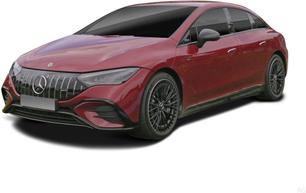
The EQE is more than an important car for Mercedes. Not only is it the German titan’s latest electric offering, on all-new underpinnings, but it represents the very future of its passenger car range.
It adopts a completely new shape and design language, but it also puts its fastest foot forward, launching with the 53 AMG variant first in Australia, by the end of 2022.
We travelled to Europe to sample it for the first time ahead of its Australian arrival to find out what the future of Mercedes feels like, but also how its go-fast AMG division has managed to leave its mark on an electric car.
The Honda Jazz is an extremely capable small car, with an ace card of virtually unbeatable interior space. While it's hardly an excitement machine, or the best looking or equipped in its class (it is missing out on some useful safety gear), the Jazz deserves its status as a well-loved hatchback.
The best in the range is probably the VTi. There isn't anything compelling further up the variants unless you're keen on bigger wheels or leather trim. Its entry-level offering is a good-value, sturdy car that is packed with its best qualities, no matter which one you buy.
In the wild new world of fully electric cars there isn’t really an ‘average’ of what to expect. If there was, I’m sure the EQE 53 would exceed it. Its electrification brings the ambiance of a luxury car, while its performance reminds you of what AMG is capable of.
There’s a bit of the mechanical engagement of AMG missing, a relatively small boot, and some won’t be sold on the function-over-form looks, but the EQE 53 is a pleasantly surprising look at the future of fast Mercedes.
The Jazz's exterior design is instantly recognisable. The shape has been roughly the same since the car's 2002 debut, with the mildest evolution over the years. The 2018 Jazz leads with the chin a bit, with a pronounced underbite and when fitted with a chrome grille, it looks a bit like the giant Jaws from James Bond after whacking his head.
Apart from that, the slimmed headlights and one-box body shape are almost entirely inoffensive, save for the chunky, stacked rear lights.
When you head inside it's a simple, basic interior. Well put together, it's easy to find your way around and, because there isn't much happening in here, it's unlikely you'll need the owner's manual, unless you want to identify and use every single deployment of the excellent Magic Seats in the back.
As you climb the range, you'll start to see body-kit additions like a rear spoiler and side skirts, but nothing particularly racy.
The EQE is certainly a departure from the classic lines of the current E-Class sedan. Mercedes-Benz has chosen to take a completely new approach for the electric era, embracing the need for ultra-low drag designs, and a corresponding newfound love for curvaceous surfaces.
It’s fairly imposing too with enormous wheels and an abundance of panels. Needless to say some will find this new design direction challenging. It proved quite controversial in the CarsGuide office, at any rate.
I can say it looks a bit more approachable when witnessed in the metal, and the AMG branded 53s I sampled for this review added a few more much-needed points of interest to this single curve of a design.
This is particularly notable around the rear of the EQE 53 which adds a little tail spoiler and glossy rear diffuser, which help accentuate the width and terraced design of the rear window.
Around the front is a little more featureless, with the blanked-out grille losing the intricate three-dimensional appeal of this car’s combustion equivalents. There’s just something a bit plain about the EQE’s face, although Mercedes has tried to spice it up with interesting headlight clusters.
The inside is spectacular, with a smorgasbord of screens and lights to match an abundance of glossy touch-based surfaces. Some may not be sold on the over-the-top approach, but it feels as futuristic as an EV should be.
The material choices are nice, too, with soft-touch materials atop the dash, doors, and running down the centre console. The ambient lighting is particularly flashy, and works in with the consistent single-piece sort of design which makes up the whole dash.
While the LEDs might be a little too much for some, there are some more subtle detailing points, like the way the centre air vents are delicately worked into the flow of the dash, and the rotor designs of each vent at the edges are intricate pieces.
The interior is full of cleverness packed into a small space. The centre console has two cup holders, a space for your phone and a compartmentalised open tray reachable by both front and rear-seat passengers. A third cupholder folds out of the dash on the driver's side. The back seat doesn't have any cupholders, unfortunately, and nor is there a centre armrest.
Rear legroom is impressive for such a small car - it's no wonder the HR-V compact SUV was spun off the Jazz platform. Added to that are the excellent 'Magic Seats', which fold in a variety of ways to increase the boot space dimensions from 354 litres to 1314 litres.
Luggage capacity is not bad for such a small car and with the flexible interior, the boot size goes up by four times in volume. This is one area in which it really does outdo the Mazda2. The removable cargo cover means you can get a decent chest of drawers in, however there's a bit of a drop once you get things over the loading lip.
You can also fold the seat bases up and out of the way to provide space for shrubbery, or a dog, or an awkward flat pack.
The basic VTi misses out on a bit of storage, namely the centre console storage box and driver's side seatback pocket, but the rest of the range has them both.
The EQE is plenty practical up front, with an odd SUV-like seating position providing a commanding view of the road. This seat positioning isn’t an accident or a necessity of facilitating batteries under the floor, but a deliberate design decision by the brand to try to emulate some design choices which have made SUVs so popular.
The result is surprisingly effective, but doesn’t help the view out of the rear of the car, which is a restricted letterbox aspect courtesy of a slinky roofline and tall boot lid.
Still, peering down on the road lets you position and park this large EV more easily. Adjustability isn’t bad for the front passenger, and space is healthy both in terms of width and height. One dimension which can’t be altered is the particularly tall dash height, and while this is largely overcome by the taller-than-average seat, it could be an issue for shorter drivers.
Storage is great, with a big bottle holder and bin in the doors, a huge cutaway below the floating centre console for storage, with an elastic strap for tying down objects. There are a further two bottle holders in the centre console and a bay with a wireless charger, too, and the split-opening armrest box is deep.
One of the more divisive points of this car’s practicality offering is the screen-based functions. Everything has been moved into the massive centre screen. There are no tactile buttons or dials for this car’s functions, with it all controlled through context menus.
To be fair, with the amount of real estate on offer, the touch elements can afford to be massive, and there is a permanent set of climate controls at the base of the screen, but adjusting these functions on the fly is never as easy without physical feedback.
The same goes for the touch-centric wheel controls. Benz says the idea with the four-zoned touch panels on the wheel is to offer unrivalled ability to control the car’s functions even when the wheel is at an angle, but it is also easy to accidentally hit various touch functions, and they can require some delicate action to use properly.
The back seat is impressive. It maintains the tall seating position of the front, letting you look down on the road as though you’re in an SUV, and the comfortable seating and surfaces continue. Legroom is particularly impressive, with leagues of space behind my own driving position. Headroom is even okay considering the descending roofline. It’s quite dark in the EQE 53 we tested thanks to its black-on-black trim, giving the illusion of a space which is smaller than it actually is.
Storage is good, too, with a big bottle holder in the door cards, quad-zone climate control, complete with a separate touch panel for rear passengers, adjustable air vents, and solid clamshell pockets on the backs of the front seats.
The EQE has a boot capacity of 430 litres which doesn’t seem enormous given the footprint of this car, and no doubt has a lot to do with its slinky aerodynamic design around the rear. There’s no ‘frunk’ either so this is a car perhaps more focused on driving and being driven in than its ability to carry things.
The Jazz range is made up of three models. As with any car, how much you get is dependent on how far up the price list you go. Honda occasionaly offers drive-away deals, but we're using RRP as a guide. We've done an exhaustive model comparison as well as snapshots to help you decide between the three trim levels - VTi, VTi-S and VTi-L.
Our American cousins score a Sport edition, but sadly we miss out on that one.
The VTi opens the price range at $14,990 for the five-speed manual, rising to $16,990 for the CVT auto. Standard features include a four-speaker stereo, air-conditioning, reverse camera, remote central locking, projector style halogen headlights, 15-inch steel wheels, cruise control power windows and mirrors, black cloth trim, trip computer and hill-start assist.
The inclusion of the reversing camera is good but the lack of rear parking sensors is mystifying, a problem shared with the VTi-S, although they are optional on both specifications.
While the spare tyre is a space-saver, it's better than a tyre-repair kit, should trouble strike. A small tool kit is also supplied for just such an occasion.
Even with the 2018 update, there is no Apple CarPlay or Android Auto, although you can plug in your iPhone or Android device via the USB port. Irritatingly, the USB port is under a cover next to the 7.0-inch touchscreen itself, so you have a cable poking out of the dashboard. You might prefer Bluetooth in that case.
Step up to the CVT-only VTi-S ($19,990) and you pick up foglights, 16-inch alloy wheels, LED headlights, 'premium' cloth trim, leather-wrapped steering wheel, a centre console with storage box and GPS sat nav.
There is no improvement to the multimedia system.
The VTi-L ($22,990) adds LED daytime running lights, climate control, navigation system (hooray!), smart key keyless entry, push-button start, leather seats, paddle shift for the CVT gearbox, an alarm, bi-LED headlights, LED daytime running lights, heated front seats and two extra speakers,
Missing from the accessories list are a CD changer, DVD player, DAB or MP3, panoramic sunroof, sport pack, black pack, city pack, subwoofer, improved sound system, HID headlights, tonneau cover, roof rack, different rims and even floor mats.
You're stuck with the same infotainment head unit right across the range - its not even a radio/CD player arrangement, just radio and your phone. At least the VTi-L has more speakers for its sound system.
Dealers will no doubt sell you darker tinted windows and an extended warranty.
The Jazz is available in seven colours, with Rally Red the only freebie. For $495 you can have one of six shades of mettallic paint - Crystal Black, Brilliant Sporty Blue, Modern steel (gunmetal grey), Phoenix Orange, Lunar Silver and White Orchid. If you're after pink or yellow, you're out of luck. Not very Jazzy.
We don’t yet know which EQE variants will be offered in Australia. The car we drove for this review, the EQE 53 AMG is the top of the range, and will be the launch variant in Australia, but the brand is yet to settle on how it will fill the line-up underneath.
Representatives said to expect at least two more Mercedes-Benz (as opposed to AMG) branded variants, with the option of a rear-wheel drive entry model and an all-wheel drive mid-grade. Whether they adopt the same spec level as the European-market EQE 350 remains to be seen.
As for the EQE 53, CarsGuide understands a price north of $200,000 is likely when it arrives before the end of 2022.
Its rivals will include other high-end four-door models like the Porsche Taycan, Audi e-tron GT, and the updated Tesla Model S. In the coming years this segment will continue to heat up with the yet-to-launch Hyundai Ioniq 6 and Polestar 5.
The EQE is fairly large, offering dimensions comparable to that of the CLS which came before it, and is quite unconventional in a host of areas.
The standard suite of equipment we sampled is impressive, too, with performance enhancements on the 53 including four-wheel steer, adaptive dampers, a performance brake package, and torque-vectoring all-wheel drive.
Massive 21-inch alloy wheels featured on our car, and there is also the option overseas for even higher performance carbon ceramic brakes.
Outside also features LED headlights, DRLs, and tail-lights, while inside impresses with the massive dash-spanning ‘Hyperscreen’ with panels for the digital dash, centre multimedia screen, and a third panel for the front passenger.
This set-up is optional on the EQE range in Europe, but we’ll have to wait and see what becomes standard for the Australian market. The car we sampled had wireless phone mirroring tech, wireless charging pads, built-in navigation with augmented reality directions, a head-up display with configurable panels, and full USB-C connectivity throughout.
Quad-zone climate also features, as does the brand’s latest steering wheel, in our case clad in Alcantara and leather trim.
The seats, even on the EQE 53 ship standard with the ‘Artico’ synthetic leather trim, although they can also optionally be upgraded to full Nappa leather. Electrical adjustment is standard for the front seats.
It’s a flashy cabin which feels primo, and little touches like unique materials for the EQ range across the dash and ambient lighting configurable to any colour you can dream up are neat, too.
Check in closer to the EQE’s local arrival time before the end of 2022 for more accurate pricing and spec, as well as the list of option packs.
All Jazzes are powered by Honda's 1.5-litre single-cam four-cylinder. The engine specs don't make for inspiring reading, with just 88kW and 145Nm. That's not a lot of horsepower, but when you consider the weight of the car, the figures don't look so weedy.
Power goes to the front wheels, so the Jazz is definitely not an off-road proposition.
Only the base model VTi has a choice of manual vs automatic, with a five-speed manual transmission and a CVT auto to choose from.
As to the question of timing belt or chain, the Jazz has the latter, so you don't have to worry about a belt change. The oil type is 5W-30
There is no diesel option, so there'll be no diesel vs petrol argument. Nor is there an EV or plug-in hybrid - with a battery, it's unlikely you'd have much boot space left. There isn't an LPG, 4x4, or AWD version either.
If you can be bothered fitting a towbar, the manual's towing capacity is 1000kg braked while the CVT's load capacity drops to 850kg. Both transmissions will haul 450kg unbraked.
The EQE 53 punches out huge power, with the standard car producing 460kW/950Nm from its dual electric motor set-up, or with the 'AMG Dynamic Plus Pack', producing even higher figures of 505kW/1000Nm.
Clearly, AMG’s electric vehicles will safely outrun their dramatic combustion predecessors. In fact, with the Plus Pack, the EQE 53 is capable of moving its bulk from 0-100km/h in just 3.2 seconds. Extreme for something carrying a whopping 90.6kWh of batteries under the floor.
Enhancements include torque-vectoring all-wheel drive, all-wheel steer, adaptive dampers, and the choice of standard performance brakes or a carbon ceramic package.
Fuel figures are slightly different, depending on the gearbox you've chosen. Honda claims you'll get 6.5L/100km on the combined cycle in a manual while the CVT uses a bit less, coming in at 5.9L/100km. So fuel consumption km/L works out at about 15km/L for the five speed and 17.km/L in the CVT.
Real-world consumption is a little different, however. Our most recent test with the manual yielded 8.0L/100km while the CVT chugged down 8.2L/100km. Having said that, you'll see better fuel economy figures in the manual if, as I admitted in my VTi review, you don't drive it enthusiastically. The CVT was a bit disappointing because I was a lot more sedate in that one and it didn't deliver better mileage than the manual.
Fuel-tank capacity is 40 litres.
Electric vehicles appear to have the same issues as their combustion counterparts, in that they still drop in efficiency the more powerful you make them. In the case of the EQE 53, this means an average WLTP-rated consumption number between 20.3kWh/100km and 23.2kWh/100km.
'Thirsty' for an EV, although it is on par with the Porsche Taycan and still below Audi’s e-tron S.
When it comes to charging the EQE 53 can charge at a rate of 11kW on the AC standard, or a whopping 170kW on DC - allowing 180km of range to be added every 15 minutes. It also has the convenient option of a 22kW AC charger, a welcome inclusion if you intend to charge your car often at public outlets.
Total range for the 90.6kWh battery is 513km on the WLTP cycle.
The Jazz has always been a comfortable, easygoing car with performance figures to match. Its 0-100km/h acceleration is best described as leisurely, so if it's speed your after, this car isn't for you.
That said, the manual VTi is terrific fun to drive. Switch to the CVT, however, and the Jazz's reputation is restored. A good ride for front-seat passengers comes from McPherson struts up front while the rear suspension is by torsion beams, meaning rear-seat occupants can get a few shocks over bumps.
Road noise is a little higher than you might expect, but that's probably a combination of tyres and a commitment to lightness.
Obviously, being such a small car, manouverability is a key advantage. The turning radius is 5.2m, which is good but not super tight and the light, electric power steering makes dodging about easy. It certainly doesn't feel like it's on rails, but that's hardly what a car with a such a small engine size is about.
Ground clearance is 137mm, which is reasonable but jumping gutters is not advised.
In the base manual, you have a five-speed with a light clutch and an easy shift. For a motor missing out on a second cam, let alone a turbo, progress is swift rather than exciting, the engine droning away with a relaxed air. The CVT has an eco mode, which further blunts performance, but a ring of light around speedo glows green if you're behaving yourself.
The way the EQE 53 drives was deeply unexpected. Just looking at this massive sedan, I would have expected it to feel burdened by its batteries, and with its length and shape, cumbersome in the corners. That wasn’t the case at all.
The EQE 53 feels remarkably coherent from behind the wheel. The seating position works well to give a nice view of the road, the steering feels a tad artificial but still direct with some AMG magic having worked its way in.
What surprised me most is how agile it feels. Once you gather some speed and attack some corners, this car shrinks. Control is excellent thanks to the massive tyres, all-wheel drive system, and all-wheel steering. It sounds like a lot of complexity, but you don’t notice any of it. Each system does its part to allow you to simply point the car where you want it to go at pretty much any speed. It is very impressive.
The ride feels supple, too, thanks to adaptive dampers, but offers plenty of control. The speed is Tesla-style violent. Put your foot to the floor in Sport or Sport+ mode and you’re thrown to the back of your seat as the car enters a state of warp. AMG says there won’t be a 63 version of this car, and I can’t imagine why you could possibly need anything faster or more capable than this 53 version. 1000Nm of torque!
This overwhelming number perhaps makes it more impressive that it’s hard to extract a squeak from the tyres. Sure there’s torque-vectoring magic at play, but even at full acceleration they hold on for dear life.
It also makes a noise. AMG is very specific about what went into making the soundscape for the EQE because in the electric era its performance can be achieved silently, and the brand knows full well its badge usually comes hand-in-hand with aural drama.
I stuck it in the stock mode and varied my driving from 'Comfort' to 'Sport+.' The sound builds as the car gains speed, but it also interacts with your accelerator and brake inputs, as well as being one of few EVs with a specific noise for regenerative braking. It sounds… odd.
There’s certainly a kind of drama to it, and to me, it’s better to have it as a way of gaining some feedback from the car. But, its artificial nature and loudness became a little too much for sustained driving in Sport + mode. I found the best balance in the more regular ‘Sport’ mode, or even toned down to ‘Balanced’ which puts it in the background.
This leaves quite a void, though. While the sound is welcome, and the throttle alarming, there’s just something missing from the usually brash AMG badge promise.
As an EV, the EQE 53 has three regen modes quite distinct from one another. Mercedes says the choice to have just three modes is deliberate, as it didn’t want to dilute the personality of the car with an overwhelming choice of regen. The three modes include: basically no regen, moderate regen, and the full regen, essentially a single-pedal driving mode. I preferred the strongest setting for efficiency's sake (plus it brakes for you as you let off!).
The EQE 53 is surprising in so many areas, and much more engaging to drive than its exterior visage might suggest. I’m impressed.
The safety specifications include six airbags, ABS, stability and traction controls, brake assist and brake-force distribution. The Jazz was awarded a five-star ANCAP safety rating in January 2015.
Baby car seat security is offered with either three top-tether anchors but there are no ISOFIX points.
Missing is the more comprehensive safety equipment of its key rival, the Mazda2, which has forward AEB as standard, and its mid-range adds reverse AEB and at the top of the range scores reverse cross traffic alert and blind -spot monitoring. The airbag count is competitive, however.
We don’t yet know what standard safety equipment will arrive on Australian-delivered EQE variants, but you can expect a high-end suite of gear including auto emergency braking to freeway speeds, lane and blind spot assistance, driver and road monitoring tech, as well as the brand’s rather good autonomous cruise suite.
The EQE pairs the expected set of airbags with an additional driver’s knee airbag and centre airbag for some markets, as well as a second set of side impact airbags for rear passengers. There are dual ISOFIX mounts on the rear outboard seats, and expect there to be the usual three top-tether mounts in Australia, too.
Stay tuned closer to the EQE’s arrival toward the end of 2022 for more accurate specification.
Honda's standard five year/unlimited kilometre warranty also comes with capped-price servicing for the first five years or 10 services, whichever comes first. Service intervals are every 10,000km or six months.
Up to 30,000km you won't have any extras but once you hit 40,000km you'll have to do the brake fluid, which is a reaonable $144 extra. Your service cost structure is otherwise simple - $259 for odd numbers and $297 for even.
Many people ask where the Honda Jazz is built, and the answer to that is "not Japan", or in Honda's Thailand plant.
Second-hand values appear strong, with around 60 percent of value retained after three years. Resale value is something of a Honda strength, which is probably to do with a lack of high-profile reliability issues.
A dip into the usual internet forums yields little in the way of common faults, problems, complaints or issues for the Jazz. Some look for automatic transmission problems, others for manual gearbox problems, but the current Jazz seems quite clear of defects in Australian-delivered cars.
Mercedes-Benz in Australia currently offers a range-wide five-year and unlimited kilometre warranty, a standard which is spreading to other premium brands.
We don’t know what the service schedule or running costs will look like for the EQE range yet, but expect it to be most affordable when chosen with a multi-year prepaid service plan at the time of purchase. Check back closer to its launch time to see the full details.