What's the difference?
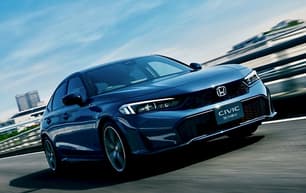
I’m just going to cut to the chase here. This Honda Civic hybrid is a good car. A great one, even.
But for some reason, nobody is really buying it. And it’s not just because it’s not an SUV – it has been outsold in its segment this year by the the BMW 1 Series, the Mercedes A-Class, the MG4 EV, and the VW Golf. Premium and non-premium alike, they’ve all got the little Honda licked.
So, what’s going on? A CarsGuide investigation is required. Stick around and we’ll try to figure this out together.
Cupra is not trying to fit in.
In a car market that is getting more and more crowded the Volkswagen Group-owned Spanish performance brand is looking to stand out. Which is why its refreshed Leon hatchback range has added the most unlikely of new models - a small wagon.
The conventional hatchback is struggling to survive against the onslaught of SUVs, and almost every brand has abandoned the wagon in all its sizes, but not Cupra. It has added the Leon Sportstourer to its facelifted Leon hatchback range, giving buyers looking for something different a new alternative.
This new compact wagon is powered by a plug-in hybrid powertrain and joins the Leon hatch in a three-pronged line-up initially, with the Leon S mild-hybrid and VZx hot hatch. A red hot VZx version of the Sportstourer and plug-in hybrid hatch are locked in to join the local Cupra range in 2026, but for now we’ll focus on this trio.
Talk about your new-car unsung heroes – I can't believe Honda's not selling more of these. So, if you can get over the price, and you worry it might be too small for you, I encourage you to check the Civic out. The back seat and boot are both bigger than you might expect, and the drive experience leaves most SUVs in the rear view mirror.
There's a lot to like about the updated Leon line-up, but probably not by lots of people. It won't be a best-seller, Cupra doesn't need or even want it to be. What it will do is offer something different, and in the case of the Sportstourer something very rare.
The S and VZx will face stiffer competition in the hatchback markets, primarily from Volkswagen, Audi and even Skoda, and it's hard to pick an area where they really stand out from the competition, apart from the unique styling. Not that they aren't pleasant cars to drive, it's just a crowded market.
Which is why the Sportstourer, especially with its plug-in hybrid powertrain, has a chance to be something that really sets Cupra apart from its rivals. Dynamic, efficient and different, it won’t fit in - and that’s exactly what the brand is hoping for.
Note: CarsGuide attended this event as a guest of the manufacturer, with meals provided.
Beauty. Eye. Beholder. All that. But I reckon this Civic looks fantastic. Low-slung and sporty. The perfect antidote to all those bland, beige SUVs currently doing the rounds.
New as part of the most recent refresh is the front-end treatment, a new front bumper, more body-coloured flourishes and new designs for the 18-inch alloys.
I think it looks sleek, premium and purposeful, and not at all boring.
Inside, though, it’s a little less adventurous, though I do adore some of the little design touches, like the perforated metal effect that spans the dash.
The central screen is pretty small by modern standards, and you don't want to push too hard on some of the touch points, like the gloss-black highlights on the doors, which feel flimsy, flexible and pretty cheap.
Now, the screen. Does UX design count in the overall design section? Let's say that it does. I haven’t really experienced less intuitive and user friendly cabin tech lately.
For example, I couldn't figure out (though I must admit I didn't resort to owner's manual) how to get Apple CarPlay to load automatically, if you can.
Instead I had to select my phone, cycle through several screens of approval, and then select my phone again, every single time I got in the car. I had a similar issue using Google maps, which simply wouldn't connect at all for me.
Good tech is easy and intuitive. This wasn't.
Design is a key tenet of Cupra’s ethos, because while it may share Volkswagen mechanical DNA, the Spanish brand wants to really stand apart when you look at or sit inside the Leon.
While it may be the same size as a VW Golf, it certainly doesn’t look or feel like one. Yes, there’s the typical Volkswagen build quality to the fit and finishes, but overall it has a unique Spanish style to it.
On the exterior, Cupra has given the Leon a major visual overhaul with the front end featuring a new-look grille, bumper and headlights. At the rear the tail-lights have been redesigned and now incorporate the logo into a single horizontal light bar that runs the width of the rear.
Inside there’s some new materials, but the most notable change is the introduction of a 12.9-inch multimedia screen. Ambient lightning available on all three models helps to highlight the cabin design.
The Honda Civic measures 4569mm in length, 1802mm in width and 1415mm in height, and as you've no doubt already noticed, it's not an SUV, rather a liftback-style sedan.
But if you feel like you need an SUV to move a family, I beg to differ. While the middle seat in the second row is too tight for adults (owing largely to the intrusive raised tunnel that runs through the middle of the cabin), the two window seats can absolutely fit adult humans. I'm 175cm, and had absolutely no issue sitting behind my own driving position.
But the biggest surprise is the boot, which opens to reveal a flat and wide storage space that can swallow 409 litres (VDA) of luggage. In real terms, that's more than enough for our pram and the assorted knick-knacks that go with it on a baby day out.
Unfortunately, though, there’s no spare. Instead you’ll find yourself wrestling with a hateful repair kit should you get a puncture, and you don't want to wait for roadside assist.
There's also twin USB ports in the back, as well as air vents, along with twin cupholders in the pulldown divider.
While we’re talking about two different bodystyles here - hatch and wagon - the front seats are the same. So you are treated to Cupra’s stylish but thoughtful layout, which looks nice but also has good practicality.
The seats themselves are comfortable, even after extended periods behind the wheel, while there’s cupholders, sizeable door pockets, a lidded centre console box and a wireless smartphone charging pad.
The previously mentioned 12.9-inch multimedia screen dominates the centre console, sitting proudly at the top of the fascia. Unfortunately, Cupra (like Volkswagen) has fallen to the modern trend of ‘touch controls’ rather than physical buttons.
Not to sound like an old man yelling at clouds, but these touch-sensitive sliders are simply not as user-friendly, especially in a moving vehicle, as a traditional physical button or dial. While the multimedia system is easy to use, especially with Android Auto or Apple CarPlay fully integrated, adding dials for the stereo (on/off and volume) and the climate control would have been great.
Otherwise, the 12-speaker Sennheiser sound system with subwoofer and 390W amplifier sounds great, offering a premium in-car entertainment experience to match the Cupra’s price and positioning.
As for space in the back, which is obviously where the hatch and Sportstourer vary. There isn’t a lot to split them in terms of passenger space. These are both small cars, so neither offer the kind of room you’d get from an equivalent-sized SUV. The real difference is the cargo capacity, the hatch pair offer 344L (or 888L with the rear seats down) whereas the Sportstourer has a more generous 470L/1045L.
Ah, so we may have hit the first Honda hurdle. Ours is the entry-level e:HEV L, and it’s a cool $49,900, drive-away. The top-spec LX is $55,900, on the road.
To put that into perspective, Toyota's two Corolla sedan hybrid grades are about $36K and $39K, drive-away, at the moment. The admittedly non-hybrid Golf starts at $39,990, on the road.
The German premium brands are still more expensive, but I think that might be at least part of the Honda’s problem. It now occupies a space between mainstream and premium, which might also be something of a no-man’s land.
Still, the entry-level L is decently equipped, with 18-inch alloy wheels wrapped in quality Michelin Pilot Sport rubber, all-LED lighting all around and key-less entry.
Inside, there’s synthetic leather and fabric seats, dual-zone climate, a 9.0-inch central touchscreen with Apple CarPlay and Android Auto, but also with Google built-in that provides mapping and updates and a 12-speaker Bose stereo.
Both Civic variants also arrive with a three-year subscription to 'Honda Connect', which gives you remote access to your car to lock or unlock it, pre-heat or cool the cabin, or set a geofence alert if your teenagers are borrowing it, that sort of stuff.
But… there are no full-leather seats, there's no sunroof, no wireless charging and you have to open the boot yourself.
The lack of all that doesn’t feel overly premium.
Knowing that hatchbacks and wagons aren’t big sellers and Cupra’s desire to stay boutique rather than mainstream, the line-up is relatively simple.
The Leon S kicks off the range at $46,990 (all prices listed exclude on-road costs) and comes with 18-inch black and silver alloy wheels, LED headlights, keyless entry and ignition, heated sports bucket seats, tri-zone climate control and a six-speaker sound system with Apple CarPlay and Android Auto.
The Leon VXz starts at $64,990 and includes 19-inch black and copper alloy wheels, multi-link rear suspension, adaptive dampers, front locking differential, upgraded brakes, quad exhaust and Cupra drive modes. There’s also leather-appointed seats and a 12-speaker Sennheiser sound system.
The VZe Sportstourer completes the line-up priced at $69,990 featuring unique 19-inch black and copper alloys, LED headlights and tail-lights, a power tailgate with handsfree opening and black roof rails. Inside it gets leather-appointed sports seats, heated front seats and steering wheel, tri-zone climate control, native navigation, Apple CarPlay and Android Auto plus the 12-speaker Sennheiser stereo.
The Civic range is an all-hybrid affair, which in this case is what Honda calls its 'two-motor hybrid', which pairs a 2.0-litre petrol engine with two electric motors, one being an electric generator, and the other being the actual propulsion motor which sends power to the wheels. Expect a total 135kW and 315Nm, which is sent to the front wheels via a CVT auto.
The three Leon models all feature a different powertrain, as each is targeting a distinctly different buyer.
The Leon S is powered by a 110kW/250Nm 1.5-litre turbocharged petrol engine with mild-hybrid assistance.
The Leon VZx gets a more potent 2.0-litre four-cylinder turbo-petrol engine that makes 221kW/400Nm, to put it right at the heart of the hot hatch market.
The Leon VZe Sportstourer manages to combine efficiency with performance, with a 1.5-litre turbo-petrol engine paired to an electric motor to make an efficient 200kW and 400Nm.
The one thing all three have in common is a seven-speed dual-clutch transmission and front-wheel drive.
Honda says you can expect 4.2L/100km on the combined (urban/extra-urban) cycle, but we found the fuel use was a still impressive 5.5L or so, admittedly mostly in the city.
The 40-litre tank drinks 91 RON 'standard' fuel, meaning its cheapish to fill up, and — using Honda’s numbers at least — should deliver a 950km driving range.
Yesterday, 91 RON was about $1.80 per litre meaning you can theoretically get from Melbourne to Sydney for around $75.
Naturally, the three different powertrains provide three very different fuel economy numbers.
The mild-hybrid system in the Leon S allows it to use just 5.4L/100km, which provides a theoretical range of up to 833km thanks to its 45-litre fuel tank.
The VZx is the thirstiest member of the range, not surprisingly, using 7.6L/100km. With its 50-litres tank it has a theoretical driving range of approximately 650km.
Finally, the Sportstourer VZe manages a claimed 0.4L/100km on paper, thanks to its 20kWh battery providing up to 121km of electric-only driving range. Obviously achieving that claimed figure in the real world is incredibly difficult (as it is with any PHEV) but we still managed to use just 2.4L/100km on our mostly extra-urban test drive, which is still a good return.
First things first – I really, really like the way this Honda drives. There's a finesse, a confidence, in the drive experience that's sometimes missing from the new brands when they first arrive in Australia.
In short, it feels like it was engineered by people who really know what they're doing. That's the easiest way to describe it.
If you're used to driving older-fashioned hybrid systems you might be used to a bit of shuddering harshness when the engine kicks in, but that's simply not the case here.
Instead, the transition is seamless, with the Honda Civic making the choice for you and largely leaving you out of the process entirely.
Where the powertrain does let itself be more known is under heavier acceleration, with engine thrum seriously invading the cabin, without much in the way of flat-footed performance to accompany it.
But the magic of the Civic drive experience is in its balance. It's not a performance car, but there's real driver engagement to be found in the way it rides and handles. Equally, though, it's never uncomfortable, striking the balance between road-holding confidence and comfort really well.
Happy in the city, happy on a twisting road - this is not one of those smaller cars that leaves the drive experience as a secondary factor. It feels like it really has the driver at heart.
Obviously there are three very different variants in the Leon range, with three different powertrains and two different body styles, and yet there is a familiar feeling between all three when you’re behind the wheel.
This is arguably the ‘most Volkswagen-y’ element of the Cupras, with the solid, stable Volkswagen underpinnings coming through. This is, of course, not a criticism, but rather highlights the positive connections between Cupra and its parent company, which has allowed it to make an immediate impression on the Australian market.
However, it also means the Leons feel so familiar that they don’t leave you with a unique impression and driving character.
For example, the VZx is almost too good, too quick and too clinical. It lacks the excitement and engagement rival hot hatches offer, notably the Hyundai i30 N and Honda Civic Type R, but instead compensates by just being really capable.
Obviously, that may not be seen as a negative by everyone and for those who want that sort of engaging, dare I say ‘fun and edgy’, driving experience the Leon VZx may not be precisely what they are looking for. Still, the engine is potent and even the lack of all-wheel drive doesn’t dampen its performance abilities too significantly compared to the likes of a VW Golf R or Audi S3.
The Leon S offers a different proposition, a warmed up hatch, rather than something hot. On that front it delivers, providing a well-mannered drive but without the punch of the VZx.
The Sportstourer is arguably the pick of the range, with its combination of sharp driving dynamics and very efficient powertrain. At no point do you feel like Cupra compromised its sporty intent to make the Sportstourer save fuel. Instead, the PHEV powertrain offers plenty of performance when you need it but is otherwise quiet and efficient the rest of the time, helping it to sip fuel at a much lower rate than its Leon hatchback alternatives.
The big safety news surrounding the Civic is that its eight airbags are joined by 'Honda Sensing', which packages up every safety system you can possibly imagine — forward collision warning, lane keeping, adaptive cruise, AEB – and delivers them as standard across the range.
But the bigger news is that, refreshingly, none of it is overly intrusive. Even the speed limit warning, which – as in most cars – always gets the speed wrong, just flashes gently on the driver display, rather than binging and bonging through the cabin.
The Civic Hybrid scored a full five-star ANCAP safety rating, with the score based on crash testing in Europe through Euro NCAP.
The Cupra trio come loaded with plenty of safety features including 10 airbags for excellent passive protection plus autonomous emergency braking, front and rear cross-traffic alert, blind spot warning and driver fatigue monitoring.
For convenience and safety there’s also adaptive cruise control, front and rear parking sensors and even self-parking.
As the Leon has had no major structural changes, the original 2021 five-star ANCAP rating still applies. However, it should be noted that ANCAP updated its testing protocols in 2023, so that five-star rating is different to a five-star rating applied since then.
The Honda is covered by a five-year/unlimited-kilometre warranty, and servicing is every 12 months or 10,000km.
There is a capped-price servicing program, called 'Low Price Servicing', which means your first five services are $199, but don't cover things like brake pads and tyres.
All three Leons are covered by Cupra Australia’s standard warranty, which covers the first five-years/unlimited kilometres. Which is good, especially for a new and more premium brand, even if it’s obviously short of the best-in-market.
Servicing is required every 12 months/15,000km, whichever comes first, and Cupra is offering a servicing pack special until the end of 2025, of $1990 for five years. That works out to an average of $398 per year.
Cupra is expanding its dealer network in Australia too. The Leon drive event we attended began at the newly-opened Cupra Macarther in Sydney’s growing west. There’s also a new dealership at Melbourne’s Essendon Fields.
Of course, one of the key advantages that Cupra has over many other new brands to Australia is its Volkswagen/Audi connections, which allows its models to be serviced at those dealerships as well. That provides a much larger footprint for customers to find somewhere convenient to service their car, which cannot be underestimated.