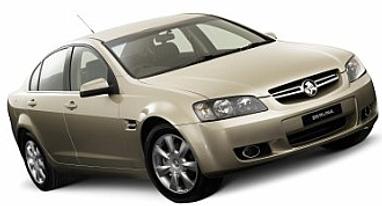
Holden Commodore 2006 Problems

Are you having problems with your 2006 Holden Commodore? Let our team of motoring experts keep you up to date with all of the latest 2006 Holden Commodore issues & faults. We have gathered all of the most frequently asked questions and problems relating to the 2006 Holden Commodore in one spot to help you decide if it's a smart buy.

Used Holden Commodore review: 2006-2009
By Graham Smith · 21 Apr 2011
A billion dollars and five years in the making the VE Commodore was a make or break model for Holden, and in many ways it also represented the future of the traditional Aussie big family car.MODEL WATCHThere was heaps riding on the VE Commodore when Holden launched it, the company had gambled heavily on being able to keep the old style large car alive in a market that was moving towards smaller cars.With its carved curves, chiseled lines and pumped wheel arches it was a good looking car.  Compared to the previous model it was also longer, wider, taller with a larger footprint, with a similar cabin that could seat five adults, and larger boot.  At the same time it was heavier, and there was only a small improvement in fuel economy, an important consideration when buying a car at the time.The Omega's engine was a 3.6-litre all-alloy V6 with double overhead camshafts and variable valve timing that put out 180kW at 6000rpm and 330Nm at 2600rpm.  It was also offered with an Impco-developed vapour-injection dual-fuel (LPG) system. In that form it's peak performance was 175kW at 6000rpm and 325Nm at 2600rpm.There was just the one transmission on offer in the Omega, it was a solid four-speed that had been recalibrated in VE for improved smoothness and shifting. Final drive, as with all Commodores, was through the rear wheels.Underneath it had all-independent suspension front and back and larger disc brakes.  Inside, the Omega was roomy with a well laid-out, well-equipped cabin boasting quality fittings and comfortable seats.IN THE SHOPService intervals for the Omega was 15,000 km. Check for a service record, proper maintenance is the key to a long life for a car.  Overall the VE was well built and is generally reliable, although the early cars suffered by production gremlins that were ironed out quite quickly.IN A CRASHAt launch the Omega had ABS brakes, ESP stability control and traction control with electronic brake distribution and emergency brake assistance overlaid with dual front airbags. When tested by ANCAP it was given four stars out of five.  In October 2008 Holden added head and side airbags, which enabled it to achieve a 5-star ANCAP rating.Parents often opt for a Commodore when buying cars for their beginner driver offspring, believing its solid build and overall safety will keep their kids safe, but a powerful engine with rear drive can often bring inexperienced drivers undone. The addition of ESP as standard equipment on the VE makes it a much better choice for a young driver than earlier models that don't have the important safety feature.UNDER THE PUMPHolden's claim for the 3.6-litre V6 petrol Omega was 10.5L/100km, the company's claim for the dual-fuel (LPG) engine was 16.0L/100km.Carsguide reader Dave Markham's Series 1 Omega V6 averages 12.5 L/100   km around town and 7.0 L/100 km on the highway.HOLDEN OMEGAPrice new: $34,490Engine: 3.6-litre V6 petrol; 180 kW at 6000 rpm/330 Nm at 2600 rpm;   3.6-litre V6 dual-fuel; 175 kW at 6000 rpm/325 Nm at 2600 rpmTransmission: 4-speed auto; rear-wheel driveEconomy: 10.9 L/100 km (petrol), 16.0 L/100 km (LPG)Body: 4-door sedanSafety: 4 stars ANCAP before 2008; 5 stars after 2008Expect to pay: $11,500-$22,000 (petrol); $13,000-$23,500 (dual-fuel)VERDICTBig, roomy family car that performs, handles, and rides well. Hard to   beat if you need the space. ***1/2Price: $11,500 plusCOMING UPDo you own or have you owned a Nissan Murano? Share your experience   with other Carsguide readers by sending your comments via e-mail to   grah.smith@bigpond.com or write to Carsguide, PO Box 4245, Sydney,   NSW, 2010.WE DRIVE THEMFord fan Geoff Warham is on his third VE Commodore, he drives them in   the course of his work doing around 70,000 km per year. In that time   he has only had to have a windscreen washer bottle replaced under   warranty on one them; the dealer put it down to poor quality plastic.   His current car is a Series I VE with the 3.0-litre SIDI V6 and 6-  speed auto."There is definitely an improvement in fuel economy, I can now easily   get more than 840 km from a tank highway driving without fear of   running out where I could only get 750 km from the previous model."Dave Markham drives a 2006 VE Commodore Omega that he bought second   hand in 2008. While overall he's happy with it he has had to repair   leaking heater hoses, replace worn anti-roll bushes and update the   software in a faulty computer."Apart from the above issues my car has been trouble free and what I   mainly like is the handling and smooth ride."
Read the article
Used Holden Commodore review: 2006-2009
By Graham Smith · 03 Jun 2011
The SV6 was a direct response to the success of Ford's XR6, which had pretty much buried the Commodore S, Holden's previous six-cylinder sports sedan.It's almost 20 years since Ford unveiled the XR6, so it's taken a long time, but there's no doubting that it has built a following among owners who believe you don't need to Drive a V8 to be sporty.As Ford's flyer has ascended the throne Holden's S has got lost in the traffic. To compete Holden needed a new hero six; that came in the form of the SV6.The SV6 built on the already sporty stance of the VE with added body enhancements to give it an even sportier look.Under the bonnet it had a high output version of the 3.6-litre double overhead camshaft Alloytec V6 that put out 195kW at 6500rpm and 340Nm at 2600rpm.Buyers could choose between a five-speed manual gearbox and an upgraded five-speed auto with a manual shifting option.Underneath it had a combination of MacPherson Strut front suspension and independent rear suspension, power steering and larger, more fade resistant ABS-supported disc brakes front and rear.With a body that was 50 per cent stiffer than the old model's, a new suspension set-up and close to 50/50 weight distribution the SV6 was blessed with a handling balance more associated with European models. On the road it was a revelation. It sat flat on the road, soaked up bumps with aplomb and went where it was pointed.Inside was a different story. Awash in dark tones and dull grey plastics, the new cabin was plain and a trifle disappointing.The handbrake was located in the centre console and awkward to use. You had to be careful not to pull it on too hard, as it could be very hard to release if you did.The SV6 was equipped with standard features like air-conditioning, cruise control, multi-function steering wheel, alarm, immobiliser, trip computer, seven speaker CD sound system, power driver's seat, body kit including a rear spoiler and 18-inch alloy wheels.Fit and finish was an issue immediately after the launch of the VE, odd noises were evident in early cars, so look and listen carefully when test driving cars.The V6 engine is quite robust and gives little trouble, although some owners feel it's a little weak at low engine speeds, which can make manual's hard to get off the line smoothly, and make it feel unresponsive when you crack the throttle.Like the engine the transmissions are solid and give little trouble. Make sure your car of choice has been serviced and inspect for crash repairs.The SV6 was well equipped with safety features, coming standard with dual front airbags and side front airbags, along with active support from ABS brakes, EBD electronic brakeforce distribution, BAS electronic emergency brake assist, traction control and electronic stability control. ANCAP rated it at 4 stars.Holden's official claim was 11.0L/100km for the six-speed manual and 11.3L/100km for the auto. Our reader reports that she gets 12.0L/100km in city type driving, but has got as low as 6.0L/100km on the highway. Holden says the SV6 is happy to run on regular unleaded and approves it for E10.Glenys Russell bought her 2007 SV6 manual in 2009 with 20,000 km on it and has since done another 43,000 km. It took some time to acclimatize to the clutch operation and the A-pillar, which she says is a huge blind spot. She has had the clutch replaced twice, the sound system has also been replaced twice, the plastic moulding on the driver's seat broke, the handbrake has stuck on, the ECM has been reprogrammed, and it currently has issues with the lower control arms, but all problems have been fixed under warranty."My car is extremely powerful, responsive, safe, and absolutely the best car I have ever driven."Punchy V6 with a stable chassis combine for a sporty ride, but lacks the presence of the Falcon XR6.
Read the article
Used first cars review: 2006
By Bill McKinnon · 05 Feb 2011
On a tight budget, you had four options: unsafe cars, unreliable cars, really boring cars or cars that combined all three characteristics.  In the past decade, though, it's become easier to find a tidy, safe, cheap used car, for several reasons.Firstly, used cars don't hold their value like they once did. New cars have become cheaper in real terms, and sales have boomed, so there's a lot more used cars on the market.Cars are also much safer than they used to be. Government legislation and independent crash test programmes like NCAP, (which publicises the results of its tests, much to the annoyance of the industry) have forced car makers to improve safety. A 2005 car, no matter what make it is, will be safer than a 1995 car. At the minimum, you want two front airbags and anti-lock (ABS) brakes.Unless it's French or Italian, in which case a weekly dummy spit is part of the "ownership experience," most cars from the last 10 years will be pretty reliable, as long as servicing has been done by the book.We are talking about ordinary, everyday cars here, that haven't been thrashed. If you're looking at some dude's slammed, chipped Subaru WRX and the price seems too good to be true, chances are it will self-destruct before you make it home. You pay your money and you take your chances.Immaculate, low kilometre cars owned by little old ladies do exist, and they are gold. So is a complete service record, especially if it's from the dealer who sold the car new.  Let's see if we can find a few to recommend. Bottom dollar in our search is $5000.There's not much joy at this money, but the last of the Mitsubishi Magnas, from 2004-2005, are great value and reasonably plentiful. Many will be ex-renters. That's not necessarily a bad thing, because serving will have been done to schedule. The 3.5-litre V6-four speed auto ES has four airbags and ABS.Another Mitsubishi, the Lancer, is the best small car we can find at this price. Toyota Corollas are fine too, though they're more expensive.  The Lancer's as sexy as a can of baked beans and completely bulletproof. Pay about $7000-$8000 or so for a 2005 model. Find one with optional ABS and six airbags.If you've got around $10,000 to spend, you have much more choice.  In 2004, Mazda made six airbags and ABS available across its entire range, as options or standard, so any Mazda2 or Mazda3 from 2004 on will be worth checking out. Mazda does blue chip quality, and if you find a good one, with a service book, buy it. You'll pick up a 2 for less than $10,000; a 3 will be $10,000-$12,000.If you need something bigger, this sort of money will also get you into a 2004-2005 Subaru Liberty, another top car from Japan's A league. All wheel drive, excellent handling and Subaru's class leading NCAP scores are pluses. The 2.0-litre four won't rip your arms off, but it will do the job. Wagons cost a little more.You might prefer a small SUV wagon instead, so look for a 2004-2005 Subaru Forester, or Toyota RAV4, at $12,000-$15,000.  If you need a big car for a big country, the Aussie six is hard to go past.You'll pay $10,000-$13,000 for the first of the VE Commodores from 2006. The 3.6-litre V6 sounds like 1000 leaf blowers on maximum thrust, however it's durable enough. Holden got serious about safety with VE, so you get stability control as standard.  It might take a while to find the right car, but in the end, it pays to be fussy. Second hand doesn't have to mean second best.WHERE TO BUY?DealerPros: On cars under 10 years old, most states require a warranty, typically 3 months or 5000 kilometres. You also get guaranteed title. Franchised dealers (ie those who also sell new cars) usually have the best selection of used cars; the trade-ins they don't want are unloaded to non franchised dealers or auctions.Cons: Can be more expensive than a similar car bought privately. Beware of non-franchised dealers selling flood damaged or rebirthed (ie cars written off by insurance companies but then repaired) from Queensland.PrivatePros: The best way to find a bargain.Cons: You have to do plenty of legwork, and finding the right car, in a place that's close to where you live, can be a time consuming process. There's no guarantee of title or provenance, and no comebacks if it drops its guts on the way home. Buyer beware.AuctionsPros: Ex-government or fleet cars, usually properly serviced, with low kilometres. Guaranteed title. Many dealers buy cars at auction, take them to their car yard, and jack the price up by thousands of dollars. Buy it yourself, and pocket the difference.Cons: You can't test drive the car before you bid. It's also easy for an amateur to pay too much, so go to a couple before you buy to get an idea of prices and how it all works.
Read the article
Ask Smithy Xtra Timing belt due on Commodore
Answered by Graham Smith · 19 Oct 2010

It doesn’t have a cam-timing belt; it uses a chain that doesn’t need regular servicing like a belt does.

Holden Commodore 2006: Bad smell from engine
Answered by Graham Smith · 21 Sep 2010

On your figures it’s getting 19 L/100 km whereas it should be getting around 11 L/100 km. That says there’s something very wrong, and the petrol smell suggests it could be running very rich. It could be a problem with the oxygen sensor. Have it checked out.

Holden Commodore 2006: Convert to gas
Answered by CarsGuide team · 21 Oct 2010

The best system for your car is a vapour-injection one and IMPCO was the system used by Holden for the factory-fitted cars. But there are lots of other systems that would also perform well. All systems are made in Italy, no matter the brand. Choose a well-known brand and an experienced installer, and ask the installer for references from other owners who have had similar systems fitted. The vapour-injection systems are more expensive than the older technology venturi/mixer ones, and on average are priced around $4500.

VE Berlina V6 high fuel consumption
Answered by Graham Smith · 18 Aug 2011

It's odd that there's such a disparity between steady-state highway driving and round town use. If the performance has dropped off I would be checking things like the exhaust backpressure, which might show up a blocked or partially blocked catalytic converter; if the performance hasn't altered look at the oxygen sensors.

Clunking Commodore
Answered by CarsGuide team · 16 Dec 2010

It could be a faulty shift solenoid or a problem with the throttle position sensor. Take it to an auto trans specialist who should be able to diagnose the problem for you.

Holden Commodore 2006: VE SS manual Vibrating
Answered by Carsguide.com.au · 05 Apr 2011

I would have the wheels and tyres balanced, then start looking at rear suspension bushes and drive shafts.

Holden Commodore 2006: Smokey exhaust
Answered by Graham Smith · 24 Aug 2010

It doesn’t sound like there’s anything wrong, the ‘smoke’ is pretty normal for most cars during the warm-up phase.


Disclaimer: You acknowledge and agree that all answers are provided as a general guide only and should not be relied upon as bespoke advice. Carsguide is not liable for the accuracy of any information provided in the answers.
Have a new question for the CarsGuide team?
More than 9,000 questions asked and answered.
Complete guide to Holden Commodore 2006
Complete guide to Holden Commodore 2006 CarsGuide Logo
Reviews, price, specs and more