Used Holden Commodore review: 1978-2003
By Graham Smith · 19 Aug 2003
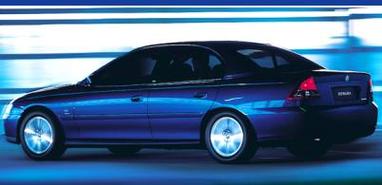
The Commodore is turning 25. Graham Smith tells you what they are worth today as used cars. The first Commodore was smaller than the previous Kingswoods but boasted European running and handling gear. It topped the sales charts and was Wheels Car of the Year for 1978. Poor build quality and rust problems make it difficult to find a VB in good condition today. A facelift of the VB with updated six-cylinder and V8 engines. For the first time there was a four-cylinder engine available but it was disappointing. A smart new shadow tone two-tone paint scheme was available for the first time on the SL/E and made it even more attractive. But build quality problems and rust plagued the VC; it's hard to find cars in decent condition. Another facelift of the first Commodore, the VH had more engine upgrades. With Holden's ongoing build problems, including poor paint, good quality VH Commodores are hard to find. Values range from $600 to $3400. SS was introduced as a limited edition model and remains the most desirable. Be careful of cars that have been thrashed. This first major facelift featured louvred grille, plastic bumpers and new rear quarter window. New models included the Berlina and the luxury Calais. The four-cylinder and the small 2.8-litre six were dropped and the 3.3-litre became standard. The 4.2-litre V8 was dropped, leaving the 5.0-litre as the only V8. Performance models, the SS and SS Group 3, were built with Peter Brock's HDT operation and are the most collectable VK models, along with the SS Group A which was designed for the new Group A touring car racing. New front and rear treatment, new slim headlights and a lip on the boot lid were features of the VL. The Holden six, a faithful servant since 1963, was replaced by a Nissan imported 3.0-litre six, prone to over-heating and head damage. The V8 was replaced by a turbocharged Nissan six which put out 150kW, until public protest brought the V8 back by late 1986. The VL SS Group A, finished in Permanent Red, is highly collectable today. TWR became Holden's performance partner in 1988 and their first creation was the TWR VL SS Group A, better known as the Batmobile for its wild body kit. The VL is popular with young drivers today but be wary of cooling problems with the Nissan engine. The Commodore was being soundly beaten by the Ford Falcon in sales. Holden responded with a bigger car. Power came from a fuel-injected 3.8-litre Buick V6 with an optional 5.0-litre V8. The SS is a popular model, while the Durif Red SS Group A is the most collectable. However, cut-price engineering and poor build quality mean lots of tatty VNs now. A facelift of the VN with attractive styling changes. The V6 was refined and the 180kW HSV 5.0-litre V8 became an option over the standard 165 kW V8. SS is popular for a sporty ride, with the Calais a popular prestige choice. With new front and rear sheet metal and new head and tail lights, the VR was an attractive remake of the VN/VP. Holden introduced driver's airbag standard and ABS and IRS available across the range. SS and Calais remain the most sought models but the value-packed Acclaim is a popular family car. The new 3.8-litre ECOTEC V6 engine was smaller, lighter, smoother and more fuel efficient than previous. A passenger's airbag, and improved remote central locking with an immobiliser, were added. The third all-new Commodore struck a decisive chord with buyers. It was longer, wider and had a longer wheelbase and roomier interior with more legroom and width than any previous Commodore. The American Gen III V8 replaced the Aussie V8 in the 1999 Series II update. Generally without major problems, although the Gen III V8 has been plagued with oil consumption and piston rattle problems. Styling changes were minimal but the V6 now had 152kW and better fuel consumption thanks largely to new electronics, and the V8 was up to 225kW, courtesy of a higher flow inlet manifold and new fuel injectors. Changes to the front suspension produced more progressive steering, which aided handling. Rear suspension improvements make VX II the better choice. The jury is out on whether the VY, with sharp edges and hard lines, is an improvement on the VT/VX. Revised steering package delivered more handling improvements. V8 power jumped to 235 kW and was standard on SS and new SV8 sports model. Auto transmissions were refined. VY will continue to roll off the production line until the VZ is launched in 2004.