What's the difference?
Brand Finance self-effacingly describes itself as "the world's leading independent branded business valuation and strategy consultancy". And adds that it regularly picks apart the current and future value of more than 3500 brands across multiple market sectors around the world.
These London-based boffins reckon Delta trumps American Airlines, Real Madrid has knocked off Manchester United, and Haval is a more powerful SUV brand than Land Rover or Jeep. So, no surprise Haval promotes the research on its Australian website.
Just to split hairs, Land Rover leaps to the top of the rankings when it comes to overall value, but in terms of an upward trajectory and potential for future growth, Brand Finance says Haval is the one.
The irony is you probably wouldn't know a Haval if it ran into you, which obviously isn't good in any sense, but a factor of the Chinese Great Wall subsidiary's relatively brief time, and so far, limited sales in the Australian market.
One of three models released in late 2015 to launch the Haval brand locally, the H2 is a small, five-seat SUV competing against a hot bed of more than 20 established players including the segment-leading Mitsubishi ASX, ever-popular Mazda CX-3, and recently arrived Hyundai Kona.
So, is Haval's potential reflected in its current product offering? We spent a week living with the sharply priced H2 City to find out.
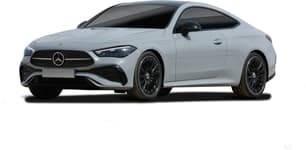
You’re looking at what Mercedes-Benz dubs “The AMG for all occasions”, the CLE 53.
Now, in case you haven’t been paying attention, the CLE replaces both the previous C-Class and E-Class coupes, so we’re talking about a relatively practical two-door four-seater here.
So, 53? Not the full-fat 63 flagship, then (that’s coming eventually), but something that comes close to the slightly more-powerful (and a bit more expensive) Audi RS5 and BMW M4 range-topping alternatives.
Like Goldilocks’ preferred porridge, this particular flavour of coupe is meant to leave well-heeled enthusiasts not too hot or too bothered, meaning it’s been engineered to be refreshingly refined as well as rousingly rapid.
Is the AMG CLE 53 just right, then? Time to find out.
How you define value will determine whether the Haval H2 City is the right small SUV for you. In terms of metal for money it delivers heaps of space, a reasonable standard features list and adequate safety. But it's let down by mediocre performance, sub-par dynamics and a surprising thirst for (premium) unleaded. Brand Finance may rank Haval high on the power index, but the product needs to climb a few rungs higher before that potential's realised.
The AMG CLE 53 4Matic+ is formidable yet friendly, ferocious yet refined and fun yet functional.
Yes, the price is edging up to previous 63 flagship levels, and it can become a bit noisy inside, but the four-seater coupe’s specification, speed, sophistication and balance are compelling reasons to consider this if your shortlist also includes an Audi RS5 or BMW M4.
Note: CarsGuide attended this event as a guest of the manufacturer, with travel, accommodation and meals provided.
Inoffensive but uninspiring is a blunt yet fair summation of the Haval H2 City's exterior design, especially when you think about rivals like the dramatic Toyota C-HR, edgy Hyundai Kona, or funky Mitsubishi Eclipse Cross.
The nose is dominated by a huge, slatted and chromed grille with bright metal mesh behind it, and vaguely Audi-of-10-years-ago shaped headlights either side.
The lighting treatment is elaborate with projector halogen main beams and reflector halogen high-beam units surrounded by a dotted-line string of LEDs looking uncomfortably like aftermarket inserts available via your online auction site of choice.
Standard fog-lights are recessed into a blacked-out area under the bumper, with another line of LEDs, functioning as DRLs, below that. And just to complicate matters, the upper LEDs only illuminate with the headlights, while the lower units come to life when the headlights are off.
A sharp character line runs along the H2's flanks from the trailing edge of the headlights to the tail, with an equally distinct swage line running from front to back, narrowing the car's mid-section and accentuating the bulge of its wheelarches, filled adequately by standard 18-inch multi-spoke alloy rims.
The rear is similarly reserved, the only hint of flash confined to a roof-top spoiler, cool typeface chosen for the prominent Haval badging across the hatch door, and a diffuser with chrome exhaust tips poking through either side.
Inside, the look and feel is early noughties plain, The dashtop is a nice soft-touch material, but there are lots of buttons and old-school analogue instruments combined with a media and ventilation interface that might have been acceptable on a mainstream model 20 years ago.
Don't even think about Android Auto or Apple CarPlay. The tiny LCD screen (sitting below a CD slot) wins the smallest, most basic graphics award. A miniscule scale reflecting the manual air-con's temperature setting is a particular low-light.
A small 3.5-inch screen between the tacho and speedometer displays fuel economy and distance information, but frustratingly no digital speed read-out. Standard cloth trim has a distinctly synthetic but tough feel, while the polyurethane plastic steering wheel is another throwback.
Sure, we're at the budget end of the market here, but be prepared for low-tech design combined with cheap and cheerful execution.
Crisp and aero clean with a handsome fastback silhouette, the CLE’s design is very much in the mould of a modern-day C-Class coupe, but with larger proportions in line with what a contemporary E-Class coupe would look like.
It employs the same architecture as the W205 C-Class and W214 E-Class sedans.
Length, width, height and wheelbase measurements are 4850mm, 1861mm, 1423mm and 2865mm, respectively.
Wearing the AMG suffix means the CLE 53’s body differs in small but important ways to the regular C236 coupes.
The front end, for instance, adopts what Mercedes calls a ‘shark nose’ look, for a suitably more macho visage, with vertical slats in the grille and larger air intakes that ultimately aid cooling and performance.
Meanwhile, the tracks are broader by 61mm at the front and 45mm at the rear, and are matched by mudguards that are 58mm and 75mm wider, respectively. This certainly gives the AMG a hunky appearance.
Speaking of which, further AMG visual titivations include a discernibly larger bulge on the bonnet feeding into (functional) side air vents, along with 20-inch specific alloy wheels, as well as a 'Night Package' I and II, comprising black trim elements all around.
A model-specific wider body kit, lip spoiler, twin pairs of tailpipes, diffuser insert and 20-inch AMG alloy wheels complete the CLE’s gymnasium makeover.
Result? The sleek and muscular body’s extra girth, fatter footwear and darkened highlights make the 53 look as menacing as any AMG forbear, setting a very high bar for the CLE 63 to beat when it eventually surfaces. Great work, Affalterbach!
At 4.3m long, 1.8m wide, and just under 1.7m high the Haval H2 is a big small SUV, and there's plenty of room inside.
Up front, storage runs to a bin (with sliding top) between the seats, two large cupholders in the centre console and a lidded oddments tray in front of the gearshift, as well as a sunglass holder, average-sized glove box and door bins with room for bottles. You'll notice the pennies saved with non-illumination of the sunvisor vanity mirrors.
Rear seat passengers pick up generous head, leg, and importantly, shoulder room. Three large adults across the back will be tight but do-able for short trips. Kids and young teenagers, no problem.
A centre fold-down armrest houses neatly integrated dual-cupholders, there are bins with space for bottles in each door and map pockets on the front seat backs. No adjustable air vents for backseaters, though.
Connectivity and power runs to two 12-volt outlets, a USB-A port and an 'aux-in' jack, all in the front.
Although a strong seller in the small SUV segment, the Mazda3's Achilles heel is its modest 264-litre boot, and while the H2 exceeds that number, it's not by much.
The Haval's 300-litre capacity is way less than the Honda HR-V (437 litres), Toyota C-HR (377 litres) and Hyundai Kona (361 litres). But it's enough to swallow the bulky CarsGuide pram or three-piece hard suitcase set (35, 68 and 105 litres), and (as with all contenders in the segment) a 60/40 split-fold rear seat increases flexibility and volume.
If you're into towing, the H2's limited to 750kg for an un-braked trailer and 1200kg braked, and the spare tyre is a full-size (18-inch) steel rim shod with narrower space-saving (155/85) rubber.
The interior dons a C-Class-in-drag-race do-over. Frankly, the latest – and much more modern-looking – E-Class sedan’s dashboard would have been preferable, however, given its tech-heavy panorama of screens.
For its AMG 53 outing, the cabin boasts an AMG-specific steering wheel with performance mode knobs, a 12.3-inch driver display brandishing a variety of instrumentation styles (including 'Race', 'Sport', 'Classic' and minimal screens) and a multimedia system with track telemetry data within a tablet-style 11.9-inch touchscreen.
There's also electric and heated ‘integral’ sports seats with memory, 'Anthracite' trim elements set against high gloss black inserts, 64 questionable shades of ambient lighting and banging Burmester premium audio with no fewer than 17 speakers.
This is a roomy and well-presented cabin, offering space to spread out up front, a superb driving position, exceptional seat support, quality materials and a decent level of practicality.
Storage is plentiful, most switchgear is within easy reach and the multimedia system is easy to fathom after you’ve taken the time to familiarise yourself with it.
On the other hand, the glossy plastics do not look or feel as elevated as, say, a Porsche’s interior, the air vents feel flimsy to the touch, while trim squeaks were occasionally heard over some rougher road surfaces. It’s not as solid as you’d expect from a Mercedes at this price point.
Rear access is tight due to a slim aperture, as almost all coupes are, but once sat on the contoured rear bucket seats, most adults should find it tolerable unless they’re especially long-legged or over 185cm or so tall.
Further back, a handy 410-litre boot is provided, with a folding rear seat backrest to boost cargo capacity even further, underlying the CLE’s family-friendly packaging.
Note, though, that this is 10L shy of the regular non-AMG models, and smaller than the Audi RS5 (465L) or BMW M4's (440L) boot.
Plus, no spare wheel is available – just a tyre repair kit.
At the time of publication, the Haval H2 City was carrying a drive-away price tag - $19,990 for the six-speed manual version and $20,990 for the six-speed auto (as tested here).
So, you're getting a lot of metal and interior space for your money, but what about the standard features taken for granted in the H2's main competitors?
Included in that drive-away price are the 18-inch alloys, keyless entry and start, reverse parking sensors, (manual) air-conditioning, cruise control, front and rear fog lights, LED daytime running lights, ambient interior lighting, heated front seats, rear privacy glass, and cloth trim.
But the headlights are halogen, the audio is four-speaker (with Bluetooth and single CD player), the safety tech (covered in the Safety section below) is relatively basic, and 'our' car's 'Pewter' (silver metallic) paint is a $495 option.
Equivalent entry-level competitors from Honda, Hyundai, Mazda, Mitsubishi and Toyota will set you back between five and $10k more than this H2. And if you're happy to live without features like a media touchscreen, digital radio, leather accented wheel and gearshift, rear air vents, reversing camera, etc, etc, etc, you're onto a winner.
Starting from $158,900 (all prices are before on-road costs), the 330kW/560Nm CLE 53 4Matic+ is an AMG product with a reputation to uphold. Thus, it comes with performance-enhancement items, like all-wheel drive, four-wheel steering (4WS), adaptive dampers and variable-ratio steering.
Additionally, for Australia, the 'AMG Dynamic Plus Package' is standard, bringing a 12-second over-boost that bumps torque up to 600Nm and special engine mounts that harmonise with the adaptive dampers for better performance response.
There's also a ‘Race’ mode offering maximum power and traction-off settings for track-work shenanigans, a brand-specific steering wheel with fast-access driving-control buttons, performance telemetry data display, galvanised paddle shifters, and 20-inch AMG alloys shod with performance tyres, amongst other goodies.
These come on top of LED headlights (with 1.1 megapixels of light), a head-up display, panoramic sunroof, 12.3-inch customisable digital instrumentation, a driver-orientated 11.9-inch touchscreen display, 64-colour ambient lighting, heated electric front seats, dual-zone climate control, wireless charging, Apple CarPlay/Android Auto integration, 17-speaker Burmester premium audio, powered boot closing, a 360-degree surround-view camera, adaptive cruise control, 10 airbags and Mercedes’ 'Pre-Safe' accident anticipation system. More on that in the safety section below.
Fairly well equipped for the money, then. April 2025 brings a cabriolet version, as well.
Option packs include an $8900 'Carbon Package' with carbon-fibre exterior elements and 'AMG Performance' seats at $5400.
These features are in line with the equivalent Audi and BMW coupes.
And while the pricing is only about $10K shy of the 331kW/600Nm RS5 and around $15K short of the 353kW/550Nm M4 manual flagships.
The latter, in blistering 390kW/650Nm M4 auto guise, starts from $190K, neatly opening up the gap for the coming CLE 63 – and that’s going to come with a V8 hybrid, we hear.
The Haval H2 City (as tested) is powered by a 1.5-litre direct-injection, turbo-petrol, four-cylinder engine driving the front wheels through a six-speed automatic transmission.
Peak power (110kW) arrives at 5600rpm, with maximum torque (210Nm) delivered at 2200rpm.
Under the bonnet is a 3.0-litre, in-line, six-cylinder petrol engine. Mercedes-AMG calls it “double charged”, with a single, 1.5-bar turbo augmented with an electric compressor as part of a 48-volt Integrated Starter Generator (or ISG).
The latter makes 17kW of power and 205Nm of torque, for a system total of 330kW at 6100rpm and 560Nm from 2200-5000rpm. Up to 600Nm is possible thanks to a 12-second overboost.
It also recuperates brake energy, offers “almost imperceptible” stop/start fuel saving and allows for an off-throttle, engine-off ‘sailing’ mode.
Not interested in economy? Tipping the scales at a hefty 2015kg the CLE 53’s power-to-weight ratio is a sparkling 164kW/tonne.
All Australian-bound CLE 53s feature the Dynamic Plus Package, with a launch-control function that helps deliver an eager 0-100km/h sprint time of 4.0 seconds. Top speed is governed to 250km/h.
Drive is sent to all four wheels via a nine-speed torque converter automatic transmission. It can simulate double-declutching and offers variable shift modes according to drive settings.
The AWD system, meanwhile, varies torque from 50:50 front/rear to 100 per cent rearwards.
To aid handling, the 4WS system allows the rear wheels to turn in the opposite direction to the fronts, up to 2.5 degrees at up to 100km/h, and 0.7 degrees in unison with the fronts above that speed.
Keeping things in control is a four-link front and five-link independent rear suspension set-up, with AMG ride control featuring adjustable dampers and sports spring rates.
Claimed fuel economy for the combined (ADR 81/02 - urban, extra-urban) cycle is 9.0L/100km, the 1.5-litre turbo four emitting 208g/km of CO2 in the process.
Not exactly outstanding, and over roughly 250km of city, suburban and freeway running we recorded 10.8L/100km (at the bowser).
Another rude surprise is the fact the H2 requires 95 RON premium unleaded fuel, of which you'll need 55 litres to fill the tank.
Considering the performance on offer, the CLE 53’s 9.6 litres per 100km combined (urban/extra-urban) cycle fuel consumption rating is not too bad. That equates to a carbon-dioxide emissions figure of 219 grams/km. City/highway numbers are 13.2 and 7.6L/100km.
With a 65-litre fuel tank filled with 98 RON premium unleaded petrol, expect an average range of about 685km.
What did we achieve? Driven fairly hard on some of Tasmania’s most beautiful rural roads, the trip meter showed an indicated 9.5L/100km.
Cold weather and internal-combustion engines are usually firm friends. Lower ambient temperature means denser air entering the cylinder (even under the extra pressure of a turbo), and as long as more fuel arrives at the same time, you'll have a bigger bang and more power.
But the H2 City's 1.5-litre four must have missed the memo, because cool morning start-ups result in a distinct reluctance to proceed at normal pace.
Sure, there's forward motion, but pinning the right-hand pedal to the floor won't shift the speedo needle much above a brisk walking pace. Unsettling.
Even after a few minutes, when things settle into a more predictable pattern, this Haval hovers at the sluggish end of the performance spectrum.
Not that any of the compact SUVs it competes with are rocketships, but you can generally expect a turbo-petrol engine to serve up a decent dose of low-down grunt.
However, with a maximum output of 210Nm delivered at a relatively high 2200rpm the 1.5-tonne H2 won't be threatening the land speed record anytime soon.
Suspension is strut front, multi-link rear, with the H2 City riding on (235/55x18) Kumho Solus KL21 rubber, and on typically pock-marked and bumpy urban roads ride quality could be better.
The steering displays some nervousness on centre, which combines with a lack of road feel and a mildly disconcerting top-heavy sensation in cornering. It's not that the car lurches or suffers from too much body roll; more that something isn't quite right in the front-end geometry.
On the upside, although firm, the front seats are comfortable, the exterior mirrors are nice and big, overall noise levels are moderate, and the brakes (vented disc front / solid disc rear) are reassuringly progressive.
On the downside, the media system (such as it is) is woeful. Plug your mobile device (mine's an iPhone 7) into the car's single USB port and you'll be met by a 'Loading-USB error' message, the heating and ventilation read-outs on the letterbox slot screen are a joke, and to top it all, select reverse and the audio cuts out altogether.
The new AMG CLE 53 might look much like several of its AMG 63 predecessors, with its brutish stance and bulging bits, but does the German performance coupe drive and feel like an AMG flagship?
With a 63 range-topper (as yet unconfirmed) in the pipeline, that’s a bit of a moot point here, because that will be an altogether harder, faster and more expensive proposition.
But we can tell you that, even without the bellowing V8 of old, the 53 does a damn-fine impression of a charming high-performance GT with the straight-six .
At the heart of the matter is the inline six-cylinder turbo-petrol engine incorporating an electric compressor working the lower revs for punchy off-the-line acceleration and a big twin-scroll gas turbo for more-instantaneous responses further up the rev range.
This makes for an impressively rapid real-world tearaway. Not brutally fast in the way even middling EVs can manage to be nowadays, but still with an urge and character that puts you in the mood for speed.
The steering, meanwhile, is alert, faithful and remarkably reactive, with that 4WS rear end tucking in neatly through the tight turns and twisty bits, allowing a feverish pace with a pleasing grace to be maintained.
Assisting that immersive agility is an almost unshakable sense of grip – no surprise given the variable-torque AWD as well as the late-summer warmth and dryness of the roads we were testing on.
Yet, even beyond these factors, it’s clear the AMG’s immense roadholding provides a reassuring layer of confidence and control.
No opportunity was provided to unleash the CLE 53’s full fury on a track, so we can’t tell you how easily sideways or catchable this thing steers in Race mode with all the safeties turned off, but this coupe’s dynamic bandwidth was obvious during the all-too-few occasions we did manage to fang it.
Another positive is the suspension’s ability to soak up the bumps without too much disturbance inside, allowing for easy and effortless cross-country touring. No truly terrible roads were encountered during our half-day in this civilised beast, though, so we’ll have to reserve our judgement on whether this is the comfortable all-rounder that Mercedes claims it is.
What we can tell you is that there is too much road-noise intrusion inside an otherwise isolated cabin. And we’re no fans of the lack of a spare wheel – an absolute necessity in Australia.
Still, first impressions are very positive.
Its maker calls the CLE 53 the AMG for all occasions, and we cannot argue with this logic.
That there’s a decent wad of thrills and emotion on offer to counterbalance this car’s comparative refinement and civility just proves there is a place for the penultimate version of this series.
In terms of active safety the H2 City ticks the 'cost-of-entry' boxes, including ABS, BA, EBD, ESP, rear parking senors, tyre-pressure monitoring and emergency brake hazard lighting.
But forget about more recent systems like AEB, lane keeping assistance, blind spot monitoring, cross traffic alerts or adaptive cruise. And you don't get a reversing camera.
If a crash is unavoidable the airbag count runs to six (dual front, dual front side, and dual curtain). And there are three child restraint/baby capsule top tether points across the back seat, with ISOFIX anchors on the outer two positions.
The Haval H2 scored a maximum five-star ANCAP rating in late 2017, a rank it would not replicate when assessed against 2019's more challenging criteria.
Unlike its maximum five-star ANCAP-scoring C- and E-Class cousins, the CLE comes with no rating.
But the brand’s boundary-pushing reputation on this front does hold the coupe in good stead, backed up by a slew of active, passive and driver-assist safety features.
These include wide-spread autonomous emergency braking (AEB) and lane-support systems, as well as Mercedes’ 'Pre-Safe' tech that anticipates a crash and prepares the car for impact.
Other tech includes 'Active Lane Change Assist', 'Active Lane Keep Assist', 'Cross-Traffic Assist', blind spot monitoring, active brake assist, traffic sign assist, active-distance-assist, adaptive cruise control, evasive manoeuvre support, 360-degree camera views, 10 airbags, adaptive high beams and a 1.1-megapixel LED lighting set-up.
In other contemporary Mercedes models, AEB operating parameters are roughly between 7.0-80km/h for pedestrians and cyclists, and from about 7.0-250km/h for vehicle-to-vehicle, while the lane-keep support systems operate between about 60km/h and 200km/h.
ISOFIX child-seat anchorages are located in the front passenger seat and two in the rear seats.
Haval covers all new cars it sells in Australia with a seven year/unlimited km warranty with 24-hour roadside assistance provided for five years/100,000km.
That's a strong statement from the brand, and well ahead of the major players in the mainstream market.
Service is recommended every 12 months/10,000km, and no capped-price servicing program is currently in place.
Somewhat average for most mainstream and luxury brands, Mercedes-Benz offers a five-year/unlimited km warranty, with five years of roadside assistance.
Intervals are every 12 months or 25,000km, and while no capped priced servicing is offered, pre-paid three-, four- or five-year service plans are available, ranging from $4190, $5310 and $7760, respectively at the time of publishing.