What's the difference?
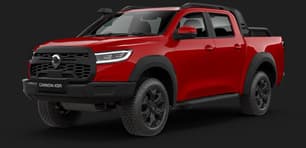
The Cannon XSR is GWM’s new top-shelf ute variant.
This dual-cab 4WD ute is intended as an off-road-focussed vehicle and has visual and mechanical upgrades over the rest of the Cannon stable, including part-time 4WD (not the full-time 4WD on GWM’s lower-spec Cannons), a front differential lock (in addition to the existing rear diff lock), raised air intake (aka a snorkel) and Cooper Discoverer AT3 all-terrain tyres.
It’s priced from $52,990 drive-away, so costs about $7500 more than you’d pay for the standard Cannon X on which this special edition ute is based. But it still undercuts similarly-equipped top-spec Ford Ranger and Toyota HiLux utes by about $20,000.
So, with twin lockers, a snorkel, underbody protection and all-terrain tyres, is the GWM XSR worth the extra cash?
Read on.
Chery’s explosive growth in Australia has been thanks to its range of affordable SUVs in some of Australia’s most in-demand categories.
Lately the brand has been expanding into the most in-demand segment of them all - hybrids. To that end, the Tiggo 4 Hybrid seems to tick a lot of boxes.
It’s relatively affordable, looks modern and offers plenty of features. Plus, unlike other Chery hybrids, it’s not a plug-in.
However, to see why I found the Tiggo 4 Hybrid a little disappointing - read on.
In a very competitive ute market, the GWM Cannon XSR represents plenty of bang for your buck, but it’s just not as refined as you’d hope.
It should be better at this price-point, especially when it’ll be unfavourably cross-shopped with lower-spec variants in the Ford Ranger, Isuzu D-Max and Toyota HiLux line-ups.
It’s a nice enough vehicle on-road, and the XSR is an effective 4WD on the dirt without ever being truly exceptional – but that’s fine for those who want to save big bucks and still drive away in a well-equipped twin-locked off-road vehicle.
If you’re just looking for an affordable hybrid which will save you money at the pump, the Tiggo 4 will do the trick, but there are so many little things which could be better here, it’s evident you’re getting what you’re paying for.
This makes the Tiggo 4 hybrid a bit of a let down, because the other Cherys I’ve driven recently have been pleasantly surprising given their price-points, not to mention the price-gap between the Tiggo 4 and many of its rivals is nowhere near as large.
The XSR is 5439mm long (with a 3230mm wheelbase), 1958mm wide, and 1918mm high. It has a listed kerb weight of 1965kg.
It looks like the mongrel child of a HiLux, Ranger and D-Max – in a good way.
The wider-than-standard wheel track, as well as the snorkel, sports bar, substantial bash plates, tyres and even red brake calipers add to this ute’s presence.
On the outside, I think the Tiggo 4 Hybrid is pretty generic and inoffensive. It shares its 'box-on-wheels' aesthetic with cars like the outgoing Mitsubishi ASX and Hyundai Venue, which, to be fair, have been strong sellers.
It might not be an eye catcher, then, but there’s something to be said for not trying anything controversial, and this is pretty consistent across Chery’s range. In fact, compared to some brands in the market, Chery is doing a solid job of design consistency for its mainline SUVs.
Highlights on the outside include the enormous grille and contemporary LED light strip across the rear.
On the inside things also look pretty swish for this compact SUV category. The seats immediately jump out as a highlight, big and lavishly trimmed in comparatively soft synthetic stuff. The glitzy steering wheel and dual-screen layout continues from other Chery products and the dash design is tidy, if a little generic.
The XSR’s five-seat interior is a neat and roomy space but, in line with most utes at this price-point, if you scrutinise it in a critical way you soon discover that some parts feel a bit cheap and flimsy, such as some buttons, dials and switches.
Up front there are two USB ports, a wireless charging pad, a 12V plug and a capacious centre console.
A pair of cupholders can be concealed under a sliding cover and the storage bin is on the right side of big.
The driver gets a six-way power-adjustable seat; the front-seat passenger gets four-way power adjustment. Both seats are comfortable without being too plush.
Second-row passengers get a firm but comfortable seat and amenities include a USB port, a 220V plug, and a fold-down centre armrest.
The second-row seat base can be folded up and out of the way to make room for more gear if only two people are travelling.
Build quality is generally okay, part from the aforementioned flimsy-feeling buttons.
The XSR’s business end, the tub, has a durable-looking tub liner, tie-down points and a handy pop-out step hidden in the top of the tailgate.
But it's worth noting this ute’s tailgate can’t be locked.
I can see this car having a lot of wow factor on a dealer forecourt but up close things are less good. The software on the screens is pretty ordinary; hardly the sharpest, fastest or most logically laid-out. There’s a selection of clumsy-looking themes, and while the multimedia portion has a logical smartphone-style main menu, beneath lies an array of confusing and inconsistently-labelled sub-menus.
The digital dash could be smoother and better looking and it’s a bit confusing to use with the poorly labelled buttons on the steering wheel.
The centre console area is finished in a gloss finish, which is easy to scratch or smear with fingerprints. Up front underneath the main screen is an entirely separate dot-matrix style climate control panel with actual physical buttons. It looks a bit clunky compared to some other solutions on the market, but at least it’s clearly labelled and straightforward to use.
Somewhat infuriatingly, though, interacting with this climate panel brings up a menu on the touchscreen which you don’t need and it takes several seconds to go away. Why?
The cabin is reasonably practical from there, though. There are decent bottle holders in each front door and a further two atop the console. There’s a pass-through beneath, good for handbags and the like. There are some strange additions, like an upright holster with rubberised sides which seems to be for a phone, and behind the shifter there’s a key fob-sized cut-out, but it’s gloss finished, so it will scratch if you actually use it.
The wireless phone charger is tucked away underneath, which makes your phone hard to get at in a pinch, and easy to forget when you exit.
Ergonomically, this car is a bit strange. The seat base is very high, so for me (at 182cm tall) even with the driver’s seat set to its lowest position, my head feels close to the roof. Plus, I’m peering down on the instruments, rather than have them at a comfortable height.
However, there are soft-touch surfaces adorning the doors, which can’t be said for every car in this segment and the rear seat hasn’t been forgotten, either.
I fit pretty comfortably behind my own driving position in terms of knee and headroom and the plush seat trim continues.
There’s a nearly flat floor, so while it’s a reasonably narrow vehicle, at least someone in the centre position will have somewhere to put their feet.
On the amenity front for rear passengers, there’s a small bottle holder in each door, pockets on the backs of the front seats, a weird storage tray and USB port on the back of the centre console and a drop-down armrest with two shallow cupholders. There’s just a single adjustable air vent for rear passengers, so they’ll have to fight over who gets the airflow.
The boot surprised me. It looks tiny, but the brand claims it weighs in at 470 litres. On top of this, the floor is a strange shape because the 12-volt battery is under the floor and doesn’t quite fit level.
However, when I went to load the full three-piece CarsGuide test luggage set, I was surprised to find it fit snugly, with the tailgate able to shut without a problem. I was also impressed to find a space-saver spare wheel and not just a repair kit under the floor.
The XSR has a manufacturer suggested retail price of $52,990 drive-away.
Standard features include a 9.0-inch multimedia touchscreen system (with Apple CarPlay and Android Auto), a 7.0-inch digital driver info display, quilted leather seat trim, quilted leather door trim, 18-inch black alloy wheels, a sports bar, an assisted tailgate (with a pop-out step) and roof rails.
It also has LED headlights with LED DRLs, side steps, powered mirrors, keyless entry, push-button start, power-adjustable and heated front seats, a leather steering wheel, single-zone climate control air conditioning, an auto-dimming rear view mirror, tinted rear glass, and a six-speaker audio system.
As well, the XSR gets a part-time 4WD system (with 2WD high-range, 4WD high-range and 4WD low-range), rather than full-time 4WD, which is on lower-spec GWM utes; a front differential lock (in addition to the existing rear diff lock) and Cooper Discoverer AT3 all-terrain tyres.
It also gets red brake calipers, an underbody bash plate, wheel arch flares, and a sunroof.
Elsewhere, it gets steel front and rear bumpers and a new black grille.
The Tiggo 4 Hybrid we’ve been driving for this review is the top-spec Ultimate, which wears a price-tag of $34,990, drive-away.
The surprising thing about this is how close it is to rivals. Yes, the Tiggo 4 Hybrid is still more affordable than most of its contemporaries, but it’s not by the same massive margin as its larger models like the Tiggo 7 PHEV ($39,990), which undercut the outgoing Mitsubishi Outlander PHEV by almost $20,000.
Instead, the Tiggo 4 Hybrid only just slips under a Toyota Yaris Cross GX hybrid ($34,790) although the margin increases considering Chery’s offer is drive-away. It also continues to look impressive compared to popular hybrid alternatives from more traditional automakers, like the exxy Honda HR-V (from $39,900) and the sightly larger Hyundai Kona (from $36,950).
The Tiggo 4’s value proposition is also complicated by how much competition there is in this small SUV space. A Haval Jolion hybrid, for example, can be had at $32,990, drive-away and is a slightly larger vehicle with a similar warranty offering, while MG’s ZS Hybrid+ can be had from $33,990, also drive-away, giving you plenty of things to think twice about.
Still, compared to those base prices for rivals, Chery is offering a top-spec and the Tiggo 4 Hybrid is pretty well equipped in this Ultimate form.
On the outside there are some expected things like 17-inch alloys and LED lighting, while on the inside the Tiggo 4 punches above its weight with things like dual 10.25-inch scregens for the multimedia and digital dash, wireless Apple CarPlay and Android Auto, synthetic leather seat trim with power adjust for the driver and heatin in the front two positions, dual-zone climate, a sunroof, ambient interior lighting, a wireless phone charger and a six-speaker stereo system.
There’s also a pretty good 360-degree view parking camera, walk away locking and auto-folding wing mirrors.
At this price, and in this segment, you generally have to spend a lot more to get this level of kit.
The XSR has the Cannon’s 2.0-litre four-cylinder turbo-diesel engine that produces 120kW at 3600rpm and 400Nm from 1500rpm to 2500rpm.
It has an eight-speed automatic transmission.
As mentioned, the XSR has part-time 4WD – with 2WD high-range, 4WD high-range and 4WD low-range – rather than the full-time 4WD set-up that’s in standard Cannons.
The Tiggo 4 hybrid variants pair a 1.5-litre four-cylinder petrol engine with a relatively large electric motor housed in a transaxle-style unit driving the front wheels. In effect, it's continuously variable without being a much-derided CVT auto.
Weirdly, Chery doesn’t state combined power figures, just separate ones for each power source, with the engine producing 72kW/120Nm and the electric motor producing 150kW/310Nm.
You’ll note the electric motor is much more powerful than the engine, which has an effect on the way this car drives.
The Cannon XSR has a listed fuel consumption of 9.4L/100km on a combined cycle.
Actual fuel consumption on this test, from pump to pump, was 11.2L/100km but, as is the nature of my testing, I did a lot of low-range four-wheel driving.
The Cannon XSR has an 78-litre tank so, going by that fuel figure above, you could reasonably expect a driving range of about 696km from a full tank.
Note: Drop 30km to 50km from any vehicle’s total calculated fuel-range figure for a better idea of that vehicle’s safe touring range – so, following that advice, the above driving range figure (696km) would become 666km after a 30km safe-distance buffer has been subtracted.
Also, remember that numerous other factors affect your fuel consumption and so impact your driving range, including how much extra weight you have onboard (passengers, camping gear, etc), whether your vehicle is fitted with any aftermarket equipment (bullbar, spare-wheel carrier, etc), whether you are towing (a camper-trailer, caravan, or boat, etc), your vehicle's tyre pressures, and the conditions.
The whole point of this plugless hybrid set-up is fuel efficiency and on paper it’s not as good as some rivals.
The official combined cycle (urban/extra-urban) economy number is 5.4L/100km, but we easily beat that claim on test with a figure of 4.5L/100km. Worth noting that average came primarily from urban and expressway driving. It seems the hybrid transmission might require significantly more combustion input in freeway scenarios, hence the higher official claim.
A 51-litre fuel tank translates to a 944km range using the official economy figure and around 1100km based on our on-test average.
If you’re not expecting a dynamic, sporty driving experience from the Cannon XSR, then you won’t be disappointed.
I’m enjoying the fact that off-road vehicles from China and India are improving all the time but there are significant trade-offs when opting for a much cheaper version of the ute you actually want.
The XSR is not an insubstantial ute, but that doesn’t excuse its less-than-ideal steering (which feels too loose) or its stiff ride on upgraded suspension which, even though it increases wheel travel (for 4WDing – more about that later), seemingly hasn’t been tuned to suit the XSR’s bigger tyres, wider wheel track and greater bulk than its lower-spec stablemates.
Also, this ute has an unwieldy turning circle of 13.7m, which makes it an interesting vehicle to manoeuvre along busy urban streets or through a bustling car park.
This is a well priced ute if compared to similarly equipped, much more expensive utes, but that doesn’t excuse its touchy throttle and thrashy transmission.
However, its engine, which can feel underdone when challenged, has a relaxed feel about it when open-road cruising and if you aren’t putting too much pressure on it you likely won’t think it’s much of a let-down.
Overall, the XSR does okay on sealed surfaces, without ever getting anywhere near great – it’s simply not as refined or compliant as it could – or should – be.
On the dirt track leading to our 4WD test track, the XSR was very skippy over corrugations and tended to thump through potholes.
This ute does go well off-road though when it comes time for low-range 4WDing but, equipped with front and rear diff locks, that’s to be expected.
Off-road traction control and other systems including hill descent control, are adequate without being as seamlessly smooth as the equivalent systems in more expensive vehicles.
It also has 'Crawl Mode' (allows for no-pedal, low-speed driving) and 'Turn Assist' (which brakes the XSR’s inside rear wheel to reduce the ute’s turning circle on traction-compromised surfaces).
The over-sensitive throttle is far from ideal during low-speed low-range 4WDing when you need absolute control for safe driving, but I did become used to it – or at least I put up with it.
As mentioned earlier, the upgraded suspension has boosted wheel travel, which means you’re more than likely able in the XSR to stretch a tyre to the dirt for better traction and controlled forward progress.
The XSR’s Cooper Discoverer AT3 all-terrain tyres help, especially when the dirt becomes sticky mud that would gum up a lesser tyre, and we had no strife getting up and over one of our more severe set-piece hill climbs on that rubber.
All in all, the XSR is a capable twin-locked 4WD without ever being exceptional – and that’s fine.
The Cannon XSR has towing capacities of 750kg (unbraked) and 3000kg (braked).
The Tiggo 4 is a strange one. This hybrid one in particular has me in two minds.
My initial impression was not a good one. The high seating position makes you feel as though you’re sitting on the car rather than in it, and the overly electrically-assisted steering removes you from feeling what’s going on at the front wheels.
Even the pedal feel is wooden, with the car having to modulate the electric and combustion drive components and blended regenerative braking at arms length, leaving the driver with little in the way of feedback.
The ride isn’t one of the worst I’ve had in recent years, with an overall soft enough edge to it, but it also doesn’t feel very sophisticated, and harsher over the rear than it is in the front, giving it an unbalanced character. On top of this, our test car had a couple of intermittent rattling noises in the B-pillar (around where the belt retainer is) as well as somewhere in the rear.
Acceleration is pretty impressive at speeds under 80km/h, however, with plenty of power instantly available from the electric motor, although this has the side-effect of being able to easily overwhelm the Sailun tyres this top-spec Tiggo 4 ships on.
One thing I quite like about the Tiggo 4, however, is how smooth it is. The seemingly primarily electric drive is excellent, particularly at lower speeds where this car is at its best, surging forward largely in silence with no annoyances from a fiddly transmission.
Even the way it blends the combustion power in is seamless, even compared to a Toyota, for example, with the engine distantly buzzing away only when required.
It's impressive that unlike the MG3 and MG ZS which have similarly powerful electric motors but run out of juice and lose a bit of punch when the hybrid battery is low, the Tiggo 4 does a better job of managing its battery reserve level, making sure the strong electric power is always available. This might mean the engine idles higher and longer, but with decent sound deadening, it’s not something you notice much.
Overall the Tiggo 4 is okay to drive. The hybrid components impressed me enough, but these are tarnished by sub-par driver feedback and inputs, handling, tyres and some ergonomic issues.
The Cannon range has the maximum five-star ANCAP rating from testing in 2021, however the Cannon XSR is not covered by this rating.
Standard safety gear on the XSR includes seven airbags, AEB (sans pedestrian detection) forward collision warning, lane-departure warning, lane-keep assistance, adaptive cruise control, traffic sign recognition, rear parking sensors, a 360-degree camera and tyre-pressure monitoring.
It does not get front parking sensors, lane-change assist or a door-open warning.
The Tiggo 4 has a lot of safety kit for this segment and for such an affordable price, so much so that combustion versions have a maximum five-star ANCAP safety rating (although this hybrid variant didn’t exist when it was tested).
Active equipment includes all the key stuff like auto emergency braking, lane departure warning, blind-spot monitoring with rear cross-traffic alert, adaptive cruise and auto high beams.
The 360-degree parking camera is a nice touch and there are seven airbags (dual front, side, curtain and centre).
Is the active stuff annoying? Yes, but you can most of it off and the car remembers your choice next time you start it, so you can turn the most egregious offenders, like lane departure warning, and speed limit assist off.
Even when they’re on they are okay, but I found the driver monitoring to be the most annoying of the usual crop, pinging at you constantly, sometimes for reasons beyond my comprehension.
The one you can’t seem to permanently turn off is driver attention alert, which is annoying because it is this car’s most egregious offender, chiming at me for even daring to peer down at the digital dash to see how fast I’m going.
The XSR is covered by a seven year/unlimited km warranty.
The first service is scheduled at the six-month/5000km mark (and costs $260), then every 12 months or 10,000km, with each service costing $360 a pop.
The Tiggo 4 Hybrid is offered with a seven-year/unlimited km warranty, seven years of roadside assist and seven years of capped price servicing with an eight year and unlimited kilometre warranty for the high-voltage battery.
The servicing is required once a year or 15,000km, with each service costing $299 for the first five years. It jumps from there, with a particularly expensive service at $736.62, dragging the yearly average for the warranty period up to $360 a year.
It’s a little pricier than Toyota, for example, but very reasonably priced compared to most.