What's the difference?
The Genesis GV70 Electrified Signature Performance has had a meaningful update, and it’s not just a light refresh.
This latest version brings significant improvements to technology, safety, and design.
With only one grade available, this review looks at whether it’s the smart choice for anyone wanting to step into a luxury electric medium SUV.
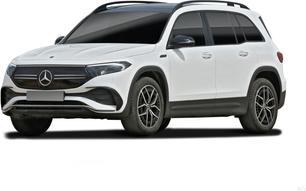
Iconic/gangster G-Class Geländewagen aside, is there a cooler-looking Mercedes-Benz SUV than the GLB and so – by association – its electrically-powered EQB twin?
And while we're asking questions, does the electric connection make the EV version even more so?
Let’s take a deeper dive into the new EQB – a striking SUV that Mercedes reckons will be its bestselling EV for the foreseeable future. Because there's much more to this Benz than meets the eye.
The updated Genesis GV70 Electrified Signature Performance is packed with features, effortless on the road, and backed by fantastic ownership value. This isn’t just polished luxury, it’s smart luxury, making it a vehicle worth serious consideration. The only caveat? I’d opt for a different interior colour to white if you have kids or pets.
The EQB is a likeable yet complicated machine.
On one hand, the high pricing is a real hurdle, even in the base 250, while the 350 4Matic costing the wrong side of $110K driveaway can’t even be had with seven seats. What is the point of it?
On the other, though, the EQB is roomier than its appearance suggests, way lovelier inside than anticipated, and – especially after allowed to really be driven hard and fast – a whole lot more Mercedes-Benz in the way the 350 4Matic moves, steers, grips, rides and stops.
As a result, we’d skip the capable but bland 250 and try to haggle hard on the price of the altogether too-expensive yet compelling 350 4Matic instead. It’s the EQB to be in.
Although slightly smaller than some rivals at 4715mm long and 1630mm tall, the GV70 comfortably fills out its medium SUV stature with a pronounced nose, wide stance, and pillowed, swoopy rear end. The update adds an exclusive reverse G-Matrix pattern in the grille, new 20-inch alloys, and a rear aerodynamic spoiler for a more distinctive presence.
Inside, there are three interior colours to choose from. Our test model’s white leather looks stunning but isn’t the most practical choice for families, pets, or anyone frequently navigating unpaved roads. A rainy day could make you anxious! The quilted leather upholstery shines visually, complemented by the new ‘Milky Way’ ambient lighting panels in the doors.
The electrified platform gives the cabin a flat floor, which improves legroom for middle-seat passengers, though it does mean there’s no space for a spare tyre in the boot.
Other notable updates include intelligent Matrix LED headlights, smart key sensors on all door handles, and new paint options. I particularly like the hidden charging port cover integrated into the grille; a subtle, clever touch. Overall, the GV70 is a handsome SUV.
The EQB does not employ a dedicated EV architecture – sometimes referred to as a ‘skateboard’ platform – like the Tesla Model Y, or for that matter the brilliant Hyundai Ioniq 5, Kia EV6 and Genesis GV60 at around the Benz’s price points.
By this, we mean that it was originally designed as an internal combustion engine (ICE) vehicle. In this case, what lies beneath is the MFA2 platform, first seen in the redesigned A-Class hatch back in 2018, and applied to all transverse-engined Mercedes models since.
The upshot here is that there are some compromises as a result compared to the aforementioned EV-only alternatives, namely concerning packaging as well as weight distribution in some cases.
Like we said earlier, the EQB’s design is eye-catching and quite handsome. It is clear that the success of the GLB that spawned it is partly attributed to the chunky, almost function-over-form tall-boy utilitarian styling. That ‘W’ shaped window-line kink is an interesting visual feature too.
The changes from GLB to EQB do give the EV definite points of difference, from the front-end’s black flat panel and fibre optic light that connects the (blue-highlight) headlights, to the curved strip LED tail-lights and bumper-sited numberplate mount.
We reckon the 20-inch AMG turbine wheels really do enhance the EQB aesthetically as well, but of course they’re an option on the 250. Though probably not in Gold Rose.
The GV70 Electrified Signature Performance feels spacious and comfortable front to back. Up front, the seats are thickly padded and packed with features, making it easy to find a good driving position. The electrically adjustable steering wheel adds to the ease, and the 172mm ground clearance with wide door openings makes getting in and out effortless.
Storage up front is a bit limited. The middle console and glove box handle most of the load, while door drink holders are slim. I do like the dedicated phone tray and sunglasses holder, which add some practicality to everyday use.
The 27-inch multimedia and instrument cluster display is sharp, high-tech and intuitive, while the responsive touchscreen and wireless Apple CarPlay/Android Auto make connectivity easy. The system includes built-in sat-nav, and you can customise it to fill the full screen while keeping a small speedo widget visible.
Charging is well-covered with two USB-C ports per row, a wireless charging pad, a 12-volt socket and a 250-volt domestic plug in the boot. Small practical touches like extendable sunvisors, manual rear sunblinds, smart key sensors on each door and the ability to move the front passenger seat or operate the boot from the driver’s seat add extra convenience.
In the rear, legroom is good and while I’m comfortable behind my driving position at 168cm, taller passengers may need to shuffle seats to optimise comfort. Seat cushioning is excellent, and the outboard seat heaters are a welcome touch. The bench is wide enough for three adults for short trips, and families will appreciate the two ISOFIX child seat mounts and three top-tether anchor points. Amenities include climate control, rear air vents, sunblinds and charging ports, although storage is limited to a couple of cupholders and map pockets. The pull-down armrest sits a little low for me, but my kid has no concerns.
Boot space measures 503L with all seats in place, the smallest compared with nearest rivals. That said, it easily accommodates my family of three’s groceries and school gear. There’s a small underfloor pocket for the tyre repair kit and home cables, plus a 22L frunk for extra storage. The powered boot lid is a practical convenience I always appreciate.
As with the popular GLB that spawned it, there’s more to the EQB than meets the eye.
Photos mask the German electric vehicle’s considerable length and height as well as the substantial space offered inside, giving the Mercedes a handy advantage compared to premium alternatives like the Volvo XC40 Recharge, the Genesis GV60 and BMW’s recently announced (and quite handsome in the flesh) iX1 due early next year.
In fact, the EQB’s lengthy 2829mm wheelbase accommodates the batteries as well as impressive cabin packaging flexibility. Its 4684mm body is actually 26mm longer and 37mm higher than the larger, current-shape (X253) GLC, though width is identical to the EQA, making this a long, tall but quite narrow SUV proportionally speaking.
That expansive feeling is boosted by deep side windows offering reassuring all-round vision, boosted by an excellent driving position. All launch vehicles had the AMG sports seats (optional on the EQB 250, so we can’t speak for the base model), but as tested, they provided hours and hours of comfort and support. Loads of adjustability also help.
The EQB’s dash design is attractive and contemporary, though it can also seem daunting at first, requiring time to learn and understand where all the switchgear and controls are. The ‘Hey, Mercedes’ voice command mostly works well, too, and can provide additional tuition. The multimedia screen can be swiped like a tablet/iPad, or controlled via a fiddly touchpad on one of the steering wheel spokes.
Once mastered, the layout is logical and operation clear… with the exception of the drive selector on the right-hand side, which can be confused for an indicator and so knocked out of ‘gear’ and into Neutral on a regular basis. This has been a two-decade-long criticism of Mercedes models.
As with most MFA2 vehicles, the interior design and quality are a big step forward compared to earlier efforts. Multi-configurable digital instrumentation (including an elegant uncluttered mode), gorgeous turbine-look vents, a row of classy toggle switches for the main buttons and a great steering wheel are highlights to behold. Storage seems endless, reinforcing the practical nature of this cabin.
Speaking of which, stepping into the rear (second row) seats further underlines the EQB’s spaciousness. Entry/egress is easy due to wide-opening doors, taller folk should find ample room for knees, legs and (especially) heads, and the (slightly reclinable) backrest does its job. Comfy if firm cushions also slide forward (by up to 140mm) when required.
That’s to aid third-row access (where applicable). To that end, the second-row seats also tilt to allow people to squeeze past. Note, though that this is really a kids-only area, rated for occupants no taller than 1.65 metres. Surprisingly cosy, both chairs are OK for short trips, but longer ones would be a stretch too far except for the smallest passengers.
Keep in mind that all outboard middle and rear seats where fitted have ISOFIX latches for child seats.
Luggage space is another EQB bonus, offering 130 litres with all seven seats up, or 495L with the third-row folded. Drop the middle row and there’s 1710L (or 1620L in seven-seater versions). These figures are between 20L to 60L down compared to the GLB.
Note, too, there is no spare wheel fitted. Just a tyre-repair kit.
The updated Genesis GV70 Electrified Signature Performance comes in a single, well-equipped grade, priced from $132,800 before on-road costs. That puts it between two of its closest electric rivals - the Audi Q6 quattro e-tron at $122,500 and the Porsche Macan 4 from $134,400. Our test car also includes features that would typically cost extra on other brands, adding extra value.
The update brings significant tech upgrades, including wireless phone mirroring, a 27-inch OLED multimedia display, a new operating system with over-the-air software and firmware updates, a colour head-up display, 16-speaker Bang & Olufsen audio and a UV-C sanitiser for the middle console (the last one a little gimmicky for me).
The other technology is well-rounded with the addition of key sensors on all doors as well as keyless start, remote parking aid (via keyfob), three customisable driver profiles accessed via fingerprint, satellite navigation, a digital rear-view mirror and tri-zone climate control.
Inside, the Signature Performance feels distinctly premium. It features quilted Nappa leather upholstery, leather trims, a suede headliner, a panoramic sunroof and a powered tailgate. The front seats are electric, heated, ventilated and have massage and memory functions, while the rear outboard seats and electric steering wheel are also heated.
Put simply, there’s a lot included as standard.
Tricky one, this.
Kicking off from $87,800 (all prices are before on-road costs), the EQB 250 front-wheel drive is nearly $24,000 more expensive than the 1.3-litre turbo petrol-powered GLB 200 FWD equivalent.
From a numerical power-output point of view, however, the GLB 250 4Matic (which adds a 2.0-litre turbo petrol engine and all-wheel drive) only costs $10,265 less, which evens things out a bit more.
But wait. To match the GLB 250 4Matic spec, you’ll need to tick the $2900 third-row seats option box in the EQB 250, while AWD is unavailable, even as an option.
An electrified future comes neither cheap nor without compromise, no matter how much you frame it.
At least that $87,800 (which sits neatly between the EQA and EQC EV SUVs) does bring some interesting technology, starting with a 140kW electric motor mounted up front, as well as a sizeable 66.5kWh battery with a rated range of up to 371km (WLTP).
For more power and AWD, you’ll need the EQB 350 4Matic priced from $106,700, adding a second, rear-mounted electric motor for all-wheel-drive traction, upping the power output ante to 215kW, though range drops slightly to 360km.
But the latter is not available in seven-seat form as in some overseas markets, due to weight-related packaging safeguards. Sorry. It’s 250 or nothing if you need a third row.
On the safety front, you’ll find Mercedes’ Driver Assistance Package that includes autonomous emergency braking, blind-spot monitoring, lane-keep assist and adaptive cruise control, as well as evasive steering and a ‘Parking Package’ featuring front and rear parking sensors and a surround-view camera.
Both models also boast LED headlights with high-beam assist, keyless entry/go, a Nappa-sheathed leather wheel, two 10.25-inch digital screens (for instrumentation and multimedia touchscreen), artificial leather upholstery, electric and heated front seats, dual-zone climate control, ambient lighting, ‘Hey, Mercedes’ voice control, a 10-speaker audio system, digital radio, wired Apple CarPlay/Android Auto, a wireless smartphone charger, a sensor-activated powered tailgate and alloy wheels (19-inch on 250 and 20-inch on 350 4Matic).
Keep in mind too that adaptive dampers are standard across the range.
Along with that second motor and AWD, the EQB 350 4Matic also adds a panoramic sunroof, sports seats, microfibre trim inserts, a flat-bottom steering wheel, illuminated door sills, a top-stitched dash and an AMG body kit.
For its first year on sale, the Edition 1 ($9100 extra on 250 and $3900 more on 350 4Matic) ushers in the AMG body kit on 250, Gold Rose 20-inch alloys, a Night Package with darkened highlights, illuminated sills, unique colour leather trim and vents, a different key, AMG mats and backlit interior elements.
Buyers of the EQB 250 can also choose other packs including an AMG Line Sports Package for $4300 and a $3000 Vision Package brandishing a Burmester audio upgrade and sunroof, while both models can be had with a $2500 MBUX Innovation pack offering a head-up display, MBUX Interior Assist that ‘senses’ hand gestures for the touchscreen and other functions, as well as MBUX Augmented reality for the standard navigation system.
At these prices, we'd argue they ought to be standard on every EQB...
There’s also a Mercedes-endorsed Wallbox option from $1710 if your home/work residence qualifies, bringing a Type 2 AC Charger, 22kW, single-phase and three-phase charging. A free Chargefox subscription is also expected to be announced shortly.
Direct, all-electric EQB rivals are very thin on the ground. Those optional third-row seats on the 250 are unique in the sub-$100K EV SUV field, with only the larger and more-expensive Tesla Model X offering the same. For now.
The EQB 350 4Matic, meanwhile, might offer a surprising amount of space and practicality, but at its six-figure starting price, it seems expensive for what you get.
The GV70 Electrified Signature Performance is a fully electric SUV with dual motors, one on each axle, producing a combined 320kW of power and 605Nm of torque. Activate Boost Mode, and those numbers climb to 360kW and 700Nm, giving the GV70 a serious edge when you need it.
Despite its name, this grade isn't pitched as a performance EV but it's definitely no slouch with a 0 -100km/h sprint time of just 4.4 seconds with Boost Mode, or 5.0 seconds in standard mode. That’s quick enough to hold its own against rivals in the luxury electric mid-size SUV segment, while still delivering smooth, linear acceleration that’s effortless in everyday driving.
As with the related EQA, the EQB uses an asynchronous motor and a single-speed reduction gear transmission under the bonnet to drive the front axle. In the 250, it makes 140kW of power and 385Nm of torque.
Moving on to the 350 4Matic, it delivers 215kW and 520Nm, since a second permanently excited synchronous motor is fitted on the rear axle. This slashes the 0-100km/h acceleration time from 8.9 seconds to 6.2s, though both offer a 160km/h top speed.
This is despite a heavier kerb weight (2153kg, up from 2059kg). Power to weight ratio for the 250 is 68kW per tonne, compared to the 350 4Matic’s 99.9kW/tonne. That second motor sure makes a difference!
Both models use a 66.5kWh lithium-ion battery pack fitted between the axles, with a maximum 11kW AC and 100kW DC charging capability.
As with most electrified MFA2 models, front suspension is via MacPherson-style struts while the rear brings a multi-link arrangement. Steering is by electrically assisted rack-and-pinion.
The GV70 Signature Performance runs on a new 84kWh lithium-ion battery, giving a WLTP driving range of up to 462km which is a solid figure for both city commuters and regional drivers, provided you charge regularly. Genesis includes a couple of charging cables, and the SUV also offers V2L (Vehicle-to-Load) capability, ideal for powering larger devices while stopped.
Charging options are strong. The Type 2 CCS port accepts up to 11kW on AC chargers and up to 350kW on DC fast chargers, allowing a 10 - 80 per cent charge in as little as 19 minutes on a 350kW unit or seven hours and 35 minutes on an 11kW AC charger. Realistically, most DC chargers on the road operate closer to 170kW or below, which still delivers a very usable recharge.
The GV70 also features four levels of regenerative braking, including a one-pedal mode. Staying mostly in this mode over the week, I achieved an energy consumption of 21.0kWh/100km, which is very close to the claimed 20.0kWh/100km and again, is a solid result for a car of this size and outputs.
Using WLTP figures, the EQB 250 has a combined consumption rating of 20.4kWh per 100km, down from the EQB 350 4Matic’s 21kWh/100km.
Maximum range is rated at 371km and 360km respectively. Note that due to challenging flood-water and torrential rain weather conditions, on-road real-world figures were not available during the launch drive.
The EQB offers varying levels of energy recuperation to help recharge the battery pack. In ‘D Auto’ it figures out the level of resistance automatically, but drivers can also choose to do this manually via ‘D+’ that provides coasting, ‘D’ that brings mild regeneration off-throttle, and ‘D—’ that activates maximising regen for close to single-pedal driving. These are paddle activated.
Cables for home charging with three-prong outlets are included – an eight metre long one plus a five metre public charging cable.
Mercedes says that using a 100kW DC charger will take an EQB from 10-80 per cent charged in 30 minutes, while an 11kW AC public outlet needs 4.1 hours and at home using a regular 3kW 10-amp socket requires at least 25 hours.
My kid called the GV70 the 'Marshmallow Limo' this week, and it’s an apt description for the ride comfort. The SUV probably delivers the one of the most comfortable rides I’ve experienced, thanks to soft suspension and new hydro bushings in the rear, which smooth out most vibrations. The trade-off is that it feels dampened when cornering and you glide over the road rather than feel it, which I find a little soft, but my husband loves.
The dual motors provide strong, prompt acceleration, and Boost Mode adds an extra kick when you need it. The cluster pulses red while active, which is a fun touch.
Visibility is excellent. The wide windows give a clear view around the car, and none of the pillars obstruct from my driving position. The digital rear-view mirror is particularly handy when carrying passengers or cargo.
Regenerative braking is easy to control via the steering wheel paddles. Mode 3 and the one-pedal function deliver strong regen without being harsh, but you need to adapt your braking technique, otherwise passengers might feel a little queasy.
Despite looking larger than it is, the GV70 is simple to park, thanks to an 11.5m turning circle and a 360-degree camera system, though the multiple view modes can feel overwhelming at first. I also love the remote parking via keyfob, which comes in handy in tight carparks or garages.
The most remarkable thing about driving the EQB is how similar the 250 and 350 4Matic seem initially, until when push comes to shove.
Around town, both rise up to meet brand expectations. Easy and smooth off the line, acceleration is sufficiently brisk in the 250 and noticeably stronger driving the 350, as you’d expect in a two-motor EV. Progress is spirited, smooth and refined.
We're also grateful that the engineers seem to have cheekily dialled in connected and agile steering, imbuing the EQB with a likeable athletic attitude that’s just right for weaving in and out of tight traffic spots. Which is quite a feat really, given this car’s substantial size and mass.
Perhaps more surprising is how settled the ride is, no doubt aided by the sheer weight of these two-tonne-plus SUVs, as well as the standard-fitment adaptive dampers. Most bumps are quietly and effectively absorbed.
Out on the open road, the 250 remains sufficiently powerful, offering decent throttle response and quite a relaxed cruising gate. However, if you’re expecting Tesla-matching neck-snapping mid-range thrust, look elsewhere. Same applies to the other model. Though undeniably stronger throughout, not even the twin-motor 350 4Matic can be classed as especially quick.
However, while both EQBs display beautifully balanced steering that go exactly where you need them to be, only the 350 4Matic has the muscle to really explore the lofty dynamic capabilities available at higher speeds.
Across water-logged and desolate rural Victoria, the EQB behaved with exceptional athleticism given its role in life, providing outstanding steering precision, matched by brilliantly reassuring control. We’re talking planted confidence, as the 350 4Matic has the ability to really come together and move with the ebb and flow of a fast country road with outstanding aplomb. Despite teeming rain at times, the Mercedes behaved like you’d hope a swift, safe and sound grand tourer would. Who'd have figured?
Back on the highway, there was plenty of road noise intrusion coming up through the tyres, but otherwise, it seems obvious to us that though you pay more, you do get more with the twin-motor AWD version.
The GV70 Electrified Signature Performance carries a maximum five-star ANCAP safety rating from 2021 testing and comes with eight airbags as standard. One standout feature is the blind-spot view monitor, which displays a live video feed of your blind spot on the instrument cluster.
The update adds several new safety technologies, including parking collision avoidance assist for the front, side, and rear, as well as side parking sensors. Adaptive cruise control is now navigation-based, adjusting speed automatically for low-speed zones and curves in the road. Other standard safety equipment includes an active bonnet, lane keeping aid, lane departure warning, tyre pressure monitoring system, 360-degree camera, rear cross-traffic alert, forward collision warning, safe exit assist and driver attention warning.
Family-friendly features are also well catered for, with ISOFIX child seat mounts, three top-tether anchor points, rear occupant alert, intelligent seatbelt warnings, and rear child locks.
The autonomous emergency braking (AEB) with car, pedestrian, cyclist and backover detection is operational from 5.0 - 85km/h but it is usual to see the top figure sit well over 100km/h, especially for car detection.
Overall though, the GV70 combines a comprehensive suite of active and passive safety systems.
Tested way back in 2019, an EQB 250 in Europe scored a five-star crash-test rating with EuroNCAP, and that result is accepted by ANCAP.
Safety features include Mercedes’ Driver Assistance Package that includes autonomous emergency braking, blind-spot monitoring with an exit warning that alerts the driver of approaching cyclists or vehicles if the door begins to open into their path, lane-keep assist and adaptive cruise control, as well as evasive steering and a ‘Parking Package’ featuring front and rear parking sensors and a surround-view camera.
The AEB with forward collision warning works between 7km/h and 200km/h, and offers pedestrian and cyclist protection day or night. The Active Lane Assist tech operates between 60km/h and 200km/h.
The EQB has nine airbags, made up of front, pelvis side and window bags for driver and front passenger, side airbags for rear occupants and a knee airbag for the driver, while the side curtains cover third-row occupants where relevant.
Along with a trio of child-seat tether anchorages, the EQB’s rear seat base is fitted with two ISOFIX attachments, and another two if the optional third-row chairs are present. That’s pretty rare, even in people movers.
Finally, the EQB makes a sound for pedestrians and other warns other road users that’s audible at speeds below 20km/h, plus a reversing tone.
The GV70 Electrified Signature Performance comes with a five-year/unlimited kilometre warranty and an eight-year/160,000km battery warranty, putting it in line with its rivals. What sets it apart are the extras included at no additional cost.
Genesis provides free scheduled servicing for five years or up to 75,000km, along with five years of roadside assistance through Assist Australia, and if you service through Genesis, that cover extends to ten years.
Owners also receive a complimentary five-year subscription to Genesis Connected Services and can choose either a five-year Chargefox subscription or an at-home wall-box charger.
Another practical bonus for regional drivers is that you aren’t limited to Genesis dealerships for servicing. You can use any of the hundreds of Hyundai service centres for scheduled maintenance, which makes ownership far more convenient. Overall, Genesis makes it easy and appealing to own a GV70.
Mercedes-Benz offers a five-year/unlimited kilometre warranty. The battery pack warranty is also industry-standard, valid for the usual eight years/160,000km.
Service intervals are every year or 25,000km. The EQB Service Plan starts at $1625 for the first three years, $2225 for four years and $2650 for five years.