What's the difference?
The Genesis GV70 Electrified Signature Performance has had a meaningful update, and it’s not just a light refresh.
This latest version brings significant improvements to technology, safety, and design.
With only one grade available, this review looks at whether it’s the smart choice for anyone wanting to step into a luxury electric medium SUV.
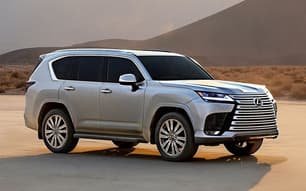
The march away from diesel power and towards a petrol-hybrid future in off-roaders continues. Okay, so it’s a full-sized Lexus we’re talking about, but the off-road credentials of the Toyota LandCruiser 300 Series-based Lexus LX have never been in question, have they?
The full-sized, super-lux Lexus LX might never see the Simpson Desert or the Old Telegraph Track, but that doesn’t mean it couldn’t tackle either with a fair degree of ease. So there’s no way Lexus would allow a new hybrid driveline to compromise any of that. Besides, this is the same driveline that will take the LandCruiser on its next step, so you better believe it’s the real deal.
Of course, the Lexus badge and somewhat frightening price tag also infer a high degree of plush and tech, and, let’s be honest, those elements are more likely to get a leading role in the LX’s day-to-day strut, as opposed to the walk-on part played by the off-road stuff.
So does all this make the LX one huge, high-tech mash up of conflicting priorities, then? That probably depends on how pragmatically you view motor vehicles generally, but one thing’s for sure, if the hybrid LX is paving the way for the next generation of LandCruiser powerplants and drivelines, then we’re all ears.
The updated Genesis GV70 Electrified Signature Performance is packed with features, effortless on the road, and backed by fantastic ownership value. This isn’t just polished luxury, it’s smart luxury, making it a vehicle worth serious consideration. The only caveat? I’d opt for a different interior colour to white if you have kids or pets.
Huge specification in terms of convenience and safety gear are matched by an equally huge range of abilities in this vehicle. As well as rock hopping with the best of them, this is also a phenomenal touring rig and a more-than-capable off-roader. Of course, whether you can see yourself clambering up the side of a muddy creek crossing in $202,000 worth of vehicle is a personal matter, but rest assured, the Lexus will do it if you ask it to.
In the case of the hybrid LX, however, the vehicle now has an extra dimension to cover off, and from what we can see, it does take the efficiency and running costs of the big wagon to a new, better place. Mind you, that may only be the case if diesel continues to cost a dollar-a-litre more than petrol at the bowser.
The shift to petrol power also brings with it a level of mechanical background noise that we’re not entirely sure fits the Lexus legend, while additions such as the camera-based rear-view mirror system seems to be a conversation starter rather than an actual improvement.
Although slightly smaller than some rivals at 4715mm long and 1630mm tall, the GV70 comfortably fills out its medium SUV stature with a pronounced nose, wide stance, and pillowed, swoopy rear end. The update adds an exclusive reverse G-Matrix pattern in the grille, new 20-inch alloys, and a rear aerodynamic spoiler for a more distinctive presence.
Inside, there are three interior colours to choose from. Our test model’s white leather looks stunning but isn’t the most practical choice for families, pets, or anyone frequently navigating unpaved roads. A rainy day could make you anxious! The quilted leather upholstery shines visually, complemented by the new ‘Milky Way’ ambient lighting panels in the doors.
The electrified platform gives the cabin a flat floor, which improves legroom for middle-seat passengers, though it does mean there’s no space for a spare tyre in the boot.
Other notable updates include intelligent Matrix LED headlights, smart key sensors on all door handles, and new paint options. I particularly like the hidden charging port cover integrated into the grille; a subtle, clever touch. Overall, the GV70 is a handsome SUV.
In a styling sense, that big, bold, deep grille at the front won’t be to everybody’s liking, but we reckon it’s pretty well matched with the otherwise taut skin of the LX’s body.
Inside, the plush look and feel is the dominant factor, but if you look really closely, there’s a fair bit of generic Lexus stuff on show. Is that a criticism? Hardly. The leather looks and feels luxe and only some hard plastics (such as on the door cappings) belie the car’s LandCruiser origins.
The GV70 Electrified Signature Performance feels spacious and comfortable front to back. Up front, the seats are thickly padded and packed with features, making it easy to find a good driving position. The electrically adjustable steering wheel adds to the ease, and the 172mm ground clearance with wide door openings makes getting in and out effortless.
Storage up front is a bit limited. The middle console and glove box handle most of the load, while door drink holders are slim. I do like the dedicated phone tray and sunglasses holder, which add some practicality to everyday use.
The 27-inch multimedia and instrument cluster display is sharp, high-tech and intuitive, while the responsive touchscreen and wireless Apple CarPlay/Android Auto make connectivity easy. The system includes built-in sat-nav, and you can customise it to fill the full screen while keeping a small speedo widget visible.
Charging is well-covered with two USB-C ports per row, a wireless charging pad, a 12-volt socket and a 250-volt domestic plug in the boot. Small practical touches like extendable sunvisors, manual rear sunblinds, smart key sensors on each door and the ability to move the front passenger seat or operate the boot from the driver’s seat add extra convenience.
In the rear, legroom is good and while I’m comfortable behind my driving position at 168cm, taller passengers may need to shuffle seats to optimise comfort. Seat cushioning is excellent, and the outboard seat heaters are a welcome touch. The bench is wide enough for three adults for short trips, and families will appreciate the two ISOFIX child seat mounts and three top-tether anchor points. Amenities include climate control, rear air vents, sunblinds and charging ports, although storage is limited to a couple of cupholders and map pockets. The pull-down armrest sits a little low for me, but my kid has no concerns.
Boot space measures 503L with all seats in place, the smallest compared with nearest rivals. That said, it easily accommodates my family of three’s groceries and school gear. There’s a small underfloor pocket for the tyre repair kit and home cables, plus a 22L frunk for extra storage. The powered boot lid is a practical convenience I always appreciate.
Like many hybrids, cargo capacity takes a bit of a blow. In this case, placement of the battery under the cargo floor means a reduction in luggage capacity from 1109 litres to 899 litres. In the seven-seat variant, capacity is 883 litres with the rearmost row folded flat. The rear seat folds 60:40 and there are good, solid tie-down points in the rear. There’s no under-floor storage, however, apart from a small compartment just behind the rear seat which locates the tools and safety triangle.
The tailgate is powered (if a bit slow in its action) and there are cup-holders atop each suspension tower, clearly a hang-over from the seven-seat variant which is not available in F Sport trim. The cargo blind is a good addition, as is the 1500-Watt power socket in the cargo bay.
In the cabin, there are plenty of grab handles and the side steps give shorter folk a leg up when entering or leaving. Once you’re in, the front seats are terrifically comfortable as well as featuring a massage function on top of the heating and cooling functions. The steering wheel is also heated.
Paddle shifts might seem odd in a vehicle like this, but they are brilliant in off-road situations, although you need to first select manual mode on the shifter to have the paddles hold each gear for more than a few seconds in most of the on-road driving modes.
Speaking of the shifter, Lexus has seen fit to once again reinvent this simple control. You now need to pull the handle towards you and up for Reverse, across and down for Drive while Park remains a separate button even though it looks like just another icon on the lever.
A pair of cup holders live over to the passenger’s side of the centre console, and there are a pair of USB charge ports as well as an HDMI port in the dashboard. But the switches for the power windows are located almost directly under the driver’s interior door pull, forcing some unorthodox wrist geometry.
At least the buttons for the climate control and off-road functions such as diff locks and ride height are, indeed, buttons and not menu items. The simple knob to control the stereo on-off and volume is a great touch, too. So is the cooled centre console under a cover that opens from either side.
The rear seat is big and wide but the high floor dictated by the body-on-frame construction means those with long legs will have their knees bent while ever they’re in the back seat. The seat cushion itself is pretty flat, too, but the backrest does recline through a wide range of angles.
Reading lights, lots of air vents and a full set of climate controls ease the pain of riding in the back, but if you want cup holders, you need to keep the centre rear seat free so the armrest that houses the holders can be lowered and snapped open. Adding to the impression that plenty of thought has gone into the rear seat environment are the pull-up sun blinds on each window. Why don’t all cars have these?
The updated Genesis GV70 Electrified Signature Performance comes in a single, well-equipped grade, priced from $132,800 before on-road costs. That puts it between two of its closest electric rivals - the Audi Q6 quattro e-tron at $122,500 and the Porsche Macan 4 from $134,400. Our test car also includes features that would typically cost extra on other brands, adding extra value.
The update brings significant tech upgrades, including wireless phone mirroring, a 27-inch OLED multimedia display, a new operating system with over-the-air software and firmware updates, a colour head-up display, 16-speaker Bang & Olufsen audio and a UV-C sanitiser for the middle console (the last one a little gimmicky for me).
The other technology is well-rounded with the addition of key sensors on all doors as well as keyless start, remote parking aid (via keyfob), three customisable driver profiles accessed via fingerprint, satellite navigation, a digital rear-view mirror and tri-zone climate control.
Inside, the Signature Performance feels distinctly premium. It features quilted Nappa leather upholstery, leather trims, a suede headliner, a panoramic sunroof and a powered tailgate. The front seats are electric, heated, ventilated and have massage and memory functions, while the rear outboard seats and electric steering wheel are also heated.
Put simply, there’s a lot included as standard.
While the LX line-up incorporates off-road oriented versions dubbed Overtrail, that specification is not available in the hybrid variety LX700h. Instead, the LX hybridised line-up kicks off with the Sport Luxury grades in either five or seven-seat layouts and a list price of $196,000 and $199,800 respectively. The F Sport is the new LX flagship model with its $202,000 price-tag (all prices are plus on-road costs) and is only available in five-seat configuration.
As you might imagine for a flagship badge for a maker like Lexus, there’s really nothing missing from the specification. In the case of the hybrid variants, that includes 22-inch alloy wheels, power sunroof, full leather trim and a hands-free tailgate. Those feature are part of the Enhancement Pack on lesser versions, but have been added to all hybrid LXs.
You also get four-zone climate-control, heated, cooled and massaging front seats, keyless entry and start, steering wheel-mounted controls, paddle shifters, automatic headlights and wipers, heated mirrors, soft-close doors, 12.3-inch touchscreen, digital radio, embedded sat-nav, wireless Apple CarPlay and Android Auto, head-up display, premium audio system and pretty much everything else you’ve ever seen fitted to a car.
The F Sport variant we’ve tested here is the big daddy and adds four-way adjustable head rests in the front, a heated steering wheel, specific aluminium trim, aluminium pedals, F Sport-specific gear knob, ventilated and heated rear seats, and a digital rear-view mirror.
The GV70 Electrified Signature Performance is a fully electric SUV with dual motors, one on each axle, producing a combined 320kW of power and 605Nm of torque. Activate Boost Mode, and those numbers climb to 360kW and 700Nm, giving the GV70 a serious edge when you need it.
Despite its name, this grade isn't pitched as a performance EV but it's definitely no slouch with a 0 -100km/h sprint time of just 4.4 seconds with Boost Mode, or 5.0 seconds in standard mode. That’s quick enough to hold its own against rivals in the luxury electric mid-size SUV segment, while still delivering smooth, linear acceleration that’s effortless in everyday driving.
The hybrid driveline of the vehicle we’re looking at here marks a further expansion of buyer choice when it comes to how their Lexus LX is powered. The twin-turbocharged petrol and diesel variants will continue alongside the newcomer, although you can bet Lexus (and Toyota) will be watching the sales charts closely to see where consumer tastes fall.
The hybrid set-up here starts with the twin-turbocharged 3.4-litre petrol V6 (a lot of people - Toyota included - are calling it a 3.5, but at 3445cc, it’s not) from the Lexus LX600.
But instead of bolting directly to the 10-speed transmission, in this case, there’s a single electric motor and clutch unit sandwiched between the engine and transmission. That means the Lexus retains mechanical four-wheel drive, while the electric motor can provide extra urge for acceleration or towing as well as offering EV-only operation when it’s required (mainly in stop-start traffic).
Crucially, it also means the vehicle retains those traditional off-road qualities of low-range gearing and permanent four-wheel drive. The electric motor also contributes torque to the equation when the driver selects either Rock, Dirt or Deep Snow modes to maintain a steady flow of Newton metres.
The petrol V6 contributes a healthy 305kW and 650Nm to the picture, while the electric motor adds a further 36kW and 250Nm. When all that’s harnessed up, there’s a total of 341kW of power and 790Nm of torque on tap, allowing for a braked towing capacity of 3500kg. It also makes this variant the torquiest Lexus LX ever.
Interestingly, Lexus says the conventional 12-volt starting system and alternator for the petrol engine, means that unit could continue to operate if any part of the EV system failed.
One of the big questions over hybrid drivelines in off-road conditions is what happens if the vehicle suddenly finds itself partly under water. In this case, says Lexus, there are additional waterproofing measures which should prevent any problems mid-creek.
The F Sport grade gets a Torsen (torque-sensing) rear differential and firmer dampers for an overall sportier feel.
At 2780kg, the LX hybrid is heavy, and is at least 100kg more than the LX600 due to the batteries and other hybrid gear.
The GV70 Signature Performance runs on a new 84kWh lithium-ion battery, giving a WLTP driving range of up to 462km which is a solid figure for both city commuters and regional drivers, provided you charge regularly. Genesis includes a couple of charging cables, and the SUV also offers V2L (Vehicle-to-Load) capability, ideal for powering larger devices while stopped.
Charging options are strong. The Type 2 CCS port accepts up to 11kW on AC chargers and up to 350kW on DC fast chargers, allowing a 10 - 80 per cent charge in as little as 19 minutes on a 350kW unit or seven hours and 35 minutes on an 11kW AC charger. Realistically, most DC chargers on the road operate closer to 170kW or below, which still delivers a very usable recharge.
The GV70 also features four levels of regenerative braking, including a one-pedal mode. Staying mostly in this mode over the week, I achieved an energy consumption of 21.0kWh/100km, which is very close to the claimed 20.0kWh/100km and again, is a solid result for a car of this size and outputs.
Here’s where the hybrid driveline really comes into its own. On paper, at least.
Despite the added kiloWatts and Newton metres, the 700h manages an official fuel consumption figure of 10 litres per 100km. That compares with 11.9/100km for the 305kW LX600, although it’s still more than the 8.9L of the 227kW diesel-powered LX500d.
But the hybrid’s big advantage will come in city and suburban traffic where the stop-start nature of things will enable the driveline to harvest braking energy and turn that back into electricity for the battery.
Our testing showed an average of 11.2 litres per 100km in mixed conditions which blew out to 13.0 litres with more urban running. That’s pretty handy in the context of a vehicle like this and won’t be far from the real-world numbers of the diesel LX.
The Lexus carries 98 litres of petrol, split between one 68-litre tank and a 30-litre sub tank. That should give it a theoretical range of almost 800km, but again, that will depend largely on where and how it’s used.
My kid called the GV70 the 'Marshmallow Limo' this week, and it’s an apt description for the ride comfort. The SUV probably delivers the one of the most comfortable rides I’ve experienced, thanks to soft suspension and new hydro bushings in the rear, which smooth out most vibrations. The trade-off is that it feels dampened when cornering and you glide over the road rather than feel it, which I find a little soft, but my husband loves.
The dual motors provide strong, prompt acceleration, and Boost Mode adds an extra kick when you need it. The cluster pulses red while active, which is a fun touch.
Visibility is excellent. The wide windows give a clear view around the car, and none of the pillars obstruct from my driving position. The digital rear-view mirror is particularly handy when carrying passengers or cargo.
Regenerative braking is easy to control via the steering wheel paddles. Mode 3 and the one-pedal function deliver strong regen without being harsh, but you need to adapt your braking technique, otherwise passengers might feel a little queasy.
Despite looking larger than it is, the GV70 is simple to park, thanks to an 11.5m turning circle and a 360-degree camera system, though the multiple view modes can feel overwhelming at first. I also love the remote parking via keyfob, which comes in handy in tight carparks or garages.
At low speeds, threading your way through traffic or parking, the LX feels like it needs a lot of real estate. Which makes sense given the 5.1-metre overall length that puts it on par with a lot of dual-cab utes. The width of almost two metres plays into things, too, and reversing down the average driveway will often have the sensors chirping at you constantly.
What’s interesting, though, is the way the Lexus seems to shrink once you’re up and running in a more open setting. Even a winding road reveals a car that is easy to place in corners and seems to feed back lots of the right sort of information in terms of what the wheels are doing and where they’re placed. The result is that you can actually hustle the LX along quite smartly if you need to.
The ride remains composed yet there’s a level of control that helps keep the big, high LX relatively flat through corners and responding sharply to the helm. Even those huge wheels and tyres and their corresponding unsprung mass don’t intrude. It’s a great trick.
Less easy to appreciate, however, is the driveline, specifically the twin-turbo petrol V6. Frankly, it’s just not as refined as we were expecting. I wouldn’t mind betting Lexus has tuned the exhaust system to make the LX sound like there’s a petrol V8 under that heavily sculpted bonnet. And at low revs, it kind of works with a rhythmic, muted, yet guttural sort of bass coming through.
But rev it harder and the engine soon reveals itself to be a V6 with all the secondary vibration and resonance that implies. Simply, this vehicle is neither as smooth nor as quiet as the Lexus brand would suggest and the harder you rev it, the more it descends into NVH (noise, vibration and harshness) territory. The issue is made worse by the fact that the rest of the package is so darn quiet.
Even the stop-start - a technology that is now well understood - doesn’t seem quite as slick as it should be. Taking off from a green light with the petrol engine stopped, the Lexus often produces a small `sonic bump’ from the driveline as the V6 fires into life. It’s felt more than heard. But it’s still puzzling in the context of this make and model.
The transmission, meantime, is as silky as you’d imagine with upshifts and even downshifts that are barely perceptible. It would be nice, though, if the transmission obeyed the paddles a bit more faithfully. As it is, the chosen gear is only held for a few seconds unless you also pull the shift lever into manual mode.
I’ll also take issue with the rear-view mirror that includes a camera view as well as a conventional mirror option. I can see the point of having a camera-view mirror (when the cargo area is piled high, for instance) but I’ve never yet met one that works properly. The problem is that the camera view that pops up on the mirror’s screen is never as faithful as it should be. Also, if you wear glasses to read, you’ll also need them to focus on the image properly. While a conventional mirror has the same depth of field as looking through the windscreen, the camera-generated view does not. Also, when used through a wet rear window in low light, the camera view is borderline useless. This tech clearly has a ways to go.
The GV70 Electrified Signature Performance carries a maximum five-star ANCAP safety rating from 2021 testing and comes with eight airbags as standard. One standout feature is the blind-spot view monitor, which displays a live video feed of your blind spot on the instrument cluster.
The update adds several new safety technologies, including parking collision avoidance assist for the front, side, and rear, as well as side parking sensors. Adaptive cruise control is now navigation-based, adjusting speed automatically for low-speed zones and curves in the road. Other standard safety equipment includes an active bonnet, lane keeping aid, lane departure warning, tyre pressure monitoring system, 360-degree camera, rear cross-traffic alert, forward collision warning, safe exit assist and driver attention warning.
Family-friendly features are also well catered for, with ISOFIX child seat mounts, three top-tether anchor points, rear occupant alert, intelligent seatbelt warnings, and rear child locks.
The autonomous emergency braking (AEB) with car, pedestrian, cyclist and backover detection is operational from 5.0 - 85km/h but it is usual to see the top figure sit well over 100km/h, especially for car detection.
Overall though, the GV70 combines a comprehensive suite of active and passive safety systems.
It will come as no surprise to learn that the expensive LX range is well equipped safety wise, nor that the flagship version of that range features every driver aid ever dreamed up by engineers.
That includes autonomous emergency braking that incorporates pedestrian and cyclist recognition, intersection turn assist, lane-keeping assistance, lane-departure warning, blind-spot monitoring, road-sign recognition, hill-start assist, front and rear parking sensors, a reversing camera with 360-degree views, rear cross-traffic alert and braking and tyre-pressure monitoring.
On top of that, the LX gains the safety additions revealed at the 2025 facelift of the LX line-up, including emergency driving stop, safe-exit monitoring and a forward-facing camera.
There are no less than 10 airbags in the LX, including rear-seat cushion airbags and side-curtain airbags for every outboard seating position.
What’s perhaps even more impressive is that the driver aids are beautifully calibrated to the point where other carmakers should pay close attention when calibrating their own. Where some cars physically fight the driver for control of the wheel in the name of lane-keeping assistance, the Lexus instead offers a polite suggestion of a better course than the one the driver is currently on.
The Lexus LX series hasn’t been crash tested by ANCAP, but the 300-Series LandCruiser on which it’s based scored the full five safety stars when it was tested in 2022.
The GV70 Electrified Signature Performance comes with a five-year/unlimited kilometre warranty and an eight-year/160,000km battery warranty, putting it in line with its rivals. What sets it apart are the extras included at no additional cost.
Genesis provides free scheduled servicing for five years or up to 75,000km, along with five years of roadside assistance through Assist Australia, and if you service through Genesis, that cover extends to ten years.
Owners also receive a complimentary five-year subscription to Genesis Connected Services and can choose either a five-year Chargefox subscription or an at-home wall-box charger.
Another practical bonus for regional drivers is that you aren’t limited to Genesis dealerships for servicing. You can use any of the hundreds of Hyundai service centres for scheduled maintenance, which makes ownership far more convenient. Overall, Genesis makes it easy and appealing to own a GV70.
Lexus offers a five-year, unlimited-kilometre warranty on its vehicles and throws in three years’ worth of subscription to the Lexus Encore owner privileges and benefits program. Those extras include Lexus on Demand, valet parking, roadside assistance and even complimentary access to Qantas airport lounges.
There’s also five years of capped-price servicing available.
As well as the overall five-year/unlimited kilometre warranty, there’s eight years and 160,000km of cover for the hybrid battery. That can be extended to up to 10 years provided the battery is checked for degradation every year after the fifth year.
Servicing for the LX is every six months or 10,000km which is much more frequent than much of the competition, but reflects the heavy-duty nature of the vehicle.
Lexus has about 30 dealerships in Australia, primarily in urban locations, but for many servicing and repair jobs, a Toyota dealership or service centre should be able to handle things on the LandCruiser 300-Series-based LX.