What's the difference?
The Genesis GV70 Electrified Signature Performance has had a meaningful update, and it’s not just a light refresh.
This latest version brings significant improvements to technology, safety, and design.
With only one grade available, this review looks at whether it’s the smart choice for anyone wanting to step into a luxury electric medium SUV.
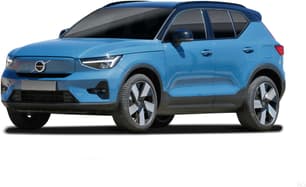
The XC40 Recharge Twin Motor is the flagship model for the segment leading small electric SUV from Volvo.
Well positioned in terms of price, specifications and driving range, it continues to prove itself a fierce rival to the Mercedes-Benz EQA, Lexus UX and newcomer BMW iX1.
But does it bring its A-game to every attribute buyers in the small electric SUV segment demand? In this review, we put it to test to find out.
The updated Genesis GV70 Electrified Signature Performance is packed with features, effortless on the road, and backed by fantastic ownership value. This isn’t just polished luxury, it’s smart luxury, making it a vehicle worth serious consideration. The only caveat? I’d opt for a different interior colour to white if you have kids or pets.
The Volvo XC40 Recharge Twin Motor is a cute small electric SUV that offers a decent specs list and a sweet urban driving experience. It’s not the nicest ride on a longer journey but it does have a decent range to be able to tackle one, if needed. I didn’t love the interior design but there’s lots the XC40 gets right.
Although slightly smaller than some rivals at 4715mm long and 1630mm tall, the GV70 comfortably fills out its medium SUV stature with a pronounced nose, wide stance, and pillowed, swoopy rear end. The update adds an exclusive reverse G-Matrix pattern in the grille, new 20-inch alloys, and a rear aerodynamic spoiler for a more distinctive presence.
Inside, there are three interior colours to choose from. Our test model’s white leather looks stunning but isn’t the most practical choice for families, pets, or anyone frequently navigating unpaved roads. A rainy day could make you anxious! The quilted leather upholstery shines visually, complemented by the new ‘Milky Way’ ambient lighting panels in the doors.
The electrified platform gives the cabin a flat floor, which improves legroom for middle-seat passengers, though it does mean there’s no space for a spare tyre in the boot.
Other notable updates include intelligent Matrix LED headlights, smart key sensors on all door handles, and new paint options. I particularly like the hidden charging port cover integrated into the grille; a subtle, clever touch. Overall, the GV70 is a handsome SUV.
The XC40 Recharge sees some design changes from its fuel-based counterparts and that’s mainly seen in the front because you get a body-coloured panel instead of a standard grille. The 20-inch alloys feature a chunkier-looking design but the front still boasts the cool ‘Hammer of Thor’ headlights (which I'm rather fond of).
The interior is where the electric powertrain loses me because the fuel-based equivalent is so much nicer inside with its leather-accented upholstery and trims.
It's lovely that there has been a conscious effort to use recycled materials and non-leather upholstery throughout but I'm left with the strange-feeling that synthetic seats don’t reflect the grade or price level of this car.
Other than the cool-looking topography inserts on the dash and front doors and the 9.0-inch vertical multimedia system, it’s pleasant but a little basic in the cabin. Which is shame because the exterior is cute as hell.
The GV70 Electrified Signature Performance feels spacious and comfortable front to back. Up front, the seats are thickly padded and packed with features, making it easy to find a good driving position. The electrically adjustable steering wheel adds to the ease, and the 172mm ground clearance with wide door openings makes getting in and out effortless.
Storage up front is a bit limited. The middle console and glove box handle most of the load, while door drink holders are slim. I do like the dedicated phone tray and sunglasses holder, which add some practicality to everyday use.
The 27-inch multimedia and instrument cluster display is sharp, high-tech and intuitive, while the responsive touchscreen and wireless Apple CarPlay/Android Auto make connectivity easy. The system includes built-in sat-nav, and you can customise it to fill the full screen while keeping a small speedo widget visible.
Charging is well-covered with two USB-C ports per row, a wireless charging pad, a 12-volt socket and a 250-volt domestic plug in the boot. Small practical touches like extendable sunvisors, manual rear sunblinds, smart key sensors on each door and the ability to move the front passenger seat or operate the boot from the driver’s seat add extra convenience.
In the rear, legroom is good and while I’m comfortable behind my driving position at 168cm, taller passengers may need to shuffle seats to optimise comfort. Seat cushioning is excellent, and the outboard seat heaters are a welcome touch. The bench is wide enough for three adults for short trips, and families will appreciate the two ISOFIX child seat mounts and three top-tether anchor points. Amenities include climate control, rear air vents, sunblinds and charging ports, although storage is limited to a couple of cupholders and map pockets. The pull-down armrest sits a little low for me, but my kid has no concerns.
Boot space measures 503L with all seats in place, the smallest compared with nearest rivals. That said, it easily accommodates my family of three’s groceries and school gear. There’s a small underfloor pocket for the tyre repair kit and home cables, plus a 22L frunk for extra storage. The powered boot lid is a practical convenience I always appreciate.
Front passengers enjoy the most space and I have plenty of head- and legroom up front. It’s a really easy car to get in and out of and the individual storage is very good for the class.
Front passengers enjoy a glove box, middle console with a removeable bin, two cupholders, utility tray and skinny drink bottle holders in the storage bins in the doors.
In the rear, passengers get map pockets on the backs of the front seats, two cupholders in the fold-down armrest and small storage bins in each door.
The synthetic leather-trimmed seats look neat and tidy but are very hard in the cushion, which makes them a tad uncomfortable on longer trips. The rear seats are much the same.
Charging options throughout the car are good with the front enjoying a 12-volt port, two USB-C sockets and a wireless charging pad to choose from. The rear also gets two USB-C ports and there's another 12-volt outlet in the boot.
The rest of the technology is easy to use once you spend some time with it. The 9.0-inch touchscreen multimedia system features built-in Google Maps, Assistant and Play Store apps, as well as, YouTube.
The 12.0-inch digital instrument panel isn’t customisable but I like the way it pulls through the satellite navigation screen and directions.
Because of the dual-motor powertrain, your boot capacity drops to 419L from 452L for the single-motor variant. It is large enough for my grocery shop and random errands and you can fold the floor up to create a deep storage well for additional space. Fold the 60/40 split-folding rear seat and available space expands to 1295 litres.
I don’t like the hardened cargo liner, it feels and looks a little cheap, but I do like the powered tailgate. There’s also handy frunk storage of 31L, which is perfectly sized for any charging cables you will have.
The updated Genesis GV70 Electrified Signature Performance comes in a single, well-equipped grade, priced from $132,800 before on-road costs. That puts it between two of its closest electric rivals - the Audi Q6 quattro e-tron at $122,500 and the Porsche Macan 4 from $134,400. Our test car also includes features that would typically cost extra on other brands, adding extra value.
The update brings significant tech upgrades, including wireless phone mirroring, a 27-inch OLED multimedia display, a new operating system with over-the-air software and firmware updates, a colour head-up display, 16-speaker Bang & Olufsen audio and a UV-C sanitiser for the middle console (the last one a little gimmicky for me).
The other technology is well-rounded with the addition of key sensors on all doors as well as keyless start, remote parking aid (via keyfob), three customisable driver profiles accessed via fingerprint, satellite navigation, a digital rear-view mirror and tri-zone climate control.
Inside, the Signature Performance feels distinctly premium. It features quilted Nappa leather upholstery, leather trims, a suede headliner, a panoramic sunroof and a powered tailgate. The front seats are electric, heated, ventilated and have massage and memory functions, while the rear outboard seats and electric steering wheel are also heated.
Put simply, there’s a lot included as standard.
There are two powertrain options in the XC40 family, a mild-hybrid or pure electric. The latter gets two variants and we’re in the top-spec Recharge Twin Motor, which is priced from $85,990, before on-road costs. This positions it in the middle of its nearest rivals but in its family line-up it’s a big $23K jump from its Ultimate B4 AWD combustion equivalent.
The standard features list for the XC40 is robust and there are some great premium features, like the electrically-adjustable and heated front seats with extendable under-thigh support and electric lumbar control.
A panoramic sunroof makes the cabin feel light and airy, the rear outboard seats have heat functions and the driver enjoys a heated steering wheel. You also get a premium 13-speaker Harman Kardon sound system in the Twin Motor.
Other premium features include pre-entry and after-park climate control (perfect for those super-hot days) and a hands-free powered tailgate.
Technology highlights include a complimentary four-year subscription for the built-in Google Assistant, Google Maps and Google Play Store which are accessed via the portrait-style 9.0-inch multimedia touchscreen.
There's also access to apps like YouTube, which delighted my seven-year old and would be handy on any charging stints for some diversion. It's surprising there isn't wireless functionality for Apple CarPlay and Android Auto but they can be hooked up via cable.
The GV70 Electrified Signature Performance is a fully electric SUV with dual motors, one on each axle, producing a combined 320kW of power and 605Nm of torque. Activate Boost Mode, and those numbers climb to 360kW and 700Nm, giving the GV70 a serious edge when you need it.
Despite its name, this grade isn't pitched as a performance EV but it's definitely no slouch with a 0 -100km/h sprint time of just 4.4 seconds with Boost Mode, or 5.0 seconds in standard mode. That’s quick enough to hold its own against rivals in the luxury electric mid-size SUV segment, while still delivering smooth, linear acceleration that’s effortless in everyday driving.
The XC40 Recharge Twin Motor features two electric motors which are powered by a large 82kWh lithium-ion battery and produce a combined power output of 300kW and 670Nm of torque.
Which is downright fun because it can do a 0-100km/h sprint in just 4.8-seconds!
The GV70 Signature Performance runs on a new 84kWh lithium-ion battery, giving a WLTP driving range of up to 462km which is a solid figure for both city commuters and regional drivers, provided you charge regularly. Genesis includes a couple of charging cables, and the SUV also offers V2L (Vehicle-to-Load) capability, ideal for powering larger devices while stopped.
Charging options are strong. The Type 2 CCS port accepts up to 11kW on AC chargers and up to 350kW on DC fast chargers, allowing a 10 - 80 per cent charge in as little as 19 minutes on a 350kW unit or seven hours and 35 minutes on an 11kW AC charger. Realistically, most DC chargers on the road operate closer to 170kW or below, which still delivers a very usable recharge.
The GV70 also features four levels of regenerative braking, including a one-pedal mode. Staying mostly in this mode over the week, I achieved an energy consumption of 21.0kWh/100km, which is very close to the claimed 20.0kWh/100km and again, is a solid result for a car of this size and outputs.
The official energy consumption figure is 19kWh/100km and I averaged 19.2kWh over a fair mix of urban and open-road driving. The energy consumption isn't bad but some rivals do sit closer to that 16.5kWh mark.
The official driving range is up to 485km for this model but I only ever saw a top range of 410km. That's not terribly surprising given I wasn't shy with the power use but there was a little bit of range anxiety on longer trips.
The XC40 Recharge Twin Motor has a Type 2 CCS charging port which means you can benefit from faster charging speeds. On an 11kW AC charger you can go from 0-100 per cent in eight hours but on a standard three-pin house plug socket expect that wait time to go up significantly.
On a DC fast charger expect to go from 10-80 per cent in as little as 33-minutes.
My kid called the GV70 the 'Marshmallow Limo' this week, and it’s an apt description for the ride comfort. The SUV probably delivers the one of the most comfortable rides I’ve experienced, thanks to soft suspension and new hydro bushings in the rear, which smooth out most vibrations. The trade-off is that it feels dampened when cornering and you glide over the road rather than feel it, which I find a little soft, but my husband loves.
The dual motors provide strong, prompt acceleration, and Boost Mode adds an extra kick when you need it. The cluster pulses red while active, which is a fun touch.
Visibility is excellent. The wide windows give a clear view around the car, and none of the pillars obstruct from my driving position. The digital rear-view mirror is particularly handy when carrying passengers or cargo.
Regenerative braking is easy to control via the steering wheel paddles. Mode 3 and the one-pedal function deliver strong regen without being harsh, but you need to adapt your braking technique, otherwise passengers might feel a little queasy.
Despite looking larger than it is, the GV70 is simple to park, thanks to an 11.5m turning circle and a 360-degree camera system, though the multiple view modes can feel overwhelming at first. I also love the remote parking via keyfob, which comes in handy in tight carparks or garages.
Like the Polestar 2 there’s no ignition button on the XC40. You shift into drive to ‘turn on’ and after you park, you simply get out to turn it off. It takes a little while to get used to but it’s a cool feature.
The twin motors deliver a hefty kick and you never worry about not having ‘enough power’. In the city it’s zippy but on the open-road you also feel comfortable getting up to speed or overtaking because the power distribution is so well-balanced because it’s an AWD.
I customised my steering wheel ‘feel’ to firm and it makes the handling crisp and direct. You feel like you’re in total control whenever you have to tackle be it tight streets or small car parks.
The blind-spot visibility is compromised by how wide the B and C-pillars are and I find that I'm relying a lot more on the blind-spot monitoring system to compensate.
The XC40 loses a few points for me in terms of ride comfort. As mentioned, the seats aren't terribly comfortable but the suspension is hard enough that you notice every bump, as well.
Road noise is also quite pronounced and it doesn’t sound refined when you drive at higher speeds, which is a shame. The flip-side, though, is that you don’t notice those things as much on short, urban trips.
The standard regen braking isn’t customisable and you don’t notice it until you switch over to a 'one-pedal' function. I found this function uncomfortable to use as it’s very aggressive and creates a jerky driving experience.
Because of its 4440mm length and tiny 11m turning circle, you won’t struggle in a car park! The 360-degree view camera system and front and rear parking sensors make it easy to navigate a tight spot.
This is a joy to park. It’s so easy.
The GV70 Electrified Signature Performance carries a maximum five-star ANCAP safety rating from 2021 testing and comes with eight airbags as standard. One standout feature is the blind-spot view monitor, which displays a live video feed of your blind spot on the instrument cluster.
The update adds several new safety technologies, including parking collision avoidance assist for the front, side, and rear, as well as side parking sensors. Adaptive cruise control is now navigation-based, adjusting speed automatically for low-speed zones and curves in the road. Other standard safety equipment includes an active bonnet, lane keeping aid, lane departure warning, tyre pressure monitoring system, 360-degree camera, rear cross-traffic alert, forward collision warning, safe exit assist and driver attention warning.
Family-friendly features are also well catered for, with ISOFIX child seat mounts, three top-tether anchor points, rear occupant alert, intelligent seatbelt warnings, and rear child locks.
The autonomous emergency braking (AEB) with car, pedestrian, cyclist and backover detection is operational from 5.0 - 85km/h but it is usual to see the top figure sit well over 100km/h, especially for car detection.
Overall though, the GV70 combines a comprehensive suite of active and passive safety systems.
The XC40 has a long safety features list but a standout is the Volvo designed 'Side Impact Protection System' (SIPS) that reinforces the car's steel framework at the sides and disperses energy in a side collision.
Other standard features include full LED external lights, daytime running lights, adaptive cruise control, rear cross-traffic alert, blind-spot monitoring, driver attention alert, forward collision warning, lane departure alert, lane keeping aid, intelligent seatbelt reminders, traffic sign recognition, 360-degree camera system, front and rear parking sensors.
The XC40 has a maximum five-star ANCAP safety rating from testing done in 2018. It has seven airbags, including a driver's knee bag and features high individual scoring for adult and child occupant protection at 97 per cent and 84 per cent, respectively.
The XC40 has AEB with car, pedestrian and cyclist detection and is operational from 4.0-210km/h. It's usual to see that top speed sit closer to 180km/h, so that's very good.
A cool feature for any parents out there is the second key which you can program to limit stereo volume levels and set a maximum speed allowance. It's even coloured bright orange so there are no chances of a sneaky switcheroo!
There are ISOFIX child-seat mounts on the rear outboard seats and three top-tether anchor points for any families out there but two seats will fit best.
The GV70 Electrified Signature Performance comes with a five-year/unlimited kilometre warranty and an eight-year/160,000km battery warranty, putting it in line with its rivals. What sets it apart are the extras included at no additional cost.
Genesis provides free scheduled servicing for five years or up to 75,000km, along with five years of roadside assistance through Assist Australia, and if you service through Genesis, that cover extends to ten years.
Owners also receive a complimentary five-year subscription to Genesis Connected Services and can choose either a five-year Chargefox subscription or an at-home wall-box charger.
Another practical bonus for regional drivers is that you aren’t limited to Genesis dealerships for servicing. You can use any of the hundreds of Hyundai service centres for scheduled maintenance, which makes ownership far more convenient. Overall, Genesis makes it easy and appealing to own a GV70.
The ongoing costs are pretty solid with the XC40 coming with a usual five-year/ unlimited warranty term but the drive battery is covered for eight years/160,000km.
You can pre-purchase a five-year/150,000km servicing program for a flat $3000 or an average of $600 per service, which is a bit expensive for the class. Servicing intervals are great at every two-years or 30,000km, whichever occurs first.
You get complimentary roadside assistance for five-years through Assist Australia and if you meet certain criteria, you can extend that by a further three years, which is handy.