What's the difference?
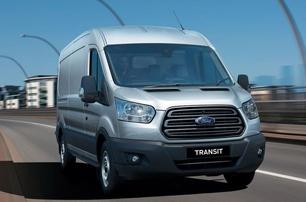
Meet Ford’s electric pioneer for Australia - the E-Transit.
It may not be as exciting as a Tesla Model S, Porsche Taycan or Audi e-tron, but this electric version of the Blue Oval’s large van will help create a new market for zero-emissions commercial vehicles.
This is seen as a major opportunity by Ford to provide an electric alternative to typically diesel-powered vans, which will no doubt prove popular with fleet operators looking to cut fuel costs and corporate emissions. While unlikely to suit all van buyers, thanks to its limited range and recharging restrictions, for those companies with shorter delivery routes it will certainly have appeal.
Ford’s research (performed by YouGov) suggests up to 58 per cent of business “can see EVs becoming part of their vehicle fleet in the future".
But it’s just Ford’s first step into the larger world of electric vehicles. We’ve already had confirmation the smaller E-Transit Custom is headed our way and there are good odds the Mustang Mach-E will eventually find its way to Australian showrooms, so there’s plenty of exciting models in store for Ford.
In the meantime, though, the E-Transit isn’t due in Australia until sometime in the first half of 2023, but CarsGuide was able to take one for a test drive near Ford’s Detroit headquarters recently to get a taste of what’s to come.
Chery would likely prefer you forget its initial foray into the Australian market, but doing so would do a disservice to the brand.
We don’t need to go into the nitty gritty of what went wrong back then, but needless to say the first Chery models of around 15 years ago were not particularly good.
Since its return in 2022 Chery is unrecognisable from that first attempt at cracking this market. The Omoda 5, the first model of its relaunch, was flawed but light years ahead of the earlier models in terms of design, presentation and build quality.
It has since expanded with the larger Tiggo 7 Pro and Tiggo 8 Pro Max SUVs and then in late 2024 it added this, the Tiggo 4 Pro. This is Chery’s answer to the likes of the Hyundai Venue, Mazda CX-30, Toyota Yaris Cross, etc in what’s known as the ‘light SUV’ segment.
Chery had a very good 2024, more than doubling its sales, so there are clear signs the brand is enjoying far greater success with its second attempt in Australia.
But is the Tiggo 4 Pro worth buying, if you’re in the market for a compact SUV? Let’s answer that question as we go through all the details.
Ford has taken an unorthodox approach to entering the electric vehicle market in Australia, avoiding the hype around the Mustang Mach-E and F-150 Lightning and instead laying the foundations with the E-Transit.
But it’s a savvy move, giving the brand a chance to enter what should be a largely untapped market with a vehicle that should appeal to what buyers are looking for. With unchanged space compared to the diesel-powered Transit, the switch to a more powerful electric powertrain makes the E-Transit a win-win scenario for those with a suitable daily driving routine.
Note: CarsGuide attended this event as a guest of the manufacturer, with travel, accommodation and meals provided.
Is the Tiggo 4 Pro the best light SUV on the market? No, it falls short in some key areas, but there’s also a lot to like about it.
The driving dynamics needs more tuning to put it on par with its class rivals. I believe the Chinese brand that invests in a local ride and handling program in the same way Hyundai and Kia have done in the past decade will have a big advantage with customers. The Tiggo 4 feels too vague and unresolved at times, especially in the wet, and that could be rectified with some minor tweaks.
The safety systems also need some major work to make them smoother and less intrusive so you don’t go searching for the button to switch them off - which defeats the purpose of having them in the first place.
But if you can look past (or accept) the driving and active safety issues, there are some big plus points for Chery’s latest model. It looks great inside and out, offers up plenty of value and is as practical as a compact SUV can be.
Chery has come a long way in a short space of time and with some more improvements it’s easy to see it continuing its sales growth with models like the Tiggo 4 Pro.
Perhaps the most interesting thing about the design is there’s nothing very different about the E-Transit compared to the regular Transit. Which is a good thing, because the Transit is already a popular delivery van so any change for the sake of difference may have messed with the winning formula.
In fact, the design element that is important is the way Ford has laid the battery packs flat inside the ladder-frame chassis which means none of the cargo space has been compromised. This means the E-Transit has the same load area as its internal combustion equivalent, which is key for any delivery van.
This is the area where Chery has made immense progress in such a short period of time, which underlines the rapid rate of change the Chinese car industry has been able to manage.
Whereas the J11 I drove all those years ago was a mess, seemingly designed by a team of people not allowed to talk to each other, the Tiggo 4 Pro looks smart and stylish on the outside and in the cabin.
While there are some elements of rival models to the look, there’s also a clear family design to all the Chery Tiggo models that helps create a cohesive look across the range.
It took the South Korean brands nearly two decades to achieve this level of design evolution, so it’s impressive (and worrying for rivals) that the Chinese brands have managed to do it so much quicker.
Inside, the cabin design is not only a major step forward and looks very nice for an SUV at this price point in terms of the presentation and technology.
The dual 10.2-inch screens look more premium than the car's price suggests, as does the lower digital screen for the climate control settings as well as the soft-touch finishes and gloss black trim.
The cabin is very similar to what you’ll find in the Transit, so there will be familiarity for anyone making the switch from the diesel-powered version. The rotary shifter and 12.0-inch tablet-style multimedia screen make for a smart look but also means minimal space is wasted.
It’s a thoughtfully designed cabin, with plenty of usable storage spaces, including three cup-holders, a pair of bottle-holders and deep storage shelves on the top of the dashboard. The doors are particularly noteworthy, with multiple storage areas carved into the available space.
The seats are comfortable and, naturally with a high-roof van, there’s plenty of head room which creates a spacious feeling.
Behind the seats is the cargo area. In the US-specification E-Transit we drove there was a dividing wall between the cabin and the back of the van, with a small sliding door to access the cargo area, but it’s unlikely this will be offered in Australia. Instead, local models will likely have a hard divider between the cabin and back, with a small window for visibility.
As mentioned earlier, the floorspace in the E-Transit remains the same as the Transit thanks to the battery being laid underneath the floor, so there’s plenty of cargo volume that will please fleet buyers.
In the US the E-Transit’s cargo area measures 11.3-cubic-metres with the medium-height roof and expands to 12.4cu/m with the high-roof body.
Ford says the “targeted payload” will be 1616kg.
Starting with the question of space, the Tiggo 4 Pro actually offers up good room, for what is ultimately a compact SUV. No, it’s not ideal for a family of five, but for anyone looking for an urban-friendly runabout for singles or couples, it plays that role nicely.
The fronts seats are quite nice, comfortable and offer good support. There’s adequate space in the back to take children, or even adults, with some compromise to the front seat position, but that’s in line with expectations for any model this size externally.
The boot holds a claimed 380 litres, which is quite generous when you compare it to the likes of the CX-3 (264L) and Venue (355L), but can’t match the likes of the Yaris Cross (397L) and Nissan Juke (422L).
The technology in the car is impressive for an SUV this size, especially given the price. The dual 10.2-inch displays look slick, as does the lower screen for climate control, which gives a hint of Audi or Range Rover vibe to the cabin.
The multimedia system is straightforward to use, thanks in large part to the wireless Android Auto and Apple CarPlay, but I did find the ‘Hello Chery’ voice command system hit and miss - although, to be fair to Chery, I find all these voice command systems hit and miss.
One minor amusement is the ‘welcome theme’ that plays when you get in the car. Many brands do this trick, a short musical jingle when you open the door to welcome you inside. The team at Chery went a little overboard, though, and wrote a whopping 15-second theme (yes, I timed it with a stopwatch), which feels like major overkill. Thankfully it can be turned off in the set-up menu.
Ford Australia originally announced the E-Transit would arrive by “mid-2022” but that date has been pushed back thanks to the ongoing supply challenges faced by most car companies.
While the initial technical details have been confirmed - the first model available will be the 420L long-wheelbase version - the company hasn’t locked in detailed local specifications and pricing yet.
The closest comparison in the current Transit range is the 350L, which is available in both mid- and high-roof variants. Based on the model we test drove in the US, there are similar specifications between the two, including 16-inch steel wheels, partial-leather-trimmed seats and Ford’s SYNC4 multimedia system displayed on a 12.0-inch centrally mounted screen.
While pricing isn't confirmed, it's likely the E-Transit will carry a premium over the Transit so we'd estimate a starting price in the mid-$60,000 range.
Chery was not backwards in coming forward with the launch of the Tiggo 4 Pro, with Chief Operating Officer Lucas Harris claiming it is “Australia’s best value SUV.” It’s a huge call to make, but there’s no doubt the Tiggo 4 Pro offers a lot for a competitive price.
There are two model grades to choose from, the Urban, which is priced from $23,990, and the Ultimate, which is $26,990 - and crucially both those prices are drive-away.
That gives Chery a clear financial advantage on its rivals. That’s because the most affordable rival is the Hyundai Venue at $22,500 (plus on-road costs), while the cheapest Mazda CX-3 is $26,950 (plus on-roads) and Toyota’s entry-level model in the hybrid-only Yaris Cross is $30,900 (plus on-roads).
Both the Urban and Ultimate feature the same powertrain, so the difference is in their specification.
The entry-level grade comes equipped with 17-inch alloy wheels, dual-zone climate control, a synthetic leather-trimmed steering wheel, dual 10.2-inch screen display (one for the instrument panel and one for the multimedia), digital radio, Android Auto and Apple CarPlay (wired & wireless), ‘Hello Chery’ voice command and all LED exterior lights.
Stepping up to the Ultimate adds 18-inch alloys, heated front seats, a six-speaker sound system, 360-degree surround camera view, a power sunroof and power-folding exterior mirrors.
All told, the Tiggo 4 Pro is a very good value SUV - even if I wouldn’t go as far as calling it the ‘best value SUV in Australia.’
One element of the E-Transit we are clear on is what’s under the bonnet. The E-Transit is powered by an 198kW/430Nm electric motor that powers the rear wheels and draws energy from a 68kWh battery.
That means the E-Transit is the most powerful member of the Transit family, with the rest of the range powered by the 125kW/390Nm 2.0-litre four-cylinder turbo diesel engine.
Ford claims the E-Transit has a range of 317km (on the WLTP cycle), which may not sound like a lot for a commercial van but Ford claims in the US the daily average for such vehicles is only 120km.
In order to save charge, the E-Transit is equipped with an Eco Mode which limits top speed, regulates acceleration and limits climate control settings. Ford claims this allows the driver to cut energy usage by between eight to 10 per cent when driven at highway speeds or when unladen.
As mentioned earlier, both Tiggo 4 variants are motivated by the same powertrain. Specifically, it’s a 1.5-litre, four-cylinder, turbo-petrol engine paired with a continuously variable transmission (CVT) driving the front wheels.
It makes 108kW/210Nm, which is quite competitive against its rivals, which adds another layer of appeal. The CVT does a decent job and the engine pulls strongly and smoothly in most situations. It’s one of the more impressive elements of the dynamic package.
Charging will be a key element of the E-Transit’s appeal (or not) to buyers, with fleets needing to maximise the van’s time on the road. Ford claims that with a 115kW DC fast-charger the E-Transit battery can go from 15 per cent charge to 80 per cent in just 34 minutes.
With the onboard 11.3kW charger it takes 8.2 hours to get the battery back to 100 per cent capacity.
The E-Transit supports bi-directional use of the battery too. In the US the E-Transit is available with its Pro Power Onboard technology as an option. This allows for the driver to draw up to 2.4kW of power from the vehicle’s battery to power tools and other equipment as necessary.
One feature that is confirmed for the Australian-bound E-Transit is what Ford calls, Scheduled Pre-Conditioning. This is a system that allows the operator to pre-set the climate control for the cabin while the van is still on charge so that you can still have maximum charge available when you start driving.
The official fuel economy figure for the combined cycle is 7.3L/100km, which is well off class-leading for a compact SUV.
The Kia Stonic has claimed ratings between 5.4-6.7L/100km (depending on the model) and the Mazda CX-3 has a 6.3L/100km claim, but Hyundai’s Venue manages 7.0-7.2L/100km to make Chery’s figure stand out less.
We saw a 9.2L/100km on the trip computer on test, but that was almost exclusively urban driving. The claimed urban cycle figure is 8.9L/100km, so the real-world economy isn’t too far off Chery's claim.
However, it’s clear that the punchy engine performance comes at a cost of efficiency, so that should be factored into your consideration of the Tiggo 4.
It does have a fairly large 51-litre fuel tank, which means it has a theoretical driving range of nearly 700km.
Electric vehicles have earned a reputation for rapid, exciting acceleration… but that’s not the case with the E-Transit. Performance could best be described as modest, with adequate but unspectacular acceleration.
Which is fine, because the E-Transit is not meant to be a ‘ludicrously’ quick van, instead it’s meant to haul a load as efficiently as possible. On that front it does a good job, with smooth (albeit gentle) acceleration and steady pulling power.
It’s important to note, though, that our test car was unladen - with only some shelving installed in the back. So we’ll have to reserve judgement on how the E-Transit performs with a full load on-board, on Australian roads.
The rest of the driving experience is as you’ll find with the Transit. The steering is nicely weighted and direct, which makes manoeuvring such a huge vehicle straightforward.
The ride is on the firm side, which isn’t unusual for either a van or an electric vehicle as it needs to control so much weight, but it isn’t uncomfortable and offers good control.
The Tiggo 4 Pro Ultimate made a strong first impression… until the moment I started driving it. As impressive as the brand’s design evolution has been, there is still work to be done on the dynamic side.
While the engine performance is good, the ride needs some fine-tuning as it’s quite soft, which is good for soaking up bumps but also means less chassis control.
The bigger issues are the steering and the brakes, both of which are below the level of Chery’s rivals in this segment.
The steering is too light, which normally wouldn’t be a deal-breaker as it makes parking and navigating traffic easy, but combined with it being unevenly weighted it becomes problematic.
It leads to a disconnected feeling between the driver and the road, and while I understand that a compact SUV doesn’t have to have sports car-like ‘steering feel’, it feels disconnected and that leads to it feeling vague to drive at times.
It doesn’t help that the Giti tyres fitted to our test car don’t provide very good grip, especially in the wet. During a summer rain shower the front end of the Tiggo 4 felt like it was going to understeer at times, with very little grip when turning, even at low speeds.
This problem is compounded by a long brake pedal, with very little initial bite when you press it. Instead, you need to bury your foot in order to get the Chery to slow with any sense of urgency and that led to some uneasy moments during our test drive.
Then there’s the adaptive cruise control, which I’ll dive into later in ‘Safety’, but has a major impact on the driving experience. Put simply, it has very poorly calibrated lane keeping assistance when the cruise control is activated, which seemingly cannot be turned off, despite turning off lane keeping assistance separately.
This leads to the car drifting in the lane until it finds the lane marking and then rather aggressively tugging the steering wheel to push you into the centre - and then begin the process again. This leads to near-constant tugging of the wheel in your hand which is as unnerving as it is annoying.
The current Transit is not rated by ANCAP, as is the case with most of its full-size van rivals because the safety authority tends to focus on the mid-size vans - such as the Transit Custom, Toyota HiAce and Hyundai Staria-Load.
However, the E-Transit does have a solid safety package, with driver and passenger front, side and curtain airbags all standard. While the E-Transit’s local safety package isn’t locked in, the Transit already boasts autonomous emergency braking with pedestrian detection, lane-keep assist with lane-departure warning, rollover mitigation, side-wind stabilisation, trailer sway control and traffic-sign recognition, so it’s probably a safe bet these will all be included on the E-Transit.
We drove the high-roof E-Transit in the US and with a high-mounted reversing camera it was surprisingly easy to navigate for such a big vehicle.
The Tiggo 4 Pro hasn’t been crash tested by ANCAP or Euro NCAP yet, so there is no third-party safety rating. However, it does come with a comprehensive list of active driver assist systems (ADAS), notably across both the Urban and Ultimate variants.
The list of fitted equipment includes autonomous emergency braking (AEB), emergency lane keeping, lane departure warning, lane departure prevention, adaptive cruise control, integrated cruise assist, lane change assist, rear collision warning, rear cross-traffic alert, door opening warning and a driver monitoring system.
That’s a lengthy array of features, which should score the Tiggo 4 well, however, as we mentioned above, it’s hard to give a good review when some of these systems are so poorly calibrated for real-world conditions that we turned them off (or attempted to).
While some, such as the driver attention system and door opening warning do their job well, others are too intrusive or aggressive when activated and spoil the driving experience.
The key villain is the lane keeping when the adaptive cruise control is activated, with the previously mentioned tugging at the wheel.
This repeated wandering in the lane followed by a firm tug at the wheel is simply not good enough and needs to be recalibrated by Chery as soon as possible.
What makes it so maddening is that other systems seem well-calibrated. For example, the driver attention warning is very good for a modern car, not overly sensitive and emitting a subtle chime when it notices your eyes wandering off the road. So Chery needs to take the same care and precision with its other systems.
Ford Australia has already confirmed that the E-Transit will be covered by Ford’s now-standard five-year, unlimited kilometre warranty, plus an extended eight-year/160,000km warranty specifically for the battery and high-voltage electric components.
As a still new-to-Australia brand, Chery has made the smart move and is offering a seven-year/unlimited kilometre warranty plus capped-price servicing and roadside assistance for the same period on all models. This gives buyers taking a chance on an unfamiliar brand some peace-of-mind should anything go wrong.
Service intervals are every 12 months or 15,000km (whichever comes first) and servicing is only $280 for the first five workshop visits, rising to $375.64 for the sixth service and $295.54 for the final one covered by the initial plan.
That means a total of just over $2071 to maintain your Tiggo 4 Pro for the first seven years of ownership.
There are still long-term questions about reliability and residual values Chery needs to answer, but only time can tell what those answers will be. Given that, the seven years of ownership coverage is a strong offer.