What's the difference?
Toyota’s legendary LandCruiser 70 Series has built a loyal following as rock-solid as Uluru across remote regions of Australia, thanks to a combination of back-to-basics ruggedness, bulletproof dependability and heavy load-hauling ability.
However, Ford has recently launched a compelling alternative with the Ranger Super Duty, which it claims has been engineered from the ground up to meet the toughest demands of remote work environments. And with 2.0-tonne payload and 4.5-tonne tow ratings superior to Toyota’s outback legend, the Super Duty is in a class of its own that did not previously exist.
We recently spent a working week aboard the new Ford to assess if it’s worthy of the revered Super Duty nameplate and how it measures up for urban and regional tradies alike.
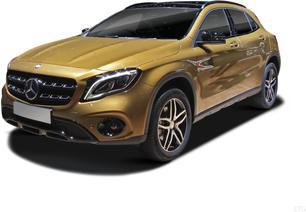
Buuuuuuuur, parp, buuuuuuuuuuuur, parp. Anyone who knows anything about cars immediately recognises the sound of a 45-engined A-class derivative. It's the sound you hear in a tunnel as old mate blasts past with a giant carbon-fibre wing atop his hatchback. It's the sound you hear at 3:00am on a summer morning (if your suburb has no speed bumps, of course).
In short, that sound means big power from a 2.0-litre turbocharged engine, a seven-speed transmission, and a bunch of Germans who clearly had a sense of humour in charge of tuning the exhaust note.
Sure, the GLA compact SUV is probably a slightly unexpected source of all that noise. But then, Merc's Ingolstadt rivals stuffed Audi's stupendous five-cylinder engine into a Q3 to make the hugely improbable RSQ3, so why not do the same with their skirts-lifted A-Class?
To be honest, my expectations for this car were low. So do I owe Mercedes a grovelling apology? Or can I still claim the moral high ground after a week of GLA 45 "ownership"?
The Super Duty is the most formidable workhorse in the Ranger fleet. It projects a feeling of immense strength each time you drive it, reflecting payload and tow ratings well beyond traditional limits for vehicles of this size combined with formidable all-terrain capabilities. For tradies wanting the ultimate Ranger workhorse, the Super Duty is clearly in a class of its own - a class which it created.
My wonderful wife, who is not really into this kind of car, admitted to me in a quiet voice that she really liked the GLA45 as long as it was in Sport + mode. And I have to agree. While I'm very fond of the ridiculous Audi RSQ3 (that turbo five-cylinder sounds amazing), I think I'd stump up the extra for the GLA.
Importantly, it can be comfortable, it can be quiet and it's a better fit for most humans than the A or CLA. It is getting on a bit and could do with a further clean-out of the poor ergonomics, but in what is likely its final year on sale, it's still a belter.
The Super Duty, originally based on Ford’s F-series full-size US pickup range, has been a mainstay on farms, building sites and in remote terrain since its inception as a standalone model in 1998, but this is the first time the nameplate has been applied to the Aussie designed and developed Ranger.
Ford claims the Ranger Super Duty resulted from extensive consultation with workers in industries that depend on their trucks in the harshest remote environments, from forestry crews and emergency service workers to land managers and fleet teams.
The challenge was to create a medium-sized truck with higher payload/tow ratings and greater all-terrain capability, as the only vehicles strong enough to carry their gear were too big and unwieldy to access critical locations.
In response, the Ranger Super Duty features a unique reinforced version of the Ranger’s chassis frame, incorporating readily accessible mounting points for a variety of aftermarket accessories and specialised equipment.
There’s also a new heavy-duty rear axle assembly with the largest and strongest differential ever fitted to a production Ranger for enhanced load-carrying capacity, paired with a unique uprated version of the US Bronco Raptor’s front diff.
The two-speed transfer case also has larger and stronger components than the regular Ranger and its low-speed gearset has been upgraded to match the F-series Super Duty.
Other chassis enhancements include uprated eight-stud wheel hubs with stronger bolts, improved cooling system to manage engine temps under heavy loads and during sustained off-road driving, a sealed engine snorkel and high-mounted breathers for the drivetrain/fuel system to enable its 850mm wading depth (50mm deeper than standard Ranger) and more. There was also a brutal and prolonged durability testing program to validate its Super Duty status.
Off-road credentials include steep 36.3 degrees approach, 26.9 degrees ramp breakover and 29.3 degrees departure angles, 299mm ground clearance and an expansive 13.6-metre turning circle which is the largest of all Ranger variants including the wide-tyred Raptor.
The GLA45 isn't a looker, but then, none of the GLAs are. There's a certain blobbiness to it. A bit of Teletubby mixed with...um, another Teletubby. It's not ugly, it's just not particularly attractive. The 20-inch wheels do much to lift the appearance and negate the effect of the raised ride height compared to the A45/CLA45.
The body kit stops just short of lairy, which is heartening. So if you want to stand out, venture out into the aftermarket world.
Inside was a mild surprise. The last time I drove a CLA 45 I used the word "gaudy". While the GLA isn't amazingly better, the texture of the Alcantara replacing the brushed metal-look plastic, or the carbon of the option pack, was much more pleasant. The brightwork in the cabin is still a bit odd looking, and it's still overcooked with its red detailing, but it is an otherwise beautifully built and well-detailed interior.
Proof of the increased solidity of the Ranger Super Duty single cab-chassis is its hefty 2518kg kerb weight, which in bare cab-chassis form (without tray) is 625kg more than a standard 2.0L Ranger XL single cab-chassis 4x4 equivalent.
The Super Duty’s 4500kg GVM results in a huge 1982kg payload limit. It’s also rated to tow up to 4500kg of braked trailer and with its towering 8000kg GCM (or how much it can legally carry and tow at the same time) it can tow its maximum 4.5 tonne trailer weight while hauling almost one tonne of payload.
These are big numbers when compared to our standard XL Ranger example, given that the Super Duty has a 645kg higher payload rating, 1000kg higher tow rating and 1650kg higher GCM rating.
The galvanised full steel tray is equipped with six internal load anchorages, each rated up to 1800kg, which lie flush with the checker-plate floor when not in use.
There’s also external rope rails beneath the tray along each side and a sturdy front bulkhead with wire-mesh rear window protection.
As previously highlighted, this tray ensemble includes a driver-side lockable toolbox and passenger-side water tank (complete with handwash pump bottle) mounted behind their respective rear wheels.
Its work-focused interior is a comfortably familiar place for Ranger single cab-chassis workhorse owners, with fabric bucket seats, wipe-clean vinyl floor and large ‘Super Duty’ lettering embossed in the passenger side dash.
Cabin storage includes a bottle-holder and bin in each door, pop-out cupholders on each side of the dash, an overhead glasses holder, upper/lower glove boxes plus a well-equipped centre console with wireless phone charging, USB ports, two cupholders, 400W (230V) inverter and a storage box with internal 12V socket and padded lid that doubles as an elbow rest.
The front seats are utterly brilliant and feel as good as they look. On first acquaintance they may feel under-padded, but once you've adjusted them to your liking, you never want to leave. The AMG cars also feature one vast improvement over a normal GLA - the ergonomic disaster of a column-mounted shifter is removed, with a console-mounted shifter added where a small cubby once lived. It's so much better, although the Park button is oddly difficult to press.
When luxuriating in those snug front seats, you'll have access to two cupholders and door-mounted bottle holders, as well as a console bin (where the USB ports are) and a tray under the climate controls. Rear seat passengers will find legroom tight but headroom good, even with the huge sunroof.
The GLA's boot holds an entirely reasonable 421 litres, rising to 1235 when you drop both rear seats.
The Ranger Super Duty is currently available in a trio of cab-chassis configurations comprising single cab, extended cab and dual cab body styles, with a dual cab ute variant and higher-grade XLT trim option due in mid-2026.
Our test vehicle is the single cab-chassis, which like all Super Duty variants comes standard with a 3.0-litre V6 turbo-diesel, 10-speed automatic and full-time 4WD, for a list price of $82,990 plus on-road costs.
Its standard equipment list includes rugged 18-inch steel wheels with 33-inch tall General Grabber 275/70 R18 all-terrain tyres and a full-size spare.
There’s also LED headlights/front fog lights/daytime running lights, zone lighting (360-degree lighting around the vehicle), a sealed engine snorkel, 4500kg tow-bar with integrated trailer brake controller and towing assistance features, onboard scales to help calculate payloads, composite side steps, heated door mirrors with puddle lamps, a frame-mounted steel bumper, twin recovery points front and rear, high-strength steel underbody armour, a big 130-litre fuel tank and more.
The work-focused interior features smart key entry and push-button start, an electric parking brake, 400W (230V) inverter, 12V socket, three USB ports, wireless phone charging, overhead auxiliary switch bank, dual-zone climate and more.
The driver is treated to a configurable 8.0-inch colour digital instrument cluster plus a big 12-inch central touchscreen for a multimedia system that includes 'SYNC' voice activation, wireless 'FordPass'/Apple/Android connectivity and digital radio.
Factory options and accessories can be ordered individually but Ford also offers three optional equipment packs tailored for different vehicle applications comprising the 'Work Pack', 'Farm Pack' and 'Adventure Pack', with pricing dependent on cab type and tray finish.
Our example showcases the heavy-duty galvanised steel tray, water tank with handwash bottle, lockable toolbox and all-weather floor mats shared by all three packs, plus the Work Pack’s 'Integrated Device Mounting System' (IDMS) and wheel nut (tension) indicators, the Farm Pack/Adventure Pack’s ARB Summit bull bar and the Adventure Pack’s rock sliders and high capacity Warn winch.
It’s also fitted with a rear ladder rack from Ford’s genuine accessories range, so depending on what combination of options and/or accessories are ordered (combined with on-road costs) you could pay more than $100K, drive-away.
The GLA 45 lightens your wallet by no less than $89,211 - more than double the GLA 180 front-wheel drive, and about $5000 more than the bonkers (and ancient) RS Q3.
Packed into the GLA's kit bag are 20-inch alloy wheels, a 12-speaker stereo, dual-zone climate control, comprehensive safety gear, reversing camera, keyless entry and start, front and rear parking sensors, electric and heated front seats, sat nav, auto LED headlights, auto wipers, leather trim (some real, some not), auto parking, powered and heated folding mirrors, a massive sunroof and dynamic dampers. There's no spare tyre, just a tyre-repair kit.
The multimedia system is Mercedes' COMAND unit and it is as user-unfriendly as ever. It does, however, power a very decent stereo, and also offers Apple CarPlay and Android Auto.
Thankfully our car was bereft of both the carbon-fibre package ($990) and the aerodynamics package ($1990).
All Ranger Super Duty models are powered by the same 3.0-litre V6 turbo-diesel, which meets tough Euro 6.2 emission standards using AdBlue. It produces 154kW of power at 3250rpm and a towering 600Nm of torque at 1750rpm.
This is paired with a 10-speed torque converter automatic with the choice of sequential manual-shifting using a toggle switch on the shift knob. It also offers seven drive modes to optimise performance in different terrain applications.
The full-time 4WD transfer case allows drivers to switch between high and low ranges and access other technologies when tackling difficult terrain including 'Trail Control' (low-speed off-road cruise control), 'Trail Turn Assist' (applies braking to the inside rear wheel to tighten turning radius), front and rear diff locks and more.
AMG's fabled 2.0-litre turbo four lurks under that higher bonnet, still kicking out an improbable 280kW and 475Nm. Drive reaches the road via Merc's own seven-speed twin-clutch transmission and all four of its wheels.
All that power and grip translates to a 4.4-second dash to 100km/h for the slightly tubby (over 1600kg) GLA, but just between you and me, anything under five seconds feels scorchingly quick.
Vehicles in this GVM class do not come with official fuel consumption figures. Even so, we clocked up 385km during our tradie-focused test which included our usual mix of suburban, city, highway and unsealed road driving, of which about one quarter was hauling its near maximum payload.
When we stopped to refuel at the end of our test, the dash display was showing average combined cycle (urban/extra-urban) consumption of 13.4L/100km which was lower than our own figure of 15.5 calculated from fuel bowser and tripmeter readings.
That’s still decent economy for a heavy-duty off-roader driven in the daily grind of metro traffic, during which it hauled more than one tonne of payload for a day.
Therefore, based on our own test figures, you could expect a real-world driving range of more than 800km from its big 130-litre diesel tank.
The official combined-cycle figure suggests the GLA45 will consume 7.5L/100km. Obviously that figure is largely irrelevant, and not just for the usual reasons, but because you don't buy a GLA45 to potter about in. I got, uh, 12.5L/100km, so you can imagine how much I was enjoying it.
As you might expect, you'll need to feed it 98RON.
It has a comfortable driving position with huge door mirrors providing commanding views. There’s also plenty of headroom for blokes my size (186cm) plus manual adjustment of the steering wheel and seat (including lumbar support) and a big left footrest for additional support.
The steering feels great like all Rangers, backed by sure-footed handling and strong braking response. The unladen ride quality is surprisingly supple for such a heavy lifter, given the combined effect of its baggy tyre sidewalls and the vehicle's substantial sprung weight helping to iron out the bumps.
Given its hefty kerb mass, acceleration feels slightly subdued compared to a standard V6 Ranger, as you’d expect. However, it still provides a satisfying surge of response in urban use thanks to 600Nm of torque and gearing that keeps the engine operating at or near its peak torque output at around 1800rpm.
It’s a relaxed highway cruiser with low engine and tyre noise. The most noticeable ingress at these speeds is mild wind buffeting around bulky fixtures like the engine snorkel, door mirrors and tray bulkhead, but it’s not overly intrusive with conversation not requiring raised voices.
To test its payload rating we firstly put our test vehicle on a public weighbridge. Unladen and with a full tank of fuel, it tipped the scales at 3130kg which after deducting the 2518kg base kerb weight revealed a sizeable combined accessory weight of 612kg.
So, given accessories are included in kerb weight, the Super Duty’s 'naked' 1982kg payload rating drops by the same amount to 1370kg, which is still a mighty capacity for a vehicle of this size.
We strapped 975kg on the tray, which combined with our crew of two equalled a total payload of 1150kg (still more than 200kg under its limit) which the onboard scales vaguely confirmed. The robust rear leaf springs compressed a mere 30mm in response, leaving ample bump-stop clearance that ensured no bottoming out on our test route.
The Super Duty carried this payload with arrogant ease, maintaining its surefooted handling and scoffing at our 13 per cent gradient, 2.0km set climb. It also displayed strong engine braking on the way down, in a convincing demonstration of its heavy load hauling ability.
When the 45-badged cars first launched, they were something of a revelation. BMW's turbo six-cylinder fans sniffed at the 2.0-litre's staggering outputs and all-wheel-drive chassis, but this car really captured the imagination. The GLA45 might be slightly unexpected, but it's better in almost every way as a daily driver than the A or CLA.
For a start, its higher ride height seems to translate to a much better ride quality. Anything on 20-inch wheels should have an appalling ride, but the GLA45 manages to be firm yet comfortable. Put the other two in Race mode and you'll need to up your private health insurance extras to include osteo, physio and whatever "o"-ending specialist fixes your back.
The improved ride quality meant I was far happier to chuck this car around. While it doesn't have the same ultimate overall performance of the lower cars, it's far more comfortable whether you're on it or just driving around. The front seats are supportive and comfortable, and the steering is excellent.
As for the engine...well, it still farts like toddler during a moment of silence at a funeral, but you can't deny its technical brilliance and huge power outputs. I remember the CLA45's engine as being a bit highly strung. Perhaps I couldn't separate the overall high-strung nature of the car from the engine, but I felt the same engine in this car wasn't as jumpy.
The way it propels this car into triple figures is tremendous fun. It's not as charismatic as the Audi five-cylinder, perhaps, but that doesn't matter in the end - it's properly fast, attached to a better chassis and offers a cabin with a driving position fit for humans.
ANCAP safety ratings do not apply to vehicles in this GVM class but it has a suite of passive and active features including nine airbags, AEB with pedestrian detection, traffic sign recognition, tyre pressure monitoring, lane keeping and adaptive cruise control.
A new feature under the rear of the tray not previously available on Ranger cab-chassis variants is what Ford calls the ‘rear driver assistance technology bar’ which delivers numerous safety functions including front/rear parking aids, 360-degree camera, blind-spot monitoring with trailer coverage and reverse brake assist with cross-traffic alert.
The GLA comes with nine airbags (including driver's knee), blind-spot sensors, lane-departure warning, lane-keep assist, forward-collision warning and mitigation and driver-attention detection.
The GLA does not have its own ANCAP rating, but the A-Class on which it is so heavily-based scored five stars in 2013.
The Ranger Super Duty comes with the same five years/unlimited km warranty shared by all Ranger models, with up to seven years of conditional roadside assist available if serviced at Ford dealerships.
Scheduled servicing is every 12 months/15,000km whichever occurs first.
Ford offers a pre-paid service plan that provides capped price servicing for the first five scheduled services up to five years/75,000km, which totals $2100 or a reasonable average of $420 per service.
Ford has a long-established network of around 180 dealers spanning all states and territories including key rural and regional areas.
The Mercedes standard warranty is three years/unlimited kilometres with roadside assist to match. Service intervals are a very reasonable 12 months/20,000km.
The company also offers capped-price servicing - first service is $576 but the second and third are a whopping $1152 each. Three years will set you back $2880.