What's the difference?
S FAR as makeovers go, Hollywood has nothing on the transformation of Ford's small SUV.
Based on the Fiesta supermini only sold here in sizzling ST form, but using a stretched and widened version of its platform with heavily reworked underpinnings, the strikingly styled Puma is as charming – beguiling even – as its EcoSport predecessor was awkward. And we're talking about capabilities that are more than merely skin deep here.
We're not alone in our admiration – one respected UK publication awarded the Ford a 'car of the year' gong – and after nearly a month with our range-topping ST-Line V (for Vignale), we can understand why.
But the German-engineered, Romanian-made Puma is also a complicated proposition in Australia that requires some context, because it is certainly not for everyone.
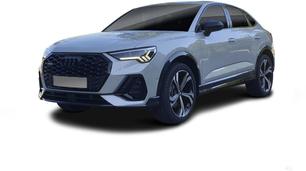
Is 10 years long enough for a special birthday celebration? When you're a kid, hitting 'double figures' is a pretty big deal, and Audi's obviously in the mood to make some noise because it has lit the candles on a limited 10th anniversary version of its compact SUV rocket ship, the RS Q3.
Only 555 examples of the 'RS Q3 Sportback edition 10 years' will be produced for worldwide consumption, with Audi Australia capturing a batch of them and sending one our way for a brief blast as the fiery five-cylinder starts filtering into dealerships.
If a minimum price and maximum interior space are your priorities, then the Puma is not for you. Especially so in the flagship ST-Line V, which may seem too small and a tad cramped compared to, say, a Seltos, C-HR or ASX.
Where the Ford excels, typically, is in the way it encourages the keen driver while cosseting four occupants (and a surprising amount of their cargo). There's a poise and maturity to the way the Puma moves that puts it on a par with or even beyond some premium compact SUVs. Even the styling is a statement. If the badges (and dashboard) were covered, you might be convinced this cat is actually a Jag.
If all that is more important, then the ST-Line V is for you. The very antithesis, then, of the unassuming and unloved EcoSport the Puma usurps.
The Audi RS Q3 Sportback edition 10 years is dynamically brilliant, beautifully finished and surprisingly civilised on day-to-day duty. A polished compact performance package that even in this special 'get-it-while-you-can' guise offers compelling value relative to its direct competitors.
If you search for the 1998 Puma coupe, you'll see some vague similarities with its modern SUV namesake, especially in their anthropomorphic face. It's in the eyes. There are also hints of Aston Martin (DBX), Porsche (Macan) and – let's face it – Mazda (CX-3).
Yet the real achievement lies in the way Ford has managed to make a 4.2-metre-long by 1.8m wide by 1.6m high crossover look so svelte, with the resulting balanced proportions, flowing lines and taut surfacing giving the Puma quite an athletic visual presence. After the EcoSport failure, head-turning looks were deemed paramount.
The extra girth gained by widening the Fiesta's platform allowed Ford's designers to create a muscular body that could also accommodate a metre-wide tailgate opening, while beneath the cargo floor is an exceptionally deep storage box, bringing better-than-expected practicality to boot.
There's a lot going on with the RS Q3's exterior design; a mix of jagged lights, hard character lines, broad haunches and multiple vents surrounding the brand's signature, six-sided grille up front.
The big 21-inch rims fill the arches nicely and the rear features a deep diffuser with fat exhaust finishers poking out either side.
It's a purposeful, macho look and the Sportback edition 10 years is defined by a black package which adds gloss black to the side window trim, front spoiler blade, side blades, rear diffuser and exterior mirrors.
The limited edition is available in two colours, 'Chronos Grey metallic', which is unique to this model and 'Dew Silver matte' which will now be added to the broader RS Q3 colour palette.
Premium performance feels like the dominant theme inside with a typically Audi tech-focused approach including high-quality brushed metal elements, matt carbon inserts and quilted leather trim on the heavily bolstered front seats.
A meticulous attention to detail is obvious and the bottom line is it's all about the driver. A grippy, flat-bottom, leather-trimmed steering wheel looks as good as it feels, sleek screens enhance the racy vibe and the mix of physical and digital controls is sensible.
Compact yet spacious, the ST-Line V's interior has strong as well as weak points.
Let's start with the latter. The most obvious connection with the Fiesta is in the Puma's dashboard, which is largely shared between the two. After all the effort expended on the design and chassis, this is somewhat disappointing. There's nothing wrong essentially with the fascia's aesthetics or functionality – it's just that the look is humdrum and dated. What's needed is something with the visual wow factor as found in the latest Peugeot 2008, especially at this price point.
Yet Ford has at least tried to put some tinsel inside this most expensive version of its smallest SUV.
Stitched perforated leather seat facings, carbon-fibre-look trim and soft vinyl coverings in key touchpoint areas bring an upmarket look and feel, backed up by a now-familiar digital instrumentation layout, a lovely flat-bottomed three-spoke steering wheel, easy and intuitive multimedia interface and a wireless phone charger. That electronic cluster, by the way, changes colour and markings but doesn't have the scope of multimedia displays of, say, Audi's Virtual Cockpit. It's comparatively rudimentary.
Conversely, there's a solidity and quietness as well, offering a level of refinement that's usually found in more-premium Euro alternatives. We weren't expecting that, though of course this is a German Ford product.
Our test car also boasted a vast glass opening sunroof, adding to the opulence. With all this gear, the ST-Line V's cabin is properly appealing.
On the practicality front, entry and egress is pretty good, the driving position is excellent (thanks in no small part to a big amount of adjustability for both the steering column and seats), the front cushions themselves are sumptuously enveloping, while wide door pockets and a big glovebox obviously come in useful. And there's a USB-C outlet in the centre cubby between the seats. How modern.
However, rear vision out is poor, there are no seat warmers and some of the lower-lying plastics are a bit drab.
The back seat isn't really suitable for people over 175cm, as kneeroom is limited and taller scalps may scrape the ceiling with the twin-pane sunroof in situ. The latter also means no overhead grab handles.
But the backrest angle and cushions themselves are fine, even for longer journeys. Just don't expect to squeeze a third adult in the back unless rubbing shoulders won't bug you. Note, too, that the rear cushion does not slide or tilt forward to allow for a lower load area when the backrest is folded down. Pity.
There is a receptacle in both doors for small bottles but no cupholders whatsoever (how can Ford call itself an American company?), or face-level air vents – though the large dash vent outputs do reach the rear. Amenities such as USBs and cupholders are AWOL; and vision out from back there is limited by the high shoulder line. Tough if you're trying to peer out. Sorry, Fido.
The Puma's overall compact footprint and rear packaging clearly suggest that this is aimed at singles, couples, or couples with smaller kids/pets to transport around.
Still, for a small SUV, the cargo area isn't bad at all. The standard floor depth is fairly generous, with a long and flat loading area, but below that is a narrower yet deeper waterproof area, while under that again is a space-saver spare wheel. Clever. Also intelligent is the luggage cover that lifts automatically with the tailgate, as per Mazda's CX-5.
For the record, cargo capacity is rated at 410 litres with the 60/40 split-fold rear seats erect – or 1170L with them folded down flat. These figures far outstrip the CX-3.
To sum the cabin experience… it's far-better than its Fiesta-sourced dashboard may suggest, while the ST-Line V treatment goes a long way in helping justify the premium. That's a win.
Snug but spacious enough, the RS Q3 Sportback's driver and front passenger are provided with plenty of breathing room without upsetting the intimate, performance car feel. Just be prepared for a bit of head-ducking physical origami when folding yourself into either of the heavily bolstered front seats.
Storage includes door bins with room for bottles, two generous cupholders in the centre console, a lidded tray in front of the gearshift (which doubles as the wireless device charging bay), a storage compartment and owners manual holder under the front seats, a modest glove box and an adjustable front centre armrest with storage compartment.
Given this car measures just over 4.5m end-to-end, a close to 2.7m wheelbase is significant and rear room is generous given the Q3's overall footprint. Plenty of head and legroom (for me at 183cm) with enough width for three adults on short journeys. A trio of up to teenage kids will be fine.
The back seat is able to slide for extra legroom (and slightly less boot space), while backrest angle is also adjustable.
Storage runs to small bins in the doors, a fold-down centre armrest (with two pop-up cupholders) and storage nets on the back of the front seats. Directional and temperature control in the rear for the ventilation system is a big plus.
Power and connectivity options run to a 12V outlet and two USB sockets in the front (Type A and C), another two Type C sockets in the back and a second 12-volt jack in the boot.
Speaking of which, cargo volume with all seats up is a handy 530 litres, enough to swallow CarsGuide's three-piece luggage set or large pram (the latter with room to spare) and 1400 litres with the 40/20/40 split-folding rear seat lowered.
The loading lip is low, a stainless steel sill protector helps minimise scuffs and scratches and the hands-free power tailgate is welcome.
If you're keen to hook up the boat or horse float the RS Q3 is able to tow a braked trailer up to 1900kg (750kg unbraked), but don't bother looking for a spare of any description, a repair/inflator kit is your only option. Boo...
In Australia, the Puma plays in the burgeoning 'Light SUV' segment, so goes up against the ageing yet athletic Mazda CX-3 as well as Honda's HR-V, along with more recent challengers like the Hyundai Venue, Kia Stonic, Nissan Juke II, Toyota Yaris Cross and Volkswagen T-Cross. All are ready to pounce on the bestselling Hiroshima crossover.
What every one of these baby SUVs have in common is that they're based on B-segment – or supermini – platforms. However, prices and sizes do blur in this corner of the class, with larger small-car-derived rivals from the 'Small SUV' segment above, led by the Mitsubishi ASX, Kia Seltos, Mazda CX-30 and Hyundai Kona, also in the Ford's crosshairs.
Formidable opponents indeed, and just like that, the first big hurdle appears for the Blue Oval hopeful. Puma is Light SUV-sized but Small SUV-priced, with the entry-level grade kicking off from a tenner under $30,000, and before on-road costs. That's even more expensive than the VW.
This instantly eliminates it from many buyers' radars.
In contrast, a CX-3 Neo Sport starts from just $22,890. But that's with a manual gearbox, plain interior and steel wheels, whereas the Puma includes a ripper turbo engine/auto combo, climate control, a smartphone app that allows for remote vehicle location/ locking/unlocking/starting, voice-activated sat nav, wireless smartphone charging, lane-departure warning and assist, traffic-sign recognition, driver impairment monitor, 17-inch alloys and a leather steering wheel.
Along with other goodies like AEB with pedestrian alert, reverse camera, Bluetooth audio and telephony, Apple CarPlay/Android auto, digital radio, live traffic updates, fuel-saving engine stop/start, auto headlights, rain-sensing wipers, adaptive cornering fog lights, powered folding mirrors, push-button start and puddle lamps, the Puma looks and feels up-spec inside. To match most of that stuff in the CX-3 you'll need a Maxx Sport auto from $26,890.
Rising to the $32,340 ST-Line drops the Puma's ride height by just 2mm (to 164mm), but adds firmer suspension, a body kit, glitzier alloys, sports seats, a 12.3-inch digital instrument cluster, flat-bottomed steering wheel, paddle shifters and racier trim for a racier experience, though it loses the climate control for a manual air-con set-up. Strange. This grade might just be the sweet spot in the Ford's range, though it does sit about $1300 higher than the CX-3 sTouring equivalent.
Finally, the subject of this test, the ST-Line V, scores privacy glass, lashings of chrome, keyless entry/start, leather upholstery, climate control, premium audio, a powered tailgate and 18-inch alloys. All for $35,540, it's about on a par with CX-3 Akari, but lacks the latter's powered driver's seat and heated front cushions, among other items. The Mazda also goes one better with a $2000 AWD option from all mid-level grades up, as well as manual availability.
We recommend the $1500 Park Package, which ushers in adaptive cruise control with full stop/go and lane-centring tech, as well as blind-spot detection and auto parking. Premium paint adds $650, a panoramic roof $2000, roof rails $250 and a black roof $500.
Against compelling alternatives costing less, like the high-flying Seltos Sport+, CX-30 G20 Touring and Toyota C-HR Koba, the ST-Line V struggles to make sense on paper. Can the Puma's cabin and driving experience claw back its obvious price disadvantage?
The Audi RS Q3 Sportback edition 10 years is priced at $102,900, before on-road costs, which is a $3800 premium over the standard issue version.
For those extra dollars the car is upgraded with specific 21-inch black alloy rims, black badging and brake calipers as well as (three-stage heated) 'RS' Nappa leather-trimmed sports front seats with contrast 'Copper Honeycomb' stitching.
The fancy stitching extends to the Alcantara-trimmed steering wheel and gear lever, the RS floor mats also feature copper highlights and the door downlighting projects a unique rhombus design.
At that money the RS Q3 lines up against BMW's firecracker X3 M40i ($126,800), the ferocious Mercedes-AMG GLA45 S ($121,900) with the Jaguar E-Pace 300 Sport AWD ($84,500) the only other similarly pitched compact performance SUV within $20K of the Audi.
And as well as the performance and safety tech covered later in the review, the RS Q3's standard features list includes, three-zone climate control, adaptive cruise control, keyless entry and start, Nappa leather trim, ambient lighting (with 30 colour choices), an RS sport contour leather-trimmed steering wheel, 12.3-inch digital instrument cluster, 10.1-inch multimedia display (with text and voice control), (wired) Android Auto and Apple CarPlay, sat nav and wireless device charging.
There's also a Bang & Olufsen '3D Sound System' (15-speaker with 680-watt, 16-channel amp), digital radio, 21-inch alloys, electronically-controlled adaptive dampers, auto Matrix LED headlights (with RS-specific darkened trim) and a hands-free power tailgate. And it's worth noting metallic and pearl effect paint finishes are offered at no extra cost.
Pretty impressive. Especially when you consider even this special edition RS Q3 is $20,000 cheaper than its primary BMW and Merc-AMG rivals.
A multiple international engine-of-the-year winner, the compact and lightweight, 999cc 1.0-litre twin-cam three-cylinder turbo petrol unit is the sole choice for now. Driving the front wheels via a seven-speed dual-clutch transmission (DCT), it delivers 92kW of power and 170Nm of torque.
With no all-wheel drive option, there are instead five driving modes – Normal, Sport, Slippery (for snow) and Trail (gravel) applications, working on the traction, stability and transmission algorithms to mimic some of the benefits of AWD. In the ST-Line V, a set of paddle shifters are fitted in lieu of the sadly-absent manual gearbox.
Owners of the previous-shape Fiesta S and EcoSport would be familiar with the 1.0T's smooth and strident performance, though these 2010s models used a completely different type of DCT. This was the highly-publicised Powershift, which consisted of a dry-clutch system, and was prone to a multitude of problems and failures in the petrol-powered auto versions.
In contrast, the Puma adopts a next-generation transmission dubbed 7DCT300; related to the item found in some smaller Mercedes-Benz, Renault and Nissan models, it instead employs a more-robust wet-clutch system with a higher torque threshold, so promises to be far more durable and reliable than the problematic old dry-clutch unit.
The RS Q3 Sportback is powered by a 2.5-litre in-line five-cylinder intercooled turbo-petrol engine sending drive to all four wheels via a seven-speed dual-clutch automatic transmission and Audi's quattro permanent all-wheel drive system based on an electronically-controlled multi-plate clutch pack.
Featuring a cast iron block, alloy head, direct-injection as well as variable intake and exhaust cam adjustment, the (EA855) engine features a special firing order (1-2-4-5-3), the odd number of cylinders producing a signature engine sound and exhaust note reminiscent of the 1980s 'Ur' Quattro.
Peak power is 294kW from 5850-7000rpm and maximum torque is 480Nm delivered across a broad plateau from 1950-5850rpm.
The Puma's official combined average fuel consumption figure is just 5.3 litres per 100km, which works out to 121 grams per kilometre. Fitted with a 42-litre fuel tank, the potential range averages out to almost 800km between refills.
Out in the real world, we managed an exceptional 6.2L/100km, no doubt helped by an ever-eager stop/start system (which, annoyingly, kills the air-con when it extinguishes the engine; we found ourselves constantly pressing that 'off' button as the days wore on). This figure was achieved in motorway-heavy driving scenarios, albeit loaded with holiday gear and with the air-con blaring.
So, we took another, urban-focused test, in lots of slow-moving traffic situations, and averaged a still-solid 8.0L/100km.
Note, that while the Puma requires 95 RON premium unleaded, it's also perfectly happy on – and is even recommended by Ford for – the cheapest petrol currently offered in Australia, 94 RON E10 unleaded. Either way, the ST-Line V is a frugal small SUV.
Audi's official fuel economy number for the RS Q3 on the combined cycle is 8.9L/100km, the 2.5-litre turbo-petrol five-cylinder engine emitting 204g/km of CO2 in the process. Stop-start is standard.
We covered city, suburban and some freeway running on test, returning an (indicated) average of 9.6L/100km. And that's pretty good, given we pushed on enthusiastically on a reasonably regular basis.
The fuel tank requires 63 litres of 98 RON premium unleaded to fill it which translates to a theoretical range of just over 700km, shrinking to around 650km based on our real-world number.
If the Puma's pricing is complicated, its cabin surprising accommodating and its real-world efficiency particularly parsimonious, then the upward trajectory of pros over cons continues with performance that's downright spirited.
Around town first. A small-displacement engine plus a turbo plus a DCT usually spell interminable spells of lag when all the driver longs for is an instant and measured response to a right foot flexing down onto the throttle.
But the Ford largely sidesteps such pitfalls. Though momentarily hesitant at take-off, the three-pot turbo does then get down to business in no time, with a sustained and satisfying surge of thrust as the revs grow, accompanied by a lusty and raspy thrum that's entirely in keeping with the Puma's track-pants appearance. And it doesn't let up either, with speed building up strongly through the gears, and much more so than the mere 999ccs suggest. Great for overtaking, or taking over a rapidly diminishing gap in the peak-hour derby.
Selecting Sport (a fiddly action that's located too far from the driver for safe eyes-on-the-road operation) lights an even bigger fire in the Puma's belly, with punchier acceleration and a very attentive transmission tune, slicing seamlessly through the seven ratios, leaving you in awe that a heart so small can possess such deep lungs.
Where the Ford really leaves an indelible mark is its enthusiasm to corner just as keenly, armed with brilliantly slick steering and a planted chassis that is set up to both encourage and interact with the driver. Minimal body roll and lots of grip from a quality quartet of Continental tyres ensure the Puma can be punted about like a sporty little hatchback, while the electronic safety tech allowing just enough leeway for lots of fun before they gently reel everything back into line.
We cannot think of a more enjoyable small SUV. And, by the way, those same driver-assist systems provide exceptionally nuanced lane-keep and adaptive cruise-control intervention – certainly they're right up there with the premium SUV brigade.
Given that our Puma wore 215/50R18 rubber, on a 'sports' suspension tune, the ride around town is commendable, with ample cushioning from the rough stuff. There is some tautness to the ride, but it isn't hard or rough; the ST-Line V walks a fine line between urban-agility and surface-decay isolation. In other words, it's commendably relaxing to travel in.
At higher speeds, some road and tyre noises do permeate through inside, and those Dumbo door mirrors do create some wind whoosh, but overall, given how dynamic the chassis is, the Puma feels grown up and sophisticated.
It still seems counterintuitive when a high-riding SUV is tuned to perform and handle like a low-slung sports car but here we are. And Audi executes this mystifying transformation as expertly as any carmaker in the automotive world.
Audi says the RS Q3 Sportback will blast from 0-100km/h in 4.5 seconds. Anything under 5.0 seconds is properly fast, and there's nothing quite like the deep-throated bellow of a VW Group in-line five to raise the hairs on the back of your neck.
The RS Q3's sport exhaust system is a dual-branch set-up with exhaust flap control, and people of a certain age will instantly imagine themselves matching it with Ari Vatanen, Walter Röhrl and Michèle Mouton on a suburban special stage behind the wheel of a 1980s Group B Sport Quattro rally car (actually, the school drop off at an infinitely more sensible pace).
The car weighs in at a not insubstantial 1775kg, but 480Nm, available all the way from 1950rpm to 5850rpm, means a near instant surge of fierce acceleration is always lurking under your right foot.
And the VW Group is on the pace when it comes to dual-clutch auto transmissions, from Porsche's 'PDK' and VW's 'DSG' to Lambo's 'DCT' and Audi's 'S tronic'.
The RS Q3's seven-speed unit is quick and positive, the wheel-mounted paddles ramping up the engagement factor.
The variable ratio, electrically-assisted steering is capital G Great. Well weighted and precise with reassuring road feel and the Alcantara trimmed wheel is a nice way to access it all.
Suspension is by struts at the front and multi-links (four) at the rear with adaptive dampers on-board.
Despite running on 21-inch rims, shod with high-performance 255/35 Continental PremiumContact 6 rubber, ride comfort is surprisingly good.
Dial in 'Comfort' mode via the 'Drive Select' system and the impact of even substantial bumps is softened off appreciably.
An ideal set-up would be the first 'RS1' short-cut Drive Select button set for Comfort suspension, with throttle, steering and transmission set to maximum attack and the second 'RS2' mode tweaking the suspension to track-day level, too.
Push on through your favourite set of bends and you can feel the electronic wheel-selective torque control system keeping everything under control. This car puts its power down through sweeping sections with fuss-free authority.
The RS-specific menu in the digital instrument cluster provides extra instrumentation in the shape of a power/torque display, G meter and lap timer. Fun!
The brakes are professional grade with big ventilated rotors all around and aluminium fixed calipers at the front.
But beware, the flip side of the RS Q3's quick steering response is a sizeable 11.8m turning circle. Take your time when parking.
Tested under the 2019 Euro NCAP crash-test regime, the Puma scores a top five-star ANCAP rating.
However, this means it does not meet the more stringent frontal offset crash, side impact crash and far-side impact crash-test criteria introduced by ANCAP for 2020 model-year vehicles – despite launching in September of that year.
Safety items include dual front, front-seat side and side curtain airbags (six in total), AEB with pedestrian and cyclist detection (working between 7km/h and 80km/h), lane-departure warning, lane-keep assist, traffic-sign recognition, driver fatigue alert, rear parking sensors, tyre pressure monitors and emergency assistance. These come on top of anti-lock brakes with electronic brake-force distribution and brake assist, stability control and traction control.
As mentioned earlier, adaptive cruise control, active park assistance, front parking sensors and blind-spot detection are part of the $1500 'Park Package'. Do it.
Although the Audi Q3 received a maximum five-star ANCAP score in 2019, the RS Q3 was specifically excluded from the assessment, so it's officially untested.
But the car boasts an extensive active (crash-avoidance) safety suite including, auto emergency braking (AEB) (5.0km/h to 85km/h for pedestrians and cyclists and up to 250km/h for vehicles), adaptive cruise control (with stop-go function and active lane assist), lane change warning and lane departure warning (with lane keeping assist).
There's also 'Attention Assist' (warning tone and visual signal if the system determines the driver's attention may be lapsing), front and rear parking sensors, a reversing camera with 360-degree view, rear cross-traffic alert, tyre pressure monitoring, 'Hill hold assist' and hill descent control.
If, despite all that, a crash is unavoidable there are six airbags on-board (front and side for the driver and front passenger as well as full-length curtains). The RS Q3's showing its (10-year) age here because additional rear side and front centre bags are close to the norm now.
Nice to see a first aid kit and warning triangle included and there are three top tethers and two ISOFIX anchor points for securing baby capsules and child seats across the second row.
Ford offers the industry-average warranty of five-years/unlimited kilometres. Services intervals are every 12 months or 15,000km.
There is also a capped-price servicing scheme under the 'Ford Service Benefits' banner, with the first four years/60,000km of 'A and B' logbook services pegged at $299 per visit, and then between $320 and $560, for up to 12 years.
There is also a Ford loan car program, SYNC 3 map updates and Motoring Club Membership included during that time frame.
Audi Australia covers all the models it sells with a five-year/unlimited km warranty with 24-hour roadside assistance included for the duration. Pretty much cost-of-entry in this part of the market.
Paintwork defects are also covered for five years, and the body is warranted against corrosion (to the point of perforation) for no less than 12 years. Nice.
Service intervals are 12 months/15,000km and capped-price servicing is available, a five-year/75,000km plan for the RS Q3 costing $3580, an annual average of $770. Fairly steep.
An 'Audi Advantage' package is also available, adding an extra two years' worth of warranty, scheduled servicing and roadside assistance (to the end of any existing term) for $3800.