What's the difference?
The Ford Ranger line-up’s limited-edition Tremor arrived here in the second half of 2024, now the Ford Everest gets its own Tremor.
Based on the Everest Sport, this Tremor is not a limited-edition variant and gets the 3.0-litre, turbo-diesel V6 engine (rather than the Ranger Tremor’s 2.0-litre four-cylinder twin-turbo diesel), and to boost the 4WD wagon’s off-road capability, Ford has given it new longer coil springs, Bilstein dampers and General Grabber AT3 all-terrain tyres.
The Tremor also gets 'Rock Crawl' drive mode, heavy-duty bash plates and side steps, as well as some Tremor-specific styling and branding inside and out.
So, is this bush-boosted 4WD wagon worth your consideration?
Read on.
Make no mistake, you are looking at the biggest challenge the all-conquering Tesla Model Y has ever faced in Australia.
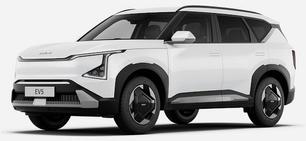
It’s the Kia EV5, a mid-size, all-electric SUV the Korean brand thinks will be its best-selling EV by some margin.
Oh, and it’s cheaper than the Tesla, by more than a little bit.
So, is this the electric SUV that might finally put an end to Tesla’s winning run in Australia?
The standard Ford Everest – powered by a 2.0-litre twin-turbo or a V6 – is a nicely refined, comfortable and capable 4WD with plenty of potential as a touring vehicle.
The Tremor treatment doesn’t turn the Everest into a Raptor-esque Everest but it does offer low-key substantial off-road improvements to what was already an impressive 4WD wagon.
This sensible package of upgrades – more ground clearance, off-road-suited suspension, and decent all-terrain tyres – gives this Everest a mild 4WD boost.
The size is right, the price is right and the drive is right – three things that make the Kia EV5 a pretty formidable foe, and the kind of vehicle that might finally be able to break through the wall of the temple of Tesla in Australia.
Note: CarsGuide attended this event as a guest of the manufacturer, with accommodation and meals provided.
Lift any vehicle a few millimetres and throw decent all-terrain tyres on it and that one-two combination instantly gives the vehicle more track-cred.
And so it goes for the Everest Tremor.
But there’s more going on here than simply increased height and a swap-out of rubber over standard Everests.
As mentioned, it gets Bilstein dampers, new springs, and tough all-terrain tyres which combine to give the Tremor a solid presence.
The new honeycomb-pattern grille with auxiliary LED lights, quite visible steel bash plate, pronounced heavy-duty side steps and orange Tremor branding add to the package.
And inside it gets those Tremor-specific touches, such as the leather-accented seats embossed with Tremor branding, ebony-coloured interior accents and all-weather floor mats.
If you’re familiar with any of Kia’s EV designs, and specifically the EV9, you’ll already know the Kia EV5, which looks a lot like a shrunken version of the company’s biggest electric 4WD.
But this one looks a bit smaller, a bit more familiar looking, and maybe a bit more accessible than the hyper-modern EV9.
Honestly, it looks like a contemporary, mid-size SUV that could be powered by anything.
There are a couple of EV5 design elements I really like. The first is the combination of hard edges and subtle curves, which combine really well. I also love the lighting treatment up front, which gives the EV5 a bold and unique light signature, especially at night.
Inside, it’s another story of familiarity, with a clean, high-tech cabin and Kia’s common twin-screen set-up. Actually, it’s more a triple screen, with two 12.3-inch screens, and a 5.0-inch climate monitor between them.
The materials are all nice, and they look great, but they don’t exactly melt under the touch, and that gives the EV5’s cabin a hard edge I don’t love.
I do, however, love the inclusion of some physical buttons, so you’re not pawing through the screen to access every in-car function.
And one final design quirk. I know it looks like it has an old-school bench front seat, but you can’t use it as a third seat in front. Kia says it’s just a design flourish. But it is also somewhere safe to pop your phone or other small valuables to stop them sliding about when you're on the road.
The Tremor cabin is a comfortably familiar interior – it’s functional and roomy and so scores well in terms of overall practicality.
Driver and front passenger have easy access to storage options, such as the centre console, cupholders, door pockets and a shelf for your everyday-carry stuff as well as charging points (wireless charger, USB and USB-C sockets).
There’s plenty of space for the driver and all passengers (front, second and third row), and the seats are supportive and comfortable, even in the third row.
While that pew is a straight-up-and-down set-up it still manages not to be a complete punishment for those passengers.
Those in the second row get a fold-down centre armrest, door pockets and map pockets as well as air con vents and controls.
The rear cargo area has standard Everest features – with cargo tie-down points and a 12-volt outlet.
A niggle, and one I’ve found in other new-generation Fords, is the multimedia system. It's a decent size with clear and crisp colours and is easy to operate, but I needed to repeatedly stab a finger onto the screen in order to work my way through menus and sub-menus to figure it all out.
My advice is get your head around all of the multimedia system’s functionality while the vehicle is stationary because, to me, some of the screen workings are counter-intuitive and it’s easier and safer to learn all of that while the vehicle is not moving.
Also, the fact some controls are on-screen and some are off it creates more than a little confusion.
At 4615mm in length, 1875mm in width, 1715mm in height, and with a wheelbase of 2750mm, the Kia EV5 is roughly the same size as a Tesla Model Y, so if you’re ever sat in the back of the Tesla, you’ll have a fair idea of what to expect here.
Sitting behind my own 175cm driving position, I found I had a heap of knee room, more than enough headroom, and I reckon you could fit three adults across the back seat pretty easily, too.
There are a couple of design flourishes I really like, too. The pull-down divider that separates the backseat is home to two cupholders, which isn’t unusual, but what is new to me is the unique positioning of the USB charge ports, which are in the middle-back of the front seats, right above the storage pocket, so you have somewhere to pop your phone and cable when you're charging.
There is also a deep storage draw between the two front seats. It’s just for extra storage in the Air and Earth, but in the GT-Line it’s heated and cooled, which means hot pies or cold drinks when you’re on the move.
The EV5 might be an all-electric vehicle, but it’s still a mid-size SUV, which means there are certain standards it has to hit to be taken seriously, and one of those is boot space.
Up front there’s 67 litres of space in the fruit, or frunk, while the boot holds 513L with the rear seats in place – that number obviously growing as you begin folding them flat.
It is also a hugely customisable space. There’s heaps of under-floor storage below the removable panels. There’s also vehicle-to-load capability, which takes the form of a standard power point in the boot that can use the vehicle’s battery to power pretty much whatever you want.
Finally, there are adjustable luggage hooks, so you can carry bigger or smaller bags as you wish.
The seven-seat Ford Everest Tremor 4WD 3.0 V6 diesel auto has a listed price of $76,590, excluding on-road costs, putting it between the Sport and top-spec Platinum in the Everest range.
That pricing pits it against the likes of the GWM Tank 500 Hybrid Ultra ($73,990 drive-away), Isuzu MU-X ($74,400, excluding on-road costs) and Toyota Prado GXL ($79,990, excluding on-road costs).
However, price 'as tested' on our test vehicle is $84,390 because this Tremor has 'Prestige Paint' ($700, 'Command Grey'), the 'Premium Seat Pack' ($1100), 'Touring Pack' ($2500) and 'Rough Terrain Pack' ($3500).
The Tremor Premium Seat Pack includes heated/vented front driver and passenger seats, eight-way power passenger seat and 10-way power driver seat (with memory).
The Touring Pack includes a 360-degree view camera set-up, tow bar and hitch, an integrated trailer brake controller and trailer back-up assist.
The Rough Terrain Pack includes what Ford Australia describes as “Under Vehicle Armour” (aka bash plates), a Rough Terrain Bar (a nudge bar on steroids) and an auxiliary switch bank.
Worth noting Ford Australia advises fitment of the Rough Terrain Bar “means the vehicle is considered 'unrated' by ANCAP”.
Also available is the 'Towing Pack', which includes a tow bar and integrated trailer brake controller.
Otherwise, standard Tremor features include a 12.0-inch digital multimedia system (wireless Apple CarPlay and Android Auto), wireless charging, an 8.0-inch digital driver’s display, as well as heavy-duty side steps and black wheel arch moldings, among many other things.
It also gets Tremor-embossed leather-accented seats, ebony-coloured interior accents and all-weather floor mats.
As mentioned earlier, the Everest Tremor gets Bilstein dampers, new springs, the all-terrain tyres (LT 265/70 R17) and low-speed Rock Crawl added to its off-road driving modes.
Other Tremor-specific features include a new grille, auxiliary LED lights, a steel bash plate, heavy-duty side steps and orange Tremor branding.
As a result of the Tremor treatment, this Everest has a claimed 255mm ground clearance (26mm more than the closest Everest model), the best off-road angles of any Everest (more about those in the Driving section) and the tightest turning circle of the Everest line-up (measuring 11.65m to best the rest of the field’s 11.8m).
Exterior paint choices include the no-extra-cost 'Arctic White', or 'Shadow Black', 'Meteor Grey', or 'Command Grey' which all cost $750.
The cheapest EV5, the Air, arrives in two guises, Standard Range or Long Range, and the former is something of a bargain.
It’s the only EV5 to get included on-road costs, and Kia is asking $56,770, on the road. That puts it well below the Tesla Model Y. As of right now, the single-motor Tesla is $60,868, on the road, in NSW.
Next is the Air Long Range, which lists at $61,170, before on-road costs. The EV5 Earth occupies the middle rung, at $64,770, before on-roads, while the yet-to-arrive flagship, the GT-Line, is a considerable $71,770, before on-road costs.
Air models get 18-inch alloys, LED lighting all around, roof racks and power mirrors, while inside there are cloth and synthetic leather seats, with a massage function for the driver, along with a synthetic leather steering wheel and LED interior lighting.
Tech is covered by twin 12.3-inch screens, with a smaller 5.0-inch climate screen sandwiched between them, and there’s in-built nav, a six-speaker stereo and Apple CarPlay and Android Auto.
The Earth then adds 19-inch alloys, gloss black exterior design flourishes and privacy glass, while inside, the seats are now entirely synthetic leather. You also get a second V2L connection, as well as a powered tailgate.
Finally, the GT-Line gets pretty much everything Kia could throw at it, including 20-inch alloys, auto-flush door handles, a panoramic sunroof, two-tone seats which are now billed as offering "premium relaxation", wireless phone charging, fingerprint recognition, a heated steering wheel and an augmented-reality head-up display.
As mentioned right at the start, the Everest Tremor has a 3.0-litre V6 turbo-diesel engine – producing 184kW at 3250rpm and 600Nm at 1750-2250rpm – and that’s matched to a 10-speed automatic transmission.
It also gets the line-up’s full-time 4WD system. This system has selectable two-wheel drive (2H), four-wheel drive high-range (4H), four-wheel drive low-range (4L) and four-wheel drive automatic (4A = 4Auto) that sends drive to the front and rear axles as needed, and which can be safely used on high-traction surfaces, such as bitumen.
The entry-level EV5 Air is available in Standard Range or Long Range guises, both powered by a single front-mounted electric motor, producing 160kW and 310Nm.
The Standard Range will clip 0-100km/h in 8.5 seconds, while the extra weight of the bigger battery slows down the sprint in the Long Range, taking around 8.9 seconds.
The Earth is a twin-motor AWD offering, with a motor at each axle, lifting outputs to 230kW and 480Nm, dropping the sprint to a brisk-feeling 6.1 seconds. The incoming GT-Line gets the same powertrain.
The Tremor has the highest listed fuel consumption of the Everest line-up: 9.5L/100km on a combined (urban/extra-urban) cycle.
I recorded an average of 11.2L/100km on this test.
The Tremor has an 80-litre fuel tank so, going by my on-test fuel-consumption figure, you could reasonably expect a driving range of about 714km from a full tank.
Worth noting the Tremor requires AdBlue diesel-exhaust fluid.
The Air Standard Range gets a 64.2 kWh lithium iron phosphate battery, weighing in at a hefty 428kg, which delivers a claimed driving range of 400km. The Air Long Range, the Earth and the incoming GT-Line all share the same 88.1kWh battery, upping the range to 555km, 500km and 470km, respectively.
So, if driving range is at the very top of your must-have list, the Air Long Range is the car for you.
All cars can take 7.0kW home AC charging, while the dual-motor versions are set up for 11kW AC charging. Fast charging. When it comes to fast charging, all models can plug into a 350kW charger, taking them from 10 percent to 80 per cent in less than 40minutes.
Overall, the Tremor is nice to drive on road. It’s quiet, refined and comfortable and the engine and transmission make a cluey, unstressed pairing.
However, the Tremor’s suspension – engineered to improve the vehicle’s off-road capability – is firm through sections of back-country bitumen and even mildly corrugated bush tracks.
Also, this Everest’s all-terrain tyres don’t help ride quality or noise levels on sealed surfaces. But that’s no surprise and a very minor trade-off when the Tremor's potential as a touring vehicle is so high.
On the open highway at cruising speed, the Tremor exhibits all of the smooth-driving characteristics the Everest line-up is well known for.
It sits nicely on the road, that wide wheel track (a 30mm increase in width to 1650mm) gives it a solid stance and this V6 ute simply rumbles along.
So, how does it perform in 4WD territory? Well, it’s based on the Everest Sport, which is no off-road loser, so you’d assume the Tremor would do okay.
However, we all know if you assume, it makes an 'ass' out of 'u' and 'me'… but the Tremor has been engineered to outperform the standard Everest in the dirty stuff. Unsurprising spoiler alert, it does, but only marginally.
The Everest Tremor is 4914mm long (without the towbar hitch receiver; 4978mm with), 2015mm wide (mirrors in; 2207mm, mirrors out) and 1904mm high.
It has a 2900mm wheelbase and a listed kerb weight of 2550kg, the latter making it the heaviest Everest in the line-up.
This is not a diminutive wagon but it has the smallest turning circle (11.65m) in the Everest range and its dimensions don’t hamper it in the bush.
As mentioned earlier, when you add running ground clearance to any off-roader its off-road performance will be improved. The Tremor has more ground clearance (255mm) than its stablemates but, as with any measurements provided by vehicle manufacturers (ground clearance, wading depth, towing capacities, etc), always regard those figures with a healthy degree of scepticism.
Wading depth is listed as 800mm and its off-road angles are in line with market rivals: for your reference, approach, departure and ramp-over angles are listed as 32, 26.8 and 23.9 degrees, respectively.
This wagon’s 3.0-litre turbo-diesel V6 offers plenty of torque across a broad rev range, the 10-speed auto is clever – no flip-flopping between ratios here – and you can use the manual shifter if you get the urge.
Low-range gearing is adequate and the Tremor has an electronic rear diff lock.
The Tremor has a variety of selectable on- and off-road drive modes, including 'Normal', 'Eco', 'Tow/Haul', 'Slippery', 'Mud/Ruts', 'Sand and Rock' and the Tremor-specific 'Rock Crawl' plus a locking rear diff.
These off-road driving modes are no substitute for track-worthy 4WD mechanicals but they help by adjusting engine, throttle, transmission, braking, traction and stability controls to suit the driving conditions.
Off-road traction control is effective without being spectacular. There’s a bit too much wheelspin for my liking.
Off-road applications are displayed on screen – with driveline/diff lock indicators, steering, pitch and roll angles depicted. Hill descent control held the Tremor to a steady 3.0-4.0km/h as I crawled down a difficult slope.
The power steering, light and sporty in all scenarios, has been tweaked with a heavy-duty tune and it retains a confident feel in difficult conditions.
Heavy-duty off-road engineering has bolstered the suspension set-up with new springs and Bilstein dampers with external reservoirs.
Wheel travel – how far the axle can move up and down vertically wheel-to-wheel relative to the chassis – is slightly better than a standard Everest’s, with this wagon’s tyres stretching a little further than the regular version’s.
Again, as I mentioned earlier, by replacing an off-roader’s standard road-biased rubber with a set of decent all-terrain tyres its off-road capability will be improved. And that’s exactly what Ford has done.
The Tremor's General Grabber all-terrain tyres feature light-truck construction. They are grippy and very effective in dirt, loose gravel, slippery clay and the like.
There are a few niggles, though.
I’ve previously expressed annoyance at the auto transmission shifter – a kind of joystick on a light cycle of steroids and just as touchy. It’s especially finicky on bumpy terrain but it’s another Everest-based characteristic to which I’ve become somewhat accustomed.
The operation of some off-road driver-assist tech can be confusing as it’s divided between the rotary dial (to select drive modes) and the screen (to engage the rear diff lock etc). Not a deal-breaker, but it takes some getting used to.
The brake pedal is spongy – taking some time between initial foot pressure to ‘biting', but then the brakes – discs all around – do clamp into action.
As for packability, there is a listed 259 litres (VDA) of space in the rear-most cargo area (with all three rows of seats in use), 898L (VDA) when the third row is stowed away and 1823L (VDA) when the second and third rows are lowered.
The Everest Tremor has a listed payload of 690kg, and towing capacities of 750kg (unbraked) and 3500kg (braked).
It has a listed GVM (Gross Vehicle Mass) of 3240kg and a GCM (Gross Combined Mass) of 6350kg. Remember: any onboard loads – such as people, pets, camping gear or aftermarket equipment (bullbar, roof rack etc) – must figure in your payload and GVM equations.
First things first – I spend most of my time behind the wheel of the EV5 Earth, which though it shares its dual-motor powertrain with the GT-Line, is actually the fastest of the lot owing to the extra weight of Kia's flagship.
That means zero to 100km/h in just over six seconds, and trust me when I say this, that is more than fast enough. I know you read about EVs knocking off the sprint to 100km/h in supercar-besting times, but you don't need that sort of crazy acceleration in a family-focused mid-size SUV.
Actually, forget needing, you don't want it. The EV5 feels more than punchy enough, without shaving years off your life every time you plant your foot.
Fit for purpose, then, which is exactly how I'd describe the rest of the EV5's very good drive experience. Kia's Australian ride and handling wizards have once again had their way with the EV5, and the result is an EV that handles most everything Australian road surfaces can throw it at it with ease.
Surprisingly, it's maybe not quite as dynamically sharp as the bigger EV9, but it's always comfortable, without feeling floaty or disconnected, and it will happily grip its way around tighter corners without tipping from side to side, either.
There are a couple of small quirks, though. The first is the steering, which is definitely responsive and confidence inspiring, but it also has a kind of artificial weight or heaviness at times that feels a bit disconnected from what's happening beneath the tyres. And the cabin can be a little noisy through wind, too.
But these are small beans, really. The EV5 is comfortable and capable, and without the harsh ride or too-sharp steering that can be found in some of its rivals.
We drove it for hours across all sorts of road surfaces, and in all sorts of conditions, and found very, very little to complain about.
The Everest Tremor has the maximum five-star ANCAP safety rating from testing in 2022.
Standard safety features include nine airbags - front, front side, driver and front passenger knee, full-length curtains plus a front-centre bag - AEB, adaptive cruise control (with stop and go), lane-departure warning, lane-keep assist, blind-spot monitoring (with cross-traffic alert and trailer coverage), a reversing camera and more.
Off-road driver-assist tech includes specific driving modes, Rock Crawl mode, 'Trail Control' and 'Trail Turn Assist'.
And remember, as mentioned earlier, if the Rough Terrain Bar is fitted, the vehicle is regarded as 'unrated' by ANCAP.
Every EV5 gets a comprehensive safety offering, including 'Advanced AEB' that includes junction crossing, lane oncoming and lane changing alerts. There’s rear-cross-traffic alert, semi-autonomous highway cruising and a whole heap more.
If you want a blind-spot view monitor, surround-view monitor or remote park assist, you’ll need to spring for the GT-Line.
The EV5 hasn’t been crash-tested yet, but Kia will be shooting for the maximum five-star ANCAP rating.
The Tremor is covered by Ford’s five year/unlimited kilometre warranty, which is the standard for this part of the market.
Roadside assistance is complimentary for 12 months after each service, extended for up to seven years as long as the Tremor’s owner has it serviced at an authorised Ford dealership.
Service intervals are scheduled for every 12 months or 15,000km and a capped-price servicing plan applies to the first five years/75,000km with a $2550 cost attached ($510 per service).
For reference a comparable Toyota LandCruiser Prado will set you back $390 per workshop visit, but that car's service interval is more frequent at six months/10,000km.
The EV5 is covered by Kia’s seven-year, unlimited-kilometre warranty, and you can prepay your servicing costs, too.
Three years will set you back $980, five years is $1535 and the full seven years will set you back $2431 ($347 per workshop visit), which is category competitive.