FROM OUR EXPERT TEAM
Explore Articles

Mitsubishi Eclipse Cross 2024 review: Plug-in Hybrid EV ES long-term | Part 1

Likes

EV driving is smooth
Theoretically avoiding the servo
Spacious inside for a small SUV

Dislikes

Hire car interior
Need somewhere to plug-in
Very pricey
Chris Thompson

Senior Journalist

6 min read

The phrase ‘best of both worlds’, depending on how old you are, might be associated in your mind with one of two things: hybrid cars, or Miley’s Hannah Montana alter ego.

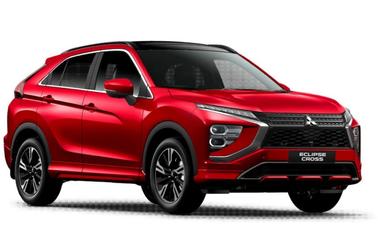
But I haven’t spent the last month watching old Disney shows, so you’re here to read about a hybrid car. Specifically, the 2023 Mitsubishi Eclipse Cross ES PHEV.

The entry-level variant to Mitsubishi’s plug-in hybrid EV line-up is spending a few months in the CarsGuide garage so we can decide if it’s worth the rather hefty price increase over a standard petrol Eclipse Cross.

Read More About Mitsubishi Eclipse Cross

The ES grade in the Eclipse Cross range signifies the base model, and the car we’re testing is pretty sparse in terms of features - and not in a ‘simple is best’ kind of way.

The purely petrol-powered version starts from $31,490, before on-road costs. Our plug-in hybrid version... $47,290.

The purely petrol-powered version starts from ,490, before on-road costs. Our plug-in hybrid version ,290.

Yep, the hybrid drivetrain effectively adds $15,800 to the price of the small SUV, so the PHEV cost about one and a half times as much. That's a big ‘oof’.

Rather than the non-hybrid’s turbocharged 1.5-litre petrol four-cylinder engine making 110kW/250Nm to power the front wheels, the PHEV boasts a 2.4-litre naturally aspirated unit that, while making only 94kW and 199Nm on its own, is joined by two electric motors (one for each axle) that help drive all four wheels.

Features LED headlights.

Mitsubishi doesn’t quote a total system output for the engine and motors together, but the front motor makes 60kW and the rear 70kW. Even though it’s not a simple case of adding all the numbers up, the Eclipse Cross isn’t a slouch.

But is it worth almost $50,000? Despite its lack of a proper hybrid system, a top-spec Mazda CX-30 Astina can be had for less than $49,000, as can an all-wheel drive Toyota RAV4 GXL hybrid, which is a category size up from those. They don’t come with Mitsubishi’s 10-year/200,000 kilometre warranty, though.

The ES comes with, as mentioned, pretty slim features, too. Aside from lacking some safety features like rear cross-traffic alert or blind-spot warning available in the Aspire and Exceed, the ES misses out on sat-nav, heated or power-adjustable seats, and LED headlights. 

It also makes do with a four-speaker sound system, which is noticeably short of the audio quality available even in entry-level hatchbacks these days. Stepping up to the Aspire means twice as many speakers, and in a ‘premium audio’ set-up.

Boot space is also slightly compromised, 359L compared to the petrol version’s 405L. It also kills the spare tyre, coming instead with a tyre repair kit, which is far less useful for those inevitable trips away from the city.

Its 8.0-inch touchscreen, however, is standard across the range, and its wired Android Auto and Apple CarPlay functionality means being able to get around the fact its feeling quite outdated.

Featuring a 8.0-inch touchscreen.

There’s more to the Eclipse Cross’s interior that feels a little harsh for a small(ish) SUV at almost $50,000, like cloth seats and even just a lack of sunroof. But people aren’t opting for the PHEV for those specifically.

The key reason you’d pick the Eclipse Cross over the likes of the CX-30, of course, is the ‘P’ in PHEV. While traditional hybrids run under electric power for short distances, the Mitsubishi’s larger battery and ability to be charged from an external source means, theoretically, the Eclipse Cross could be run using no fuel.

There’s more to the Eclipse Cross’s interior that feels a little harsh for a small(ish) SUV at almost ,000, like cloth seats and even just a lack of sunroof.

For those who want an electric car for the city but might sometimes need a couple of hundred kilometres of extra range for an out of town trip, it’s probably an ideal - if expensive - alternative to either a full petrol model or waiting around at charging stations.

It also requires, of course, somewhere to park that’s within a reasonable distance of a way to charge the car. During my custodianship of the Eclipse Cross, I’m planning to test it with varying levels of charge discipline - there are sure to be some out there who rarely charge their PHEV - to see how good or poor the consumption is.

For those who want an electric car for the city but might sometimes need a couple of hundred kilometres of extra range for an out of town trip, it’s probably an ideal - if expensive - alternative to either a full petrol model or waiting around at charging stations.

This month, for example, I’ve been fairly 50/50 about the charging frequency, treating it as my own life allows. I live in a share house, and I’m not always home first to park in the driveway.

Next month, I’ll run its tank down once with a single charge, then I’ll keep it charged as much as possible.

Its battery is a 13.8kWh unit, so it’s not tiny, though it takes a while to charge. At a DC fast charger, 80 per cent comes along in a claimed 25 minutes, while a cable at home using AC charging is a seven-hour job.

At a DC fast charger, 80 per cent comes along in a claimed 25 minutes, while a cable at home using AC charging is a seven-hour job.

First impressions are that commuting under electric power is quite pleasant, though a day that requires a bit of running around is a good way to empty the battery quite quickly. 

It also seemingly becomes relatively inefficient without any charge saved up - which makes sense given its 1895kg kerb weight is over 420kg heavier than the non-PHEV ES.

Mitsubishi claims I should be able to get a rate of 1.9L/100km out of the PHEV, which is pretty impressive.

First impressions are that commuting under electric power is quite pleasant, though a day that requires a bit of running around is a good way to empty the battery quite quickly. 

That, of course, is only tested on a 100km journey, and the electric driving range of 55km covers most of that. In the first relatively charging-relaxed run through the petrol tank, I managed 6.4L/100km.

Admittedly, that's with a lot of mixed driving, and a couple of longer journeys that weren’t conducive to charging beforehand.

If not for the efficiency, anyone with an Eclipse Cross PHEV is going to want to keep the battery topped-up for the simple fact that its EV driving mode is its best.

I’ll cover off its driving in more detail in a future update, after more time behind the wheel.

Acquired: August 2023

Distance travelled this month: 570km

Odometer: 1789km

Fuel consumption this month: 6.4L/100km

Mitsubishi Eclipse Cross 2024: ES Phev (awd)

Engine Type Inline 4, 2.4L
Fuel Type
Fuel Efficiency 1.9L/100km (combined)
Seating 5
Price From $44,220 - $51,480
Safety Rating

Verdict

No Verdict or Score until final instalment

Pricing Guides
$32,340
Based on 329 cars listed for sale in the last 6 months.
LOWEST PRICE
$19,998
HIGHEST PRICE
$51,740
Chris Thompson

Senior Journalist

CarsGuide’s Senior Journalist Chris Thompson has never had a ‘real job’ outside being a motoring journalist, which makes him the perfect candidate to inform you about everything happening in the world of new cars. Even as a teenager, while studying journalism at university and stacking shelves at a Brisbane bottle shop, he became a contributor to Unique Cars Magazine in 2014. There he specialised in covering classic car events and writing stories of his own and others’ car ownership. Shortly after packing up his 1992 VW Golf GTI and moving to Melbourne, he worked stints as Deputy Editor at industry titles Australasian Bus and Coach Magazine, and Farms & Farm Machinery Magazine under then Bauer Media’s umbrella, but being a full-time motoring journalist remained his goal. After a few months in Melbourne, he became the first digital journalist at performance car title MOTOR Magazine in 2017. He soon got to grips with the new car industry, becoming probably the youngest full-time journalist and road-tester in Australia at the time, at just 22 years old. A few years at MOTOR saw him become a seasoned reviewer with a particular skill for on-road assessment, as well as becoming adept at video presenting and finding and writing left-of-field motoring stories, sometimes at a rate of several a day. He traded track days and supercharged V8s for family SUVs and fuel efficiency tests when he transferred across the office to Australia’s longest-running motoring publication, Wheels Magazine. There he continued to hone his skills as a reviewer driving mass-market cars with more seats and less power. He also ran Wheels’ news section for a high-intensity period during Melbourne’s infamous lockdowns. Now, Chris brings more than a decade of motoring journalism experience to the team at CarsGuide as a Senior Journalist. He joined in 2022 and works across areas ranging from the news desk and road tests to international new car launches. He also leads the editorial side of CarsGuide’s social media content. He doesn’t get nearly as much time in his 1989 Mazda MX-5 as he would like, as he’s usually behind the wheel of a new car, constantly familiarising himself with the increasingly fast pace the new car industry is changing. When he’s not working, he’s probably playing Australian Rules football, seeing live music, or answering everyone’s car questions at the pub. You can find Chris on LinkedIn and Instagram. Expertise Road testing New car news Performance cars Video presenting and broadcasting Social media content Education Bachelor of Journalism | Queensland University of Technology | 2013-2015 Featured Publications Unique Cars Magazine | 2014-2017 Australasian Bus and Coach | 2016 Farms & Farm Machinery | 2016-2017 MOTOR Magazine | 2017-2020 WhichCar | 2018-2022 Wheels Magazine | 2020-2022 CarsGuide | 2022-present
About Author
Disclaimer: The pricing information shown in the editorial content (Review Prices) is to be used as a guide only and is based on information provided to Carsguide Autotrader Media Solutions Pty Ltd (Carsguide) both by third party sources and the car manufacturer at the time of publication. The Review Prices were correct at the time of publication. Carsguide does not warrant or represent that the information is accurate, reliable, complete, current or suitable for any particular purpose. You should not use or rely upon this information without conducting an independent assessment and valuation of the vehicle.
Pricing Guide
$19,998
Lowest price, based on CarsGuide listings over the last 6 months.
For more information on
2024 Mitsubishi Eclipse Cross
See Pricing & Specs

Have you considered?

Deepal S07
Deepal S07
Jeep Avenger
Jeep Avenger
Mini Countryman
Mini Countryman
Skoda Kodiaq
Skoda Kodiaq
Volvo EX30
Volvo EX30
Isuzu MU‑X
Isuzu MU‑X
Audi Q2
Audi Q2
KGM Rexton
KGM Rexton
MG Hs Super Hybrid
MG Hs Super Hybrid
Skyworth Be11
Skyworth Be11
Subaru Outback
Subaru Outback
Mahindra Scorpio‑N
Mahindra Scorpio‑N
Volkswagen Tayron
Volkswagen Tayron
Zeekr X
Zeekr X
Skoda Elroq
Skoda Elroq
Suzuki E‑Vitara
Suzuki E‑Vitara
Kia Ev3
Kia Ev3
KGM Actyon
KGM Actyon
Lexus LBX
Lexus LBX
Jaecoo J8
Jaecoo J8
MG Qs
MG Qs
MG Mgs6 Ev
MG Mgs6 Ev
GWM Tank 300
GWM Tank 300
Jeep Compass
Jeep Compass
Toyota RAV4
Toyota RAV4
Alfa Romeo Junior
Alfa Romeo Junior
GWM Haval H7
GWM Haval H7
Toyota C‑HR
Toyota C‑HR
Kia Niro
Kia Niro
Gac Aion V
Gac Aion V
GWM Haval H6GT
GWM Haval H6GT
Mazda CX‑60
Mazda CX‑60
Volkswagen Tiguan
Volkswagen Tiguan
Leapmotor C10
Leapmotor C10
LDV D90
LDV D90
Subaru Forester
Subaru Forester
BYD Sealion 6
BYD Sealion 6
Chery Tiggo 8
Chery Tiggo 8
KGM Torres
KGM Torres
Peugeot 2008
Peugeot 2008
Mahindra Scorpio‑N
Mahindra Scorpio‑N
Honda CR‑V
Honda CR‑V
Geely EX5
Geely EX5
MG Hs Hybrid+
MG Hs Hybrid+
Check out more SUVs
CarsGuide Logo

Rival reviews

Toyota Corolla Cross 2023 review: Atmos Hybrid 2WD
7.0/10
Honda HR-V 2023 review: e:HEV L long-term | Part 3
8.5/10
Kia Niro 2023 review: EV S
7.0/10

Comments