What's the difference?
There aren’t many cars like the new Cupra Terramar VZe as it’s a mid-size plug-in hybrid flagship that sits firmly at the premium end of the mainstream market. That’s either a huge advantage… or it’s not.
Because when you don’t have a clear set of rivals, you tend to stand out.
There are alternatives, of course. Things like the BYD Sealion 6 Premium, Chery Tiggo 7 Super Hybrid, GWM Haval H6 GT, Mitsubishi Outlander PHEV and Volkswagen Tiguan eHybrid - but they each approach this space a little differently, whether it’s in pricing, positioning or execution.
Which leaves the Terramar VZe carving out a niche for itself. So the question is, does this plug-in hybrid make a compelling case?
Make no mistake, you are looking at the biggest challenge the all-conquering Tesla Model Y has ever faced in Australia.
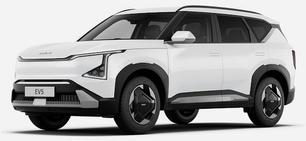
It’s the Kia EV5, a mid-size, all-electric SUV the Korean brand thinks will be its best-selling EV by some margin.
Oh, and it’s cheaper than the Tesla, by more than a little bit.
So, is this the electric SUV that might finally put an end to Tesla’s winning run in Australia?
The Cupra Terramar VZe looks fantastic on the road and confidently handles most things you throw at it. The plug-in hybrid set-up offers a nice blend of performance and efficiency. But… when you start digging into the price and ownership promise and what you do (and don’t) get for your money, it doesn’t always feel like the most compelling package. Sexy and sporty? Definitely. Value-for-money? Mmm.
The size is right, the price is right and the drive is right – three things that make the Kia EV5 a pretty formidable foe, and the kind of vehicle that might finally be able to break through the wall of the temple of Tesla in Australia.
Note: CarsGuide attended this event as a guest of the manufacturer, with accommodation and meals provided.
Design is one of the areas where the Terramar makes a strong first impression. It’s sharply styled, and very much aimed at buyers who aren’t quite ready to let go of their sportier tastes, even if their car choice suggests otherwise. The stance is wide, the proportions are tidy and those 20-inch copper alloy wheels do a lot of the heavy lifting visually.
Up front, the grille features a triangular LED lighting signature that, for anyone who grew up with it, looks a little like the Triforce (Zelda). Around the back, there’s a full-width light bar with a 3D illuminated logo which enhances the overall 'cool-edge' style the Terramar has.
Inside, that same theme carries through. The cabin is clean but still visually interesting, with plenty of soft-touch materials and leather throughout. Copper-coloured accents are used generously but not to the point where it feels overdone and give it a firm identity.
The optional panoramic roof lifts the space and the 12.9-inch central display sits front and centre, giving the cabin a properly high-end feel.
If you’re familiar with any of Kia’s EV designs, and specifically the EV9, you’ll already know the Kia EV5, which looks a lot like a shrunken version of the company’s biggest electric 4WD.
But this one looks a bit smaller, a bit more familiar looking, and maybe a bit more accessible than the hyper-modern EV9.
Honestly, it looks like a contemporary, mid-size SUV that could be powered by anything.
There are a couple of EV5 design elements I really like. The first is the combination of hard edges and subtle curves, which combine really well. I also love the lighting treatment up front, which gives the EV5 a bold and unique light signature, especially at night.
Inside, it’s another story of familiarity, with a clean, high-tech cabin and Kia’s common twin-screen set-up. Actually, it’s more a triple screen, with two 12.3-inch screens, and a 5.0-inch climate monitor between them.
The materials are all nice, and they look great, but they don’t exactly melt under the touch, and that gives the EV5’s cabin a hard edge I don’t love.
I do, however, love the inclusion of some physical buttons, so you’re not pawing through the screen to access every in-car function.
And one final design quirk. I know it looks like it has an old-school bench front seat, but you can’t use it as a third seat in front. Kia says it’s just a design flourish. But it is also somewhere safe to pop your phone or other small valuables to stop them sliding about when you're on the road.
In terms of practicality, the Terramar feels a little mixed depending on where you’re sitting.
Space and comfort first. The front row is where it feels most at ease. The sport seats are supportive, with enough adjustment to stay comfortable on a longer drive and the added heating and driver’s memory function round things out nicely. That said, elbow room can feel a little tight if you’re sitting alongside someone broad-shouldered.
The rear row is more of a compromise. Legroom behind my driving position is on the tighter side, and for context, I’m 168cm, though headroom holds up reasonably well, even with the panoramic roof. The shape of the seat base and storage cut-outs also make the bench feel narrower, so it’s better suited to two adults than three.
Storage is about what you’d expect, without really exceeding it. Up front, the glove box is the largest cubby, supported by a centre console, a phone cradle and a pair of cupholders, although they’re different sizes, so only one emotional support bottle will fit.
In the rear, it’s a similar story. You get a couple of bottle holders and cupholders, but you miss out on map pockets.
On the tech and amenities front, most functions are housed within the 12.9-inch media display. The graphics are clear and the touchscreen is responsive, though the touch-based climate controls underneath it can be fiddly at times. That said, the overall layout becomes fairly intuitive after a short adjustment period, even if physical buttons would still be welcome.
Connectivity is well covered, with wireless Apple CarPlay and Android Auto, the former holding a steady connection during my time with it, along with built-in navigation. Charging options are solid, too, with four USB-C ports across the cabin, a 12-volt outlet and a wireless charging pad.
The rear gets its own climate control, though without fan speed control, and again, at this price point, it feels like there’s room for a little more in the way of convenience features - particularly things like heated outboard seats.
At the back, boot space comes in at 400L, which is the smallest in the Terramar range due to the battery placement. It’s broadly in line with key alternatives like the BYD Sealion 6 Premium, which offers slightly more capacity, but the difference isn’t dramatic in day-to-day use.
In practice, it’s been enough for a week of errands with a small family, and the flat loading floor and powered tailgate make it easy to live with. There’s no spare tyre, though, just a puncture repair kit, which won't suit everyone.
At 4615mm in length, 1875mm in width, 1715mm in height, and with a wheelbase of 2750mm, the Kia EV5 is roughly the same size as a Tesla Model Y, so if you’re ever sat in the back of the Tesla, you’ll have a fair idea of what to expect here.
Sitting behind my own 175cm driving position, I found I had a heap of knee room, more than enough headroom, and I reckon you could fit three adults across the back seat pretty easily, too.
There are a couple of design flourishes I really like, too. The pull-down divider that separates the backseat is home to two cupholders, which isn’t unusual, but what is new to me is the unique positioning of the USB charge ports, which are in the middle-back of the front seats, right above the storage pocket, so you have somewhere to pop your phone and cable when you're charging.
There is also a deep storage draw between the two front seats. It’s just for extra storage in the Air and Earth, but in the GT-Line it’s heated and cooled, which means hot pies or cold drinks when you’re on the move.
The EV5 might be an all-electric vehicle, but it’s still a mid-size SUV, which means there are certain standards it has to hit to be taken seriously, and one of those is boot space.
Up front there’s 67 litres of space in the fruit, or frunk, while the boot holds 513L with the rear seats in place – that number obviously growing as you begin folding them flat.
It is also a hugely customisable space. There’s heaps of under-floor storage below the removable panels. There’s also vehicle-to-load capability, which takes the form of a standard power point in the boot that can use the vehicle’s battery to power pretty much whatever you want.
Finally, there are adjustable luggage hooks, so you can carry bigger or smaller bags as you wish.
The new Cupra Terramar is available in four grades, and we’re in the flagship VZe, the only one to feature a plug-in hybrid powertrain, priced from $77,990, before on-road costs.
Given where it sits, there’s still not a lot that lines up neatly against it. The closest is probably the Volkswagen Tiguan eHybrid R-Line, expected to land at around $74,550, before on-roads, along with the Mitsubishi Outlander PHEV EV GSR from $73,990 MSRP.
Beyond that, you start to drift into more value-focused territory with options like the BYD Sealion 6 Premium ($52,990, MSRP), Chery Tiggo 7 Super Hybrid Ultimate ($43,990, drive-away), and GWM Haval H6 GT Ultra ($50,990, drive-away). So, significantly cheaper, while still offering a fairly generous level of equipment.
As for the Terramar VZe, it doesn’t arrive empty-handed. You get leather upholstery, electric front seats with heating, a heated steering wheel, wireless Apple CarPlay and Android Auto, 20-inch alloy wheels, a full LED light suite, a 12.9-inch media display, 10.25-inch digital instrument cluster and a 12-speaker Sennheiser sound system. There’s also built-in navigation, four USB-C ports, a 12-volt socket and a wireless charging pad.
It’s a solid list but at this price point a couple of omissions stand out. Front seat ventilation isn’t offered, there’s no heating for the rear outboard seats and the panoramic sunroof, which feels like it would round things out nicely, is still a $2000 option.
None of those are deal-breakers on their own, but in this part of the market, they’re the kind of details that you'll notice.
The cheapest EV5, the Air, arrives in two guises, Standard Range or Long Range, and the former is something of a bargain.
It’s the only EV5 to get included on-road costs, and Kia is asking $56,770, on the road. That puts it well below the Tesla Model Y. As of right now, the single-motor Tesla is $60,868, on the road, in NSW.
Next is the Air Long Range, which lists at $61,170, before on-road costs. The EV5 Earth occupies the middle rung, at $64,770, before on-roads, while the yet-to-arrive flagship, the GT-Line, is a considerable $71,770, before on-road costs.
Air models get 18-inch alloys, LED lighting all around, roof racks and power mirrors, while inside there are cloth and synthetic leather seats, with a massage function for the driver, along with a synthetic leather steering wheel and LED interior lighting.
Tech is covered by twin 12.3-inch screens, with a smaller 5.0-inch climate screen sandwiched between them, and there’s in-built nav, a six-speaker stereo and Apple CarPlay and Android Auto.
The Earth then adds 19-inch alloys, gloss black exterior design flourishes and privacy glass, while inside, the seats are now entirely synthetic leather. You also get a second V2L connection, as well as a powered tailgate.
Finally, the GT-Line gets pretty much everything Kia could throw at it, including 20-inch alloys, auto-flush door handles, a panoramic sunroof, two-tone seats which are now billed as offering "premium relaxation", wireless phone charging, fingerprint recognition, a heated steering wheel and an augmented-reality head-up display.
Under the bonnet, the Terramar VZe pairs a 1.5-litre, four-cylinder, turbo-petrol engine with a single electric motor, for a combined output of 200kW and 400Nm.
On paper, those figures sit a little behind some of the more value-focused plug-in hybrid options, like the BYD Sealion 6 Premium and GWM Haval H6 GT, and it’s also front-wheel drive, where some rivals offer all-wheel drive.
In practice, though, it doesn’t feel underdone. The six-speed automatic shifts cleanly and the transition between electric and petrol power is smooth. As a whole, the set-up feels well calibrated.
The entry-level EV5 Air is available in Standard Range or Long Range guises, both powered by a single front-mounted electric motor, producing 160kW and 310Nm.
The Standard Range will clip 0-100km/h in 8.5 seconds, while the extra weight of the bigger battery slows down the sprint in the Long Range, taking around 8.9 seconds.
The Earth is a twin-motor AWD offering, with a motor at each axle, lifting outputs to 230kW and 480Nm, dropping the sprint to a brisk-feeling 6.1 seconds. The incoming GT-Line gets the same powertrain.
The VZe uses a 20kWh lithium-ion battery, which is on the smaller side compared to some alternatives but it still delivers a useful amount of electric driving range at 109km (WLTP).
With its Type 2 CCS charging port, you can access DC fast charging at up to 50kW, with a claimed 0-80 per cent top-up taking around 26 minutes. On AC, it’s more of an overnight affair, so it suits a home charging routine.
Officially, energy use is rated at 1.8L/100km on the combined (urban/extra-urban) cycle, and after a mix of highway and urban driving, I saw a trip computer figure of 1.5L/100km.
That’s an impressive result but it comes with a bit of context. I'm charging it daily to make the most of the claimed electric-only range, and that has a big influence on the numbers you’ll see in the real world.
The Air Standard Range gets a 64.2 kWh lithium iron phosphate battery, weighing in at a hefty 428kg, which delivers a claimed driving range of 400km. The Air Long Range, the Earth and the incoming GT-Line all share the same 88.1kWh battery, upping the range to 555km, 500km and 470km, respectively.
So, if driving range is at the very top of your must-have list, the Air Long Range is the car for you.
All cars can take 7.0kW home AC charging, while the dual-motor versions are set up for 11kW AC charging. Fast charging. When it comes to fast charging, all models can plug into a 350kW charger, taking them from 10 percent to 80 per cent in less than 40minutes.
On the road, the Terramar VZe makes an immediate impression. Power delivery is prompt, and even with the battery depleted, it feels responsive off the mark. There’s enough in reserve that you don’t feel like you’re chasing performance, even when you lean on it.
The handling follows a sporty brief. Suspension tuning does a good job of smoothing out the bigger bumps, but it still lets a fair amount of road feedback in, particularly when you’re pushing through a corner. The steering is on the firmer side and the brakes are quite sensitive, which takes a moment to adjust to, but together they give the car a more engaged feel. That said, it won’t be to everyone’s taste.
Visibility is one area that takes a bit more effort. The lower window line and thicker pillars give it a more enclosed feel than a typical mid-size SUV, so you find yourself being a bit more deliberate with blind spot checks, particularly around the A-pillar.
Ride comfort holds up despite the firmer set-up, and the sports seats do a good job of keeping you settled. Around town and under electric power, the cabin is impressively quiet, though you notice more road and engine noise creeping in at highway speeds or under heavier acceleration.
Around tighter spaces, it feels smaller than it is. The 11.5-metre turning circle and quick steering make it easy enough to manoeuvre, and the 360-degree camera is a useful addition, although the image quality doesn’t quite match the expectations set by the price point.
First things first – I spend most of my time behind the wheel of the EV5 Earth, which though it shares its dual-motor powertrain with the GT-Line, is actually the fastest of the lot owing to the extra weight of Kia's flagship.
That means zero to 100km/h in just over six seconds, and trust me when I say this, that is more than fast enough. I know you read about EVs knocking off the sprint to 100km/h in supercar-besting times, but you don't need that sort of crazy acceleration in a family-focused mid-size SUV.
Actually, forget needing, you don't want it. The EV5 feels more than punchy enough, without shaving years off your life every time you plant your foot.
Fit for purpose, then, which is exactly how I'd describe the rest of the EV5's very good drive experience. Kia's Australian ride and handling wizards have once again had their way with the EV5, and the result is an EV that handles most everything Australian road surfaces can throw it at it with ease.
Surprisingly, it's maybe not quite as dynamically sharp as the bigger EV9, but it's always comfortable, without feeling floaty or disconnected, and it will happily grip its way around tighter corners without tipping from side to side, either.
There are a couple of small quirks, though. The first is the steering, which is definitely responsive and confidence inspiring, but it also has a kind of artificial weight or heaviness at times that feels a bit disconnected from what's happening beneath the tyres. And the cabin can be a little noisy through wind, too.
But these are small beans, really. The EV5 is comfortable and capable, and without the harsh ride or too-sharp steering that can be found in some of its rivals.
We drove it for hours across all sorts of road surfaces, and in all sorts of conditions, and found very, very little to complain about.
On the safety front, the Terramar holds a maximum five-star ANCAP rating from 2025 testing and comes equipped with seven airbags.
The standard active safety suite is comprehensive, covering the essentials like lane keeping aid, lane departure warning, lane centring, forward collision warning, blind-spot monitoring, rear cross-traffic alert, driver attention monitoring and a side-exit warning system.
In use, the adaptive cruise control is well calibrated, though the steering assist is a little overzealous. It requires quite a firm hold on the steering wheel to override warnings or prevent emergency intervention... like braking, as it did me going 80km/h in a tunnel.
It’s also worth noting a couple of omissions. There’s no emergency call functionality, and hill descent control (HDC) isn’t included.
The autonomous emergency braking has junction, car, cyclist, motorcyclist and pedestrian detection and is operational form 5.0-85km/h (up to 250km/h for car detection).
Every EV5 gets a comprehensive safety offering, including 'Advanced AEB' that includes junction crossing, lane oncoming and lane changing alerts. There’s rear-cross-traffic alert, semi-autonomous highway cruising and a whole heap more.
If you want a blind-spot view monitor, surround-view monitor or remote park assist, you’ll need to spring for the GT-Line.
The EV5 hasn’t been crash-tested yet, but Kia will be shooting for the maximum five-star ANCAP rating.
In terms of ownership, the Terramar is covered by Cupra’s five-year, unlimited-kilometre warranty. That’s fairly standard for the segment, though it sits behind some rivals now offering longer seven-year plus programs. Inclusion of five years' roadside assistance is a welcome addition.
Servicing can be pre-purchased with either a three- or five-year plan, with the latter priced at $2590, which is in line with what you’d expect for this class. Intervals are set at every 12 months or 15,000 kilometres.
One thing to keep in mind is the size of the Cupra service network. It’s still relatively limited, with around 14 centres nationwide, so depending on where you’re based, that may take a bit more planning.
The EV5 is covered by Kia’s seven-year, unlimited-kilometre warranty, and you can prepay your servicing costs, too.
Three years will set you back $980, five years is $1535 and the full seven years will set you back $2431 ($347 per workshop visit), which is category competitive.