What's the difference?
Let’s be honest, medium SUVs are the bread and butter of the Aussie new car market and there are a lot of rivals to choose from.
Which is why the Citroen C5 Aircross Sport’s much-needed update is welcomed with open arms, especially since it’s the only model in the range.
It boasts more space than a lot of its rivals but it’s been let down in the past by a sparse safety sheet and older tech.
The facelifted model sees tweaks to the design, safety and tech, making it more of a true competitor against the likes of the Kia Sportage, ever-popular Mazda CX-5 and practical Nissan X-Trail.
But are the changes enough for it to be considered as a family SUV? I’ve been testing it this week with my family of three to find out for you!
The meteoric rise of the Chinese-owned MG brand continues with the HS, a family-focused SUV stepping into the most hotly contested segment in Australia.
When the first generation HS arrived in December 2019, it should have been MG’s big sales driver, yet it sat in the shadows of the cut-price MG3 hatch and ZS small SUV as they lifted the storied MG badge into Australia’s overall top-10 sellers.
The HS has so far been MG’s missing link and that’s down to the segment being full of such strong name plates such as the Mazda CX-5 and Toyota RAV4. The mid-size SUV has also been the focus of other strong value rivals that were better, namely the GWM Haval H6.
So, what did my family think about the Citroen C5 Aircross Sport?
I love how it looks and its updated safety list. It’s fairly spacious inside and has a great boot space but it’s lacking a lot of family-orientated practicality in the back seat. The lack of individual storage and amenities is noticeable when you have a kid or two but even as an adult, not having a cupholder for your coffee/drink on a trip feels odd.
The multimedia system and reversing camera need to be improved, too. Overall, it will suit a small family which is out of the baby stage but can’t yet justify upgrading to a larger SUV. It gets a 6.5/10 from my family.
There are a few niggles with the latest MG HS, for example the annoying driver-attention monitoring and expensive maintenance costs. We’ve not had a full sample of its open-road performance yet either, which may prove more telling.
Yet the HS is shaping up to be one of the most successful product updates of recent years, second only to, I don’t know, the MG3? The family SUV is also backed by a 10-year warranty and, despite the drastic improvements, doesn’t cost a whole lot more than before.
The entry-level Vibe is our pick, there's no need to spend more. It features all manner of safety equipment and a quiet drive but with cloth upholstery that doesn't get all sticky and sweaty in the Australian climate.
The end of 2024 is the tipping point where MG goes from cheap and cheerful to a real headache for established players. Perhaps not for the strongest in the segment like the RAV4 and Nissan X-Trail, but the HS is now an easy car to recommend for a family looking for a spacious SUV that drives their dollar further. The hybrid will boost appeal further when it arrives next year.
Note: CarsGuide attended this event as a guest of the manufacturer, with meals provided.
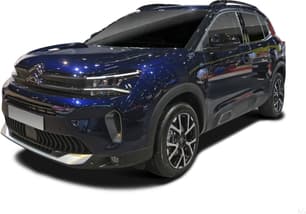
The facelifted model sees a sportier front with the grille redesigned to highlight the double chevron badge.
The bonnet curves around the badge, as do the two long LED strip lights that connect the headlights. The bonnet also sports new divots that give it a gruffer edge.
The wide profile at the rear and new three-pronged tail-lights create some interest.
The black plastic moulding that runs along the base of the car could look unfashionable on a lighter colour but on our blue paintwork, it looks good. As does the contrasting black roof!
The interior trims are finished in a combination of synthetic and Nappa leather but boast a two-tone colour which might not land with everyone. Particularly given the navy portions seem to be glittery in certain lights.
Sitting at 1859mm wide, 1695mm high and just 4500mm long, the overall exterior design is sporty but cute. It should appeal to those who want a nice-but-not-loud-looking car and something that is easy to park.
Though the previous HS had shapely bodywork, the wheels sat too far in-board and the rear end looked awkward. It’s not the same story with the new model which is designed as a family SUV first, rather than a converted hatchback platform.
Part of the improved looks are better proportions. The new HS is 81mm longer, 14mm wider and rides on a 45mm longer wheelbase yet sits 21mm lower for a sleeker appearance.
The front end takes cues from the new MG3 and ZS design language with a broad grille and thin LED headlights. At the back, MG’s design team references the UK’s capital with ‘Shard’ lighting signatures that also appear in the alloy wheels.
It is still fairly anonymous, though perhaps that comes from a lack of familiarity with the brand. The painted wheel arch cladding and metallic-only paint give it a premium boost.
The biggest improvement is inside, where the HS takes plenty of inspiration from the excellent MG4 electric car with the hexagonal steering wheel (though here with perforated leather finishing), high-set controls and confident lines. It’s a welcome, modern change after the old car’s bloated cabin design.
There are soft-touch rubbery materials in all sorts of prominent places, including on the dash top, front and rear door cards as well as where the driver’s knees rest on the doors and transmission tunnel.
The interior is spacious for a medium SUV but the back seat knocks off some points for family practicality. So, let’s start in the back.
Despite there being plenty of headspace for my 168cm (5’6’’) height, the legroom is cosy behind my driving position.
Meaning a 0-4 rearward facing child seat will encroach on front passenger space. It’s probably best suited to a family which is out of the baby stages but it was cumbersome fitting my big harnessed-booster seat in there, too.
It has ISOFIX child seat mounts on the outboard rear seats and three top tethers but two seats will fit best. The floor is flat, which offers far more comfort for a middle seat passenger and I love how the seats can be individually shifted.
The amenities and storage in this row are sparse. You get directional air vents, reading lights, netted map pockets and shallow storage bins in the doors.
Siblings may squabble over the single USB-A port on a long road trip but more than that, there are no cupholders or drink bottle holders back there or even a centre armrest.
That said, the 182mm ground clearance made it an easy car for my six-year-old to get in and out of; plus, the stadium-like seating and wide windows meant he had an awesome view this week.
Now for the front. It has ample amenities, storage and tech. You get plenty of head- and legroom, plus with the panoramic sunroof the cabin manages to feel airy, too.
Individual storage is great with an extra deep middle console, glove box, two cupholders, bins in each door and two very handy utility trays situated near the toggle-type shifter.
Charging options are much better up front, too, and you can choose between a wireless charging pad, two USB-A ports and a 12-volt socket to charge your device.
It's super easy to connect to the wired Apple CarPlay and there’s wired Android Auto for those users.
The built-in satellite navigation is straightforward but that’s where the simplicity ends. I did not find the multimedia system or the digital instrument panel to be terribly intuitive to use and the touchscreen controls can be laggy.
I’m sure you could get used to it over time but I felt flustered.
For this size SUV, the boot space is great at 580L with all seats in use but you can bump it up to 1630L if you fold the back row.
The floor can be adjusted to make a level load space or dropped to give you greater depth for bulkier items and there is a temporary spare tyre underneath the floor.
There are luggage tie-down anchors, a cargo blind and I always like having a powered tailgate.
There is nothing especially ground-breaking about the MG HS’s front cabin. The cupholders are medium-sized and the door bins have enough storage for a one-litre bottle, so this is no Skoda Karoq when it comes to clever cabin solutions.
Telling a tale of the HS’s Roewe RX5 base car’s earlier 2022 launch (and the staggering development speed of personal technology) the lack of USB-C charging ports is now frustrating with all USB ports regular old-school items. Apple CarPlay or Android Auto phone mirroring requires a cabled connection.
The centre multimedia screen is high resolution with day selectable light and dark modes. It was a little laggy to use MG’s software, however, especially when swiping across menu screens.
There are four hard shortcut buttons beneath it that can jump to the home screen, activate the HS’s front and rear demister and turn the ventilation on and off.
To adjust the temperature you need to go into the touchscreen, though there is a persistent shortcut on the main menu.
A 12.3-inch digital cluster has several selectable info displays and can show navigation mapping and directions in Excite and Essence trims.
The seats are comfortable and supportive and it's easy to find a good driving position thanks to power-adjust driver's seat and tilting/telescoping wheel adjustment. The front passenger does not get height adjust, though, and is set too high.
Where the extra size pays dividends is in the back seat which has ample room for passengers beyond 185cm, especially when it comes to leg space. The fold-out armrest is sturdy, too, with twin cupholders. Rear air vents are fitted to only the top-spec Essence.
For baby capsules or child seats the HS has ISOFIX anchors fitted to all three rear seats matched with a trio of top tether points.
The MG HS’s boot is about average for the class measuring 507 litres. It grows to 1484L with the 60:40 backrest folded. For reference, class leaders include the Toyota RAV4 (580L), Nissan X-Trail (585L) and Volkswagen Tiguan (up to 615L with rear seats slid forward).
There are few amenities, with no 12-volt socket, only one (dim) boot light and no shopping bag hooks. The carpet isn’t bargain basement and the luggage cover is sturdy with additional separated storage compartments below the floor and netted cubbies off to the side.
MG has also been smart in packaging a space saver spare tyre beneath the boot floor (and a cumbersome Styrofoam piece).
There is only one model for the C5 Aircross Sport and it will set you back $54,990, before on-road costs.
That prices it as the most expensive compared to its rivals with the Mazda CX-5 GT SP ($51,810) coming in closest but the Nissan X-Trail ST-L ($46,790) and the Kia Sportage SX+ ($41,850) are even more affordable.
The only included paint colours are 'Polar White' and 'Nera Black'. Our model’s 'Eclipse Blue' will add on $690.
However, the C5’s price tag doesn’t feel too cheeky because of the feature-heavy specification, including heated front seats, electric driver’s seat with massage function, a panoramic sunroof and a mix of premium Nappa leather and synthetic leather interior trim.
You also get a powered tailgate, rear privacy glass tinting, full LED lights on the exterior, individually sliding seats on the back row and black 19-inch alloy wheels.
The technology has been upgraded with the dashboard being headlined by a 10-inch touchscreen multimedia system and a 12.3-inch digital instrument panel.
Built-in satellite navigation, as well as wired Apple CarPlay and Android Auto are also included as standard equipment.
On top of that, the safety list has been significantly improved, but more on that later.
Shock horror, the new HS is 10 per cent more expensive than before… but that still makes it $33,990, drive-away, for the basic Vibe — easily undercutting established rivals from Honda, Mazda, Toyota and others.
You get a lot for that extra $4000, too, right down to basic presentation. There’s no fridge-like solid white paint with all six hues either metallic or pearlescent for no extra cost. MG even offers the upper trims with the option of an eye-catching tan upholstery colour.
The three-strong trim line-up starts with the Vibe: dusk-sensing LED headlights, 18-inch alloy wheels, adaptive cruise control, auto wipers, tyre pressure monitoring, a six-speaker sound system, nice cloth upholstery and six-way power adjust driver’s seat are standard.
The Excite sprinkles in 19-inch alloy wheels, perforated synthetic leather upholstery, navigation, fog lights and MG’s 'iSmart' connectivity system for a smart $36,990, drive-away.
The range-topping Essence gains a panoramic sunroof, rear privacy class, a power tailgate, front parking sensors, wireless phone charging, eight-speaker audio, 10-way power adjustable driver’s seat with memory, seat heating, dual-zone climate control, rear air vents and wireless phone charging for $40,990, on-the road.
The short of it is that, although MG’s prices are up, even the basic Vibe is a more enticing proposition on price than the new Chery Tiggo 7 Pro Urban ($39,990, drive-away) and established Mazda CX-5 Maxx (currently on offer for $37,990, drive-away).
It also is much closer to the popular GWM Haval H6 ($31,990-$37,990, drive-away) — if only MG had brought ventilated seats to the flagship Essence then this mid-sizer would be (almost) sold on paper alone.
The C5 Aircross Sport has a 1.6-litre, four-cylinder turbo-petrol engine with a maximum power output of 133kW and 250Nm of torque. It’s not super grunty but there’s plenty here to keep you up to speed on the open road.
It is a front-wheel drive and has an eight-speed auto transmission but the gear changes can feel a bit jerky at lower speeds.
The new HS petrol has a 1.5-litre, turbo-petrol, four-cylinder engine that develops 125kW at 5000rpm and 275Nm from 3000-4000rpm, with those outputs up 6.0kW and 25Nm on the old car.
MG claims new engine features, including the variable geometry turbocharger, centre-mount variable valve timing and a lighter dual-mass flywheel, add up to a 30 per cent improvement in engine response.
More importantly, the insulation is excellent. You barely hear any unpleasant engine noises out on the road and although the four cylinder’s tone isn’t sexy at full-throttle, it is warm and pleasant enough.
The HS petrol is front-wheel drive only which may rule it out for some buyers, but there is a saving grace. The new seven-speed type dual-clutch transmission behaved itself impeccably on a brief first encounter taking in awkward hill starts and reverse manoeuvres. It’s a huge improvement over prior efforts and more refined than even a Hyundai or Kia dual-clutch.
MG claims a 0-100km/h acceleration time of 9.6 seconds, which is about right for entry-level versions of the HS’s typical rivals.
MG no longer offers a more powerful 2.0-litre turbo but a plug-in hybrid with a punchy 223kW and an all-new full-hybrid option will join the line-up in the first quarter of 2025, details of which are yet to be confirmed.
Ah, this is where it earns back some points!
I was very impressed by the efficiency of this because the official combined cycle fuel figure is 5.7L/100km and my real-world usage came to 6.2L! That’s fantastic for this sized SUV and for a turbo.
With a fuel tank of 53L and based on the combined fuel figure, you should be able to get a driving range of around 930km, which is good for those families who like to do road trips.
In the ADR combined (urban-extra urban) fuel efficiency cycle, the MG HS petrol is rated at 6.9L/100km, emitting 156 grams of CO2 per kilometre in the process. A 55-litre fuel tank gives the HS a theoretical driving range of around 800km.
We weren’t able to get a true read on the fuel consumption but the trip computer showed 8.1L/100km after an hour-long run. It lacks an idle start-stop system and requires 95 RON premium unleaded petrol.
Despite its city-friendly size, the C5 Aircross Sport is just as happy cruising on the open-road as it is in an urban environment.
The ride is smooth enough once you get up to a steady speed but the suspension can feel harsh on a bumpy road.
Also, the auto stop-start function can make it feel sluggish to respond, so I disabled this on most trips.
There is plenty of power so you'll feel confident overtaking or getting up to speed on the open road. However, you have to be a little more aggressive with the accelerator when you’re hitting hills.
The steering can, at times, feel vague when you’re at lower speeds but is otherwise responsive.
The cabin space is quiet and nice to be in on the highway and you’ll be able to chat with your passengers with ease.
What I like most about this though is the visibility – the windows are large and I feel like I have a clear view most of the time, which isn’t always the case in an SUV.
Parking this is a cinch with entry to tight car parks helped by a 10.7m turning circle!
However, the 180-degree view camera isn’t great and near hopeless at night time. A clearer image would be welcome but front and rear parking sensors ease the annoyance.
MG’s launch drive program was too brief to really get under the skin of the HS, which is a shame because the initial signs are extremely positive.
Compared to the old ZS, in which a gumnut hitting the roof was loud enough to distract you from your thoughts, the new car is packed with sound deadening for a vastly more premium experience.
The electronic power steering system has a natural ratio (2.6 turns lock-to-lock) and weighting in 'Comfort' and 'Sport' modes, which cannot be said for rivals such as the Chery Tiggo 7 and Haval H6.
This new HS rides nicely, too, with enough compliance from the suspension without sacrificing body control — at least around town. It has struts up from with a multi-link rear end which is not a given, even in this segment.
There were a few sharp-edged bumps that sent a shock through the body but that is to be expected on Sydney's awful roads. The new HS rides about as well as a Mazda CX-5 and believe us, that is a dramatic improvement.
Visibility out the front and sides are good as is the comfortable driving position, however I wasn’t able to move the driver’s side mirror far enough out for my liking. That’s a small blip in an otherwise strong first showing.
The updated safety list is most welcomed, especially on a family SUV.
The C5 Aircross Sport has the following as standard - daytime running lights, forward collision alert, lane keeping aid, lane departure alert, blind-spot monitoring, rear cross-traffic alert, intelligent seat belt reminders, traffic sign recognition, 180-degree view reversing camera, front and rear parking sensors and adaptive cruise control with stop and go function.
Special mention for the new fatigue detection alert. When it triggers it doesn’t stop sounding until both of the driver's hands are detected on the steering wheel.
The autonomous emergency braking with car, pedestrian and cyclist detection is operational from 10 – 80km/h (5.0 -140km/h for car detection), however the pedestrian and cyclist functions are only detectable in the day time. It’s usual to see it operational at night, as well.
Despite the new safety items, it still only has six airbags, which includes curtain airbags covering both rows but that’s pretty low for a family car nowadays.
It was awarded four from a maximum five-star ANCAP safety rating back in 2019 but didn’t have all of the new items at the time of testing.
The MG HS has not yet been evaluated by an independent safety testing body such as ANCAP or Euro NCAP.
MG has fitted the new HS with seven airbags, including driver and passenger, front side, side curtain and a centre airbag.
The HS has a long list of active safety and driver assistance features, such as front and rear auto emergency braking with junction detection, lane-keep assist, blind-spot monitoring, adaptive cruise control with stop and go and driver-attention monitoring.
I can’t say all the aids are perfect but the adaptive cruise control and lane-keep assist systems were less intrusive than those in Chery and Haval products.
The regularly-beeping driver-attention monitoring remains a constant frustration as it does across almost every brand at the moment.
The on-going costs are super-reasonable on the C5 Aircross Sport, with a five-year/unlimited km warranty included.
You can also choose to pre-purchase a three- or five-year capped-priced servicing plan, both significantly cheaper than the pay-as-you-go option.
On the three-year plan, services are $1100 or an annual average of $366.
It’s a flat $2000 for the five-year plan, (averaging just $400 per service), which is very competitive for the class.
Servicing intervals are every 12 months or 15,000km, whichever occurs first.
The Aircross also comes with a five-year roadside assistance plan that is offered through Digicall Assist, for added peace-of-mind.
MG has recently moved to a 10-year/250,000km new car warranty in Australia which covers the HS and is the longest non-conditional offer in the market.
GWM/Haval, Kia and SsangYong remain at seven years while Mitsubishi requires you to service the car at a main dealer for its 10-year guarantee.
This long warranty period should help allay concerns for new MG buyers that the brand stands behind its products.
Less impressive is the cost of maintenance, which adds up to $2354 over five years/75,000km with a particularly steep $936 service at the four-year mark. There’s a big $1647 service at 120,000km, too.