What's the difference?
Let’s be honest, medium SUVs are the bread and butter of the Aussie new car market and there are a lot of rivals to choose from.
Which is why the Citroen C5 Aircross Sport’s much-needed update is welcomed with open arms, especially since it’s the only model in the range.
It boasts more space than a lot of its rivals but it’s been let down in the past by a sparse safety sheet and older tech.
The facelifted model sees tweaks to the design, safety and tech, making it more of a true competitor against the likes of the Kia Sportage, ever-popular Mazda CX-5 and practical Nissan X-Trail.
But are the changes enough for it to be considered as a family SUV? I’ve been testing it this week with my family of three to find out for you!
A good car in its own right, the Mazda CX-60 has nevertheless been one of the most disappointing new-model releases of recent times.
After the ongoing critical and commercial success of the CX-5, its somewhat larger premium mid-sized sibling should have been a slam dunk, with BMW-evoking longitudinal drivetrain and terrific in-line six-cylinder engine choices, as well as the surprisingly far-sighted option of a plug-in hybrid electric vehicle (PHEV) from the get-go.
Yet, when launched internationally during 2022, the quality, packaging and performance were overshadowed by high prices, a jarring ride, odd handling and erratic transmission calibration, particularly in the aforementioned PHEV.
Now there’s been a wholesale re-think surrounding all of the CX-60’s objectionable systems, as well as a new, lower priced grade, among other updates.
Is it the SUV Mazda should have launched in the first place? Let’s find out.
So, what did my family think about the Citroen C5 Aircross Sport?
I love how it looks and its updated safety list. It’s fairly spacious inside and has a great boot space but it’s lacking a lot of family-orientated practicality in the back seat. The lack of individual storage and amenities is noticeable when you have a kid or two but even as an adult, not having a cupholder for your coffee/drink on a trip feels odd.
The multimedia system and reversing camera need to be improved, too. Overall, it will suit a small family which is out of the baby stage but can’t yet justify upgrading to a larger SUV. It gets a 6.5/10 from my family.
Have no doubts. The MY25 version of the CX-60 is the SUV that Mazda should have launched in Australia in 2023.
It fulfils the promise of its sophisticated specification, builds on the extensive dynamic abilities of previous models, and now provides a compelling – and unique – choice for medium-SUV buyers who do not need an extended seven-seater.
It may still looks a bit daggy from some angles outside, and we’d like a little bit less suspension noise on the inside, but the CX-60 should now be on Australian family-car shortlists.
Note: CarsGuide attended this event as a guest of the manufacturer, with accommodation and meals provided.
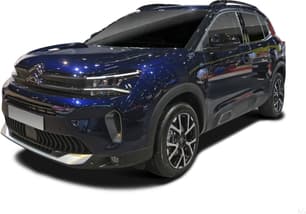
The facelifted model sees a sportier front with the grille redesigned to highlight the double chevron badge.
The bonnet curves around the badge, as do the two long LED strip lights that connect the headlights. The bonnet also sports new divots that give it a gruffer edge.
The wide profile at the rear and new three-pronged tail-lights create some interest.
The black plastic moulding that runs along the base of the car could look unfashionable on a lighter colour but on our blue paintwork, it looks good. As does the contrasting black roof!
The interior trims are finished in a combination of synthetic and Nappa leather but boast a two-tone colour which might not land with everyone. Particularly given the navy portions seem to be glittery in certain lights.
Sitting at 1859mm wide, 1695mm high and just 4500mm long, the overall exterior design is sporty but cute. It should appeal to those who want a nice-but-not-loud-looking car and something that is easy to park.
If you’re searching for something new in the looks department for the CX-60, you won’t find it, since this is essentially the same car as last year’s model from the outside. Except there’s a new beige colour option.
Which means the same long-bonnet/cab-backward silhouette remains, along with the corporate wing-motif grille, hunched-over styling (that looks awkward from some angles) and short rear overhangs.
Still, the overall effect remains modern, clean and distinct from the nearly-identical and very closely-related CX-70, CX-80 and CX-90 further up the Mazda food chain.
Note that the CX-60 is usefully larger than the CX-5, with the former coming in at 4740mm long, 1890mm wide, 1675mm tall and 2870mm in wheelbase length, compared to the latter’s 4575mm, 1845mm, 1680mm and 2700mm dimensions respectively.
Which, of course, elevates it from an interior point of view.
The interior is spacious for a medium SUV but the back seat knocks off some points for family practicality. So, let’s start in the back.
Despite there being plenty of headspace for my 168cm (5’6’’) height, the legroom is cosy behind my driving position.
Meaning a 0-4 rearward facing child seat will encroach on front passenger space. It’s probably best suited to a family which is out of the baby stages but it was cumbersome fitting my big harnessed-booster seat in there, too.
It has ISOFIX child seat mounts on the outboard rear seats and three top tethers but two seats will fit best. The floor is flat, which offers far more comfort for a middle seat passenger and I love how the seats can be individually shifted.
The amenities and storage in this row are sparse. You get directional air vents, reading lights, netted map pockets and shallow storage bins in the doors.
Siblings may squabble over the single USB-A port on a long road trip but more than that, there are no cupholders or drink bottle holders back there or even a centre armrest.
That said, the 182mm ground clearance made it an easy car for my six-year-old to get in and out of; plus, the stadium-like seating and wide windows meant he had an awesome view this week.
Now for the front. It has ample amenities, storage and tech. You get plenty of head- and legroom, plus with the panoramic sunroof the cabin manages to feel airy, too.
Individual storage is great with an extra deep middle console, glove box, two cupholders, bins in each door and two very handy utility trays situated near the toggle-type shifter.
Charging options are much better up front, too, and you can choose between a wireless charging pad, two USB-A ports and a 12-volt socket to charge your device.
It's super easy to connect to the wired Apple CarPlay and there’s wired Android Auto for those users.
The built-in satellite navigation is straightforward but that’s where the simplicity ends. I did not find the multimedia system or the digital instrument panel to be terribly intuitive to use and the touchscreen controls can be laggy.
I’m sure you could get used to it over time but I felt flustered.
For this size SUV, the boot space is great at 580L with all seats in use but you can bump it up to 1630L if you fold the back row.
The floor can be adjusted to make a level load space or dropped to give you greater depth for bulkier items and there is a temporary spare tyre underneath the floor.
There are luggage tie-down anchors, a cargo blind and I always like having a powered tailgate.
Like the exterior, the changes for the MY25 CX-60 are pretty much under the skin, with improved noise/vibration and harshness-quelling measures to quieten things down more.
And an exhaust-sound enhancer through the audio system to liven things up if you desire.
Representing the aforementioned $10K saving over the previous entry-level Evolve, the Pure does possess less opulent trim and (nice) cloth seat fabrics, but otherwise the CX-60 does present a larger-than-usual cabin environment compared to smaller medium-sized SUVs.
But fans of big, showy screens may be underwhelmed.
The dash is elegant but somewhat old-fashioned, especially compared to, say, the latest BMW X3’s dazzling displays. It feels like a hangover from last decade’s CX-9.
Yet there’s no denying how satisfyingly easy and logical most of it is, from the super-clear, electronic instrumentation to the simple and effective climate control layout, while the iDrive-style rotary controller means less time with eyes off the road. Safe, intuitive ergonomics. Thank you, Mazda.
Additionally, there’s a quality solidness to the fit and finish that elevates the social-climbing Mazda beyond what a CX-5 could achieve.
All the essentials are also well thought out, from storage and vision out to ventilation and, not least of all, space and seat support, especially when sat on over long distances.
That also carries over to the expansive back-seat environment, with air vents, USB ports, lighting, cupholders and grab handles. The CX-60 is an SUV that a family could grow into without it feeling excessive.
Is this ‘big-medium’ or ‘small-large’ sized?
From the boot’s perspective, either fits, and is one of the reasons why you might consider stepping up to a CX-60. The floor is low, wide, flat and easy to load, as well as beautifully finished.
The 40/20/40 split fold backrests can be folded remotely via Mazda’s Karakuri function, boosting capacity from 477 litres (VDA) to 1726L, while the in-line six-cylinder models have a space-saver spare wheel underneath, leaving PHEV owners with an inadequate tyre repair kit.
There is only one model for the C5 Aircross Sport and it will set you back $54,990, before on-road costs.
That prices it as the most expensive compared to its rivals with the Mazda CX-5 GT SP ($51,810) coming in closest but the Nissan X-Trail ST-L ($46,790) and the Kia Sportage SX+ ($41,850) are even more affordable.
The only included paint colours are 'Polar White' and 'Nera Black'. Our model’s 'Eclipse Blue' will add on $690.
However, the C5’s price tag doesn’t feel too cheeky because of the feature-heavy specification, including heated front seats, electric driver’s seat with massage function, a panoramic sunroof and a mix of premium Nappa leather and synthetic leather interior trim.
You also get a powered tailgate, rear privacy glass tinting, full LED lights on the exterior, individually sliding seats on the back row and black 19-inch alloy wheels.
The technology has been upgraded with the dashboard being headlined by a 10-inch touchscreen multimedia system and a 12.3-inch digital instrument panel.
Built-in satellite navigation, as well as wired Apple CarPlay and Android Auto are also included as standard equipment.
On top of that, the safety list has been significantly improved, but more on that later.
Starting from $50,240 (all prices are before on-road costs) for the Pure grade in G40e six-cylinder turbo-petrol-powered guise that should account for nearly half of all sales, this is the new base grade.
It has lost some items compared to the previous entry-level Evolve, but remains a decently-equipped proposition.
Included are LED headlights with auto high beams, keyless entry/start, dual-zone climate control, cloth trim, a 10.25-inch display/touchscreen, a 360-degree view camera, front/rear parking sensors, satellite navigation, wireless Apple CarPlay/Android Auto, DAB+ digital radio, eight-speaker audio, vehicle-exit warning, folding/heated exterior mirrors and 18-inch alloy wheels.
There’s also a decent level of advanced driver-assist safety technology like autonomous emergency braking, lane-support systems and adaptive cruise control. More on those later.
Moving up to the Evolve from $55,240 scores you a larger touchscreen (12.3-inches), ground-view monitor, artificial leather trim, a wireless charger, powered tailgate and a few extra safety features like front-cross traffic alert and a driver monitor, while the new Touring grade from $58,240 gains leather trim and heated/powered front seats with driver’s side memory.
Climbing up to the GT from $64,240 adds adaptive LED headlights, panoramic sunroof, Bose 12-speaker audio upgrade, a powered/heated steering wheel, hands-free tailgate operation, heated rear seats, glossier trim and 20-inch alloys, while the Azami from $68,440 includes Nappa leather, glitzier finishes, vented front seats and more.
Speaking of more, $2000 extra buys you a white interior with unique woven textiles (Azami Takumi pack) or a sportier tan colour edition (Azami SP pack).
Want more economy? Diesel adds another $2000 while going for the PHEV powertrain ups that by a whopping $11,050 across all grades. We’re grateful for the choice, Mazda.
These certainly sound expensive for a mid-sized SUV from Japan, but the CX-60 is considerably larger and roomier than, say, a CX-5 or Toyota RAV4, and possesses a level of sophisticated engineering that puts it in Audi Q5, BMW X3, Lexus NX, Mercedes-Benz GLC and Volvo XC60 territory – and the least-expensive of these kicks off from upwards of $20,000 more, depending on spec.
As a sub-luxury premium proposition, then, the CX-60 lives in a sort of no-man’s land. Yet its styling certainly reveals where Mazda’s aspirations lie.
The C5 Aircross Sport has a 1.6-litre, four-cylinder turbo-petrol engine with a maximum power output of 133kW and 250Nm of torque. It’s not super grunty but there’s plenty here to keep you up to speed on the open road.
It is a front-wheel drive and has an eight-speed auto transmission but the gear changes can feel a bit jerky at lower speeds.
For now, the base engine is the 209kW/450Nm G40e, a 3.3-litre turbo-petrol ‘six’ delivering the sort of healthy power figures that late-model Commodore and Falcon buyers would appreciate.
There’s also the 187kW/550Nm D50e turbo-diesel version, for extra pulling power and economy, and we’re getting into premium Euro territory here, because both offer a 48-volt, mild-hybrid system, employing a small electric motor located behind the engine to boost torque yet cut fuel consumption and CO2 emissions.
Mazda says new motor control and clutch slip control software facilitates “…smoother transitions as the electric motor is activated and deactivated”. We hope so!
Last but not least, there’s the 241kW/500Nm P50e plug-in hybrid electric vehicle powertrain, combining the familiar 2.5-litre four-cylinder petrol engine with a larger, 129kW electric motor powered by a 17.8kWh Lithium ion battery. The latter allows up to 76km of pure-electric driving, and can be recharged either by regenerative braking when driving or plugged into a Type 2 port.
All three engines use a revised eight-speed, wet multi-plate-clutch automatic transmission, still driving the rear or, as traction and/or performance needs arise, all four wheels.
Yep, this is essentially a rear-drive-biased family SUV, with a sophisticated double wishbone front and multi-link rear suspension set-up to keep everything in line.
So, what’s changed underneath compared to last year’s CX-60?
Among the modifications are stiffer dampers and softer rear springs to address ride-comfort issues with the old car; relocated front knuckle mounts; altered rear axle bushes and the removal of the rear anti-roll bar for more stable control; shorter rear bump stops for greater suspension travel; an extra joint in the steering column quells vibrations while updated software improves steering feel and electronic stability control operation. The goal is for noticeably smoother, comfier and more linear dynamics.
Result? To find out how much better or worse Mazda’s latest mid-sized SUV is, we drove the it in a variety of conditions, from the push-and-shove of Melbourne’s bumper-to-bumper peak-hour traffic, to a series of demanding emergency-swerve and multi-speed ride and handling test manoeuvres at the legendary Lang Lang proving ground that shaped so many of our iconic Holdens.
More on that a bit later on.
Ah, this is where it earns back some points!
I was very impressed by the efficiency of this because the official combined cycle fuel figure is 5.7L/100km and my real-world usage came to 6.2L! That’s fantastic for this sized SUV and for a turbo.
With a fuel tank of 53L and based on the combined fuel figure, you should be able to get a driving range of around 930km, which is good for those families who like to do road trips.
One area where the Mazda did not need fixing is in its fuel economy.
All of the CX-60’s powertrains are rated at Euro 5.
Officially, the G40e 3.3-litre petrol averages 7.4L/100km, on the combined cycle, and emits 174 grams per kilometre of CO2. Urban and Extra Urban numbers are 9.9L/100km and 6.0L/100km.
Fitted with a 58L petrol tank, expect an average range of around 780km. And it will run on standard 91 RON unleaded petrol to boot.
Moving on to the D50e 3.3L diesel, it manages an impressive 5.0L/100km, for a CO2 figure of 132g/km, resulting in a range average of about 1160km. Its Urban/Extra Urban figures are 5.5/4.7L/100km respectively.
And, finally, there’s the P50e 2.5L PHEV, offering a theoretical 2.1L/100km, for a CO2 figure of just 49g/km, for an unlikely range average of 2380km from its 50L tank, though on 95 RON premium unleaded brew.
Out in the real world, and mostly driven harder than a typical owner might, the trip computer in the PHEV showed low sevens, while the diesel displayed mid-eights and the petrol high nines, which aren’t too bad at all.
Despite its city-friendly size, the C5 Aircross Sport is just as happy cruising on the open-road as it is in an urban environment.
The ride is smooth enough once you get up to a steady speed but the suspension can feel harsh on a bumpy road.
Also, the auto stop-start function can make it feel sluggish to respond, so I disabled this on most trips.
There is plenty of power so you'll feel confident overtaking or getting up to speed on the open road. However, you have to be a little more aggressive with the accelerator when you’re hitting hills.
The steering can, at times, feel vague when you’re at lower speeds but is otherwise responsive.
The cabin space is quiet and nice to be in on the highway and you’ll be able to chat with your passengers with ease.
What I like most about this though is the visibility – the windows are large and I feel like I have a clear view most of the time, which isn’t always the case in an SUV.
Parking this is a cinch with entry to tight car parks helped by a 10.7m turning circle!
However, the 180-degree view camera isn’t great and near hopeless at night time. A clearer image would be welcome but front and rear parking sensors ease the annoyance.
This is the acid test. Does the CX-60 drive like a Mazda should?
In the engine department, definitely.
The changes that Mazda has made to the transmission calibration means that it no longer hunts indecisively between ratios like it used to, and that results in smoother shifts as well as a more relaxed driving experience.
And that's across the range, whether we're talking about the six-cylinder diesel or petrol, or four-pot plug-in hybrid. And the latter brings the biggest surprise, because the changes made to the gearbox have resulted in a much more pleasant car around town, with no more shunting or jerky movements to contend with.
And then there's the ride, which is palpably softer than before. The suspension is significantly more pliable and comfortable as a consequence, offering better bump absorption, improved control at speed and basically just a more refined experience. We tried several of the Lang Lang Proving Ground’s rough-road tests, which the CX-60 sailed over without any of the hard jarring of the previous model, which Mazda helpfully provided for back-to-back assessments.
So, how does all that translate in everyday driving?
Well, the latest CX-60 is way more comfortable to ride in across the board, it handles and corners with greater control and linearity, seems quieter and it's just a suppler experience overall.
As there was so much that was good with the original CX-60 anyway, including muscular performance from the inline six-cylinder turbos, impressive high-speed stability and exceptional body control through fast turns, the modifications for 2025 do much to elevate an already good thing.
So, it's a win-win situation. If you are in the market for a sub-premium, mid-sized SUV with performance and space, as well as newfound comfort and sophistication, you can do a lot worse than check out the CX-60. It is that much better than before.
The updated safety list is most welcomed, especially on a family SUV.
The C5 Aircross Sport has the following as standard - daytime running lights, forward collision alert, lane keeping aid, lane departure alert, blind-spot monitoring, rear cross-traffic alert, intelligent seat belt reminders, traffic sign recognition, 180-degree view reversing camera, front and rear parking sensors and adaptive cruise control with stop and go function.
Special mention for the new fatigue detection alert. When it triggers it doesn’t stop sounding until both of the driver's hands are detected on the steering wheel.
The autonomous emergency braking with car, pedestrian and cyclist detection is operational from 10 – 80km/h (5.0 -140km/h for car detection), however the pedestrian and cyclist functions are only detectable in the day time. It’s usual to see it operational at night, as well.
Despite the new safety items, it still only has six airbags, which includes curtain airbags covering both rows but that’s pretty low for a family car nowadays.
It was awarded four from a maximum five-star ANCAP safety rating back in 2019 but didn’t have all of the new items at the time of testing.
Thankfully, the CX-60 isn’t frugal on safety, scoring a five-star ANCAP crash-test rating back in 2022.
An extensive suite of driver-assist tech is standard, and it’s all nicely tuned for Australian roads, unlike some Chinese vehicles we’ve tested and that’s an important distinction.
These include autonomous emergency braking (AEB) for cyclists, pedestrians and in back-over situations, blind-spot monitoring, vehicle exit warning, lane-departure, lane-assist and emergency lane-keep tech, driver attention alert, forward obstruction warning, rear cross-traffic alert, turn-across traffic and adaptive cruise control tech with full stop/go.
However, front cross-traffic alert, 'Cruising/Traffic Support' (that assists drivers in slow-moving traffic with automatic accelerator, brake and steering control to maintain a safe distance from the vehicle ahead) and see-through view front camera are not in the Pure. Adaptive LED headlights and drowsy driver alert only start from GT up, while emergency brake assist is for the Azami grade only.
All CX-60s include front and rear parking sensors, surround-view cameras, tyre pressure monitors and traffic sign recognition.
The AEB for vulnerable road users works between 10km/h and 80km/h, and the AEB car-to-car operates between 4km/h and 160km/h.
Likewise, the extensive lane-support systems work between 55km/h and 195km/h.
There are also eight airbags, as well as a trio of child-seat restraining top-tether points fitted, along with two ISOFIX latches in the rear outboard seats.
The on-going costs are super-reasonable on the C5 Aircross Sport, with a five-year/unlimited km warranty included.
You can also choose to pre-purchase a three- or five-year capped-priced servicing plan, both significantly cheaper than the pay-as-you-go option.
On the three-year plan, services are $1100 or an annual average of $366.
It’s a flat $2000 for the five-year plan, (averaging just $400 per service), which is very competitive for the class.
Servicing intervals are every 12 months or 15,000km, whichever occurs first.
The Aircross also comes with a five-year roadside assistance plan that is offered through Digicall Assist, for added peace-of-mind.
Mazda could also do a bit better with its warranty nowadays, since its five-year/unlimited kilometre warranty and roadside assistance is decidedly average.
Service intervals are at 12 months or every 15,000km, while a fixed-price service scheme is available, starting from $463 per service depending on powertrain. That’s for the petrol. The diesels start from $500 while the PHEVs commence from $435.