What's the difference?
You’re a city dweller on the hunt for a small hatch, but the usual suspects just don’t do it for you. Time for a trip down the urban road less travelled.
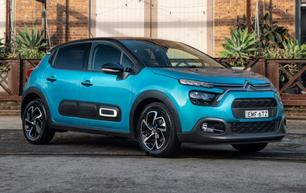
The Citroen C3 fits the bill in terms of scale, but brings something extra when it comes to personality. A fun-sized European with the ability to surprise and delight.
It comes at a price, though. So, is the promise of some extra excitement in your motoring life worth it? Read on to find out.
It’s a new, premium, pure-electric, mid-size SUV, but unlike every second market arrival CarsGuide has been looking at lately, it doesn’t come from China.
This is Skoda’s Elroq, the Czech manufacturer’s second electric SUV, following the larger Enyaq which launched here just on 12 months ago.
Effectively an electric counterpart to the Karoq, it’s a single-motor, rear-wheel drive, five-seater with healthy performance and range claims as well as sharp pricing and generous spec to challenge its ever-expanding competitive set.
After a brief preview drive earlier this year, we’re back behind the wheel for a fuller examination. So, read on to see if this sleek newcomer could be part of your family EV future.
The Citroen C3’s plus column contains some big ticket items like a solid standard equipment list, design flair, generous interior space, an eager engine, good safety and a comfy suspension. However, the minus side of the ledger isn’t exactly empty, with entries like steep price, marginal perceived quality, poor cabin storage, sub-par refinement, okay economy, and high ownership costs.
But there’s no doubt this car delivers a different, adventurous take on the city-sized hatch, and for you, that alone may count for more than any of those things.
The Skoda Elroq is a niche option in a boiling hot small SUV segment, but it makes sense as the next plank in Skoda’s multi-model EV strategy. It has the value, quality and performance to cut through. We think it’s a worthy newcomer.
Note: CarsGuide attended this event as a guest of the manufacturer with accommodation and meals provided.
If Citroen is known for anything it’s daring, innovative design. From the idiosyncratic 2CV, via the sleek DS, to the ultra-cool SM, and angular BX, Citroen boasts a 100-plus year back-catalogue of stunning automotive breakthroughs.
And true to form, the C3 sits left-of-centre with a determined, almost angry expression defined by chrome borders extending from its signature ‘double chevron’ logo above the grille.
A mix of carefully radiused curves, soft organic shapes and whimsical decoration define the rest of this SUV-ish hatch. Rounded rectangles and squares (squircles?) are a recurring theme, forming part of a dent-resistant panel along the car’s flanks and embossed into the door cards inside.
Our white test example sported a (no-cost) contrast red roof colour, the same shade picking out details like the front fog light surrounds, exterior mirror caps and side scuff panels.
The interior is less bold with a multi-tone grey colour palette broken up by light green contrast stitching on the seats, as well as piano black finish on the centre console and satin chrome highlights around the air vents, instrument panel and door handles.
Plus, the squircle still makes its presence felt in everything from the directional air vents to the speaker grilles and sections of the dash.
Functionality and ergonomics are good with sensible touches like a physical knob for audio volume control (big tick) as well as easy-to-navigate controls for audio, phone and more on the steering wheel.
An unexpected highlight, and regular talking point with people in the car during my week with it, is what Citroen calls ‘Luggage-inspired’ front interior door handles.
Check out the interior photos. The straps look amazing, are easy to use, and remind me of the handle on my mum’s circa-1965 Olympia portable typewriter.
Skoda’s aim with the Elroq is a contemporary, ‘solid’ design approach and while of course a car’s looks are always a subjective call I think it’s sleek and clean.
In this case, perception is reality with the car recording a slippery 0.26 drag coefficient and a 2025 Red Dot Award in the automotive category is an impressive design feather in its cap.
First thing you’ll notice is ‘SKODA’ type on the leading edge of the bonnet in place of the more typical winged arrow brand logo, which is a cool detail.
Functional pieces include active shutters to help balance aero efficiency and battery cooling as well as front wheel arch air curtain inlets on the outer edges of the nose.
The underbody has been smoothed and at the back 'separation edges’ help to manage exiting airflow, as does a roof spoiler with subtle mini aero pieces underneath it on either side.
The interior is understated and manages to combine visual interest with easy functionality.
A 13-inch media screen sits in the centre but happily there’s a row of physical shortcut buttons underneath for often-used functions. The ‘SKODA’ lettering replaces the logo on the steering wheel, too.
A two-tone treatment across the console, seats, doors and multi-level dash looks deluxe, as do bold orange seatbelts in the 130 Years Edition.
There’s also a heavy emphasis on the use of what Skoda says are “sustainable, practical and durable materials” in the cabin.
The ‘Loft Design’ interior in the 85 Select uses fabric comprising 78 per cent recycled PET plastic, while the ‘Lodge Design’ in the 130 Years Edition features synthetic leather and a fabric made from Nylon waste. The floor trim and mats also contain a high percentage of recycled polyester.
At a fraction under 4.0m long, just over 1.8m wide, and close to 1.5m tall, the C3 is a small hatch that, in terms of practicality, does well in some areas and could do better in others.
On the plus side, there’s plenty of space for the driver and front seat passenger, and rear room is surprisingly generous. Sitting behind the driver’s seat, set for my 183cm position, I had more than adequate head, leg and knee room.
Three full-size adults across the rear is a short-journey proposition only, but a trio of up to mid-teenage kids will be fine.
The space-efficiency carries over to the boot, with 300 litres of volume available (below the parcel shelf) with the 60/40 split-folding rear seat upright. But beyond that number, the space has been carefully sculpted to maximise usability.
We managed to fit our three-piece (36L, 95L, 124L) luggage set in there, with a small cheat of removing the divider, and could swap them out for the bulky CarsGuide pram, with room to spare. Fold the rear backrest down and available space increases to an impressive 922 litres.
The downside is storage and concessions to comfort elsewhere in the car. As in, a lack of them.
For a start, the dual cupholders in the front centre console confirm the French’s affection for Espresso. You’ll struggle to locate an average size take-away coffee cup in one of those dainty receptacles.
The front door bins are long but relatively narrow, and lack a designated spot to hold bottles upright, so I found myself laying drink bottles horizontally along them, which is awkward.
Plus, there’s no lidded storage box between the front seats, so no centre armrest, either. Rather an open tray behind the handbrake lever.
The glove box is modest, there’s a small open cubby below the central multimedia screen that isn’t big enough to hold a phone, there’s just one USB-A port for connectivity/power and a single 12V outlet.
No fold-down centre armrest in the rear, either. There are map pockets on the front seat backs, a single (again, small) cupholder at the end of the front centre console for back-seaters to share, and while rear door pockets are welcome, they’re petite.
Yes, the boot is commodious, but it lacks tie-down anchors to secure loose loads, and the flimsy carpet in there is prone to moving around.
On a more positive note, the spare is a 15-inch space-saver, which is streets ahead of the all-too common inflator/repair kit.
In terms of practicality up front there are big bins in the doors able to easily cope with larger bottles as well as a pair of cupholders in the centre console with a removable divider. They’re best for cups rather than bottles.
There’s a decent glove box, a useful oddments tray behind the cupholders, a console box in the centre with a lift-out tray and a ‘false floor’ style door at the bottom to hide things, which is typically Skoda.
Wireless device charging is onboard and under the ‘flying buttress’ style centre console there’s a large storage bay with two USB-C sockets, plus there’s another pair of USB-Cs in the back. And don’t forget the obligatory Skoda umbrella housed in the driver’s door. Very nice.
The Elroq rides on the VW Group ‘MEB’ platform and although shorter overall it has the same wheelbase as its larger Enyaq sibling, so rear space is surprisingly generous.
For the record, the Elroq is just under 4.5m long, close to 1.9m wide and a little over 1.6m tall with a 2765mm wheelbase.
In the back, sitting behind the driver’s seat set for my 183cm position I have ample legroom, plenty of space for my feet and lots of headroom.
It would be a little tight for three full-size adults across the back; two is probably better. But a trio of up to mid-teenage kids will be swimming in it.
In terms of storage, again, there are pockets in the doors big enough for large bottles. There is a pair of pop-out cupholders in the fold-down centre armrest combined with a small tray for devices or other bits and pieces.
A removable tray, including a couple of bottle-sized holders sits on the floor in front of the centre rear position, which is terrific. Then you’ve got your map pockets on the front seatbacks. Nothing unusual there, but a thoughtful touch is a device-sized pocket on the back of them.
Both grades have adjustable ventilation for back-seaters with third-zone temperature control and drop-down side shades in the 130 Years Edition.
Boot capacity is a class competitive 470 litres with all seats up, nudging up to a generous 1580 litres with the 60/40 split-fold rear seat backrest lowered.
In typical Skoda fashion there’s a range of useful additions including a through-port door for lengthy items, side storage compartments, an intermediate position for the parcel shelf, multiple cargo fasteners, net pockets and a 12-volt socket.
There’s even a windscreen ice scraper housed in the tailgate and a charging cable tidy in the 130 Years Edition.
Bad news is there’s no spare wheel of any description, just a repair/inflator kit. But it’s worth noting the Elroq can tow a 1200kg braked trailer which is handy.
The Citroen C3 is offered in a single Shine grade, and lines up against a slew of similarly city-sized hatches from China, Europe, Japan and South Korea. Think Kia Rio, Mazda2, MG3, Suzuki Swift, Toyota Yaris, and VW Polo.
But when it comes to its price - $32,267, before on-road costs - you’re looking at primo competitors only, like the Suzuki Swift Sport Turbo ($30,990), Toyota Yaris ZR Hybrid ($32,200), and VW Polo Style ($31,250).
And to tempt you away from those more mainstream options, Citroen loads up the C3 with a solid list of standard equipment.
Aside from the safety tech covered later in the review, this small hatch features keyless entry and start, cruise control, a 10-inch colour multimedia touchscreen (with voice recognition across multiple functions), climate control air, a leather-trimmed steering wheel, six-speaker audio (with digital radio as well as Bluetooth, Apple CarPlay and Android Auto connectivity), built-in sat nav, LED headlights and daytime running lights, rain-sensing wipers, and 16-inch alloy wheels.
Not too shabby, but bear in mind, as is often the case in this class, the trim is cloth, the front seats adjust manually and the instruments are conventional analogue.
At this point, it’s important to mention ‘perceived quality’, a term used in various industries to describe the look, touch and feel of a product. And it’s here that the C3 suffers.
Open the tailgate, look to the pillar on the right-hand side of the rear windscreen (from the inside) and you’re confronted with more than half a dozen spot weld craters that have creased the sheet metal to varying degrees. Not to mention a crude fold of the outside panel onto this interior piece. Perfectly functional, but not a good look.
The elastic cords suspending the cargo divider at the top of the boot space feel as insubstantial as the thin metal hooks they’re attached to, and the finisher matt sitting on top of the engine looks like it won’t stand the test of time.
There are other examples, but suffice it to say, the overall feel is not in the same league as this car’s main competitors.
A two-grade Elroq line-up starts with the entry-grade 85 Select at $54,990, before on-road costs, which pitches it into a swirling vortex of small SUVs comprising a mix of pure combustion, hybrid and other EVs kicking off in the around 50 to 60 grand bracket.
How’s this for a table of well-credentialed competitors?
At the same time it substantially undercuts primo compact EV SUV options like the BMW iX2 (from $77,300), Mercedes-Benz EQA (from $84,900) and Mini Countryman E (from $64,990), all before on-road costs. Which brings the flagship Elroq 130 Years Edition into the picture at $64,990, BOC.
Once you’ve crested the $50K barrier expectations in terms of included features are understandably high and Skoda has obviously done some heavy lifting to load up the Elroq value proposition.
Aside from the performance and safety tech we’ll get to shortly, 85 Select highlights are 19-inch alloy rims, a 13-inch central multimedia touchscreen, a 5.0-inch digital instrument display, wireless Android Auto and Apple CarPlay, dual-zone climate control and heated front seats.
There’s also an eight-speaker audio (with digital radio), wireless device charging, a heated leather-trimmed steering wheel as well as LED headlights, auto rain-sensing wipers and heated auto-folding exterior mirrors.
The flagship 130 Years Edition, celebrating the brand’s time in business, ups the ante with 21-inch rims, an augmented reality head-up display, power front seats (with memory and massage), heated rear seats, three-zone climate, 675W 12-speaker Canton audio, a hands-free power tailgate and matrix LED headlights.
Then you can add in a 360-degree overhead camera view, adaptive cruise control, ‘Intelligent Park Assist’ and more.
Both Elroq grades’ standard equipment is on the pace for the price.
The Citroen C3 is powered by a small-capacity (1.2-litre), turbo-petrol, three-cylinder engine, driving the front wheels through a six-speed automatic transmission.
This little unit punches well above its weight thanks to tech like direct injection, and dual variable valve timing to enhance pulling power. The lightweight (all-alloy) unit produces 81kW of power at 5500rpm and a substantial 205Nm of torque at just 1500rpm.
The Elroq is powered by a single, rear-mounted AC permanent magnet synchronous motor sending 210kW/545Nm to the rear wheels only.
Strong numbers for a single-motor EV; way higher outputs than the Elroq’s internal combustion and hybrid rivals and right up there with pricier Euro EV options in the category.
Citroen’s official fuel economy number for the combined (ADR 81/02 - urban, extra-urban) cycle is 5.2L/100km, the 1.2-litre three-cylinder emitting a modest 118g/km of CO2 in the process.
Our time with the car included mainly city and suburban trips, with some freeway running thrown in, and the result was a (dash-indicated) average of 8.0L/100km. Not exactly miserly, and points to the turbo triple having to work pretty hard to keep up around town.
Minimum fuel recommendation is the relatively pricey 95 RON premium unleaded, but you’ll need just 45 litres of it to fill the tank. Using the official consumption figure, that translates to a range of 865km, dropping to around 560km using our real-world number.
Both Elroq grades are fitted with a CATL-sourced 82kWh (77kWh net) lithium-ion battery for a claimed 529km (WLTP) range.
DC fast-charging up to 175kW is possible which equates to a 10-80 per cent charge in 28 minutes. AC charging at 11kW means eight hours for a 100 per cent charge. Mode2 and Mode3 Type 2 charging cables are included.
Claimed energy consumption on the combined cycle is 16.6kWh/100km and on the launch drive which took in city, suburban and freeway running we saw an average of 15.2kWh/100km, which is impressive given the mix of conditions covered.
The C3’s compact footprint and relatively light weight (1090kg) make it an urban-friendly option and outputs from the 1.2-litre turbo-petrol engine are exceptional.
Maximum torque of 205 Nm is plenty of pulling power from such a tiny unit, and with that number arriving at just 1500rpm it should be ideally suited to stop-start traffic.
And yes, with enthusiast use of the right pedal the C3 gets up and goes pretty well, but refinement isn’t its strongest suit.
The throttle can be jumpy unless you’re super smooth with it, the three-cylinder engine’s typically coarse note makes its presence felt under load, and the brakes need to be dealt with gently to avoid an overly aggressive stop.
Sure, familiarity and practice will help you get in tune with the car but it’s not a smooth ‘plug-and-play’ drive like the majority of its competitors.
That said, in true Citroen fashion, steering feel is good, the front seats are as comfortable as they are supportive, while the suspension manages to blend plush compliance with excellent dynamic response. Another Citroen hallmark.
The six-speed auto shifts smoothly, with a press of the Sport button encouraging it to shift up later and down earlier for a more urgent response. But the zig-zag (my term, not Citroen’s) shift pattern makes for an awkward shuffle between D, N and R when parking. No doubt you’d get used to it, but I’m not a fan.
Speaking of parking, the C3's diminutive size makes it easy to slot into even tight spots, the standard front and rear proximity sensors, as well as a decent resolution reversing camera helping out, too.
Skoda claims the Elroq will accelerate from 0-100km/h in 6.6 seconds which is usefully rapid. There’s plenty of power and nearly 550Nm of torque available. But the car weighs almost 2.2 tonnes, so you’re talking strong rather than ‘extreme’ performance.
There’s plenty of acceleration on tap for the nip and tuck of the city and suburbs as well as easy cruising and overtaking on the freeway.
There are multiple drive modes including ‘Eco’, ‘Comfort’, ‘Normal’, ‘Sport’ and ‘Individual’ to manage energy use and performance.
The Elroq sits on the same ‘MEB' battery-electric platform as any number of EVs in the VW Group portfolio and it has a strut front, multi-link rear suspension set-up. And it feels the bumps.
Even on reasonably smooth surfaces little bumps and thumps make their presence felt. The worse the surface gets, the more pronounced it is. Once you get out onto the smooth highway and freeway, of course it’s not an issue. And you may get used to it over time but it certainly is present.
Noise suppression tech along with low wind and tyre intrusion combine to deliver a calm interior environment, even by EV standards.
The Elroq steers nicely. It points accurately and the steering weight is quite light, although it’s not the last word in terms of road feel - the connection between your hands on the wheel and the tyres on the tarmac.
Speaking of which, tyres on the 85 Select’s 19-inch rims are Kumho Ecsta PS71 (235/55 fr - 255/50 rr) and the 130 Years Edition’s 21s are shod with Hankook Ventus S1 evo3 (235/45 fr - 255/40 rr), both EV-specific tyres designed to reduce rolling resistance for improved energy efficiency. They grip firmly and the car feels stable and nicely balanced in twisting corners.
All around vision is good. The A-pillars in particular aren’t as chunky as they can be in some modern cars, which opens up the view in front. Over the shoulder vision is good and the large rear window makes the internal rear view clear, as well.
As mentioned, the Elroq is reasonably hefty for its size and you want sturdy brakes to wash off speed, which come in the form of ventilated front discs clamped by twin-piston calipers.
Having said that, there are drums at the rear. Not unheard of on an EV where regenerative braking takes a fair amount of the load, harvesting energy in the process.
Nothing wrong with a well engineered drum and the brakes work perfectly well, even when tested constantly on downhill twisting sections. No hint of fade.
On the active safety front, this car is loaded with ADAS-style crash prevention tech but we didn’t feel any of it being overly intrusive. No lane-keeping wrenching at the wheel or reminders telling you to pay attention; it’s all fairly low-key.
Miscellaneous observations include the compact 9.3m turning circle, great front seats in both Elroq grades and the effectiveness of the augmented reality head-up display in the 130 Years Edition. As well, a 5.0-inch instrument display might sound crazy small but it works beautifully. The view to it and the graphics on the screen are crystal clear with three switchable layouts available.
The Citroen C3 scores four out of five ANCAP stars courtesy of testing dating back to 2017.
The sticking point was a sub-par result in Pedestrian Protection, one of the independent safety body’s four main assessment areas (beside Adult Occupant Protection, Child Occupant Protection, and Safety Assist).
Specifically, potential pedestrian head injuries resulting from contact with the base of the windscreen and “stiff” windscreen pillars.
But Citroen hasn’t left the C3 standing still with active (crash-avoidance) tech fitted to the current model including the usual suspects like stability and traction controls as well as more sophisticated systems like ‘Autonomous Emergency Braking’ (AEB), forward collision warning, blind-spot monitoring, lane departure warning, ‘Driver Attention Alert’, a reversing camera (with zoom function), and tyre pressure monitoring.
That said, although there are parking sensors front and rear, there’s no cross-traffic alert (front or rear), no adaptive functionality on the cruise control, and no lane change assist. Arguably unrealistic to suggest all of these should be included at this price point but it’s worth noting not all boxes are ticked.
If a crash is unavoidable there are six airbags on-board (driver and front passenger front and side, plus full-length side curtain). The hazard lights automatically activate when emergency braking force is applied, but multi-collision brake, which reduces the chances of further impacts after an initial crash, is missing-in-action.
There are three top tethers for child seats or baby capsules across the back seat, with ISOFIX anchor points in the two outer rear positions.
No ANCAP or Euro NCAP assessment for the Elroq at this point but crash avoidance tech is extensive, including auto emergency braking (AEB) with car, pedestrian and cyclist detection, ‘Lane Assist’ (with ‘Adaptive Lane Guidance'), rear cross-traffic alert, ‘Traffic Jam Assist’ and adaptive cruise control.
There’s also ‘Turn Assist’, ‘Side Assist’, an exit warning system, driver fatigue detection, front and rear parking sensors and a reversing camera. The 130 Years Edition ads a 360-degree overhead camera view, adaptive cruise control, ‘Intelligent Park Assist’ and more.
If a crash is unavoidable there are seven airbags in the 85 Select (front, front side, front centre and side curtain) and nine in the 130 Years Edition, which picks up rear side airbags.
There are three top tethers for child restraints across the third row, with ISOFIX anchors on the two outer positions.
Citroen covers the C3 with a five year/unlimited km warranty, which is cost-of-entry now in the mainstream market, and roadside assistance is included for the duration.
Service is scheduled for 12 month/15,000km intervals, with costs capped for the first five workshop visits. The average annual figure over that period is $505, which is way more than double the $205 you’ll pay annually for servicing a Toyota Yaris ZR Hybrid. Sacre bleu!
The Elroq is covered by Skoda’s seven-year, unlimited km warranty which is ahead of most mainstream players sitting at five years, unlimited km, with 24 months roadside assist included and renewed for a further year after each authorised dealer service. The battery carries an eight-year, 160,000km warranty which is the industry norm.
The option of guaranteed future value pricing is a plus with loan terms from 12 to 60 months as well as novated lease packages to take advantage of FBT reductions for efficient vehicles.
Service is recommended every 30,000km or two years, with each workshop visit costing $502, which isn’t bad given the maintenance interval. Six, eight and 10-year service packs are also available.