What's the difference?
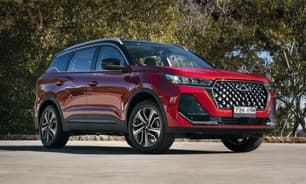
The Chery Tiggo 7 Pro Elite is a part of the brand relaunch for Chery and it showcases the brand's commitment to safety with its five-star ANCAP rating, awarded in 2023.
The medium SUV market is well and truly saturated with options and the Tiggo 7 Pro has rivals like the GWM Haval H6, Hyundai Tucson and MG HS which offer affordable packages for families in an expensive economy.
So, does the newest offering from Chery hold its own? In this review I'll unpack what my little family of three thought after a week with the mid-spec Elite model. (And why I suddenly have a hankering for Cherry Ripes).
MG has a knack for bucking market trends. The MG3 hatch currently makes up more than a quarter of the brand’s sales at a time when the ‘light car’ category is in gradual decline. Electric cars are too expensive? Here comes the MG4 for less than $40K.
So is this, the MG5, here to resuscitate the sedan? A market segment that’s on the way to flatline here in Australia (aside from the Tesla Model 3's relatively niche appeal)?
If it does, it’s going to do it the same way MG has before. Low pricing. Both MG5 variants come in at less than $30K drive-away and convincingly undercut rivals… but at what cost?
MG delivers a strong value proposition with its small sedan, but it largely only comes with the essential safety features needed to be sold in Australia.
Does the MG5 bring enough to the table to be worth considering without common active safety features like lane-keep assist or rear cross-traffic alert? Let’s find out.
The Chery Tiggo 7 Pro Elite has been a very surprising car for me. Its premium features, stylish design and practical space don't match the affordable price tag! But I'm all for it because you definitely get bang for your buck. The technology needs to be improved but everything else more than makes up for it. This medium SUV is a solid all-rounder.
My son likes the red paintwork and how much space he has in the back seat.
The MG5 works well as a budget-friendly small car, and it’s genuinely good to drive.
Some small let-downs in terms of packaging don’t detract from this car in any major way, but the lack of active safety is a concern considering the features most of its rivals offer.
If it’s on your shopping list, make sure you know what else is on offer in terms of safety before you lock in the MG5 for the savings.
The Chery Tiggo 7 Pro looks great because it manages to do two things really well.
It's not boring to look at yet simultaneously blends into the sea of medium SUVs without ruffling any design feathers.
The Tiggo 7 Pro is well-proportioned and has some interesting focal points like the large grille that sports a dual-coloured 'diamond' motif.
It gives me some insect-like vibes while adding depth and dimension to the bonnet.
There is a full suite of exterior LED lights that look sharp, the 18-inch alloy wheels and the simplified rear rounds out the package.
The overall footprint is a good size at 4513mm long, 1862mm wide and 1696mm tall.
With those dimensions, the Tiggo earns its place in the medium-SUV category, yet it's still being easy to manoeuvre in tight city streets.
The interior style looks premium with the use of black synthetic leather upholstery and contrasting white piping.
The dashboard is headlined by a large curved screen housing the 12.3-inch touchscreen multimedia system and 12.3-inch digital instrument cluster.
There's also adjustable, coloured ambient lighting, a chunky shifter and a plethora of soft touchpoints throughout, accentuating an already pleasant cabin space.
The MG5’s styling might be a little divisive, with the overall shape and look of the small sedan sitting somewhere between its direct rivals, like the Hyundai i30 Sedan, and aspirational models like the Mercedes CLA.
In this Essence variant, the grey insert for the grille gives the front a darker, more aggressive look, though the way the grille mesh weaves makes it look a little like moustache hair.
The large ‘intake-style’ design at the sides gives it a sportier look than its outputs have perhaps earned - not to say the MG5 is sluggish - and following those around to the side of the car leads to a fairly minimalistic and tidy silhouette.
Here, probably most notable is the rather tall gap between the tyres and wheel arches.
The rear, with that sloped-up roofline, transitioning into a gentle lip spoiler, flanked by those lights, is where CLA fans might have the most to say about the MG5’s design.
Notably, the exhaust vents at the bottom are fake. The real exhaust exit is hidden well underneath.
The cabin space is practical and user-friendly, which is a great combo. Both rows have a decent amount of leg- and headroom (despite the massive sunroof).
Individual storage is great throughout the car with the front row enjoying an extra-deep middle console, undershelf storage cubby below it, a drink bottle holder in each door and two cupholders.
The rear row gets two map pockets, two cupholders in a fold-down armrest and drink bottle holder in each door.
There is also a (very) shallow storage nook at the back of the middle console… think packet of chewing gum or small wallet size.
The boot space is a great size at 626L but if you need extra space, you can bump it up to 1672L with the back seats folded.
The rear backrest has a 60/40 split with a level loading space. Impressively, underfloor storage is taken up by a full-sized spare wheel and you get a powered tailgate in this model.
Other amenities accentuate the premium-feeling the Elite is going for with the electric and heated front seats offering well-cushioned support, although I miss having adjustable lumbar support!
The rear seats aren't as comfortable as the front (a bit hard on the tush) but the back support is fantastic.
In terms of technology, you get a single USB-A port in each row but the front also gets a faster USB-C port, 12-volt socket and a wireless charging pad to choose from.
The multimedia system's touchscreen can be laggy at times, which is annoying while on the go and the onboard 'Hello Chery' assistant tech needs improving.
I managed to get a few voice commands to work but most of the time the response was 'I haven't learned that yet' or a garbled version of the request (despite using the same phrasing as previously approved requests).
The system has built-in satellite navigation supplied by Turbo Dog, which is easy to use and it's simple to connect to the wired Apple CarPlay.
It also has Android Auto, Bluetooth connectivity and AM/FM radio but misses out on digital radio.
Some newer brands to Australia, often MG’s compatriots from China, get some of the ergonomic or tech basics wrong as they focus more on an impactful first impression. Fortunately, MG doesn’t do that, for the most part.
Inside the MG5 is a cabin that looks more expensive than it is, but has some useful features to back it up without the superfluous add-ons.
Aside from the lack of physical climate controls - an annoying cost-saving or interior-tidying trend embraced by brands from budget to bougie - the MG5’s interfaces and ergonomics are pretty sensible.
Accessibility ticks for the steering wheel buttons being few and large enough to use without needing to look, as well as the lack of a panel of buttons and switches in the centre console. Looking at you, BMW.
The screen is also functionally sound, with obvious menu layouts and fairly large buttons as touch points, so it doesn’t feel like trying to operate a tablet while you’re driving.
It does, again, lose points for the climate control situation, which weirdly features a temperature slider as a colour gradient rather than numerical temperatures.
No wireless phone charger means needing space for a plugged-in phone, which the MG5 has just enough of, though similarly ‘just enough’ is the size of the cupholders, which won’t fit a big water bottle.
In the rear, there’s space enough for an adult to sit comfortably behind another adult, though it’s not the place for long journeys.
Strangely, there’s only one central vent control in the rear so only one passenger gets cool air or heat, plus there isn’t a great deal of storage. No armrest or cupholders for rear passengers, either.
Also noteworthy is the single-piece rear seat, which means if longer items need to be transported in the 401-litre boot, the whole rear seat must be folded down and the MG5 temporarily becomes a two-seater.
Under the boot floor is a space-saver spare, though, so bonus points for a more useful addition than a simple repair kit.
There are three variants for the Chery Tiggo 7 Pro with the range starting with the Urban base model for $39,990 drive-away, the Elite (our test model) for $41,990 drive-away and the top-spec Ultimate grade which sits at $45,990 drive-away.
The price tag for the Elite puts it on par with most of its rivals with the Hyundai Tucson being the most expensive competitor.
The Elite grade comes with a host of standard features which makes the price tag feel very reasonable. Think full-size spare wheel, keyless entry, keyless start, dual-zone air-conditioning, adjustable coloured ambient lighting and a full suite of LED exterior lights.
There are a lot of premium-ticket items, too, like a panoramic sunroof, electric and heated front seats, synthetic leather upholstery and built-in satellite navigation.
Technology and safety get some serious focus with dual 12.3-inch touchscreen multimedia screen and digital instrument cluster, 360-degree view camera system, powered tailgate, Apple CarPlay and Android Auto (both wired) plus an eight-speaker Sony sound system, to name a few.
However, it's the brand-spanking-new five-star ANCAP safety rating that should excite families out there.
MG has managed to cram quite a bit into the MG5 for less than $25K drive-away in its Vibe entry-level variant.
More specifically, you’re forking out $24,990 to head off from the dealership in one, even with its missing active safety features, but we’ll come back to that.
In Vibe specification, the MG5 comes with 16-inch alloy wheels, auto LED headlights, a reversing camera and a tyre pressure monitor, while inside you’ll find a 10.0-inch touchscreen with Apple CarPlay and Android Auto capability (both wired) with four speakers for the sound system, as well as a push-button start, synthetic leather seats and three different selectable steering modes.
Stepping up to the Essence, which we’re testing here, costs $28,990 drive-away and adds a sunroof, a six-speaker sound system, electric seat adjustment for the driver, steering wheel paddle shifters - for a reason we’ll return to - and turns the rear-view camera into a surround-view parking camera.
The Essence is also visibly different on the outside thanks to slightly larger 17-inch alloys, auto-fold (when locked) side mirrors, and a grey grille insert rather than body-coloured.
On that, you can have white or yellow as no-cost paint colours in either MG5 variant, but metallic red, blue, black or grey are all $700 options.
The Elite variant has a 1.6-litre, four-cylinder turbo-petrol engine with a maximum power output of 137kW and 275Nm of torque. It also features a front-wheel drive drivetrain and a seven-speed dual-clutch auto transmission.
I wasn't expecting it to be as gutsy as it is and the Elite has adequate power for easy open-road driving.
Both versions of the MG5 come with a 1.5-litre four-cylinder engine that drives the front wheels, but the similarities mostly end there.
In the entry-level Vibe, that engine is naturally aspirated and makes 84kW and 150Nm - similar to the MG3. Power is transferred to the front wheels via a continuously variable transmission (CVT).
In our Essence variant the engine is turbocharged and makes a suitably higher 119kW and 250Nm, driving the front wheels via a seven-speed dual-clutch automatic transmission.
The official combined cycle fuel consumption figure is 7.0L/100km and my real-world usage averaged 8.2L after doing some open-road, but mostly urban, driving.
The fuel economy is great considering the driving conditions and the fact I don't hold back in making use of its power.
Based on the combined cycle fuel figure and the 51L tank, expect a driving range of around 730km.
Chery recommends minimum 95 RON unleaded petrol be used.
The naturally aspirated Vibe's official combined cycle fuel economy figure is 5.7 litres per 100km, while the turbocharged Essence drinks a little more at 5.9L/100km.
For comparison, Toyota claims its non-hybrid Corolla Sedan will sip 6.0L/100km, while a Mazda3 Sedan claims 6.1L/100km. Not bad, then, if you can keep it near MG’s claim.
During our testing, with a mix of city, suburban, highway, and rural driving, the MG5 Essence burned through 95 RON premium fuel at a rate of 9.1L/100km, checked at the pump, though I wouldn't expect this to be representative of normal, calmer day-to-day driving.
The Tiggo 7 Pro is a fairly easy-going car to drive. It handles well in the city but also feels pretty solid on the road at higher speeds.
There is a good sense of power that always feel primed and ready to go, in the sense that you don't have much delay between putting your foot down and the car shooting forward.
However, if you're too aggressive with the accelerator, you will lose a bit of tyre traction which can make it feel jumpy.
The brakes aren't particularly sensitive, meaning you have to be firmer when applying pressure. This creates a jerky experience until you get used to it but is more noticeable in stop-start traffic.
Steering feel is not too heavy, not too light. There's a great balance and the car is responsive when manoeuvring, which is what makes its cornering behaviour so surprising.
It doesn't feel dynamic on a winding road, due mainly to the amount of roll the car exhibits.
The cabin is very quiet in terms of wind and road noise, accentuating the premium-feel but suspension is a little firm which can lead to some grunts over harder bumps.
I like medium SUVs because their size usually makes them easy to park and the Tiggo 7 Pro is no different.
With a super clear 360-degree camera system, you shouldn't have any issues parking it. However, I didn't notice the front and rear parking sensors sounding out all that much.
Perhaps the biggest surprise about the MG5 is that it’s quite good to drive. And not just ‘for an MG’ or ‘for a car from China’. It’s actually good.
The turbocharged engine takes a moment to get going, and the dual-clutch can be a little hesitant off the mark.
The combo of the two means sometimes you need to plan your take off ahead of time - but in its above-3000rpm sweet spot, the Essence has a good bit of urgency to it.
That’s fortunately paired with a combination of comfortable suspension and a composed chassis, with well-weighted steering.
On urban roads and with a little awareness of the slow take-off, the MG5 is capable and well-suited to small roads, though it can be a little frustrating in stop-start traffic.
On the other hand, outside the confines of city driving, the small sedan is more dynamic than you might expect, able to get up to speed and comfortably overtake on highways, as well as handle corners on twisty roads confidently.
Potholes and rough sections of road don’t rattle the MG5 as much as you might expect from a car in this segment, though road noise can be a intrusive on coarse roads - of which Australia has many.
Dare I say it - the MG5 is rather fun.
The safety list is fantastic for the Tiggo 7 Pro Elite with the standard features list including full LED external lights, daytime-running lights, adaptive cruise control, rear cross-traffic alert, rear collision braking, blind-spot monitoring, driver attention monitor, forward collision warning, lane departure alert, lane keeping aid, intelligent seatbelt reminders, child occupant alert, child rear door safety locks, traffic sign recognition, a 360-degree camera system plus front and rear parking sensors.
I found the driver attention monitor annoying as it's extremely sensitive. There's an audible alert and a badge pops up onto the digital instrument cluster for the smallest things: scratching your face, looking at the speedometer, looking at the steering wheel controls, adjusting sunnies … you get the idea.
Multiple alerts on every journey is distracting and takes away from the driving experience.
Annoyingly, you can't adjust the sensitivity but you can switch this function off. You just have to do it in every trip.
The Tiggo 7 Pro has eight airbags, which includes a driver's knee airbag and the newer front centre bag, which is great to see. And the five-star ANCAP safety rating, awarded in 2023, will surely entice families!
The AEB with pedestrian, cyclist and motorcyclist detection is operational from 5.0–80km/h and up to 135km/h for car detection.
There are ISOFIX child seat mounts on the rear outboard seats and three top tether anchor points but two seats will fit best. There is enough room for front occupants when a 0-4 rearward facing child seat is installed.
Here’s the bit that might turn potential owners off the MG5. Or here aren’t the bits, more accurately.
The MG5 comes with a short list of safety features that amount to the minimum standard for a car to be sold in Australia.
That is, six airbags, autonomous emergency braking (AEB), anti-lock brakes (ABS) and electronic stability control (ESC).
MG also lists hill-hold under its safety features, as well as its active cornering brake control and auto door unlock and activation of hazard lights in case of an accident.
There are also ISOFIX and seat tether points for the outer rear seats.
The reverse camera in the Vibe is replaced by a surround-view camera in the Essence, though the visual quality of the feed leaves a bit to be desired.
Crucially, it’s missing a host of safety features that would be standard, or at least optional on a rival like the Toyota Corolla Sedan or Mazda3 Sedan, like steering assist, a pre-collision safety system, pedestrian detection, active cruise control and even lane departure alert.
Rear cross-traffic alert and blind-spot monitoring? Nope.
MG Australia CEO Peter Ciao told CarsGuide not long ago it’s about keeping the price of the car accessible for more customers, which means you’ll have to make your own call regarding whether it’s safe enough for you.
To that, ANCAP hasn’t crash tested the MG5, but if it did we wouldn’t expect it to score any higher than three stars.
While we don’t know how it would hold up in the area of crash protection, it lacks too much of the active safety gear that ANCAP expects of a maximum five- or even four-star car.
The Tiggo 7 Pro comes with a seven-year/unlimited km warranty, which is longer than usual for the class.
There is a seven-year/105,000km capped priced servicing program and services average $294 per, which is very competitive.
Servicing intervals are reasonable at every 12 months or 15,000km, whichever occurs first.
MG offers a seven-year/unlimited kilometre warranty on the MG5 as with all its models - even electric cars. That also comes with roadside assist for the duration of the warranty, though only 160,000km is covered by the warranty if the car is used for commercial purposes.
Servicing prices for the MG5 range from $266 or $272 for the Vibe or Essence, respectively, up to $581 or $661 for the most expensive of the seven 10,000km/12-month scheduled services.
The total cost of servicing the Vibe over its seven years under capped-price servicing comes to $2661, or about $380 average per service. For the Essence, that bumps up to $2764 or an average of about $394 per service.