










Holden wants to make the Commodore the poster boy of the liquefied petroleum gas-powered vehicle set. The new dedicated LPG Commodore has left the compromises of dual-fuel (petrol and gas) behind to produce a large car with small-car running costs.
For example, how does filling an LPG Omega fuel tank for $55 at one of the 3300 LPG outlets around Australia sound? Then travelling up to 710 km before the next fill-up, at the same time virtuous because the car is only emitting 189 grams of carbon dioxide every kilometre.
In 2009, Holden began a program aimed at producing a Commodore with class-leading carbon dioxide (CO2) emissions; and to achieve a seamless drive that’s comparable to petrol Commodore models.

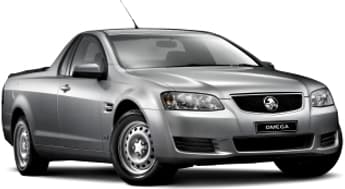


The company has just wheeled out an extended Commodore range, including sedan, Sportwagon, ute and long wheelbase models to the motoring media.
Technology
The engine, a 3.6-litre, double overhead camshaft V6 with four valves per cylinder, has been specifically developed to run on LPG, earning the entire range an outstanding 4.5 out of 5 score in the Green Vehicle Guide and exceeding Euro 6 exhaust emission standards.
Internally, new fuel injectors are positioned to optimise fuel delivery, while the fuel control system has also been optimised to ensure the advantages of LPG are fully realised to give best performance and drivability under Australian conditions.
Hardened valves and valve seats make for long-term durability, while the heads and manifold are also designed specifically for the LPG Commodore to ensure ideal air flow and combustion.
As LPG contains a higher octane rating (100 to 110) than petrol (91 to 98), new pistons have been used to allow the compression ratio to be\ raised to 12.2:1 to take full advantage of LPG.
The world-class engine puts out 180 kW of power and 320 Nm of torque, eclipsing the outgoing dual-fuel LPG variant by five kW and two Nm. At the same time, the new LPG Commodore Omega sedan records 11.8 litres per 100 kilometres consumption on the combined urban/highway cycle, 1.6 L/100 km, or 13 per cent, better than the dual-fuel LPG Omega sedan.
The first Holden-approved LPG system was introduced on VP Commodore nearly 20 years ago and culminates in the advanced dedicated offering in VE Commodore.
LPG powered vehicles emit fewer greenhouse gases and pollutants – 10 to 15 per cent less CO2 and fewer hydrocarbons – compared to petrol-powered equivalents.
Value
The LPG option can be had for $2500, including GST, over the corresponding petrol-powered VE model but private buyers of new factory-fitted LPG vehicles can apply for a $2000 Federal Government rebate. It is estimated the remaining $500 can be recouped in a matter of months.
Depending on fuel prices, the Omega sedan will cost about $1300 less per year in fuel to run, based on 20,000 km per year and average ULP and LPG fuel prices for December 2011.
Driving
The new six-speed automatic transmission is lighter, smarter and more refined, boasting shift patterns that provide outstanding drivability. On a test run in a variety of vehicles in the Melbourne city and suburbs, there was some harshness under load when being hurried uphill, other than that, I defy anybody to tell the LPG from a petrol powered VE.
Holden insists that the LPG engine starts without delay at all outside temperatures. We only tested it during a warm Melbourne day. In line with Holden’s safety philosophy, the LPG model goes beyond Australian regulatory requirements and scores the maximum five-star ANCAP safety rating.
With a rigid body structure with multiple energy paths in a crash, electronic stability programmed standard on all models, as well as six standard airbags in every model, the Commodore is one of the safest cars on the road.
Beyond this were the challenges thrown up by fuel storage. LPG requires a larger tank than petrol in order to achieve a similar range, so to keep mass contained, Holden’s safety engineers developed a lightweight, 84-litre aluminium tank, which to their knowledge is the only mass produced, OEM-equipped, aluminium fuel tank anywhere in the world.
Holden safety engineers shifted the tank to behind the rear axle requiring significant re-routing of the exhaust system among other modifications. The tank itself is made from high-strength, multi-celled, aircraft grade extruded aluminium with strategically-placed additional aluminium protection plates.
Related cars for sale on CarsGuide
See more Holden Commodores for sale View cars for saleHolden Commodore 2012: Omega (LPG)
| Engine Type | Liquid Petroleum Gas V6, 3.6L |
|---|---|
| Fuel Type | Liquid Petroleum Gas |
| Fuel Efficiency | 11.8L/100km (combined) |
| Seating | 5 |
| Price From | $6,380 - $8,910 |
| Safety Rating |
|


Pricing Guides

.jpg)

.jpg)
.jpg)
.jpg)
.png)
.jpg)
.png)
.jpg)
.jpg)

.png)


