What's the difference?
Back in 2010, Mitsubishi released Australia’s first mainstream electric vehicle (EV) in nearly a century.
That model, the i-MiEV, was a four-seater city-sized Kei car from Japan that cost $48,800, before on-road costs, or from roughly $70,000 in today's money. Little wonder it bombed. That was four times more than petrol-powered equivalents of the time.
Now, in 2026, the new BYD Atto 1 is the first EV sold here since the i-MiEV’s 2013 departure to be considered a four-seater city car.
It’s also the least-expensive EV money can buy, being even cheaper than many internal-combustion engine alternatives like the Mazda 2 and Toyota Yaris hybrid. The fact is, there’s nothing remotely near the Chinese supermini’s base price that’s electric.
But is the Atto 1 any good?
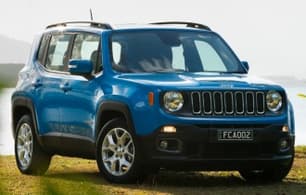
Jeep's Renegade might be late to the mini-SUV party but it comes with a pretty impressive back catalogue to suggest that this is a SUV that can cash the cheques its name can write.
The top of the range Trailhawk can write even bigger cheques than the lower models, bringing with it a range of off-road tech toys to let you really get down and dirty.
The BYD Atto 1 has already earned its place in history as the cheapest new EV ever sold in Australia. And the good news is that, on the strength of bigger-battery Premium version, it rarely puts a foot wrong as a city car, exceeding performance, efficiency, refinement and comfort expectations. The Atto 1 really delivers around town.
But the baby BYD’s price is too close to larger EVs with better range, while extended exposure reveals issues with seat comfort, touchscreen access/distraction, ADAS interference and nervous steering feel at speed. Australian road tuning is required to rectify these.
Still, as a cheap urban EV runabout, the Atto 1 Premium still (just) stands alone. A glimpse into the future, someday, all city cars will likely follow in the bold BYD’s footsteps.
Rugged, dependable and good off-road are the most obvious qualities of the Trailhawk. It stands out from the rest of the mini-SUVs by being able to do the S and the U with plenty of vigour.
It's just a shame that its on-road manners can't match that of its big brother, the Cherokee. Unless you're planning on proper off-roading, the Trailhawk might not be quite what you're looking for.
Fun fact. Designer Wolfgang Egger was responsible for the gorgeous Alfa Romeo 156 of 1997 among others, as well as some Audis and Lamborghinis later on. You can definitely see the latter’s influence in the Atto 1’s angular face.
Based on the Dolphin architecture and badged the Dolphin Surf elsewhere (as well as Seagull but that name wouldn’t fly here), the BYD’s boxy proportions are pure supermini and is about the size of the previous-generation Honda Jazz.
However, the designers have added some crossover cues to the styling, including plastic cladding around the wheel arches, to give it a pseudo SUV look.
Inside, though, the Atto 1 is unashamedly hatchback in layout and appearance, with a contemporary, minimalist dash, big central touchscreen with precious few buttons and loads of storage.
In other words, a typical modern small car from China.
In what is absolutely not a coincidence, the Renegade immediately conjures up the Wrangler. Upright grille from the Willys Jeep (references abound here), round headlights, squared off wheel arches to mimic the Wrangler's guards, short overhangs and big rear view mirrors.
The 17-inch wheels look completely lost in the wheelarches which are even more cavernous owing to the Trailhawk's 50mm of extra ride height. The wheels are also a bit cheap looking but will probably survive the belting the car is intended to take.
Less rugged is the interior, despite a fairly self-conscious effort to make it look and feel chunky. The front seats are flat and unsupportive with the rears just as lacklustre making sure everyone is sliding around together. Luckily, front passengers get a dash-mounted grab handle.
It seems quite well put together, however, but with carpets and easily-marked plastics, you'll hope your passengers don't bring the mud in with them too often. And the "Since 1941" stamped into the steering wheel can go.
The dashboard is reasonably clear and has plenty of information to share via the screen between the dials but whoever thought marking the redline with a water splash graphic in bright orange should probably rethink their design decisions.
Storage is limited to two cupholders up front, door pockets in each door and nets on the front seat backs.
And… what a perfect time to release Australia's cheapest new EV!
Sat alongside the base Essential from $23,990 (all prices are before on-road costs unless otherwise stated) is the Premium as tested here, starting from $27,990 and representing a $4000 difference.
But oh, what a difference.
The cheaper Essential comes with a 30kWh battery, providing a WLTP range of just 220km. Usefully, the Premium’s battery is 44 per cent larger at 43.2kWh, boosting range to a more-comfortable 310km, while power jumps by 77 per cent.
Every Atto 1 includes synthetic leather-trimmed seats, a 10.1-inch central touchscreen, rear camera with sensors, adaptive cruise control as part of some Advanced Driver Assist Systems (ADAS) tech (more on safety later on), wireless Apple CarPlay and Android Auto and even Vehicle to Load (V2L) functionality, so you can use your hairdryer on the fly. Handy!
However, the Premium ups the ante with a surround-view monitor, powered and heated front seats, reach as well as rake adjustment for the steering wheel, a wireless charger, LEDs rather than halogen headlights and 16-inch alloy wheels instead of 15-inch steelies with hubcaps.
But… both are four-seaters only. And neither offers an exterior temperature gauge, remote keyless entry from the passenger side (you’ll always need to press a fob), a luggage cover or a spare wheel – just the totally-unsatisfactory tyre repair kit.
Plus, there’s no heat pump so, in winter, turning the temperature up will drag range down noticeably, while a lack of liquid cooling for the battery will do the same during a hot Aussie summer, since the AC has to work overtime doing that job instead.
And we’re not convinced the Atto 1 represents such great value.
Yes, that small-battery Essential undercuts every hybrid bar Suzuki’s (mild-hybrid) Swift, including the MG3 Hybrid+ and Toyota Yaris HEV, and even the ageing Mazda 2 petrol costs more, but its limited range means it’s better as an inner-urban, small-distance-only commuter proposition. Best as a second or even third car.
Meanwhile, the bigger-battery Premium is priced perilously close to significantly larger EVs with greater range, including BYD’s own Dolphin from $29,990, the MG4 Urban from $31,990 drive-away, GAC Aion UT from $32,990 drive-away and the coming Geely EX2.
And, alongside cheaper-still petrol-powered alternatives such as the Kia Picanto, MG3 and MG5 sedan, there are also smaller SUVs that slip beneath the bijou BYD, like the Chery Tiggo 4, Haval Jolion, Hyundai Venue, Mahindra XUV 3X0 and MG ZS.
What we’re saying is, unless the Atto 1’s sub-four-metre length and narrowness are paramount, it’s behind the eight-ball for value against an array of more-substantial alternatives costing not much more.
Still, we get this is that rare thing today, a truly-new city car and we’re here for that.
The Renegade range starts at $28,000 for the 1.6-litre Renegade Sport manual front-wheel drive, climbing between $2000 and $3000 through the Sport Auto, Longitude Auto, Limited Auto with a final jump of $4000 to the 2.4-litre auto-only Trailhawk.
Standard is a nine-speaker stereo with Bluetooth and USB, 17-inch alloys, dual-zone climate control, reversing camera, rear parking sensors, keyless entry and start, cruise control, electric front seats with heating, satellite navigation, automatic bi-xenon headlights, auto wipers, leather trim, roof rails, front and middle bash plates, full size spare, heated leather steering wheel, privacy glass, trailer sway control and tyre pressure monitoring.
The lairy Omaha orange is $500, part of an eleven colour palette with only two no-cost paint options (black and white).
You can add lane departure warning, auto-parking and a black painted roof for $500 each, a removable and retractable roof called My Sky Roof for $2200 or a more conventional electric sunroof for $1900.
The Beats-branded nine-speaker stereo is run via Fiat-Chryser's UConnect system, accessible through the 6.5-inch touchscreen. While it improves with every attempt, it's still quite clunky and when the sat-nav is added, becomes a bit of a mess.
Thankfully, not every function has been crammed into the touchscreen interface, so you'll spend more time with your hands on the wheel rather than working out which bit of the screen has the climate control.
The Atto 1's electric motor is offered in two output choices. Either way, it can be found under the bonnet and driving the front wheels via a single-speed transmission.
The Essential scores a low-power version making 65kW and 175Nm of torque, which is enough for a 0-100km/h sprint time of a still-decent 11.1 seconds, while the Premium’s high-power unit ups those to 115kW and 220Nm respectively, shaving two seconds off in the process. Top speed is said to be 135km/h.
Note that, while the latter grade’s 43.2kWh battery adds 96kg overall compared to the smaller 30kWh model, it still enjoys a way-superior power-to-weight ratio of 82.7kW/tonne versus just 50.2kW/tonne.
The Trailhawk is powered by Fiat's 2.4-litre four naturally-aspirated four-cylinder producing 129 kW and 230 Nm. Jeep reckons you'll get 7.5L/100km on the combined cycle. Our mostly city driving with a longish motorway run produced an 11.0L/100km average over a week.
The transmission is a nine-speed ZF automatic driving all four wheels.
The Trailhawk also has Jeep's five mode Selec-Terrain system which should cover pretty much every eventuality – Auto, Sport, Mud, Sand and, just for the Trailhawk, Rock. The Trailhawk is rated to tow 400kg unbraked and 907kg braked.
Sadly, we cannot comment on how the 65kW/175Nm Essential drives, but with 77 per cent more power and 25 per cent more torque, the 115kW/220Nm Premium’s performance is one of its calling cards.
Lively off the mark, even in Eco, it thrives in inner urban environments, with instant throttle response for effortlessly zippy and smooth acceleration, as you’d expect of an EV.
And it just keeps on keeping on at speed, giving the Premium a terrific breadth of performance flexibility. We’re now very curious to see how the Essential goes.
Armed with light and alert steering, the Atto 1 can weave in and out of traffic gaps with confidence and precision, and is backed up by a super-tight turning circle to boot, so parking manoeuvres around town is a doddle.
BYD’s decision to set up the chassis for a soft, long-travel suspension is appreciated, since the Premium takes most bumps and humps in its stride, making this one of the comfier city cars around.
Road and tyre noises are omnipresent, but aren’t not too bad overall by supermini standards, while the Hankook 185/55R16 tyres deliver sufficient grip, even over some rain-soaked roads we endured.
Most of these Atto 1 attributes also translate well at freeway speeds, with the Premium offering ample muscle for overtaking, slick steering responses and a planted chassis feel.
But, once you hit some faster corners, the BYD’s reactive steering, lofty seating and cushy suspension conspire to create considerable body movement, especially through tighter bends, scrubbing the front wheels as it turns wide (understeer).
Yet, press on a bit harder, the Atto 1 can instantly change its attitude to oversteer, feeling darty as weight shifts from the rear, making the steering suddenly too sharp and the car too nervous, Even experienced drivers might hesitate to carry on. And this happened on dry roads.
Of course, the BYD is a city car so not designed for sports-car handling, but it does lack the confidence and control of a hard-driven Mazda 2 or Suzuki Swift. Strangely, it seems more SUV-like than supermini, dynamically.
Most owners won't care, but they will have to live with the infuriating ADAS tune, with inexplicably sudden braking when the adaptive cruise control is on, and lane-support systems that all-too-often tug and bleat endlessly like an agitated goat, becoming too distracting, and requiring far-too-fiddly touchscreen menu diving to silence, especially as they default back on with every restart.
The driver-attention warning is also in a semi-permanent state of nerves, squawking all-too-regularly unless the driver is sat perfectly still, and will easily escalate the danger level to “take-a-break” should you dare move about in your seat. Which would be regularly, due to the latter’s lack of enduring support. A literal and metaphorical pain.
Clearly, then, the Atto 1 can really do with some Australian road tuning and on a number of fronts at that. Until this happens, these are the dark clouds blighting the blue skies that this car’s otherwise sunny disposition delivers with every urban drive on a daily basis.
Or, in other words, stick to the urban jungle.
The Trailhawk name suggest that things are going to get muddy – compared to the rest of the range, the range-topper rides 50mm higher and has exposed, easy-to-reach tow hooks in the fairly unlikely event you get stuck. It also has a 20:1 low-range crawl ratio and Active Drive 4x4 which means it can switch between front and all-wheel drive. It'll also wade through almost half a metre of water. It's a genuine mud-plugging proposition and will take on some much bigger machinery out in the bush.
On the road, where we spent all our time in the Renegade, it's not what you'd call particularly inspiring. There's a number of sources of noise that contribute to a less than quiet cabin and having to constantly correct your course at freeway speeds adds to the tiring nature of the Renegade.
It's much better at lower speeds, pottering around but then again, its nine-speed transmission needs a lot more work on the shift mapping because it seems to forget which gear it needs to be in when you sink the right foot. If you don't need the Trailhawk's extra off-road goodies, consider the 1.4 litre Limited or Longitude.
The Atto 1 debuted in China back in 2023, but this is a facelifted, international-market version evolved mainly for European consumers, so crash-tested by Euro NCAP only last year, and scoring a maximum five-star ANCAP rating.
Note, though, that while the baby BYD includes Autonomous Emergency Braking (AEB) with forward collision warning, lane-departure assist and adaptive cruise control as standard, there is no blind-spot monitor or rear cross-traffic alert. Odd for a city slicker.
Six airbags are fitted, including curtain protection for all outboard occupants, while there are two rear-seat sited ISOFIX anchorage points and child-seat tether points behind each backrest.
Seven airbags (including driver's knee bag), traction and stability controls, roll mitigation, blind spot monitoring, ABS and brake assist.
The Renegade does not yet have an ANCAP star rating although it scored five EuroNCAP stars in 2014.