What's the difference?
Can you believe it’s been nearly two and a half years since the fourth-generation BMW X5 went on sale? Buyers clearly have short memories, though, because the first X model BMW ever unleashed on the world is still the best-seller in its large SUV segment.
Try as the Mercedes-Benz GLE, Volvo XC90 and Lexus RX might, but the X5 simply cannot be dethroned.
So, what’s all the fuss about? Well, there’s no better way to find out than to take a detailed look at the X5’s volume-selling xDrive30d variant. Read on.
This version of Tesla’s Model Y is the new frontier for enthusiasts. How do you make an electric performance car?
It should be easy, right? Just up the power of the motors - no need to fit a larger, more complex engine, and make sure you’ve got a battery with the appropriate outputs.
There’s far more than meets the eye. The big question is, is it worth the significant additional spend over the base Model Y?
We grabbed one of the earliest examples of the Performance to hit Australian shores to find out.
There is no doubt that BMW seriously stepped up its game with the fourth-generation X5, raising its levels of luxury and technology, all the way to that of the flagship 7 Series.
The X5’s mix of imposing looks and relatively well sorted dynamics is complemented by the xDrive30d’s brilliant engine and transmission.
It’s no surprise, then, that the X5 continues to be its best in xDrive30d form. There really is no need to consider any other variant.
One thing is for sure, it’s definitely a performance car, but not as we know it.
This version of the Tesla Model Y is the ultimate tech gadget on four wheels. It’s incredibly fast, has unbelievable, unnerving handling, and importantly what seems to be the best software in the business. Coming in significantly cheaper than its European performance EV rivals, it doesn’t even seem like bad value.
But. Enthusiasts be warned. There is an element of drama missing here, the Model Y is almost too good at attacking the road, there’s no roaring feedback or imperfections for you to correct, and for this reason alone, even if it’s the future, I don’t think it’s going to be for everyone.
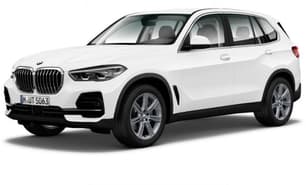
Few SUVs are as imposing as the X5 xDrive30d. Simply put, it commands attention on the road, or even from across the road. Or a mile away.
The sense of commanding presence starts at the front, where the first signs of its sports body kit are. As impressive as the trio of large air intakes is, it’s the engorged version of BMW’s signature kidney grille that gets people talking. It’s simply appropriately sized for a vehicle this big, if you ask me.
The adaptive LED headlights integrate hexagon-style daytime running lights, which look the business, while the LED foglights below also help to light the way.
Around the side, the X5 xDrive30d is also pretty slick, with our test vehicle’s optional bi-colour 22-inch alloy wheels ($3900) filling its wheelarches nicely, with blue brake callipers tucked behind. The ‘air curtains’ also look sporty alongside the high-gloss Shadow Line trim.
At the rear, the X5’s three-dimensional LED tail-lights look superb, combining with the flat tailgate to deliver a strong impression. Then there’s the chunky bumper, with dual exhaust tailpipes and a diffuser insert. Not bad at all.
Step inside the X5 xDrive30d and you’d be excused for thinking that you’re in the wrong BMW. Yes, it could very well be a body-double for the 7 Series luxury sedan. In fact, in many ways, it’s just as luxurious as BMW's flagship model.
Granted our test vehicle had optional Walknappa leather upholstery covering its upper dashboard and door shoulders ($2100) , but even without that it is still a seriously premium affair.
Vernasca leather upholstery is the X5 xDrive30d’s standard choice for seats, armrests and door inserts, while soft-touch materials are pretty much found everywhere else. Yep, even on the door bins.
The ambience is further heightened by the Anthracite headliner and ambient lighting, which makes things feel even sportier.
Speaking of which, while it might be a large SUV, the X5 xDrive30d still has a genuinely sporty side, as exhibited by its chunky steering wheel, supportive front seats and grippy sports pedals. They all make it feel that bit more special.
The X5 also has cutting-edge technology, highlighted by the pair of sharp 12.3-inch displays; one being the central touchscreen, the other a digital instrument cluster.
Both are powered by the now-familiar BMW OS 7.0 multimedia system, which was a stark departure from its predecessor in terms of layout and functionality. But that’s no bad thing, as it still raises the stakes, especially with its always-on voice control.
Users will also be stoked by this set-up’s seamless support for wireless Apple CarPlay and Android Auto, with the former connecting with ease upon re-entry, although it does consistently dropout if the iPhone involved is placed in the cubby directly beneath the dash...
That said, the instrument cluster is fully digital, having abandoned the physical rings of its forbear, but it looks dim and still lacks the breadth of functionality that some rivals offer.
And let’s not forget the brilliant windshield-projected head-up display, which is large and crisp, giving you few reasons to look away from the road ahead.
If you’ve seen one Tesla, you’ve pretty much seen them all, with the Model Y Performance doing little to set itself apart from the rest of the range.
It’s all part of Tesla’s minimalist Silicon Valley aesthetic. Like various models of iPhone, the changes between models are meant to be felt and not seen.
The Uberturbine wheels are of course a highlight, really filling the arches compared to the standard hub cab-wearing ones which ship on the standard Model Y, but they are also the only option on the Performance, too bad if you’re not a fan of matt black.
On the inside there are no surprises, either. The same minimalist aesthetic applies, as usual to a fault.
I feel like I’m sitting in the Apple Store, with just a big floating tablet being the main decoration.
Our car had the wood-look trim option, which is the most preferable option of the two. I found the white plastic fill alternative a bit cheap-feeling during my test of the standard Model Y.
I think the minimalism of the Model Y’s cabin will help it age well, but as I usually complain about these Tesla cabins. There’s no dash cluster or even a head-up display which feels like a bit of a usability blunder. Who wants to look at a centre display for critical information on the car?
Measuring 4922mm long (with a 2975mm wheelbase), 2004mm wide and 1745mm, the X5 xDrive30d is a large SUV in every sense of the term, so it’s no surprise that it does practicality very well.
The boot’s cargo capacity is generous, at 650L, but it can be expanded to a very helpful 1870L with the 40/20/40 split-fold rear bench stowed – an action that can be taken via the boot’s manual-release latches.
The split power-operated tailgate ensures that access to the wide and flat rear storage area couldn’t be any easier. And there are four tie-down points and a 12V power outlet on hand.
There are plenty of genuine in-cabin storage options, too, with both the glovebox and central bin on the larger side, while the front door bins can carry a stunning four regular bottles. And don’t worry; their rear counterparts can take three apiece.
Better yet, two cupholders are located at the front of the centre console, while the second row’s fold-down armrest has a pair of pop-out cupholders as well as a shallow tray with a lid.
The latter joins the small driver's side cubby and the two trays at the rear of the centre console as the most random storage spaces on hand, while map pockets are attached to the front seat backrests, which integrate USB-C ports.
Speaking of the front seats, sitting behind them, it becomes apparent how much space there is inside the X5 xDrive30d, with oodles of legroom available behind our 184cm driving position. We also have about an inch of headroom, even with the panoramic sunroof fitted.
What’s really impressive is how well the second row accommodates three adults abreast. There’s enough room on offer that a fully grown trio could go on a long journey with few complaints, partly thanks to the almost non-existent transmission tunnel.
Child seats are also easy to fit, thanks to the three top-tether and two ISOFIX anchorage points, as well as the generous aperture of the rear doors.
Connectivity-wise, there’s a wireless smartphone charger, a USB-A port and a 12V power outlet ahead of the aforementioned front cupholders, while a USB-C port is found in the central bin. Rear occupants also get a 12V power outlet below their central air vents.
The Model Y feels much bigger than the Model 3 so it will definitely hit the sweet spot for people who wanted a Tesla but found the Model 3 too cramped for a family.
Everywhere feels expanded, especially headroom, and the minimalist design leaves room for big door pockets and the flat floor leaves room for extra large stowage areas under the centre console.
I especially like the way the dual wireless chargers integrate with the design here.
There are a few hidden hard plastics, but Tesla has put soft-touch and padded surfaces in all the right areas.
The seats are reasonably comfortable, but I’m not sure how the synthetic leather trim will age in the Australian sun particularly as there’s no way to cover the big panoramic sunroof.
Not everyone has a garage. Interestingly though the car does have a cabin overheat protection function, which automatically starts the air conditioning should the cabin exceed a certain temperature.
Still, there are a lot of months in the year our brutal sun will be cooking the interior.
If you’ve read any of my Tesla reviews before, you’ll know I’m not a huge fan of the need to control pretty much all of the car's key functions through the central touchscreen.
It feels like a shame to complain about this, because the software is truly beautiful, and Tesla backs it with powerful computer hardware to keep the screen fast and responsive.
But having no dash cluster feels like a bit of a design-over-usability trait, especially when you go to adjust some of this car’s settings on the fly.
Priced from $121,900 plus on-road costs, the xDrive30d slots between the xDrive25d ($104,900) and xDrive40i ($124,900) at the lower end of the X5 range.
Standard equipment in the X5 xDrive30d that hasn’t been mentioned yet includes dusk-sensing lights, rain-sensing windshield wipers, power-folding side mirrors with heating functionality, roof rails, keyless entry and a power-operated tailgate.
Inside you'll also find push-button start, satellite navigation with live traffic, digital radio, a 205W sound system with 10 speakers, power-adjustable front seats with heating and memory functionality, an auto-dimming rearview mirror and M-branded scuff plates.
In typical BMW fashion, our test vehicle was fitted with several options, including Mineral White metallic paintwork ($2000), bi-colour 22-inch alloy wheels ($3900) and Walknappa leather upholstery for the upper dashboard and door shoulders ($2100).
Rivals for the X5 xDrive30d include the Mercedes-Benz GLE300d ($107,100), Volvo XC90 D5 Momentum ($94,990) and Lexus RX450h Sports Luxury ($111,088), meaning it’s relatively expensive, although specification isn’t exactly like for like.
This is a far cry from an affordable EV. Forget your MG ZS EVs, BYD Atto 3s and even base Teslas, because the Model Y Performance is in a different league when it comes to price and ability.
To give you an idea, the entry-point Model Y tends to float around $70,000 once you add on-road costs, sometimes slightly more. This Performance version takes a massive hike to nearly $100,000, before on-road costs, and the example we drove for this test totalled $108,031.
The trouble with the Performance version is it’s so expensive it doesn’t qualify for electric car rebates, and in fact attracts luxury car tax instead, pushing the price ever higher.
To add insult to injury, there’s not even a whole lot on the outside of this car to tip you off it costs nearly $40,000 more than the entry-level version, with the main hint being the 21-inch 'Uberturbine' wheels.
If you look even more closely you might notice it rides a little lower than the standard car, has bigger brakes, and a little carbon-fibre lip spoiler attached to the tailgate.
Most of the changes are under the skin, including an alternate suspension tune, second motor on the front axle, and a lot of additional power.
Tesla, famously shy about sharing specifics, only gives a 0-100km/h sprint time, which improves from 6.9 to 3.7 seconds for the Performance.
The battery is larger, too, boosting range from 455km on the base Model Y to 514km.
On the inside expect the standard Tesla stuff, like synthetic leather interior trim, the huge 15-inch centre tablet screen with integrated nav and always online connectivity, dual wireless chargers, and a panoramic sunroof.
The whole look and feel is super slick, as always, but is notably missing Apple CarPlay or Android Auto. Tesla is hoping you’ll use built-in versions of all your favourite apps. Too bad if you use one which isn’t offered.
LED headlights, performance tyres, and a power tailgate add to the gear list, but interestingly there’s no V2L - one key feature still missing from the Tesla brand, and something which adds a slight advantage to its rivals from Kia and Hyundai.
Of course, the software is the biggest sell. As though to prove Tesla is a software company first and a car brand second, the software in this car is by far the best on the market.
It’s super slick, and offers the most feature packed and functional app. It’s stuff like this which is hard to go back from, and is still keeping Teslas feeling more futuristic than most electric rivals.
It’s worth noting: even at this inflated price, the Model Y Performance still seems like decent value given how quick it is.
The only comparisons, cars like the Porsche Taycan, Audi e-tron GT, and BMW iX cost more, with the exception of the Kia EV6 GT which is similarly priced and offers similar specs and features.
As its name suggests, the X5 xDrive30d is motivated by the same 3.0-litre turbo-diesel inline six-cylinder engine used in other BMW models, and that’s a very good thing, because it’s one of my favourites.
In this form, it produces 195kW of power at 4000rpm and a very useful 620Nm of torque from 2000-2500rpm – perfect outputs for a large SUV.
Meanwhile, an eight-speed ZF torque-converter automatic transmission (with paddle-shifters) – another favourite – and BMW’s fully variable xDrive system are responsible for sending drive to all four wheels.
As a result, the 2110kg X5 xDrive30d can sprint from standstill to 100km/h in a hot-hatch-like 6.5 seconds, on the way to its top speed of 230km/h.
Tesla, always mysterious when it comes to hard specs, does not offer official power and torque figures for any of its models. Just the ever-impressive 0-100km/h sprint times.
However, looking at documentation the brand has officially filed in China (where the Model Y for our market is built) reveals specs of 220kW/440Nm for the rear motor, and 137kW/219Nm for the front motor, placing it pretty far up there in the EV performance charts.
It’s not just raw power, either. The Model Y performance also scores a lowered ride, bigger brakes, impressive torque vectoring software to keep everything under control, and interestingly, what Tesla tells us is a new suspension tune (even newer than the set-up we tested when the Model Y first arrived in Australia in late 2022.)
It’s all very impressive-sounding, but does it work? Read on to find out.
The X5 xDrive30d’s fuel consumption on the combined cycle test (ADR 81/02) is 7.2L/100km, while its carbon dioxide (CO2) emissions are 189g/km. Both claims are strong for a large SUV.
In the real world, we averaged 7.9L/100km over 270km of driving that was slightly skewed towards highways over city roads, which is a very solid result for a vehicle of this size.
For reference, the X5 xDrive30d has a large, 80-litre fuel tank.
The Model Y Performance has an official, WLTP-rated consumption number of 15.4kWh/100km, which grants the car a 514km driving range.
Few EVs manage to get over the 500km range mark, so this fact alone is pretty impressive.
In our testing the car returned a higher figure of 18.7kWh/100km, reducing range to the mid-400s on a full charge.
We only had the car for three days, so I expect, like the standard Model Y, it would be possible to get close to the official number with a longer-term test.
When it comes to charging, the Model Y can hit an impressive 250kW on a fast DC charger, allowing a charge time of around half an hour on a compatible unit. Expect more like an hour and a half on a more common 50kW unit.
Meanwhile the slow AC charger will hit a peak of 11kW, allowing the Model Y to charge from 10 per cent in more like seven hours. Still, adding roughly 75km of range an hour is worth it for longer stays at shopping centres or the like.
Interestingly, the Model Y doesn’t offer V2L, that is - the ability to power devices from its charging port. It seems to be one key piece of EV equipment missing from its spec list.
When it comes to ride and handling, it would be easy to argue that the X5 xDrive30d’s combination is class-leading.
While its suspension (double-wishbone front and multi-link rear axles with adaptive dampers) has a sports tune, it stills rides comfortably, wafting over uneven surfaces with ease and quickly regaining composure over bumps. It all feels suitably luxurious.
However, the optional bi-colour 22-inch alloy wheels ($3900) fitted to our test vehicle often catch sharper edges and spoil the ride over poorer surfaces, so you should probably stick to the standard 20-inch rims.
Handling-wise, the X5 xDrive30d does naturally lean into corners during spirited driving when in its Comfort drive mode.
That being said, overall body control is relatively strong for a large SUV, and the Sport drive mode does go some way towards tightening things up, but the fact is, it’s always going to be hard to defy physics.
Meanwhile, the X5 xDrive30d’s electric power steering is not only speed-sensitive, but its weight is adjustable via the aforementioned drive modes.
In Comfort, this set up is well-weighted, with just the right amount of heft, however, change it to Sport and it becomes heavier, which might not be to everyone’s taste. Either way, it’s relatively direct and offers solid levels of feedback.
That said, the X5 xDrive30d’s sheer size is reflected by its 12.6m turning circle, which makes low-speed manoeuvres in tight spaces more challenging. The optional rear-wheel steering ($2250) can help with that, although it wasn’t fitted to our test vehicle.
In terms of straight-line performance, the X5 xDrive30d has a thick wad of maximum torque available early in the rev range, which means its engine’s pulling power is effortless all the way through to the mid-range, even if it can be a little spiky initially.
While peak power is relatively strong, you rarely need to approach the top end to make use of it, because this engine is all about those Newton-metres of torque.
Acceleration is therefore spritely, with the X5 hunkering down and charging off the line with intent when full throttle is applied.
A lot of this is performance is thanks to the transmission’s intuitive calibration and general responsiveness to spontaneous inputs.
Gear changes are quick and smooth, although on occasion they can be a little jerky when decelerating from low speeds to a standstill.
The five drive modes – Eco Pro, Comfort, Sport, Adaptive and Individual – allow the driver to alter engine and transmission settings while on the move, with Sport adding a noticeable edge, but Comfort is what you'll be using 99 per cent of the time.
The transmission’s Sport mode can be summoned at any time, with a flick of the gear selector leading to higher shift points that are complementary to spirited driving.
I’ll just cut to the chase here: Sorry Musk haters, the Model Y Performance is truly, deeply impressive.
I didn’t stopwatch test its 0-100km/h sprint time, but 3.7 seconds certainly feels possible, and totally visceral.
Yes, the Model Y Performance will turn your groceries into a fine paste on the back of the boot if you stick your foot in, but the sprint time is far from the most impressive part of the drive experience.
I’d hand this honour over to the handling. The Model Y is simply incredible at holding onto the road.
Try as I might on one of Sydney’s best and curviest roads, the Model Y simply wouldn’t misbehave.
It’s almost surreal feeling the computers work their magic in the corners, taming the physics of a 2.0-tonne SUV, constantly fighting understeer or oversteer on the fly to keep it all tidy.
It does all of this in silence, with just the tyre roar to indicate your velocity. I must admit. I didn’t expect such ferocious ability from this car.
I certainly expected speed, but not this level of tidiness for something heavier and taller than a Model 3.
The trouble for a traditional car enthusiast, then, is the fact the Model Y is almost too good. It’s clinical in the way it attacks the road, and feels almost unfair, artificial, as though a computer is doing the work for you (it might as well be).
It feels risk-free, drama-free, feedback-free. While the experience of driving such a machine is nothing short of incredible, I somehow think it’s not the kind of thrills combustion enthusiasts are looking for.
Even the steering is artificial, with three heavily computer-assisted modes. I must say, 'Sport' and 'Standard' are a bit too heavy, with my preferred steering mode being the 'Chill' setting, which is the lightest and makes the car feel a bit easier to wrangle in the corners.
The three regen modes will actually appeal to a variety of tastes, allowing the car to behave either like a single-pedal EV (my preferred mode) or more like a combustion car, with a creep mode and a roll mode which will be more familiar to those who haven’t experienced an EV before, or are not fans of regenerative braking.
The new suspension has improved the ride significantly, with the Model Y Performance lacking the brittle edge which I experienced when the Model Y first arrived a few months ago.
It feels like it deals with sudden jolts a bit better, but make no mistake, this is still a firm ride, and the Y still has a firm frame.
While the ride has improved, it is still susceptible to significant amounts of jiggle, with the ride being notably busy over poor road surfaces. Still, it’s good to see this common issue with Teslas starting to move in the right direction.
The Australasian New Car Assessment Program (ANCAP) awarded the X5 xDrive30d its maximum five-star safety rating in 2018.
Advanced driver-assist systems in the X5 xDrive30d extend to autonomous emergency braking with pedestrian and cyclist detection, lane-keep and steering assist, adaptive cruise control with stop and go functionality, traffic-sign recognition, high-beam assist, driver-attention alert, blind-spot monitoring, cross-traffic alert, park and reversing assist, surround-view cameras, front and rear parking sensors, hill-descent control and tyre-pressure monitoring. Yep, there’s not much missing here.
Other standard safety equipment includes seven airbags (dual front, side and curtain plus driver’s knee), anti-skid brakes (ABS), brake assist and the usual electronic stability and traction-control systems.
Teslas are very impressive when it comes to safety, with an almost unprecedented number of sensors, and, importantly, great software to process what the car sees.
This is best seen through the radar screen which the car displays alongside the map, which is constantly collecting data on what the car sees around it.
It gives you confidence the car has seen and categorised a potential threat, usually before you have, and if ANCAP’s testing is anything to go by, it works, too.
The Model Y, including this Performance variant, wears a maximum five ANCAP stars, performing extremely well across all categories, with a particularly high score in ‘adult occupant protection’, and ‘Safety Assist’ which considers the abilities of its automatic safety systems.
While the Model Y’s suite is broader than individual standard active safety items offered by other brands, equivalents of most systems like auto emergency braking, blind-spot monitoring, lane keep assist, and things like traffic sign recognition are on-board.
Even the adaptive cruise control is one of the best on the market, remarkably good at lane keeping and steering assist, but I’d question whether it’s worth splashing for the controversial 'Full Self Driving' option.
Coming in at more than $10,000, it’s questionable if any of the included software features are even legal to use.
As with all BMW models, the X5 xDrive30d comes with a three-year/unlimited-kilometre warranty, which is two years behind the premium standard set by Mercedes-Benz, Volvo and Genesis. It also gets three years of roadside assistance.
The X5 xDrive30d’s service intervals are every 12 months of 15,000km, whichever comes first. Five-year/80,000km capped-price servicing plans start from $2250, or an average of $450 per visit, which is more than reasonable.
It’s a good question: What’s it like to own a Tesla. Some of the numbers aren’t promising, like, for example, the four-year and 80,000km warranty promise which is one of the shortest new car warranties on the market right now.
However, Tesla does cover the high voltage battery and drive components for a much longer eight years and 192,000km, guaranteeing 70 per cent of the car’s original battery capacity at that time.
Teslas have condition-based servicing (because, of course they do), meaning the car will tell you when it wants to visit a Tesla workshop based on various inputs. Seems logical, but not very transparent.