What's the difference?
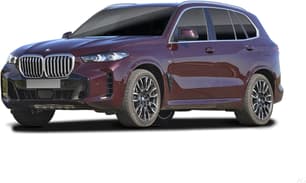
The BMW X5 is a leading contender in the ‘Over $70K Large SUV’ division of Australia’s new car market, which is a hotly-contested segment boasting 15 marques and 25 models.
The X5 has hit an enduring sweet spot with Aussie buyers in terms of size, performance and price. BMW prefers to call it a Sports Activity Vehicle (SAV) as distinct from its Sports Utility Vehicle (SUV) rivals.
Clearly, any word association with a utility is something BMW Group Australia wants to avoid after recently launching its latest X5 range, which brings numerous enhancements including design revisions, increased standard equipment, refreshed powertrains and more.
We were entrusted with the digital ‘Comfort Access’ key to one of the latest X5s, to understand from a family car perspective why this model range enjoys such enduring popularity with prestige SUV (sorry, SAV) buyers.
BYD has made a big impact in a short space of time in Australia and the arrival of this all-new mid-size SUV opens the door for an even bigger future.
BYD has taken the fight to Tesla in the electric vehicle contest, and while still some margin behind the American brand the Atto 3 and Seal remain amongst the most popular rivals to the Model 3 and Y, respectively.
At the same time it has out-sold established brands including Honda, Skoda and Renault, as well as fellow Chinese newcomers LDV and Chery.
Now BYD has its sights set on upsetting the established order in one of the biggest segments in the Australian market - mid-size SUVs.
The Sealion 6 is not a name that rolls off the tongue but it does leave an impression, as does the car, as we discovered when we drove it.
This is a luxurious prestige five-seater brimming with BMW’s latest design and technology that’s not only practical for weekly family duties but can also embrace spirited driving with the push of a button. A great all-rounder for families that like a sporty edge.
So, should Toyota, Tesla, Hyundai and others be worried about the arrival of the Sealion 6 and BYD’s new DMi powertrains? Yes, but not because it represents any major breakthrough in technology or dynamic prowess.
Instead, the strength of the Sealion 6 is how average it is. It may not be the obvious class-leader in any particular area, but it does a good job in almost every measurable aspect and doesn’t possess any major flaws.
Yes, there are still questions about the long-term dependability of BYDs but that’s a risk any new owner will need to accept. But the very sharp pricing should tempt plenty of buyers to take that chance and continue BYD’s steady upwards trajectory in the Australian market.
The latest front-end design features subtle revisions to BMW’s signature 'kidney' grille theme, highlighted by slimmer matrix LED headlights with chevron-shaped DRLs that incorporate the turn indicators.
There’s also an ‘iconic glow’ function, which illuminates the twin-grilles at night in-sync with the external courtesy lights when approaching and departing the vehicle. Lower front air-intake and tail-light treatments have also been revised.
The dash features a new curved instrument panel. Based on BMW’s latest generation 'iDrive' operating system, it consists of a 12.3-inch driver’s info display and 14.9-inch control display presented across the same seamless glass surface.
The control display’s touchscreen functionality has allowed dash buttons and switches to be minimised.
This new design dash has a blend of synthetic leather trim and dark brown/high-gloss woodgrain surfaces, along with new LED ambient lighting and gear-selector design.
The rear seat is sumptuous and spacious, even for someone my height (186cm). There’s ample knee and headroom and it can seat three kids in comfort, but for adult passengers wanting that 'business class' feel it would be ideal for two.
My only criticism of the new instrument display is that with more than 30 applications displayed on the expansive control screen, it can be distracting at times trying to visually locate and operate these functions while driving.
And, depending on sun angle, there were also complaints from different front seat passengers on different days about blinding glare caused by the dash’s high-gloss woodgrain inserts. Fortunately, the driver is unaffected by these reflections.
This is one area where BYD has a mixed record. Not to be unkind or create an international incident, but the Chinese car industry has a history of not being totally original with all of its automotive designs.
However, things are improving and the Sealion 6 is a good example of the Chinese industry learning to develop its own style. While there are some subtle hints from European models, overall it’s a smart-looking mid-size SUV with some character to it - rather than being a bland imitation of something else.
One area where the Sealion is a cut above its competition is its size, being longer than and wider than the RAV4, Mitsubishi Outlander and Nissan X-Trail.
With its 2165kg kerb weight and maximum allowable weight of 2885kg, our test vehicle can legally carry up to 720kg.
That should be ample for five adults (even better for kids) and their luggage, of which up to 100kg can be carried on the roof rails using a rack or roof box (both in BMW's accessory range).
Powered upper and lower tailgates provide good access to the luggage area, which is carpeted and equipped with a roll-out privacy screen, load securing hooks, a 12-volt accessory outlet and a first-aid kit stored behind a removable side panel.
The space-saver spare and tools are stored below the hinged load floor, so all luggage must be removed to access them.
Internal luggage space with the rear seat upright is 650 litres (0.65 cubic metres) which expands to 1870 litres (1.87 cubic metres) with the rear seat folded flat.
A useful load-carrying feature when the rear seat’s backrest is upright is a hinged centre section that folds forward and flat to carry long and narrow items.
These can stretch all the way from the tailgate to the dash if need be, which could be handy for carting anything from skis to home hardware purchases (firmly secured, of course).
It’s also rated to tow up to an impressive 3500kg of braked trailer, which matches the class benchmark for one-tonne utes.
However, given that tow-ball download (TBD) is usually around 10 per cent of trailer weight, the X5’s maximum TBD rating of only 140kg could be a challenge if 3500kg towing is required.
Front of cabin storage includes a big bottle-holder and bin in each front door, a glove box and on the right-hand side of the dash a pull-out driver’s bin, both of which are felt-lined.
The centre console, in addition to its wireless phone-charging pad, USB-A port and 12-volt outlet, has two small-bottle/cupholders up front and a large box at the rear, housing a USB-C port and topped by a padded dual 'brochure fold' lid that double as an elbow-rest for driver and front passenger.
Rear seat storage includes a large-bottle holder and bin in each door and pockets on each front seat backrest. The rear of the centre console has two storage nooks for small items in addition to its air-vents, two USB-C ports and a 12-volt outlet. There’s also a handy tablet-mount and USB-C port on each front seat backrest, which is great for long trips.
Folding down the rear seat’s centre armrest reveals two pop-out small-bottle/cupholders. And under its hinged lid is a hidden felt-lined compartment that’s ideal for storing slim screened devices away from prying eyes.
That external size translates to a roomy cabin, which also has some flair to the design but thankfully a bit more restrained than the smaller Atto 3 - which is a bit over-the-top in this reviewer’s opinion.
The element that sticks out immediately is the large central touchscreen which, like other models in the range, can rotate either vertical or horizontal, depending on your preference.
I don’t understand the point of this, because when rotated vertically it impacts your forward vision and can interfere with the air conditioning vents; and I can’t even see it with my polarised sunglasses.
It simply makes more sense horizontally, but I guess all carmakers are looking for catchy gimmicks these days. But while it may seem like a cool party trick it remains somewhat confusing to me, like one more thing to go wrong. But maybe I’m just getting old and grumpy.
What I do like and think is a great idea is double smartphone charging pads in the centre console. And overall the design of the cabin feels well thought out and has plenty of useful storage areas.
The seats are fine, a little flat and the fixed headrests are irritating, but overall they’re soft and supportive enough.
The key in the second row seating is the amount of space, with the extra length of the Sealion 6 compared to its rivals showing up with more knee room in the back for families with growing teenagers or those who need to carry their adult friends.
There’s also a pair of USB ports in the back too, so everyone can keep their electronics charged.
The boot is a good size, measuring 425 litres on paper, and has a nice long and wide floor. But some of that space is thanks to the lack of a spare - so that counts against it in my book.
Our test vehicle, to use its full name, is the X5 xDrive 40i M Sport. That breaks down to xDrive (intelligent all-wheel drive) and 40i (3.0L turbo in-line petrol six) with eight-speed automatic transmission.
M Sport denotes a package that's included as standard equipment which contains desirable goodies like enormous multi-piston M Sport brakes/adaptive suspension/aerodynamics, M leather-rimmed steering wheel, high-gloss black roof-rails and more.
All up, the list price is $138,900. However, our example has an optional ‘Enhancement Package’ which for another $6000 adds your choice of selected 22-inch alloy wheels (fitted with 275/35 R22 Continental tyres on ours), a tyre pressure monitoring system, metallic paint ('Skyscraper Grey' on ours), Harman Kardon 16-speaker surround-sound audio and 'Crafted Clarity' glass application (glass-handled shifter).
And this is on top of many standard features including three-zone climate control, automatic two-piece tailgate, digital radio, a head-up driver display, adaptive LED headlights with high beam assist, a panoramic full-length sunroof, wireless Apple/Android integration, 'Verino' quilted synthetic leather upholstery, numerous USB ports/12v outlets and more. However, there’s only a space-saver spare.
Numerous options include self-levelling air suspension, 'Merino' leather upholstery, active seat ventilation and massage functions, thermo-adjustable cupholders, LED-illuminated ‘sky lounge’ panoramic glass sunroof and Bowers & Wilkins premium surround sound to name a few.
Price is key to BYD’s success in Australia. Quite simply, the Chinese brand has undercut its rivals and consumers have responded to that, unsurprisingly in these tough economic times. The Sealion 6 follows the same path blazed by the Atto 3, Dolphin and Seal, offering plenty of vehicle for your money.
BYD Australia has kept it really simple, offering just two models - Dynamic and Premium - with very similar specification and separated primarily by powertrains.
The Dynamic is a less powerful, two-wheel drive option, while the Premium gets more grunt and all-wheel drive; but we’ll detail that later.
Both the Dynamic and Premium come with 19-inch alloy wheels, power-operated tailgate, a panoramic sunroof, powered front seats that are heated and cooled, a 15.6-inch touchscreen, Infinity premium audio, two wireless phone chargers and wireless Apple CarPlay and Android Auto.
The only non-powertrain difference between Dynamic and Premium is a head-up display on the latter model.
One noticeable absence from the Sealion though is a spare tyre. There’s not even a space-saver, just a tyre repair kit, which is disappointing and out of touch with the unique demands of the Australian market.
The Dynamic is priced from $48,990 (all prices exclude on-road costs), while the Premium starts at $51,990.
To put that into context with its competition, the Toyota RAV4 Hybrid range begins at $42,250 for the GX and stretches to $51,410 for the range-topping $51,410.
While, if you’re looking at an electric alternative, the Tesla Model Y currently starts at $55,900. The most direct rival, however, is the Mitsubishi Outlander PHEV which is only available with all-wheel drive and stretches from $57,290 to $73,790 across five variants.
The X5 xDrive40i is powered by BMW’s legendary 3.0-litre DOHC 24-valve in-line six with state-of-the-art technology.
This includes twin-scroll turbocharging, variable valve/camshaft timing and 48-volt mild hybrid technology (delivering up to 9.0kW and 200Nm) using an electric motor integrated with the transmission.
The combined effect is optimised power and throttle response (0-100km/h in 5.4 secs) with minimal fuel consumption and Euro 6d emissions.
It produces 280kW between 5200-6250rpm and 520Nm of torque (this can reach 540Nm with hybrid input) across a remarkably wide and flat peak torque band between 1850-5000rpm, which showcases its flexibility. There’s also auto start-stop and selectable drive modes.
This is paired with BMW’s smooth and sharp-shifting eight-speed torque converter automatic, which combines the best characteristics of a dual-clutch and traditional torque converter transmission.
There’s overdrive on the seventh and eighth gears to optimise fuel economy and the choice of rapid manual-shifting using the steering wheel paddles.
Power reaches its wide tyres through the xDrive intelligent all-wheel drive system, which actively varies the engine’s torque distribution between the front and rear wheels to optimise traction at all times.
BMW’s ‘Efficient Dynamics’ also includes brake energy regeneration with recuperation display and many other standard features to enhance driving safety and efficiency.
While BYD has made its name in Australia as an all-electric brand it has always referred to itself as a 'new energy' company, and the Sealion 6 (and upcoming Shark ute) are why.
That’s because these feature BYD’s new 'Dual-Mode Intelligence' (DMi) powetrain - a hybrid system to you and me.
As mentioned above, the biggest difference between the Dynamic and Premium models is the powertrain, with two reasonably different systems.
The Dynamic is powered by a 78kW/135Nm 1.5-litre four-cylinder petrol engine, paired with a 145kW/300Nm electric motor - making for a combined system output of 160kW/300Nm. Notably, this powertrain only drives the front wheels.
In contrast, the Premium has an all-wheel drive set-up, combining a turbocharged version of the petrol engine (good for 96kW/220Nm) with a pair of electric motors, one on the front axle and one on the rear to produce a combined output of 238kW and 550Nm.
Both models get the same 18.3kWh ‘Blade’ battery, which is BYD’s proprietary technology underpinning all of its models and is attracting attention from other brands.
For reference, the Outlander PHEV has a 20kWh battery, Nissan’s X-Trail e-Power has a 2.1kWh battery, while the more conventional RAV4 Hybrid has just a 6.5Ah battery.
BMW claims combined average (WLTP) fuel consumption of 9.9-8.5L/100km. Our 415km test comprised a mix of suburban and highway driving and when we stopped to refuel the dash display was showing 10.2L/100km which was line-ball with our own 10.6L/100km figure, calculated from fuel bowser and tripmeter readings.
So, based on our figures, you could expect a realistic driving range of around 780km from its 83-litre tank using standard 91-octane petrol.
There are multiple modes to drive it in, including electric only, with the Dynamic able to go up to 92km on a single charge, while the Premium manages a claimed 81km.
However, it's important to note these are the NEDC standards and not the more real-world like WLTP, so you may not achieve those in practice.
The claimed fuel consumption is an impressive 1.1L/100km for the Dynamic and 1.4L/100km for the Premium although again achieving those in the real world will take some effort.
With a 60-litre fuel tank BYD claims the Dynamic has a driving range of just over 1000km, while the Premium can manage around 960km.
It's also worth noting the Sealion 6 comes equipped with vehicle-to-load charging which means you can draw power from the batteries to run small electronic devices if you need to.
It’s a bonus feature that may or may not be of use, but is one of those things that may come in handy one day to get you through a camping trip or a BBQ at the park.
It’s supremely comfortable, with front bucket seats that offer powered-adjustment of height, reach and backrest angle along with side bolsters that can tighten their grip of your upper torso.
There’s also two-way lumbar support, that adjusts not only how far it pushes your spine forward but also allows that pressure point to be raised or lowered.
Combined with its power-adjustable leather-rimmed steering wheel, it would be hard not to find a comfortable driving position.
Eyelines to all mirrors are good and over-shoulder blind-spots are minimal. Front and rear occupants can talk without raised voices thanks to low engine, wind and tyre noise at highway speeds.
As you’d expect, it has high build quality and a tangibly solid feel as though it was machined from a single block of steel, from the satisfying thuds of its closing doors to the absence of shudders or rattles on a variety of roads.
It also has two personalities, which can be switched in an instant. In 'Comfort' mode it will happily cruise around city and suburbs as a mild-mannered family car, fulfilling daily duties like work commutes, school drop-offs and pick-ups, supermarket shopping and the like.
However, flick the drive mode to 'Sport Plus' and you awaken, well, if not ‘the ultimate driving machine’ then something close.
Its optimised drivetrain and handling settings feel more like a sports sedan than a family car, which can turn any winding mountain road into an engaging experience.
It has impressive reserves of cornering grip and braking force, combined with sparkling engine response and fast sequential manual-shifting at your fingertips.
It feels impressively agile, with all-round response that belies its 2.0-tonne-plus kerb weight, backed by a symphony of sounds from its sublime in-line six.
We drove the Sealion 6 Dynamic and despite having the less powerful powertrain it feels good on the road. The DMi system offers good performance, with quiet acceleration off the mark and a good integration between the petrol engine and electric motors. We haven’t driven the Premium yet, so we can’t make any comment on how different it feels.
It’s hard to make a definitive call on the Sealion PHEV powertrain because, like every plug-in hybrid, its greatest strength relies on how the owner operates it.
If you don’t charge the battery every day or so, you’ll just end up lugging around a battery and electric motor for little benefit. However, if you do keep the battery topped up, you can do most of your urban commuting without needing to turn the petrol engine on, which should result in some very low fuel consumption figures.
The company clearly knows this, which is why BYD Australia is offering a complimentary home charger to the first 3000 customers who order a Sealion 6.
Not only will that encourage sales but it will also help owners become evangelists for PHEVs in the future, because they’ll have the best possible experience.
So, a large part of its strength or weakness rests on the owner’s behaviour and that’s something we can’t assess.
As for the rest of the driving experience, the ride comfort is fine. It can’t match the class-leaders for compliance or dynamics, but the Sealion feels pleasant to drive around the urban environment and on the freeway at speed.
Biggest criticism is the steering is very, very light. While that makes parking easier, it feels so light you get very little feedback from the front wheels so it can feel vague at times.
Overall the driving experience is best described as fine. It doesn’t have any major vices but neither does it set any new benchmarks.
Five-star ANCAP (awarded in 2018) includes front and side airbags for driver and front passenger, plus head airbags for front and rear seats.
The comprehensive 'Driver Assistant Professional' active safety menu includes AEB (city, interurban and vulnerable road user) and a multitude of others.
It also has 'Parking Assist Professional' and for young families there are ISOFIX child seat anchorages on the two outer rear seating positions and top-tethers for all three.
Both Sealion 6 variants come equipped with autonomous emergency braking, front and rear cross-traffic alert/braking, 'Forward Collision Warning', 'Rear Collision Warning', lane departure warning/prevention, blind-spot detection, traffic-sign recognition, door-opening warning, trailer stability control, auto high beam, a 360-degree monitor, adaptive cruise control as well as front and rear parking sensors. Plus, it can even detect if you’ve left a child or pet inside the car.
ANCAP had not crash-tested the Sealion 6 at the time of publication, but with its comprehensive list of safety items it should tick most of the boxes when it comes to protecting its occupants and pedestrians.
BMW covers the X5 with a five year/unlimited km warranty and offers several service plans to suit different budgets and requirements.
For example, the 'Service Inclusive Basic' package covers all scheduled services over five years/80,000km for a total of $3450, or an average of $690 per year.
BYD is a small company but has partnered with mycar service centres to make maintaining your Sealion 6 easier. The Sealion is covered by BYD's six-year/150,000km warranty as well as its 10-year capped price servicing plan.
Service intervals are every 12 months/20,000km and prices range from $265 up to $1184 for the major eight year/160,000km tune up. Over the first five years, in keeping with most of its rivals, you’ll be paying $1648.
As I’ve written in previous BYD reviews, the biggest question mark hanging over the brand is arguably its long-term prospects. Quite simply, the brand is still too new to know how well it will perform on the used car market.
We also can’t tell you how it will hold up from a reliability point-of-view. We’re not suggesting there’s any doubt over its quality, but each car brand must prove itself reliable and dependable over time, and BYD hasn’t had that time yet.