What's the difference?
There’s no point waxing too lyrical here, because the facts surrounding the M3 Touring are more than exciting enough.
It’s a (kind of) family friendly wagon with oodles of space and practicality. It’s also an unhinged performance weapon with a thumping 3.0-litre twin-turbo-petrol inline six-cylinder engine.
And it has been years — decades, even — in the making. So, has it been worth the wait? Let’s strap in and find out.
You may be sensing an increasing level of hype around hybrid and full battery-electric vehicles. In fact, it feels like the automotive world has gone full-fat bananas over ‘electro-mobility’.
At least car manufacturers have, with Tesla’s entertaining antics disrupting the status quo, and causing virtually every mainstream brand to get on board the zero-emissions express.
But of course, the other side of that equation is demand. The rush to meet ever tightening emissions regulations (and save the planet in the process) fails to recognise the fact that not everybody wants a ZEV… yet.
The days of big-bore, more is good, internal combustion propulsion aren’t over yet, and Chrysler, like the rest of the ‘Murican Big Three’ is keeping traditional muscle car enthusiasts happy.
In fact, we’re in the midst of a US horsepower arms race not seen since the late 1960s and early ‘70s, and Chrysler’s SRT (Street & Racing Technology) performance subsidiary is leading from the front with a variety of over-the-top Hellcats, Demons and Red Eyes.
Australia has recently picked up a whiff of that action with the utterly mad 522kW Jeep Grand Cherokee Trackhawk, but the only slightly unhinged SRT version, and this car, the Chrysler 300 SRT, have been around for some time.
Launched here in 2012, the second-generation version of the 6.4-litre naturally aspirated sedan was discontinued in the USA in 2014. But sensing a large sedan-sized opportunity as local manufacturing from Ford, Holden and Toyota went the way of the Dodo, the local FCA team negotiated a continuation deal.
Think of the 300 SRT as America’s M5 or E63. A full-size performance sedan with a thick layer of luxury laid over the top, but at around one third the price.
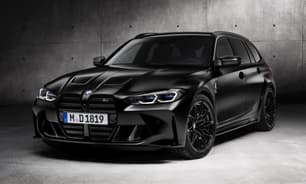
Long live the mighty wagon. The BMW M3 Touring is treat to look at, and an even bigger treat to drive.
If you want one, act fast. We waited a long time for a wagon-shaped M3, and with electrification increasing in the automotive industry, this will likely be your last chance.
The Chrysler 300 SRT is a big, fast, well-equipped and super-comfortable point-to-point tourer that’s also able to soak up the stresses of a city commute with ease. It’s also showing its age in terms of design, obscenely thirsty, dynamically flawed, and offered with a bottom-of-the-class ownership package. A fun place to visit but make sure you’re ready for permanent residency.
It looks spectacular, this M3 Touring, and even more so given a) wagons are so rare, and b) proper low-riding performance wagons with massive alloys are even rarer.
That said, I expect it will be polarising – and possibly too shouty for some – but I've got to say, I like it.
I’ve seen it described elsewhere as a bit of a sleeper, but for mine, you’d need painted-on eyes to not see there’s plenty going on with the Touring, especially one finished in the same Frozen Black paint as our test car.
It is at once sleek and swept back, and bulging and aggressive, especially at the flared wheel arches and fat exhausts poking from its diffuser-filled rump.
Inside, it’s mostly business as BMW usual, though with more carbon-fibre elements — our vehicle was equipped with the M Carbon Experience pack — but snug-fitting seats aside, it’s a premium, if performance-focused, place to spend time.
The NSW Highway Patrol has adopted the 300 SRT as its weapon of choice, and psychologically I reckon they’re onto a winner.
A high waistline, small glasshouse and big 20-inch rims combine to give the 300 a chunky, take-no-prisoners stance. And this intimidating beast filling the mirrors is enough to make even the most determined speedster drop their bundle.
Except for the SRT badge at the back, the exterior is a chrome-free zone, with black finish on the big honeycomb grille, window frames, and dark chrome wheels dialing up the overall air of menace.
The rear view is similarly imposing, with a large slab of almost right-angular boot lid topped by a pronounced body-colour spoiler.
At this point, we have to call out less than perfect panel fit. On our test car for example the intersection of the bonnet and front clip above the headlights was messy with inconsistent shut lines and poor alignment.
Inside not much has changed over the current 300’s seven years on sale, and the design lacks the integrated approach of more modern competitors.
An 8.4-inch colour media touchscreen sits in the centre of a squared oval panel between the central air vents and under an analogue clock, that shape bearing no resemblance to the form of the heating and ventilation control panel below it or the instrument binnacle alongside.
A mass of buttons confronts the driver across the centre stack, steering wheel and door, while genuine carbon fibre inserts add a racy if slightly ironic touch in a close to 2.0-tonne car.
Leather and suede sports front seats look (and feel) the business, and the strongly illuminated gauges are divided by a 7.0-inch multifunction display including a clear digital speed read-out. Which is just as well, because the fussy increments on the analogue dial are hard to read.
A performance-focused wagon is still a wagon, right? And that means there is oodles of space in the boot, though the seating choices in our test cars made the front seats less comfortable than they could, and should, be.
But first, the boot. The M3 Touring is a 4.8m-long wagon, which pays dividends when it comes to cargo. BMW says you'll find a minimum 500L of storage space, which grows to 1510L with the rear seat folded.
In the back, you’ll find seating for three, with the requisite ISOFIX attachment points, and with enough head and leg room to get comfortable.
But those carbon front seats are an option I wouldn’t be springing for. They arrive carved out of the rock-hard material, though with big holes throughout to reduce their overall weight, and they’re not only challenging to climb in and out of, but they’re awkward and hard to sit behind.
Stick with the regular seats and both rows will be happier.
At just under 5.1m long, 1.9m wide and close to 1.5m tall the 300 SRT is a sizeable machine, so it’s no surprise there’s plenty of room inside.
Those up front are provided with a pair of cupholders in the centre console (complete with heating or cooling at the press of a button), storage bins and medium-size bottle holders in the doors, a long oddments tray and a small storage cubby (with 12-volt outlet) near the gear shifter, as well as a sunglasses holder in the overhead console and a big glove box.
There’s also a lidded storage box between the seats, complete with sliding tray, two USB ports, an ‘aux-in’ jack and a 12-volt outlet. Even old school nicotine enthusiasts are catered for with an ashtray insert ready to slip into one of the cupholders and a cigarette lighter to drop into the main 12-volt socket.
Rear seat passengers pick up a fold-down centre armrest with two cupholders and a lidded oddments box, decent door bins with bottle holders, as well adjustable vents at the back of the centre console, two USB ports, and switches for the standard heated rear seats.
Sitting behind the driver’s seat set for my 183cm position I had ample legroom but only adequate headroom. There’s enough shoulder room for three adults across the rear, but the broad transmission tunnel throws a spanner in the works when it comes to centre foot room.
The fully-lined boot is nicely trimmed, with a pair of flip-out bag hooks (22kg capacity), load tie-down anchors, and useful lighting included.
Volume is 462 litres, enough to fit our three-piece hard suitcase set (35, 68 and 105 litres) lying flat on the floor, or the CarsGuide pram, with heaps of room to spare. A 60/40 split-folding rear seat adds extra space and flexibility.
In the case of a flat tyre your only option is a repair/inflator kit, and it’s worth noting towing capacity for the SRT is the same 450kg for a braked or unbraked trailer, where the standard V6-powered 300C can tow a 1724kg braked trailer.
The BMW M3 Touring lists at $180,100, which isn’t chump change, and positions the wagon body shape a fair way above a regular M3 sedan.
That’s before on-road costs, of course. According to BMW’s website, putting an M3 Touring on the road in NSW will be more like $194,039 — before you start ticking option boxes.
The 'M Carbon Experience' adds $17,500, and reduces overall weight by close to 10kg through carbon bucket seats, and adds more visible carbon and even more possible headroom to fit a helmet
The 'M Carbon ceramic brakes' add another $16,500, and while there are plenty of free paint colours, you can pay up to $7000 for the 'Frozen White' paintwork.
Our test car was finished in 'Frozen Black', a bargain at $5K.
Elsewhere, there is plenty of equipment on a stacked standard features list.
That includes staggered 19- and 20-inch alloys, BMW’s digital 'Laserlight' headlights, and an automatic boot.
Inside, there’s a 'BMW Live Cockpit' with a 12.3-inch instrument display, a 14.9-inch central screen, a head-up display, wireless device charging, Apple CarPlay and Android Auto and a premium Harman Kardon surround sound stereo.
You also get three-zone climate, leather seats, an 'Active M Differential' and 'Adaptive M Suspension', and seat heating up front.
Oh, and there is lots — lots — of performance, but we’ll come back to that shortly.
A list price of $74,950 (before on-road costs) buys a whole lot of car, equipment, and performance, with that figure only gaining entry to a pack of next-size-down options from Europe and Japan.
A $5k spread from $71-76,000 covers the Alfa Giulia Veloce ($72,900), Audi A4 45 TFSI Quattro ($73,300), BMW330i M-Sport ($70,900), Infiniti Q50 Red Sport ($74,900), Jaguar XE P300 HSE R Dynamic ($71,940), Lexus GS300 Luxury ($75,931), and Merc C 300 ($71,800).
And aside from the extra cubic inches under the hood and sheetmetal in the body, the 300 SRT’s standard features list is long, including dual-zone climate control, keyless entry and start (plus remote start), heated and ventilated front seats, heated rear seats, heated leather-trimmed SRT flat-bottom steering wheel, heated/cooled front cupholders, power boot lid release, electric steering column adjust (height and reach), plus eight-way electrically-adjustable driver and front passenger seats (with four-way power lumbar adjust on both and radio/seat/mirror memory on the driver’s side).
Also standard are auto headlights (with auto level and auto high beam), rain-sensing wipers, power-folding exterior mirrors (with defrost), nappa leather and suede seat trim, 825-watt, 19-speaker harman/kardon audio (including digital radio), sat nav, Android Auto and Apple CarPlay, a 7.0-inch instrument cluster display, the 8.4-inch colour media touchscreen, and 20-inch forged alloy wheels.
There are plenty of other safety and performance features, which we’ll cover in later sections, wrapping into an impressive standard package at this price point. And ‘our’ test car featured the ‘SRT Luxury Package’ ($4750) adding a monster dual-pane glass sunroof, premium leather trim on the instrument panel, centre console and door trims, as well as premium floor mats front and rear.
The standard colour choice is black and white… ‘Gloss Black’ or ‘Bright White’, with ‘Silver Mist’, ‘Ceramic Grey’, ‘Granite Crystal’, ‘Maximum Steel’ and ‘Velvet Red’ optional, and ‘Ocean Blue’ available to specific customer order.
The M3 Touring’s engine might well be one of the best in the business – a hard-charging 3.0-litre twin-turbo-petrol inline six-cylinder engine that produces a sizeable 375kW and 650Nm.
That power is sent to all four wheels via BMW’s 'M xDrive' with Active M Differential, producing a sprint to 100km/h of just 3.6 seconds.
Forget hybrid, forget turbos, the Chrysler 300 SRT is powered by 392 cubic-inches of Detroit iron… although the 6.4-litre ‘Apache’ V8 is actually built in Mexico.
The engine’s block is indeed cast iron although the heads are aluminium, with the ‘Hemi’ name derived from its hemispherical combustion chamber design.
It’s naturally aspirated, direct fuel-injected and produces 350kW (470hp) at 6150rpm and no less than 637Nm of torque at 4250rpm.
Drive goes through an eight-speed automatic transmission to the rear wheels with a limited-slip diff standard.
Officially, you should see a claimed 10.4L/100km on the combined cycle, but as is often the case in cars with engines that tempt you to be aggressive with the accelerator, the reality can be a little different.
We saw more like 16.4L/100km, but in the big bruiser’s defence, we spent a lot of time in city and suburbs, and a lot more time standing on the accelerator.
The M3 Touring is fitted with a 59-litre tank, and will only accept 98RON premium fuel.
Range is close to 570km using the official consumption figure and around 360km using our real-world number.
A model of fuel efficiency this car is not. Claimed economy for the combined (ADR 81/02 - urban, extra-urban) cycle is 13.0L/100km, the 300 SRT emitting 303g/km of CO2 in the process.
Over roughly 300km of city, suburban and freeway running we recorded 18.5L/100km (at the bowser), and the on-board computer threw up some horrifying short-term numbers as we explored the car’s performance potential.
Minimum fuel requirement is 95 RON premium unleaded and you’ll need 70 litres of it to fill the tank… regularly.
In a word? Delightful.
Don’t get me wrong, it’s not the easiest car in the world to daily drive. The carbon-fibre seats fitted to ours, for example, made getting in and out a slightly embarrassing challenge, and there’s a surging eagerness to the delivery of power that makes you look a little like you're showing off.
But the adaptive suspension serves up a far more comfortable ride than you might be expecting (more comfortable, in fact, than lesser, cheaper M models), making tootling around town easier and less chiropractic than I was expecting.
But it’s away from the city, with its traffic and red lights, that owning the M3 Touring becomes a delight, from its potent and punchy powertrain to the thrum of its exhaust, and the EV-like immediacy of its power delivery.
This is a driver’s wagon, there’s no doubt about it, with proper seatback-pushing acceleration, direct and confident steering and enough body stiffening and bracing that you really would have no idea you’re driving a wagon when cornering.
Engage its sportiest settings, and disengage its electronic nanny systems, and you can even set to work judging your drifting skills, courtesy of the (as yet untested, honestly) 'M Drift Analyser'.
A family car like few others, then. That you can also take it to Bunnings and throw some sleepers in the back is just a very welcome bonus.
Roll onto a smooth, dry surface, engage the SRT’s standard launch control function and you’ve dialled in the ability to storm from 0-100km/h in a ludicrously rapid 4.5sec.
Unlike smaller capacity turbo engines, the big atmo Hemi takes a while to develop maximum torque (637Nm), hitting peak pulling power at 4250rpm. Keep the throttle pinned and full power (350kW) is achieved on the cusp of the rev limiter at 6150rpm.
All this fire and fury is accompanied by a beautifully brutal V8 roar courtesy of an active exhaust which tweaks the pulsing note it produces according to drive mode and throttle position. It’s hard not to love it, complete with rude pops and crackles on the over-run.
Beware though, this car is relatively loud all the time, so you’ve got to hope the love affair is a long-term one.
Suspension is by a short and long arm (SLA) and upper A-arms at the front, with a five-link set-up at the rear, and Bilstein adaptive dampers all around.
The switch between Comfort and Sport is swift and marked, with the latter best kept for billiard tables and race circuits. Around town ride in the more compliant setting is agreeably smooth.
Push the big 300 along your favourite backroad and you know you’re asking two tonnes of metal, rubber and glass to move against its will.
The eight-speed auto responds well in manual mode (with wheel-mounted paddles), and the grippy sports front seats do decent job of keeping their occupants stable and balanced, but the sheer mass of this car means you’re never going to get a corner-carving hot hatch-like experience.
And despite a chunky, leather-trimmed sports wheel, the hydraulically-assisted ‘SRT Tuned’ steering isn’t exactly the last word in road feel or sharp response.
Having said that, the fat 20-inch (245/45) Goodyear Eagle F1 rubber grips hard with minimal impact on ride quality, and in a more relaxed mode the SRT is a stress-free and comfortable tourer.
Big acceleration is balanced by big brakes, with beefy ventilated rotors (360mm fr / 350mm rr) clamped by Brembo four-piston calipers front and rear.
The system’s outright power is impressive but can be abrupt on initial application at around town speeds, until you get used to greasing the pedal pressure in.
‘SRT Performance Pages’ allows you to scroll through multiple real-time data screens (timers, G-force, engine performance, etc), which is fun, with outputs downloadable to a USB stick or SD card. The 19-speaker harman/kardon audio system absolutely cranks, and the active cruise control works intuitively, without the frustrating conservatism (taking forever to pick up the throttle) of some other systems
Neither the M3 or M3 Touring have been independently crash tested to date, but it’s worth pointing out the 3 Series and 4 Series received maximum five-star scores from Euro NCAP.
Standard safety kit includes AEB with pedestrian detection, active lane keeping assist, blind spot monitoring, adaptive cruise control and rear cross-traffic alert.
You’ll also find six airbags on board.
The 300 SRT hasn’t been assessed by ANCAP or Euro NCAP, but the NHTSA in North America has given the 2019 Chrysler 300 a four-star safety rating (from a possible five).
In terms of active tech a lot of major boxes are ticked, with AEB a notable exception.
Standard features include, ABS, ‘Ready Alert Braking’ (primes system when driver lifts off the brake pedal quickly), ESC, ‘Electronic Roll Mitigation’, traction control, forward collision warning, lane departure warning, blind spot monitoring, rear cross path detection, and advanced brake assist.
A ‘Rain Brake Support’ function is triggered by the rain-sensing wiper system to periodically ‘wipe off’ the brake rotors with the brake pads, keeping them as dry as possible in the wet. And Chrysler has cleverly piggy-backed ‘Knock Back Mitigation’ into the arrangement.
In aggressive cornering front wheel assemblies can flex, pushing the brake rotor against the brake pads and ‘knocking’ them back into the caliper, potentially leading to an alarmingly long pedal the next time the brakes are applied. Not a factor in the 300 SRT, with the pads automatically pushed up into their optimum position.
Also included are, adaptive cruise control (with stop function), a reverse parking camera, front & rear parking sensors, and a tyre pressure monitoring system.
If, despite all that, a crash is unavoidable, the airbag count runs to seven (dual front, dual front side, dual curtain and driver’s knee), and the front head restraints are active.
There are three child seat/baby capsule top tether points across the back seat, with ISOFIX anchors on the two outer rear positions.
The BMW M3 Touring is covered by a five-year, unlimited kilometre warranty, and servicing is "condition based", in that the vehicle will tell you what maintenance is required, and when.
You can prepay your service costs at the time of purchase for all BMW vehicles, covering the first five years of ownership.
The warranty world has moved significantly in recent months, and the 300 SRT’s three year/100,000km warranty is now well off the pace.
Yes, it includes corrosion cover and 24-hour roadside assistance, but with the likes of Ford, Holden, Honda, Mazda, and Toyota now at five years/unlimited km, Chrysler is way behind.
Kia moved to seven years/unlimited km in 2014, and there are whispers of the Korean brand shifting to 10 years sooner rather than later.
Service is required every 12 months/12,000km, and no capped price servicing program is currently offered.
With the caveat that labour rates will inevitably vary between dealerships, Chrysler Australia estimates five year standard servicing cost at $2590 (including GST).