What's the difference?
If there ever was a modern BMW that captured the essence of the classic 1602-2002 and pre-Bangle-era 3 Series, it's the 2 Series coupe.
From the lowly 118d diesel to the sublime M2, this model line is the reincarnation of everything that the old 'The Ultimate Driving Machine' company tagline stood for.
Now there's a third-generation 2 Series (if you also count the crisp E82 1 Series of 2007), and right now the M240i is giving off the sort of exciting vibes you might have felt as a teenager looking at a bedroom poster of a 2002ti or 323i.
Does the G42 2 Series deserve to sit alongside such esteemed ancestry? Let's take a deep dive into this most intriguing of BMWs to find out.
It was, perhaps, a matter of time before BYD joined the seven-seat SUV brigade. In fact, the real surprise is that it has taken the Chinese brand as long as it has to begin mining the rich vein of Aussie car buyers looking for a full-sized SUV with the ability to seat a bigger family across three rows. But here it is, finally, anyway, the Sealion 8.
Interestingly, BYD hasn’t started its quest for seven-seat dominance by offering a traditional hybrid driveline. Instead, it’s gone straight for the throat with a pair of plug-in hybrid drivelines, both offering their own distinct take on the concept.
The first is a front-drive variant of the Sealion 8. With a single electric motor and a useful range, it stands as the sensible choice. But for those who want more performance, there’s the almost comically-fast all-wheel drive version with a pair of electric motors and monstrous acceleration. Interestingly, there doesn’t seem to be much in the middle, but the brand’s typically sharp pricing means there’s not a huge price-gap to negotiate in any case.
Of course, this is a pretty crowded marketplace right now, and standing out is the key to success. Whether that’s through value-for-money, performance, practicality or just shock value is open to debate, but it remains that BYD is launching the Sealion 8 into seriously competitive seas.
When BMW is on a roll, the world needs to watch out.
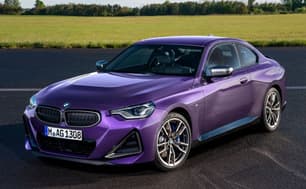
And, as our Thundernight metallic-hued M240i so literally demonstrates, its purple patch continues after a string of modern marvels like the latest 4 Series and iX, distilling the essence of compact sports coupe and luxury cruiser with dizzying confidence.
Joining the pantheon of back-catalogue greats like the 2002ti and 330Ci, we're missing it already now that the keys have been returned. Isn't that the true sign of the quintessential BMW experience?
There’s quite a bit to like here. There’s plenty of equipment, and lots of choice in price, trim level and mechanical complexity.
The driving dynamics are fine if you’re not looking for anything sporty although the performance offered by the dual-motor variants must be considered excessive, even if it’s pretty exciting the first time.
Perhaps what’s missing from the Sealion 8 experience is anything that stamps the car as something special within its hotly-contested market segment. Which is another way of saying it offers up the same limitations, most notably in the third row accommodation and access.
You only need to drive a one-box people mover and utilise the rearmost seat, to understand that the two-box SUV, while a pretty marketable thing, is compromised once the passenger count exceeds five. Nothing new there, but nothing new in the BYD, either, to change that narrative.
At which point, the front-wheel drive variant emerges as the most pragmatic choice and probably the one that meets all the important family tasks headed its way for the smallest outlay.
Note: CarsGuide attended this event as a guest of the manufacturer, with meals provided.
What is happening with BMW design? It's as if the Germans have run out of ideas.
Though we're eternally grateful it exists, the G42 is the least pretty of the three 1 and 2 Series coupe generations, as well as the most aggressively styled. All the usual macho tropes are present – cab-backward long-bonnet/short boot silhouette with an exaggerated dash-to-axle ratio, huge front air intakes, bulging bonnet and diffuser-heavy rear end.
There's also a beady eyed look to this M240i, with its squinty headlights and angry tail-light shapes further piling on the attitude. It's a far cry from the simple elegance of the E82 original, let alone the classic E30 of the Eighties. We wonder how much extra the M2 version will be when it surfaces later on.
That said, the G42's design is in keeping with something wearing an M-something-something prefix. In the optional purple of our press car, it certainly turns heads. That said, in the Bangle era, BMWs didn't have to rely on paint to do that.
Bangle, by the way, refers to BMW's late '90s/early '00s head designer Chris Bangle, an American with a bold aesthetic, scant regard for tradition and a taste for the controversial. His effect on vehicle styling, starting with the 2001 7 Series, is still felt today.
Dimensionally speaking, comparing the length/width/height/wheelbase measurements of the M240i (4548mm/1838mm/1404mm/2741mm) with a 2000 E46 330Ci (4488mm/1757mm/1369mm/2725mm) shows how today's coupe is palpably larger.
Over the previous (F22) 2 Series, the newcomer is 105mm longer, 64mm wider and 28mm lower; the wheelbase has been stretched by 51mm, while the front and rear tracks are 63mm and 35mm further out, respectively. Result? More space inside for today's lucky occupants.
BYD has done its best to give the Sealion 8 its own character and vibe. In fact, it’s a pretty smart looking thing - although still very much a two-box wagon concept - and that’s no given when you consider how much some big SUVs can start to look like large blobs of nothing when you look closely.
There’s the usual Darth Vader stuff at the front, but in profile, the diagonal vent across the front door makes a bit of a statement. The 'plaited' motif of the tail-lights might be stretching things a bit, though.
Inside, the modern board-room feel is invoked by the angular lines and high-tech look and feel of the large info-screens. The panoramic sunroof of the Premium grade also helps brighten up an otherwise pretty dark space.
Interior dimensions may not be paramount to most coupe purchasers, but a stylish one with quality fittings and generous equipment levels certainly is, and here the M240i is bang-on brand.
For a compact two door, the M240i is pleasingly accessible. Long doors and a tallish roof help entry/egress, into a 2+2 cabin that obviously prioritises front-seat occupants. And it does that exceedingly well.
There's space to stretch – even if you're two metres tall – up front, as long as the rear seats aren't occupied, as a result of generous leg and shoulder room, while headroom should also be sufficient, even with the sunroof fitted. We're talking about a small coupe, remember, so that's impressive.
Vision out isn't as bad as you might imagine, either, due to the airiness that the elongated side windows provide. There are blind spots, though, with the B-pillar being the worst, but at least the extensive camera and sensor network surrounding the car provide reassuring back-up.
The handsome M Sport front seat option ($2000 extra) look like they mean business, providing all the comfort, support and adjustment most occupants will ever need. They're firm enough when you need them yet restfully supple all the time. Backed up by a multitude of electronics, both buckets will brace people of pretty much all sizes, while the driver has the luxury of two memory settings that also take in mirror positions.
Remember how the new 2 Series comes via Mexico? You'd never know it wasn't built in Germany, from the solid build quality and expensive materials to the extremely welcome absence of squeaks and rattles. No area exposed to the occupants looks or feels cheap.
Also meeting expectations is the dashboard itself, which is essentially a scaled-down replica of every recently released BMW – futuristic and fabulous iX aside – since the current (G20) 3 Series in 2018 broke the Bangle-era curse of disappointing new-millennial models.
If you're hoping for a return to classic analogue instrument dials, forget it. The M240i's instruments are modish electronic items, providing plenty of vehicle and driving data, and supported by an excellent head-up display. Like the switches and buttons, they're easy to fathom, with little familiarisation required.
As we've said repeatedly in other BMW reviews, the iDrive multimedia controller is amongst the best in the business, responding instantly to inputs. The other basics – ventilation, storage, driving position – are also first class. Nothing to complain about here. The company is on a good thing and it's sticking with it.
Accessing the rear seats is aided by electrified front seats that slowly whir forward, to provide a big-enough aperture for your medium-build 178cm tall tester to squeeze in.
Once sat, with legs splayed apart, there's just enough space for another person of similar height and proportions, as well as surprisingly decent levels of vision thanks to the narrow front bucket seats and extended rear glass area, to offset any feelings of claustrophobia.
BMW has also provided several welcome amenities, including face-pointed rear vents with full single-zone temperature control to serve two occupants back there, armrests (with the centre fold-down item also packing in a pair of cupholders), reading lights and coat hooks.
Sadly, however, the rear windows do not retract, and the thick door pillars are fixed, so you cannot enjoy a pillarless hardtop experience. That's what the M4 coupe (and convertible too) is for.
While rear-seat space is adequate, with enough room for shoulders, thighs and feet if the front-seat occupants don't mind raising the cushion a little, the backrest is too upright to be considered comfortable on longer journeys. At least the low cushion is scalloped enough to provide some support, though, again, not over extended periods.
That rear backrest folds, by the way, to a 40/20/40 split, providing access into the 390-litre boot while still able to accommodate a single passenger. The lid opens up and wide, offering up a long, flat and wide space for storage. Along with a 12V outlet and tie-down hooks, you'll find a tyre-repair kit, since no spare wheel is carried.
BYD has made sure all three rows of the Sealion 8 are fit for purpose while attempting to make the rearmost row (traditionally the trickiest to get right) less of a downmarket place to be. With that in mind, both rear rows get air vents and climate-control adjustment for that part of the car. There's also a pair of USB-C charge ports in the second row and a single USB-C and USB-A port in the third row. The third row also has cupholders bult into the wheel arch on each side.
With the third row in place, there’s a decent amount of luggage space (270 litres) largely thanks to the Sealion’s five-metre overall length. There’s no spare tyre, but a puncture repair kit lives under the floor (as does the removable cargo blind) and the rearmost luggage space also incorporates a 12-volt socket and luggage hooks.
A pair of pull-tabs drop the headrests and then the entire split third row in a single movement, at which point you suddenly have a five-seater with a huge, 960 litres of luggage space. And if you need to cart gear over people, the second row also folds flat to open up 1960 litres of space.
Up front, the feeling of spaciousness is amplified due to the low scuttle height and what the aviation industry calls the glass cockpit (no analogue dials or gauges at all). The 15.6-inch central info-screen runs the usual apps and control displays but, thankfully, the climate control touch-controls are tethered to the bottom of the screen, so they’re always visible regardless of what else is going on.
The 10.2-inch driver’s display adds a head-up function in Premium trim and displays the usual array of information required to operate the vehicle. But even better is the steering wheel which features a thick, well-padded rim that looks and feels pretty luxe. It also houses the usual buttons for stereo, phone and cruise-control functions.
A really nice touch is the addition of an extra set of tilt controls on the inside of the passenger’s front seat, allowing the driver to control that seat to allow people in or out without leaving their own seat. Nice one.
It is, of course, the centre row of seats that will make or break a car like this for many families. Even though many clans will not use the rearmost seat much of the time, the central row will get a huge workout. So it’s nice to see that leg, foot and headroom are all sufficient for even growing teenagers. Again, the car’s overall length appears to be the key, but it’s also worth noting the centre row seat is comfy and supportive. The outboard positions in the second row also feature heating and ventilation functions.
The third row, however, follows SUV tradition by being strictly for smaller kids. Access past those huge wheel arches is tight, and once you’re in, there’s a combination of dark trim and tiny windows to limit joy.
While it won’t matter to many buyers, the front-drive Sealion 8 is rated to tow 1800kg with a braked trailer, and up to two tonnes in the all-wheel drive version. But there’s no spare tyre fitted, and roadside flats need to be addressed by the included tyre repair kit.
Don't worry. Even though the latest, third-gen 1 Series hatch as well as five-door versions of the 2 Series have sacrilegiously gone all transverse-engined and front-wheel drive on us, BMW knows not to cook the golden goose or poke the bear by retaining the traditional longitudinal/rear-drive set-up for the G42.
For car enthusiasts, that was one of the few pleasant surprises of last year.
Hailing from a new BMW plant in Mexico, the 2 Series coupe comes in two flavours for now: the 220i from $61,900 before on-road costs, and the M240i from $89,900 before ORC. Other grades like a 230i are likely to follow soon.
Both models are decently specified, sharing LED headlights and tail-lights, auto start/stop, paddle shifters, an M Sport Package (including a multifunction steering wheel, selectable driving modes, sports seats and anthracite headliner), M Sport suspension, variable sport steering, 'Hey, BMW' driving assistant, head-up display, auto parking assistance with a surround-view camera, a 12.3-inch instrument display, a 10.2-inch control display, digital radio, wireless smartphone integration, Apple CarPlay/Android Auto connectivity, emergency services access, three-zone climate control, rain-sensing wipers, electric heated/folding exterior mirrors, through loading into boot with remote-release backrests, ambient lighting and tyre-repair kit in lieu of a spare wheel.
However, the differences between the two already on sale here are extensive, starting with the M240i gaining a 3.0-litre inline six-cylinder (I6) turbocharged petrol engine in lieu of the 220i's 2.0-litre four-cylinder turbo petrol unit.
There's also all-wheel drive (AWD) for the first time in a 2 Series in Australia, as well as M Sport suspension with adaptive dampers, an M differential, M Sport brakes, body kit, adaptive cruise control with full stop/go functionality, keyless entry/go via BMW Digital Key, electric sunroof, leather instead of Alcantara/artificial leather upholstery, electric front seats with driver's side memory and heaters, adaptive LED headlights with auto high beams, 14-speaker Harman/Kardon surround-sound audio system and 19-inch alloy wheels, among other items, to help justify the extra $28,000.
Standard safety features include six airbags, forward collision warning, Autonomous Emergency Braking (AEB) front and rear, with front/rear cross traffic alert, lane departure warning with passive steer assist, lane keep with active assist, blind spot monitor, 360-degree view cameras, parking assist, parking sensors and road-sign recognition, among other features. More details in the safety section below.
With two-door coupes falling out of favour, four-seater performance rivals to the M240i Coupe include the Ford Mustang GT V8 (from $64,190) and Audi TT S quattro (from $104,500), while there are various two-seater options like the coming Nissan Z (pricing TBC, but the outgoing 370Z kicks off from just $50,490), Toyota Supra (from $87,803) and Porsche 718 Cayman (from $115,900).
Thinking more laterally, the $92,900 Audi RS3 and $99,895 Mercedes-AMG A45 S hyper-hatches are quicker while the Tesla Model 3 Performance Dual Motor sedan from $88,900 will blow the BMW away for performance, so if you don't strictly need coupe style, then the M240i does cop some unexpectedly stiff competition at its price point.
Still, few rivals balance the pricing, packaging, performance and AWD capability with the swagger of our purple coupe, which makes this 2 Series quite a unique value proposition in its own right.
BYD will offer the Sealion 8 in three trim levels, starting with the front-drive Dynamic at $56,990, before on-road costs, then moving to a pair of all-wheel-drive variants, the first with the same Dynamic trim level at $63,990 and the range-topping Premium AWD at $70,990.
The Dynamic trim level on both the front-wheel drive and the all-wheel drive variant gets you three-zone climate-control, air vents in both rear rows, full connectivity including wireless Apple CarPlay and Android Auto. There’s also wireless phone charging. The Dynamic specification also takes on 20-inch alloy wheels and there’s full LED lighting as standard.
Pony up for the Premium trim and you make the switch to 21-inch alloys, a 21-speaker sound system and even a massage function for the first two rows of seats. The Premium also includes a head-up display for the driver.
Not as easy to quantify is the level of plush inside the cabin. There are lots of soft-touch surfaces and the whole interior design looks pretty fresh and modern and well put together. But more than that, there’s a bit of design flair that makes the BYD feel perhaps a bit more expensive than it really is. That’s not an easy thing to pull off. But it seems to work here, even in the entry-level Dynamic trim.
Against the competition, the Sealion 8 can't match the similarly specified Chery Tiggo 8 on price, even though on performance and EV range, the Tiggo 8 and the entry-level Sealion 8 are quite similar. The more expensive Sealion 8 Premium, meanwhile, lines up pretty neatly on price with the Kia Sorento S PHEV. But that vehicle can't get close to the epic straight-line performance of the BYD.
As with all of our current favourite BMWs that aren't electric on full-fledged M cars, the M240i is fitted with a variation of the divine B58 engine – a 2998cc 3.0-litre double overhead cam direct-injection turbo I6. It delivers 285kW at a heady 6500rpm, and 500Nm of torque between a low 1900rpm and 5000rpm.
A kerb weight of 1690kg (200kg more than the 220i equivalent) means the M240i's power to weight ratio is about 169kW/tonne, which may explain why it can manage the 0-100km/h time in 4.3 seconds. V-max is 250km/h.
Power is channelled to all four wheels continuously via an eight-speed M Steptronic transmission, while the AWD system features a differential to help transmit torque to all four wheels more cleanly.
Controlling all those outputs, the M240i's suspension consists of a two-joint spring strut front and a five‑link rear axle arrangement, with M Sport suspension including variable sport steering, additional front axle struts, M Sport brakes, M Sport differential at the rear axle and adaptive M suspension with electronically controlled dampers.
BYD has managed to keep a lid on the price of the entry-level version of the Sealion 8, by specifying it with front-wheel drive rather than the all-wheel drive of the other two variants. It still gets the same driveline beyond the lack of a driven rear axle, although battery capacity is the other difference.
As such, you’re looking at a 1.5-litre petrol engine (kind of the default powerplant for Chinese SUVs right now) with a turbocharger. With the 19kWh battery chiming in to power the electric motor, the driveline can achieve outputs of 205kW and 315Nm.
In the case of the AWD variants, the larger 35.6kWh battery and extra electric motor ups the potential outputs to 359kW and 675Nm which is a huge jump any way you look at it and gives the Sealion 8 a huge bandwidth when it comes to matching buyer performance aspirations.
All the variants have the potential for a claimed electric-only range of greater than 100km if owners use the plug-in facility to charge either at home or at work. For the AWD variants, the larger battery stretches the EV range to a claimed 152km. On longer journeys or whenever the battery has reached about 25 per cent capacity, the Sealion 8 acts just as any other hybrid with regenerative braking and electric assistance to aid performance.
In suspension terms, the BYD is pretty conventional but if you do pay the extra for the Premium variant, you’ll gain adaptive dampers.
Over exactly 503km of city, suburban, freeway and performance testing, we managed a credible 9.6 litres per 100km – and that was with the air-con on constantly and regular visits to the 7000rpm rev limiter. No horses were spared in our quest to properly assess this vehicle.
BMW's official combined-average claim for the Euro 6d-rated M240 is 8.0L/100km flat – and 6.6L and 10.3L in the Extra Urban and Urban runs – for a carbon dioxide emissions average of 185 grams/km.
The small fuel tank swallows just 52 litres of E10, 95 or 98 RON (as tested) premium unleaded petrol, meaning an average of 650km between refills is possible.
BYD claims a range of more than 1000km for both variants of the Sealion 8, provided you start with a fully charged battery and a full 60-litre fuel tank.
The BYD can also make use of commercial fast-chargers and, when using the maximum 40kW on the FWD version and the 74kW possible for the AWD variant, the charging times from 30 to 80 per cent are both under 20 minutes. The Sealion 8 can also charge at 11kW on an AC socket and the vehicle also offers V2L (Vehicle to Load) capability, meaning it can power on-site work tools, camping gear or even your house at night.
Provided the EV battery is kept at 25 per cent capacity or above, BYD claims a 1.0-litre per 100km fuel consumption figure for the car based on the laboratory test. In the real world, the results will vary enormously depending on where you drive and how the car is used. Deplete the battery and continue to drive at highway speeds, and your actual fuel consumption might easily increase to many times that 1.0-litre claimed figure.
In a word, invigorating.
Stuffing a big old engine in a little-ish car is always an exciting recipe for thrills, and the M240i Coupe does not disappoint.
Press the start button, and the sublime B58 3.0-litre turbo I6 growls into life, setting a rich tone for the level of performance as well as sophistication that's coming.
Even in Eco mode, off-the-line acceleration is stirring, with a hefty shove if you're in a hurry, or a brisk pace if you just long to just take it easy, defined by smooth upshifts from what remains one of the world's greatest-ever automatic transmissions.
That said, Normal is the default operating setting, and here the M240i can take on a Jekyll and Hyde split-personality, that goes well beyond simply possessing a strong throttle response accompanied by a soaring exhaust note. The engine sings sweetly even right up to 7000rpm, while the gearbox is uncanny in its ability to always be in the correct gear, yet will simultaneously hold each ratio in manual mode (via the shifter or paddles) if the driver needs to go hell-for-leather.
Speaking of which, in Sport mode, the 3.0-litre turbo goes into red alert, taking on a louder and more muscular mood, as it roars along with frenetic yet effortless speed. What seems like 90km/h can, in fact, be very much more, and with plenty of extra oomph in reserve.
It's so typical BMW that purists affronted by some of the brand's other niche offerings of late will cry with joy that the art of making a sports coupe has not been lost in Bavaria after all.
And that's before the first turn of that fat little steering wheel. Here the 2 Series Coupe's 3 Series-derived CLAR architecture's DNA is immediately obvious, providing subtle balance and an immersive connection to go with all that bolshy brawn.
The M240i will glide along precisely where pointed, sticking steadfast to the tarmac while cornering at speed without breaking a sweat. That mechanical rear diff helps provide both alacrity and reassuring control. Yes, it remains weighty and planted when punted relentlessly through tight corners, but it's also not as heavy-feeling as before.
Being AWD, there's grip galore to rely on for security, yet the M240i still seems deliberately rear-drive biased in its set-up, so the driver can hang the tail out if wanted with gradual ease in Normal, or with a little more of a sideways flick in Sport. The modes are configurable so the level of engine, steering and suspension responses can be tailored as desired, meaning that in the racy Sport Plus setting, with stability and traction controls on hold, the full oversteer experience is possible if you're game/brave/silly enough.
This car's brilliant performance is also down to incredibly dependable and nuanced braking, adding another layer of driver enjoyment, since it can pull up hard and fast if need be without drama or fuss.
So, it's no surprise to learn that an M-Sport-enhanced BMW can be a deliciously fast and limber along a mountain road.
But the real progress over the old F22 is just how suave and polished the G42 is if you're tired and stressed, isolating its occupants from the rigours of rubbish road surfaces. Kudos to the 'Adaptive M Suspension' and its adaptive dampers for this, for they're standard M240i fare. The resulting cushy ride completely broadens the dynamic bandwidth of this compact sports coupe, making it an everyday commuting proposition.
Ultimately, it's a bit of a struggle to find fault in the 2 Series' drivability and dynamic make-up. The usual Euro luxury car bugbear of too much coarse-chip tyre noise applies, but as this is a sports coupe, that's not such a big deal here. Even wind noise levels are subdued – all the better to drink in that glorious turbo engine wail.
BMW, you got the M240i delightfully right.
The first thing you’re going to do in a Sealion 8 is wonder where the gearshift is. It’s a column-shift, but it's not only located where a traditional indicator stalk would be, it looks very much like one, too.
This promises two things. One, you’ll spend a few seconds finding it and two, you’ll try to turn the indicators on with it at least once every drive. (The real indicators are on the other side of the steering column.)
Another note to those test driving a Sealion 8. Sample the front-drive version first. (I’ll get to why in a minute.) When you do, you’ll soon figure out this is a driveline that prioritises electric running. That is, the petrol motor barely ever actually drives the wheels (only at full throttle and higher speeds). Any other time, if the petrol engine is running, it’s to charge the battery that keeps the electric motor purring away. This is how efficiency is defined by BYD.
You’ll also find that the Sealion’s acceleration is purposeful in that electric-motor way, but hardly startling. And when you do smash the throttle and force the petrol engine to drive the axle, you’ll notice that this takes a fair time to play out, and that when everything is grunting as hard as possible, the petrol engine is quite noisy and even a little harsh sounding. Use the driveline sensibly, though, and it’s all smooth and quiet, even if that then means you can hear a little suspension noise creeping into the cabin.
That done, you’re now free to drive the AWD variant. Why wait? Because this thing is seriously off the leash. Bear in mind that 359kW of power is getting on for the thick end of 500 horsepower in the old money, so even though the Sealion 8 is a hefty critter at about 2.5 tonnes, all that power and torque will get it from rest in under five seconds, or thereabouts. The relevance of this to family-car technology is hugely debatable, but it’s one heck of a party trick the first time you try it.
The huge torque also magnifies the Sealion 8’s natural tendency to lift its inside front wheel when accelerating out of a turn. A small tyre squeak can sometimes be heard before the traction control gathers it all together, but even the single-motor variant displays the same trait.
In steering and suspension terms, it’s probably fair to say the Sealion 8 doesn’t unlock any new depths of talent. The ride is pretty comfy but at the expense of body control and the steering points the wheels but doesn’t convey much else to the driver.
That said, the fact everything seems to be tuned to the same frequency means it all works okay. You don’t have too-fast steering fighting the tyres or too firm suspension upsetting the interior calm. Use it as a family would, and it’s 100 per cent fit for purpose.
There is no ANCAP rating for the BMW G42 M240i Coupe, but over at EuroNCAP, a 2022 220d coupe scored just four out of five stars.
Areas singled out needing improvement include better pedestrians/vulnerable road user protection (especially for cyclists) and a 'marginal' rating for the emergency lane keeping's effectiveness.
Standard safety features includes six airbags (dual frontal, side chest and head-protecting airbags for the first row and side chest protecting airbags for the second row), forward collision warning, Autonomous Emergency Braking (AEB, operational from 5km/h to at least 210km/h and with cyclist and night-time operation), front/rear cross traffic alert, lane departure warning with passive steer assist (operational from 70km/h), lane keep with active assist, blind spot monitor, driver attention monitor, 360-degree view cameras, parking assist, parking sensors, anti-lock brakes with electronic brake-force distribution and brake assist, stability control, traction control, corner braking and rain-sensing wipers.
There are also two ISOFIX points as well as two top tethers for straps in the rear seats.
Any family car needs to be safe, so BYD has thrown the kitchen sink at the Sealion 8 in terms of its active and passive safety gear. That starts with nine air-bags including full-length curtain side bags and a centre-front airbag to help prevent head clashes.
There’s also a 360-degree camera on all grades, front and rear parking sensors, and the full line-up of current driver-assistance functions including autonomous emergency braking, lane-keeping assistant, rear-cross-traffic alert and assistance, blind-spot monitoring, driver attention monitoring and a tyre-pressure monitoring system.
To that lot, you can add adaptive cruise-control, traffic-sign recognition, adaptive headlights, front and rear collision warning, anti roll-over systems and hill-hold functions. It’s also worth mentioning that the overhead camera system is very, very good with a clear, crisp display and no processing delay.
The driver-attention monitoring seems to behave itself better than some of the over-active systems other makers specify, but the lane-keeping assistance function is still far form perfect. To be fair, it is less aggressive than some such systems and the intervention is more subtle, but the recued aggression seems to be packaged with lower sensitivity. As in, the cameras seem to sometimes miss a critical white line, particularly if its faded or less than freshly painted.
There are also ISOFIX child restraint tether points in both the second and third rows, as well as seat-belt warnings for every position and an electronic child-safety switch for the doors.
The Sealion 8 is yet to be crash tested locally, so no ANCAP star rating is available.
Trailing all of its main luxury car rivals (except Porsche) by two years, BMW only offers a three-year/unlimited kilometre warranty, as well as three years of roadside assistance.
BMW says its vehicles' servicing is condition-based, depending on how they're driven and other factors, with a dash warning appearing to let the driver/owner know when it's time. We advise servicing your M4 annually or at every 10,000km
No capped-price servicing system is offered. However, as long as the first one is paid for before the first service on a new vehicle, the 'BMW Service Inclusive Basic packages' is available at extra cost, covering scheduled servicing for three years/40,000km or five years/80,000km. A 2 Series should cost from $1700 for the five-year/80.000km package.
Servicing any hybrid can be a bit more expensive thanks to the presence of two propulsion forms.
In any case, the Sealion 8 requires routine servicing every 12 months or 20,000km.
Warranty is BYD’s normal six-year/150,000km cover, although there’s also eight years and 160,000km of cover for the EV battery.
BYD also claims its 'Blade' battery technology is among the safest in the business, and says the design resists damage (and, therefore, the risk of fire) better than the competition.