What's the difference?
When the iPhone first appeared just over a decade ago, I can remember thinking a phone without buttons would be a giant pain in the neck. Until I used one, and now the idea of a keypad phone sounds akin to starting a car with a crank handle.
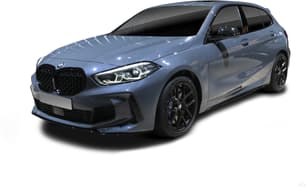
The new 1 Series is likely to offer most buyers a similar revelation, with its move from the BMW-traditional rear-drive layout to more conventional front and all-wheel drive. That is assuming you gave a damn in the first place, as I suspect it’s only hardcore BMW traditionalists that care about a rear-drive premium hatchback in 2020.
And that’s not who is buying the 1 Series, with the Bavarian brand’s cheapest model intended to appeal to younger buyers who are more likely to care about connectivity, practicality and personalisation options than the excitement of losing grip from the rear. It certainly hasn’t stopped plenty of people from buying 1 Series-rivalling A-Class and A3s from Mercedes-Benz and Audi over the years.
The Nissan Z is a real blueblood.
With Datsun, Nissan introduced the world to Japanese cars via a gruelling round-Australia rally in 1958 that had the country captivated. Within 10 years the 1600 made them respectable, but it was the 240Z of 1970 that also made them desirable.
Seven generations later, today’s RZ34-series Z – along with the Toyota/Subaru GR86/BRZ and Mazda MX-5 – embodies that nation’s tradition of affordable yet charismatic sports cars.
They’ve always been ripe for modifying as well, with Nissan leaning on its performance arm Nismo for 40 years. Which is exactly what the Z Nismo is all about, stepping up to take on the Toyota GR Supra, BMW M240i and Ford Mustang GT.
The old 370Z Nismo was a true corker. Let’s find out if this one does the family proud.
To answer the question of whether it matters that the new 1 Series is no longer rear-wheel drive, I say no it doesn’t. It may not be as romantic on the absolute limit, but it is better in every measurable way, and still feels distinctly BMW despite moving to the conventional layout of its rivals.
Be sure to check out Mal’s video review from the 1 Series launch last December:
The Nismo turns up the wick just enough to justify its $20K premium over the brilliant regular Z.
Visual changes inside and out are one thing, but with tangible boosts in performance, handling and braking – with no detriment to ride quality or comfort – as a result of properly engineered upgrades, the RZ34 version deserves its place in Nissan’s sports car hall of fame.
Note, though, that good as it is, the Nismo is also a potent reminder of how solid a foundation the standard Z also is… especially in manual gearbox guise.
Yes, that kidney grille is rather large. If you want everyone to know you drive a BMW, you’ll love it. If not, get used to it. The X7, recent 7 Series update and upcoming 4 Series suggest they’re only going to get bigger.
Nose aside, the 1 Series hatch has always had a distinctive, long-bonnet profile, which has generally been attributed to the rear-drive layout. Despite the move to a transverse engine, the new one is actually very close in proportions when compared side by side.
It’s just 5mm shorter in overall length and 13mm taller, with body width being the most notable change at 34mm wider.
The key difference is that the front and rear wheels have been moved further back into the body, because of said engine layout change, and to make more back seat space in the rear.
Surprisingly for a model aimed at a younger demographic, the new 1 Series interior design isn’t quite the same step forward as the recent G20 3 Series.
It’s a cut above the X1 and X2 SUVS the new 1 Series shares its underpinnings with in terms of the shapes used, but is still classic understated BMW.
However its headline act is the Live Cockpit driver display on both models, which gives you fully digital instrumentation and replaces traditional analogue gauges once and for all.
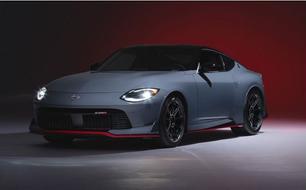
Reinterpreting a classic via retro styling isn’t always successful – hello, 2001 Ford Thunderbird – but what Nissan has achieved with the RZ34, given it’s a pastiche of several Z greatest hits from the ‘70s, ‘80s, ‘90s and today, is truly masterful design.
Take the cab-backward silhouette, long nose and short wheelbase; it somehow manages to deftly capture the spirit of previous Z generations, without looking like a bad caricature.
Points especially go to the stunning nose and tail treatments that evoke both the ‘70s 240/260/280 as well as the sadly long-forgotten Mid-4 II concept car of 1987.
Slightly longer than the regular model, the Nismo’s nose is meant to evoke the early ‘70s Japan domestic market Fairlady ZG, with the G denoting “Grand Nose”. Fun fact: Fairlady first appeared on the 1960 Datsun roadster as deference to the Broadway musical (and later Audrey Hepburn film, presumably) ‘My Fair Lady’.
Anyway, besides scraping speed humps and driveways, the Nismo’s elongated front bumper promotes improved engine cooling and better aero flow, as do the side sills, larger wraparound three-piece spoiler and redesigned rear bumper/diffuser. The wider-yet-lighter back wheels are 10mm wider. And a glossy red stripe runs along the underside like Anna Nicole Smith’s lipstick.
Does it all look better than the simpler, purer regular Z? No. But they perform better. And isn’t that the point of a Nismo?
With my modest 172 cm height, I never had any trouble with the old model, but the new 1 Series is a bit more more spacious by all the important measures.
The back seat base and backrest are a bit flat though, which is probably to help the backrest fold almost flat, but probably not very supportive during hard cornering.
There's also no centre armrest in the back or cup holders, but you do get bottle holders in the doors.
You also get two ISOFIX child seat mounts and there’s two USB-C charge points in the back of the centre console, but there's no directional air vents unless you opt for the dual-zone climate control that comes standard with the M135i.
The boot has grown by 20-litres to a pretty impressive 380 litres VDA which includes a very useful cavity under the floor instead of a spare tyre. An inflation kit is there for those duties. With the back seat folded flat, boot space expands to 1200 litres VDA.
So, just as the exterior is an anthology of past Z car stylings, the same also applies inside.
A mishmash of new and old as well, they also marry together harmoniously – after you’ve bent and contorted yourself inside nice and snug, on the racy yet not-too-unforgiving set of Recaro bucket seats.
The Z’s signature sloping roof and rising window line; a trio of dials that have been a hallmark of the series since the 240Z, a thin three-spoke steering wheel; a physical hand brake and a pair of old-school seat base angle adjuster knobs just like in sports cars from 20 years ago betray the Nissan’s ageing DNA.
But they set the mood, like hearing a favourite old track, though one remixed by a contemporary DJ to a modern beat.
Which means that you’ll be able to view whichever artist you like through the 8.0-inch touchscreen, either via Bluetooth audio streaming, Spotify or some such app.
Easy to decipher and simple to navigate (though no imbedded GPS is fitted), the Z’s dashboard also offers the essential surround-view parking camera (given how limited vision is as you’re sat so low with not much glass to peer out through), amongst a host of vehicle functions. You’re also privy to extremely useful blind-spot alert thoughtfully placed inside the car by the mirror mounts, four cupholders if you count the door-sited ones and surprisingly generous storage. Practicality, thy name is Fairlady.
For lightness and sensible packaging, we understand why Nissan’s sports coupe is strictly a two-seater proposition – and certainly a roomy enough one for the lucky pair at that.
However, it’s a shame Nissan doesn’t offer a 2+2-seater option in the form of a pair of occasional jump seats behind, as per the old Datsun days, as there seems to be just enough space for smaller folk – though as a pair of shelves, that area did prove very useful during our week with the Nismo.
Issues? Along with a sheer lack of grace entering and exiting the Z, poor overall vision and 350Z-era switchgear that are now old enough to drive themselves, finding the right driving position eluded this particular 178cm tester. The seats do a great job keeping you firmly fixed in place, and of course the wheel tilts and telescopes, but those pair of knobs were forever being twirled and fiddled with.
Oh, and simultaneously unlocking and opening the doors was also confounding, due to exterior door handles and pressure sensor not designed for Homo Sapien hands.
Further back, and as in the two previous generations Zeds, a brace bisects the luggage area. Rated at 241 litres VDA, it is wide and flat but a wee bit shallow. At least it adds another level of practicality and is big enough for those weekends away.
There’s no cover (though seeing what’s inside isn’t easy) and no spare wheel of any size is fitted.
Meanwhile, on the other side of the Nismo…
For the F40 generation, the 1 Series range has been cut back to two variants from launch, with the 118i for volume sales and the M135i xDrive hot hatch taking aim at the new Mercedes A35 and the Audi S3.
Both versions were priced $4000 higher than the equivalent models they replaced from launch, but have recently jumped a further $3000 and $4000 respectively. This puts the now-$45,990 118i beyond the starting prices for the equivalent Audi and Mercedes, and the $68,990 M135i xDrive is now nudging the A35’s list price.
The launch prices were largely offset by extra equipment over the previous generation, but the more recent hikes have taken the shine of this somewhat.
Thankfully, both 1 Series models now come standard with wireless Apple CarPlay. The previous ‘one year free, the rest you need to subscribe for’ plan has been scrapped since we shot the launch video below in favour of free CarPlay for life. There’s still no Android Auto, but this is due to change in July.
The 118i packs more standard equipment than before in general, including the M Sport styling pack, head up display, wireless phone charger and adjustable ambient lighting.
The M135i adds bigger brakes, a rear spoiler and 19-inch wheels, plus sport seats with leather trim, and Harman/Kardon audio among a few other things.
You can get even more from the M135i with the $1900 M Performance Package, which drops the 0-100km/h claim by one tenth to 4.7s thanks to enabling engine overboost and lighter forged 18-inch alloys, which is signified by gloss black grille surrounds, intake elements in the front bumper, mirror caps and exhaust tips.
Other options include the $2900 Enhancement Package, which brings metallic paint and a panoramic glass roof. On the 118i, it also brings 19-inch black alloys. On the M135i, it also brings active cruise control with stop and go function. This package costs an extra $500 if Storm Bay metallic is chosen.
The Comfort Package costs $2300 with the 118i and $923 with the M135i, and brings front seat heaters and lumbar adjustment for both front seats. On the 118i, it also brings proximity keys and electric front seat adjustment. On the M135i, it also brings a heated steering wheel.
The Convenience Package costs $1200 with either variant, and adds a powered hatch, modular storage system and cargo net and a ski port for the back seat.
The 118i can also be optioned with the $1000 Driver Assistance Package, which adds active cruise control (plus 0-60km/h AEB), adaptive LED headlights with auto high beams and a tyre pressure monitor.
Beyond the 118i’s standard M Sport pack, it can also be augmented with the $2100 M Sport Plus Package. This brings sports front seats, a rear spoiler, M-coloured seat belts, a sports steering wheel and upgraded M Sport brakes.
Nismo is short for Nissan Motorsport. It’s like what AMG means to Mercedes or HSV was to Holden. Which means, of course, that Australians love this sort of thing.
Last year, as limited editions, the first 100 Z Nismos sold out in under an hour, according to Nissan. Now it’s back more permanently, still from $94,000 before on-road costs, but without quite the exclusivity.
But, don’t worry. You still get the Nismo body kit and leather/Alcantara-clad cabin treatments, stronger performance and track-focused chassis upgrades, which include extra bracing, sharper steering, beefier suspension, bigger brakes and GT-R-spec wider wheels, compared to the regular Z. More on the engineering changes later on.
There are also Recaro sports seats, Nismo-branded digital instrumentation and steering wheel, additional drive modes and red trim highlights.
These come above the regular Z items like keyless entry/start, an 8.0-inch touchscreen, surround-view reverse camera, (wired-only) Apple CarPlay/Android Auto, Bluetooth connectivity, an eight-speaker Bose premium audio, active noise cancellation tech, dual-zone climate control, artificially amplified exhaust note and wider-yet-lighter 19-inch alloy wheels.
Note, however, that going Recaros means ditching the regular Z’s seat heating and electric adjustment including lumbar support. And there’s no spare wheel in either grade… just a tyre-repair kit. Boo.
For your $100K-driveaway, from an equipment perspective anyway, the Nismo does stretch the value argument almost to breaking point, so it’s a good thing that the Z still looks so good. And there’s lots of beautiful engineering underneath that pretty skin too.
Both cars use versions of the three and four cylinder petrol engines from before, with the popularity of automatics leaving the previous manual option consigned to history. The 118i’s 1.5-litre turbo three cylinder now produces 103kW/220Nm, with max torque available all the way from 1480-4200rpm. The 118i now uses the seven-speed dual clutch automatic transmission, as seen on Mini models that use the same engine.
The M135i’s 2.0-litre turbo has been tweaked to take the place of the six-cylinder M140i from the last model and now produces 225kW/450Nm, with max torque available all the way from 1750-4500rpm. Its auto remains a torque converter though, but now the transverse-mounted unit also shared with Mini models with the same engine and splitting drive to all four wheels via the xDrive system for the first time. The drive split is constantly variable, but the rear bias tops out at 50 per cent and the only limited slip diff is an electric unit on the front axle.
Nissan sure knows how to make a great six-cylinder engine.
The Nismo’s internal combustion engine in question is the VR30DDTT – a twin-turbo V6 making four per cent more power and around 10 per cent more torque compared to the one found in the regular Z.
Power jumps 11kW and torque a handier 45Nm to 309kW @ 6400rpm and 520Nm between 2000rpm and 5200rpm respectively, providing extra punch as well as a slightly superior power-to-weight ratio of around 184kW per tonne.
That’s up 2kW/tonne, despite the Nismo gaining around 50 kilos, to 1680kg.
This has been possible thanks to extra turbo boost, revised ignition timing, improved cooling systems and updated engine management software.
Driving the rear wheels is a Mercedes-Benz based nine-speed torque-converter auto. Upgraded and retuned for track use, it includes a Sport+ mode providing speedier shift responses. Aided by the new launch control function, we managed a tidy 4.5 seconds from standstill to 100km/h.
Sadly, though, there’s no manual option as per the regular Z.
What else is unique here? Underneath, the platform might date all the way back to the 350Z of 2003, but Nismo has really worked some of its magic.
Along with the retuned dampers, everything else has been stiffened up – including the anti-roll bars, springs, bushes and even the steering rack mounts – to help deliver more controlled and linear steering. There’s extra underfloor bracing at the front, centre and rear of the car, thicker brake rotors and model-specific Dunlop SP Sport Maxx GT600 tyres that are wider at the back, on gloss-black RAYS alloys.
Continuing to use a double-wishbone front and multi-link rear suspension set-up, the Z’s front/rear weight distribution is 56/44 front/rear.
Now, the Nismo was our favourite version of the previous 370Z by some margin. How does it all square up in RZ34 guise?
Official combined fuel consumption is a decent 5.9L/100km with the 118i, but the M135i steps up to 7.5L/100km) 2.0 litre four in the m135i. Both engines require premium unleaded.
Fuel tank sizes vary across the two models also, with the 118i measuring 42 litres and the M135i managing 50 litres, despite its need to package rear drive components somewhere under there also.
This results in a decent theoretical range between fills of 711km for the 118i and 666km for the M135i.
Not surprisingly, the Z Nismo needs to drink from the 98 RON premium unleaded petrol fountain.
Nissan reckons owners should expect to average 10.4L/100km (for 242 grams per kilometre of carbon dioxide emissions) on the combined cycle (and 15.0 and 7.7 L/100km for the urban and extra-urban ratings respectively.
This figure is almost half a litre worse than the non-Nismo Z’s 9.8L/100km result, but still substantially better than the six-speed manual base grade’s 10.8L, despite the latter being some 33kg lighter.
With a sizeable 62L tank, you might be able to average just under 600km between refills.
For the record, we achieved 11.9 litres per 100km in a mix of urban, freeway and performance driving which is not too bad at all given how often we fanged this thing.
For a brand with a marketing slogan of pure driving pleasure, this is the important part, particularly given the new 1 Series has lost its rear wheel drive USP.
Why do some of us love rear wheel drive? It tends to be more fun when you're driving on the limit, and generally makes for nicer steering because you're only using the front wheels to turn corners.
So how does the new 1 Series drive? That depends on which version.
The 118i is quite a nice package really. It rides a bit more gently than what I remember in the A-Class and generally feels more like a premium product. It also feels a step ahead of the 2 Series Active Tourer it shares its underpinnings with, which is a good thing.
The three-cylinder engine is quite smooth for a fundamentally unbalanced triple, and it makes enough power to get you out of trouble.
Do you miss rear wheel drive? Not really, as you can only tell the difference when you're going real fast, which let's face it, is not somewhere 118i drivers are likely to go very often.
The M135i is a vastly different beast, as you'd expect. Aside from being real quick, it's that much tighter everywhere, but still definitely on the more comfortable side than what we expect the future full house M version to be.
The continuously variable xDrive all-wheel drive system does a great job of putting its power down, but the rear bias maxes out at 50 per cent, which is probably spot on for chasing lap times, but means you miss out on the tailiness of the old one altogether.
So it’s not as classically fun as the old M140i, but it’s easily faster, and that's what will probably matter most to most buyers.
Nissan does plenty of things really well, and the Nismo is no exception.
Firing up the VR30DDTT 3.0-litre twin-turbo V6 is also a reminder of how brilliant the brand’s six-cylinder engines are. They tingle all the right sensory areas, starting with the baritone rumble at idle.
What a portent of what’s to come!
Nismo’s massaging of the engine, combined with upgraded clutch packs and a retune of the nine-speed auto’s software, results in stronger, hungrier and angrier acceleration, no matter which of the three driving modes you’ve selected. Even in Normal, the Nissan leaps off the line. In Sport, its appetite for speed is palpable. In Sport+, this thing is eating up the tarmac. Somehow, in an EV era where 4.5s to 100 is ho-hum, the (electronically enhanced but who cares) guttural exhaust bellow seems to amplify the action and thrills.
And spills. For five of our seven days together, the heavens poured. Now, in Normal mode, the Nismo was as benign and controlled as you’d hope in wet conditions, the driver-assist tech metering out just enough torque and braking to seamlessly keep the car humming along. Ever-present but always nuanced, they’ll help make your commute a safer and more relaxing one.
Selecting Sport loosened things up markedly, with the driver needing to be ready to counteract with steering, seating and throttle, though still with a safety net to keep the car from going totally out of whack; Sport+, meanwhile, is not for amateurs or the distracted. This is serious, tail-wagging waywardness that should only be fully explored with experience and care.
Later in the week, Launch Mode in Sport+ on cold but dry bitumen also requires super concentration, as we discovered attempting to extract the fastest acceleration time. Sideways in a straight line at 100km/h-plus is not for the faint hearted.
Beyond all-out performance and drama, the Nismo soars with weighty yet linear and precise steering, resulting in satisfying, hunkered-down handling that is the hallmark of a great sports car. Really tight turns can be taken at impressive speeds, but there’s about 1.7 tonne of muscle to manipulate, so the real fun can be found blasting along a snaking set of more open corners, where the Z’s inherent thrust, poise and grip come into play, all to the symphony of that bi-turbo V6.
That the suspension can feel both firm and supple at the same time is another arrow in the Nismo’s bow.
Nissan isn’t pretending this is anything but a rousing and rapid grand tourer with track aspirations, so the fact there’s also comfort and sophistication to be enjoyed just shows the sheer bandwidth of this particular Z.
Downsides? There’s always a wall of sound, be it mechanical or noise intrusion from the rubber and/or bitumen. The Nismo is rarely quiet. The extended front spoiler seems to summon up speed humps and bumps you never knew existed. The adaptive cruise control’s inability to resume in heavy stop/start traffic betrays this car’s 350Z-era tech. And the lack of a manual transmission, we reckon, is a missed opportunity for an even greater degree of interactive sports car driving.
Still, the Nismo delivers exactly what the brand promises, and continues to improve a firm favourite for speed and drama.
But the gap between Nismo and regular model is smaller than the one that existed in the preceding 370Z, which means that – if $100K driveaway is too steep – you’re already driving something elevated in the standard Z. Particularly if you yearn for a manual.
It’s all good.
The new 1 Series comes with most of the important safety gear, but like the X1 and X2 SUVs and 2 Series Active Tourer that the new 1 Series shares its platform with, you still can’t get proper auto emergency braking unless you opt for active cruise control.
Both versions do offer partial automatic braking, which confusingly was enough to earn the new 1 Series a maximum five-star ANCAP safety rating according to 2019 standards, but we feel this is not good enough and is worth considering before you put your money down.
Aside from the options packages mentioned above, active cruise control with AEB (up to 60km/h) can be added to either version for $850, but when it’s been a standard item on something as cheap as a Mazda2 since 2017, it’s not a good look.
There is no Euro NCAP or ANCAP crash-test rating for the Nissan Z Nismo
Standard safety features include AEB with pedestrian detection (though no operating parameters could be found about this system), 'Predictive Forward Collision Warning', lane departure warning, blind spot warning, rear cross-traffic alert, high beam assist, tyre pressure monitoring sensor, traffic sign recognition and adaptive cruise control with full-stop (but no resume) functionality.
What’s missing? There is no active lane-keep assist tech to nudge you into line, and you won't find parking sensors nor a front-centre airbag.
But the Z does have dual frontal, side chest and head-protecting airbags, a surround-view camera, anti-lock brakes with electronic brake-force distribution and brake assist, stability control, traction control, hill-start assist, front and rear parking sensors, LED headlights with light sensitivity and rain-detecting wipers.
There is also a child seat tether point on the passenger seat, but the Nismo ditches the other Z’s ISOFIX alternative.
BMW is yet to step up to the five year warranty offered by most mainstream brands and now Mercedes-Benz and Genesis, continuing with the three year/unlimited coverage matched by Audi.
As always, BMW describes the service intervals as condition based, and the car will alert the driver when a service is due. This will occur at least every 12 months though, but individual intervals will vary based on how the car is driven.
This can all be bundled into five year/80,000km service packs though, with the Basic pack costing $1465, but the Plus pack adds brake pad and disc replacement to regular fluids and consumables for $3790. Assuming 12 month intervals, these prices are about average for a premium branded product.
Your wallet’s pretty secure as well.
Like all Zs, the Nismo is subject to a warranty period of five years with unlimited kilometres, while service intervals are fixed at every 12 months or 10,000km – whichever occurs first. There is also five years of roadside assistance.
Nissan also provides pre-paid maintenance plans that can save up to $245 over three years, as well as capped-price servicing. At the time of publishing, the capped-price service appointments cost between $347 and $950 depending on the year of ownership.