What's the difference?
BMW has been incredibly smart with its electric vehicle (EV) offerings in Australia to date.
Ever since the Fringe Benefits Tax (FBT) exemption was introduced for novated lease buyers of EVs under the Luxury Car Tax (LCT) threshold, the German brand strategically introduced versions of its EVs that qualify.
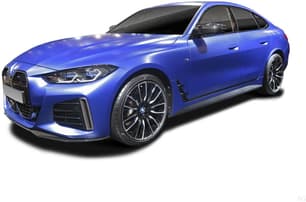
The BMW i4 eDrive35 electric liftback, which is based on the locally defunct 4 Series Gran Coupe, is one of these cars.
It recently received a mid-life update that brought more range and features, while remaining under the LCT threshold for fuel-efficient vehicles.
However, the plot thickens. BMW is soon set to launch its new i3 electric sedan which is based on the company’s Neue Klasse dedicated electric architecture.
BMW hasn’t given the i4 an official production end date, however overseas reports indicate it’ll end as soon as next year to make way for the new i3.
Should you hold out for this new-generation car, or does the i4 still hold up? Read on to find out.
If you have even a passing interest in the Tesla Model S, you'll have seen the endless internet videos where someone has lined up a Ferrari, Lamborghini, or another fast exotic car you could name, to race against it.
There's a long build-up, usually involving men who can't operate a baseball cap, a drag strip and idiotic words in the headline like "destroys" or "rips", or whatever. There's usually a bunch of honking bros with bad haircuts watching on, already planning their next viral video where they set a perfectly good mobile phone on fire.
It's facile and idiotic and doesn't give you any real clue as to the depth of whatever supercar it has "humiliated" or, just as importantly, the depth of the Model S and its spectacular engineering.
So, I won't be spending the next thousand words building up to the conclusion that the Model S P100D with Ludicrous Mode is up there with the world's fastest production cars from 0-100km/h, because I'll tell you now that it is, and it does it in a claimed 2.7 seconds.
Now that's out of the way, there's quite a bit more to the Model S than a "broken" Nissan GT-R owner weeping into their bento box.
The BMW i4 balances a solid, old-school feel with the beauty and stunning looks of high-end technology. It feels like the end of an era for the German brand before it leaps into the screen-heavy age of software-defined vehicles.
While BMW hasn’t publicly announced an end-date for i4 production just yet, the new i3 is bound to overshadow it once it arrives. It offers more than double the claimed range and will likely address a number of this car’s flaws.
In the meantime however, the i4 is definitely worth considering if you value driving dynamics and a quality feel in a car that you can drive daily.
I spoke to a friend who bought a Model S before one had even hit the ground here in Australia. He chuckled when I told him how much this car cost but then said something I'd already suspected. "My mates who own a P100D would never drop that kind of money on a normal car. Buying a Tesla is like buying shares in the company, you're buying into the future."
And that's kind of the point. A $300,000 Audi RS7 (fully-loaded, obviously) is a bit slower in a straight line, looks just as good, is extremely well-built and emits noises that make people like me go as weak at the knees (just as the Model S' acceleration does). And would probably win a 10 lap race with the Tesla around Mount Panorama.
The Tesla is the future of cars. It may still be decades before the internal combustion engine is gone, but Tesla buyers are getting the jump, and today the Model S is the best car in which to make that leap.
The BMW i4 is firmly at the end of its lifecycle, however its exterior design is ageing like fine wine. This is apt given our tester was finished in delicious-looking 'Fire Red' metallic paint.
The overall proportions of this car are gorgeous, especially towards the rear where the roofline is drawn out, accentuating the liftback look.
This latest update only brought minor tweaks to the design, including refreshed headlight and tail-light signatures. As mentioned above, the M Sport package is now also standard which does give this car a subtly sporty look.
Inside the design marries together the best of the old and new worlds. A major highlight is the curved display housing not only the 12.3-inch digital instrument cluster, but also a 14.9-inch touchscreen multimedia display. It’s a stunning setup that looks ultra modern.
On the flipside however, there is still a lot of physical switchgear on the centre console, including a rotary iDrive controller that allows you to control the content on the screen. It’s a great setup if you like to avoid getting fingerprints on the touchscreen.
While there are a few applications of glossy piano black around the cabin, it’s balanced nicely with other metallic and matt finishes. You’re able to choose from a few different trim inlays, including aluminium and open-pore wood, for no extra cost.
Lastly, the new M Sport steering wheel looks great in this car and adds a lovely sporty touch to the interior.
The Model S is definitely the looker of the three Tesla models on sale (the Model 3 might be some way from release, but you can reserve one and it's... weird-looking). With a slinky, Jaguar XF/Audi A7 roofline and low-slung stance, it looks the business. Like the X, the detailing of the car's surfacing and panel gaps aren't where other $200,000+ cars are, but it has improved a lot over the last couple of years.
The cabin has improved even more than the exterior.
The styling is quite sparse, really. Teslas look like computer renders in real life, especially in white, with little in the way of jewellery or detailed design elements. And that's probably the idea. It's a cleaner design than when first launched, with a simpler, flatter snout that brings out the headlights better.
The cabin has improved even more than the exterior. It's still the same minimalist design, but it fits together much more tightly than it used to. The 17.0-inch portrait screen is still there in its central but skewed-to-the-driver position and is now up to version 8. It's an impressive interface, covering off the vast majority of functions in the car, and is mostly easy to use. The responsiveness is key to its usability. If it was underpowered, you'd quickly start demanding real buttons.
Hopping into the i4, it’s clear you’re getting into a low-slung vehicle. If you’ve got poor mobility, it may be worth looking elsewhere.
Once you’re in though, the cockpit is a lovely space to spend time. The driver’s seat is beautifully comfortable and offers plenty of adjustment, including extendable thigh support.
Ahead of the driver the steering wheel is rather thick in classic BMW fashion. I appreciate the physical buttons and scroll wheels as they’re easy to understand and use on the fly.
The curved display not only looks stunning, but is functional and easy to use. The digital instrument cluster has a number of layouts you can choose from and it can be paired with the head-up display, which is great to refer to at a glance.
Moving across, there is a lot going on with the central multimedia system. It can feel overwhelming with the amount of content and information to begin with, but once you start poking around, things are logically sorted.
Thankfully there are also a series of shortcut buttons always at the bottom of the screen to take you to key menus.
Adding to this, there is the flexibility of having the iDrive controller. Reaching the far side of the screen from the driver’s seat can be a bit of a stretch and being able to use the rotary dial on the move is much easier.
There is wireless Apple CarPlay and Android Auto as standard. It takes up the full touchscreen display, which looks great.
Looking around the cabin, storage space is fine but not amazing. There are two cupholders plus a wireless charger tucked behind them on the centre console, plus a shallow centre storage area under the central armrest.
Hopping into the second row, it’s clear the focus for this car is on the occupants up front. The door aperture is rather narrow, making it tricky to get in and out gracefully.
In the second row space is nothing more than adequate. At a leggy 182cm tall, my legs almost touch the seat in front when it’s set to my driving position and my head almost brushes the roofliner. I’d struggle to spend a lot of time back here.
This is compounded by the massive hump in the centre that’s a carryover from the combustion platform this car is based on.
Second-row amenities include climate control with air vents mounted on the back of the centre console, two USB-C ports, as well as a fold-down armrest with cupholders.
At the back there is a large liftback that opens and closes electronically. With the rear seats upright there is 470L of boot space, which expands to 1290L when folded.
While this is not massive in terms of outright capacity over a similarly sized sedan, the envelope is much more open and usable.
There’s also a section under the boot floor that’s generously sized for power cables, among other odds and ends.
The Model S is a rare car in this class in that it has an almost completely flat floor, meaning rear seat passengers don't have to negotiate a transmission tunnel. The two motors run physically independently of each other so there's no crankshaft to get in the way.
The floor is thicker than a normal car, it's like a big skateboard underneath. That means your knees are up higher, which might cause numb bum on a long trip. The rear seats are comfortable enough, but middle seat occupants might feel like the outboard passengers are falling into them.
With all that torque, when you do load it up, the extra kilos barely make a dent on the performance.
The view out isn't too bad given the rising window line, and if you've got the big two piece sunroof (without cover, irritatingly... ), it's quite airy out back. And hot (with the sunroof), but you do get rear air-con vents.
The boot is an eminently sensible 744 litres with the seats up and 1795 with the seats down, although the floor doesn't fold flat. While it's a big boot, it's relatively shallow so your suitcases go in on their sides. Up in the front boot (or froot) there's another 150 litres, so you can pack a lot in to the Model S. And with all that torque, when you do load it up, the extra kilos barely make a dent on the performance.
BMW now only offers one version of the i4 in Australia, the eDrive35. It dropped the M Performance grade when the facelift was introduced last year.
The 2026 BMW i4 eDrive35 is priced from $88,900 before on-road costs, which is $1100 more than it was in pre-update guise.
It’s worth noting that it now picks up the M Sport package as standard which gains sporty exterior and interior highlights. This was previously offered on defunct eDrive40 trim.
Critically the i4 remains under the LCT threshold which means that if you put it on a novated lease it’s exempt from Fringe Benefits Tax.
Standard features include 18-inch alloy wheels, LED headlights, power tailgate, 12.3-inch digital instrument cluster, 14.9-inch touchscreen multimedia system, wireless Apple CarPlay and Android Auto, synthetic leather upholstery and heated front seats.
It’s fairly standard on this front, though a heated steering wheel and ventilated front seats would make for a nice touch. However, this would likely tip it over the LCT threshold.
Tesla is basically a technology company - well, a battery company - that makes cars, so the features and options reflect that. It's a gadget-laden five-door hatch powered exclusively by electricity and seemingly full of things that will drain the batteries quickly.
If you view the car's price purely through its standard features list and the cost of options, you're missing the point. If it had a 3.0-litre turbo six, there's no way you'd pay this kind of money for the Model S. But it doesn't have that, it has a bleeding edge battery pack and propulsion system.
The Model S can be had for as little as $118,652 for the 60 offering 400km range, rear-wheel drive, and 5.8s 0-100km/h (but move quickly, Tesla has just axed this model), or as much as this P100D which starts at $250,582.
Standard are a seven-speaker stereo, leather-like trim, 19-inch alloys, reversing camera, 17.0-inch touchscreen, keyless entry and start, forward collision warning, digital dashboard, electric front seats, sat nav, auto LED headlights, auto wipers, internet connectivity via included SIM card, power mirrors and windows and air suspension.
Our P100D came with 21-inch grey 'Turbine' wheels ($6800), panoramic roof ($2300) multi-coat pearl paint (white, $2300) and carbon-fibre interior trim bits for $1500, as well as a carbon lip spoiler for another $1500.
We also had the 11-speaker audio upgrade (with neodymium magnets, don't you know) for $3800 and the 'Subzero Weather Package' (seat heaters, heated steering wheel, wiper blade defrosters and washer nozzle heaters) and on-board high-power charger (speeds up charging with the 'Tesla Wall Connector', $2300).
There was also 'Enhanced Autopilot' ($7600) and 'Full Self-Driving Capability' ($4600). The former is meant for highway running, and comes with four cameras (up from one) and 12 ultrasonic sensors around the car, as well as upgraded processing power to run it all.
The full self-driving is meant for around town. The idea is you punch in a destination, or speak to the computer or passive-aggressively stay silent, which triggers the car to check your calendar and take you to the address in the appointment. Part of the extra cost of that is yet more cameras (up to eight), more sensors, and more number-crunching power.
A 'Premium Upgrades' package adds the overkill of a 'Bioweapon Defense (sic) Mode' that knocks out 99.97 per cent of exhaust particulates and other contaminants.
We would love to tell you how all that worked, but being Tesla 'Hardware 2', it's not ready yet. While these features are being fleet-tested by 1000 cars in the US, your car will run it all in "shadow mode" for data and behaviour validation. One day you'll go to your car and a software update will be ready to download and install the functionality.
Unusually, you can retrofit both of these features for about $1500 more (each) than if you order them up-front. That's very cool and Tesla is probably the only car company in the world that will let you do it.
The 17.0-inch screen's software is regularly updated, like a mobile phone's. Also like a mobile is the sometimes less successful update, in this case the slightly bewildering and difficult-to-use music interface that is very keen for you to make a selection with voice commands, but not ones that go through your phone.
A 'Premium Upgrades' package adds the overkill of a 'Bioweapon Defense (sic) Mode' that knocks out 99.97 per cent of exhaust particulates and other contaminants, using two activated carbon air filters for other nasties like NO2 and hydrocarbon exhaust fumes.
LED turning lights and fog lights, real leather on the armrests, steering wheel and lower dashboard (if you also have leather seating), nappa leather and Alcantara on the dashboard, soft LED interior lighting, power tailgate and backlit door handles for $5300. Thankfully, the silly self-opening front doors in the Model X's pack aren't in this little lot.
Grand total? $297,792. On the road in, say, NSW... $313,013. Youch.
The i4 eDrive35 continues to be powered by a single, rear-mounted electric motor that produces an unchanged 210kW and 400Nm.
This is nothing revolutionary in terms of the powertrain, though it’s nice it retains a rear-wheel drive-layout like the discontinued 4 Series Gran Coupe this car is based on.
BMW claims the i4 eDrive35 can do the 0-100km/h sprint in 6.0 seconds and the top speed is 190km/h.
The P100D ships with two electric motors fed by a huge battery pack which triples as the bulk of the chassis and a super-strong crash structure. It's also shared with the Model X SUV.
Combined power output is 568kW with more of it out the back rather than up front. Torque is quoted at 1000Nm, but it's likely more than that. Claimed 0-100km/h time is a mildly unbelievable 2.7 seconds, with a further two-tenths to be shaved off when you press and hold Ludicrous Mode and accept a warning that you'll wear the car out faster if you use it.
With 'Ludicrous Mode' comes not just software but a higher capacity fuse that allows more power to be drawn from the batteries for longer to provide the searing acceleration.
The electric motor is fed by a 70kWh lithium-ion battery pack that allows for up to 448km of claimed range, according to ADR 81/02 testing.
This is 18km more than the pre-update car thanks to silicon carbide semiconductor components which are claimed to reduce energy consumption and increase range.
However, the Tesla Model 3 and Polestar 2 both still offer more range for less money.
BMW claims the i4 eDrive35 consumes an average of 16.3kWh/100km, according to ADR 81/02 testing. Over my 200km of urban testing I saw an average of 17.5kWh/100km, which isn’t fantastic as EVs are predominantly more efficient in the city.
Using my as-tested consumption, this means you have a theoretical range of 379km. That’s not great, though this range issue will be addressed with the forthcoming i3 electric sedan.
AC charging is available at rates up to 11kW, whereas DC fast-charging is offered at rates up to 180kW, allowing for a 10 to 80 per cent charge in 32 minutes.
Zippo. Obviously with the new rules for Tesla Superchargers, it's not as cheap to own and run a Tesla as it was before (from January 2017, all new orders don't get free juice after the first 400kWh), but if you charge it at home (and can get away with it), it'll probably be cheaper than using Tesla's chargers. If you look, there's a company offering $1 per day charging for electric cars.
If I'd charged the car to 100 percent rather than the 80 percent recommended by Tesla for most charges (past that mark, the charge rate drops and the software has to slow to a trickle, doling out the electrons to the different cells), I would have managed just over 400km on the charge.
BMW has positioned itself as creating vehicles that are the ‘ultimate driving machine’ for decades now and this i4 is no exception.
While it’s not an outright performance powerhouse, it doesn’t need to be in order to feel engaging to drive.
The rear-mounted electric motor produces a decent 210kW/400Nm and it’s enough to get moving in frenetic urban traffic with ease. You’ll rarely want any more out on the open road either as rolling acceleration is decent.
The regenerative braking system in this car feels natural and transitions to the friction brakes with no awkward lurching or inconsistencies.
I like how you can drive this car like a regular combustion car using both the accelerator and brake pedals, or with an extra flick of the gear selector you can activate one-pedal driving. During my loan I played around with both and didn’t have a favourite as both feel well tuned and easy to adapt to.
The steering is direct and on the lighter side, making the car feel agile and nimble on the move. However, in low-speed situations you realise the turning circle isn’t fantastic…
I appreciate that BMW opted for standard 18-inch alloy wheels that are paired with tyres that have chubby sidewalls as this keeps the ride from being harsh and jittery, especially over firmer bumps.
Don’t worry if 18 inches aren’t enough though, BMW offers alloy wheel options that go all the way up to 22 inches.
This is the type of car that suits a long-distance road trip as it’s such an easy and fun car to cruise around in. That's why it’s so unfortunate that the range limits how you can travel before recharges.
In terms of noise, vibration and harshness (NVH) in the cabin, the i4 is naturally quiet given it’s an EV. However, it feels like there’s extra insulation because even at high speeds tyre and wind noise are virtually nonexistent, creating a hushed and tranquil interior ambience.
The first time I drove a Model S, I enjoyed the acceleration and the silence of the electric motor (this was back in the Dark Ages when even the P90 only had one motor). And that has remained, with the air suspension providing a firm but comfortable ride despite the P100D's 21-inch rims and very low profile tyres. Electric motoring in any electric car is addictive.
Much progress has been made (yes, I'm getting to the acceleration, stay with me) in the way it drives. The earlier cars felt too computer gamey, with little feel through the wheel or the seat of your pants. The steering is better, especially in Sport mode, but not a lot gets through the air suspension, so it takes a while to build confidence in the chassis.
One passenger became quite emotional, almost crying. And not just because they were stuck in a car with me.
On the freeway (look, you can read ahead if you must) it's amazingly quiet, with just a bit of a rustling around the mirrors. Well, of course it's quiet, it's electric. For chassis and NVH (noise, vibration and harshness) squashers, not having the marvellous engine noise means much harder work to dull the other noises you just don't hear when there's an internal combustion engine.
And there's the acceleration. As the driver, you obviously know it's quick. Mash the throttle and the response is instant, the horizon closing in on you like you're attached by a very stretched and immensely strong bungee strap that's just been released. The way cars disappear in your rear vision mirror is hilarious.
It's more fun as a passenger, though. The Model X elicited whooping and laughing, but the P100D's extra 0.6s-worth of acceleration over the P90D, delivered with a truckload more G-force, equals silence. One woman said she was glad I'd caught her before dinner rather than after, before bursting forth with a range of expletives. One passenger became quite emotional, almost crying. And not just because they were stuck in a car with me.
The BMW i4 received a four-star ANCAP safety rating based on testing conducted by Euro NCAP in 2022.
It was held back from receiving a five-star rating due to its ‘Safety Assist’ score of 62 per cent. A car needed to receive a minimum of 70 per cent back in 2022 to achieve five stars.
It’s also worth noting that the Australian-specification BMW i4’s autonomous emergency braking (AEB) and lane support systems are claimed to be of a “higher standard” than the European-specification car tested by Euro NCAP. However, BMW never provided ANCAP with an Australian-spec i4 for verification testing.
Standard safety highlights include AEB, blind-spot monitoring, rear cross-traffic alert, lane departure warning, adaptive cruise control, front and rear parking sensors, plus a surround-view camera.
One of the few safety features that is missing is an active lane-keep assist or lane-centring function. When you drift near a marked line the steering wheel only vibrates to notify you and doesn’t physically move you back into the lane.
The Model S comes with six airbags, ABS, stability and traction controls, three ISOFIX points, rollover sensors, emergency power disconnect. Additionally, when the software arrives, you'll have full AEB (ours was limited), self-driving and an ultra-clever active cruise that'll change lanes and overtake if the car you're following falls below your set speed.
The Model S scored five ANCAP stars, the maximum available, in April 2015 via the sharing arrangement with EuroNCAP.
Like all electric BMWs, the i4 is covered by a five-year, unlimited-kilometre warranty, whereas the high-voltage battery is covered for eight years or 160,000km.
A five-year warranty has been commonplace within the premium space for a few years now, whereas many mainstream brands have since moved up to seven years of coverage, or longer in some cases. It’s far from competitive.
Owners also receive three years of complimentary roadside assistance.
BMW offers a six-year pre-paid service package priced at $2420, which averages out to just over $400 per year.
Tesla offers a four-year/80,000km warranty with a parallel eight year/unlimited kilometre warranty for the battery and drive units. Roadside assist applies for the four year warranty period.
Tesla offers two maintenance plans, three and four years in length. The three year plan costs $2100 and the four year $3175. Paying for the services individually over the same period will cost $2300 and $3425 respectively. That includes a wheel alignment (if needed), but it isn't particularly cheap when compared with 'normal' luxury cars.
Your first 400kW/h of recharging is free using Tesla's supercharger network, so that would be four full charges from empty (which you wouldn't do, obviously), or about 1600km worth. After that, it's 35c per kWh or $35 for a full charge.