What's the difference?
Phwoar. Mate!
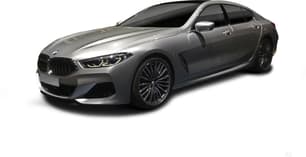
Or should I say, M-eight-fifty-I. That’s right. This is the all-new, 2020 BMW M850i Gran Coupe, the first ever example of its kind. It’s a big, long, luxury, sporty, coupey thing. And it’s gorgeous.
The BMW 8 Series 2020 range includes this new Gran Coupe body style, and also the Coupe and Convertible models. This particular model, the M850i xDrive Gran Coupe, is essentially BMW’s answer to, say, the Audi RS7. Or one of the many Porsche Panamera variants. Or the Mercedes-Benz CLS or Mercedes-AMG GT 4 door Coupe.
Like those cars it has svelte looks, striking dimensions and a sledgehammer engine under its long, shapely bonnet. This is first ever 8 Series Gran Coupe, as it essentially stands in place of the existing, now defunct, 6 Series Gran Coupe. But it’s bolder, bigger and more brutal - just take note: this isn’t a full-scale ‘M8’ Gran Coupe. It has more of a luxury speed cruiser angle to it, arguably like a Mercedes-AMG CLS 53, not the full-fat AMG 63.
The question is, then, should you buy it over one of its established rivals?
Let’s figure it out together, shall we?
Yet another Chinese-branded EV has arrived on our shores and if the name Jaecoo doesn’t ring a bell, that’s understandable. It’s a relatively new offshoot of Chery, making its presence felt with a growing line-up aimed squarely at everyday buyers. Think mainstream, built around accessible pricing and a decent spread of features.
Offered in a single grade, the Jaecoo J5 EV is a small SUV entering an already crowded segment. It goes up against familiar names like the BYD Atto 2, Chery E5 and MG S5 EV, all offering broadly similar promises on paper. The real question, then, is whether the J5 EV manages to carve out an identity of its own, and whether its appeal stretches beyond the price tag.
If you’re the sort of buyer who wants a car that signifies a lifestyle that is ‘large and in charge’, the BMW M850i Gran Coupe could be just the thing for you. It isn’t as showy as some of its competitors, and mightn’t reach the same levels of excitement as those cars either - but it is a convincing offering in its own right, and a beautiful piece of design at that.
The Jaecoo J5 EV makes a strong first impression and a quieter long-term one. The J5 looks the part, feels comfortable and covers all the basics well, making it an easy choice for buyers who want an affordable, practical EV without too many compromises.
It’s a solid effort overall, though even at this lower price point a few more rear-seat features would be welcome - especially given this is the only grade currently available. However, it hits the right notes when it comes to ownership and value which will be its strongest pull.
This could be BMW’s most convincing design in years. I mean, the X5 is predictably handsome, the X3 was unexpectedly muscled, and the less said about the frumpy 1 Series and busy 3 Series (apart from the wagon… drool) the better.
To my untrained but enthusiastic eye, the 8 Series Coupe is a bit too rounded over its rear haunches, and the rear screen is just a little steep - to me, that lets its dimensions down a little. But this. This is gorgeous.
I mean, you might have questions over the tail-light design, which is a theme across a few BMW models now. But there isn’t as much confrontation between horizontal and vertical graphics for this model as you’ll find one other big Bimmers, like the X7.
The M850i model has BMW Laserlight headlights, which throw a sharp beam and look menacing in their signature, while the grille and bumper are strong. The stance of the car is prominent - there’s a long body, a long wheelbase, and a long body in general. The standard wheel package consists of 20-inch rims, and they don’t look disarmingly large.
As our images show, there’s a lot to talk about when it comes interior design and finishes, but the cabin doesn’t quite benefit quite as mochas you might think it would from all that real estate. I mean, with dimensions of 5074mm long (on a 3023mm wheelbase), 1932mm wide and 1402mm tall, this is a squat, yet substantial vehicle. It’s just more cramped than you’d think inside.
The Jaecoo J5 EV is a handsome-looking small SUV. Its suite of LED lighting, 18-inch alloy wheels and upright, robust silhouette give it plenty of presence, particularly for something positioned at the affordable end of the EV market. That said, originality isn’t really its strong suit. The design, especially from the rear, feels heavily inspired by a Range Rover. Imitation may be the highest form of flattery but Jaecoo could have pushed the design in a slightly more distinctive direction.
It looks good on the road, though, and inside, the J5 has a genuinely airy feel. Light-coloured synthetic upholstery and the expansive panoramic glass roof help the cabin feel open and welcoming, particularly from the front seats. The design is modern and tech-focused, with the large 13.2-inch display taking centre stage on the dashboard.
The overall layout is clean and undeniably premium in its presentation, though it doesn’t bring a great deal of personality with it. That’s becoming a familiar theme, especially in this part of the EV market, where minimalism and screens often take priority over character.
I recall a Mitsubishi designer telling me, once upon a time, that he dreamed of making ‘a big car on the outside with a very small interior’. Maybe he made the jump to BMW, because that’s pretty much the 8 Series Gran Coupe.
There aren’t many other vehicles on the market, of this size, that offer less space inside. The boot capacity, for instance, is just 440 litres. Competitors like the Audi A7 (535L) and Mercedes CLS (520L) easily outdo it - but at least this car has more boot than the Panamera (405L), though the BMW is a smidge bigger. The cargo space is large enough for a couple of overnight suitcases, but you’re hardly going to fit a family of four’s luggage for a week away.
And while we’re in the “not quite what you’d expect” column, the back seat space is hardly commodious. There’s enough space for me, at 182cm, to sit behind my own driving position, but not without wishing for a bit more toeroom, headroom and knee space.
The big centre console section eats into the space in the rear, justifying the brand’s “4+1” seating claim, and unpleasantly it has a hard plastic finish to rest your leg against. Getting in and out of the second row isn’t easy for bigger people, and it’s quite a squat down into the rear seat - it really has taken inspiration from its squashy-back-seated predecessor in that regard.
If you have smaller rear-seat occupants, however, there will be catered for with dual ISOFIX and three top-tether points, plus there are air vents with climate controls (quad zone in total), and two USB-C ports as well. There are sun-blinds on the rear windows, too, which is a plus, and there is a pair of cup holders in the fold-down armrest, and map pockets in the seat backs, too. The door pockets are near-useless, though.
The front seats score better practicality, with bottle holders in the doors, bigger and sturdier cup holders, a covered centre storage bin between the seats with a USB-C port, and a wireless phone charger (Qi) with standard USB port in front of the gear selector.
Above that is the weird, very out-of-place quick buttons (1-8) that BMW could easily do away with, and further up are the controls for the climate control (thankfully with hard buttons for fan speed and temperature), and above that is the media screen, a familiar looking 10.25-inch touch display running BMW OS 7.0.
The screen is quick and crisp, and is backed up by the rotary controller and buttons on in the centre console area. There’s wireless Apple CarPlay (now at no cost for three years), as well as a built-in SIM card for 4G data and access to the BMW Online news and weather stations, accessed through the screen.
It’s all pretty easy to use, and the sound system is excellent - the standard setup consists of 16 speakers, with DAB+ digital radio, Bluetooth and USB plus the smartphone mirroring tech, provided you don’t have an Android device, as Android Auto is still missing from BMW’s range.
It’s a nice cabin, but I couldn’t help but thinking that I’d want a little more differentiation from the lesser models in the range if I was spending this much. Especially considering the optional cost of the interior trim fitted to our test car - see below for more detail.
The Jaecoo J5 EV's cabin is spacious with both rows offering ample head- and legroom. A flat floor also helps the middle rear seat feel more usable than usual, which is always appreciated. Up front, the seats are very comfortable, with their added adjustment, heating and ventilation making a noticeable difference on longer drives. The rear seats are well padded with decent back support, so passengers in the second row shouldn’t feel short-changed.
Access to both rows is good with wide door apertures and an easy step in/step out height. My main quibble here is the keyless entry set-up. Unless you enable proximity unlocking through the multimedia system the doors aren’t truly keyless. Even then, the system can be inconsistent. That means occasionally having to reach for the key fob, which is frustrating when your hands are full.
Storage is one of the J5’s stronger suits. Up front, it’s easy to keep things neat thanks to a large glove box and a deep, if slightly narrow, middle console. There’s also a clever open shelf beneath a centre console that houses cupholders and phone storage, including a wireless charging pad. A small hidden pocket behind the media display adds to the storage count, although I’ll admit I regularly forget it exists.
Rear passengers get a couple of map pockets, drink bottle holders and cupholders. Beyond that, amenities are limited. There’s a single directional air vent and a USB-A port, but not much else to keep older kids or adults entertained.
Technology is fairly straightforward, although almost everything is accessed through the touchscreen. The multimedia system is crisp and responsive, with wireless Apple CarPlay and Android Auto working well, however it misses out on built-in satellite navigation and any meaningful apps. That said, there is a karaoke app tucked away in the system, which will undoubtedly delight someone, somewhere.
Charging options up front include a USB-A and USB-C port, along with a 12-volt socket. There’s also a USB-A port near the rear-view mirror, which is handy if you’re planning to install an aftermarket dash cam.
Jaecoo pitches the J5 as pet-friendly, with upholstery designed to be easy to clean and resistant to wear. In practice, I’d say that claim comes with caveats. Jaecoo clearly hasn’t met my son or my German Shepherd, and it took a fair bit of elbow grease to properly clean the cabin. Staying on top of messes will be key if you want the interior to keep looking fresh.
The boot offers up to 480L of capacity, which is strong for the class, and the flat load floor makes it easy to slide items in and out. There are no power ports or sockets, which feels like an odd omission for an EV. You also get a repair kit instead of a spare tyre, despite there being enough space to accommodate one. A 35L frunk adds some extra storage flexibility, and the powered tailgate is a welcome inclusion.
No-one could level the accusation of affordability at the BMW 8 Series Gran Coupe, as it’s one of the brand’s most expensive models.
This one, the M850i xDrive Gran Coupe, is the range-topping version for 2020, with a list price of $272,900 plus on-road costs.
Where does that plot the BMW against its rivals? It’s beyond the level that the existing Audi RS7 Sportback was (last sold in 2018 at $261,140), and the Mercedes-AMG CLS 53, which looks like a value offering at $182,740. Also, it splits the difference between and the Mercedes-AMG GT 4 door Coupe variants (GT 53: $251,140; GT 63: $351,640), and could best be considered a contemporary of the Porsche Panamera E-Hybrid AWD ($252,400) or the Panamera 4S ($316,500).
So, look - competitors might matter to you. But there’s a good chance that if you’re shopping for an 8 Series, you’ve already made up your mind that you want the BMW four-door coupe slugger. So here’s what you need to know about it when it comes to equipment.
Standard it comes with the M Sport styling pack, 20-inch M alloy wheels with run-flat tyres and tyre pressure monitoring, adaptive M suspension with active roll stabilisation, 395mm M brakes, BMW Laserlight headlights, BMW Night Vision infrared camera with pedestrian detection.
Luxury touches include soft close doors, semi-autonomous parking, panoramic glass sunroof (front opening, rear fixed), keyless entry and push-button start and electric auto tailgate, heated and ventilated front seats with electric adjustment including lumbar and bolster, leather seat trim, a 16-speaker harman/kardon sound system, 10.25-inch media screen with gesture and voice control, 12.3-inch digital instrument display, full colour head-up display, ambient lighting and rear sun-blinds.
You’re getting a lot for your money, though our tester had a couple of extras. Metallic paint is included, but no the Frozen Bluestone matte finish our car had ($2600), and the interior piano black trim elements cost $200, as well. Plus the Full Leather Merino finish in Ivory White and Night Blue - that box cost $10,200 to tick. All told, the price as tested before on-roads was $285,900.
We’re testing the only Jaecoo J5 EV variant available at the moment, ahead of petrol and hybrid versions due to arrive later this year. Right now, it’s being offered with a limited-time drive-away price of $36,990. Once that offer expires, it reverts to a $35,990 MSRP, which sees it tie with the BYD Atto 2 Premium as the most affordable EV in its segment.
Step up from there and you reach the J5’s sister model, the Chery E5 Ultimate, priced from $40,990 MSRP. The MG S5 EV Essence 62 sits close by, starting from $40,490 MSRP.
On paper, the J5 hits a few more notes than its key rivals and that’s worth acknowledging. There’s a solid list of premium-style features, including electrically adjustable front seats with heating and ventilation, a panoramic glass roof, powered tailgate and synthetic leather-style upholstery.
Technology is similarly generous. You get a large 13.2-inch touchscreen multimedia display paired with an 8.88-inch digital instrument cluster, along with wireless Apple CarPlay and Android Auto. A 360-degree camera system is standard, as are two USB-A ports, a single 12-volt socket up front and a wireless charging pad.
That said, there’s only one USB-C port in the entire cabin, and no charging ports or power sockets in the boot, which feels like an odd omission in an electric SUV. Accessing the vehicle-to-load function also requires an adapter via the external charging port, rather than a more user-friendly internal outlet.
Despite its sharp pricing, the J5 is offered in just one high-spec grade and that raises expectations. In that context, the rear seat feels a little underdone. It misses out on several amenities you’d reasonably expect in a flagship-style model. While that’s not unusual for an EV at this end of the market, it still feels like a missed opportunity to stand out.
If you’re going for the M850i, you’re getting the big bopper engine. It’s a 4.4-litre twin-turbo V8 petrol engine, and it isn’t short on horsepower.
The outputs for this engine are 390kW of power (at 6000rpm) and 750Nm of torque (from 1800-4600rpm). Hardly numbers to sneeze at.
And the performance figures are exceptional, too: the claimed 0-100 km/h time is just 3.9 seconds. That’s because there’s the traction of BMW’s xDrive all-wheel drive system, and shifting gears is an eight-speed automatic transmission.
For what it’s worth, your humble reviewer saw a 0-100km/h time very close to that (4.2sec).
The quoted kerb weight for this model is 1995kg.
The Jaecoo J5 EV is powered by a single electric motor sending 155kW/288Nm to the front wheels. That’s enough to see it sprint from 0-100km/h in a claimed 7.7 seconds. Those figures stack up well relative to the J5's positioning in the segment.
This isn’t a performance-led EV and it doesn’t pretend to be. Instead, the J5 delivers its power in a way that feels competent and predictable rather than 'exciting'.
You can’t really expect a big V8 beast like this to be a fuel miser, and it isn’t.
The claimed consumption is 10.7 litres per 100 kilometres. Which is alright, honestly, given the sheer volume of car you’re driving.
But on my test - which consisted of more than 300km of mixed driving, including days of city commuting, some twisty mountain driving, and all the freeway floundering to get there - I saw an at the pump real-world figure of 15.4L/100km.
That’s not very efficient, and it’ll be expensive to run on the daily — yet the argument could be made that if you’re spending this much on a car, fuel costs won’t matter much to you. But with a small fuel tank capacity of 68 litres, it could become a little inconvenient as you’ll be seeing a lot of your local servo.
The Jaecoo J5 EV uses a Type 2 CCS charging port and can accept up to 10.3kW on AC power via a three-phase connection, along with DC fast charging speeds of up to 130kW. On a suitable fast charger, Jaecoo claims a 30 to 80 per cent charge can be completed in as little as 28 minutes. That’s a solid result for this segment, with only the MG S5 EV offering higher DC charging capacity and quicker top-up times.
The J5 has a 58.9kWh lithium-iron phosphate battery and a 402km (WLTP) driving range. Both its sister model, the Chery E5, and the MG have slightly longer ranges. It's not surprising but it means it's an EV better suited to the city where you can keep it regularly topped up.
Official energy consumption is listed at 14.3kWh/100km. After a mix of longer drives and urban running, my average settled around 15.4kWh/100km, which is a respectable result overall and broadly in line with expectations.
It’s an impressive thing, this M850i xDrive Gran Coupe. But I’m just not sure who it’s trying to please.
It’s not the sort of German monster coupe-sedan that grabs you by the scruff of the neck and throws you around with its mammoth acceleration. Not unless you poke it and prod it and make it really angry.
And that might be exactly what you want to do - put it in Sport mode, sling the shifter across to sport or manual mode, hear the exhaust open up from a pursed-lip tongue-click to an open-mouth growl.
You’ll push hard on the accelerator, watch the tacho needle jolt to the redline, and if you’re in auto mode you’ll feel the transmission whipcrack as it shifts rapidly up through the gears as you’re shoved back into your seat. Before you know it you’ll be in licence-loss zone, and you won’t have even made the tyres chirp - that’s how immense the traction from the all-wheel drive system is.
You’ll brake hard into a sharp bend, and you’ll feel the front end dip and the body of the car change direction more readily than you’d think given its size as you turn in. The steering response will meet your expectation, with rapid reaction to adjustments mid corner. And the Active Roll stabilisation system will mean you’re not being thrown around in your seat, because it’s sitting flatter and truer than you might have expected - you’ll notice how it works extremely well in conjunction with the car’s torque-vectoring-by-braking system. There’ll be little weight shift or body roll to be counteracted, and that’ll inspire you to push it even harder.
Put it in manual transmission mode and you’ll rejoice that it won’t overrule you and shift up, but you’ll also feel shortchanged because it gets to the end of its limit very quickly. And when it hits redline, it emits a breathless little cough rather than a “oh maybe I should stop” rev-bounce noise.
But, if you’re like me, you might be doing all this with a niggling thought in the back of your mind that, while this car is technically really good and it’s a clinical performance car, you might just think to yourself, “I’m not having as much fun as I thought I would”.
A Mercedes-AMG would be more fun; it’d be more raucous, more of a muscle car experience. An Audi RS7 (at least the previous one) would be noisier, brasher, more theatrical than this car. And likewise, a Porsche Panamera - no matter the model you go for - would be more entertaining in the bends.
Maybe it’s just a bit too predictable - and maybe that’s a result of this car being honed for drivers who will spend more time on the Autobahn than anywhere else. I have to say, there are much, much worse (and slower) ways of getting from A to B, and the highway cruising comfort of the M850i Gran Coupe was what impressed me most.
It’s also surprisingly adept at urban driving duties, coping well with unpleasant city surfaces, though potholes can still upset things because of the stiff-sidewalled run-flat tyres. The suspension does an exceptional job otherwise, however, and I switched between the Adaptive drive mode and Comfort mode for my commuting duties. Both proved comfortable and controlled.
The M850i is by no means a failure when it comes to fulfilling the expectations you might have of a luxury sports sedan of this size. In fact, it’s close to a distinction. But I just can’t help thinking that it’s not as much an ‘M car’ as that M850i badge might have you believe it should be.
The Jaecoo J5 EV has plenty of power on hand, with good pick-up when you need it for hills or overtaking. It feels responsive enough for everyday driving, without ever feeling aggressive or overly eager.
Steering is light, and the suspension leans towards the softer side. Around town that works well, offering a comfortable ride. On faster roads or through corners, however, it can feel a little unsettled, and the J5 isn’t particularly convincing on the open road.
Visibility out the front and sides is strong and the driving position gives you a fairly commanding view of the road, which makes day-to-day city driving straightforward.
There are three levels of regenerative braking, but even on the lowest setting it can feel abrupt. Some passengers reported feeling queasy and maintaining a smooth, consistent speed can be tricky as the car has a tendency to lurch.
Parking is generally easy thanks to the J5’s compact footprint and a clear 360-degree camera system. That said, the aggressive regen braking can make low-speed manoeuvres, particularly reversing, more challenging than necessary, as it’s hard to get the car to creep smoothly.
The safety equipment fitted to the BMW M850i Gran Coupe as standard is extensive - but this model has not yet been tested by ANCAP or Euro NCAP, so there’s no safety rating or crash test rating available.
Standard equipment includes BMW’s Driving Assistant Professional system with adaptive cruise control with stop and go in traffic, auto emergency braking with pedestrian and cyclist detection, front and rear cross-traffic alert, lane keeping assist with steering input, blind spot monitoring, “crossroads warning and evasion aid” which can help you steer away from potential danger more easily.
There’s also a comprehensive camera suite with a reversing camera, surround view and forward view camera setup which can adjust based on what part of the parking manoeuvre you’re up to. Plus if you get stuck, the reversing assistant system can remember the last 50 metres you drove and get you out of the spot. There’s also a thing called Active Park Distance Control rear, which will apply the brakes when you’re reversing if it thinks you’re getting to close to an impact.
There are six airbags - dual front, front side and curtain - with no rear side airbag protection, which seems odd in a car at this price point but is likely down to packaging.
The J5 hasn’t been assessed by ANCAP yet and is unrated but it has a good suite of safety equipment included. There are seven airbags, intelligent seat belt reminders, ISOFIX anchors, three top-tether anchor points, front/rear parking sensors and a 360-degree view camera system.
There’s also blind-spot monitoring, lane departure alert, lane keeping aid, forward and rear collision warning, side exit assist, a driver monitoring system, autonomous emergency braking and adaptive cruise control. The J5 EV misses out on emergency call capability.
Most of the driver assist systems aren’t intrusive, although the driver attention monitoring can ping more than it’s needed and the adaptive cruise control is best without the assisted steering on.
BMW backs its cars in Australia with a three-year/unlimited kilometre warranty.
You may be confused if you head to the BMW site and see that M models and 8 Series models aren’t covered by BMW’s pre-pay capped price servicing plan (as I saw when testing this car), but CarsGuide can confirm that the 8 Series is indeed covered - unless it’s the real M8, not this M850i jigger.
BMW Australia has clarified that the Service Inclusive pack for five years/80,000km of maintenance cover is $2490 for Basic cover (no brakes/pads, no wiper replacement), or $5641 for the more comprehensive Plus pack. Hardly affordable, but nor’s the car.
The company uses a condition-based servicing program, too - there are no set service intervals, but the car will tell you when it needs maintenance based on how you drive it.
For what it’s worth, we ran the numbers on resale value using Glass’s Guide predictive analysis tool, and after three years/40,000km the expected retained value for this version is approximately 66 per cent - which is impressive.
Ownership is one of the J5’s stronger points. The number eight is associated with good fortune in Chinese culture and Jaecoo has clearly leaned into it here!
It's offered with an eight-year/unlimited km warranty, eight years battery cover and roadside assistance, plus eight years of capped-price servicing where workshop visits average a low $190 per visit (which is very good).
Servicing is required every 12 months or 20,000 kilometres and for now the service network is fairly small, with around 50 centres nationwide. They’re mostly found in major cities, which is something to keep in mind depending on where you live.