What's the difference?
The BMW 7 Series is Munich’s flagship, the car that fans of the blue and white roundel respect as peak plush motoring.
Now, for the seventh 7 Series, BMW has brought electric power to the table in the form of the i7 in order to stay ahead of the curve.
It’s still joined by a petrol-powered variant here in Australia, the 740i, which is a mild hybrid and shares a lot of the luxury specifications of the i7 - including a properly impressive rear seat theatre screen.
But is it forward-thinking enough to fend off the likes of the Mercedes EQS?
The Land Rover Defender 130 is the big dog of the Defender line-up. It’s bulky and long, roomy inside (with three rows of seats) and offers plenty in terms of onboard features and optional extras.
The latest generation has managed to retain the old beloved Landie spirit and combine it with contemporary styling.
But that’s not worth noting. What is worth noting right at the get-go is the fact that the last of the V8s on offer in the range – the 5.0-litre supercharged V8 pumping out 368kW/610Nm – is in our test vehicle, the Land Rover Defender 130 P500.
Also worth noting, the V8 has the option of 'Captain Chairs'. This second-row seating choice comprises two individual seats, with winged headrests and arm rests, separated by an aisle for walk-through access to the third row.
So, while the short-wheelbase Defender 90 is likely the best choice for the more adventurous off-roaders among us, is the Defender 130, as large and in charge as it is, the better choice for a family?
Read on.
While the new 7 Series won’t visually appeal to everyone, nor is it at the forefront of spirited driving dynamics, it’s hard to argue that it isn’t fit for purpose.
Its rear theatre screen and lounge layout might seem gimmicky at first, but it’s difficult to think of a more comfortable way to be transported on wheels short of putting a chassis under your loungeroom. Even then, you’d have to ask someone for a massage.
This is one of those cases where a car becoming larger isn’t such a bad thing, and BMW should feel like it’s achieved, seemingly, what it set out to do in building an electric limousine that doesn’t fall short in range or dynamics.
If BMW can bring this level of refinement down to its more affordable models, its electric future is looking promising.
Note: CarsGuide attended this event as a guest of the manufacturer, with meals provided.
The Land Rover Defender 130 P500 V8 is big, roomy and great to drive. It’s supremely plush without sacrificing practicality and if you’re in the market for a spacious, comfortable and refined package and aren’t afraid to open your wallet, then this long Landie is well worth your consideration.
Do you need the V8? Of course you don’t – and the diesel variants make a lot more sense anyway in terms of day-to-day fuel efficiency – but, geez, it's a lot of fun to drive.
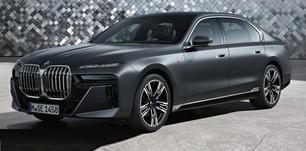
BMW freely calls the new 7 Series “monolithic” in its press material, and it’s hard to argue. The seventh-generation of its luxo limo is bigger in every dimension, and with a higher bonnet and bootlid, the car is convincingly imposing even when parked. Even more so in black.
From the front, the 7 Series clearly has a new face compared to its predecessor, with split headlights now an indicator of BMW’s luxury oriented models - the incoming XM SUV features the same.
Its LED daytime running lights feature Swarovski crystals, while the grille surround illuminates while the vehicle is parked and on. It’s currently unable to be illuminated while driving to comply with Australia’s laws.
It’s perhaps less elegant and more aggressive than previous generations, but that doesn’t mean there won’t be those who approve. It’s certainly emotive, especially when compared to the side and rear of the car.
The side profile of the 7 requires quite a few steps back from the car to really take in - it’s almost 5.4 metres long - though it's hard to hide the size of a car that allows its rear passengers to almost lay down.
From the rear, the 7 Series is probably at its most uninspiring, which is a reverse from the interior where the front feels more minimalistic than some of its rivals like the Mercedes-Benz S-Class.
BMW has used crystalline geometric shapes throughout the cabin, and the front ‘interaction bar’ is perhaps the best example.
In keeping with the minimalism, its screen sits in an almost freestanding style out from the dash, with no physical buttons seen around it.
The Defender 130 measures 1970mm high, 5358mm long (including rear-mounted spare wheel; 5099mm without), and 2105mm wide (with the wing mirrors out). It has a 3022mm wheelbase and a listed kerb weight of 2745kg (unladen).
It is big, but really it’s no more intimidating to drive than a Toyota LandCruiser 300 Series or Nissan Patrol.
Upper large SUVs have a Federal Chamber of Automotive Industries-defined footprint bigger than 9801mm – think 300 Series LandCruiser (close to 5.0m long), Hyundai Palisade (almost 5.0m long) and Nissan Patrol (almost 5.2m long).
In terms of styling, the 130 strikes an effective balance between the distinctive shape and spirit of the old-school Defender with the new-generation’s pomp and presence – and the striking Carpathian Grey paint on this variant complements that blend.
The current-generation Defender is no city-soft shadow of its former adventure-tackling self that Landie lovers everywhere feared it might be. But it’s modern and sleek enough to put the minds of urban dwellers/weekend warriors at ease.
If the word ‘practicality’ brings to mind simplicity, the 7 Series might require you to have a bit of a mental reset. If it means plenty of space and a long list of elements to keep you comfortable, you’d be closer to the money.
While it’s visually restrained in some ways, the space accessible to the driver is thought out reasonably well, as you’d expect from a car costing more than a quarter-million.
The front seats certainly aren’t the main event, but the Merino leather and cashmere wool combination seats are far from uncomfortable, with the heating, cooling, and massage functions accessible from the central multimedia screen.
The controls for those, as well as functions like the climate control, are easily accessible, though could probably be even easier with a physical climate control panel.
Controls for the individual vents, and even the glovebox are found along the BMW interaction bar, which can (frustratingly) reflect light thanks to its crystalline design, meaning it’s hard to see while driving on a sunny day.
Similarly, while the centre console where the main control dial for BMW’s 'iDrive' isn’t far removed from previous versions, it’s less tactile and requires a look sometimes to see what’s being pressed. Here, too, sunlight can reflect (this time off the dial) and make it more distracting.
Fortunately, the steering wheel controls remain physical buttons, and they’re laid out in a way that previous BMW owners or drivers will find familiar.
The 7 Series also now leans more heavily on voice activation, so if the lack of physical climate controls or the multimedia screen is a little distracting, much can be achieved by actually asking the car with a “hey, BMW… ”.
There’s a large storage unit in the centre console, as well as two cupholders and a phone charging platform in front of the multimedia controls.
The rear seats, especially the one behind the front passenger, are where the 7 Series begins to feel its worth. If you’re buying one with the intention of being the driver 100 per cent of the time, you’re missing a trick.
The ability for the front passenger seat to shift forward and maximise legroom while the rear seat reclines into a lounge position is nothing new, limousine sedans have been able to do this for years, but the 7 Series takes it to another level.
Not only is there plenty of space for even the tallest of humans to stretch out, but the positioning and angle of the huge 31.3-inch theatre screen is great, even if it impedes the driver’s rear view, and the ability to use it as a touchscreen for some functions means less need for the handy but sometimes fiddly door-mounted control screen.
If you plan on playing games, the controls (and the fact you’re likely in a moving car) can make it a little difficult, but the small control panel is overall easy to use and well-placed.
The cushioned armrest that folds down in place of a middle passenger is comfortable, features a phone charging pad and pop-out cupholders, as well as a storage space under the armrest.
Finally, the boot space in the BMW 7 Series is far from small, with the electric i7 offering 500 litres (VDA) of space, while the 740i boasts 540 litres thanks to its lack of battery.
The Defender 130 is well-suited to people-carrying duties thanks to its three-row seating.
And don’t forget this test vehicle has (optional) Captain Chairs in the second row.
The cabin has a distinctive premium look and feel about it, without sacrificing anything in terms of just how practical it all is. It’s a pleasant mix of durable materials – carpet mats and soft-touch surfaces – and stylish touches, such as a metal Defender-stamped section in front of the front passenger.
Layout is user-friendly and this is an easy cabin in which to swiftly become comfortable as all controls easy to locate and operate even when busy negotiating with your teenagers who gets what song next.
Storage spaces include a deep centre console, glove box, twin cupholders between driver and passenger, sunglass storage, door pockets and shallow spaces positioned about the cabin for your everyday carry gear.
Charge points include USB-Cs up front and a wireless device charging tray.
The driver and front passenger get ample room and plenty of amenities and those behind them also fare well with adequate room for everyone – even those in the third row.
All seats are comfortable and the front seats are 14-way power-adjustable with heating, cooling and memory.
The second row – two outboard Captain Chairs in this test vehicle – have a headrest and armrests for both passengers.
The third-row seats are heated and configured in a 40/20/40 pattern.
The rear cargo area is small in this seven-seater, although it offers a listed 389 litres with all three rows up and in use. That area has a sliding cover (which conceals your valuables from the prying eyes of nefarious types), cargo-restraint points, power sockets and a shallow underfloor storage space.
With the third row folded down, there is a listed 1232 litres of space. The maximum loadspace volume behind the front row is a listed 2231 litres.
There is a lot more to admire inside this Defender’s cabin for those who love the interiors of plush SUVs, but rather than spending my time stroking leather accents, going ‘ohhhh-ahhhh’ over a sunroof or reflecting on the butt-warming benefits of a heated seat, I like to actually drive.
So I did. A lot.
Given we’re in the realm of models where the price difference between two variants could pay for an entire new city car, what value means shifts a little bit.
The BMW 7 Series comes in two variants for the seventh generation, starting at $268,900 for the petrol-powered 740i, and $297,900 for the electric i7.
Previously, it was possible to get into the BMW 740i for $198,900 after BMW lowered the price of the sixth generation car.
However, the new 7 Series is larger and has more packed into it, with both variants highly specified and mostly differing in price due to their drivetrains and some more minor creature comforts.
The 740i starts with an already impressive list of standard features, with 20-inch M alloy wheels, remote start, a tyre pressure monitor, rear-wheel steering, 'crystal' headlights and an illuminated grille surround, a panoramic glass roof, heated seats and a massage seat for the driver with Merino leather, a 20-speaker Bowers & Wilkins sound system, as well the option to select the M Sport or M Sport Pro pack at no extra cost.
The more expensive i7 xDrive60 gains, on top of that, 21-inch wheels, active roll stabilisation, automatic opening and closing doors, multifunction seats with heating, cooling, and massage in the rear, plus a 39-speaker sound system and the impressive 31.3-inch theatre screen.
The i7 also comes with a BMW third-gen wallbox, home and public charging cables, and a five-year ChargeFox subscription. It also gains a six-year service package over the five included with the 740i.
If the i7’s extra features are tempting, but its drivetrain isn’t, 740i buyers can opt for a 'Connoisseur Lounge' pack for $27,900 which adds the auto doors, multifunction seats, rear theatre screen, and a 40-speaker sound system.
The 2025 Land Rover Defender 130 P500 V8 has a manufacturer’s suggested retail price of $216,197 (excluding on-road costs). But because our test vehicle has a raft of options onboard – matte protective film ($6840), 'Carpathian' exterior pack ($2400), second row heated and cooled a pair of Captain Chairs with winged headrests as the second row ($1930), Carpathian grey premium metallic paint ($1040), and a rubber load space mat ($320) – it has a price as tested of $228,727 (excluding on-road costs).
The Land Rover Defender 130 P500 V8's standard features include an 11.4-inch multimedia touchscreen (with Apple CarPlay and Android Auto), wireless device charging, a head-up display, interactive driver display, as well as 22-inch satin dark grey wheels, quad outboard-mounted exhaust pipes, 'Terrain Response 2' with 'Dynamic Program', privacy glass, a heated steering wheel and an electrically-adjustable steering column.
Also included are bright metal pedals, configurable cabin lighting, a load space cover, satin chrome gearshift paddles, illuminated metal tread plates (with V8 branding), four-zone climate control, 'Ebony Windsor' leather and Kvadrat (wool blend textile) seats, Meridian audio, 'Online Pack' (with data plan), a head-up display, a 12V power socket in the boot and the 'Pivi Pro' multimedia system.
Paint choices on the Land Rover Defender 130 P500 V8 include 'Fuji White' (solid) or 'Santorini Black' (metallic with body-coloured roof) – or you can opt for 'Carpathian Grey' (premium metallic with black contrast roof), which is a $1040 option (price correct time of writing).
This Defender is available with the 'Extended Black Exterior Pack' ($1707) or the 'Carpathian Exterior Pack' ($2396).
The BMW 740i is powered by a 3.0-litre turbocharged in-line six-cylinder petrol engine, as is the way with many of BMW’s larger cars. It’s also a mild hybrid, incorporating a 48-volt electric starter/motor combination.
The 740i makes 280kW between 5200-6250rpm, and 520Nm between 1850-5000rpm, which is transferred to the rear wheels via an eight-speed automatic transmission.
The electric i7 xDrive60 is the flagship model, with its dual-motor all-wheel drive powertrain good for 400kW and 745Nm, allowing for a claimed 0-100km/h time of 4.7 seconds - 0.7s faster than the 740i.
The Land Rover Defender 130 P500 V8 has a 5.0-litre supercharged V8 petrol engine (producing 368kW at 6000-6500rpm and 610Nm at 2500-5000rpm), an eight-speed automatic transmission and all-wheel drive system.
This is a very effective and fun combination of gutsy V8 and clever auto.
The Defender has permanent all-wheel drive and a dual-range transfer case with high- and low-range 4WD.
It also has Terrain Response 2, an off-road-focussed driver-assist system, which will make any off-roading newbie look and, more importantly, feel like a dirt-track driving champion.
The system includes switchable modes - 'Grass/Gravel/Snow', 'Sand', 'Mud and Ruts' and 'Rock Crawl'.
This tech optimises throttle response, engine outputs, transmission shifts and diff control to best suit the terrain. It also has centre and rear diff locks.
BMW Australia hasn’t yet specified local figures for fuel consumption or energy efficiency for either variant of the 7 Series at the time of our review, but the international specifications for both i7 xDrive60 and 740i give a relatively accurate guide.
BMW claims the electric i7 has a power consumption of between 19.6 and 18.4kWh/100km, which means its 101.7kWh battery allows a range of between 591 and 625km according to the brand.
It’s claimed to charge from 10 per cent to full in less than 5.5 hours with a 22kW AC wallbox, or in 34 minutes to reach 80 per cent using DC fast charging at 195kW.
The petrol powered 740i will use between 7.0 and 8.0 litres per 100km, according to BMW, which equates to between 183 and 159g/km of CO2.
Fuel consumption is listed as 12.7L/100km and that's on a combined (urban/extra-urban) cycle. On this test I recorded 14.9L/100km.
The Land Rover Defender 130 P500 V8 has an 90-litre fuel tank so, going by my on-test fuel figure, you could reasonably expect a driving range of about 604km from a full tank.
Fuel requirement is 95 RON premium unleaded.
BMW hopes for two things for the new 7 Series: one, that it’s the best car to be driven in, and two, that it’s the best car to drive.
While one of those things could be argued to be true, we suspect there are some engineers in BMW’s M department who would be frustrated at the thought of a more-than 2.6-tonne limo being called better to drive than a car half that size with a manual gearbox.
But, perhaps unsurprisingly, the BMW 7 Series is rather refined from the driver’s seat, especially on roads where the speed limit is high and the corners are long.
The two variants Australia has available, the i7 xDrive60 and the 740i, differ in their drivetrains as mentioned above, and the dynamics of each are slightly different.
The all-wheel drive electric i7, despite its extra heft (the 740i is almost 600kg lighter) the EV feels more nimble thanks to its immediate torque delivery and higher outputs give it more flexibility in dynamic driving.
The lower centre of gravity, even with the extra weight, helps the electric i7 hold its own against the turbo six-powered 740i.
Both variants come standard with BMW’s rear-wheel steer system, or ‘Integral Active Steering’, which is vital to providing the agility needed for keeping the 7 Series in shape on tight roads, where it tightens the turning circle below 60km/h, though its 3215mm wheelbase does a lot to keep it feeling stable.
Above 60km/h, the rear-wheel steering improves stability further by turning slightly with the front wheels as opposed to against them, allowing for smoother flowing cornering and highway lane changes.
In either case, the 7 Series is easy to drive, with the steering able to be set to Comfort regardless of the drivetrain’s intensity (Sport and Comfort are the only options), which leaves the wheel feeling lighter.
The ride, whether from the front or the back, is impressive, even when being chauffeured through rough backroads.
The 7 Series, despite not being engineered specifically for Australia’s sometimes shockingly pockmarked roads, manages to soak up impacts before they transfer from the tyre into the seats, and that goes for the sound and road noise, too.
Unfortunately, our launch test drive was hampered by some roadworks out of BMW’s control, so stay tuned for a more in-depth drive soon.
What's it like to drive? It’s bloody great.
This is a big vehicle – have I mentioned that already? – but powered by this V8 the Defender 130 punches along with nary a care in the world.
Throttle response is crisp, and the 5.0-litre supercharged petrol’s 368kW and 610Nm are always readily available for a snap-punch standing-start, or to smoothly and safely overtake other vehicles on the open road.
This Defender has an official 0-100km/h sprint time of 5.7 seconds and a listed maximum speed of 240km/h!
By the way, it doesn’t hurt that the V8’s growl is piped through quad outboard mounted exhausts.
The eight-speed automatic transmission is supremely clever but the shifter’s stubby size and awkward location (under the multimedia system’s touchscreen) is annoying.
Otherwise, this V8 130 is smooth and refined, with tremendous road-holding abilities despite a Landie legacy of past-generation Defenders being about as composed as dodgy tractors.
What’s more, comfort levels are exceptional in a vehicle model once considered a form of punishment in which to travel.
Steering has a well-weighted driver-friendly feel to it and this upper large SUV never feels too cumbersome to navigate through even busy city streets, even though it has a turning circle of 12.8m.
Some body roll creeps in every now and again – especially when you become energetic throwing this giant around corners, etc – but otherwise this big bulky vehicle is well controlled and comfortable.
The air suspension negates the majority of thumps and bumps you might be expecting to get from a vehicle riding on 22-inch wheels and low-profile tyres over irregular road surfaces.
Our test vehicle was on 22-inch rims and 275/45 R22 Continental CrossContact RX “SUV performance” tyres, which are fine for driving on sealed surfaces, but if you’re looking to do any off-roading in this Defender get a set of more appropriate all-terrains.
I wasn’t driving the 130 to test its 4WDing prowess this time, but it’s still worth noting the Defender’s off-road measurements include 293mm of ground clearance (with air suspension), a wading depth of 900mm, and approach, departure and ramp-over angles of 37.5, 25.8 and 27.9 degrees, respectively.
This Defender 130 has a gross vehicle mass (GVM) of 3380kg and a gross combined mass (GCM) of 6380kg.
It has an unbraked towing capacity of 750kg, and braked towing capacity of 3000kg (with maximum 300kg on the towball), which is somewhat of a disappointment and sub-par for the upper large SUV segment.
The new BMW 7 Series hasn’t been crash tested by ANCAP, nor does it seem likely it will be, given the small number that are likely to be sold here.
But the car itself isn’t short on safety features, and BMW has a good recent history of scoring the maximum five stars for its cars.
The 7 Series features front and side airbags for driver and front passenger, curtain airbags for both front and rear seats, crash sensors, and a tyre pressure indicator.
Of course, the standards like active cruise, AEB, and sensors for collision warnings are all standard, plus BMW also offers active roll stabilisation as an option, which uses 48-volt motors to steady the car and account for the road surface and body roll through corners.
The Defender 130 does not have an ANCAP safety rating but it does have plenty of safety gear as standard including a plethora of airbags (driver, front passenger, and first, second and third row (head) and side for first row passengers).
Driver-assist tech includes AEB, adaptive cruise control, driver condition monitor, blind-spot assist, lane keep assist, a 3D surround camera, 360-degree parking aid, traffic sign recognition and adaptive speed limiter and more.
It has other tech, such as ‘transparent’ bonnet view, wade sensing, a tyre pressure monitoring system and tow hitch assist, which comes in handy for on- and off-road tourers.
It also has child-seat top tether anchorage points on the backs of both second-row seats and all three third-row seats. And there are ISOFIX anchors on the second and third row outer seat positions.
BMW offers a five year, unlimited kilometre warranty and that extends to both variants of the 7 Series.
BMW also offers servicing packs for its new cars, though the pricing for each group of models excluded the 7 and 8 Series and its M cars.
Given the most expensive servicing pack listed is the BMW X7’s $2800 five-year, 80,000km pack, expect anything similar for the 7 Series to cost more.
In terms of when servicing is required, BMWs are condition-based, meaning the car’s own systems detect whether something like an oil change or part replacement is required, and provides that data to your BMW service centre to help calculate an estimate for work needed, ahead of time.
The Defender has a five year/unlimited km warranty with five years of roadside assistance included.
The vehicle will let you know when it needs to be serviced – isn’t it bloody clever? – and prepaid service plans are set for five years/130,000km (maximum km) at a total cost of $3750.