What's the difference?
Without a whole lot of fanfare BMW has slipped yet another model into its Australian line-up.
Sitting alongside existing coupe and convertible variants, the new 4 Series Gran Coupe follows the template established by the previous gen version.
A sports luxury four-door with a sleek, fastback twist, it provides a more adventurous alternative to its close 3 Series cousin.
Offered in three grades, this is the M440i xDrive, the 3.0-litre, six-cylinder, all-wheel drive 4 Series Gran Coupe flagship.
It competes with premium all-wheel drive four-doors like Audi’s S5 Sportback, the Jaguar XF P300 R-Dynamic HSE, and the Mercedes-AMG C 43.
What’s the closest thing we have to a modern-day Holden Statesman/Caprice?
If, like General Motors, you obliterate Australia’s Own from existence altogether, you’re left with time-honoured rivals also made in this country, like the Ford Fairlane, Chrysler by Chrysler and Toyota’s Crown and Avalon.
But they’re also all in history’s dustbin (well, the American ones, anyway), leaving the humble Camry as the sole living nameplate with any connection to Australian manufacturing.
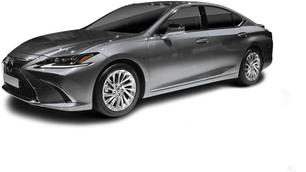
And since the Lexus ES is a close relative, we’re going to take a fresh look at the latest version, with a view of it as a bit of a survivor of a bygone era – where aspirational vehicles were created from normal family sedans.
Just like the Fairlane, Crown and of course, the Caprice.
Launched in mid 2018 but facelifted in 2021, we test the ultimate version of the seventh-generation ES, the 300h Sports Luxury – or SL, if we’re to make yet another tenuous connection to long-gone Holdens.
Let’s go!
The BMW M440i xDrive Gran Coupe manages to combine sleek design with a fun-to-drive personality and surprising practicality. It’s a rapid premium, four-door, five-seater offering extra flair, and in this part of the market, good value. But more than anything else it’s got a cracking in-line six under the bonnet.
There’s no denying the Sport Luxury is imposing, spacious, plush, chock-full of kit, efficient, speedy and pleasingly relaxing up to a point.
But its interior is also dated and true ride comfort can be elusive beyond smooth roads for this top-of-the-line version to make the grade as a proper luxury sedan.
The ES 300h feels more like an aspirational Toyota than a Lexus for the (wealthier) masses, especially after recent triumphs like the latest NX and RX SUVs. The Camry DNA is difficult to disguise, as the amused strangers who sat in our test car uninvited thinking it was their Camry highlights.
Sure, the hybrid is no Chevy V8, but in many other ways, the Sport Luxury seems like the modern successor to the Holden Caprice experience.
So, how does this four-door 4 Series differ from a four-door 3 Series? The answer is as plain as the nose on this car’s face.
BMW’s head of design, Adrian van Hooydonk, has been expanding the brand’s signature ‘kidney grille’ in every conceivable direction, and this is the much talked about interpretation adorning all 4 Series models (petrol, hybrid and electric) as well as the M3 sedan.
The new Gran Coupe is longer, wider, and taller than the outgoing model, and the track is broader, front and rear. The wheelbase has also been extended, now a whole 5.0mm longer than the 3 Series.
The DRLs and headlight main beams are LED with laser high beams, immense gills square up the edges of the front clip, while a vent and the strake attached to it stand the car apart. Plus, of course, the doors are frameless.
One niggle, though. I’m not in love with the slender door handles. It’s hard to get a good grip on them, especially in the wet.
Standard 19-inch alloy rims are shod with Pirelli P Zero rubber 245/40 fr / 255/40 rr), the roofline slopes distinctly towards the rear, a lip spoiler on the trailing edge of the tailgate is classic BMW, darkened LED tail-lights wrap around the rear corner, and a diffuser-type panel is flanked by large exhaust apertures.
Our car’s ‘Aventurine Red’ finish is a $3850 option, but to my eyes anyway it looks superb.
Exterior trim including the grille frame, front air intake inserts, mirror upper housing, model designation badges, and tailpipe are finished in ‘Cerium Grey’, which I reckon 99.9 per cent of people will see as black.
The interior will be familiar territory for any current BMW owner, the 12.3-inch digital instrument screen sitting in a compact, hooded binnacle, and partnering with a 10.25-inch multimedia display standing proud of the dash above the broad centre stack.
The seats are trimmed in top-shelf leather with blue contrast stitching, plus the grippy sports wheel is also wrapped in genuine hide.
BMW calls the finish on the main buttons and controls ‘Galvanic’ which translates to a slick silver metallic look and feel. Configurable ambient interior lighting is a nice touch, and the broad console enhances the driver-focused feel, with a sprinkling of carbon-fibre around the centre console and dash lifting the sense of occasion.
Overall, the interior feels clean and classy with an obvious attention to detail.
Historically, cars like the ES appeal to an older and more conservative demographic, who value imposing, conspicuously-expensive looking sedans offering the luxury of space. This is the Cadillac model and our Lexus embodies it.
Which is why hire company operators snap such vehicles up. Great for airport-hotel-airport runs.
But it’s weird, given how much of Lexus’ design language is in the ES’ elaborate nose and tail treatments, how generically Toyota this looks. Certainly, our test car’s 'Sonic Quartz' white paint job does not help.
Just to reinforce this perception, two strangers were fully sat inside our unlocked test Lexus before they realised it wasn't their actual car parked nearby – a white Camry of course.
How they laughed. But if I had paid over $80K for my ES, I certainly wouldn't be amused.
At close to 4.8m long the 4 Series Gran Coupe is a sizeable machine. Up front, the feeling is airy and comfortable, and the rear is surprisingly spacious, especially in light of the car's sloping roofline.
At 183cm I have to fold myself tightly to fit under the low roof, but once inside I have enough room to sit behind the driver’s seat set for my position with more than enough legroom and adequate headroom. Put three full-size adults across the back row, though, and there will be breathing difficulties.
Kids will be fine, however, and individual vents with adjustable temp in the rear was a big plus during a particularly hot test week.
For storage there are generous door bins in the front with room for large bottles, a decent glove box, dual cupholders in the centre console, a reasonable lidded bin (which doubles as a centre armrest), and the wireless device charging bay (forward of the gearshift) makes a handy oddments space when not in use.
In the rear, again the doors feature pockets with room for (medium-size) bottles, there’s a fold down centre armrest with two cupholders, but thanks to the one-piece shells on our test car’s optional M Sport front seats there are no map pockets.
Power and connectivity runs to a USB-A socket and a 12V outlet in the front centre console, as well a USB-C port in the front storage bin, a pair of USB-Cs in the rear, and a 12V outlet in the boot.
Speaking of which, lift the tailgate and with the rear seat upright we were able to fit all three of our suitcases or the beefy CarsGuide pram into the healthy 470-litre (VDA) boot space.
Lower the 40/20/40 split-folding rear seat down and 1290 litres of volume is at your disposal. Plus there are handy bag hooks and tie-down anchors to help secure loose loads.
You can also tow a braked trailer up to 1.8 tonnes (750kg unbraked), but don’t bother looking for a spare of any description, a repair/inflator kit is your only option.
The ES 300h may look like a gussied-up Camry on the outside, but there’s very little evidence of the Toyota inside the stretched cabin, with Lexus-specific seating, trim and dashboard.
However, if you’re familiar with the latest LS, NX or RX models, much of what you see is now dated, previous-gen tech, and that’s an issue in some key ways.
Let’s start with the SL positives, though.
Quiet and free from rattles, the interior is defined by its first-class fit and finish, and then closely followed by the vast length inside, with ample room up front to stretch out and relax in. The ES’ substantial width adds to the sense of spaciousness.
Ventilation is excellent, exemplary even, with strong and effective climate control all around the car. Great for very hot days.
The front seats provide practically infinite adjustment in most directions, and include a handy thigh-support extender that – like everything else inside – moves electrically.
Comfy and supportive, they do a fine job. Effective heated and vented cushions and backrests are further bonuses.
But let's call out the hard front headrests. They feel cheap. And the ES’ age now shows in other, eyebrow-raising ways for an $80K-plus machine.
The dash is a messy mix of now-dated Lexus styling cues – from the ugly asymmetrical centre console to the single circular instrumentation dial for speed and tachometer.
The original IS 200's analogue watch face theme was cool in '99. Today's iteration looks basic.
Storage seems poorly judged given the vastness of this sedan, provided for by cavities in the sub-sized centre armrest, glove box and door bins. Note that the latter cannot hold bottles.
Then, there’s the ill-conceived touchpad that requires brain-surgery precision when fingered to navigate the main display screen when driving (though now it's also a touchscreen, and not before time); after years of various iterations of this, it remains alien and confounding in the extreme to operate. Rest assured, it's been banished in newer-gen Lexuses.
Also annoying is the infernal ‘please obey all traffic regulations’ voice warning, just like you find in a Yaris; the limited and easily-flummoxed voice-control tech and the dated and low-fi graphics for the needlessly complicated sat-nav system.
We relied on CarPlay because the in-built item endlessly let us down. Chuck them all out.
However, there are upsides to a dated interior, because even though this is a confusing and at-times intimidating button-fest, it’s still preferable to the today's everything-behind-a-touchscreen mania.
Give us physical switches and buttons every time, like the ES. Yes, the Lexus also has them replicated within the central display, but the point is, the driver has a choice.
You shouldn't be shocked to learn that the Sports Luxury impresses most as a sumptuously comfortable back-seat experience.
Rear access is easy, the passengers can adjust the front seat, climate control and audio systems via handily-sited switches (meaning they're replicated thrice in some instances).
Limo luxury amenities include individually-reclinable and heated outboard seats that are downright sumptuous, blinds for all glass (electric for the rear window), a lined centre bin, face-level air vents, two USB ports, a 12V outlet, generously-sized elbow rests on the doors, overhead lighting and door pockets are also included.
This is tailored as an airport/hotel shuttle and very comfortable doing so.
No folding backrest, though, meaning the boot – though not small at 454 litres – lacks the load-through facilities now common in most other sedans, including the Camry.
Under the flat floor is a space-saver spare with the words ‘SPACE MISER MKIII’ emblazoned across it. Classy.
In summary, the ES’ interior is one of two parts – comfortable but dated up front, invitingly lush out back. Perfect for its intended station in life then.
We’re in a zone some way North of $100K here with cost-of-entry running to $115,900, before on-road costs. So, as well as the included powertrain, suspension, and safety tech you should rightfully be expecting a lengthy standard features list.
And the M440i Gran Coupe goes toe-to-toe with its heavyweight Euro competition, featuring three-zone climate control air, adaptive cruise control, ‘Laserlight’ headlights, that 12.3-inch ‘BMW Live cockpit Professional’ instrument display and 10.25-inch ‘Control Display’ multimedia touchscreen managing navigation, the 16-speaker/464W harmon/kardon Surround Sound audio system (with Apple CarPlay and Android Auto integration) and a host of other on-board functions.
There’s also the ‘Vernasca’ Black leather trim, an electric glass sunroof, the leather-trimmed sports steering wheel, the electric sports front seats are heated and there’s wireless charging for compatible devices.
The second-oldest Lexus nameplate after the LS flagship, Australia skipped the fifth-gen version from 2006 to 2012 altogether because it was ousted by the smaller, sportier and more-popular IS series.
However, the latter’s 2021 demise saw the situation flipped, with the ES retaking the mantle as the affordable Lexus sedan torchbearer, while also belatedly replacing the larger GS.
This all coincided more-or-less with a facelift later that year, which brought revised front-end styling, uprated safety, updated multimedia, extra kit and a beefier body, among other changes.
Plus, a (slightly) cheaper non-hybrid ES version returned, dubbed 250. Starting from $61,620 (all prices are before on-road costs), it uses the Camry’s 2.5-litre four-cylinder atmo petrol engine.
However, the 300h hybrid from about $2K more is the better seller, with its electric motor and battery pack assistance. Our test SL flagship kicks off from $78,180, and heaves with standard equipment.
On the safety front, the usual array of driver-assist tech is present, starting with Lexus’ pre-collision system that includes Autonomous Emergency Braking (AEB), blind-spot monitor, adaptive cruise control and lane-keep warning/assist. See the safety section for more.
The biggest change inside is the now-touchscreen-enabled 12.3-inch display, boasting a 360-degree view camera, Apple CarPlay, Android Auto, digital radio, a 17-speaker Mark Levinson audio system, CD player (!) and shockingly sub-par satellite navigation.
Beyond that, Sports Luxury buyers also score tri-beam LED headlights with adaptive high beams, an informative 8.0-inch driver display, a heated steering wheel, sunroof, powered heated/vented front seats (with memory setting for the driver), a wireless charger, head-up display, keyless entry/start, powered steering column (including retraction for easier access), active noise-control tech, rear privacy glass with sunshades, a powered boot lid with kick sensor, semi-aniline leather with a choice of walnut trims, tri-zone climate control, powered/reclining/heated outboard rear seats with centre armrest climate and audio controls, 18-inch alloys and performance (but not adaptive, crucially) dampers. More on that later.
All Lexus models also include an ‘Encore’ aftersales subscription program offering myriad offers and services including 'free' car rental.
Everything but the cliché sink, then, but is the 300h SL actually good value for money?
No rival can match the Lexus’ mix of sheer size, hybrid efficiency, spec generosity and aftersales support.
But around that $80K mark, the cheaper yet roomier Skoda Superb and smaller Volvo S60/V60 and VW Arteon 206TSI all feature all-wheel drive, as do the classy Audi A4/A5 quattros, while the rear-drive-biased BMW 3/4 Series, Genesis G70 and Alfa Romeo Giulia are far more focused on character and athleticism. Serious competition all.
And, as we found out, none can be mistaken for a Camry. Image is important at this level.
Under the bonnet is BMW’s (B58) all-alloy 3.0-litre twin-scroll turbo intercooled, in-line six-cylinder engine, driving all four wheels via an eight-speed automatic transmission and electronically controlled clutch pack, as well as an electronic limited-slip differential at the rear.
It features high-pressure direct-injection and BMW’s ‘Valvetronic’ system managing air flow to the intake side, to produce 285kW at a relatively high 5800-6500rpm. But the big punch is 500Nm of peak torque from just 1900rpm all the way to 5000rpm.
The M440i is also a mild-hybrid with a 48-volt starter motor-generator and supplementary battery able to give an 8.0kW kick at low engine speeds.
Doing duty in a cornucopia of Toyota products, the ES 300h’s A25A-FXS engine remains the same as the pre-facelift model, meaning it is a 2487cc (2.5-litre), double overhead cam, 16-valve Atkinson Cycle in-line four-cylinder petrol unit with variable valve timing.
In this application, it makes 131kW of power at 5700rpm and 221Nm of torque between 3600rpm and 5200rpm, and sends that through to the front wheels via an e-Continuously Variable Transmission (CVT) with a sequential shift facility offering artificially stepped 'ratios' for a more-conventional automatic transmission sensation.
A series/parallel full hybrid system, the engine is backed up by a permanent magnet synchronous electric motor, delivering 88kW and 202Nm, and is fed by a tiny 1.6kWh Nickel-metal hydride battery pack.
With only a couple of kilometres of pure-EV driving availability, and only under light throttle or when coasting along, the latter is recharged via the petrol engine as well as recaptured energy from the regenerative braking system. Combined power output is 160kW. No combined torque maximum is stated.
With an impressive power-to-weight ratio of 92kW/tonne, the 1740kg 300h needs 8.9 seconds to reach 100km/h, and maxes out at 180km/h.
To handle all that movement and mass, the steering is an electrically powered rack and pinion set-up, the front suspension consists of MacPherson-style struts and the rear suspension is made up of a multi-link arrangement.
BMW’s official fuel economy figure for the M440i xDrive Gran Coupe, on the ADR 81/02 - urban, extra-urban cycle, is 8.2L/100km, the 3.0-litre turbo six-cylinder emitting 187g/km of C02 in the process.
Stop/start is standard, and we saw an average of 11.1L/100km over city, B-road and freeway running during a week with the car.
With the 59-litre tank brimmed (with minimum 95RON premium unleaded) that real-world test number translates to a range of around 530km.
Rated as Euro 6, the ES 300h requires a minimum brew of 95 RON premium unleaded petrol.
But that’s where the bad news stops, because over 626km of all sorts of driving in hot weather with the tri-zone climate control in full workout mode, we averaged an extremely commendable 5.6 litres per 100km. Well done, Lexus.
That’s against the official combined average of 4.8L/100km, which equates to just 109 grams per kilometre of carbon dioxide emissions. Not bad.
With the 50L tank brimmed, expect a real-world range of about 890km – or 1041km using the official average fuel consumption figure.
Either way, the 300h is mighty frugal for a 5.0-metre long and 1.8-tonne luxury machine. But cab and hire companies already knew that from their Camry hybrids, right?
BMW says the M440i xDrive Gran Coupe will accelerate from 0-100km/h in 4.7sec, and I reckon the threshold for a properly quick car is sub-five seconds.
The 3.0-litre turbo six develops its peak power of 285kW between a relatively lofty 5800-6500rpm, but the big number is a solid 500Nm punch of pulling power delivered between 1900-5000rpm.
Squeeze the throttle pedal pretty much anywhere in the rev range and the response is glorious. Rapid acceleration accompanied by raucous engine noise and rorty exhaust note (albeit with some synthetic support). Various pops and bangs in the Sport settings add extra entertainment..
The eight-speed auto gets some electric support from the mild-hybrid system to fill the torque gap on up shifts, and the result is a conventional torque-converter transmission that behaves like a dual-clutch.
Shifts are seamless in general driving, and satisfyingly quick in a more aggressive mode, the wheel-mounted paddles dialing up the fun in manual changes.
Suspension is double wishbone front and multi-link rear with the standard ‘Adaptive M Suspension’ built around an adaptive damper set-up.
The change between the ‘Comfort’ setting to the ‘Sport’ or ‘Sport+’ calibration is close to instant and makes a discernible difference, especially in terms of ride comfort.
I found the best ‘Individual Sport’ arrangement to be damping in Comfort, with the steering engine and transmission in Sport. The car flows so beautifully through corners with urgent response from the powertrain.
By all means dial up the suspension if you’re having a real crack, but the car feels superbly balanced, stable and predictable in Comfort (front to rear weight distribution is 50:50).
The electrically-assisted variable-ratio steering is nicely weighted with good road feel, and the grippy sports steering wheel is a nice point of contact.
The xDrive AWD system’s default setting is rear-biased, although it will push most of the drive forward when required. But the RWD feel is unmistakable.
The M440i weighs in at around 1.9 tonnes but feels lighter and more nimble than that figure would typically indicate.
A standard electronically-controlled M Sport limited-slip differential puts the power down confidently. I have a favourite LSD test corner on my regular evaluation drive, a sharply twisting and rising left-hander.
Rolling into it in a low gear before planting the throttle mid-corner, the car simply hunkers down without a hint of fuss (or traction loss) as it rockets out the other side.
Optional M Sport front seats ($2000) provide comfort and firm location in equal measure and in terms of ergonomics BMW knows how to focus on the driver and set-up an efficient environment. Key controls are perfectly positioned and simple to operate.
I have an issue with the ‘Lane Departure Warning’ function, however, which is too quick to intervene and overly intrusive when it does so. I turned the ‘Steering Intervention’ function off. You can dial down steering wheel vibration warnings, too.
The standard M Sport brakes feature big vented rotors front and rear, with fixed four-piston front calipers doing the bulk of the work. They’re strong but don’t bite or release too aggressively. It’s easy to grease in a smooth application.
In the right conditions, the ES 300h is a big, squishy, comfy drive. At low speeds, for instance, thanks to an airtight cabin that does a great job isolating its pampered occupants from the outside world.
You cannot hear the car on start-up because the electric motor whirrs this Lexus off the line instantly, silently and effortlessly. And aided by all the surround-view cameras, the steering is light and direct enough to make parking a breeze. Automotive Valium to soothe your weary head after a long day.
Likewise, get the ES out on a smooth motorway and that relaxed feeling remains, with the 300h being right at home as it lopes along quietly and steadily. Cocooned in sumptuous leather and walnut, the adaptive cruise control gently rolling with the ebb and flow of traffic, it’s easy to zone out in here.
Find an empty stretch of road and you might also be impressed at how instantaneous the 300h’s throttle response is, leaping into action and piling on the speed without even breaking a sweat. This thing ain't slow!
Likewise, if you must hurry through a tight set of corners, the Lexus will remain composed and in control, without skipping a beat. Even the brakes seem well tuned and nicely modulated – something that many electrified vehicles struggle to achieve. It’s all so nice and easy.
So, what’s the catch?
First of all, while hushed when pussyfooting around, the illusion of posh sophistication is shattered once the accelerator pedal is prodded down hard, with the accompanying engine noise seeming incongruous.
Perhaps it’s because we’ve been lulled into an electric peace, but once the revs are up, no amount of sound-deadening will quell the mechanical roar.
And it's that same Camry hybrid symphony you've probably heard hundreds of times before, in the back of a taxi hurrying to the airport.
Except in the Lexus, it's far-more muffled. Like you're wearing headphones.
Then there’s the question of bonding. While the ES 300h will do what’s asked of it capably and without complaint, there is nothing to connect car with driver.
By this, we mean that the steering is remote and feels numb at all times, with little to no feedback. Enthusiasts will search for the short way home. This is the anti-Alfa Giulia - technically a rival.
Most people will not care about that, but on the Sport Luxury’s 18-inch wheel and 235/45R18 tyre package – while modest by today’s standards – the ride quality is less than ideal on anything but smooth roads.
The ES can easily cope with small-frequency surface irritations, but seems to lack sufficient suppleness dealing with larger bumps and pot holes.
There’s an underlying and often unyielding firmness that undermines this car’s luxury aspirations. We’d dial back the taut handling for more cushiness if we could. Or fit a decent set of adaptive dampers.
Plus, the Dunlop Sport Maxx tyres aren’t as quiet as we’d expect on some of our coarser bitumen surfaces.
Comfy on smooth roads, fast when you need it to be, fit enough to go exactly where you point it to without losing composure, and wonderfully economical even when driven like it’s been stolen, the 300h has much to offer from a driving point of view.
But you won’t be aching to drive it just for fun’s sake. And you’ll quickly learn which roads are less than perfect in your neck of the woods.
Active crash-avoidance tech in the M440i xDrive Grand Coupe is impressive with AEB standard, as well as lots of assistants and warnings, namely: ‘Steering and Lane Control Assistant’, ‘Cross Traffic Warning’ (front and rear), ‘Lane Keeping Assistant’ (with ‘Lane Departure Warning’ and ‘Lane Change Warning’), ‘Crossroads Warning’, ‘Evasion Assistant’, and ‘Parking Assistant Plus’ (including ‘3D Surround View and Reversing Assistant’).
If an impact is unavoidable there are six airbags on-board (driver and front passenger front and side, plus side curtains) as well three top tethers and two ISOFIX positions for child seats in the second row.
Plus an ‘Intelligent Emergency Call’ function automatically dials back-to-base if the car has been involved in a crash, and a comprehensive first aid kit is on-board.
The BMW scored a maximum five-star ANCAP assessment in 2019.
Tested in 2018 under a less-strict regime, the ES delivers a maximum five-star ANCAP crash-test rating result. Back then, it scored especially strongly in Adult, Child and Vulnerable Road User categories, and quite well for Safety Assist tech.
There are 10 airbags in total (offering dual frontal, side chest, side head and front-occupant knee protection). The AEB system works between 10km/h and 180km/h, while the lane-tracing, lane-keep and emergency steering assist systems are operational from 50km/h to 200km/h.
Other driver-assist tech includes rear cross-traffic alert, blind-spot monitoring, adaptive cruise control with full stop/go and road-sign recognition and 'Intersection Assist' with 'Turning Assist'. The latter warns and brakes the car if the driver attempts to turn into oncoming traffic.
These are backed up by adaptive LED headlights with auto high beams, 360-degree view cameras, tyre pressure monitors and 'Lexus Connected Services' that can notify emergency services in an accident and track a stolen ES. An alarm with intrusion sensor is also fitted.
You’ll also find anti-lock brakes with brake-assist and electronic brake-force distribution, stability and traction control systems, three rear-seat child-seat tether anchorages and two ISOFIX latches, fitted to the outboard positions of the back bench.
The M440i Gran Coupe is covered by BMW’s three-year/unlimited km warranty (including paintwork), as well as 12-year/unlimited km anti-corrosion (perforation) cover.
That’s off the premium market pace now with Genesis, Jaguar, and Mercedes-Benz at five years/unlimited km and Lexus set to join them from January 1st, 2022.
That said, roadside assistance is provided for the duration of the main warranty, but it’s worth noting “rattles and squeaks” are only covered for one year.
Service is condition-based, the car telling you when maintenance is required, and a range of service packages are available. The basic plan covering a 4 Series for five years/80,000km comes in at $1750.
Here is where Lexus really excels nowadays.
Since the beginning of 2021, it caught up with most other manufacturers by offering a five-year, unlimited kilometre warranty with roadside assistance – up from four-years and 100,000km previously. Free towing and loan vehicles are provided for that period, too.
Service intervals are at 12 months or 15,000km, whichever comes first.
The ES offers three years and 45,000km of capped-price servicing, with each one costing $495 – as well as a free loan vehicle and car wash.
Plus, there’s also Lexus’ ‘Encore’ aftersales subscription program offering myriad offers and services.