What's the difference?
Late last year, Audi gave its large SUV range a freshen up by stocking its showrooms with the Q8 55 e-tron model; a rebadged, facelifted full-sized electric SUV designed to go head-to-head with things like the Mercedes-Benz EQE.
As it turned out, the Q8 55 was destined to become the mid-spec model and now Audi has book-ended the Q8 range with the entry-level Q8 e-tron 50 and the flagship SQ8 e-tron.
And while the previous 55 model was available in Sportback and SUV (station-wagon) forms, the latter has now been dropped.
That leaves the 50 model as an SUV only, while the headline act – and the vehicle we’re testing here – the SQ8 can be had in either body style.
The reason we’re concentrating on the biggest, baddest, most expensive variant, is that’s precisely what Audi is tipping the Australian market will gravitate towards.
In fact, as many as 70 per cent of Q8-platform sales could be the SQ8. That’s in line with the Australian market’s fondness for spending up big on the sportiest version of many makes and models, but it remains a bit of an anomaly in the rest of the car-buying world. Nevertheless, it remains the reason we’re focussing on that variant here.
Of course, electrification has never been more important for a carmaker operating here since the New Vehicle Efficiency Standard was announced recently, and even though the Q8 range will be a small percentage of Audi’s sales here, any EV represent progress towards meeting corporate targets.
Yet another Chinese-branded EV has arrived on our shores and if the name Jaecoo doesn’t ring a bell, that’s understandable. It’s a relatively new offshoot of Chery, making its presence felt with a growing line-up aimed squarely at everyday buyers. Think mainstream, built around accessible pricing and a decent spread of features.
Offered in a single grade, the Jaecoo J5 EV is a small SUV entering an already crowded segment. It goes up against familiar names like the BYD Atto 2, Chery E5 and MG S5 EV, all offering broadly similar promises on paper. The real question, then, is whether the J5 EV manages to carve out an identity of its own, and whether its appeal stretches beyond the price tag.
There’s not doubt large, luxury SUVs like the SQ8 have a lot to gain from electrification in terms of refinement, performance and running costs. The flip-side is the extra mass of the batteries and other electrical gear but, in this case at least, there might be a silver lining there in the way the hulking SUV manages to force the air suspension into agreeable submission.
For our money, the station-wagon variant is the one to buy. It’s cheaper to begin with and with its greater luggage capacity, it simply makes more sense. Which is not to say the Sportback version is compromised in luxury, safety or performance terms, but if practicality doesn’t figure highly in any purchasing decision involving an SUV, then we sense a great disturbance in the force.
Regardless of what’s powering the SQ8, the driving experience is vintage Audi and that’s a good thing, and even that massive kerb mass can’t blunt the sort of chassis dynamics and feedback we’ve come to expect from the brand.
Some buyers will possibly baulk at the projected range and the Audi’s appetite for electrons, but when lined up side-by-side with its major competition, the SQ8 is every chance to emerge as the one to buy. We’ll need a proper comparison for that, of course, but the Audi should be on any short-list of big, deluxe, electric SUVs.
Note: CarsGuide attended this event as a guest of the manufacturer, with accommodation and meals provided.
The Jaecoo J5 EV makes a strong first impression and a quieter long-term one. The J5 looks the part, feels comfortable and covers all the basics well, making it an easy choice for buyers who want an affordable, practical EV without too many compromises.
It’s a solid effort overall, though even at this lower price point a few more rear-seat features would be welcome - especially given this is the only grade currently available. However, it hits the right notes when it comes to ownership and value which will be its strongest pull.
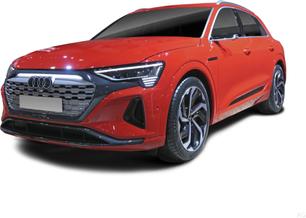
Stylistically, the big news is that the SQ8 is the second model to take up Audi’s latest exterior design language. That includes the two-dimensional Audi grille logo as well as a 'singleframe' (Audi’s own word) light bar that links the matrix headlights.
The SQ8 also gets Audi’s Sport Package as part of the price of admission, and that includes black roof rails and other touches.
Of more technical interest is the way the front of the car has been designed to aid air flow around the front wheels. Controllable flaps in the front fascia as well as underbody winglets keep the air flowing around the wheels without contributing to excess aerodynamic drag at speed.
In an engineering sense, the big news is the adoption of a three-motor layout. While some manufacturers are yet to see the value in this, having a motor on each of the rear wheels means there’s no longer a need for a rear differential.
The Jaecoo J5 EV is a handsome-looking small SUV. Its suite of LED lighting, 18-inch alloy wheels and upright, robust silhouette give it plenty of presence, particularly for something positioned at the affordable end of the EV market. That said, originality isn’t really its strong suit. The design, especially from the rear, feels heavily inspired by a Range Rover. Imitation may be the highest form of flattery but Jaecoo could have pushed the design in a slightly more distinctive direction.
It looks good on the road, though, and inside, the J5 has a genuinely airy feel. Light-coloured synthetic upholstery and the expansive panoramic glass roof help the cabin feel open and welcoming, particularly from the front seats. The design is modern and tech-focused, with the large 13.2-inch display taking centre stage on the dashboard.
The overall layout is clean and undeniably premium in its presentation, though it doesn’t bring a great deal of personality with it. That’s becoming a familiar theme, especially in this part of the EV market, where minimalism and screens often take priority over character.
There’s absolutely no question Audi knows a thing or two about cabin layouts and ergonomics. Like other contemporary Audis, this one features the fully customisable Virtual Cockpit with a huge range of possible displays and layouts. And again, as usual, it all works seamlessly and efficiently.
The head-up display is amazingly clear and the twin touchscreens divide the car’s tasks logically. Yes, there’s a lot going on, but compare the way the Audi applies logic to the menu strategy to the scatter-gun approach of many others, and you can see that plenty of thought has gone into this stuff.
Also, it goes without saying, of course, that there are multiple charging points as well as plenty of connectivity with good wireless connections available. That includes wireless phone changing.
The front seats are sporty but not too firm, even if they do give you a bit of a squeeze thanks to high bolsters and lots of contouring. The rear seat is likewise firm initially and is really best for two backsides thanks to the sculpting of the rear bench.
That said, it will accept a centre passenger, but that seat will be the last one occupied. Rear legroom – important in a car like this - is good, there’s enough room for your feet under the front seats and headroom, even in the allegedly racier looking Sportback, is ample if not huge.
The panoramic sunroof means there’s plenty of light to counter the dark interior colours, and the only real surprise is the amount of hard plastic on the upper part of the door trims, just below the glass. Given the acres of much plusher trim farther down the door, this seems a bit odd.
The other comment we’d make is that the SUV body simply makes more sense in terms of load carrying (569 litres plays 528) and makes more of the SUV’s claim to practicality.
The Sportback is also a bit of an acquired taste and while it’s not the first SUV-coupe mash-up we’ve seen, to many eyes, the combination never looks right. Coupe on stilts? Surely, not for everyone.
On that subject of practicality, the SQ8 bucks the trend in EVs by being able to tow up to 1800kg with a braked trailer. The factory towing pack is a $2180 option.
The Jaecoo J5 EV's cabin is spacious with both rows offering ample head- and legroom. A flat floor also helps the middle rear seat feel more usable than usual, which is always appreciated. Up front, the seats are very comfortable, with their added adjustment, heating and ventilation making a noticeable difference on longer drives. The rear seats are well padded with decent back support, so passengers in the second row shouldn’t feel short-changed.
Access to both rows is good with wide door apertures and an easy step in/step out height. My main quibble here is the keyless entry set-up. Unless you enable proximity unlocking through the multimedia system the doors aren’t truly keyless. Even then, the system can be inconsistent. That means occasionally having to reach for the key fob, which is frustrating when your hands are full.
Storage is one of the J5’s stronger suits. Up front, it’s easy to keep things neat thanks to a large glove box and a deep, if slightly narrow, middle console. There’s also a clever open shelf beneath a centre console that houses cupholders and phone storage, including a wireless charging pad. A small hidden pocket behind the media display adds to the storage count, although I’ll admit I regularly forget it exists.
Rear passengers get a couple of map pockets, drink bottle holders and cupholders. Beyond that, amenities are limited. There’s a single directional air vent and a USB-A port, but not much else to keep older kids or adults entertained.
Technology is fairly straightforward, although almost everything is accessed through the touchscreen. The multimedia system is crisp and responsive, with wireless Apple CarPlay and Android Auto working well, however it misses out on built-in satellite navigation and any meaningful apps. That said, there is a karaoke app tucked away in the system, which will undoubtedly delight someone, somewhere.
Charging options up front include a USB-A and USB-C port, along with a 12-volt socket. There’s also a USB-A port near the rear-view mirror, which is handy if you’re planning to install an aftermarket dash cam.
Jaecoo pitches the J5 as pet-friendly, with upholstery designed to be easy to clean and resistant to wear. In practice, I’d say that claim comes with caveats. Jaecoo clearly hasn’t met my son or my German Shepherd, and it took a fair bit of elbow grease to properly clean the cabin. Staying on top of messes will be key if you want the interior to keep looking fresh.
The boot offers up to 480L of capacity, which is strong for the class, and the flat load floor makes it easy to slide items in and out. There are no power ports or sockets, which feels like an odd omission for an EV. You also get a repair kit instead of a spare tyre, despite there being enough space to accommodate one. A 35L frunk adds some extra storage flexibility, and the powered tailgate is a welcome inclusion.
None of the Q8 variants are what you’d call remotely spartan, and even the entry-level Q8 50 gets air suspension, Audi’s 'Virtual Cockpit', 20-inch alloy wheels, LED headlights, ambient interior lighting, dual-zone climate control, driver’s seat memory function, a head-up display, digital radio and a 360-degree camera.
The Q8 55 builds on that with the Sportback body (which is not available on the 50 variant) an extra 50kW of power from its twin electric motors, 21-inch alloy wheels, sports front seats and four-zone climate-control. There’s also an electrically adjustable steering column (the 50 has manual adjustment).
What makes the SQ8 the flagship car, of course, is not just more equipment (though there is plenty of that) but rather the optimised driveline with its three electric motors and 370kW output.
Beyond that, you also get a panoramic sunroof, 22-inch alloys, matrix LED headlights, heated front seats and a Bang & Olufsen premium sound system with no less than 16 speakers including 3D loud-speakers.
And because choice equals luxury, the SQ8 can be had in either of the Q8’s body styles; the station-wagon SUV or the Sportback. Neither of which run to a third row of seats.
Option packs include the 22kW charger option at $6900 and the 'Sensory Pack' which gets you headlights capable of branded projections on to your garage wall, e-tron branded puddle lights, powered, soft-close doors, heated rear-outer seats, an interior ioniser and 'fragrancer', extra dashboard leather and manual rear-window sun-shades. Yours for an extra $9600.
And if the SQ8 doesn’t look menacing enough, there’s a black exterior package at $2300 that, um, adds extra blackness.
The one option you need to think about carefully is the virtual mirror package which, at $3500, replaces the conventional mirrors with cameras that show what’s behind on panels in the top corner of the front door trims. It takes a bit of acclimatisation and revision of muscle-memory and is definitely not for everybody.
The price hike over the $140,600 entry level car is a hefty $33,000 for the SUV variant ($173,600) and a neat 40-grand for the Sportback ($180,600).
We’re testing the only Jaecoo J5 EV variant available at the moment, ahead of petrol and hybrid versions due to arrive later this year. Right now, it’s being offered with a limited-time drive-away price of $36,990. Once that offer expires, it reverts to a $35,990 MSRP, which sees it tie with the BYD Atto 2 Premium as the most affordable EV in its segment.
Step up from there and you reach the J5’s sister model, the Chery E5 Ultimate, priced from $40,990 MSRP. The MG S5 EV Essence 62 sits close by, starting from $40,490 MSRP.
On paper, the J5 hits a few more notes than its key rivals and that’s worth acknowledging. There’s a solid list of premium-style features, including electrically adjustable front seats with heating and ventilation, a panoramic glass roof, powered tailgate and synthetic leather-style upholstery.
Technology is similarly generous. You get a large 13.2-inch touchscreen multimedia display paired with an 8.88-inch digital instrument cluster, along with wireless Apple CarPlay and Android Auto. A 360-degree camera system is standard, as are two USB-A ports, a single 12-volt socket up front and a wireless charging pad.
That said, there’s only one USB-C port in the entire cabin, and no charging ports or power sockets in the boot, which feels like an odd omission in an electric SUV. Accessing the vehicle-to-load function also requires an adapter via the external charging port, rather than a more user-friendly internal outlet.
Despite its sharp pricing, the J5 is offered in just one high-spec grade and that raises expectations. In that context, the rear seat feels a little underdone. It misses out on several amenities you’d reasonably expect in a flagship-style model. While that’s not unusual for an EV at this end of the market, it still feels like a missed opportunity to stand out.
While many electric all-wheel-drive vehicles use a motor on each axle, the Audi electric 'Quattro' system here arguably goes one better with a total of three motors.
The front axle features the traditional single motor while the rear axle has two; effectively a motor on each rear wheel.
When they all chime in, they bestow the e-tron with a maximum of 370kW of power and an astonishing 973Nm of torque; more than enough to get the 2.6-tonne e-tron moving.
Enough, in fact to get the car from rest to 100km/h in a claimed 4.5 seconds and on to an electronically limited top speed of 210km/h.
A single-speed reduction transmission is fitted and drive is constantly sent to all four wheels via an electric version of Audi’s famed Quattro all-wheel-drive layout.
Suspension is by adaptive air springs and there’s adjustable (via the steering wheel paddles) regenerative braking.
The Jaecoo J5 EV is powered by a single electric motor sending 155kW/288Nm to the front wheels. That’s enough to see it sprint from 0-100km/h in a claimed 7.7 seconds. Those figures stack up well relative to the J5's positioning in the segment.
This isn’t a performance-led EV and it doesn’t pretend to be. Instead, the J5 delivers its power in a way that feels competent and predictable rather than 'exciting'.
Moving this much weight at such velocities and for such distances requires a big battery. In fact, Audi claims the SQ8’s battery, at 114kWh is the biggest in the business.
But, again, it needs to be, especially with the claimed energy consumption of a hefty 28.8kWh per 100km for the SUV version and 28.0kWh per 100km for the slightly slipperier Sportback.
That gives a theoretical range of 417km for the SUV and 430 for the Sportback, both of which are numbers some potential buyers won’t consider sufficient.
But those same people should consider the fact that in a mix of winding country roads and some freeway running, we were able to beat those consumption claims, recording closer to 26 or 27kWh per 100km which, if nothing else, suggests the published range figures might be somewhat closer to reality than the EV (or any other segment of the car industry) market typically gets.
The standard charger runs at 11kW but on a 10-amp household socket, home charging will be limited to 7.2kW, although an optional 22kW charger ($6900) is also available from Audi.
The DC charging is the highlight, however, and the SQ8 can cope with charging speeds of up to 170kWh, meaning it can theoretically get from 10 per cent to 80 per cent charged in about 31 minutes on a commercial charging station with enough grunt.
The Jaecoo J5 EV uses a Type 2 CCS charging port and can accept up to 10.3kW on AC power via a three-phase connection, along with DC fast charging speeds of up to 130kW. On a suitable fast charger, Jaecoo claims a 30 to 80 per cent charge can be completed in as little as 28 minutes. That’s a solid result for this segment, with only the MG S5 EV offering higher DC charging capacity and quicker top-up times.
The J5 has a 58.9kWh lithium-iron phosphate battery and a 402km (WLTP) driving range. Both its sister model, the Chery E5, and the MG have slightly longer ranges. It's not surprising but it means it's an EV better suited to the city where you can keep it regularly topped up.
Official energy consumption is listed at 14.3kWh/100km. After a mix of longer drives and urban running, my average settled around 15.4kWh/100km, which is a respectable result overall and broadly in line with expectations.
Almost a thousand Newton-metres (not to mention 370kW) infers some pretty serious performance and so it is.
When you press down on the throttle pedal, there’s an instant and somewhat furious response from the driveline. And just as the Audi’s touchscreens have been calibrated to respond on a human scale, so too have the major driving controls.
That said, while there’s more acceleration on tap than most drivers will ever have experienced, the SQ8 doesn’t move forward with quite the irresistible force the bald numbers might suggest.
And that’s purely down to the thing weighing the wrong side of 2.6 tonnes. Sure, Audi claims 4.5 seconds and that seems fairly believable, but it’s not quite as ballistic as some other current EVs.
Still, that’s hardly its mission in life, anyway. Top speed, in the interests of thermal management, has been limited to an entirely understandable – not to mention adequate - 210km/h.
But one thing all that kerb mass has (arguably) done is make the suspension work properly. Speaking purely personally, until I’d sampled the SQ8 over a variety of bitumen joins, potholes of all sizes and even clattering level-crossings, I was yet to drive a passenger car on air suspension that worked as well as the brochure claimed.
Historically, air suspension has been okay on smooth roads and even sometimes bigger lumps and bumps. But it usually fell short of expectations on small amplitude, high frequency stuff that made the suspension judder and stutter. Not this Audi.
Even on the 'Dynamic' setting, the ride never falls beyond plush although you will notice a little more stiffness being dialled into it by the computer.
The best advice is to leave it in the 'Comfort' setting where there’s still lots of roll and pitch control, yet an even higher degree of suppleness that fundamentally refuses to be beaten by a lack of post-Covid road maintenance. And this from a car that rides on 22-inch wheels and tyres.
Perhaps compressed air doesn’t scale in a linear manner, making the addition of a couple of tonnes of sprung mass a positive, rather than a negative.
The other thing Audi has done well to maintain is that almost indefinable corporate steering response.
It’s kind of muted this time around in terms of its ability to talk to you, but there’s still an over-arching Audi-ness to it with an instant pointiness without the frenetic feel often associated with a quick ratio and sticky tyres.
The Jaecoo J5 EV has plenty of power on hand, with good pick-up when you need it for hills or overtaking. It feels responsive enough for everyday driving, without ever feeling aggressive or overly eager.
Steering is light, and the suspension leans towards the softer side. Around town that works well, offering a comfortable ride. On faster roads or through corners, however, it can feel a little unsettled, and the J5 isn’t particularly convincing on the open road.
Visibility out the front and sides is strong and the driving position gives you a fairly commanding view of the road, which makes day-to-day city driving straightforward.
There are three levels of regenerative braking, but even on the lowest setting it can feel abrupt. Some passengers reported feeling queasy and maintaining a smooth, consistent speed can be tricky as the car has a tendency to lurch.
Parking is generally easy thanks to the J5’s compact footprint and a clear 360-degree camera system. That said, the aggressive regen braking can make low-speed manoeuvres, particularly reversing, more challenging than necessary, as it’s hard to get the car to creep smoothly.
Like any modern, high-end SUV, the Audi is dripping with safety gear, both passive and the latest active driver aids.
Autonomous Emergency Braking is included, of course, but goes a bit further with pedestrian and cyclist detection. There’s also adaptive cruise-control with a speed limiter and the Audi offers assistance rather than just a passive warning with traffic-jam assist, collision avoidance assist, turn assist, exit assist, intersection assist, rear-cross traffic assist and lane-change warning and assist.
There are also front and rear parking sensors combined with a 360-degree camera system which includes a kerb view function for tight parking spots.
Given the bulk of the e-tron, that might be a pretty handy addition. A tyre-pressure monitoring system is also a great standard feature.
The SQ8 hasn’t been locally crash-tested but has scored a maximum five stars in European testing.
What’s missing? Probably only a central airbag to prevent front-seat head clashes in the case of a side impact.
The J5 hasn’t been assessed by ANCAP yet and is unrated but it has a good suite of safety equipment included. There are seven airbags, intelligent seat belt reminders, ISOFIX anchors, three top-tether anchor points, front/rear parking sensors and a 360-degree view camera system.
There’s also blind-spot monitoring, lane departure alert, lane keeping aid, forward and rear collision warning, side exit assist, a driver monitoring system, autonomous emergency braking and adaptive cruise control. The J5 EV misses out on emergency call capability.
Most of the driver assist systems aren’t intrusive, although the driver attention monitoring can ping more than it’s needed and the adaptive cruise control is best without the assisted steering on.
Audi’s factory warranty is a good, but no longer remarkable five-year/unlimited warranty on most of the SQ8.
The exception is the battery which is covered by a six-year/160,000km warranty. Audi will also come to your home and connect the standard 10-amp charger and there’s an Origin Energy green power offer that comes with it.
Charging is taken care of for the first six years with a Chargefox subscription as well as Audi Connect. You’ll also get six years of free roadside assistance and the first six years of standard servicing are also included.
The SQ8 also makes good on the EV promise of less maintenance with service intervals every two years or 30,000km, whichever comes first.
Ownership is one of the J5’s stronger points. The number eight is associated with good fortune in Chinese culture and Jaecoo has clearly leaned into it here!
It's offered with an eight-year/unlimited km warranty, eight years battery cover and roadside assistance, plus eight years of capped-price servicing where workshop visits average a low $190 per visit (which is very good).
Servicing is required every 12 months or 20,000 kilometres and for now the service network is fairly small, with around 50 centres nationwide. They’re mostly found in major cities, which is something to keep in mind depending on where you live.