What's the difference?
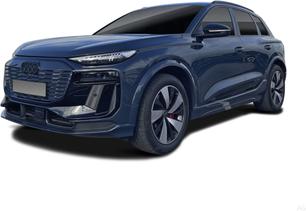
Sharing the same Volkswagen Group PPE platform as its main rival, the Porsche Macan 4S, the newly launched Audi SQ6 e-tron has promised both efficiency and performance.
Is it a combination that can be achieved in real life? My family of three have been testing it out this week to find out for you.
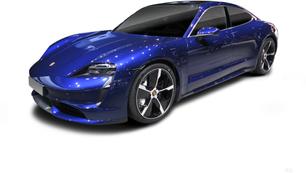
Can you believe Porsche’s Taycan has been on sale in Australia for three and a half years?
Well, it has, which means the mid-life refresh clock has struck 12 for this ground-breaking pure-electric performance sedan and wagon.
Porsche says it’s faster in a straight line… and to charge, with more power and an extended range. It’s also been refreshed cosmetically, the dynamics have been tweaked and the standard features list has been lengthened as prices have gone up.
We’re ready to share our first impressions review, so stay with us to see if the new Taycan keeps the Porsche flame burning in an increasingly electrified automotive world.
When it comes to a performance electric SUV, the Audi SQ6 e-tron is a fine example and showcases a masterclass in design. It drives and handles beautifully, even if it’s not as fun as I expected.
The technology looks amazing and I'm sure the little bumps we experienced will be ironed out with a software update.
The SQ6 will suit a smaller family best but the decent driving range and fast charging capabilities means regional families might like it too.
Porsche says its Taycan models have always been performance-focused and this updated version is even faster than the car it replaces, in a straight line and point-to-point. It’s better equipped, more efficient, and yes, more expensive but every millimetre a Porsche in the way this EV sedan and wagon package has been executed.
It’s an impressive car likely to appeal to Porsche newcomers rather than traditionalists, although you may already have other Porsches in the garage. But with the Macan EV landing any minute and the pure-electric 718 Boxster and Cayman just around the corner it's a key part of the changing face of this iconic German brand.
Note: CarsGuide attended this event as a guest of the manufacturer, with travel, accommodation and meals provided.
The SQ6 has a distinct look compared to the other mid-size SUVs in Audi’s stable with panelling that lacks some of the severe pleating of its cousins, instead incorporating swoopy lines and a more pronounced moulding around the base of the car.
The sporty S styling is seen in the large 21-inch alloy wheels and red calipers but the customisable light designs inside and out really make this stand out.
The interior is sumptuously styled with Nappa leather and suede upholstery and trims, and sports front seats, while the use of displays in the dashboard makes the SQ6 feel like a spaceship.
However, the main panel curves towards the driver and it still feels accessible and intimate for a cockpit. The cabin looks as expensive as what you’d want it to look like at this price point.
Porsche has freshened up the Taycan’s front and rear end, the nose losing the vents dropping down from the headlights as previewed by the original Mission E Concept in 2015.
Matrix LED headlights are standard with high-resolution HD available. But there are no major sheet metal changes to the bulk of the car. And why would you fiddle with it? The drag coefficient is an ultra-slippery 0.22.
Around the back the Porsche logo in the rear light strip has been given a cool three-dimensional treatment al la the 911, Panamera and other current Porsches. And if you have eyes for the Turbo or Turbo S the brand’s glamorous ‘Turbonite’ metallic silver colour is now available.
Inside is a screen-rich environment with a three-dial digital version of the brand’s five-dial instrument cluster customisable through roughly 5000 configurations and there’s a new multimedia software interface for the central screens with additional functions. A passenger display is a $2860 option.
The cabin's primary objective seems to be one of passenger comfort. Everything you touch feels soft under hand and while seat padding is on the firmer side, all but the rear middle seat is comfy on a longer journey because of their extra functions.
The rear-row back rest has two recline positions and the seat beds offer long under-thigh support. The middle seat bulges up, and coupled with the compromised legroom, it won't be a nice seat for an adult.
The front row offers the best legroom and there is enough space in the rear for my six foot three brother to squeeze into (somehow) but I wouldn't want to be in the rear for a longer journey if you're super tall.
Access is good for each row with wide door apertures and seats that aren't positioned too high. There will be no groans getting in and out of the SQ6.
Up front the glovebox and middle console shoulder most of the storage burden but there is a handy flip-down drawer at the driver's knee for a wallet and a centre console with the charging stuff but it is an awkward space that could have been better utilised. Things tend to move around in there if not secured.
In the rear there are a couple of net map pockets, storage bins and a total of four drink holders but that's about it. The other amenities back there soften the lack of storage options as you get directional air vents, climate control, heated outboard seats and a couple of USB-C ports.
The technology on a whole looks amazing and the touchscreen multimedia display is responsive and logically laid out. You'll be able to figure it out quickly and I like that important functions, like climate control, and shortcuts are pinned to the screen as it makes it easier to access them when on the go. The Audi voice assistant can be activated by 'Hey Audi' if you don't want to fiddle with screens on the road.
The wireless Apple CarPlay was simple to set up but at the beginning of the week it did tend to get booted whenever the climate or massage functions were activated. This was annoying as you'd have to reselect CarPlay and jump back into whatever app you were in and when you're using the Map app, it feels disjointed. However, this sorted itself out by the end of my week.
On the whole, all the screens and their functions are user friendly but there were a couple of gremlins that needed a car restart to fix. Randomly, my volume became useless and the touchpad/buttons on the steering wheel stopped working.
I do like a normal button over touchpad controls as I find them more responsive but the touchpad controls on the driver's door were really easy to use and I like the family-friendly option of being able to individually apply the child-lock to the rear doors.
Rounding out the cabin is the large 526L boot which offers a level loading space and the ability to adjust the height via the adaptive S air-suspension from buttons in the rear.
The rear row has a 40/20/40 split, which opens up storage options again and there is a deep under-floor storage pocket that houses the tyre repair kit. A handsfree-powered tailgate comes standard, which I always appreciate and the massive frunk (64L) takes care of all of the cable storage.
At nearly 5.0m long and 2.0m wide but less than 1.4m tall the Taycan is a low-slung large sedan.
In the front of the Taycan I’ve got plenty of breathing space, lots of headroom and enough shoulder room and you don’t feel cramped relative to the co-pilot.
In terms of storage, there are pockets in the doors with room for bottles, a couple of cup and bottle holders in the centre console as well as a tray under the flying buttress type upper console section.
A lidded box between the seats housing a couple of USB-C outlets and a 12-volt socket is handy and there’s a decent-size glove box on the passenger side.
Interestingly, an in-car video function enables video streaming on the central display (while the vehicle is stationary) and the passenger display at any time with the vision hidden from the driver by a lenticular-style screen.
In the back, sitting behind the driver’s seat, set for my 183cm position, I have ample legroom and space for my feet. Problem is my head hits the roof solidly, even with the extra room afforded by the panoramic glass insert, which is a no-cost option from the Taycan 4S up.
Standard configuration is two rear seat positions, although a ‘4+1’ set up which adds an occasional centre rear position is optionally available. Trust me, that’s tight.
On the upside you have adjustable ventilation for the rear seat passengers (climate control zones on the Turbo grades) with a small oddments shelf below them, slots in the doors for bottles and two more cup or bottle holders in the fold-down centre armrest.
No map pockets on the front seat backs, so while there’s some room for storage it’s not exactly over supplied in that department, or for breathing space in general.
Boot space is relatively modest at 366 litres in the sedan but the 60/40 split-folding rear seat liberates more space if required. The Cross Turismo wagon offers 405 litres and a much larger load aperture for greater flexibility. An 84L frunk sits in the nose of all Taycans.
Interesting to note Taycans in other markets boast an extra 41L of boot space. It doesn’t feature here because Porsche Australia has made the high-end Bose sound system standard and its sub-woofer eats into available capacity.
A power boot lid or tailgate and auto self-levelling to maintain the car’s ride height under load is standard but there’s no spare tyre of any description. A repair/inflator kit is your only option, which is less than ideal.
The launch of the flagship SQ6 e-tron brings the Q6 line up to three before a high-performance RS hits our shores sometime in the future. However, this new variant is priced at $151,400 before on-road costs and that's a hike of $28,900 over the mid-spec Q6 e-tron quattro.
Is it worth the jump? Mostly because this model has almost every feature that is found as an at-cost extra or pack for the other variants but it does miss out on a ventilation function for the front seats and at this stage Audi is saying it's not available to add, which is odd for a top model grade.
With the motor outputs and performance tweaks, the SQ6 competes in the world of the Porsche Macan 4S as they are mechanically related but you can pick up the 4S for $149,300 MSRP and the SQ6 can't match it's torque output of 820Nm.
The most exciting thing about the Q6 range in general is the technology and the SQ6 is no different. The dashboard is a visual feast for the eyes with a 14.5-inch multimedia display, an 11.9-inch digital instrument cluster, and a 10.9-inch touchscreen for the front passenger.
There is wired/wireless Apple CarPlay and Android Auto, built-in satellite navigation and because the system is run by Android Automotive there are a whole bunch of downloadable apps like Spotify, YouTube and Amazon Alexa voice assistant on top of the connected Audi App. These apps are accessible from the passenger display, which means they can scroll the news or watch a video on a longer trip.
There is also the upgraded 3D Bang & Olufsen surround sound system, a colour augmented reality head-up display (the screen is basically a dynamic 3D setup) and three-zone climate control.
Charging is taken care of with four USB-C ports (2/2), a 12-volt socket that moonlights as an actual cigarette lighter (complete with an nearby ashtray) and a wireless charging pad with its own 'arm' that secures your phone.
The LED lights at the rear can be customised with different light signatures which are downright cool and the front LED lights also have animated individual pixels that do a little light show when you turn on the car (to the delight of my child).
Other highlights include front sports seats with heat and massage functions, wine-red Nappa leather upholstery and black suede trims, a heated steering wheel, panoramic sunroof, heated rear outboard seats, and a handsfree powered tailgate.
Audi also includes three charging cables and a one-year subscription for Chargefox public charging stations for free, as well as installing an at-home 7kW charger, which is a nice way of making a new owner feel valued.
Cost-of-entry to the Taycan club stretches from close to $174,500, before on-road costs, for the entry-grade, single-motor RWD model to just under $373,600 for the flagship dual-motor AWD Turbo S. That’s an increase of between 2.7 and 6.6 per cent, varying by model.
MSRP - correct at time of publication
The heavy-hitting Taycan Turbo GT is scheduled to arrive in the third quarter of this year at $416K, and we’ll no doubt see a sporty GTS variant within the next 12-to-18 months.
That price spread for the new Taycan pitches the Porsche against the likes of Audi’s closely related e-tron GT and RS GT, BMW’s three-tier i5 line-up and the Mercedes-Benz EQE sedan.
Highlight spec additions include ambient lighting, soft-close doors and an ‘Intelligent Range Manager’ which uses the nav and onboard systems to optimise energy use.
The ventilation system now features a heat pump which compresses outside air to heat the cabin and wireless charging is included across the board.
Then tip in adaptive cruise control, a head-up display, lane change assist, surround camera view (with ‘Active Parking Support’), rear side airbags and digital radio.
The base model picks up adaptive air suspension, alloy door sill protectors and a bigger, lighter battery.
That’s on top of a laundry list of non-safety or performance related inclusions like auto matrix LED headlights, dual-zone climate control, 14-way electrically adjustable heated front seats (with memory), partial leather trim, privacy glass, 10.9-inch central multimedia display, configurable digital instrument panel, 14-speaker/710W Bose audio (with digital radio), Apple/Android connectivity, an auto tailgate and more.
While, depending on model, higher grades collect extra standard gear ranging from bigger rims and full leather interior to a panoramic glass roof and ventilated seats.
Not bad, even in this elevated part of the market.
The SQ6 is a fully electric all-wheel drive and has two motors, one located on each axle. Together they produce up to 380kW of power and 580Nm of torque, which means this can do a 0-100km/h sprint in just 4.3 seconds when the launch control is activated.
There are three regenerative braking levels and a one-pedal mode which can be selected by sliding the gear-selector into 'B' otherwise the other two modes can be selected via the paddles on the steering wheel. You'll get the best efficiency when B is selected but it does take a beat to get used to and if you time your stops right, it can function as a proper one-pedal action.
The entry-level single-motor RWD Taycan features a new electric motor that’s 10kg lighter and seven per cent more powerful but more notably produces 22 per cent more torque than the unit it replaces.
Both it and the additional motor fitted to the front axle of AWD models are permanent magnet synchronous units with outputs up across the range, the Turbo S producing a stonking 700kW and more than 1100Nm.
That 700kW peak number for the Turbo S comes courtesy of an ‘overboost’ function with Launch Control. And Taycan models equipped with the Sport Chrono package and the Performance Battery Plus have up to an extra 70kW courtesy of a 10sec push-to-pass button.
There’s a two-speed transmission on the rear axle and a single-speed on the front of AWD variants.
The SQ6 has a lithium-ion battery with a large 100kW capacity and can accept up to 270kW on DC power, which is excellent. There are two Type 2 charging ports (on either side of the car) and one has a CCS enhancement which means you can charge this from 10 to 80 per cent capacity in as little as 21 minutes on a 270kW ultra-rapid DC charger.
It is more common to see a 50kW DC charger though and that charge time sits closer to an hour and 20 minutes.
On a home 7.4kW charger, you'll get the same percentage after 15 hours, perfect for an overnight recharge.
With a claimed WLTP driving range of up to 568km and energy consumption between 17.5 and 18.6kWh/100km, the daily commute and odd family road trip is more than covered with this model.
My average consumption popped out at 18.1kWh based on the trip computer and that’s a good result for how hard I’ve pushed it over country roads, in the city and on the highway.
The Taycan runs 800-volt electric architecture which means it can charge at up to 320kW on a DC fast-charger which is 50kW more than its predecessor. In fact, charging at more than 300kW for up to five minutes is possible.
You’re looking at a 10-80 per cent charge in 18min on a fast charger which is down from 37min. It’s 46min on a more typical 120kW charger.
An 89kWh lithium-ion battery is standard on the entry-grade Taycan. It boasts a nickel, cobalt, manganese cell chemistry which Porsche says delivers high energy content, lower internal resistance and higher charge and discharge currents. And it’s 9.0kg lighter.
All models above it feature the 105kWh ‘Performance Battery Plus’, a roughly $12K option on the base car.
Maximum AC charging capacity is 11kW and you’re staring down the barrel of nine hours for a 0-100 per cent fill of the smaller battery and 11 hours for the performance battery pack.
Official energy consumption on a combined urban, extra-urban cycle varies from 17.1kWh/100km for the single motor Taycan to 17.8kWh for dual-motor variants.
On the launch drive program, covering mainly rural B-roads on Tasmania’s east coast, we cycled through all models on offer and recorded a best figure of 21.5kWh/100km for the single-motor Taycan up to 22.0kWh for the Turbo S. Not bad.
Claimed range is 566km for the entry-grade Taycan, up to 626km for dual-motor models.
Interestingly, on 4WD models the - front electric motor can electronically decouple more frequently to improve efficiency.
Outside of the initial acceleration thrill, I have to say that the SQ6 sort of drives like a lot of the other Audi SUVs I’ve sampled. Which is fine because it’s dynamic and handles beautifully on the highway or city but it’s just not as fun as what I was hoping it would be. The power will satisfy everyone though.
The different driving profiles and adaptive S air suspension really personalises the on-road experience when you want it and my favourite profile is Dynamic as the suspension and steering feels more performance focused, which I prefer.
Ride comfort is up there with the best and you won’t really be bothered by the bumps in the road, even with the stiffer suspension, but road noise does creep in at higher speeds.
The visibility all round is good despite thicker pillars but the rear visibility is narrow even before a car seat or passengers are back there. A digital rearview mirror would have been handy here.
Just something interesting to note is that when you accelerate from a full stop, there can be a small lurch as if it’s rolled backwards or the brakes have held a tad too long. It’s so quick when it happens that it’s not annoying but it is noticeable in stop/start traffic.
The SQ6 is really simple to park and navigating small car parks feels like a dream. The dimensions are forgiving and the 360-degree camera system is top notch.
Full disclosure. My preference when it comes to Porsche propulsion is pistons in cylinders; ideally six of them, horizontally opposed.
But if the Taycan is on your shortlist you’re ready to move past internal combustion and there is no doubt this car is properly quick.
The entry-level RWD model accelerates from 0-100km/h in 4.8sec (0.6 faster than the outgoing model) with the Taycan Turbo S at 2.4sec which is hypercar fast.
Porsche admits to having played around with some dual-clutch transmission-type mimicry along the lines of the Hyundai Ioniq 5 N. But the boffins in Zuffenhausen left that to one side due to concerns over compromise to the car’s point-to-point ability. Porsche seemingly can’t entertain anything that makes a car slower.
It did, however, install a push-to-pass function on dual-motor versions which gives you a 10-second burst of extra performance which is fun.
Suspension is by forged alloy double-wishbone front and rear with some extra links at the back.
Adaptive air suspension is standard across the range, and ‘Active Ride’ is fitted to the upper variants which takes things one step further.
And it does ride very nicely. The launch drive covered second-class, coarse-chip B-road type surfaces and the Taycan smooths the road out beautifully.
Standard wheel diameter is 19-inch for the entry-grade, 20s for the 4S and Turbo, then 21s on the Turbo S. The cars on the launch program all featured 21-inch rims shod with Goodyear Eagle F1 or Michelin Pilot Sport 4 rubber and even on those big wheels the car still rides well.
In terms of the steering… hey, it’s a Porsche. It’s fantastic. Accurate and direct without being too jerky or snappy. It does exactly what you want the car to do. The connection with the front tyres feels like it’s almost direct.
This car may be lighter than its predecessor but all models are over 2.0 tonnes so you’d expect it to be heavy and slow. It’s not. Point and accelerate through corners with supreme confidence. It’s beautifully balanced. What you’d expect from a Porsche performance car.
Physical braking is by big ventilated discs all around with six-piston aluminium monobloc fixed-calipers at the front and four-piston units at the rear. Suffice it to say they wash off speed effectively.
Believe it or not the Turbo S’s front brake calipers contain no less than 10 pistons, clamping ceramic composite rotors. We gave all Taycan variants a solid workout on the Baskerville Raceway just north of Hobart and stopping power felt as strong and effective at the end of the session as it did at the start.
There’s also improved recuperation capacity for the regenerative braking system, up 30 per cent from 290 to 400kW.
In terms of miscellaneous observations, beware the 11.7m turning circle. What might appear to be a three-point turn situation often turns into a five-pointer.
And entry to cars fitted with Active Ride is made easier (when activated). As soon as a door is opened, the body raises by 55mm. May seem OTT but it makes life with the Taycan that bit better.
The SQ6 is covered by a maximum five-star ANCAP safety rating from testing done in 2024, and features nine airbags which includes side chest airbags for the second row but it’s more common to see those just on the first row so it's nice to see on a family car.
There’s a host of safety equipment included but standouts are the emergency call capability, and safe exit assist which will delay your door from opening if it detects a car or cyclist which is a handy feature if you have a kid that throws open their door like mine.
Other equipment includes driver attention warning and alert, blind-spot monitoring, tyre-pressure monitoring, intelligent seatbelt warning, adaptive cruise control with stop/go function, lane departure warning, lane keeping assist, emergency lane keeping, park assist, front/rear parking sensors, 360-degree camera system, rear cross-traffic alert, and traffic sign recognition.
There is auto emergency braking (AEB) with forward collision warning, car, pedestrian, cyclist and junction turning assist which is operational from to five to 250km/h.
There are ISOFIX child seat mounts on the rear outboard seats and three top-tether anchor points but two seats will fit best. Front passenger space might get cosy when a rearward facing child seat is installed but I had no issue fitting my big booster seat this week.
Although Porsche and ANCAP do not intersect at this stage the Taycan ticks just about every active (crash avoidance) safety box in the book.
The highlights are AEB (including pedestrian detection), 'Intersection Assist', 'Lane Keeping Assist' and adaptive cruise control (with ‘Swerve & Turn Assist’). There’s also a high-def reversing camera, a surround view set-up, lane-change assist and a head-up display.
If a crash is unavoidable there are 10 airbags onboard (dual front and front side, driver and front passenger knee, rear side and full-length curtains) as well as an active bonnet to minimise injuries in a pedestrian impact and multi-collision brake minimises the chances of subsequent collisions following an initial crash.
There are two top tethers and two ISOFIX anchors for baby capsules and/or child seats across the second row.
The SQ6 is covered by Audi’s five-year/unlimited kilometre warranty and the battery is covered by an eight-year or up to 160,000km warranty, which are all standard terms for the class.
Audi also offers six years of complimentary roadside assistance and a servicing program for six years that costs $2080, which is competitive, and servicing intervals are at every two years or 30,000km.
Audi includes the installation of a 7.4kW AC home charger, three charging cables and a one-year Chargefox public charging subscription with this model.
Porsche covers the Taycan with a three-year, unlimited km warranty which is off the pace for the premium segment where five years, unlimited km is the norm. The high-voltage drive battery is covered by an eight-year, 160,000km warranty. The paint is covered for three years and a 12-year (unlimited km) anti-corrosion warranty is included.
Porsche Roadside Assist provides 24/7/365 coverage for the life of the warranty, and after the warranty runs out is renewed for 12 months every time the vehicle is serviced at an authorised Porsche dealer.
Thanks to fewer moving parts, servicing intervals for the Taycan are relatively lengthy at two years or 30,000km, whichever comes first.
With Porsche, final costs are determined at the dealer level (in line with variable service labour rates by state/territory).