What's the difference?
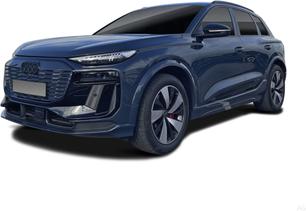
Sharing the same Volkswagen Group PPE platform as its main rival, the Porsche Macan 4S, the newly launched Audi SQ6 e-tron has promised both efficiency and performance.
Is it a combination that can be achieved in real life? My family of three have been testing it out this week to find out for you.
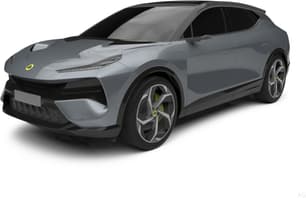
This is a Lotus - but it’s not like any Lotus you’ve ever known.
In fact, forget everything you know about Lotus, the British brand previously famous for small, lightweight sports cars is now evolving into something very different. Very, very different.
Under the control of Chinese automotive giant Geely since 2017, Lotus will shed its past and focus its future on all-electric, luxury vehicles like the Eletre we’re testing here.
The Eletre is a full-size luxury electric SUV designed to take on the likes of the Audi SQ8 e-tron, BMW iX and Mercedes-AMG EQE on the electric side, while also trying to lure buyers away from the likes of the Bentley Bentayga and Lamborghini Urus.
So, how does this radically different Lotus measure up to the brand’s reputation and stack up against its would-be competitors? Read on to find out…
When it comes to a performance electric SUV, the Audi SQ6 e-tron is a fine example and showcases a masterclass in design. It drives and handles beautifully, even if it’s not as fun as I expected.
The technology looks amazing and I'm sure the little bumps we experienced will be ironed out with a software update.
The SQ6 will suit a smaller family best but the decent driving range and fast charging capabilities means regional families might like it too.
So, how does this radically different Lotus measure up to the brand’s reputation and stack up against its would-be competitors in the final summation? It doesn’t reset the benchmark in any area or stand out head and shoulders above its competition, but crucially for Lotus (and its overlords at Geely) it doesn’t feel behind its rivals.
For the Lotus diehards this is an unrecognisable addition to the brand’s legacy of great sports cars. But this new version of the brand is looking to reach fresh customers and the Eletre will likely grab their eye with its dramatic looks.
It’s a highly competitive luxury, performance SUV that should have anyone considering a similar sized Bentley, BMW, Mercedes, or even the Lamborghini taking it for a test drive. It has both elements - luxury and performance - that will appeal to those looking for something special.
The SQ6 has a distinct look compared to the other mid-size SUVs in Audi’s stable with panelling that lacks some of the severe pleating of its cousins, instead incorporating swoopy lines and a more pronounced moulding around the base of the car.
The sporty S styling is seen in the large 21-inch alloy wheels and red calipers but the customisable light designs inside and out really make this stand out.
The interior is sumptuously styled with Nappa leather and suede upholstery and trims, and sports front seats, while the use of displays in the dashboard makes the SQ6 feel like a spaceship.
However, the main panel curves towards the driver and it still feels accessible and intimate for a cockpit. The cabin looks as expensive as what you’d want it to look like at this price point.
The design of an electric SUV is, by its very existence, interesting as it’s something a Lotus has never been before. This is the brand’s new flagship SUV, designed to take on the likes of everything from the Bentley Bentayga to the BMW iX and even the Lamborghini Urus, so it needs to make a statement.
The design is influenced by the Evija electric hypercar, which Lotus built to kick-start its Geely era, but goes a step further with its angular design. It certainly looks more closely related to the Lamborghini SUV than any Lotus you’ve seen before.
It’s different, it looks special and will likely turn heads, but to be blunt, if you’re a Lotus lover who has an affection for the Elise, Exige and the like then this really isn’t for you.
This is a modern evolution for Lotus, created to appeal to new customers with its edgy exterior design, utterly modern interior look and premium finish.
One disappointment is the way the plethora of safety sensors and cameras can disturb the lines of the car, making it look like an unfinished prototype from some angles.
The cabin's primary objective seems to be one of passenger comfort. Everything you touch feels soft under hand and while seat padding is on the firmer side, all but the rear middle seat is comfy on a longer journey because of their extra functions.
The rear-row back rest has two recline positions and the seat beds offer long under-thigh support. The middle seat bulges up, and coupled with the compromised legroom, it won't be a nice seat for an adult.
The front row offers the best legroom and there is enough space in the rear for my six foot three brother to squeeze into (somehow) but I wouldn't want to be in the rear for a longer journey if you're super tall.
Access is good for each row with wide door apertures and seats that aren't positioned too high. There will be no groans getting in and out of the SQ6.
Up front the glovebox and middle console shoulder most of the storage burden but there is a handy flip-down drawer at the driver's knee for a wallet and a centre console with the charging stuff but it is an awkward space that could have been better utilised. Things tend to move around in there if not secured.
In the rear there are a couple of net map pockets, storage bins and a total of four drink holders but that's about it. The other amenities back there soften the lack of storage options as you get directional air vents, climate control, heated outboard seats and a couple of USB-C ports.
The technology on a whole looks amazing and the touchscreen multimedia display is responsive and logically laid out. You'll be able to figure it out quickly and I like that important functions, like climate control, and shortcuts are pinned to the screen as it makes it easier to access them when on the go. The Audi voice assistant can be activated by 'Hey Audi' if you don't want to fiddle with screens on the road.
The wireless Apple CarPlay was simple to set up but at the beginning of the week it did tend to get booted whenever the climate or massage functions were activated. This was annoying as you'd have to reselect CarPlay and jump back into whatever app you were in and when you're using the Map app, it feels disjointed. However, this sorted itself out by the end of my week.
On the whole, all the screens and their functions are user friendly but there were a couple of gremlins that needed a car restart to fix. Randomly, my volume became useless and the touchpad/buttons on the steering wheel stopped working.
I do like a normal button over touchpad controls as I find them more responsive but the touchpad controls on the driver's door were really easy to use and I like the family-friendly option of being able to individually apply the child-lock to the rear doors.
Rounding out the cabin is the large 526L boot which offers a level loading space and the ability to adjust the height via the adaptive S air-suspension from buttons in the rear.
The rear row has a 40/20/40 split, which opens up storage options again and there is a deep under-floor storage pocket that houses the tyre repair kit. A handsfree-powered tailgate comes standard, which I always appreciate and the massive frunk (64L) takes care of all of the cable storage.
The modern and premium design carries over into the cabin, with the model we were testing finished in grey leather and Alcantra with gold highlights. Which, along with the fact there’s leather and carpet inside, makes this feel more polished and luxurious than any previous Lotus.
But once you look beyond that you notice it’s not quite as practical as such a large SUV could be. Yes, there are a couple of cupholders in the centre console, but one is quite small and not practical for most cups/bottles.
There’s a small shelf for the wireless smartphone charging pad and the centre console box, but aside from that, there’s no other significant storage space in the front.
On the plus side the seats are comfortable and supportive, which is also true of those in the rear. The space in the rear is excellent, with plenty of head and knee room that will allow four adults to travel in comfort (adding a fifth to the middle seat would be a squeeze).
Those in the back also get access to the small screen that allows them to adjust not only the climate control but also the front seats. The rear seats also recline and there’s a pair of cupholders and USB-C ports.
The Lotus Eletre has a generous 688-litre boot, which is wide and deep. However, it comes at the expense of a spare tyre, with only a puncture repair kit provided.
The launch of the flagship SQ6 e-tron brings the Q6 line up to three before a high-performance RS hits our shores sometime in the future. However, this new variant is priced at $151,400 before on-road costs and that's a hike of $28,900 over the mid-spec Q6 e-tron quattro.
Is it worth the jump? Mostly because this model has almost every feature that is found as an at-cost extra or pack for the other variants but it does miss out on a ventilation function for the front seats and at this stage Audi is saying it's not available to add, which is odd for a top model grade.
With the motor outputs and performance tweaks, the SQ6 competes in the world of the Porsche Macan 4S as they are mechanically related but you can pick up the 4S for $149,300 MSRP and the SQ6 can't match it's torque output of 820Nm.
The most exciting thing about the Q6 range in general is the technology and the SQ6 is no different. The dashboard is a visual feast for the eyes with a 14.5-inch multimedia display, an 11.9-inch digital instrument cluster, and a 10.9-inch touchscreen for the front passenger.
There is wired/wireless Apple CarPlay and Android Auto, built-in satellite navigation and because the system is run by Android Automotive there are a whole bunch of downloadable apps like Spotify, YouTube and Amazon Alexa voice assistant on top of the connected Audi App. These apps are accessible from the passenger display, which means they can scroll the news or watch a video on a longer trip.
There is also the upgraded 3D Bang & Olufsen surround sound system, a colour augmented reality head-up display (the screen is basically a dynamic 3D setup) and three-zone climate control.
Charging is taken care of with four USB-C ports (2/2), a 12-volt socket that moonlights as an actual cigarette lighter (complete with an nearby ashtray) and a wireless charging pad with its own 'arm' that secures your phone.
The LED lights at the rear can be customised with different light signatures which are downright cool and the front LED lights also have animated individual pixels that do a little light show when you turn on the car (to the delight of my child).
Other highlights include front sports seats with heat and massage functions, wine-red Nappa leather upholstery and black suede trims, a heated steering wheel, panoramic sunroof, heated rear outboard seats, and a handsfree powered tailgate.
Audi also includes three charging cables and a one-year subscription for Chargefox public charging stations for free, as well as installing an at-home 7kW charger, which is a nice way of making a new owner feel valued.
The Eletre is one of many electric vehicles to fall victim to the fluctuating market, receiving an enormous price cut before it officially went on sale in Australia.
The range was meant to start at $239,000, but the decision makers changed their minds and slashed it by a whopping $49,100 so the ‘entry-level’ Eletre is priced from $189,900, plus on-road costs.
The Eletre S, which is the subject of this review, also received a major price cut, dropping to $229,990 from its original $269,000, while the range-topping Eletre R is now priced from $279,990 rather than $315,000 as first announced by the brand.
As for what you get for that money, the Eletre comes standard with a range of premium equipment, befitting Geely’s aspirations for the Lotus brand. This includes matrix LED headlights, two-tone paint with a black contrasting roof, 20-inch alloy wheels, air suspension, keyless entry and start, a key card with NFC (Near-Field Communication) function, four-zone climate control, eight-way power adjustable front seats and heated front seats.
There’s also a KEF premium sound system, in-built eSIM card with 5G capability, a wireless charging pad as well as a 12.6-inch digital instrument panel and a 15.10-inch OLED central multimedia screen.
Stepping up to the Eletre S adds more goodies including 22-inch 10-spoke alloy wheels, an 'Active Aero Pack', 64-colour ambient lighting, automatic parking assist and a 23-speaker KEF 3D surround sound system.
At the top of the range, the Eletre R gets a more potent dual-motor powertrain, two-speed transmission, unique 22-inch alloys and a 'Quartz' interior theme.
The SQ6 is a fully electric all-wheel drive and has two motors, one located on each axle. Together they produce up to 380kW of power and 580Nm of torque, which means this can do a 0-100km/h sprint in just 4.3 seconds when the launch control is activated.
There are three regenerative braking levels and a one-pedal mode which can be selected by sliding the gear-selector into 'B' otherwise the other two modes can be selected via the paddles on the steering wheel. You'll get the best efficiency when B is selected but it does take a beat to get used to and if you time your stops right, it can function as a proper one-pedal action.
As mentioned earlier, there are three Eletre models, with the base model and S sharing the same powertrain, while the R gets a unique set-up.
The Eletre and Eletre S punch out a very healthy 450kW/710Nm from the dual motors that provide all-wheel drive traction. Despite being a full-size SUV, the two 450kW models are able to run 0-100km/h in only 4.5 seconds.
The Eletre R gets more powerful motors that make a staggering 675kW/985Nm, and crucially also get a two-speed transmission, which helps with acceleration. Lotus claims it has enough performance for the Eletre R to launch from 0-100km/h in just 2.9 seconds, a hugely impressive time for such a big and luxurious vehicle.
The SQ6 has a lithium-ion battery with a large 100kW capacity and can accept up to 270kW on DC power, which is excellent. There are two Type 2 charging ports (on either side of the car) and one has a CCS enhancement which means you can charge this from 10 to 80 per cent capacity in as little as 21 minutes on a 270kW ultra-rapid DC charger.
It is more common to see a 50kW DC charger though and that charge time sits closer to an hour and 20 minutes.
On a home 7.4kW charger, you'll get the same percentage after 15 hours, perfect for an overnight recharge.
With a claimed WLTP driving range of up to 568km and energy consumption between 17.5 and 18.6kWh/100km, the daily commute and odd family road trip is more than covered with this model.
My average consumption popped out at 18.1kWh based on the trip computer and that’s a good result for how hard I’ve pushed it over country roads, in the city and on the highway.
Despite the different powertrains, all three Eletre models have the same 111kWh battery but the driving range varies across each one.
The entry-grade model has a claimed WLTP range of between 535-600km, the Eletre S drops to 490-535km and the Eletre R can travel between 410-450km on a single charge.
On test we found those claims to be optimistic, certainly on the higher end, and especially if you head out of the urban environment and don’t maximise the regenerative braking to keep the battery topping up.
Outside of the initial acceleration thrill, I have to say that the SQ6 sort of drives like a lot of the other Audi SUVs I’ve sampled. Which is fine because it’s dynamic and handles beautifully on the highway or city but it’s just not as fun as what I was hoping it would be. The power will satisfy everyone though.
The different driving profiles and adaptive S air suspension really personalises the on-road experience when you want it and my favourite profile is Dynamic as the suspension and steering feels more performance focused, which I prefer.
Ride comfort is up there with the best and you won’t really be bothered by the bumps in the road, even with the stiffer suspension, but road noise does creep in at higher speeds.
The visibility all round is good despite thicker pillars but the rear visibility is narrow even before a car seat or passengers are back there. A digital rearview mirror would have been handy here.
Just something interesting to note is that when you accelerate from a full stop, there can be a small lurch as if it’s rolled backwards or the brakes have held a tad too long. It’s so quick when it happens that it’s not annoying but it is noticeable in stop/start traffic.
The SQ6 is really simple to park and navigating small car parks feels like a dream. The dimensions are forgiving and the 360-degree camera system is top notch.
The challenge for Lotus, and its competitors, is to make its cars stand out from the pack despite the increasing similarities in performance brought on by electric powertrains.
Whereas in the past we could have assessed the difference between a Lotus-built V8 compared to a BMW manufactured V8 or even a Mercedes-Benz V12, these days all the electric models produce the same quiet, effortless punch.
So, it creates a generic driving experience in some regards, when what you’re hoping for at this end of the market is something special and different. And it’s important to note I don’t use the term ‘generic’ in a negative sense, but simply the Eletre has similar driving characteristics to the electric models from BMW, Mercedes-AMG and others.
Where it does give a hint to Lotus’ heritage is in its handling, where the combination of the air suspension with adaptive dampers, torque vectoring (by braking) and the British brand’s decades of experience combine to create a surprisingly direct and responsive SUV.
You won’t mistake it for an Emira, Exige or Elise, but the Eletre does have dynamic ability a cut above your average luxury SUV.
The SQ6 is covered by a maximum five-star ANCAP safety rating from testing done in 2024, and features nine airbags which includes side chest airbags for the second row but it’s more common to see those just on the first row so it's nice to see on a family car.
There’s a host of safety equipment included but standouts are the emergency call capability, and safe exit assist which will delay your door from opening if it detects a car or cyclist which is a handy feature if you have a kid that throws open their door like mine.
Other equipment includes driver attention warning and alert, blind-spot monitoring, tyre-pressure monitoring, intelligent seatbelt warning, adaptive cruise control with stop/go function, lane departure warning, lane keeping assist, emergency lane keeping, park assist, front/rear parking sensors, 360-degree camera system, rear cross-traffic alert, and traffic sign recognition.
There is auto emergency braking (AEB) with forward collision warning, car, pedestrian, cyclist and junction turning assist which is operational from to five to 250km/h.
There are ISOFIX child seat mounts on the rear outboard seats and three top-tether anchor points but two seats will fit best. Front passenger space might get cosy when a rearward facing child seat is installed but I had no issue fitting my big booster seat this week.
Another major change for this new era is massive upgrades in terms of safety technology. The Eletre is packed with an array of cameras and sensors to help you avoid an accident.
There are 34 in total - four Lidar, six radar, seven HD cameras and 12 ultrasonic sensors. This all feeds a raft of features, including 'Highway Assist', which makes the Eletre the first Lotus to drive itself.
However, as part of the price cut, the Lidar hardware is removed from the entry-level model from the MY25 built examples onwards. However, if you option the Highway Assist package, they are fitted again in order for the system to work.
Standard on all Australian models is the 'Lotus Pilot Pack' which includes all the safety items that have become so common in recent years, including adaptive cruise control, autonomous emergency braking, rear cross-traffic alert, blind-spot monitoring, driver monitoring and traffic sign information.
Neither ANCAP nor Euro NCAP have tested the Eletre, as the safety authority rarely tests such expensive vehicles.
The airbag count is seven - front, front side, side curtain and far side (front centre) - and there are three top tether point and two ISOFIX positions for child seats across the second row.
The SQ6 is covered by Audi’s five-year/unlimited kilometre warranty and the battery is covered by an eight-year or up to 160,000km warranty, which are all standard terms for the class.
Audi also offers six years of complimentary roadside assistance and a servicing program for six years that costs $2080, which is competitive, and servicing intervals are at every two years or 30,000km.
Audi includes the installation of a 7.4kW AC home charger, three charging cables and a one-year Chargefox public charging subscription with this model.
As for its ownership credentials, Lotus doesn’t offer capped price servicing, so you’ll need to discuss the on-going maintenance costs for your Eletre.
On the plus side, the new model is covered by a five-year/150,000km warranty for the car, with an eight-year/200,000km warranty for the battery.