What's the difference?
Is 10 years long enough for a special birthday celebration? When you're a kid, hitting 'double figures' is a pretty big deal, and Audi's obviously in the mood to make some noise because it has lit the candles on a limited 10th anniversary version of its compact SUV rocket ship, the RS Q3.
Only 555 examples of the 'RS Q3 Sportback edition 10 years' will be produced for worldwide consumption, with Audi Australia capturing a batch of them and sending one our way for a brief blast as the fiery five-cylinder starts filtering into dealerships.
Zeekr is making waves in Australia at the moment but it's not because of the car you see before you.
Nope, it’s the 7X mid-size SUV that’s captured a heap of attention and a whole lot of sales. In fact, of the 1832 sales the brand has managed over the first three months of 2026, just 54 were for the X.
But that was the old X and this is the new one. With more power, more performance, faster charging and a whole heap of pretty special equipment, especially for the small SUV segment.
So, is that enough to finally put the X on the map?
The Audi RS Q3 Sportback edition 10 years is dynamically brilliant, beautifully finished and surprisingly civilised on day-to-day duty. A polished compact performance package that even in this special 'get-it-while-you-can' guise offers compelling value relative to its direct competitors.
It's a good thing in a small package, this Zeekr X, and there are a lot of things I like about it. In fact, the only sticking point for me is the price. But that's all about perspective. If you see this as a newcomer Chinese brand, then yes, there are a lot of more affordable options out there. But if you see it as a premium player, it's really a more affordable version of a Volvo.
Note: The author, Andrew Chesterton, is a co-owner of Smart As Media, a content agency and media distribution service with a number of automotive brands among its clients. When producing content for CarsGuide, he does so in accordance with the CarsGuide Editorial Guidelines and Code of Ethics, and the views and opinions expressed in this article are solely those of the author.
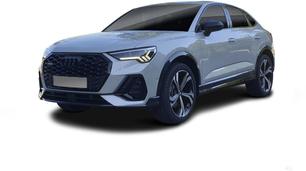
There's a lot going on with the RS Q3's exterior design; a mix of jagged lights, hard character lines, broad haunches and multiple vents surrounding the brand's signature, six-sided grille up front.
The big 21-inch rims fill the arches nicely and the rear features a deep diffuser with fat exhaust finishers poking out either side.
It's a purposeful, macho look and the Sportback edition 10 years is defined by a black package which adds gloss black to the side window trim, front spoiler blade, side blades, rear diffuser and exterior mirrors.
The limited edition is available in two colours, 'Chronos Grey metallic', which is unique to this model and 'Dew Silver matte' which will now be added to the broader RS Q3 colour palette.
Premium performance feels like the dominant theme inside with a typically Audi tech-focused approach including high-quality brushed metal elements, matt carbon inserts and quilted leather trim on the heavily bolstered front seats.
A meticulous attention to detail is obvious and the bottom line is it's all about the driver. A grippy, flat-bottom, leather-trimmed steering wheel looks as good as it feels, sleek screens enhance the racy vibe and the mix of physical and digital controls is sensible.
The visual changes aren’t massive. This AWD version welcomes a couple of new exterior colours, including the 'Matt Khaki Green' of our test car. It also gets the two-tone black roof and there are new 20-inch alloy designs.
Elsewhere, it's the futuristic-style of design we’re used to which differentiates the X from its Volvo EX30 twin under the skin.
Inside, this is a seriously well-equipped and polished-feeling small SUV, and — unlike some of the newcomer brands to Australia — it all feels very high quality and well put together. And that includes the material choices.
I don’t even hate the fact that most of the functions are controlled via this screen, thanks to the little shortcuts glued to the home screen. I do, however, hate the fact that there’s no easy way to change the wing mirrors or shortcuts for toning down some of the safety stuff.
That aside, though, it’s a nice and high-quality feeling space.
Snug but spacious enough, the RS Q3 Sportback's driver and front passenger are provided with plenty of breathing room without upsetting the intimate, performance car feel. Just be prepared for a bit of head-ducking physical origami when folding yourself into either of the heavily bolstered front seats.
Storage includes door bins with room for bottles, two generous cupholders in the centre console, a lidded tray in front of the gearshift (which doubles as the wireless device charging bay), a storage compartment and owners manual holder under the front seats, a modest glove box and an adjustable front centre armrest with storage compartment.
Given this car measures just over 4.5m end-to-end, a close to 2.7m wheelbase is significant and rear room is generous given the Q3's overall footprint. Plenty of head and legroom (for me at 183cm) with enough width for three adults on short journeys. A trio of up to teenage kids will be fine.
The back seat is able to slide for extra legroom (and slightly less boot space), while backrest angle is also adjustable.
Storage runs to small bins in the doors, a fold-down centre armrest (with two pop-up cupholders) and storage nets on the back of the front seats. Directional and temperature control in the rear for the ventilation system is a big plus.
Power and connectivity options run to a 12V outlet and two USB sockets in the front (Type A and C), another two Type C sockets in the back and a second 12-volt jack in the boot.
Speaking of which, cargo volume with all seats up is a handy 530 litres, enough to swallow CarsGuide's three-piece luggage set or large pram (the latter with room to spare) and 1400 litres with the 40/20/40 split-folding rear seat lowered.
The loading lip is low, a stainless steel sill protector helps minimise scuffs and scratches and the hands-free power tailgate is welcome.
If you're keen to hook up the boat or horse float the RS Q3 is able to tow a braked trailer up to 1900kg (750kg unbraked), but don't bother looking for a spare of any description, a repair/inflator kit is your only option. Boo...
You know you're in a small vehicle when you can't fit two large (not those crazy American-style jumbo cups, just normal coffee-shop takeaway) coffees in the cupholders, but so it is with the Zeekr X.
The small SUV's 4432mm length, 1836mm in width and 1566mm height doesn't leave much room to spread out up front. There's ample room for driver and passenger, of course, but we are talking about a small vehicle here.
Clever storage helps to mitigate that, though, especially the super-deep storage space in the centre console and the very clever fridge that separates the driver and passenger seats.
Weirdly, though, the space doesn’t feel overly tight in the back seat. We had a massive baby seat in there, and that fit without issue. And full size humans can genuinely get pretty comfortable. I'm 175cm, and I had enough knee and headroom.
In the boot, there’s 404 litres of volume with the rear seats upright and 1247 litres with them folded flat. And it’s worth pointing out this isn’t intended to be a family car, but there’s certainly enough space for the shopping... and a pram.
The Audi RS Q3 Sportback edition 10 years is priced at $102,900, before on-road costs, which is a $3800 premium over the standard issue version.
For those extra dollars the car is upgraded with specific 21-inch black alloy rims, black badging and brake calipers as well as (three-stage heated) 'RS' Nappa leather-trimmed sports front seats with contrast 'Copper Honeycomb' stitching.
The fancy stitching extends to the Alcantara-trimmed steering wheel and gear lever, the RS floor mats also feature copper highlights and the door downlighting projects a unique rhombus design.
At that money the RS Q3 lines up against BMW's firecracker X3 M40i ($126,800), the ferocious Mercedes-AMG GLA45 S ($121,900) with the Jaguar E-Pace 300 Sport AWD ($84,500) the only other similarly pitched compact performance SUV within $20K of the Audi.
And as well as the performance and safety tech covered later in the review, the RS Q3's standard features list includes, three-zone climate control, adaptive cruise control, keyless entry and start, Nappa leather trim, ambient lighting (with 30 colour choices), an RS sport contour leather-trimmed steering wheel, 12.3-inch digital instrument cluster, 10.1-inch multimedia display (with text and voice control), (wired) Android Auto and Apple CarPlay, sat nav and wireless device charging.
There's also a Bang & Olufsen '3D Sound System' (15-speaker with 680-watt, 16-channel amp), digital radio, 21-inch alloys, electronically-controlled adaptive dampers, auto Matrix LED headlights (with RS-specific darkened trim) and a hands-free power tailgate. And it's worth noting metallic and pearl effect paint finishes are offered at no extra cost.
Pretty impressive. Especially when you consider even this special edition RS Q3 is $20,000 cheaper than its primary BMW and Merc-AMG rivals.
This is a small SUV with a LOT of stuff. There are two trims in the Zeekr X range – the entry-level rear-drive model is $48,900, drive-away, while the all-wheel drive version we've tested is $57,900 on the road.
The obvious comparison is to the Volvo EX30, which shares its platform with the Zeekr X through both brands' Chinese parent company Geely.
As of right now, the cheapest single-motor Volvo is $56,051, drive-away in NSW, or $49,990 plus on-roads, making the Zeekr version much, much cheaper.
Anyway, outside there are 19- or 20-inch alloys, though our test car is fitted with the optional 20-inch black alloys, paired with a black-with-red-highlights interior treatment, which adds $2000 to the price.
Ours is also fitted with the electric front doors which open or close at the push of a button, and back doors that unlatch, but don’t fully open, the same way, which adds another $2000.
Both trims also get heated and cooled front seats, and heating in the rear window seats, but this AWD version also adds a massage function for front seat riders.
There’s also wireless charging, a 13-speaker Yamaha sound system and — very cool, literally — is the little drinks fridge between the front seats in the AWD variant.
Tech is handled by a 14.6-inch touchscreen with Apple CarPlay and Android Auto and there’s a head-up display for the driver.
The RS Q3 Sportback is powered by a 2.5-litre in-line five-cylinder intercooled turbo-petrol engine sending drive to all four wheels via a seven-speed dual-clutch automatic transmission and Audi's quattro permanent all-wheel drive system based on an electronically-controlled multi-plate clutch pack.
Featuring a cast iron block, alloy head, direct-injection as well as variable intake and exhaust cam adjustment, the (EA855) engine features a special firing order (1-2-4-5-3), the odd number of cylinders producing a signature engine sound and exhaust note reminiscent of the 1980s 'Ur' Quattro.
Peak power is 294kW from 5850-7000rpm and maximum torque is 480Nm delivered across a broad plateau from 1950-5850rpm.
The big news here is a more powerful rear motor – meaning you get more grunt whether you opt for the rear-wheel drive or this all-wheel drive.
In rear-drive form, that boosts your outputs from 200kW to 250kW, dropping the sprint to 100km/h to 5.6 seconds. In AWD guise, your new outputs are 365kW (up from 315kW) and 573Nm, and your sprint to 100km/h falls to 3.7 seconds.
Audi's official fuel economy number for the RS Q3 on the combined cycle is 8.9L/100km, the 2.5-litre turbo-petrol five-cylinder engine emitting 204g/km of CO2 in the process. Stop-start is standard.
We covered city, suburban and some freeway running on test, returning an (indicated) average of 9.6L/100km. And that's pretty good, given we pushed on enthusiastically on a reasonably regular basis.
The fuel tank requires 63 litres of 98 RON premium unleaded to fill it which translates to a theoretical range of just over 700km, shrinking to around 650km based on our real-world number.
This is where it starts to get weird. The rear-drive Zeekr X is fitted with a 61kWh LFP battery, which can accept up to 230kW DC fast charging, taking you from 10 to 80 per cent charged in just 18 minutes. Total claimed range is 405km.
The flagship AWD, though, charges at a slower rate. It gets a 66kWh NMN battery and can only be charged at 150kW, meaning the same charge takes 30 minutes. Zeekr is promising a 415km driving range between charges.
It still seems counterintuitive when a high-riding SUV is tuned to perform and handle like a low-slung sports car but here we are. And Audi executes this mystifying transformation as expertly as any carmaker in the automotive world.
Audi says the RS Q3 Sportback will blast from 0-100km/h in 4.5 seconds. Anything under 5.0 seconds is properly fast, and there's nothing quite like the deep-throated bellow of a VW Group in-line five to raise the hairs on the back of your neck.
The RS Q3's sport exhaust system is a dual-branch set-up with exhaust flap control, and people of a certain age will instantly imagine themselves matching it with Ari Vatanen, Walter Röhrl and Michèle Mouton on a suburban special stage behind the wheel of a 1980s Group B Sport Quattro rally car (actually, the school drop off at an infinitely more sensible pace).
The car weighs in at a not insubstantial 1775kg, but 480Nm, available all the way from 1950rpm to 5850rpm, means a near instant surge of fierce acceleration is always lurking under your right foot.
And the VW Group is on the pace when it comes to dual-clutch auto transmissions, from Porsche's 'PDK' and VW's 'DSG' to Lambo's 'DCT' and Audi's 'S tronic'.
The RS Q3's seven-speed unit is quick and positive, the wheel-mounted paddles ramping up the engagement factor.
The variable ratio, electrically-assisted steering is capital G Great. Well weighted and precise with reassuring road feel and the Alcantara trimmed wheel is a nice way to access it all.
Suspension is by struts at the front and multi-links (four) at the rear with adaptive dampers on-board.
Despite running on 21-inch rims, shod with high-performance 255/35 Continental PremiumContact 6 rubber, ride comfort is surprisingly good.
Dial in 'Comfort' mode via the 'Drive Select' system and the impact of even substantial bumps is softened off appreciably.
An ideal set-up would be the first 'RS1' short-cut Drive Select button set for Comfort suspension, with throttle, steering and transmission set to maximum attack and the second 'RS2' mode tweaking the suspension to track-day level, too.
Push on through your favourite set of bends and you can feel the electronic wheel-selective torque control system keeping everything under control. This car puts its power down through sweeping sections with fuss-free authority.
The RS-specific menu in the digital instrument cluster provides extra instrumentation in the shape of a power/torque display, G meter and lap timer. Fun!
The brakes are professional grade with big ventilated rotors all around and aluminium fixed calipers at the front.
But beware, the flip side of the RS Q3's quick steering response is a sizeable 11.8m turning circle. Take your time when parking.
Short answer? Pretty good, with some caveats.
I'm partial to a firmer ride. I find some Chinese car companies can feel like they get their suspension bits from Captain Snooze, such is the soft, pillowy ride served up. And to be honest, it makes me a little seasick at times.
The Zeekr is not like that. It has firmness dialled into the ride equation and can feel harsh at times, but also improves the drive experience, delivering connection and engagement at the cost of some sharpness on the wrong road.
It's also faster than the model it replaces, but it's also one of those cars in which the real-life feeling doesn't quite match the on-paper promise.
This thing serves up supercar speed, but it doesn't feel like it from behind the wheel. Instead, the acceleration - especially from a rolling start - feels potent, but not biblical.
From a standing start it pauses for a moment, almost like an internal-combustion vehicle might, before delivering a quick (but not stratospheric) flow of power. None of that is a bad thing, by the way. Who wants their small SUV to accelerate like a supercar?
It's otherwise an entirely pleasant drive. The cabin is serene and quiet and it's a small car that doesn't feel like one. There's nothing light or tinny about the drive experience, instead there's a heft and quality.
Although the Audi Q3 received a maximum five-star ANCAP score in 2019, the RS Q3 was specifically excluded from the assessment, so it's officially untested.
But the car boasts an extensive active (crash-avoidance) safety suite including, auto emergency braking (AEB) (5.0km/h to 85km/h for pedestrians and cyclists and up to 250km/h for vehicles), adaptive cruise control (with stop-go function and active lane assist), lane change warning and lane departure warning (with lane keeping assist).
There's also 'Attention Assist' (warning tone and visual signal if the system determines the driver's attention may be lapsing), front and rear parking sensors, a reversing camera with 360-degree view, rear cross-traffic alert, tyre pressure monitoring, 'Hill hold assist' and hill descent control.
If, despite all that, a crash is unavoidable there are six airbags on-board (front and side for the driver and front passenger as well as full-length curtains). The RS Q3's showing its (10-year) age here because additional rear side and front centre bags are close to the norm now.
Nice to see a first aid kit and warning triangle included and there are three top tethers and two ISOFIX anchor points for securing baby capsules and child seats across the second row.
The Zeekr X wears a maximum five-star ANCAP safety rating, earned in 2024, which means the long list of required active safety stuff is present and accounted for, all wrapped up in what Zeekr calls its 'Intelligent Driving Assist System'.
There are five cameras, five radars and 12 sensors, which is a crazy number for a car this small.
And this is also not a car in which I was desperately trying to figure out how to deactivate any of the active safety systems – save the overzealous over-speed warning – which is a win these days, too.
There are also seven airbags, including a centre front airbag.
The Zeekr X is fitted with ISOFIX anchors on the rear outboard seats and top tether anchorages for all rear seating positions.
Audi Australia covers all the models it sells with a five-year/unlimited km warranty with 24-hour roadside assistance included for the duration. Pretty much cost-of-entry in this part of the market.
Paintwork defects are also covered for five years, and the body is warranted against corrosion (to the point of perforation) for no less than 12 years. Nice.
Service intervals are 12 months/15,000km and capped-price servicing is available, a five-year/75,000km plan for the RS Q3 costing $3580, an annual average of $770. Fairly steep.
An 'Audi Advantage' package is also available, adding an extra two years' worth of warranty, scheduled servicing and roadside assistance (to the end of any existing term) for $3800.
Zeekr's coverage is an underwhelming five-year, unlimited-kilometres, while the drive battery is covered for eight-years or 160,000km. There’s five years' of roadside assistance thrown in, too.
Service intervals are 20,000km or 12 months, with five years' of ownership setting you back a hefty $3072; an average of $614 per workshop visit.
There are currently 16 Zeekr dealers in Australia - two of which are 'pop-up' sites rather than full retail centres.
Multiple locations in Melbourne, Sydney and Brisbane with the ACT, Adelaide and Perth also covered. Others include Geelong and the Sunshine Coast but so far you're out of luck in Tassie or the NT.