What's the difference?
The Audi Q8 is a big luxury SUV that is aimed at people who just don’t need a seven-seater, and are more focused on style than outright practicality.
It’s essentially a competitor to the likes of the BMW X6 and Mercedes-Benz GLE Coupe, though the design of the Q8 isn’t as exaggeratedly swoopy as those two. In fact, you might prefer to consider how it lines up against a Range Rover Sport.
Styling is one (very subjective) thing, but how does this new entrant into the luxury SUV class stack up in terms of the way it drives, its plushness and its value for money?
Let’s find out.
For Porsche, T is much more than the 20th letter of the alphabet. In Weissach-world it stands for Touring, and has been applied to special 911 variants for over half a century.
More recently it’s been attached to the 718 Boxster and Cayman, and now the mid-size Macan SUV.
Porsche says T means “precise tuning, exclusive equipment and efficient engines”, and this most recent example adds another option in the Macan line-up, one rung above the entry-level model.
We spent a week with this recently introduced 2.0-litre, four-cylinder, AWD machine to see how far it expands the Porsche Macan performance and practicality envelope.
The Audi Q8 is a compelling and impressive new entrant into the luxury SUV fray, and it deserves to do well considering the pricing and specification on offer. I have no doubt that an even more enticing version of the Q8 - be it an SQ8 or RS Q8 - is on its way, and it’s bound to be even more impressive again.
Competent and comfortable, the Macan T delivers that amazing Porsche double act of crisp dynamic response without compromising refinement. It’s well equipped for the price, neatly packaged, and entertaining to drive. But there are holes in its armour. Active safety comes up well short and a three-year warranty now stands out like a sore thumb. It’s good, but could be better.
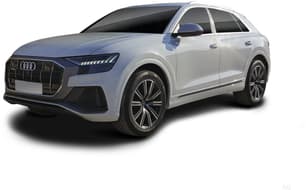
It isn’t a coupe-style SUV, but it also kind of is. That’s what’s most interesting about the design of the Q8, which has muscular haunches, a huge grille with a polarising silver trim ‘mask’ around it (which thankfully can be had in gloss black, too), and a body that may look familiar to you if you like big luxury SUVs.
That’s because it’s got some stuff in common with the likes of the Porsche Cayenne and Bentley Bentayga, which share some underbody components. If you squint there’s a bit of family resemblance, but the Q8 is convincingly different enough to justify some attention in its own right.
There are standard-fit LED headlights and daytime running lights, plus massive 21-inch wheels that fill those copious arches. And if those aren’t big enough, there are optional 22-inch alloys, too.
The lines that run the length of the body aren’t over the top, and the beautifully named “blisters” that run over the tops of the wheel arches are pronounced, but not shouty. The tail-light garnish really accentuates the broadness of the Q8, and in an interesting styling highlight, the big Audi has pillar-less doors - hello Subarus from the 1990s!
It’s exceptional to look at from the outside, with a strong road presence that helps it stand out from the round-edged Q5 and Q7 models that sit below it. The dimensions definitely help out in that regard - the Q8 is 66mm shorter than Q7 at 4986mm long, and has the same wheelbase (2995mm). It is 2190mm wide (up 27mm on Q7), but sits 1705mm tall (38mm shorter).
The interior? Well, there’s quite a bit of pleasantness there, too. Check out the interior images for yourself.
Michael Mauer has been Porsche’s chief of design for close to 20 years, overseeing the look and feel of every product the brand has produced in that time. And he’s been successful in massaging particular forms and signature elements to work across the line-up.
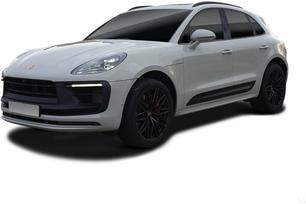
For example, you can see more than a hint of 911 in the Macan T (and other models, for that matter), from the elongated four point headlights, to the gentle curve at the rear of the roofline, as well the distinctive tail-light treatment.
Since launching internationally in 2012, the Macan has been tweaked in 2016, before a full-blown refresh in 2021. Mauer and his team have somehow transplanted a Porsche sports car’s stance and personality to this mid-size SUV, which incidentally boasts a drag-coefficient of 0.35 (not bad, but still a fair way off the 911’s 0.29).
For car-spotters keen to tick the Macan T off their list, the thing to look out for is exterior elements finished in ‘Agate Grey Metallic’. Specifically, the middle section of the front apron, the side ‘blades’ running across the lower section of the doors, the roof spoiler, and the exterior mirrors (including their V-shaped bases).
Then it’s all about high-gloss black on the side window trims, exhaust outlets and parts of the rear diffuser. But the biggest giveaway is the Porsche logo and model designation finished in, you guessed it… Agate Grey Metallic.
In looking at the Macan T’s interior design it’s important to call out our test car’s optional leather trim package ($3280) and carbon interior trim package ($1600), combining to dial up the cabin’s racy, premium feel.
A relatively simple dash design incorporates Porsche’s iconic three-dial instrument layout housed in a compact, curved binnacle. On the right-hand side a 4.8-inch configurable info display takes the place of what would have traditionally been an analogue gauge.
The wide centre stack houses a 10.9-inch media display above (big tick) physical ventilation controls. A sloping centre console is filled with touch controls under a piano black finish. Looks good in the showroom, but fingerprints are its enemy.
The front sports seats feel as good as they look, and overall the design is premium, functional and focused.
If you’re considering the Q8 as an alternative to the Tardis-like Q7, you’ll be upset. It may pay to think of it as a slightly larger Q5 in terms of cabin space, because despite its imposing dimensions, the Q8 is cosier inside than you might think.
That isn’t to say it’s small or cramped. Not at all. And the raked roofline of the Q8 isn’t as big an imposition on passenger comfort and space as it is in its direct German competitors.
For someone my height - 182cm - there’s enough headroom in the rear seat to be comfortable with a similarly sized driver in front, and the legroom and foot room is well considered, too. The back seat slides fore and aft in a 60:40 ratio, up to 100mm, so if you have smaller back-seaters, you can allow for a bigger boot space.
Storage is well considered for all occupants, with bottle-sized door pockets all around, cupholders between the seats (in a flip-down armrest in the back), plus some extra loose item and covered storage up front -along with a wireless phone charger in the centre console.
And in terms of boot space and luggage capacity, the Q8 is better than many SUVs in the class; with the seats pushed all the way back there is 606 litres of space available, and should you need more space, the second-row slide function liberates 75L more (total: 681L). That expands to 1755L with the rear seats folded down (which can be done in a 40:20:40 ratio, making for easy stowage of skis or other long items).
Up front, there are comfortable seats with nice amenities, and the design of the dashboard is neat and tidy. Very minimalist.
As for the tech interface and media screens, there is some learning required to get the hang of how to use them. The top screen controls the media and navigation function, while the lower one manages climate and car controls. Both are touchscreens, but both have haptic feedback which makes it feel like you’re hitting a physical button rather than the screen.
The resolution of both screens is lovely, with superb 3D mapping and even a surround-view camera system that uses AI to give you a 3D view of the car and its surroundings.
But the menus aren’t as intuitive as they could be - things like the fact you have a lane keeping assistance button that sits separate to the rest of the safety controls, and that’s separate again to the button on the end of the indicator stalk that adapts the active cruise control/lane keeping system. There’s a voice control system if you think the screens will be too distracting to use while on the move.
One issue with fit and finish - the dash top didn’t align perfectly with the plastic below in all cars present on test, whether equipped with the standard plastic dash finish or the optional leather-trimmed version. It’s something that’s hard to un-see.
At just over 4.7m long, around 1.9m wide, and a fraction more than 1.6m tall the Macan is a large medium-size SUV, but inside it feels more like the former than the latter.
Plenty of breathing space for the driver and front passenger, with a broad centre console dividing the space. Storage is good, too.
The glove box is a handy size, there’s a decent lidded box between the seats (that doubles as a centre armrest), as well as two large cupholders in front of it, and a handy oddments tray just behind the gearshift. Big door bins with space for large bottles are also a welcome inclusion.
Swapping to the back seat, sitting behind the driver’s seat, set to my 183cm position, I had heaps of leg and headroom. There’s even enough room for three full-size adults on short to medium journeys, although the full road trip experience would be too close for long-distance comfort. A trio of up to teenage kids will be laughing.
For storage there are two cupholders in the fold-down centre armrest, bins with enough room for large bottles (and a bit more) in the doors, and adjustable air vents with temperature control as part of the three-zone climate-control system. No map pockets on the front seat backs, though.
Power and connectivity runs to a 12-volt outlet in the front centre console and another in the boot, as well as a SIM and SD card slot in the front, supplemented by two USB-C jacks in the front and another pair in the rear.
Speaking of the boot, it’s generous, with 488 litres (VDA) available with all seats up (measured to the upper edge of the rear seats). Fold the 40/20/40 split-folding rear seat and that number grows to 954 litres. Measure volume right up to the roof in that configuration and you have no less than 1503 litres to play with.
The boot space is properly illuminated, there are four tie-down anchors to help secure loose loads, and a small netted space lurks behind the wheel tub on the driver’s side.
Our test car was fitted with the optional adaptive air suspension system ($2790) which allows lowering of the car’s rear when stationary to make shuffling heavy loads into the back easier. And the standard auto tailgate is super helpful.
Maximum towing capacity for a braked trailer is 2.0 tonnes (towbar preparation and ‘Trailer Stability Management’ are standard), and the spare is a space-saver.
There will be two versions of the Q8 to begin with, the 55 TFSI you see here, and the 50 TDI which will arrive later in 2019.
Both come quite well equipped, and for a vehicle that is Audi’s flagship SUV, the Q8 is convincingly well priced in both petrol and diesel guises, with identical list pricing (RRP) of $128,900 before on-road costs for both the 50 TDI and 55 TFSI.
The Q8 55 TFSI undercuts the closest BMW X6 (50i - $153,619) and Mercedes-Benz GLE Coupe (AMG 43 - $145,830) by $24,719 and $16,930 respectively. That’s good news in anyone’s book.
As for the diesel version, there’s a more affordable X6 (xDrive30d - $119,900) and GLE Coupe (350d - $126,330), and it’s a fair statement that you can get a Range Rover Sport petrol or diesel for less, and the base Porsche Cayenne petrol is more affordable, too. But it’s the standard equipment levels that impress with the big Audi SUV.
Included as standard are 21-inch alloy wheels, the S line exterior styling pack, adaptive suspension with damper control, adaptive cruise control with lane change assist, a 360-degree camera with kerb view (so you don’t mark those huge rims, obviously!), 'Valcona' leather upholstery, front seats with electric adjustment plus heating and ventilation, a leather-trimmed steering wheel with paddle-shifters, LED headlights (with auto high beam) and daytime running lights, three-zone climate control, a head-up display, Audi’s 12.3-inch 'Virtual Cockpit' instrument cluster, and the new MMI touch response control screen with 10.1- and 8.6-inch screens for media and car controls.
There’s the expected connectivity of Apple CarPlay and Android Auto, plus you get sat nav GPS, DAB digital radio and a 10-speaker sound system.
Audi is offering a number of optional extras if the standard stuff isn’t enough, including the Premium Plus package ($11,000) that bundles a bunch of goodies that customers typically want when shopping for a high-end model in the range. It includes 22-inch wheels, adaptive air suspension, privacy glass (tinted windows), HD Matrix LED headlights with dynamic indicators front and rear, quad-zone climate control with a rear touchscreen display, and LED interior ambient lighting.
Other add-ons you might want to consider include a panoramic sunroof ($3550), massage front seats ($1050), a choice of two Bang & Olufsen stereo upgrades (the more exxy of which has 23 speakers and costs $12,100), and the 'Dynamic Steering' package ($4500) with all-wheel steering and variable ratio steering rack, and which is worth the money in terms of the drive experience. More on that below.
And the safety gear list? How does a total of 39 driver assist features sound? Check out the safety section below for the detailed breakdown.
Colour choices include two no-cost options ('Night Black' and 'Carrara White'), while the optional 'Daytona Grey' pearl effect and metallic 'Glacier White', 'Floret Silver', 'Orca Black', 'Galaxy Blue', 'Navarra Blue', 'Dragon Orange' and 'Argus Brown' will set you back an extra $2300.
With cost-of-entry sitting at $92,700, before on-road costs, the Macan T is positioned just above the entry-level grade in a four model line-up.
And it stacks up against well-credentialed and well-equipped competitors like the Audi Q5 45 TFSI S line Sportback ($90,600), BMW X3 xDrive30i M Sport ($91,900), and Mercedes-Benz GLC 300 ($92,300).
Aside from the performance and safety tech covered later, the standard equipment list includes the often optional ‘Sport Chrono Package’ (including a mode switch and ‘Sport Response’ button on the steering wheel), as well as a 10.9-inch HD multimedia touchscreen, sat nav (with voice control), three-zone climate control, eight-way electrically-adjustable sports front seats (with driver’s side memory), heated front seats, cruise control, as well as keyless entry and start.
Also included is combination leather and ‘Sport Tex’ cloth seat trim (with silver contrast stitching), a leather-trimmed heated GT sports steering wheel, 10-speaker/150-watt audio with digital radio as well as Bluetooth and Apple CarPlay connectivity (no Android Auto, though), a 4.8-inch configurable info display in the instrument cluster, 20-inch alloy rims (finished in ‘Dark Titanium’), LED headlights, tail-lights and daytime running lights, plus an auto tailgate. There’s more, but you get the idea.
Worth noting our test car featured more than $25K’s worth of options. Specifically, a leather trim package ($3280), panoramic roof ($3110), sports exhaust ($3080), adaptive air suspension ($2790), 18-way adaptive sports front seats ($2410), Bose 14-speaker/665-watt audio ($2230), ‘Papaya Metallic’ paint ($1800), tinted LED headlights with ‘Porsche Dynamic Light System Plus’ ($1650), adaptive cruise control ($1620), carbon interior trim package ($1600), lane keeping assist ($1100), high-gloss black roof rails ($650), and Porsche logo door courtesy lights. Total price as tested (before on-road costs) $118,560.
At that money you’re more in line with the Audi SQ 5 Wagon ($110,400), BMW X3 M40i ($118,900), and Merc-AMG GLC 43 ($129,000). A tough trio to get your nose in front of, but the Macan T still presents pretty well.
Under the bonnet of the 55 TFSI model is a hard-hitting horsepower hero - a 3.0-litre twin-turbo V6 petrol producing engine specs of 250kW of power (at 5500rpm) and 500Nm of torque (at 2090-5300rpm).
It uses an eight-speed automatic transmission and Audi’s quattro all-wheel-drive system, and the brand claims it will slingshot from 0-100km/h in just 5.9 seconds.
For context, the equivalent Benz GLE 43 has 287kW/520Nm and does the sprint in 5.7sec (claimed), while the BMW gets a stonking 4.4L turbo V8 in 50i spec with 330kW and 650Nm, with a resulting sprint claim of 4.8sec. Yeah, so those two are a bit speedier - is that enough to justify the additional expense?
If petrol vs diesel is important to you, here’s how the 50 TDI stacks up: it has a 3.0-litre turbo-diesel engine with 210kW of power and 620Nm of torque, and again has an eight-speed auto and quattro AWD. Audi claims a 0-100km/h time of 6.3sec for this model.
As for weight, the Q8 tips the scales at a not unsubstantial 2265kg (including 75kg driver) in 55 TFSI spec. Towing capacity is rated at 750kg for an un-braked trailer, and a huge 3500kg for a braked trailer, which is better than a Toyota Prado.
The Macan T is powered by a version of the VW Group’s ‘EA888’ turbo-petrol, four-cylinder engine, used in a host of Audi, Seat and Skoda models, as well as, most-notably, the previous generation VW Golf Mk7 GTI.
The 2.0-litre, all-alloy unit uses a combination of port and direct fuel-injection, plus variable cam timing on the inlet and exhaust side to produce 195kW from 5000-6500rpm, and 400Nm across a broad plateau from 1800rpm right up to 4500rpm. The rev ceiling sits at 6800rpm.
Power goes to all four wheels via a seven-speed dual-clutch automatic transmission and an electronically-variable multi-plate clutch.
Claimed fuel consumption for the 55 TFSI is rated at 9.2 litres per 100km - which is on the high side (some may say, the ‘realistic’ side), and it’s not far off the V8-powered BMW X6 (9.7L/100km) and Benz GLE 43 (9.8L/100km).
It employs 48-volt mild hybrid technology which is said to decrease consumption by 0.7L/100km, so it could have been even thirstier, theoretically. The system is able to shut the engine down and coast at speeds between 55-160km/h for up to 40 seconds, and it can also shut the engine of when decelerating at speeds of 22km/h or less.
Our drive route - which included twisty mountain roads, city driving, flowing country roads and about 30km of dirt/gravel - saw an indicated return of 10.5L/100km. That’s not bad at all.
The Q8 55 TFSI requires 95RON premium unleaded petrol, and it has a fuel tank capacity of 85 litres.
If petrol vs diesel is something you’re weighing up, the fuel use figure for the Q8 50 TDI is a bit better, claimed at 6.7L/100km.
Porsche’s official fuel economy number for the combined (ADR 81/02 - urban, extra-urban) cycle for the Macan T is 9.5L/100km, the 2.0-litre four emitting 217g/km of CO2 in the process.
Over a week of city, suburban, and some freeway running we saw a dash-indicated average of 10.2L/100km. A solid, if unspectacular result for a close to 1.9-tonne SUV.
Auto start-stop is standard, but pricey 98 RON premium unleaded is required, and you’ll need 75 litres of it to fill the tank.
Using the official number that translates to a range of 789km, which drops to 750km using our real-world number.
It’s rare for a brand like Audi to offer up the chance to drive a pricey model like the Q8 in a spec that is basically free of options, but that was what I started with. And it was good, but not great.
With the standard steering system and the standard steel springs paired to adaptive dampers, the Q8 felt rather large through a series of twisting bends, with a bit of body lean and a tendency to feel like it wanted to push on a bit rather than bite harder in the corners. The traction was good, though, with a firm footprint and all-wheel drive ensuring things were kept under control.
Things were markedly more impressive in the model with the dynamic steering pack with four-wheel steering. Its behaviour in the bends was noticeably different. It tucked into the corners more, with a quicker steering action that made the big SUV shrink around you, making it feel like it had been on Lite n' Easy.
And it’s not just at higher speeds on challenging roads that you can feel the effect of the four-wheel steering, it also works to reduce the turning circle by 1.1m at lower speeds by allowing up to five degrees of steering (the opposite angle to the front wheels) to be applied at the back axle. That lower-speed turning circle improvement is worthy of mention, because otherwise the radius (at 13.3m with the standard steering) is worse than some dual-cab utes.
That model also had the adaptive air suspension setup, which offered a very similar ride quality to the normal car despite sitting atop 22-inch rims. Both were comfortable in Comfort mode, and predictably more chuckable in Dynamic, though the air suspension version looked a lot meaner when the latter mode was selected as it drops the body by about 40mm over those huge rims.
There’s an off-road mode, which Audi labels Allroad, and it eases up the traction control and ABS as well as adjusting the reactiveness of the steering, throttle and transmission. In the version with airbag suspension the body rises up to allow a huge 254mm of ground clearance - 50mm more than standard running height.
Not that an off-road review is overly important in a car like this, but my stint was confined to the model without airbag suspension and it still had good running clearance, the big wheels didn’t crunch or crash too hard into pockmarked gravel roads, and the handling was predictable.
The quietude of the cabin hits the Luxury Level for sound insulation, with only a bit of tyre roar and some wind noise from the large wing mirrors at highway speed. It’s mostly very hushed and very pleasant.
But that might be a bit of a disappointment to some; the sound of the V6 engine is muted, and never really sounds as enticing as you might want it to. This is a big, brash, Look At Me SUV, but it never feels it from the driver’s seat, because there’s no rasping or raucousness when it revs. Maybe we’ll have to wait for an even sportier version to bring the noise…
And the engine itself is willing, but slightly inhibited by the weight of this big truck. It is refined and certainly powerful enough, but doesn’t quite hit the ‘wow that’s fast’ benchmark that you’d get in the V8-powered Bimmer.
My biggest driving annoyance was the lane keeping assist system - not just how it’s a separate button to the rest of the assist systems, but that it triggers back on whenever you stop the engine. I found myself hitting the button every single time I got into a different car or back into the driver’s seat, because the system makes the steering feel unbearably artificial and interruptive.
Happily, if you are purchasing one of these vehicles, Audi can set it up so that the button is a ‘steering assist on’ switch rather than ‘steering assist off’.
Porsche claims the Macan T will accelerate from 0-100km/h in a suitably rapid 6.2 seconds and mid-range pulling power is healthy, with maximum torque available from 1800-4500rpm.
Worth noting, however, if you’re looking for ‘special event’ engine and exhaust noise to accompany that progress you may be left wanting more aural oomph. Despite our test car’s optional sports exhaust ($3080), this four-cylinder can’t match the relative drama of the Macan S and GTS’s twin-turbo V6.
The upside of that difference is the 2.9-litre V6 puts an extra 59kg on the Macan’s front axle, so the 2.0-litre T feels lighter and that bit more responsive when the road starts to twist.
Suspension is multi-link front, trapezoidal link rear, and the Macan T is also fitted with stiffer, model-specific sway bars to manage body roll. Ride height is also 15mm lower than the base 2.0L Macan.
Steering is quick, road feel is good, and despite the standard 20-inch rims, ride comfort is excellent. This is Porsche’s long-established, engineering party trick, combining plush compliance with sharp dynamic response, even in a high-riding SUV. That said, the optional adaptive air suspension fitted to our test example, is $2790 well spent.
The drivetrain is set up with a RWD bias, and standard rubber is Michelin’s high-performance SUV tyre, the Latitude Sport 3 (265/45 fr / 295/40 rr). They grip hard while remaining quiet, and the Macan T is an entertaining drive on a quiet B-road.
Braking is by vented discs all around (350mm fr / 330mm rr) with beefy four-piston alloy monobloc fixed calipers up front and floating singles at the rear. Stopping power is reassuringly strong and progressive, especially important given the car’s 2.0-tonne (braked) towing capacity.
For more adventurous drivers, ground clearance is 187mm, while the approach, departure and ramp angles are a relatively modest 15.8, 15.4, and 21.0 degrees, respectively.
In the less challenging terrain of a shopping centre car park the standard reversing camera and 360-degree surround view make manoeuvring into tight spaces a stress-free operation.
The level of high-tech safety equipment fitted to the Audi Q8 is exceptional. As mentioned above, there are 39 safety assist features. Here’s a rundown of the important ones.
There’s auto emergency braking (AEB) up to 250km/h, forward collision warning with pedestrian detection, adaptive cruise control with traffic jam assist (including steering assist up to 60km/h), lane keeping assist, blind-spot monitoring, rear cross-traffic alert, and a forward cross-traffic alert system known as ‘Intersection Assist’.
Plus there’s a 360-degree surround-view camera system with AI graphic interface and adjustable view system, front and rear parking sensors, and semi-autonomous park assist for those who are nervous about marking the huge rims.
Of course there’s also the expected array of airbags (dual front, front-side, rear-side, full-length curtain) and the rear seat has dual ISOFIX and three top tether baby seat attachment points.
There’s no ANCAP crash test rating for the Audi Q8, and it hasn’t been tested by Euro NCAP either. That’s why it gets an 8/10 for this section. If it scores the full five stars, this criterion score could bump even higher.
The Macan has been around for 10 years, and despite regular updates it’s starting to give ground to competitors in terms of standard active and passive safety tech.
With a base price within shouting distance of six figures, you’d expect the Macan T to be at the pointy end of the safety game, but not so.
While crash avoidance features include ‘Lane Change Assist’, ‘Lane Departure Warning’, tyre pressure monitoring, and ‘Park Assist’ (including a reversing camera and 360-degree surround view), other big ticket items are optional extras.
Arguably the biggest is adaptive cruise control (including AEB) at $1620, and ‘Lane-keeping Assist’ for another $1100. Blind-spot monitoring, rear cross-traffic alert and other increasingly common systems aren’t available at any price.
What? It’s as much the principle as the dollars. These things should be standard in a close to $100K Porsche.
If a crash is unavoidable there are eight airbags on-board (driver and front passenger front, front side, rear side, and full-length curtains), but the front centre airbag, increasingly included to avoid head clash injuries in a side impact, is MIA.
Multi-collision brake minimises the chance of subsequent impacts after an initial crash, and there are three top-tether points for baby capsules/child seats across the rear row, with ISOFIX anchors on the outer positions.
For the record, Porsche doesn’t submit its cars for ANCAP (or Euro NCAP) evaluation, and so far the independent body hasn’t raided the piggy bank to purchase one for assessment.
Audi Australia offers a three-year/unlimited-kilometre warranty. That’s about average for the luxury car segment, but falls short when you consider what mainstream brands are moving towards (five years or more). The argument - and it’s a valid one - is that most luxury car buyers don’t hang onto their cars for more than three years anyway.
At the time of writing, Audi hadn’t announced official pricing for its capped price service plan, which is called Service Plan Pricing, but it must be pre-purchased at the time of delivery (the good news is that you can roll that cost into your finance package).
For three years/45,000km of servicing, you can expect to pay about $2000 - meaning the average cost is $666 per 12-month/15,000km visit.
You get included roadside assist as part of the ownership plan. It spans the cover of the warranty.
Porsche is the last brand standing in the local mainstream sports luxury market, offering a three-year, unlimited kilometre warranty when the rest of the segment has moved on to five-year, unlimited km cover.
The good news is paint is covered for three years and a 12-year (unlimited km) anti-corrosion warranty is included (the Macan’s body is fully galvanised).
Porsche Roadside Assist provides 24/7/365 coverage for the life of the warranty, and after the warranty runs out is renewed for 12 months every time the vehicle is serviced at an authorised Porsche dealer.
Servicing is required every 12 months or 15,000km, which is less in terms of mileage than some others in the category.
With Porsche, final costs are determined at the dealer level (in line with variable labour rates by state/territory), but indicative pricing for the first five years is: 12 months/15,000km (annual) - $695, 24 months/30,000km (inspection) - $1300, 36 months/45,000km (annual) - $695, 48 months/60,000km (inspection) - $1300, 60 months/75,000km (annual) - $695. Not exactly cheap, but not outrageous in this part of the market.
A brake fluid flush is recommended every two years ($290), as well as spark plugs ($450), air filter ($200), and transmission fluid and filter ($850) every four years. So, be ready for those ‘extras’.