What's the difference?
Here’s a fun fact.
Audi has only ever offered two rear-wheel drive (RWD) production cars in its entire 116-year history… the spectacular R8 supercar and the electrifying e-tron GT.
Now there’s this, the Q4 e-tron – a small-ish medium-sized SUV electric vehicle (EV), and Audi’s overdue response to the BMW iX1 and iX2, Polestar 4, Volvo EX40, Mercedes EQA and, of course, the Tesla Model Y.
Overdue? It’s been in production since March, 2021, making it very, very late to Australia.
But, you know what? You might be very glad the local team waited, because this MY25 update might be the premium medium electric SUV to buy right now.
To find out, read on.
When the GLB arrived in Australia in 2020 it did so to much fanfare as the little premium SUV which could do it all.
It had seven-seats, ideal dimensions slotting underneath the mid-size GLC, the option of all-wheel drive, and even a go-fast AMG version to boot.
Now, the clever little luxury SUV can add another headline feature - it’s gone fully electric.
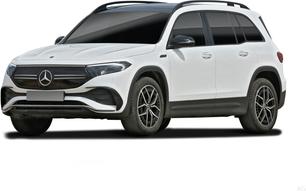
The EQB, like the EQA before it, follows the formula of its donor car to a T, being familiar for an existing Mercedes buyer whilst also making the jump to a fully electric drivetrain.
For now it comes in two variants, a two-wheel drive with seven seats, and a five-seat all-wheel drive which leans more on the performance aspect of its electric drivetrain. Is the trade-off worth it?
The answer is: It depends. Read on to find out why.
Audi is famous for sticking doggedly to front-wheel drive and quattro AWD, but clearly, when it puts its mind to it, the few RWD machines it has produced over its 116 years have been exceptional.
While not as exciting as the R8 or as supersonic as the e-tron GT, the Q4 e-tron is an impressive machine. Thoroughly engineered and thoughtfully designed to be a friendly, refined, comfortable, safe and capable family SUV, it deserves to be on your shortlist.
With a couple of choice option packages, the base 45 seems remarkably complete, but there’s plenty to enjoy in the hot-shot 55 quattro as well. Either way, Audi seems to be on a winner.
Note: CarsGuide attended this event as a guest of the manufacturer, with travel, accommodation and meals provided.
I really liked the combustion version of this car, the GLB, for its funky style and flexibility and I was pleased to find how easily Mercedes has made the conversion to a fully-electric layout for the EQB.
Despite a tall price, the EQB 350 is a compelling option for those seeking something a bit more luxurious than the Tesla Model Y, something a bit larger than the Volvo XC40 Recharge, and something a bit smaller than the Audi e-tron or the EQC.
The main trade-off for this 350 variant is the loss of the seven-seat layout in favour of more performance. Instead it offers a huge boot, has a sufficient range for city-based buyers, and offers surprising levels of fun, too.
Just make sure you’ve considered its rivals which may potentially offer more range or features for the same money.
Whether talking about the SUV or Sportback, the Q4 e-tron is an excellent example of Audi’s recent design prowess.
Beautiful proportions, crisp surfaces, exquisite detailing and undeniable elegance are all present in spades. And the Sportback is a rare example of a graceful-looking coupe SUV, though it is not in the otherworldly Polestar 4’s league aesthetically.
However, where is the originality? You’d never know these are rear-motored and predominantly RWD vehicles. Yes, the Single Frame grille execution is amongst the best-yet from the brand, while the wheelarch ‘blisters’ are an (albeit questionable) homage to the seminal Ur-Quattro of the 1980s, but the Q4 e-tron could be any contemporary Audi SUV from the Q3 up. Its design is the opposite of daring.
Still, maybe the Q4 e-tron’s classy, relatable conservatism explains why the Brits made this car their second-best selling EV of 2024, representing everything that the number one Model Y is not.
Plus, with current global automotive interiors stalling behind over-illuminated and oversized screens full of greasy fingerprints, glitchy electronics and reflections of their frustrated operators, a bit of old-school Audi cabin presentation knowhow can only be a good thing, right?
The EQB has a very predictable design in that it doesn't stray from the combustion car’s formula. At all.
The only evidence from the outside this is the electric version is the blanked out grille, and closer observers might notice the rear light bar which cuts across the boot lid is different from the split tail-light design which appears on the combustion car.
Still, to my eyes, the GLB is a cool design with its upright boxy look bucking the curvaceous trend of most EVs, and, indeed, the rest of the Mercedes line-up.
Its rebellious streak makes it one of the most appealing SUVs in Mercedes’ current range, and it comes with a bit of toughness which is missing from the EQA.
If nothing else, it’s a completely different look from Tesla’s amorphous Model Y, and this may be enough to appeal to some.
Inside is identical to other Mercedes models which sit on the MFA2 small car platform, immediately setting itself apart with the big high-resolution screens, glitzy ambient lighting, as well as an abundance of chrome and gloss black.
It’s designed to impress from the first time you hop in, and there’s no doubt it does, but it may be a bit over-the-top for some, particularly fans of the more conservative Mercedes designs of eras past.
The chrome in particular becomes a bit of a problem, as it has an annoying habit of catching the reflection of the sun and sending it directly into the driver’s eyes.
It all feels as plush as a circa-$100,000 luxury car should though, with the ‘Artico’ seat trim being one of the better synthetic options on the market, and soft-touch surfaces throughout the cabin selling the Mercedes promise.
The GLB toughness is even reflected in the chiselled out finishes in the door, dash, and centre console, helping to set it apart from the tamer EQA.
The software is also fast, high resolution, and well presented, which bodes well given the amount of screen real-estate, and the amount of customization is impressive, too.
Again, there are many who will prefer its look and feel to the Apple-store chic of the Tesla Model Y, or the pared back Scandinavian approach of the XC40 Recharge, but also those who won’t. Like many new Mercedes products, it continues to polarise buyers.
Unlike most of its German competitors (and the Volvo EX40), the Q4 e-tron is built on a dedicated EV platform known as MEB, and shared with other Volkswagen Group models, like the Skoda Enyaq and Volkswagen ID.4.
Consequently, the Audi feels a wee-bit narrow inside, as the MEB SUV family are on the smallish side for medium-sized SUVs. This is not a criticism, just an observation.
And there is no lack of interior space, either. Entry/egress is easy via large doors, there’s plenty of space for heads and shoulders and legroom is generous. All are an upshot of the EV-only platform.
Despite some obvious packaging links with the other VW MEB interiors, the dashboard is very Audi-esque in styling, layout, functionality and quality.
From the ‘Virtual Cockpit’ electronic instruments and crisp multimedia screen, to the feel of the buttons and logical, easy locations of the controls, the Q4 e-tron is completely and utterly on-brand. And that means high standards. Looks posh. Works well. Nice to touch. No bewildering endless screen-menu search and rescue frustration here.
Plus, the Audi is practical. We’ve already talked about ample room, but even the standard, non-sports seats cosseted and supported over a few hours of testing; different and unexpected levels of storage (including a nifty bottle holder ahead of the forward door jam – brilliant); superb ventilation and, especially in the Sportback 55 e-tron quattro sampled, a banging audio system, complete a suave and sophisticated interior experience.
Issues? No too many, really.
There is quite a lot of quality plastic material visible, which might offend some sensitive souls. There is some road-noise intrusion over coarse surfaces, perhaps reminding owners of the Q4 e-tron’s shared architecture; and rear vision in the Sportback is hampered by fat pillars and slim back glass.
However, no spare wheel exists. Nada. Just the occasionally ineffective and always-infernal tyre inflation kit, that renders the tyre and kit useless afterwards and so makes for expensive replacements. And just because almost everybody else does it, this is not good enough for Australia.
The corollary of that is quite generous luggage capacity, with the Sportback’s 535 litres somehow beating the more-upright SUV’s 520L VDA capacity, though with the rear seatbacks folded that switches to 1460L and 1490L respectively. Both are gorgeously lush and quite practically shaped.
And what about the storage compartment up front?
This should be the GLB’s calling card. It’s a car with an ideal footprint, not as wide or as long as most mid-size SUVs, whilst also offering a larger cabin and boot.
The big drawback for this variant in particular is the lack of a seven-seat option, as the all-wheel drive requires the under-floor space which is required to give rear occupants legroom.
It’s a shame, too, because I found the two rear seats in this car’s GLB combustion equivalent to be surprisingly accommodating for even adults.
As a result of these missing seats, though, the full volume can be exploited in the boot, which comes in at a whopping 495 litres.
It’s rivalled by the Model Y, which also has a cavernous boot, although it has a much larger storage area than the Volvo XC40.
As an added bonus, there is a decent under-floor storage area which has enough space for all your charging cables, although there is no so-called ‘frunk’ with what is normally the engine bay taken up by cooling and auxiliary hardware.
At first glance there’s so much going on under there, you’d be forgiven for thinking the EQB has an actual engine!
The cabin is also enormous as well as configurable. The EQB has massive rear doors (as it’s designed to be a seven-seater) to make it easy to get in and out of, and once you’re settled in, the amount of space for me (at 182cm) behind my own driving position is very impressive, with ample leg, arm, and headroom.
Rear passengers score the same nice synthetic leather seat and door trim as the front passengers, a bottle holder in each door, as well as two in a flip-out caddy on the drop-down armrest, two nets on the backs of the front seats, dual adjustable air vents, and power outlets on the back of the console. There is also a separate section of the split sunroof to benefit those in the back seat.
Up front the cabin is equally flexible, although it immediately seems odd that the front seats are manually adjustable. Almost unforgivable in a $100,000 car.
At least the trim is comfortable, and again, the space is configurable for people of all shapes and sizes.
Storage options include large bins in each door, a split-opening armrest console with USB-C outlets inside, a slide-open area underneath the climate unit, which houses a wireless phone charger and additional power outlets, as well as the usual glove box arrangement.
Soft trims continue into the doors, although one small annoyance is the excess of chrome trim which has the unfortunate habit of reflecting harsh Australian sun into your eyes if it hits at the wrong angle.
The software is nice and quick, but can be cumbersome and over-complicated to operate at times, particularly when using the centre touchpad, or adjusting the dash with the small touch elements on the wheel.
It is also notable the Apple CarPlay as-tested only took up a centre portion of the screen, and is not set-up for widescreen mode to take full advantage of the hardware.
Minor complaints aside, though, the EQB follows its combustion GLB twin in having by far one of the most flexible and configurable cabins in its class.
The Q4 e-tron is available in two body shapes – a handsome if quite conservative wagon SUV style, as well as a sleeker coupe-SUV derivative that Audi calls Sportback.
The latter is expected to be the slightly more popular of the two designs, despite costing about $1600 more.
Obviously slotting in between the smaller Q3 and larger Q5, the Q4 e-tron almost shadows the latter size wise, and is available in either 45 RWD or 55 quattro all-wheel drive (AWD) guises.
Since both share the same, largish (82kWh) battery, Audi reckons most buyers will choose the 45, especially as its pricing in either body style slips under the Australian Federal Government’s Luxury Car Tax (LCT) threshold.
Kicking off from $84,900 before on-road costs, the base grade includes a full suite of safety tech such as full stop/go adaptive cruise control, an electronic instrument display, heated front seats, three-zone climate control, a gesture-controlled powered tailgate and 19-inch alloy wheels.
These come on top of the LED headlights, an 11.6-inch touchscreen, full wireless multimedia connectivity, a premium audio system, electric driver’s seat adjustment, navigation, folding/heated/kerb-side-view mirrors, roof rails and automatic parking.
From the Sportback 45 and up, the S-Line package is standard, bringing with it 20-inch alloys.
All the essentials then.
But, on the base 45s, be prepared to spend extra for luxuries like bolstered “sports” seats, a head-up display, a powered front passenger seat, driver’s side memory settings, a 360-degree camera instead of the regular rear-only view and privacy glass.
The 55 quattro grades from $105,900 include most of these, along with an extra electric motor for AWD and considerably more muscle, as well as variable-ratio steering, Matrix LED headlights, dynamic indicators, extra lane-assist intervention and the aforementioned S-Line trim shod with 20-inch alloys.
Now, against the remodelled Tesla Model Y Juniper, the Audi costs considerably more, but it is also a more upmarket (and less conspicuous) luxury brand that prioritises quality.
The iX1, iX2, EQA and EX40 cost around the same as the Q4 e-tron, but aren’t quite as large, offer smaller batteries (Volvo-aside), are based on other internal combustion engine (ICE) models compared to the Audi’s ground-up dedicated-EV architecture and, except for the BMWs, are getting somewhat long in the tooth.
Conversely, fresh designs, bespoke electric platforms and bigger batteries set the larger yet less-expensive Polestar 4 as well as the more-compact yet loaded Genesis GV60 apart against the Audi’s aforementioned competitors, but neither challenger brand is as established as all the others. Finally, Lexus’ UX300e is too compact while the larger RZ450e has priced itself out of contention here.
So, why the delay getting the Q4 e-tron to Australia? Especially when the brand has offered the bigger and much-more expensive Q8 e-tron SUV since the beginning of this decade?
Initially, demand in Europe was through the roof and supply could not keep up. Then Audi elected to wait for an update that debuted globally in September 2023, ushering in a raft of changes, to make its most important EV ever more competitive in a wildly shifting market.
These include efficiency gains leading to more range thanks to an upgraded motor and battery, stronger performance, faster charging, retuned steering, comfier suspension and improved safety spec.
Not that you’d be able to spot the differences comparing new Q4 e-tron with old. Nor even against sibling SUVs…
The EQB range kicks off from $87,800, before on-road costs, for the base 250, but the car we’re looking at for this review is the top-spec 350 4Matic, which wears a price-tag of $106,700.
There’s no doubt it’s a hefty price, even for an EV, and especially for a sort-of ‘small’ SUV. There’s more to consider, too. As I mentioned in the intro, the all-wheel drive system precludes the seven-seat layout in this top-spec car, and it has less range than the front-wheel drive model, too, dropping from 371km to 360km.
On the upswing, the dual-motor powertrain is far preferable to the so-so front-wheel drive option, and the 350 also gains an AMG-spiced bodykit and flat-bottomed steering wheel, as well as a panoramic sunroof.
Outside of the extra flair, the EQB 350 is almost as well equipped as you could hope, with the flashy dual-10.25-inch 'MBUX' screen set-up, Nappa leather steering wheel and interior appointments with Mercedes’ signature 'Artico' synthetic seat trim, LED headlights, ambient interior lighting with fully customisable RGB controls, dual-zone climate, a wireless phone charger, 20-inch alloy wheels, as well as keyless entry and push-start ignition.
Given the EQB’s dimensions it would seem its most direct rival is the Tesla Model Y, although it may not be a favourable comparison.
At over $100,000 the EQB 350 is still more expensive than the top-spec Model Y Performance, which is even more powerful than our Merc here.
Other more indirect rivals include the Volvo XC40 Recharge (from $74,490 in twin-motor form), or less performance-oriented Lexus UX300e ($80,691 for the top-spec Sports Luxury), although neither are as large as the EQB, and the Lexus has about half the performance.
Unlike the Model Y, there's no storage up front. That space is instead reserved for auxiliaries and, in the 55 quattro versions, the second electric motor that drives the front axle for AWD.
In all versions, a permanently excited synchronous motor sits on the rear axle driving the rear wheels via a single-speed transmission.
Tipping the scales at 2145kg, the 45s produce 210kW of power, to offer a power-to-weight ratio of 98kW per tonne, while the 2235kg 55s’ 250kW output ups that to 112kW/tonne. Both Q4 e-trons deliver a healthy 545Nm of torque.
No slouch, the 45s manage the 0-100km/h sprint in a rapid 6.7s, while the 55 quattro’s extra motor chimes in when extra traction is required, shaving another 1.3s off that, for a 5.4s time. Top speed in both is limited to 180km/h.
Adding a bit more driver involvement, the 55s have variable ratio steering, while MacPherson-style struts up front and a four-link independent rear suspension setup out back help keep everything under control.
While the EQB 350 loses its valuable third-row seats, it gains a much more impressive drivetrain than the lesser EQB 250 variant.
While that car has a so-so front-motor set-up producing 140kW/385Nm, the top-spec 350 sports a much more capable 215kW/520Nm dual-motor system.
This allows a 0-100km/h sprint time of 6.2 seconds, and while it’s not as fast as the entry-level Tesla Model 3, it’s still impressive for a 2153kg SUV.
The all-wheel drive capability also adds a level of confidence which can’t be matched by a front-drive, more on this in the driving section of this review.
Built on a 400V architecture, the Q4 e-tron uses an 82kWh Lithium-ion battery pack, offering a useable capacity of 77kWh. It only charges to 80 per cent full to help preserve battery life.
Now, driving most of the available versions over a 200km launch route from Adelaide airport to wine country, we averaged between 17.5 and 19.5kWh/100km, with the lighter RWDs obviously being the more economical of the drivetrains.
In ascending order, the official combined average figures are 16.9kWh/100km (Sportback 45), 17.4kWh/100km (45 SUV), 17.5kWh/100km (Sportback 55 quattro) and 18.1kWh/100km (55 quattro SUV).
Despite weighing about the same, the Sportback uses around 0.5kWh/100km less electricity than the SUV version, due to better aerodynamics.
That translates to about 15km of extra distance, with the Sportback 45 going the furthest, delivering a WLTP range of 540km. That’s followed by the 45 SUV, Sportback 55 quattro and 55 quattro SUV with 524km, 503km and 488km respectively.
To aid with recharging, the driver has three modes of battery energy recuperation via steering-wheel paddle shifters.
Plugged in at home, the battery needs about 40 hours to completely recharge, or over 12 hours using an optional 7kWh Wallbox. Maximum AC charging capacity is 11kW.
With a maximum of between 135kW (RWD) and 175kW (AWD) of DC charging capacity, however, 10-80 per cent charge using a 50kW DC public charger needs fewer than 70 minutes, or just 40 minutes if you find a 100kW station.
Regardless of which version of the EQB is chosen, the SUV has a 66.5kWh lithium-ion battery pack, and in the case of our all-wheel drive 350, this grants it a 360km WLTP-rated driving range between charges.
My car was reporting around 350km of range at or near a full charge, while my week of testing produced a dash-reported consumption figure of just 18.2kWh/100km.
This is surprising for two reasons. Firstly, I subjected the EQB 350 to a significant amount of freeway testing during my time with it, which usually produces worse consumption numbers for EVs, but it actually bested its official 21.0kWh/100km official figure by a decent margin.
Secondly, I’m puzzled to find this car outperformed the smaller and lighter EQA 250 I had on test in 2021 in terms of overall consumption, and by a significant margin. Very odd.
When it comes to charging up, the EQB can be charged at a rate of 100kW on a fast DC charger, for a 10-80 per cent charge time in a claimed 30 minutes.
On the slower but cheaper-to-install AC standard, the EQB has an 11kW inverter, allowing a convenient ‘slow’ charge time of 4.1 hours. Expect between 25 and 30 hours on a standard wall socket.
Audi might be late to the affordable electric SUV party, but it’s certainly been worth the wait from behind the wheel, because the Q4 e-tron drives exactly how you would expect an Audi to.
The 45 in either body shape has ample oomph, as its impressive 6.7s 0-100km/h times prove, providing a decent amount of instant speed the moment you put your foot down. This is a smooth, strong and muscular performer.
The steering is nicely modulated and precise, for easy, flowing handling, even when the speed is taken up a few notches. Note that while it may seem a little light, it can be configured for a more dynamic feel.
However, slightly stronger single pedal braking would be appreciated. The Audi EV’s brakes do a great job stopping the car, but they do feel a bit on/off at first. Maybe even a bit wooden.
All the Q4 e-trons we drove on the launch around the Adelaide hills rode on steel springs. That said, and to our surprise, the suspension is more than comfortable enough, soaking up many of the bumps we encountered without breaking a sweat.
Plus, except on coarse bitumen, there's not much of any type of noise coming through inside the cabin. These are agreeably comfortable and refined cruisers.
Meanwhile, the 55 quattro version is a slightly different proposition, with measurably stronger acceleration across the board and more eager throttle response. Actually, even on bone-dry roads at the height of summer, there’s almost too much torque coursing through the axles, so just be wary of this EV’s considerable power.
Still, the twin-motor Audi feels like a relaxed yet brawny grand touring SUV, with plenty in reserve for fast overtaking and quick getaways. Even the RWD model provides exceptional roadholding and control, but that extra AWD grip when things become a bit slippery would certainly be a bonus.
Plus, kudos to the Germans for delivering user-friendly driver assist safety systems. Nuanced and largely unobtrusive, they keep you safe without driving you to distraction. China and Polestar in particular, are you listening?
On the flip side, you do feel the extra weight of the second electric motor (about 100kg more), and so it doesn't quite have the agility and alacrity of the standard 45 RWD machine.
Indeed, there isn’t quite the athleticism or connection of driver-focused alternatives (like BMW), but the Q4 e-tron rarely puts a foot wrong, either.
Impressively capable and dynamic, Audi’s more-affordable electric SUV has been worth the wait.
This is where the 350 version of the EQB shines. This car is a beast to drive with plenty of power available at your right foot, and incredible amounts of traction to match from its torque-vectored all-wheel drive system.
This lets it be rapid, but not scary, and despite its square and upright body, might surprise you when it comes to carving a few corners.
Like many EVs, the EQB’s weight feels low and centred, but it appears the suspension has been adjusted to remove any bouncy quality, which might come with the additional weight added over the combustion variants, with nearly 500kg of lithium batteries under the floor.
In fact, the ride is also one of the things which impressed me most about the EQB. It even has huge 20-inch AMG wheels, yet it dealt with bumps of all shapes and sizes in an impressive manner, keeping the body under control, and communicating remarkably little in terms of vibration or unpleasantness into the cabin.
The steering offes a nice balance of feel and electrical assistance, a trait which combines with the EQB’s convenient size to make for an easy SUV to park and manoeuvre.
When it comes to the EQB’s traits as an electric car, there are several modes available to alter the experience.
Using the paddle shifters, there are several regenerative braking settings to choose from. While none of them are a ‘single pedal’ mode, the D- mode is pretty strong, and clearly contributed to the EQB’s surprisingly good energy consumption in my time with the car.
Activating D+ mode, which can be combined with a sporty driving setting, tones down the regenerative setting almost completely and feels as though it unleashes more potential from the potent electric motors.
While the sportier settings made the 2WD EQA I tested last year feel a little twitchy and prone to wheelspin, the all-wheel drive system keeps this well under control in the larger EQB for impressive acceleration characteristics.
The breadth of this SUV’s ability is perhaps its most impressive attribute. It can feel comfortable and tame around town, with alarming speed and tenacity when attacking the open road should you so desire.
Sure, it’s not as whiplash-inducing as some of its rivals, particularly the Volvo XC40 Recharge or Tesla Model Y, but for a luxury SUV like this it’s more than what you could ask for.
Tested back in 2021, the Q4 e-tron managed a five-star ANCAP crash-test rating, and possesses most of the driver-assist safety systems expected nowadays in this class of car.
This includes Autonomous Emergency Braking (AEB, dubbed Audi Pre-Sense in corporate-speak), lane departure warning/assist, rear cross-traffic alert, blind-spot warning, on-coming traffic turn-and-swerve collision avoidance, exiting-vehicle alert tech, adaptive cruise control (with active lane assist in the 55s), driver attention monitor, tyre pressure indicators, 360-degree cameras, and light and rain sensors.
AEB operating parameters vary. Car to car, it’s between 5km/h and 250km/h. For pedestrian/cyclist/back-over, it’s from 5km/h to 85km/h. And the lane support systems work between 60km/h and 250km/h.
All outboard occupants also enjoy full airbag coverage – front, front side/centre, and full-length curtain airbags.
A trio of child-seat anchorage points are fitted across the back seat, along with ISOFIX child-seat anchorages in the front passenger seat and two in the rear outboard positions.
The EQB scores a thorough suite of active safety equipment including freeway-speed auto emergency braking (7.0-200km/h), lane keep assist with lane departure warning, blind-spot monitoring with rear cross-traffic alert, as well as one of the best adaptive cruise systems on the market.
In the event of an impact, the EQB scores dual front, side, and head curtain airbags (the side and curtain bags cover both rows) as well as a driver’s knee airbag. There are the usual dual outboard ISOFIX child seat mounting points on the rear row, as well as three top-tether points.
The EQB scored a maximum five-star ANCAP safety rating to the current 2022 standards, but this rating only covers the base 250 variant. It scored highly across all criteria.
Audi’s warranty remains the same as before, at five years with unlimited kilometres, with the battery covered for eight years or 160,000km. Six years of roadside assistance is also included.
Service intervals are every two years or 30,000km. Nothing special here nowadays.
But the Q4 e-tron owner can buy a six-year service plan for a total of $2050, while gaining 12 months of free electricity at Chargefox stations. They can also purchase a JET Charge home installation charger from $800.
Mercedes offers a five year and unlimited kilometre warranty, with five years of roadside assist. The high-voltage battery components are also covered by a separate and industry-standard eight-year and 160,000km warranty.
Service intervals are once every 12 months or 25,000km and the service plan costs an average of $440 a year for the life of the warranty which is expensive for an EV, especially considering Polestar offers free servicing for the first five years, and Volvo’s electric offerings are around half the cost over the same period.