What's the difference?
Can a hatchback still be a fun and fashionable way to get around when the SUV has become such a status trend?
The facelifted Audi A3 certainly makes a case for it.
The refreshed 2025 A3 is, as Audi puts it, more competitive than before when it comes to not only value but also, you might agree, style.
Last year, before the update even arrived, the A3 sold almost as well as its Volkswagen Golf corporate sibling. In fact, it’s Audi’s third most popular model behind the Q3 and Q5 SUVs.
It’s also third in its segment of ‘Small cars under $40,000’, behind only the MG4 electric car and, you guessed it, the VW Golf.
As such, it also outsells its actual closest rivals the BMW 1 Series and Mercedes-Benz A-Class, both of which are close to the A3 on price.
Now that it’s been given a bit more razzle dazzle, let’s see if the A3 can keep that momentum going.
Most cars get secretly cheapened as they travel through their model lifecycles.
Yes, while facelifts often usher in headline advances like updated electronics and more equipment to boost attention, in too many cases, engineers are forced to cut costs, especially where they cannot be very easily detected, such as with removed sound-deadening, inferior carpet quality and deleted minor items, like bonnet struts. Hello, latest Ford Ranger!
Every cent saved is extra profit made.
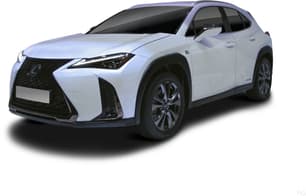
Now, we cannot tell at what level – if any – the penny-pinchers pilfered the Lexus UX for its Series II update last year, but the completely unexpected result is a small SUV/crossover that feels and drives noticeably better than before.
Keep reading to find out how and why.
Closing in on $60,000 for a small car isn’t cheap. Ask a car dealer and they might even say the hatchback is a good way to get someone into a showroom to eventually look at an SUV.
But I reckon you’d be doing the A3 a disservice to count it out. It’s always been one of those cars that does everything well, and with this current facelift manages to keep its practicality without becoming boring.
It looks good on the outside, it’s smart on the inside and it’s fun to drive while remaining sensible. Even if you get it in bright yellow.
Most cars get worse as they age as their makers try and save pennies by scrimping on quality and features. But the reverse seems to be true for the Lexus UX.
The 250h Luxury 2WD we tested is the car that the brand should have launched with back in 2018, with an appealing balance of performance and economy, comfort and sporty handling, as well as refinement and features. The UX has finally come of age.
Eye of the beholder and all that, sure, but the A3 looks cool from the outside. It’s got this angular design but manages it without being too aggressive or busy with other design elements, so it still has a ‘premium Euro’ feel to it.
Shooting pics of the car for this review, the harsh light accentuated its sharp lines. It looks sculptural rather than just some little blob.
At the same time, thanks to the proliferation of sports design packs like the S Line, The A3 looks like it could be an S3, almost. Which makes sense, because the front bumper and rear diffuser as well as the roof spoiler are all partly inspired by RS models.
New for the A3 is the flat, 2D Audi badge, the model name on the B pillar and the new font for its name on the tailgate.
The lights in the cluster are able to look narrower than before thanks to their customisable settings, which allow you to choose the light signature, while the grille has a flatter appearance and the air intakes are bigger. Even the wheels look like they’re from a sports car.
Whether you’d have the A3 in the Python Yellow of our test car is another thing. I don’t mind a loud colour but I reckon a bit of 'District Green', 'Ascari Blue' or 'Progressive Red' would be the vibe.
Also, any colour that isn’t white is a cost-option on the A3, all of them coming in at $1350, except Ascari Blue which is an Audi Sport colour and costs $1850.
Speaking of the vibe, inside the A3 feels properly nice. It’s not just a spruced up Golf in there. There’s proper Audi character to the car, though that means plenty of piano black trim to get smudgy.
Audi’s done a good job making the layout look sleek without resorting to locating all the controls in the screen. There are design elements in the cabin that aren't strictly necessary but are worth doing for the way they look.
Things like the way the vents flank the driver display or the trim inlay on the passenger side of the dash.
A hefty portion of the UX’s engineering underneath is shared with the popular Toyota C-HR. Not that you would necessarily know that by glancing at it.
Even five years on from launch, the current model looks slick and contemporary, and it seems to have informed the styling of newer, larger Lexus SUVs like the latest NX.
Not that you’d call the UX an SUV – it’s very much a higher-riding hatchback, with a ho-hum 160mm of ground clearance.
To put that in perspective, other crossovers are taller: the GLA has 213mm, while Subaru’s new Crosstrek boasts 220mm. At least the UX’s is loftier than the C-HR and its pitiful 137mm.
That said, the angular wheel arches and wide-track stance serves the Lexus well.
Starting from what’s right in front of you as a driver, the steering wheel is the same as in bigger, more expensive Audis. That’s a good thing, because it’s nice to hold, has a good shape for the nine-and-three hand position and it’s not too thick.
As well as the nice, clear buttons on the wheel, you’ve got some physical controls for the climate control and some of the vehicle functions like parking assist and stop-start under the multimedia screen.
For a car this size, the 10.1-inch central touchscreen is plenty big enough, and the fact it doesn't sit up high over the dash is great. It's like a perfect arm's length for your standard-sized adult (like me). I can reach the other side of the screen without needing to lean.
The fact there’s no head-up display is a bit of a let-down, but the now-standard 12.3-inch driver display is very good. It’s configurable yet clear, and means you can get detailed navigation information in front of you rather than having to look to the multimedia screen.
The test A3 has genuine leather upholstery, which is $1100 extra. Not the most you’d pay for leather seats in a Euro, and the seats are comfortable. They're nicely bolstered, the drivers’ side is electrically adjustable and the leather doesn’t feel hard or rough to the touch.
Sitting behind my own seating position in the second row is a little tight, however. At 178cm, my knees almost touch the seat in front. There's also no sunroof, and even though there's just about enough light, that omission doesn’t help the cramped feeling.
There are, like the front, two USB-C ports and the air vents in the back, the latter separately adjustable to avoid arguments, though the cupholders in the armrest are in an awkwardly central position.
Behind that, under the 380-litre boot's floor is a space-saver spare tyre. That's better than some SUVs designed for family adventures that only offer up an inflator/repair kit. Keep that up, Audi. Good job. Well done.
If you fold the rear seats, you get 1200 litres of space. Interestingly, those luggage space figures are the same as the BMW 1 Series.
The UX’s compact crossover-esque hatchback proportions have implications inside. Inevitably, this is no larger than the (related) Toyota Corolla, despite having the higher seating position.
Beyond that, though, the 2023 model highlights how Lexus has made its so-called ‘gateway’ model better than before.
For starters, despite being the base grade, this UX has a properly premium ambience, backed up by exceptional fit and finish.
From a sensory perspective, the UX looks, smells, feels and sounds like a Lexus should. And by the latter, we mean the cabin is pleasingly isolated from the outside world.
The overhauled touchscreen and multimedia system is a huge step forward for the series. The larger new display looks great and works well – what a monumental improvement over the infuriatingly fiddly old set-up. It’s difficult to see how they’ll improve it. Dependable and glitch-free. Are you listening, all European manufacturers?
Meanwhile, the carryover parts that worked well enough before continue to impress.
The UX’s front seats are sumptuous in their cushy softness and comfort, yet provide sufficient support over longer driving distances.
There’s also the excellent driving position, with most switchgear within grasp. There’s just enough space for taller people to settle in nicely up front. And the basics like ventilation and storage are thoughtfully executed. The climate in the UX is always fine.
Negatives? Don’t worry, we’ve identified several.
As mentioned earlier, the now-better-equipped Luxury does have all the essentials. But for a car that’s approaching $60K-drive-away, we’d expect kerb-side mirrors that dip down when reversing to avoid damaging alloys against gutters; we couldn’t get ours to auto-fold when locking up, either.
Driver vision out isn’t great. Thick pillars and that rising shoulder line make changing lanes and reversing a technology-reliant affair, as it’s difficult to see objects that are too-easily obscured. For the same reasons, a front camera would be useful in this grade.
Others might expect a sunroof, or cooled seats that massage, or a head-up display for the instrumentation, but we’d argue that they’re hardly necessities. Lexus has to upsell buyers to something.
Moving on to the back-seat area betrays the UX’s compactness most.
The back doors have small apertures. Entry/egress is challenging for folk with long legs. Legroom is tight, and three adults abreast would be a struggle, so it’s best to treat the littlest Lexus crossover as a four-seater.
Yet headroom is fine, the appearance and finish remain first class as it is up front, and the basics are all present – air vents, grab handles, coat hooks, overhead lighting, one map pocket, centre armrest with cupholders, two USB outlets, and windows that wind all the way down. Narrow front seats aid with light, vision and ambience, too.
Further back, the luggage area is pretty petite for an SUV, though the boot is (slightly) larger than the Corolla and Mazda3’s. That powered tailgate is useful if your arms are full, but the loading lip is high.
Normal boot floor depth is shallow but most of that flooring can be removed to reveal a hidden compartment underneath.
Small side pockets are also useful. You’ll find a 240V outlet. Bag hooks and floor tie-down hooks are fitted.
And – being a hybrid – there’s no spare wheel, just a tyre inflation kit. And the flimsy cargo cover is there only to keep prying eyes out.
Not big on utility, then, but the UX is true to its role as a Lexus in concentrate form.
For $54,800, before on-road costs, the A3 can be had as a hatchback - aka Sportback if you’re Audi - or for $57,800 as a sedan.
It’s a little over $4000 more expensive than the pre-facelift version, but Audi reckons there’s about $10,000 more value than before.
And value can be an important when you’ve got the BMW 118 ($57,600) and Mercedes A200 ($61,900) not sitting too far away in terms of price.
Part of the A3’s value equation comes thanks to the addition of the S Line package as standard, which not only makes the A3 look sportier but adds heated sports seats, aluminium interior trim elements and stainless steel on the pedals.
There’s also a larger 12.3-inch screen for the driver display as standard rather than an option. Audi has also reconfigured the air vents for the three-zone climate control, as well as adding a new style gear shifter.
Continued standard kit on the A3 is a wireless phone charger as well as a 10-speaker sound system, an ambient lighting package, a leather steering wheel and synthetic leather trim on the seats which all make for a sporty feel on the inside.
But on the outside there’s also customisable LED headlights and daytime running lights, as well as dynamic indicators and a set of 18-inch alloy wheels.
The car we tested also has a couple of options, its 'Python Yellow' paint is $1350 which I’ll come back to in the design section, but there’s also optional leather seats for $1100 and an electric tailgate for $660, the latter certainly worth it, I reckon.
All up, the car on test comes to $57,910, before on-roads, so even an optioned-up A3 comes in at either the same or less than its closest rivals from BMW and Mercedes-Benz.
Let’s list those changes briefly, as they inform the car you see before you.
The pre-facelift UX released in 2018 was criticised for riding too harshly and not being fun enough to drive.
So, Lexus says the MY23 version’s steering rack is better braced, the suspension and rear adaptive dampers have been retuned, the chassis gains more spot welds for added rigidity and the body is now stiffer and stronger than before. These are learnings directly applied from the UX300e EV version released in late 2021.
Most buyers will probably be more impressed with a now two-inch larger touchscreen, updated and (at long last!) easier-to-operate multimedia system, post-crash emergency services-callout should the driver end up incapacitated, upgraded voice recognition system, more-effective lane-keep assistance, improved traction through corners, better surround-view monitor and jazzed-up trim presentation.
Collectively, they strive to finally bring the expected/demanded on-brand qualities lacking from the previous model and in the UX’s largely-patchy competitor set – namely the Audi Q2, BMW X2, Jaguar E-Pace, Mercedes-Benz GLA and Volvo XC40.
This is especially so when sizing up the entry-level front-wheel drive grades (euphemistically dubbed 2WD at these exalted heights) of each, as we have done with the least-expensive hybrid version of the UX, the 250h Luxury from $53,820 (all prices are before on-road costs).
Costing nearly $8000 more than the base 200 Luxury petrol version, the hybrid accounts for the lion’s share of sales, and really has no direct electrified premium rival at that price point, except in the recently-released Alfa Romeo Tonale Ti from $49,900 – though that’s a mild-hybrid set-up with a 48-volt battery.
Along with an electric motor and a small Nickel-metal Hydride (Ni-MH) battery, the 250h Luxury is compellingly equipped for a base grade, including a 12.3-inch touchscreen, wireless Apple CarPlay, wired Android Auto, Bluetooth telephony, ‘Hey, Lexus!’ voice recognition, 10-speaker audio, digital radio, satellite navigation, remote engine-start/door-unlocking/hazard flashers/buzzer, acoustic windscreen glass, heated/powered mirrors, powered steering column, heated/powered front seats, climate control, keyless entry/start, a powered tailgate, roof rails, alarm and 17-inch alloys.
The 250h Luxury also comes with ‘Enhancement Pack 2’, featuring a powered tailgate with kick sensor, a wireless phone charger, cornering lights, headlight cleaners and rear privacy glass.
On the safety front, there’s all the usual driver-assist tech equipment including Autonomous Emergency Braking (AEB), lane-support systems and rear-cross traffic alert, amongst other items. Check our safety section for a full rundown.
So, yes, the UX 250h Luxury represents strong value. Even for a luxury-branded vehicle.
The A3 is powered by a 1.5-litre, turbocharged four-cylinder petrol engine that makes 110kW and 250Nm.
It drives the front wheels via a seven-speed dual-clutch auto transmission and it can hit 100km/h in a claimed 8.1 seconds.
It’s also got a 48-volt mild hybrid system to help with efficiency, though you’d need to be told about it to notice. It also helps with the A3’s (smooth) stop-start system.
The UX’s Corolla/C-HR connection continues with its 2.0-litre (1987cc) twin-cam four-cylinder petrol engine, delivering 107kW of power at 6000rpm and 188Nm of torque between 4400 and 5200rpm.
The 250h Luxury pairs that with an 80kW/202Nm permanent magnet motor and 1.4kWh Ni-MH battery, for a combined power output of 135kW. A second, rear-mounted motor is available in higher grades, providing all-wheel drive. But not in this Luxury guise.
As with most Toyota and Lexus hybrids, charging is only via the petrol engine and recuperated energy from braking. Electric-only drive is only offered during brief spells of low-speed light-throttle driving, or off-throttle coasting where conditions allow.
Drive is sent to the front wheels via an electronically-controlled continuously variable transmission (CVT). Three modes are offered – 'Eco', 'Normal' and 'Sport'.
Tipping the scales at 1625kg (kerb), the 250h Luxury offers a power-to-weight ratio of nearly 83.1kW per tonne. That’s a hefty output for a hybrid. Top speed is 177km/h, with 0-100km/h needing 8.5 seconds.
Underpinning that performance is a MacPherson-style strut-front and a multi-link rear suspension set-up.
The A3’s 50-litre fuel tank needs to be filled with RON 95 premium fuel and it’ll drink a claimed 5.3-litres per 100km on the combined (urban/extra-urban) cycle.
Theoretically you’re topping 900km a tank there, but given how fun this car is to drive you’d have to be well behaved to get even close.
For reference, whenever I was on a normal, day-to-day drive on test the A3's trip computer was returning figures in the mid to high sixes.
Officially, the 250h averages an impressive 4.5 litres per 100km on the combined cycle, which is just 103 grams per kilometre of carbon-dioxide emissions.
Now, out in the real world, with plenty of inner-city and urban driving as well as a spell of fast highway runs punctuated by some very heavy-footed acceleration, we managed just under 7.4L/100km pump-to-pump.
That’s not too bad given how hard our UX was caned. The trip meter showed 5.6L/100km over the same distance (nearly 400km).
This is one Lexus hybrid that will happily sip from the standard 91 RON unleaded petrol pump. With a fuel tank capacity of a smallish 43 litres, expect a range of between 930km and 1000km.
For a luxury small crossover, these are economical figures.
First things first, the A3’s exterior and S Line pack are a clue to the way the car drives. It’s probably not the perfect car if you like a cushy, soft ride.
Its suspension errs towards the stiffer side of things, and certain bumps can feel more significant than they need to. But even on particularly bad roads or tram tracks in the city the dampers do a decent job of soaking up the harsh stuff.
It also means there’s more road noise than you’d like on some older highway surfaces, but only in a way that might get annoying if you’re on a road trip with the stereo off for some reason.
The upside of that is its steering feels well weighted and accurate. Plus, the way it handles and corners feels like a bit more grunt would make this a proper driver's car.
It’s not too intense, and there’s enough feedback to make it feel like the A3 shouldn't be a city-dweller only when it comes to driving.
Of course, it’s a hatchback, so you've got the advantages that come with less weight and a lower centre of gravity.
It doesn’t have enough weight to push into understeer more than you’d like on a tight corner. But it also doesn’t feel so light that you’re not sure how it’s going to behave under sharp braking.
The A3’s drivetrain, despite looking underwhelming on paper, feels practical on the road. Sure, 110kW isn't anything wicked, but its 250Nm feel like they’re working in the right places - that being between 1500 and 3500rpm.
It isn't blisteringly quick but even with the seven-speed transmission operating in default auto mode it usually feels like it's in the right place, let alone chipping in with 'manual' shifts via the paddles or shifting drive modes. The A3 has a choice of 'Normal' and 'Sport' shift settings.
You might be a little disappointed if you thought you’d be getting anything approaching a hot hatch, but for an entry-level model the A3 more than holds its own. It’s a solid platform that performs well without compromising too much when it comes to daily driving ability.
Before driving the 2023 UX250h hybrid, there was some trepidation.
All versions of the original series from 2018 were tested previously, and in every one bar the base 200 on small wheels and tyres, none lived up to the promise of a premium Lexus crossover. A harsh ride, excessive noise intrusion and dull handling made this model a disappointment.
That’s all in the past, thankfully, thanks to a sustained program to save the UX from mediocrity. The company really got the basics wrong the first time around with the horrid CT200h predecessor back in 2011, so we imagine that it would be damned if this was going down the same sorry path again.
In the 250h Luxury, as reviewed here, it is difficult to objectively fault the way everything works and drives.
Let’s start with performance. Even in Normal or Eco mode, the UX steps off the line briskly, and initially at least, it’s the electric motor and battery that silently whooshes the car forward.
If you’re gentle, you can reach speeds of up to about 40km/h before the petrol engine chimes in unobtrusively.
Beyond that, there’s a stream of electric power you can feel, keeping the acceleration coming on strong, even as speeds rise above 100km/h.
This is also true for Sport mode, except that it all happens a bit quicker and earlier, and with extra urge.
And the welcome news here is that the CVT doesn’t really make the engine sound too droney, unless the driver is mashing the pedal to the metal.
Travelling along at normal urban speeds, there’s a seamless transition from electric-enhanced petrol propulsion back to electric-only if the conditions are right – such as when coasting off-throttle.
This is most common in heavier traffic, and the resulting smoothness and quietness adds to a refined and relaxed experience.
About our only objection is when you apply the brakes. In our test car, they felt a little on/off, like a switch. At times, they seemed too grabby for smooth stopping.
That said, the driver can downshift using the gear lever to provide powertrain braking, to help minimise snatchiness.
Road noise seems to be more muted than before, supporting Lexus’ claims that retuning the suspension and beefing up the structure/chassis has helped with refinement.
We wouldn’t say the UX is at the top of the class for quietness, especially on Australia’s coarse-bitumen highways, but now things have hushed sufficiently enough for a crossover purporting to be a premium.
Where the suspension changes really transform the UX, at least on the 215/60R17 tyres the Luxury wears, is how much softer and comfier the ride is.
Where before there was suddenness there’s now suppleness, substantially improving the experience. We wonder whether the bigger-wheeled rubber the richer grades receive are as well-resolved.
As the 250h Luxury is not trying to be a hot hatch, the resulting body lean through fast corners is a happy trade-off, though it’s not so roly-poly that handling composure is adversely affected.
Plus, the steering – while light and easy at parking speeds – still offers enough response and feedback for most drivers to enjoy taking the UX for a cross-country blast once in a while.
To that end, the steering’s weighting does increase in Sport mode… though you won’t be selling your Peugeot 205 GTi for one just yet, but that previous dullness is history. In fact, whether behind the wheel or ensconced in one of the inviting outboard seats, the UX250h as a whole is a much sunnier experience all-round than before.
Tested in 2020, the A3’s been awarded a maximum five-star rating from ANCAP which applies to the facelifted version.
Six airbags and a suite of active safety tech helped contribute to this, though, whether it would pass with five stars under ANCAP’s current assessment protocols isn’t certain.
That’s likely only down to its relatively non-invasive safety warnings and mild assistance with things like lane-keep and speed warnings.
If you’re someone who’s likely to turn off most of the electronic assistance, the A3’s systems are at a pretty good level as standard.
It’s missing some modern kit like surround-view parking cameras but it does have front and rear proximity sensors and things like rear cross-traffic alert.
Tested in 2019, the UX has managed an ANCAP crash-test rating of a maximum five stars. The rating applies to all models built from October, 2020, onwards.
That’s no surprise, given the level of standard safety equipment fitted, even to this entry-level 250h Luxury grade.
You’ll find eight airbags – dual front, side chest, side head and driver and passenger knee – as well as Lexus’ ‘Pre-collision safety system’ with AEB for pedestrian (day/night) and cyclist (day) detection and daytime intersection assistance.
The AEB functions from 10km/h to 180km/h and the lane support systems between 50km/h and 180km/h.
Also included is lane-keep assist, speed-sign recognition, rear cross-traffic alert, parking support braking, blind-spot monitor, emergency steering assist, auto high beam, full stop/go adaptive cruise control and front and rear parking sensors.
Anti-lock brakes with brake assist and electronic brake-force distribution, traction control, stability control, active cornering assist, four-wheel disc brakes and a reverse camera are fitted.
Lexus’ Connected Services offers SOS emergency call, stolen vehicle tracker and other GPS-based assistance features.
The outboard rear seats include ISOFIX child restraint anchors and there are three top tethers for baby capsule/child seat straps across the second row.
Audi offers a five-year/unlimited kilometre warranty, which is about par for a premium brand, but it also offers five years' free roadside assist and the ability to pay to extend the warranty.
Servicing is $2520 for a five year plan, but the extended two years of 'Audi Advantage' warranty is $3250 and comes with unlimited kilometres, roadside assist and covers two services.
Lexus offers a five-year/unlimited kilometre warranty and roadside assistance.
Service intervals are at 12 months or 15,000km.
The first three scheduled services are capped at $495 each, with the work carried out detailed online.