What's the difference?
If you’re someone still convinced the newcomer Chinese brands don't have what it takes to shake up the Australian new car market, this might just prove you wrong.
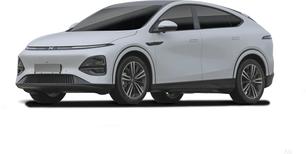
It’s the 2025 XPeng G6 Long Range, and it’s a lot like the Tesla Model Y, only cheaper – and, in some ways, much better.
Don't believe me? Read on and I'll prove it.
The SsangYong Tivoli XLV is about as unknown to Australian customers as cheeseburgers are to the tribespeople of the Amazon.
That is to say, if I asked your opinion of the SsangYong Tivoli XLV, you’d probably have no idea what I was on about. You may be unsure of its origins, unclear of its intentions, and generally baffled by the concept of it. The Amazonians may well feel the same way about burgers.
However, if Korean SUV specialist SsangYong has its way, the Tivoli XLV will become as hip and desirable, as Instagrammable and indulgent as the most clickable cheeseburgers out there. Geez, I’m hungry.
The Tivoli XLV is essentially a longer, taller version of the shorter, lower Tivoli, which is also coming to Australia. It keeps the Tivoli part of the name because it’s largely very similar, but the XLV has some points of difference: it’s all-wheel drive only, it’s diesel only, and it’s clearly one of the most practical small SUVs in the class.
What does XLV stand for? According to SsangYong, the acronym represents “eXciting smart Lifestyle Vehicle”.
Scratch that. Think of it as the 'eXtra Large Version' of the brand’s smallest vehicle, and you’ll be most of the way to understanding just what this big small SUV is all about.
You never know quite what to expect when you jump into the first model from a brand-new brand, but the XPeng G6 was a pleasant surprise. And at this price, with these features, it should really give Tesla Model Y shoppers something to think about.
Depending on the pricing and specifications, the SsangYong Tivoli XLV might well offer an interesting alternative to the mainstream small SUV crowd. The safety score is a bit of a deterrent, but that may not rule it out for all buyers.
It’s almost like this is a provisional review, because we simply don’t know much about the brand’s strategy ahead of the local range rollout in November.
One thing’s for sure: just like a cheeseburger or any good laboured pun, we can’t wait to get our hands on some of the finer details from SsangYong Australia.
There’s more than a little Tesla Model Y in the XPeng’s exterior design, with the two sharing the same kind of soft-edged, swept-back SUV styling.
It helps make the XPeng look familiar and inoffensive, and while I wouldn’t go so far as to call it ground-breaking, I think it has enough exterior flourishes to break up the body work, and I don’t mind the way it looks, and the way it sits on those big alloys.
Inside, it’s a spacious and pretty stylish space. This giant screen is super responsive, and is easy enough to navigate, with the key functions (like climate) glued to the bottom of the screen so you don't have to paw through menus to access them. The idea begins to fail when you have Apple CarPlay or Android Auto active, though, as you have to revert back to the car's home screen to access anything.
The XPeng uses its steering wheel controls to access air-con fan and temp controls as a kind of shortcut, but confusingly they change to distance adjustment when you’ve got the cruise control on. An easier, and much better solution would be to bring back buttons.
I also don't love the stalk-style gear selector, which doubles as a cruise control activator, and, with a double pull, as your autonomous helper. It just feels super old-school in a vehicle this modern.
What is a massive win though is the driver screen. Tesla fans can scream minimalist aesthetics all they want, but the drive experience is simply better when you can see your speed and other key info right in front of you.
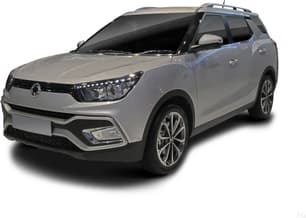
One look and you might think 'honey I shrunk the Stavic', and that’s not too bad of a summary. There are some ungainly touches to the design of the Tivoli XLV - as you might expect from a small SUV that has been stretched.
But from some angles, it doesn’t look too bad. The front end is quite fetching, I think, with those projector halogen headlights with LED daytime running lights cutting a different shape to many of its rival models sold in our market. However, the overtly lipped quarter panels aren’t to all tastes, and the curved, clear-lensed tail-lights aren’t going to win any beauty contests.
I don’t think it’s ugly in the same way the original Stavic was… but SsangYong let us in on a secret at the launch event in Korea: there’s an updated, facelifted version of the Tivoli XLV and the regular Tivoli due in June 2019. It may be worth waiting for, because not only will it bring a new, more modern look, it will probably add equipment and safety features.
What do you think? Does it look more or less attractive than, say, a Honda HR-V, Mitsubishi ASX or Nissan Qashqai? Tell us in the comments section below.
Now, size: the XLV is essentially a stretched, more family-friendly version of the Tivoli. Both are built on the same line, and everything is pretty much the same from the C-pillar forward. It measures 4440mm long (which is 198mm longer than the standard Tivoli, both on a 2600mm wheelbase), 1798mm wide and 1635mm tall (Tivoli is 1590mm). The XLV is longer than any other small SUV it competes against.
Australian customers are expected to be able to choose between an array of eight body colours and a contrasting roof finish. One really smart combination is the red body and black roof, and high-spec models are expected to get flashy 18-inch wheels (with 16s on low spec models).
The benefits of the Tivoli XLV’s stretched body are clearest in the boot area, which beats some mid-sized SUVs.
At 4753mm in length, 1920mm in width and 1650mm in height, the XPeng fits into the fast-growing mid-size electric SUV space.
And it ticks a lot of practicality boxes, like with its 571-litre boot, swelling to 1374 litres with the seats folded. But its real party trick is in the back seat, where the space is properly massive.
I have another mid-size SUV, powered by a petrol engine, at the moment and our baby seat presses against the back of the passenger seat. In this it feels like I could fly a kite in the space between them.
It’s the same for passengers, too. Honestly, the real estate on offer is massive, and that includes for the middle-seat rear passenger, where the lack of a bulky tunnel eating into legroom means adults can sit there comfortably.
There's a pull-down divider separating the back seat that's also home to two cupholders, and there are twin USB connections, as well as air vents (though no temp controls).
There's no spare tyre, though, which means fiddling with the repair kit should you get puncture, or waiting for roadside assist.
If you’re buying the Tivoli XLV, it’s arguably because it’s a compact SUV with the interior space of a bigger SUV inside. With a claimed cargo capacity of 720 litres (VDA), that makes sense. The XLV adds 297L more space (VDA) over the Tivoli, with a bigger boot than some very big SUVs.
In person the boot looks pretty big, but not as enormous as the numbers suggest. The fact there’s a false floor set-up is handy, though, and the packaged from SsangYong to be able to engineer so much boot space and still offer a four-wheel-drive system and multilink rear suspension is almost genius. Many brands can’t do it as well as SsangYong has. And going by SsangYong’s promise to fit a full-size spare wheel to all of its AWD models, the packaging is even more impressive.
It was handy for us to drive the XLV alongside the Musso and Rexton, both of which are newer-generation models that feel more modern inside. That isn’t to say the XLV feels old - it’s just not as special as its bigger siblings. Again, the face-lifted model due in 2019 could go a ways to fixing that.
If I had to compare the quality and design of the XLV to any car, it would be the old Hyundai ix35. You remember that small-to-mid-size SUV that came before the Tucson, which was on sale here from 2010 to 2015? Well, its cabin design and materials were fine, but nothing special. A bit like the Mitsubishi ASX, which launched around the same time as the ix35, yet is still sold today (and in big numbers!).
The front seats are pretty comfortable and the driver’s seat has good adjustment to it, but taller front seat passengers may lament the lack of height adjustment to the seat - especially in models fitted with a sunroof.
In the back there’s easily enough for a 182-centimetre-tall adult to sit behind their own driving position, with more knee room than most small SUVs, and reasonable shoulder and head room, too. The XLV is a five-seater, and three across the back is possible, but not enjoyable. There are dual ISOFIX child-seat anchors for outboard seats, and top-tethers across the width.
Okay, first things first – what the hell is XPeng? It's been around for about 10 years in China, but only made its way to Australia last year. It was founded by some former car company execs and tech tycoons — one of whom is telecommunications billionaire He Xiaopeng, which is where that name comes from.
Anyway, this one is the XPeng G6, which launched in Australia with two trims – the Standard Range, which is $54,800, before on-road costs, and the one we’ve tested, the Long Range, which is $59,800. The difference is in the battery size, of course, but we’ll get to that in a minute.
As of now, the new Model Y can be ordered for $63,400 for the Standard Range or $73,400 for the Long Range, which makes the XPeng a whole heap cheaper.
Outside, you get LED lighting all around (including the DRLs), a massive glass roof, auto door handles, an auto-opening boot, a V2L connection, which allows you to use your XPeng’s battery to power whatever you plug in and big 20-inch wheels wrapped in Michelin rubber.
You also get some cool high-tech features, accessed through the XPeng app, like the ability to drive your car out of tight parking spots remotely.
Inside, there are synthetic-leather seats that are heated, a heated steering wheel, dual-zone climate, a massive 18-speaker sound system (with speakers in the headrest), wireless charging and two very handy screens — a responsive 15-inch central screen with Android Auto and Apple CarPlay, and a 10.2-inch digital dashboard.
There’s also more safety stuff than you can shake a crash test at, but we’ll come back to that in a second.
We don’t know what price SsangYong is aiming to list the XLV model range at, because the company hasn’t yet confirmed pricing and specifications. So we can’t tell you what it will cost.
But we do know there will be manual and automatic variants available in four-wheel drive only (4WD/AWD) at launch, and it will be diesel only. The smaller Tivoli will be offered with petrol and diesel, and a more affordable front-wheel drive model.
There’s an expectation that the XLV will come well specified as standard, but that two trim levels will be offered.
The base model will likely have cloth seat trim, dual-zone climate control and a leather-lined steering wheel, while the top-spec will come with leather seat trim. All models will likely come with a touchscreen media system with Apple CarPlay and Android Auto, plus USB and auxiliary inputs and Bluetooth phone and audio streaming.
Seat heating, auto headlights, auto wipers, a sunroof, 18-inch wheels (as opposed to 16s on the base spec), push-button start and keyless entry could be offered standard in the high grade version - but we’ll have to wait and see.
Expect more safety equipment in the top version, too, but a reversing camera and parking sensors should be offered range-wide.
As a potential budget-conscious offering pitched against relative high-spec small SUVs, the Tivoli XLV prove intriguing. Think of a Honda HR-V VTi-L, which lists at $33,390, and has a 1.8-litre petrol engine and is front-wheel drive… a similarly specified diesel AWD automatic model could be tempting.
This G6 is a rear-wheel drive affair, with a single electric motor housed at the rear axle. It produces 190kW and 440Nm in Standard Range form or 210kW/440Nm in Long Range guise, which don’t sound like massive numbers — especially given the 2.0-tonne-plus weight of this XPeng – but it gets up and moving just fine.
The 100km/h sprint is a claimed 6.2 seconds, while the top speed is 200km/h.
The XLV will come with only one engine option - a 1.6-litre turbocharged four-cylinder diesel engine. Hardly a horsepower hero, it produces 115kW of power (from 3400-4000rpm) and 300Nm of torque (1500-2500rpm).
It is available with a six-speed manual or six-speed automatic, with a standard-fit 4WD system known as 'Torque On Demand 4x4', which can sense the surface under the tyres and apportion torque to the rear axle to ensure better traction. SsangYong says it may offer a front-wheel drive XLV if demand necessitates.
A diesel engine isn’t unique, but it is rare in the small SUV class. But the fact of the matter is about 90 per cent of small SUVs sold are petrol-auto, so diesel could miss the mark for a lot of buyers.
The XLV offers a bonus element - towing capacity: the XLV can cope with a 500-kilogram unbraked trailer, and a 1500kg braked trailer - pretty strong for a compact SUV. Consider it competing against the Mazda CX-3 diesel AWD (640kg un-braked, 800kg braked) and Mitsubishi ASX (750kg/1400kg).
The Long Range version of the G6 nabs a 87.5kWh battery (compared to 66kWh in the Standard Range), unlocking a claimed driving range of 570km.
The official power use figure is 17.5kWh/100km, but I did a fair bit of driving on all sorts of roads and my number was more like 14kWh.
When it does come time to charge, the G6 is set up for 280kW DC fast charging which means, should you find the right fast charger, a 10-80 per cent charge should arrive in just 20 minutes. Home charging will take a lot longer, of course – we’re talking overnight plugged into a regular wallbox.
The fuel consumption claim for the Tivoli XLV 4x4 auto is 6.3 litres per 100 kilometres. That’s not bad, and some small SUVs are better…
The Mazda CX-3 diesel AWD auto, which has a very low claimed consumption of 5.1L/100km (admittedly, it has a 1.5-litre engine with just 77kW/270Nm). But even the 2.2-litre turbo-diesel Mitsubishi ASX AWD auto uses less, at 6.0L/100km, and it’s almost a decade old. That engine has 110kW/360Nm.
The Tivoli XLV is a fair bit bigger than those two models, but even so, the fuel use should be a bit lower. It just goes to show the engine is working hard to deal with the weight of the Tivoli XLV, which in its heaviest guise, weighs 1535kg. Beefy.
How much you love your time behind the wheel of the XPeng G6 comes down to what you're looking for from your mid-size electric SUV.
Speed and sportiness? There's not much of either. But it does serve up tons of space and technology, surprising refinement and a calm and cosseting ride.
And I think you can mount a pretty solid argument that all of that is pretty important in a mid-size SUV, more so than the ability to carve corners.
I did some solid driving in the G6, including a round trip from Sydney to the start of the NSW South Coast, taking in every road type and surface imaginable, and XPeng proved super comfy, pretty quiet and very, very easy the entire time.
Sure, it's not one of those EVs that makes the scenery blur when you put your foot down. Its outputs and acceleration are a bit more user-friendly than that. But it also doesn't ever feel underpowered, with the plenty of poke away from the lights and even some in reserve for freeway overtakes at 110km/h.
The steering, even in its 'Dynamic' mode, is fairly soft, and you can never magic away the weight of the XPeng in corners, where that compliant suspension does allow for some roll, but it also doesn't feel entirely disconnected from the road below in that disconcerting way some vehicles can.
So, if comfort is mission critical in your SUV space, the XPeng delivers.
Oh, and I know that big screens aren't that uncommon these days, but the multimedia unit in the XPeng is a treat. It's super fast, even when scrolling across maps, and it's relatively user friendly, too.
It’s difficult to learn what a car is all about over 29km, but that was the task I was handed in Korea, where I drove the Tivoli XLV from the hotel in Gangnam, Seoul, to a rest stop some 24km north of town. Then I jumped in some other models, before eventually getting a further - very illustrative - 5km stint behind the wheel at an off-road coarse later in the day.
There was some traffic, slow moving highway driving, and even a bit of higher-speed cruising. And it was fine.
The diesel engine was impressively refined and quiet, so much so that I initially thought it was a petrol. But after a couple of instances of traffic halts, it became clear there was a little more rattle from under the bonnet, and a more heft over the nose than you’d expect of a petrol.
That said, the performance was muted. With a torque output of 300Nm, you might think it would be potent - but it’s really not, and there’s some hesitancy from standstill, not to mention some sluggishness during roll-on acceleration.
The six-speed auto transmission did a good job, as far as I could tell, but a more arduous test loop will sort the facts from the feels.
As for the dynamic element, it’s hard to say anything other than the XLV felt smaller, more nimble and more fun to drive than either the Rexton or Musso models I also drive. The steering was adequate in its response, if a little lifeless, and the ride was a touch harder than I was expecting, but not sharp or punishing.
If you’re interested in off road specs, the Tivoli XLV is said to offer a 20 degree approach angle, a 20.8deg departure angle, and 17.0deg ramp-over. More of a problem, though, was the lack of ground clearance. The figure is just 168mm, which isn’t much more than some regular run-of-the-mill hatchbacks. Consider this: a Subaru XV has 220mm. Yep.
The suspension travel isn’t huge, either, with stiff-legged feel to the model we drove. Part of that could have come down to the stylish 18-inch alloy wheels and low-profile tyres, but it simply isn’t a soft and wobbly off-road SUV. It’s a monocoque chassis small crossover, so if you want a more serious SsangYong off-roader, the ladder-frame Rexton could offer a lot more appeal.
The XPeng G6 wears a maximum five-star ANCAP safety rating from assessment in 2024, owing mostly to a flood of active safety features that arrive as standard, including AEB (with pedestrian, backover, cyclist, motorcycle and crossing detection), lane departure warning, lane keep assist, speed sign recognition, driver monitoring and more.
But it could also lay claim to a unique record – the first Chinese EV in which the safety systems don't make you want to make you pull your hair out with their incessant chiming and bonging.
Only on the freeway, where an intermittent chiming incorrectly warned me I was leaving my lane, were the safety systems at all overzealous. Otherwise, they were entirely liveable.
If a crash is unavoidable, the airbag count runs to seven (dual front, front side, side curtain and front centre) and multi-collision brake is standard, to minimise the chances of a secondary crash following an initial impact.
The Tivoli XLV doesn’t have an ANCAP crash test rating, but it was tested by Euro NCAP in 2016, where it scored a less-than-excellent four- out of five-star score. That’s in spite of the fact it was available with auto emergency braking (AEB), too.
According to SsangYong, the “top of the range Tivoli will feature AEB, lane departure warning, lane keep assist and high-beam assist”. We’ve heard that will be mirrored in Tivoli XLV flagship spec, too.
The Tivoli XLV has seven airbags (dual front, driver’s knee, front side and full-length curtain), as well as a reversing camera and rear parking sensors. ISOFIX child seat anchors are standard.
I'm scoring the regular warranty offering here, which is five years or 120,000km, with the battery covered for eight years or 160,000km. Keep an eye out for deals, though. At the time of writing XPeng was offering a 10-year warranty on both, for example.
Service intervals are 12 months or 20,000km. The cheapest individual service is $238, but over five years the total cost is $2064, averaging out to more like $410 per year.
Nothing has been confirmed yet, but we suspect SsangYong could be working to match one of the best warranty offers in the Australian market in mimicking Kia’s seven-year/unlimited kilometre plan. In the UK SsangYong models have seven-year/150,000 mile (241,000km) cover, but an unlimited mileage offer is expected here.
If that’s the case, and models like the Tivoli XLV can be competitively priced for servicing, and with reasonable (read: not too frequent!) service intervals, then the score for this element of our test could increase in later reviews.