What's the difference?
The third-generation Volkswagen Tiguan is likely to be the most important new vehicle Volkswagen launches in 2025.
The popular mid-sizer has proven to have impressive staying power for the brand, with the outgoing version still impressing buyers despite being nearly a decade old.
What does this ground-up new version change? Does it have what it takes to maintain the nameplate’s reputation in one of Australia’s most hotly contested market segments? And what are some surprises this time around?
We went to its local launch to find out.
Sedans have long been supplanted by SUVs as the family favourite but they still have their charms for those drivers who like something that feels more dynamic on the road.
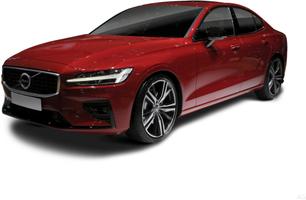
Enter the limited edition Volvo S60 Recharge Black Edition which sees the return of a plug-in hybrid powertrain for Volvo’s only sedan.
I’ve been family-testing the PHEV variant to see just how practical a sedan is for the modern family, and whether it's rivals, the Audi A4, BMW 3 Series and Mercedes-Benz C200 have anything to worry about.
The new Tiguan is as confident as ever in its identity, even in such a crowded mid-size SUV space where there are so many models worthy of your attention.
No matter which version you choose, this is still the mid-size SUV for a driving enthusiast who doesn’t quite have premium dollars to spend.
While it may not quite expand its appeal as much as the brand hopes precluding a hybrid variant, those who are choosing this as their family hauler for the right reasons won’t be disappointed.
Note: CarsGuide attended this event as a guest of the manufacturer, with travel, accommodation and meals provided.
The Volvo S60 Recharge Black Edition proves sedans can still be sexy and an excellent family car, providing your family is on the smaller side. I only have one kid, so it's perfect for our activities and gear. It’s wonderful to drive and has a great features list but it's not without its quirks.
My son thinks it looks cool, and we enjoyed bellowing out a few renditions of the original Batman theme song this week. He has had a lot of comfort in the back seat, too.
The new Tiguan is a bit of a mind-bender. Its new design seems to make it feel smaller than the outgoing vehicle, despite it being both slightly wider and longer.
This, I have decided, is because the design creates a visual effect, where the upper curvier parts seem to shrink it down, and the additional length makes it seem narrower than the more boxy visage of the previous model. Also, it’s 20mm shorter than the previous design, which we’re told combines with the new bodywork to make for a 15 per cent drag reduction.
Either way, it’s nice not to see a mid-size SUV not continually engage in an arms race to get bigger and bigger. Volkswagen will also introduce the dedicated seven-seat Tayron later in 2025. It’s a half-size up and replaces the outgoing Tiguan Allspace, and this time it features a much more distinct design from its Tiguan sibling.
The third-generation Tiguan not only embraces a more curvy design aesthetic than its predecessor, but it also features many more contemporary design elements. The headlights and curvy accents over the wheelarches feel like they more closely associate this SUV with the new ID.4 and ID.5 EVs, while the light bar across the front on some grades combines with the new light bar across the rear to give it a trendy silhouette. It tops things off with the ‘Tiguan’ letterwork on the tailgate, and, as usual, a sporty spoiler fitting giving the rear hatch a bit of depth.
As usual, VW’s array of gloss-black, chrome or plastic garnishes on the outside, depending on grade, offer a subtle and tasteful finish to the exterior appearance.
The inside is revolution rather than evolution, now heavily screen-centri, and featuring an array of lighting features like many of its rivals.
The screens look the part and have fast and mostly straightforward-to-navigate software, while the seat designs are a real highlight, being both aesthetically pleasing and nice to the touch in all grades.
The ambient lighting features add a sense of presence to the cabin, and unlike the outgoing car, the new one feels a bit more driver-centric thanks to the design of the dash and screens effectively pointing their way down the road from the driver’s point of view.
It does away with the sparse feeling of the previous car, elevating things a notch with an increase of nice materials throughout.
While some may find the abundance of gloss-black finishes a bit harder to maintain, it’s hard not to feel like this new Tiguan is a major generational jump from the previous one. Mission accomplished, VW.
The S60 Black Edition nails it on design. It sports a handsome and sleek shape that manages to look sporty and elegant. It's exactly what you expect a luxury sedan to look like.
My seven-year old dubbed this the Batmobile, and for good reason, every accent is black!
The grille, badge and 19-inch five-spoke alloys look aggressive against the 'Hammer of Thor' LED headlights and make this design look hot.
You better like black paintwork, though, as that is the only choice for this variant.
The interior hasn’t seen any changes for the 2025 model and it seems Volvo is streamlining most of its interiors to look the same.
You could find this dashboard in most of its cars, which is fine because it’s a good-looking treatment full of soft-touchpoints and high-quality materials. But there’s also nothing that sets the Black Edition apart from its stablemates. It would be nice to see a point of difference.
The dashboard is headlined by the 9.0-inch touchscreen multimedia system and a 12-inch digital instrument cluster. You have some other nice focal points in the large sunroof and massive air-vents, which add some interest to the dash.
Overall, it’s a pleasant interior but maybe not as fun as some of its rivals.
Like the previous model, VW hasn’t forgotten its pragmatic touches for the interior, despite its increase in complexity and appointments.
Finding a driving position was easy for me at 182cm tall, with both a healthy adjustment range for the seats and steering wheel. The digital instrument cluster remains one of the best on the market in terms of usability and customisation, while the multi-function steering wheel commits to buttons rather than the widely-disliked haptic feedback panels, which have appeared on various other VW models.
Unfortunately, this doesn’t entirely extend to switchgear for key functions, with the climate control exclusively controlled via touch sliders, a touchscreen menu or the Tiguan’s new voice control suite, none of which are as intuitive as just having a physical dial for temperature and fan speed and buttons for recirculate, auto and on-off.
However, the Tiguan does have a central dial on the console, which can cycle through volume control, drive modes or ambient lighting modes when pressed. A welcome addition.
Moving the shift stalk to the steering column, like the ID.4 and ID.5, has also allowed additional space for the centre console area, which is now quite versatile. It includes a variable-height armrest console box with either dividers or a dual-bottle-holder fitting, which can be interchanged between the two areas, while the dual-charging bays up front have a rubberised cover, which can be pulled down as to not waste the storage space. This has the additional feature of making the cooling system for the wireless charging phones more effective.
There are two large bottle holders and pockets in each door, which have a carpeted finish to reduce vibration, and there’s also a passenger glovebox.
The rear seat offers a healthy amount of space behind my own driving position. I had leagues of knee room and a healthy amount of airspace above me, however the presence of a tall raise for the transmission tunnel eats into the amount of room a centre passenger would have for their feet.
The comfortable seats continue and are on rails if you need to increase the amount of room in the boot, or simply want a more aggressive recline. When it comes to storage, there are bottle holders in each door, a drop-down armrest with dual bottle holders, dual USB-C outlets on the back of the console, as well as dual air vents with a touch control panel for the independent third climate zone. The only thing it seems to be missing is built-in window shades, which are offered on some Skodas and the now-discontinued Passat (RIP).
The boot helpfully features a powered tailgate on all grades, and measures in at 652 litres with the second row up, or 1650L with the seats down. Numbers can be deceptive, but it does seem large for the class, and there’s a space-saver spare wheel under the floor.
The cabin of the S60 is fairly practical with the front row feeling spacious for my 168cm height. It’s a low car, so if your knees squeak you might find it annoying to get in and out of!
The comfort of the front seats cannot be understated. They feature a two-position memory function, lumbar- and side-bolster adjustments and under-thigh extenders. Plus, with the heat and ventilation functions, you’ll look forward to a long journey.
Because of the sloping roofline, it’s a bit awkward to get in and out of the back seat but once you’re in there is a stack of room (behind my driving position) and the outboard seats hug you into position, so you don’t move around in corners.
Seats are comfy for long journeys and outboarders enjoy heat functionality, too. The pillar-mounted directional air vents are super practical and the hardened kickplates are a godsend for parents with wildlings like my son, who seem to want to put their feet on everything.
The transmission tunnel is massive, though, so keep the middle seat reserved for kids only.
Up front, individual storage isn’t as great as you might hope for with the glove box being the largest cubby on offer. The middle console is literally a tray and it doesn't fit my iPhone 15 Pro Max (I have a thin case, as well!).
There's no centre console storage aside from the two cupholders, and this variant misses out on a wireless charging pad, so my phone and 'bits' have been shoved into the cupholders or on the passenger seat, which is a tad annoying. The storage bins in each door feature a small drink bottle holder but are, again, shallow.
Individual storage is a bit better in the rear with two net map pockets, two large cupholders in the fold-down arm rest, as well as a drink bottle holder in each storage bin.
Technology is well-rounded and the multimedia system (powered by Android Automotive) is easy to use, but curiously you don’t get Android Auto in this model!
You do get a bunch of built-in apps like Google Maps and Spotify. There's wired Apple CarPlay and satellite navigation, too.
You get a head-up display and the digital instrument cluster looks high-end with its graphics and shows your sat nav directions, which is always handy.
Charging options throughout are good with two USB-C ports in each row, while the front also gets a 12-volt socket.
The boot is slightly smaller compared to its rivals at 427L thanks to the electric components but it is still well-sized for my grocery run and it’s not too difficult to grab things that slide to the back.
You get a 'tyre mobility kit' (rather than a physical spare) underneath the floor and I like the way you can hang the home charging cable bag out of the way.
The Black Edition has a hands-free tailgate which is operated by a kick-function. But you don’t have an electric button on the lid and the kick-function didn’t always work to close it! That said, the lid isn’t heavy, so it’s nothing to split hairs over.
Volkswagen is attempting to broaden the appeal of the Tiguan this time around. As such, it hasn’t jacked prices up massively like some recent new-generation versions of rivals, despite a comprehensive cabin tech overhaul and big lift in standard equipment.
As a result, the range is vast, with six variants covering a wide price spectrum and, as the brand says (or hopes), a wide range of potential buyers.
Kicking it off is the base model 110TSI Life, which, at $44,990 plus-road costs, is only $1000 more than the outgoing version. It sports a carryover 1.4-litre turbocharged four-cylinder engine, although it has a new version of VW’s seven-speed wet dual-clutch automatic sending power to the front wheels, replacing the derided dry dual-clutch that marred the base version of the old car.
Standard equipment on the base car is high, including 19-inch alloys, a full array of LED lights both for the headlight clusters and rears, it also includes a 12.9-inch multimedia touchscreen with wireless Apple CarPlay and Android Auto, a 10.25-inch digital instrument cluster with the brand’s signature digital cockpit software, tri-zone climate control, ‘comfort’ cloth seats (said to be benchmarked against the best in-class) with manual adjustments, a leather-trimmed multifunction steering wheel, dual wireless phone chargers, ambient dashboard lighting and even an electric tailgate.
The mid-spec Elegance grade can be chosen with either the 110TSI engine in front-wheel drive, or the new 150TSI 2.0-litre engine in all-wheel drive, priced at $50,690 and $60,690 respectively. It increases the equipment to include chrome styling on the exterior with alternate 19-inch wheel designs, rear privacy glass, improved LED headlights with a lit-up centre strip and dynamic cornering functions, leather interior trim, power adjustments with heating, ventilation, and message functions for the front two seats, and a heated steering wheel.
Alternatively, there is the 150TSI R-Line which starts at $55,690, representing a $4600 price reduction compared to the outgoing 162TSI R-Line. It is also all-wheel drive only and features an R-Line styling pack inside and outside, with sporty but manually adjusted cloth bucket seats featuring integrated headrests up front (which miss out on the heating and ventilation of the Elegance grade), black headlining, an R-line steering wheel with additional contouring, 19-inch alloys in a sportier design, a wider wheel and tyre package for enhanced grip, and the VW’s signature progressive steering tune.
Both 150TSI cars also add adaptive chassis control and hill descent control as standard, with an additional off-road and snow driving mode, while the Elegance specifically scores a larger 15-inch multimedia screen.
Finally, topping out the range is the new 195TSI R-Line priced at a massive $70,490. Not only does this grade score its own 195TSI engine sourced from the Golf GTI, but it also adds everything available in the range, swapping out the 150TSI R-Line’s cloth seats for the leather-trimmed, heated, cooled and massaging ones otherwise only available on the Elegance, along with the larger 15-inch screen, sporty steering wheel and R-Line appearance package inside and out, along with its own set of 20-inch alloy wheels.
Option packs include a black styling pack for the R-Line at $1500, a panoramic sunroof available on the Elegance and R-Line grades at $2100, and the Sound and Vision package, which adds premium audio and the larger 15-inch multimedia screen to the 110TSI variants for $2700.
This makes the Tiguan range span from surprisingly good value at the low end, to a real enthusiast-only proposition at the pinnacle, with VW even pitching the 195TSI R-Line at the lower-end BMW X3 and Mercedes-Benz GLC buyers.
In reality many of its mainstream rivals should include options like the dominant Toyota RAV4 ($42,260 - $58,360), Subaru Forester ($38,690 - $50,140), Nissan X-Trail ($38,025 - $59,265), Hyundai Tucson ($39,100 - $61,100) and Kia Sportage ($32,995 - $55,420).
The surprise, some will note, is all of the Tiguan’s rivals have at least one hybrid variant, where VW has chosen to stick with combustion only for the time being for its new-generation mid-sizer.
There are two variants for the S60, the mild-hybrid Ultimate or the plug-in-hybrid Recharge Black Edition, the latter being our test model.
The Recharge Black Edition is priced from $88,990, before on road costs, which positions it towards the lower end of the market, with the Audi A4 Avant 45 TFSI Quattro S Line MHEV being the most affordable at $85,700 MSRP.
Next up is the Mercedes-Benz C200 MHEV at $89,900 MSRP and then the BMW 330e M Sport PHEV at $98,700 MSRP.
The interesting thing, though, is you don’t pay extra for any packs on this model, which is rare for a luxury brand. It’s pretty well-specified already.
Luxury features include powered front seats that have adjustable side-bolsters, lumbar support and two-position memory function, as well as heat and ventilation functions.
Other items include heated rear outboard seats, a heated steering wheel, a panoramic sunroof and beautiful Nappa leather upholstery throughout.
Practical features include dual-zone climate control, handsfree boot opening and double locking, which is when you lock the car from the outside and if there is forced entry via a smashed window, for example, the doors still can't be opened, even from the inside.
Technology is robust with a 9.0-inch touchscreen multimedia system including in-built Google Apps (Google Play and Maps, YouTube, and Spotify).
Other items include wired Apple CarPlay, the 'Volvo Car Services App' with a four-year subscription and over-the-air updates, 12-inch digital instrument cluster, Bluetooth connectivity, digital radio and a 15-speaker Bowers & Wilkins 'High Fidelity' audio system.
Unfortunately on this variant, you miss out on Android Auto capability and a wireless charging pad.
There are three engine options in the Tiguan range, and it is notable none are even mild hybrids (MHEVs) in 2025.
The base engine present in 110TSI variants is even a carryover 1.4-litre four-cylinder turbocharged petrol engine, providing 110kW/250Nm to the front wheels. The big news for these base cars is the dry-clutch DCT has been swapped out for the better-performing wet-clutch version, which also has various improvements made to it for this iteration. Notably, VW has stripped-out the stop-start system with this engine and transmission combination.
The brand says it opted not to use the more recent 1.5-litre MHEV version of this engine as it simply didn’t need it to meet Australia’s new emissions standards and it would have added a prohibitive amount to the cost of entry-level variants to justify its inclusion in the range.
Next up is the new 150TSI engine. It is a 2.0-litre turbocharged four-cylinder unit, which replaces both the 132TSI and 162TSI engines from the previous-generation model. It provides 150kW/320Nm and drives all four wheels via the same seven-speed dual-clutch automatic. This engine also reintroduces stop-start.
At the top of the range, solely available on the R-Line, is the 195TSI engine. VW says this offers buyers of the previous Tiguan R somewhere to go, but also an option for those who wanted more than the previous 162TSI R-Line offered. The 2.0-litre four-cylinder turbocharged 195TSI engine is sourced from the Golf GTI and produces 195kW/400Nm, driving all four wheels via the same seven-speed dual-clutch. It reduces the 0-100km/h sprint time from 7.1 seconds to 5.9 seconds.
It is a shame in the current environment VW hasn’t chosen to make a splash with the 1.5-litre plug-in hybrid (PHEV) variant, which is available overseas. This Tiguan features a 25kWh battery paired to the 110kW engine to make for an estimated 100km electric-only driving range. It even features both 11kW AC charging and 50kW DC charging for convenient top-ups.
If you want it, tell your dealer. VW tells us they’re working on a business case for the PHEV in the background, but if you want electric driving for now, it’s pointing current customers to the ID.4 (from $59,990 before on-roads).
The S60 Recharge Black Edition’s plug-in hybrid powertrain features a 2.0-litre, turbo-petrol, four-cylinder engine and an electric motor that combine to produce 340kW of power and 709Nm of torque.
It has serious kick and can do a 0-100km/h sprint time of just 4.5-seconds. The eight-speed auto transmission is smooth as silk and creates a refined on-road driving experience.
Efficiency is remarkably even across the Tiguan range, with the new engines and updated transmission helping to make things reasonably straightforward.
The base 110TSI versions have an official/combined fuel consumption of 7.6L/100km, as do the 150TSI versions thar benefit from the stop/start system but have the added heft of all-wheel drive.
The top-of-the-range 195TSI R-Line, meanwhile, is said to consume 8.5L/100km. All versions require 95RON mid-shelf unleaded. And for those who care, the 110TSI and 150TSI produce 173g/km of CO2, while the 195TSI produces 194g/km.
Interestingly, the 110TSI variants have a 55-litre fuel tank, while the 150TSI and 195TSI have a 58-litre fuel tank.
The official combined cycle fuel consumption figure is an extremely low 1.4L/100km and I did two economy tests this week covering a healthy mix of open-road and urban driving.
Charging it every day for four days, gave me a real-world usage of 3.8L/100km and charging it once in three days gave me a trip readout of 5.6L/100km.
The PHEV powertrain has proven itself economical whether you dedicate yourself to the charging or not, so that’s pretty good.
The Black Edition features a Type 2 port for AC charging, but it can’t be hooked up to a DC fast charger.
This doesn't worry me because even on a standard domestic house socket you can charge the 19kWh battery from 0-100 per cent in just five hours, which is pretty fast for a PHEV.
You also get up to 90km of WLTP-rated pure electric driving range in this, which is good for a plug-in.
The Tiguan range has some significant upgrades from behind the wheel this time around, but there are a handful of areas where I was surprised to find it didn’t quite live up to expectations.
Firstly, the seating position and driver-centric cabin design make the Tiguan feel like more of a driver’s car than ever before. The bucket-style seats and the high beltline combine to make the seating position feel like more of a hatchback than an SUV. Yet visibility out of the cabin is healthy thanks to large windows and mirrors.
As you set off, the Tiguan feels smoother through its drivetrain than its predecessor, thanks to the new dual-clutch automatic being sandpapered when it comes to its initial engagement and shift-mapping. Even the base 110TSI, which can sometimes struggle for initial torque thanks to a dollop of turbo-lag, has a decent roll-on, and with no stop-start system this time, it’s much more friendly when hopping on the accelerator from a standstill.
The steering tune is great in all grades, helping to make this new Tiguan feel light and reactive, despite its slightly expanded dimensions. This lightness is a trait which shines through on this new version, making it feel much less pedestrian than almost all of its rivals.
On the base variant, this can be to its detriment at times, with the 110TSI engine occasionally overcoming the grip of the front tyres when a lot is asked of it, however all-wheel-drive versions are much more confident in their footing, not only delivering power in a more linear fashion, but also putting it to the ground more smoothly.
R-Line variants, with wider and more expensive tyres, are reactive, grippy, and simply outstanding to drive in this mid-size segment, with the 195TSI bringing a strong additional lump of torque and a throatier engine note.
Indeed, this version of the Tiguan leans into the nameplate’s best traits and solidifies its position as the driver’s option in the segment. The 150TSI R-Line in particular stood out as raucous amounts of fun for a mid-sizer for a fair price, as it could be driven significantly harder than the more powerful 195TSI.
However, this new Tiguan was also not without some disappointments. The amount of road noise in all grades was notable, and while VWs are usually known for their balanced ride quality, all Tiguan variants also featured a certain seemingly inherent firm response to sharper blemishes in the road, perhaps a cost for the otherwise superb body control.
These blemishes in driving ambiance were relatively minor in scale, but surprising to find nonetheless.
A lot of people think driving a Volvo means it’s stately or boring. Get in the Black Edition and it will change your mind.
The power it has is awesome and the pick-up will blow your hair back. Power delivery feels effortless.
The firm suspension and steering provide great road feedback and dynamic handling. While the suspension is firm, the comfort in the cabin is high and you don’t wince going over a pothole. The cabin is very quiet which makes it feel refined, too, even at higher speeds.
You do feel a bit low when you’re sitting next to a big SUV at lights but visibility is pretty good with the wide windows and pillars that don’t get in the way.
I've been precious about going over speed bumps or exiting a ramp, because it's easy to scrape underneath the nose as the S60 sits quite low. But on a whole it's pretty easy to park.
The 360-degree view camera system is clear and has a birds-eye and reversing view but I'd like to see both feeds pop up at the same time. It's easy enough to flit between the views when needed.
Every new Tiguan gets the full array of modern active safety kit, including freeway-speed auto emergency braking with vulnerable road-user protections and intersection features, lane-keep assist, blind-spot monitoring, both rear and front cross traffic alert, a 360-degree parking camera suite, driver attention alert, traffic sign recognition, adaptive cruise control and exit warning.
It also features an emergency assist feature, and there’s a suite of nine airbags, including a centre airbag. VW is anticipating a maximum five-star ANCAP rating, although at the time we put this review together, the SUV’s score was yet to be released.
The S60 Recharge Black Edition has just been launched, so it’s not covered by its siblings’ maximum five-star ANCAP safety rating from 2018 but it features all of the goodies you’d expect from a Volvo.
Standard features include blind-spot monitoring, rear collision warning, forward collision warning, rear cross-traffic alert, lane departure alert, lane keeping aid, traffic sign recognition, an intelligent seatbelt warning, a head-up display, adaptive cruise control, 'Pilot Assist', a tyre mobility kit and a 360-degree view camera system, as well as front, side and rear parking sensors.
The S60 Black Edition also features Volvo designed safety items like the 'Side Impact Protection System' (SIPS) that reinforces the car's steel framework at the sides and disperses energy in a side collision.
It also features a 'Whiplash Injury Protection System' (WHIPS), which if hit from behind, the headrests move with the occupants to limit injuries.
One of the highlights is the programmable spare key where you can limit audible levels and speed limits. Which is perfect if you have a teenager who borrows your car. And the spare key is bright orange, so there's no sneaky 'whoops, I grabbed the wrong key' moments!
The rear row features two ISOFIX child seat mounts and three top-tethers. You'd be doing very well to fit three child seats in, so two will fit best.
Volkswagen offers the Tiguan with its usual five-year/unlimited-kilometre warranty. While this is still the prevailing standard, the warranty wars are back with more manufacturers pushing into the seven-to-10-year category.
The Tiguan requires servicing once every 12 months or 15,000km, although pricing for the service packages was yet to be revealed at the time we put this review together.
The S60 comes with a five-year/unlimited km warranty, which is a normal term for the class.
You can pre-purchase either a three- or five-year servicing plan and the three-year plan costs $1750, while the five-year plan costs a flat $3000 or an average of $600 per service, which is reasonable.
Servicing intervals sit at every 12 months or 15,000km, whichever occurs first.