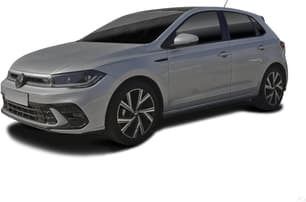
What's the difference?
The sixth-generation Volkswagen Polo arrived in Australia in 2018, and four years down the track it’s time for an update.
The line-up has been trimmed from four to three grades, and in a conscious decision to better align the car with what Polo buyers are typically opting for, standard specification is up along with cost-of-entry.
Some of the headline upgrades are cosmetic tweaks front and rear, as well as new digital instrumentation, wireless charging, AEB, and LED headlights on all models.
We’ll get into the details shortly, but to clarify, this review will deal with the entry-level Life and more highly specified Style model, with the GTI hot hatch covered in a separate review.
Volkswagen Australia invited us to the car’s local launch drive which took in a combination of city, suburban, B-road, highway and freeway running. So we were able to get a solid first taste of how the refreshed small hatch measures up in a slowly shrinking, but still hotly contested city car market.
Kia has launched a new small sedan - the K4 and it replaces the popular Cerato model for our market. A hatchback sibling arrives sometime later this year as a contender against the Toyota Corolla.
With a design that's sharper and far sportier-looking than the model it replaces, will it prove to be as successful?
We're in the flagship GT-Line grade to see what this new sedan has to offer and whether it's a good fit for urban dwellers who don't want another SUV.
The Polo has always been a desirable, high-quality, small car option. Effectively moving it to a more premium positioning by aligning its specification with what the market has been buying is a bold move. But this mid-life upgrade has given the Polo the extra safety tech and digital sophistication it needs to substantiate the shift.
Note: CarsGuide attended this event as a guest of the manufacturer, with meals provided.
The new Kia K4 GT-Line has a lot to offer - an interesting design, lots of features and a pleasant driving experience. It’s not without its quirks and there are times when a more powerful engine may have improved it for me as a long-term prospect as I do some big kays every year but it ticks the boxes as a friendly urban dweller.
It’ll take a sharp eye to spot the external differences between this upgraded Polo and its predecessor.
The car’s compact, tightly wrapped body and finely chiselled lines are unchanged, the only differences being reshaped (body-coloured) bumpers front and rear, a new headlight signature, with LED units now standard across the range, and remodelled LED tail-lights.
And after dark car-spotters should look out for the Style’s standard ‘IQ.LIGHT’ LED matrix headlights adding a continuous LED strip across the nose.
Inside things have shifted further, most notably in the entry-level Life, which now boasts the sleek digital instrument display, previously reserved for higher grades, as well as a neatly integrated 8.0-inch multimedia touchscreen above the centre stack.
The rest of the interior is relatively understated in typical VW style (no pun intended), the neatly sculpted seats trimmed with a mix of textured and smooth cloth on both models.
Have to admit I wasn’t convinced on the design of this new sedan at first as it can look a little out of sorts from certain angles. But the more time I spend with it, the more I appreciate its sharp lines and sporty rear shaping.
The small sedan market doesn't have a lot of options now because SUVs are so popular but it's nice to see a design that stands out and the fang-like LED light design at the front and rear, as well as the 18-inch alloy wheels make the K4 look very cool.
The rear doors look sleek because the handle has been hidden in the C-pillar and the K4 is particularly striking in our test model's 'Wave Blue' ($600 RRP) paint colour.
Head inside and you'll find a cabin that looks slick with a two-tone synthetic leather upholstery that feels supple underhand and a plethora of soft touchpoints under all the bits that touch.
The black headliner creates a posh space but the sunroof helps the cabin to feel airy when you need it to.
The dashboard isn't too wide, preferring a sharply linear shape and is headlined by a massive display panel that houses dual 12.3-inch screens and a 5.0-inch climate panel.
There is still a strong presence of plastics inside but you don’t tend to focus on them.
Unlike some other new cars hitting our market, the K4 hasn’t done away with its buttons and dials - and there’s enough to satisfy those who don’t like to rely on a screen for everything. The extra traditional element of the physical gear selector adds to its charm as well.
Volkswagen has developed the Polo over six generations (the first appearing in 1975) and its packaging and space-efficiency game has been honed to a fine point.
This car measures just under 4.1 metres end-to-end, yet the wheelbase is close to 2.6m, which isn’t a million miles away from the Golf. Well, actually, it’s 72mm shorter, but still pretty impressive.
And it shows in terms of interior space. The driver and front passenger have plenty of breathing room, and the rear is remarkable.
At 183cm, sitting behind the driver’s seat set to my position, I enjoyed ample legroom, and more than enough headroom.
Width is another story, because while two grown-ups will be fine in the back, there isn’t enough space for three to sit in comfort for any length of time. You need to be realistic about what to expect from a city-sized car.
Storage options in the front include a small lidded box between the seats (which doubles as an adjustable armrest), two cupholders and various oddments spaces in the centre console, as well as the wireless charging bay in front of the gearshift.
There are also pockets in the doors with room for (medium) bottles, a decent glove box, a shallow drawer under the passenger seat, and an overhead drop-down tray for glasses.
Map pockets on the front seat backrests, and small bins in the doors add extra practicality, but there’s no fold-down centre armrest or individual ventilation control for rear seaters.
For connectivity and power, there are two USB-C ports in the front, plus another two in the rear, as well as a 12-volt socket in the front centre console.
Boot space is 351 litres (VDA) with the 60/40 split-folding rear seats upright, which is impressive for a car of this size, that number growing to 1125L with them folded down. You can also change the floor level when you’re making a call between maximum volume and ease of loading.
Tie down anchors are handy for strapping loose loads, while shopping bag hooks help keep smaller bundles under control. And all this efficiency is even more impressive given the spare is a 15-inch steel rim.
The K4 feels big for the class, especially compared to its nearest rivals and that translates to a cabin that feels adult-friendly in both rows. An impressive feat for a small sedan.
Access is the only time you will have moments of 'I should have opted for an SUV'. That's because you will get in your daily squats sliding in and out of the K4 due to its 140mm ground clearance.
The rear doors also feature a wide wing that juts out from the door handle and it catches your hip almost every time you go to close the door.
The wide front seats offer lots of comfort with thick padding and long under-thigh-support. The driver's side is powered with adjustable lumbar support but the passenger seat only offers manual adjustments, which is surprising for a top-grade model. However, both front seats enjoy heat and ventilation functions.
The back bench seat offers similar comfort to the front with seat padding and length but it's not terribly wide and two adults (or child car seats) will fit best.
Amenities and storage is decent for the class with each row enjoying four drink holders and two USB-C ports. Front rowers also get a wireless charging pad and 12-volt socket.
In the front there is a large glove box that fits more than just an owner's manual, a mid-size middle console and a centre console that features retractable cupholders to open up the space if you need to. A dedicated phone cradle with small spaces on each side rounds up individual storage for the front.
In the rear there are two map pockets, a small item cubby next to the USB-C ports and a pair of directional air vents, reading lights and a fold-down armrest.
The boot space is massive for the class at 508L (that's nearing mid-size SUV territory) but the aperture is narrow and I couldn't fit my big booster seat through the opening.
The boot is quite deep as well and you may find yourself climbing into it to retrieve items that roll into the back.
The rear bench seat has a 60/40 split which can help with storage and there is a temporary spare tyre underneath the floor.
While you don't get a powered tailgate in this model, the lid isn't heavy to operate and has a proximity opening function that keeps it practical when you have your hands full.
This just means when you approach and stay near the boot with the key fob on your person the boot lid will pop open for you.
The 12.3-inch touchscreen multimedia system looks great with crisp graphics and a responsive touchscreen. The menus are in an easy-to-understand layout which you'll get accustomed to in no time. The 5.0-inch climate display sits to the right of this system and it's nice to have it on display all the time.
The 12.3-inch digital instrument cluster isn't all that customisable but it's easy to read with large text and a small menu screen that shows nav directions, trip info or a compass.
The built-in satellite navigation system is easy to get going and to cancel a route guidance, it's a one button affair which is great for when you're on the go.
The system features wired and wireless Apple CarPlay and Android Auto. The CarPlay is simple to connect to and retained a steady connection this week with feedback from my callers that my voice was clear on calls.
Let’s rip the Band-Aid off and get to the bottom of a more than 30 per cent base price increase before we go any further.
Yep, you read that correctly. Previously, a Trendline 70TSI manual gained you Polo club membership for $19,290, before on-road costs. Now, the entry-grade Polo Life, with exactly the same powertrain underneath it, will set you back $25,250.
So, what gives? Instead of getting down and dirty with the likes of the Kia Rio, Mazda2, and Suzuki Baleno, maybe even the poshest MG3, the Polo’s aiming up at its Audi A1 cousin and the Toyota Yaris, the latter undergoing a similar upscaling evolution in 2021.
The answer is standard equipment, and more of it. Volkswagen believes the days of a ‘price leader’ Polo are behind it. That is, pique a buyer’s interest with a keenly priced but relatively sparse base model, and they inevitably move up to a higher grade once engaged in the process.
No, the new Polo cuts right to the chase, specified more in line with the cars ultimately ending up in consumers driveways.
As mentioned, the Polo range now kicks off with the 1.0-litre, three-cylinder turbo-petrol Life in manual for $25,250, and auto at $28,250, before on-road costs.
The gap between five-speed manual and seven-speed auto versions is slightly larger this time around ($3000 vs $2500) because the auto now boasts a more powerful (85kW/200Nm) version of the turbo triple than the manual (70kW/175Nm).
On top of the active and passive safety tech detailed in the Safety section (and it’s a pretty big story), the Life picks up new standard features including, LED headlights and tail-lights, 15-inch alloy wheels, the ‘Digital Cockpit’ configurable digital instrument display, front and rear parking sensors, ‘Manoeuvre Braking’ (low-speed rear AEB), wireless phone charging, electrically-folding exterior mirrors, auto headlights, rain-sensing wipers, and an auto-dimming rearview mirror. That’s the $5960 difference between prior and current Polo entry models in a nutshell.
As well, the Life boasts leather trim on the steering wheel, gearshift and handbrake lever, an 8.0-inch media touchscreen, six-speaker audio, rain-sensing wipers, LED tail-lights and DRLs, and more.
Opt for the auto-only Style ($31,250) and you’ll pick up front fog lights (with static cornering function), ‘Matrix’ LED headlights, ‘Premium’ LED tail-lights (with dynamic indicators), ‘Dynamic Light Assist’ (auto low to main beam switch with light profile adjusted to avoid dazzling cars ahead or oncoming), 16-inch alloys, dual-zone climate-control air con, front and rear carpet mats, ‘Digital Cockpit Pro’ (incorporating nav and phone functions), ambient interior lighting, and sports front seats.
A sharp package in the Polo’s brave new world of $25-$35K small car competition.
Two option packs are available, starting with the ‘Vision & Tech Package’ for the Life (auto only - $1700), incorporating ‘Discover’ nav in the 8.0-inch media set-up, Digital Cockpit Pro, voice control, wireless app connect, ‘Travel Assist’ (Level 2 semi-autonomous driving) and adaptive cruise control.
A ‘Sound & Tech Package’ is available for the Style ($1900) delivering ‘Discover’ nav in the 8.0-inch media set-up, voice control, wireless app connect, keyless entry and start, and a Beats branded premium audio system (digital eight-channel amp, 300 watts).
A Panoramic glass sunroof ($1500) is available for the Style, and metallic paint adds $600 for both models.
The new K4 sedan is offered in four grades - the base-model S which has an optional 'Safety Pack' available, the mid-spec Sport and Sport+ grades and the flagship GT-Line, which is the model on test for this review.
The GT-Line is sharply priced at $42,990, before on road costs. This positions it in the middle of its small sedan rivals, the Hyundai i30 N Line Premium ($41,500 MSRP) and the Mazda3 Astina ($43,310 MSRP).
What the K4 GT-Line has going for it over its peers is a standard specification list that features some heavy-hitting technology.
This includes dual 12.3-inch displays, a 5.0-inch climate display, built-in satellite navigation with 10-years' of map updates, wireless/wired Apple CarPlay and Android Auto and dual-zone climate control.
Charging is taken care of by two USB-C ports for each row but the front row also enjoys a 12-volt socket and fast wireless charging pad in the dedicated phone cradle.
There's also an eight-speaker Harman Kardon sound system, over-the-air updates, digital radio, AM/FM radio, Bluetooth connectivity, and a 'Sounds of Nature' soundscape for added ambience.
The Kia Connect app is also included and this allows user access to the emergency call functionality (e-Call), remote control functions for the vehicle, as well as vehicle status monitoring.
Premium equipment includes a tilt and slide sunroof with electric sunshade, two-tone synthetic leather upholstery, heated and ventilated front seats, an electric drivers seat (with two-position memory function and adjustable lumbar support) and a heated steering wheel.
For a small sedan, it comes packed with features!
The Polo is powered by Volkswagen’s 1.0-litre (EA211) three-cylinder turbo-petrol engine, driving the front wheels through either a five-speed manual gearbox (yep, five-speed) or seven-speed dual-clutch auto in the Life, or auto only in the Style.
Important to note the all-alloy triple is tuned to produce 70kW/175Nm in the Life manual, those numbers jumping to 85kW/200Nm in the Life auto and Style.
No matter the output, maximum torque is available from 2000-3500rpm, with peak power arriving from 5000-5500rpm.
The flagship grade is front-wheel drive and has a 1.6-litre four-cylinder, turbo-petrol engine that produces up to 142kW of power and 265Nm of torque giving this a more powerful presence than its non-turbo siblings (which only produce up to 112kW/192Nm).
However, while the power is adequate for the GT-Line there are times when the engine sounds like it's working a bit too hard.
The eight-speed torque-converter automatic transmission can also become flustered as it moves through the lower gears, especially when you’re accelerating quickly.
On the whole, the power delivery and outputs are more than enough for a city environment and the odd road trip.
If VW’s aim in turning the wick down on the manual Polo is improved fuel-efficiency it’s a dubious move with both versions of the 1.0L three-cylinder engine returning an official fuel economy figure of 5.4L/100km on the combined (ADR 81/02 - urban, extra-urban) cycle.
And the environment is ultimately the (not so big) loser, the 70kW manual producing 124g/km of CO2, while the 85kW auto trims that to 123g/km.
Minimum fuel recommendation is 95 RON premium unleaded, although you’ll need just 40 litres of it to brim the tank. Using the official consumption figure that translates to a range of 740km.
With an official combined (urban/extra-urban) cycle fuel usage figure of 6.7L/100km and a fuel tank size of 47L, this model has a theoretical driving range of 701km. That does sit around 80 kays less than some of its rivals but it’s still sufficient for those wanting to do the odd road trip!
My on-test fuel usage has popped out at 9.2L/100km, which is based on figures achieved at the pump (32.05L) and my km travelled (348km).
I’ve done mostly urban trips this week with one longer open-road drive and overall I’m not too surprised by that figure because I’ve been pushing it hard but it could be better.
The K4 is a simple gal because Kia recommends a minimum 91 RON unleaded petrol to be used for all models.
The Polo’s launch drive program covered around 150km of city, suburban and freeway running from inner Sydney, through twisting B-roads to the city’s south, and sprawling semi-rural areas further west.
We sampled the Life and Style, both in 85kW seven-speed auto form, and first impressions are dominated by how refined this little car feels in terms of ride quality and noise suppression.
Typically throaty three-cylinder engine and exhaust noise is there under load, but it’s relatively low-key. And even on coarse secondary roads the Polo remains quiet and composed.
Zero to 100km/h comes up in around 10.5 seconds, which isn’t going to rewrite the class record books, but with seven ratios to play with the engine stays in its 2000-3500rpm sweet spot most of the time.
There’s more than enough pulling power for safe highway overtaking, and cruising at 100-110km/h is easy. You don’t have to mash the accelerator to maintain a comfortable pace.
Suspension is strut front, torsion beam rear, and if you’re inclined towards a cheeky fang through your favourite set of corners, the Polo is heaps of fun. At a fraction over 1.1 tonnes it’s light but feels planted and stable on twisty sections.
The steering’s nicely weighted and road feel is good, plus the front seats are supportive and comfortable over long stints behind the wheel.
Not surprisingly, parking is stress-free thanks to the Polo’s compact dimensions and good visibility.
Braking is progressive and reassuringly firm, but, although we didn’t drive the Life manual at launch, be aware its back brakes are drums, a ‘technology’ largely unknown beyond base utes in 2022.
Nothing wrong with an efficient drum set-up on a light-weight car, but let’s just say it’ll be interesting to drive that variant and see how it pulls up under pressure.
Under the heading of random thoughts, the combination of on-screen touch controls, and physical dials for the multi-media system is welcome. And the connection for Apple CarPlay and Android Auto is wired or wireless which is handy for those who prefer the surety of a wired connection or the flexibility of one less cable in their life.
As mentioned earlier, the power is adequate to move this car around on the open-road but you have to be a little aggressive on hills to keep your speed consistent.
It’s not always quick off the mark, though, and you’ll notice that when you have to cross traffic or enter a roundabout - so allow for extra car lengths. Once you get going, it’s responsive in the city.
The steering is sports-stiff and so is the suspension. This makes the handling feel nimble in turns and sure-footed when doing quick lane changes but you hear and feel every bump in the road.
On-road comfort is okay around the city but the road noise is very loud inside the cabin and is particularly noticeable at higher speeds. You’ll have to raise your voice to chat to passengers in the back when you're on the highway.
The K4 has a small turning circle of just 10.7m and you can easily do a U-turn in spaces that others might have to do a three-pointer. This made the K4 feel friendly in small car parks and on ramps.
The direct steering makes it easy-enough to park, as does the reversing camera and front/rear parking sensors but I’m pretty disappointed that at the top grade-level, you miss out on a 360-degree camera system (tsk, tsk, Kia).
With a maximum five-star ANCAP score already in the bag for the Polo from a 2018 assessment, the path of least resistance for VW would have been to rest on its laurels. But to its credit the German giant resubmitted this updated version for testing against stricter 2022 criteria.
That’s largely because it’s squeezed in several key active safety features under the umbrella of ‘IQ.Drive’, with all Polos now featuring, AEB (with cyclist and pedestrian detection), lane-keeping assist (with lane departure warning), ‘Multi-Collision Brake’ (automatically slows the car after a collision, reducing the chance of a secondary impact), driver fatigue detection, front and rear parking distance sensors, rear AEB (low-speed), a reversing camera (with static and dynamic guidelines), cruise control (with speed limiter and distance warning display), tyre pressure monitoring, and more.
‘Park Assist’ (perpendicular and parallel) and active cruise and are standard on the Style, with the latter optionally available on the Life auto as part of the Vision & Tech package.
If, despite all that, a crash is unavoidable there are seven airbags on-board - driver and front passenger (front and side), front centre (to minimise head clash injuries) and full-length side curtain.
There are three top tether points across the rear seat for child seats and/or baby capsules, with ISOFIX anchors on the two outer positions.
The Kia K4 has just been launched and hasn’t been tested by ANCAP yet, so is unrated but Kia is hustling to get it tested so it can join in on their strong five-star performance record. The K4 has seven airbags, including a front centre airbag.
The K4 GT-Line has all of the bells and whistles when it comes to safety equipment and includes the big-ticket items like blind-spot monitoring and collision avoidance, intelligent seatbelt warning (all seats), rear cross-traffic alert, front cross-traffic alert, lane keeping aid, lane departure alert, leading vehicle alert, emergency call functionality, side exit warning, rear occupant alert, traffic sign recognition, driver monitoring and alert, LED DRLs, dusk-sensing LED headlights, front/rear parking sensors and a reversing camera with dynamic guidelines.
The K4 GT-Line has AEB with forward collision warning, car, pedestrian, cyclist, and junction crossing detection.
The rear seat has two ISOFIX child seat mounts on the outboard positions and three top tether anchor points but two seats will fit best.
Kia has become well-known for having annoying sound alerts in their cars and while the K4 has them too - you can easily disable the most annoying one, the traffic sign recognition, by holding the steering wheel volume button in for a few seconds.
Volkswagen Australia covers the Polo with a five-year/unlimited kilometre warranty, which is now the volume market standard.
The paint is warranted for three years/unlimited kilometres, “Through Corrosion” is covered for 12 years/unlimited kilometres, and 12 months roadside assistance is included.
Servicing is required every 12 months or 15,000km, with prices over the first five years for the Life manual (70kW) ranging from a low of $413 to a high of $929, the average per service coming out at $560, bumping up to $580 for the Life auto and Style (85kW).
Capped price servicing is available, however, over five- and three-year plans. Paying up-front for five years results in a $664 saving over pay-as-you-go for the Life manual, and $716 for the Life auto and Style.
A compelling side benefit is the ability to fold servicing costs into the vehicle’s financing at the time of purchase, and the plan is transferable if you decide to sell the car before the five or three years is up.
The K4 GT-Line is offered with Kia’s seven-year/unlimited-kilometre warranty. That’s a pretty good term for the class and there is a seven-year capped price servicing program for a flat $3877 (averaging $554 per service), which is slightly more expensive than others in the class.
Servicing intervals could get annoying if you do big kays every year as they're spaced at every 12 months or 10,000km, whichever occurs first.