What's the difference?
Long before a hash-tag was anything more than a confusing symbol on a typewriter, vanlife was already a thing.
And you can largely thank Volkswagen for that because its Kombi models from the 1950s, '60s and '70s help cement the idea of roaming around the planet in a self-contained car-cum-house as a counter-culture favourite. More than that, the affordable, rugged Kombi made it actually possible.
Back then, there were a couple of paths to tread. You could take a second-hand butcher’s or florist’s Kombi van (windows optional) and trick it out with a bed, a table and whatever gear you needed to survive on the road.
Or, if the cash was around in sufficient quantities, you could buy a Kombi brand-new and have it converted to camper spec. And of all those brand-new conversion options, Volkswagen’s own, in-house conversion supplier, Westfalia was (and is) regarded as the pick of the crop.
So, when VW announces a 21st Century take on the concept of a factory campervan, those who like the idea of a lap of Australia but don’t like caravans or towing, are suddenly all ears.
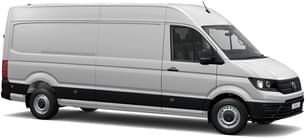
Like most things, the latter-day VW camper has grown a size or two over the last six or seven decades. Which is why the factory Kampervan TD1410 4 Motion (to give it its full name) is based on the long-wheelbase, high-roof version of the Crafter van rather than the original Transporter layout. (There’s still the VW Multivan-based California if the Kampervan is too big.)
But just as commercial vehicles have become bigger and more sophisticated, and glamping has grown out of actual camping, does the modern take on a hippy legend make the grade in 2024? And does the Volkswagen offering retain any of the charm of the original campervan?
Oh, and forget about Westfalia. This conversion is the work of none other than Aussie caravan specialist Jayco.
The deal between Jayco and VW locally, means this variant of the Crafter Kampervan is an Australia-only deal.
Zeekr is making waves in Australia at the moment but it's not because of the car you see before you.
Nope, it’s the 7X mid-size SUV that’s captured a heap of attention and a whole lot of sales. In fact, of the 1832 sales the brand has managed over the first three months of 2026, just 54 were for the X.
But that was the old X and this is the new one. With more power, more performance, faster charging and a whole heap of pretty special equipment, especially for the small SUV segment.
So, is that enough to finally put the X on the map?
This is not the vehicle for somebody looking for the odd weekend away. That’s mainly because it will take up a lot of real estate when you’re not using it (it may not even fit in a lot of car-ports or garages) and it’s far from a daily driver for the school run or shopping trips.
If you’re looking for a getaway machine that will also work at home for the other 48 weeks of the year, a conventional caravan and four-wheel-drive is likely to be a better bet, purely because the tow-vehicle can be your day-to-day transport
But if your plans include longer getaways and you have the storage space to keep the Kampervan stashed away safely, it starts to emerge as a functional alternative.
Talk to long-term travellers, and even the best camper trailer needs to be set up each night and folded away next morning, and as for tents, don’t even start us…
But like a full-sized caravan, the VW simply pulls up to where ever it is you want to stay for the night and is ready to feed, entertain and rest its occupants within seconds of stopping.
But unlike a big, heavy caravan, the Volkswagen imposes far fewer driving caveats (including fuel consumption) and is a vastly more enjoyable and simple thing to drive in pretty much any circumstance.
It's not for everybody, but for those whose lifestyle it matches, the VW Kampervan is an alternative to a caravan that deserves short-listing. Let’s face it, 50 million hippies can’t be wrong.
Note: CarsGuide attended this event as a guest of the manufacturer, with accommodation and meals provided.
It's a good thing in a small package, this Zeekr X, and there are a lot of things I like about it. In fact, the only sticking point for me is the price. But that's all about perspective. If you see this as a newcomer Chinese brand, then yes, there are a lot of more affordable options out there. But if you see it as a premium player, it's really a more affordable version of a Volvo.
Note: The author, Andrew Chesterton, is a co-owner of Smart As Media, a content agency and media distribution service with a number of automotive brands among its clients. When producing content for CarsGuide, he does so in accordance with the CarsGuide Editorial Guidelines and Code of Ethics, and the views and opinions expressed in this article are solely those of the author.
Given that the design of the camper conversion was partly the work of Jayco, there’s every reason to suspect that the end result should work for recreational users. That is, of course, provided Jayco’s caravan-building experience translates to a campervan layout.
That’s because this is not as simple as plonking a wheel-less caravan onto a Crafter cab-chassis; integration in the key here.
The various zones – driving, entertaining, sleeping, bathroom and cooking – need to work with each other with as many components having more than one job.
The off-grid capability is also a highlight and, in the case of the All-Terrain model with its off-road tyres, bash plates and 30mm higher ground clearance, makes getting farther off the beaten track more of a reality.
A lot of people will wonder why VW didn’t simply import a batch of the campervan conversions it already builds in Europe.
The fact is, however, that the left-hand drive layout means the sliding side door would be on the wrong side for Australia, and the integrated gas system would not have met ADR standards. So was born the idea of a local conversions which is where Jayco came in.
The visual changes aren’t massive. This AWD version welcomes a couple of new exterior colours, including the 'Matt Khaki Green' of our test car. It also gets the two-tone black roof and there are new 20-inch alloy designs.
Elsewhere, it's the futuristic-style of design we’re used to which differentiates the X from its Volvo EX30 twin under the skin.
Inside, this is a seriously well-equipped and polished-feeling small SUV, and — unlike some of the newcomer brands to Australia — it all feels very high quality and well put together. And that includes the material choices.
I don’t even hate the fact that most of the functions are controlled via this screen, thanks to the little shortcuts glued to the home screen. I do, however, hate the fact that there’s no easy way to change the wing mirrors or shortcuts for toning down some of the safety stuff.
That aside, though, it’s a nice and high-quality feeling space.
The Crafter’s phone mirroring system seems to work pretty well, although it’s menu-driven layout can be a bit frustrating (it’s hardly alone there) and Android phones sometimes didn’t want to connect as simply as they should have (potential user-error here, folks).
But the rest of the interior is typically Crafter-smart including lots and lots of cupholders, USB ports and cubby-holes dotted around the front seat area.
Doubtless, a few months on the road will show up design issues according to the individual, but for now, our main comment would be the proximity of the bathroom to the food preparation area (although, to be fair, most owners will cook outside the vehicle).
The mattress is a split queen unit (rather than a single mattress) and it occupies the full width of the rearmost part of the vehicle, so making the bed might be a bit more difficult.
The location and width of the bathroom (although it feels pretty tiny once you’re in there and operates as a wet-room) also means there’s just half the rear view that the vehicle might otherwise have.
The thick pillar between the two rear barn-doors also adds to that blind spot. At least the mirrors are good; nice and wide and very clear.
It’s when the Kampervan is not being used to survey this wide, brown land that its practicality starts to come into question. Unlike a conventional four-wheel drive and caravan rig, the accommodation section of the Crafter can’t simply be unhooked and parked in the driveway.
Which means it’s not really suburb or city-friendly. Underground car-parks will soon detach the air-conditioning unit in a pretty violent way, and the almost-seven-metre length will have you looking for adjacent empty parking spaces (or the car-and-trailer section at Bunnings).
Put simply, this is the touring solution for those who want to tackle the Big Trip in one go, staying on the road for weeks or perhaps even months. Obviously, that’s an observation rather than a criticism, but it remains something to think about.
You know you're in a small vehicle when you can't fit two large (not those crazy American-style jumbo cups, just normal coffee-shop takeaway) coffees in the cupholders, but so it is with the Zeekr X.
The small SUV's 4432mm length, 1836mm in width and 1566mm height doesn't leave much room to spread out up front. There's ample room for driver and passenger, of course, but we are talking about a small vehicle here.
Clever storage helps to mitigate that, though, especially the super-deep storage space in the centre console and the very clever fridge that separates the driver and passenger seats.
Weirdly, though, the space doesn’t feel overly tight in the back seat. We had a massive baby seat in there, and that fit without issue. And full size humans can genuinely get pretty comfortable. I'm 175cm, and I had enough knee and headroom.
In the boot, there’s 404 litres of volume with the rear seats upright and 1247 litres with them folded flat. And it’s worth pointing out this isn’t intended to be a family car, but there’s certainly enough space for the shopping... and a pram.
Based on the top-shelf Crafter van, the Kampervan then goes on a mission to be both a car and a holiday house.
So, pull up a comfy chair, because there’s a fair bit to discuss here. This isn’t just a tent on wheels, it’s a fully functional tiny home that just happens to be relocatable on a daily basis. As such, the vehicle needs to be able to manage energy, water, gas and waste.
VW’s aim was to elevate the quality standards of the caravan industry to that of the car-making world, as well as address its customers’ main agendas, including storage, the ability to go off-grid and the management of light and ventilation for sleeping.
That utility starts with the walk-through layout where the front seats swivel to form the other half of the dining table seating. From there, the layout runs to a full bathroom, a kitchen and then back again to a fixed queen-size bed.
The bathroom combines a shower and a lavatory with a cassette system for black-water storage and disposal.
The kitchen features a 90-litre fridge with a freezer drawer that is accessible form both inside and outside the vehicle. There’s a dual gas-hob and a 9.0kg gas bottle stored in the rear compartment (under the bed, but accessed from outside) that also includes a huge slide-out drawer for an extra fridge or whatever else needs to be carted around.
There’s also a sink with a mixer tap and the vehicle carries 120 litres of fresh water, not to mention gas-powered on-demand hot water.
A wind-out awning runs the full length of the van, extending the living space and forming a space for the VW-branded camping table and chairs.
The bedroom includes a pair of swivelling fans for cross-ventilation, USB and 240-volt ports, a swivelling TV and blinds and screens on all windows. The standard air-conditioning system will also run for about seven hours before the vehicle runs out of power.
Speaking of power, the electrical system is a force of nature. Aside from the standard Crafter battery (which remains the start battery and can’t be depleted by the equipment on board) the standard smart-alternator function has been disabled so the engine can help charge the batteries whenever possible.
That power storage array incorporates a 400Ah lithium-ion battery with a 3000-watt inverter to run the 240-volt system even when off-grid. There’s a 60A DC-to-DC charging system and, all up, VW reckons the vehicle can stay off grid for about three days straight based on normal power consumption. A multi-screen control panel tracks power usage and issues alerts when required.
So, what’s missing from the Kampervan? Climate-control air-conditioning for the cabin, mainly (the Crafter starts life as a commercial van, after all). Oh, and beds for the third and fourth passenger. Cue hippy-free-love jokes.
The Kampervan starts at $157,990 for the on-road biased Style model and $165,490 for the All-Terrain version.
As the more off-road capable variant, the All-Terrain gets 16-inch steel wheels with all-terrain tyres, bash plates, a higher ride height and a snorkel.
In either case, the accommodation fittings and fixtures are identical, that sounds pretty steep, but go out and price a full-sized four-wheel drive and a full-sized caravan with a bathroom and then see how it all stacks up.
This is a small SUV with a LOT of stuff. There are two trims in the Zeekr X range – the entry-level rear-drive model is $48,900, drive-away, while the all-wheel drive version we've tested is $57,900 on the road.
The obvious comparison is to the Volvo EX30, which shares its platform with the Zeekr X through both brands' Chinese parent company Geely.
As of right now, the cheapest single-motor Volvo is $56,051, drive-away in NSW, or $49,990 plus on-roads, making the Zeekr version much, much cheaper.
Anyway, outside there are 19- or 20-inch alloys, though our test car is fitted with the optional 20-inch black alloys, paired with a black-with-red-highlights interior treatment, which adds $2000 to the price.
Ours is also fitted with the electric front doors which open or close at the push of a button, and back doors that unlatch, but don’t fully open, the same way, which adds another $2000.
Both trims also get heated and cooled front seats, and heating in the rear window seats, but this AWD version also adds a massage function for front seat riders.
There’s also wireless charging, a 13-speaker Yamaha sound system and — very cool, literally — is the little drinks fridge between the front seats in the AWD variant.
Tech is handled by a 14.6-inch touchscreen with Apple CarPlay and Android Auto and there’s a head-up display for the driver.
The Crafter is powered by VW’s now-familiar 2.0-litre turbo-diesel four-cylinder engine which produces 130kW of power and 410Nm of torque thanks to a pair of turbochargers.
Driving through an eight-speed automatic transmission, the torque is then sent to all four wheels via VW’s '4Motion' permanent all-wheel-drive system.
It’s worth mentioning the automatic transmission is a conventional torque-converter unit, rather that the dual-clutch layout VW has championed for years now.
The Crafter also uses ventilated disc brakes front and rear and the however you look at it, the modern driveline of the Kampervan makes an old air-cooled Kombi look even more antiquated (which is saying something).
And while the Crafter in commercial-vehicle trim has the option of an electronic locking rear differential, the Kampervan adds this as standard.
The big news here is a more powerful rear motor – meaning you get more grunt whether you opt for the rear-wheel drive or this all-wheel drive.
In rear-drive form, that boosts your outputs from 200kW to 250kW, dropping the sprint to 100km/h to 5.6 seconds. In AWD guise, your new outputs are 365kW (up from 315kW) and 573Nm, and your sprint to 100km/h falls to 3.7 seconds.
Although the Crafter’s driveline boasts energy recuperation, it’s not a hybrid system. Instead, the vehicle’s alternator is able to generate electricity during braking and store that in the vehicle’s batteries for later use, rather than storing that power in a dedicated hybrid battery.
This also helps ensure the main battery is always fully charged to power the stop-start system that is also standard on the Crafter.
Because it’s a commercial vehicle, there’s no compulsion to offer an official fuel consumption figure and, indeed, Volkswagen doesn’t.
But our real world drive including some winding roads and a bit of freeway thrown in, gave us an average figure of between nine and 10 litres per 100km. This is likely to be a bit lower on a purely highway run, but is a good indicator of general use consumption.
The 75 litre fuel tank should, then, give an easy 700km of range, but don’t forget the Crafter’s engine uses AdBlue, so that extra cost needs to be factored into running costs.
This is where it starts to get weird. The rear-drive Zeekr X is fitted with a 61kWh LFP battery, which can accept up to 230kW DC fast charging, taking you from 10 to 80 per cent charged in just 18 minutes. Total claimed range is 405km.
The flagship AWD, though, charges at a slower rate. It gets a 66kWh NMN battery and can only be charged at 150kW, meaning the same charge takes 30 minutes. Zeekr is promising a 415km driving range between charges.
You can see the appeal of a high driving position the moment you step into (or climb into, really) the Kampervan. The view out is fabulous and even though the vehicle is just shy of seven metres long, you soon develop a bit of a sixth sense for where the back wheels are, based on what the front wheels have just done.
The glass area is huge with the exception of the view to the rear thanks to that bathroom placement.
The front seats are big and comfy, although the two rear seats are pretty flat and place the occupants quite close together. There’s enough adjustability in the seat and steering column to make anybody feel at home and the exterior mirrors are big and clear.
There’s enough performance, to be sure, but the sheer mass of the Kampervan and the fact that it’s moving a lot of air means you’ll be giving the rather long-travel accelerator a decent workout.
Taking off into traffic is the only time the VW will feel a bit sluggish, but once the engine has a few revs on board it all gets going fairly smartly.
Unlike a lot of modern cars that can feel as though they're travelling a lot slower than they really are, the Kampervan is the opposite. Not that it’s spooky to drive, but there will be times you’ll be in a 100km/h zone, look down and discover you’re doing 90.
In the context of a leisure vehicle, this shouldn’t bother anybody apart from a highway patrol officer down on his or her monthly quota.
The engine is smooth and the transmission is refined and possesses enough smarts to make a better job of shifting itself than the driver ever will.
It’s not exactly silent inside, though, with a smattering of clicks and clatters from some of the less-automotive furniture, but it’s a fair bet even a brand-new house would likewise rattle a bit if you hurled it down a bumpy road at 100km/h.
The biggest source of noise pollution, though, is in the All-Terrain model and consists of a chorus of sucking, sobbing, choking and burping noises from the snorkel which is placed right near the driver’s right ear. Obviously, it’s worse with the window open.
Ride quality is very good. Clearly, having a bit of weight on board doesn’t hurt, but even so, the Kampervan refuses to pitch or wallow despite that ride compliance. In fact, it’s very composed for such a big unit that was originally designed to carry parcels and pallets.
Short answer? Pretty good, with some caveats.
I'm partial to a firmer ride. I find some Chinese car companies can feel like they get their suspension bits from Captain Snooze, such is the soft, pillowy ride served up. And to be honest, it makes me a little seasick at times.
The Zeekr is not like that. It has firmness dialled into the ride equation and can feel harsh at times, but also improves the drive experience, delivering connection and engagement at the cost of some sharpness on the wrong road.
It's also faster than the model it replaces, but it's also one of those cars in which the real-life feeling doesn't quite match the on-paper promise.
This thing serves up supercar speed, but it doesn't feel like it from behind the wheel. Instead, the acceleration - especially from a rolling start - feels potent, but not biblical.
From a standing start it pauses for a moment, almost like an internal-combustion vehicle might, before delivering a quick (but not stratospheric) flow of power. None of that is a bad thing, by the way. Who wants their small SUV to accelerate like a supercar?
It's otherwise an entirely pleasant drive. The cabin is serene and quiet and it's a small car that doesn't feel like one. There's nothing light or tinny about the drive experience, instead there's a heft and quality.
The Crafter, on which the Kampervan is based, is typical of the emerging breed of commercial vehicles that try not to give anything away to passenger cars in safety terms.
Well, in the front seats anyway, because the two seats in the rear are formed by a bench seat that doubles as a kitchen-table seat, so lacks the contouring of most car seats.
More importantly, the rear seats miss out on side-curtain airbags. This is understandable given the vehicle’s origins. Both rear seats do, however, feature top-tethers for child restraints.
Up front, meantime, the two front passengers get both front and side-curtain airbags with a full array of driver aids to help with safety.
They start with stability control, anti-lock brakes, brake-assist, traction-control, multi-collision braking and hill-holding function.
There’s also autonomous emergency braking that works at speeds up to 60km/h, driver-fatigue detection, a rear view camera, adaptive cruise-control, rear cross-traffic alert, blind-spot monitoring and lane-keeping assistance.
What’s missing? Apart from the side airbags for all passengers, we’d like to see tyre-pressure monitoring on such a large, heavy vehicle and AEB that works beyond 60km/h.
The Kampervan has not been ANCAP tested.
The Zeekr X wears a maximum five-star ANCAP safety rating, earned in 2024, which means the long list of required active safety stuff is present and accounted for, all wrapped up in what Zeekr calls its 'Intelligent Driving Assist System'.
There are five cameras, five radars and 12 sensors, which is a crazy number for a car this small.
And this is also not a car in which I was desperately trying to figure out how to deactivate any of the active safety systems – save the overzealous over-speed warning – which is a win these days, too.
There are also seven airbags, including a centre front airbag.
The Zeekr X is fitted with ISOFIX anchors on the rear outboard seats and top tether anchorages for all rear seating positions.
The Kampervan carries Volkswagen Australia’s full five-year/unlimited-kilometre warranty. That extends to not just the base vehicle, but the whole conversion including all of Jayco’s additions and other aftermarket fittings.
VW offers a version of capped price servicing called its 'Service Care Plan' that covers scheduled maintenance for the first five years and can be purchased at the time the vehicle is ordered.
No price for this was available as we went to press, but for reference, the same five-year service plan for the Amarok dual-cab ute costs $1900.
Standard service intervals are every 12 months or 20,000km, whichever comes first.
Zeekr's coverage is an underwhelming five-year, unlimited-kilometres, while the drive battery is covered for eight-years or 160,000km. There’s five years' of roadside assistance thrown in, too.
Service intervals are 20,000km or 12 months, with five years' of ownership setting you back a hefty $3072; an average of $614 per workshop visit.
There are currently 16 Zeekr dealers in Australia - two of which are 'pop-up' sites rather than full retail centres.
Multiple locations in Melbourne, Sydney and Brisbane with the ACT, Adelaide and Perth also covered. Others include Geelong and the Sunshine Coast but so far you're out of luck in Tassie or the NT.