What's the difference?
Thinking of a Toyota GR Supra, eh? Well, come on in, your timing is perfect.
See, up until halfway through last year the Toyota GR Supra only came with an automatic transmission, so I was jumping up and down to drive this version with the six-speed manual.
To me, it’s the way the Supra should be. Not having a manual gearbox in a car like this is like spending the day at an amusement park but not going on any rides.
Not only that but the Supra now has more power than it did when this generation launched in 2019.
See what I mean about your timing?
In a lot of ways the Supra is now complete.
Well that was what I wanted to verify when I tested the entry grade GT, along with what it was like to live with daily, the fuel consumption, warranty and even its practicality; fitting all of me and my stuff.
If EVs are to make a meaningful difference to our collective environmental impact, there's one thing standing in the way: price.
Complexity, competency and capability have all improved since EVs started entering new car showrooms a decade ago, but in that time the price tags haven't improved all that much.
Buying an EV is still a rich person's game and scarcity on the used-car market means there are few true bargains for those willing to go with something second-hand. Even the Chinese aren't selling electric cars below the $40K barrier yet.
And that's where the Mitsubishi eK X EV comes in - or at least it would, if Mitsubishi Motors Australia chose to bring it to our shores.
Though it's unconfirmed for our market for now, we took the opportunity to spend a bit of time behind the wheel in its home (and so far, only) market of Japan.
Appetite for eco cars has been strong in Japan for a long time now, and the eK X EV (along with its platform twin the Nissan Sakura) arrives at a time where Japanese motorists are crying out for more affordable all-electric options.
Though its diminutive size and limited single-charge range would exclude it from consideration for a large number of Aussie motorists, would the compact eK X EV nevertheless make sense in Australian cities as a low-cost runabout for urbanites? It's certainly a question worth asking.
The Toyota GR Supra GT is a superb sports car that’s relatively easy to live with in the city even with the manual gearbox and incredibly fun to drive out where the roads are free from traffic.
Not only is the GT great for the price compared to rivals but it’s the pick of the Supra range.
And that’s the core takeaway from our time driving the Mitsubishi eK X EV – it’s a near-perfect tool for dealing with inner-urban congestion and tightly-packed city streets. After all, while cars have become progressively more bloated, our roads haven’t expanded in sympathy with that. The tiny measurements of the eK X EV and its slick and seamless electric powertrain allow drivers to flip that paradigm.
But even if Mitsubishi's Australian office chose to bring it here, it wouldn't be the first time the company has experimented with an ultra-compact EV in this country. Remember the i-MiEV from a decade ago? That too was a kei car EV with similar performance stats, however it languished in obscurity thanks to a high $48K price tag and a generally ho-hum offering.
By comparison, the eK X EV feels much more complete and better-equipped, though its price will need to be considerably sharper than the i-MiEV's if it's to convince would-be EV adopters to look away from the entry-level options from Chinese automakers like MG and BYD.
Will Mitsubishi take the plunge? It'll be chasing a niche within a niche if it does, but provided that audience uses the car within its urban-only design parameters, and provided Mitsubishi can offer it for a compelling price, the Japanese company could carve out a meaningful toehold in the EV space at the entry-level end of the spectrum.
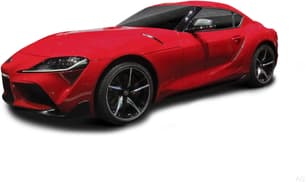
Perhaps it’s just me but I think the Supra looks exactly how it should look - like a Hot Wheels car.
Seriously, how good does the back view look? I love the spoiler that angles up like a crazy ski jump and the tail-lights integrated underneath it.
I love the huge rear hunches swollen like they’ve been stung by an enormous wasp. Check out the roof - see how it’s curved? And that bonnet with the vent above the wheel arches, I love the styling of every millimetre of this car.
But my neighbour doesn’t. I pulled up and said, “How good does this look?” And he gave me this stare like I was bonkers.
I don’t know, maybe you and I have the same excellent taste, but if there’s anything I hate it's anything that’s boring.
To me the BMW Z4 ‘twin’ is getting very close to the boring end in the styling department.
Talking of BMW, the Supra's interior is very BMW from the indicators stalks to the media system and climate control set-up.
It’s a modern and minimalist cabin… if only there wasn’t a cupholder right where my elbow goes. That’s a good place to stop and talk about the Supra GT’s practicality.
As a member of the uniquely-Japanese kei class of vehicles, the eK X EV has to fit within a very specific footprint of 3.4 metres long, 1.48 metres wide, and 2.0 metres tall.
The eK X pushes up right to those limits, measuring just 5.0mm shy of those length and width restrictions while stretching to 1655mm tall, and in order to maximise interior volume each face is almost perfectly vertical and all four corners are right-angles.
The end result is a very angular one-box hatchback, with the raked-back windscreen and bonnet giving the front half a somewhat wedge-shaped profile.
Is it a beauty queen? Not by any conventional standard – it’s more bricklike than beautiful – but like most kei cars its shape is driven by its function.
All four wheels are pushed right to each corner, minimising intrusion into passenger space, and the generous side and rear glass areas allow a great view of what’s around you – ideal for staying out of trouble on crowded Japanese city streets.
Another pragmatic design feature is the presence of roof rails – optional in Japan (¥27,500, or $311), but probably a good idea for those wanting to gain some more cargo capacity by bolting on a roof pod (which would certainly make the eK X EV look even more comically proportioned).
The P grade also brings a roof spoiler and black plastic wheel arch trims (both of which can also be had on the G spec as part of a ¥71,500/$810 bundle that includes the roof rails), which gives the stumpy eK X a smidge of SUV flavour.
And as far as style goes, it’s certainly cohesive with other members of the Mitsubishi showroom. The brand’s narrow-eyed headlamps and X-shaped grille motif translate well to the eK X’s nuggety bod, looking very much like if an Outlander’s visage was squished into a compact 1.48-metre wide cube.
The two-tone paint of our high-grade test vehicle looks modern and appealing (though it’s an expensive option at ¥82,500/$935), while single-tone paint jobs are also available.
However, if you’re a fan of artful vehicle design then the blocky and boxy eK X EV probably won’t excite your retinas.
The good news is that if you’re tall like me (189cm) and mainly legs then you’ll have more than enough legroom and headroom because the footwells are impossibly deep and the seats can be lowered to what feels like ground level.
Actually, you are almost at ground height in this car so the bad news if you’re as tall as me you’ll probably have to crawl out of the car on all fours.
The cabin of the Supra doesn’t do the storage space thing well. Sure there are two cupholders but their location is the same place my elbow frequents while changing gears and resting.
The wireless phone charging area is good and easy to access, but the door pockets are as thin as post box slots so if it’s letters you’re storing there you’re in luck.
If it’s anything thicker than that you’ll be left looking around for a place to put your purse or wallet and end up throwing it in the phone charger space if the passenger seat is taken.
You could always ask your co-pilot to hold onto your things which reminds me to tell you that the Supra is a two-seater only. There are no back seats, and there’s no option to have back seats.
If you’re looking for a sports car with rear seats (although space will be limited) for the same money then there’s the Audi A4 45 TFSI and at an even lower price is the Ford Mustang GT.
If you look over your left shoulder while in the driver’s seat of the Supra GT you’ll see into the boot - there’s no wall separating the cabin from the cargo area. This is handy for throwing a school bag in as I did for my son on the morning drop off, but also means your items may make an unexpected visit to the cockpit if you stop suddenly.
The boot is large for a sports car at 296 litres (VDA) and it managed to fit our large CarsGuide suitcase with space to spare as you can see in the images.
While design might not be the eK X’s ace card, space efficiency absolutely is.
Trust the Japanese to figure out how to make the best use of a compact volume – with compact apartments and ultra-dense cities being the norm for most Japanese people, it’s no surprise they’ve been able to extract the greatest utility possible from something the size of a kei car.
Those in the front seats get to enjoy some fairly cushy (though not super-supportive) chairs, with the driver’s seat being a little wider to cover the gap between it and the passenger seat.
Folding up the centre armrest also allows the driver to slide across to the left seat, perfect for getting out of a confined parking spot… or dates at the drive-in.
The steering column only adjusts for tilt and not reach, which is a bit of an ergonomics fail, but generally speaking there’s a surprising amount of room for ‘Western’ frames.
The manually-adjusted seats can slide a fair way back, headroom is substantial, outward vision is superb and, thanks to the narrowness of the eK X, literally everything is within arm’s reach.
The long shelf that spans the dash at mid-height is also a useful feature, an ideal perch for small items like keys, wallets, tissues and phones, while the cupholders are moulded into the dash itself and the climate control and shifter quadrant are housed in their own extension of the centre stack.
Below the climate controls, a bag hook is perfect for toting takeaway, purses or small grocery bags, and there’s some additional shelves and cubbies along with a USB-A, USB-C and 12-volt charger.
Peek under the passenger seat, and an under-seat stowage tray reveals itself, too. There’s even a pull-out compartment in the passenger door to house the owner’s manual. Everything in its right place.
Granted, with limited width there are some constraints on passenger space. The eK X’s rear bench only has room for two seats rather than three, but there’s enough shoulder room available to ensure it’s not as claustrophobic as you might think, and the rear bench is even mounted on sliding rails, has a reclinable backrest and offers more cushion length than the front seats.
With the seat slid all the way back there’s quite a lot of legroom for back seat passengers, while sliding it forward allows at least one piece of large luggage to sit in the boot while still giving enough space for passenger’s feet.
Other quality-of-life touches include some storage pockets high up on the front passenger’s backrest as well as bottle holders and cupholders integrated into the rear door cards, though, unlike the front seats, there’s no fold-down centre armrest or face-level air vents.
Mitsubishi doesn’t publish a cargo volume for the eK X EV, but the boot opening measures 1105mm wide and 875mm tall, with depth variable depending on the position of the sliding rear seat.
The rear seat backrests also fold down (though not flush with the boot floor), and supersized cargo can also be accommodated by reclining the front passenger seatback all the way so you can tote objects up to two metres long.
Under the boot’s floor hides an inflator kit and charge cable storage, though there’s no cargo blind.
The Toyota GR Supra GT with the manual gearbox lists for $87,380 and you’ll pay the same price for the same car with the automatic transmission.
Yes, almost $90K might sound like a lot of money for a Toyota (unless it’s a LandCruiser) but it’s actually a bargain considering the GTS grade above costs $10K more and has the same engine plus pretty much the same features apart from a fancier stereo, head-up display and 19-inch alloys (rather than the 18s on this GT).
Also, if you didn’t know already the Supra is a BMW/Toyota joint venture model aligned with the BMW Z4, and if you want the Beemer version with the same engine as the Supra GT you’ll pay $139,800 for it.
So see, it’s a bargain in comparison.
The standard features list of the GT has pretty much everything you need. There’s a proximity key, LED headlights with adaptive high beam, active cruise control, sat nav, wireless Apple CarPlay and Android Auto, a 10-speaker stereo, wireless phone charger, heated and power adjustable seats, shifting paddles and sports pedals.
Great features, but let down only by a small 8.8-inch screen for your media and nav. Still, that absolutely shouldn’t be a deal-breaker for you.
The rivals? Well, clearly the BMW Z4 which is way more expensive, but also there is the Nissan Z which costs between $70-$80K and is also a hoot to drive.
Add the Ford Mustang GT to your research list, as well. It’s not as agile as the Supra but it’s quick, fun and sounds better to my ears.
Given it’s currently not confirmed for the Australian market, it’s a little hard to speculate on how much it’d cost over here.
In Japan, however, the eK X EV is offered in two grades, base model ‘G’ and high-spec ‘P’, with the former retailing for ¥2,398,000 (AU$27,000 at today’s rate), and the latter for ¥2,932,600 (AU$33,020).
In Japan, the eK X EV is eligible for a generous government incentive that slashes those stickers down even further, but we’ll just go with the retail price here.
Those already look like compelling numbers, even without any state or federal incentives. Specification-wise, not much would need to be touched to meet Australian expectations either.
Both the G and P spec come standard with AEB (with pedestrian and cyclist detection), a full suite of front, side, curtain and driver’s knee airbags, front and rear parking sensors, lane departure warning, frontal collision alert, ISOFIX child seat anchorages, auto-high beam, front seat heaters, power-folding wing mirrors, keyless entry/ignition and climate control.
A 9.0-inch touchscreen head unit with Android Auto/Apple CarPlay integration is standard on the P specification, but the base model G doesn’t include an audio system at its price.
Adding an integrated sat-nav unit adds another ¥222,860 (AU$2508) to the eK X G’s retail sticker, but even with that adjustment to spec the eK X would easily shape up as Australia’s cheapest EV by a wide margin – that is, of course, assuming Mitsubishi Australia could secure a competitive ‘factory door’ price for our market.
Given low market share of EVs in Australia, that may not be an easy negotiation for Mitsubishi’s local office.
You’re looking at a Supra that could be the peak of its model evolution because since the generation’s arrival in 2019 Toyota has increased the power of the 3.0-litre turbo-petrol in-line six-cylinder from 250kW to 285kW (torque remains the same at 500Nm) and introduced a six-speed manual.
This 3.0-litre six-cylinder turbo-petrol is the only engine you can have with the Supra, there are no four cylinders or V8s - now there’s an idea.
Toyota says the 0-100km/h time for the GR Supra with the manual gearbox is 4.4 seconds and 4.1 seconds for the automatic which comes with a ‘launch control’ feature.
Of course, all Supras are rear-wheel drive.
The eK X EV is powered by a single electric motor connected to the front wheels, and while all kei cars are limited by Japanese law to just 48kW, torque output has no such limitation.
Thanks to that loophole, and the generally torque-rich nature of an electric motor, the eK X EV produces peak torque of 195Nm, which is just 8.0Nm shy of the heavier petrol-powered Toyota Corolla.
A 20kWh lithium-ion battery pack supplies the motor with power, and is located under the vehicle’s floor. It’s a small battery, but it’s also a small car.
According to Mitsubishi, 20kWh is all most eK X EV drivers should need, but it’s about a third the size of typical EV’s battery these days.
Toyota says the 3.0-litre six-cylinder straight-six turbo-petrol engine in the Supra GT paired with the six speed manual gearbox should use 8.9L/100km after a combination of open and urban roads.
I did a week’s worth of city commuting and then a couple of hundred kilometres on country roads, but no motorways and the trip computer told me I was averaging 10.3L/100km.
Not bad for a big engine in a car tuned for performance, driven by a big kid who feels like he’s playing with somebody else’s toys.
Premium 95 RON fuel is recommended, although 'standard' 91 is acceptable. A 52-litre fuel tank translates to a theoretical range of around 580km, dropping to approximately 500km using our real-world number.
Our short (just under 30km) test drive was done entirely at urban speeds, with no significant highway component.
That plays into an electric car’s strengths, with minimal energy being used to fight aerodynamic and tyre drag, while the constant speeding up and slowing down for traffic and stop lights means a lot of energy gets put back into the battery via the regenerative braking system.
At the end of it, after using 23 percent of the battery (4.6kWh) to travel 28.3km, our average energy consumption measured in at 16.25kWh/100km, which is about par for a modern EV.
However, we were expecting a significantly lower result given the eK X EV weighs only 1080kg – half the weight of a Kia EV6 AWD. And Mitsubishi claims an average energy consumption of 12.4kWh/100km, with a city-only figure of just 10.0kWh/100km.
Couple that result with a 20kWh battery, and the eK X’s real-world range looks a lot more like 123km instead of the 180km WLTC Mitsubishi claims.
Granted, Tokyo traffic and streets aren’t a perfect analogue for Australian conditions, but there seems to be a big disconnect between the factory numbers and what we could achieve. Even for a city car, a circa-120km range may not be seen as sufficiently generous in Australia.
That said, there’s more than one way to deploy this car’s stored energy. You can use the eK X EV’s vehicle-to-load function to power household appliances through an adaptor, while another intriguing feature is the car’s Vehicle-to-Home (V2H) bi-directional charge capability.
With V2H, a single connector can make the eK’s battery pack the source of power for an entire building. Useful in the event of a grid power outage, which is a real consideration for disaster-prone Japan.
As for regular charging, the eK X EV has a slightly oddball configuration. Open up the charge port flap on the driver-side flank and you’ll see an old-school Type 1 CCS connector positioned above a chunky CHAdeMO port.
While the latter is useful for bi-directional charging and has significant headroom for high-voltage fast charging, the Type 1 CCS port is probably less useful in Australia given most modern electric cars have moved to the more capable Type 2 CCS design.
If the eK X is to make any sense in Australia, that’s something that would likely need to be addressed along with its seemingly short legs.
Ah, but what about living daily with a manual? As a car enthusiast most of the cars I’ve owned have been manuals and I’ve rarely cursed them because I love to drive.
But there were times when they were a pain, such as in traffic, or in traffic on steep streets and in traffic in shopping centres. Did I mention in traffic, also?
But on the nice roads with bends and dips, hills and sweeping corners, hairpins and twisty parts in places without traffic, then all is forgiven.
And so it goes with the manual version of the Supra.
Making life easier in the Supra GT is a clutch pedal without much travel so you don’t feel as though you’re at the gym doing a one-sided leg press.
I found the shifts themselves, while short, to be less than smooth. At first, I thought that the clunky changes might have been because the gearbox hadn’t been run in yet, but the odometer was saying 7500km, so this could just be the nature of the gearbox and after a few days I became used to it.
The rev-matching feature of this gearbox is a nice touch, especially on those sporty drives when you change into a gear and you’re thrown straight back into the power band again.
Superb balance, great steering with a nose which points exactly where you want it to and that magnificently smooth turbo-petrol in-line six posting all its meaty grunt to the rear wheels just behind your shoulders makes for a sports car that’s fun, talented and quick.
Good brakes (348mm ventilated rotors with four piston calipers at the front and 330mm discs with single piston calipers at the rear) and grippy Michelin Pilot Supersport tyres (255/40 fr - 275/40 rr) complete a great package.
A ride that’s still comfortable over bad Sydney roads and surprisingly good visibility made the Supra easy to live with in the city, from parking to school drop offs.
Yes, used it each day for the school run with my older child and the grocery shopping.
Kei cars are something of a unique experience to begin with, an electric one even more so. Besides those compact dimensions giving it the ultimate ability to cut through dense traffic, the addition of an electric powertrain endows it with the torque necessary to feel properly zippy around the city.
And by ‘zippy’, we’re not joking. With all of that torque being channelled through a pair of skinny eco tyres on the front axle, the eK X EV has little trouble squealing its tyres if you’ve got a heavy right foot.
It might be tiny but it moves with the feisty urgency of a Jack Russell, and thanks to its kerb weight of just over a tonne, it’s a nimble and light-footed thing.
It’s a shame the steering is so lifeless, though at least its fingertip-lightness makes easy work of lane changes, U-turns, and everything in-between.
There are three drive modes – 'Eco', 'Normal' and 'Sport', but they just change the throttle sensitivity and alter the strength of the regenerative braking.
Alongside this, a one-pedal accelerator model allows the bulk of speeding up and slowing down to be accomplished by modulating the throttle pedal, but you still need to move your foot to the brake in order to come to a complete halt.
We drove mainly in Normal mode without the one-pedal function activated, and the car felt smooth and easy-going.
Power delivery is linear, the regenerative braking feels natural, with no noticeable step between regen and mechanical braking, and there’s just a faint hum from the motor and inverter when power is being delivered or generated.
It’s difficult to form an opinion on the eK X EV’s suspension. Kei cars aren’t typically the best when it comes to ride comfort, handling, or any other discipline that requires suspension talent, but we can say that it was at least reasonably comfortable.
Take that assessment with a grain of salt, though. The perfectly-graded streets of central Tokyo are ultra-flattering to any car, and with little in the way of huge imperfections, weird camber or any other kind of challenging surface, we’d have to reserve suspension judgements until we can drive it on more varied roads.
That said, for its intended purpose of crushing short journeys through inner-city environments the eK X EV does a stellar job.
The GR Supra GT has not been crash tested by ANCAP, but its BMW Z4 twin scored a maximum five stars when it was tested by the European equivalent Euro NCAP.
Still, the Supra has seven airbags, there’s AEB with pedestrian and cyclist detection, lane keeping assistance and blind spot warning, plus front and rear parking sensors. There are seven airbags on board.
There’s no spare wheel, but there is a tyre inflation kit which should get you out of trouble.
The eK X, being a Japanese-market vehicle, has no ANCAP safety rating.
Standard equipment includes stability control, traction control, AEB (which can detect pedestrians and cyclists, but not necessarily motorcyclists), lane departure warning, frontal collision alert, a 360-degree top-down camera view, front and rear parking sensors and seven airbags (dual front, front side, curtain and a driver’s knee airbag).
Active cruise control, lane keep assist and a self-parking function are available as cost options.
Toyota covers the GR Supra GT with its five-year, unlimited kilometre warranty. Servicing is required every 12 months or 15,000km and is capped at $415 per service.
The warranty is the industry standard in terms of time and kilometre length, and the capped service prices are very reasonable - a lot more affordable than a car with a prestige badge on the bonnet, too.
The eK X EV is not yet offered in Australia, so at this point in time it’d be premature to put a number on ownership costs, maintenance, warranty coverage and things like that.
However, with a 20kWh battery it would cost somewhere between $4.20 and $7.00 for a full charge on household power depending on where you live and the kWh rate your energy provider charges you.
As always, those with solar generation and/or home battery storage could whittle those running costs down to practically nothing.