What's the difference?
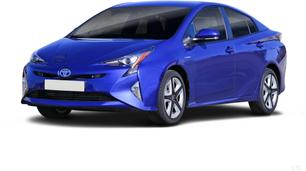
What to say about the Toyota Prius in 2021? A car that was once a technology trailblazer seems now to have become properly retro, even while it’s still being built and sold.
The awkward-looking wedge, an eco-punk icon, not only brought Toyota’s hybrid synergy drive to the masses, it also debuted the brand’s excellent TNGA architecture and set the scene for the company's absurd hybrid success, which now sees the RAV4 version topping the sales charts.
So, after all these years (25 to be precise), is the Prius’s time finally over? Or does this quaint hybrid hero still have more to offer? I took a top-spec I-Tech for a week to find out.
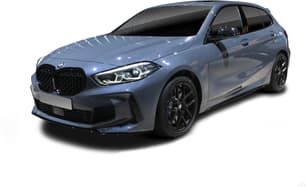
It wasn’t that long ago the notion of a front-wheel drive (FWD) BMW was unheard of, but along came the third-generation 1 Series five-door hatchback in September 2019.
The 'F40' 1 Series' predecessors were based on rear-wheel drive (RWD) platforms, as was every other model in BMW's long history – to that point.
Ironically, though, the F40 1 Series' performance flagship remains the all-wheel drive (AWD) M135i xDrive, but now it has a FWD counterpart, the Volkswagen Golf GTI-baiting 128ti.
Critically, this represents the first time since the late 1990s range of 3 Series Compact three-door hatchbacks that the ti, Turismo Internazionale, badge has been affixed to a BMW.
So, does the 128ti hot hatch live up to the ti lineage of sporty BMW small cars? And perhaps more importantly, does it prove a FWD BMW can be truly desirable? Read on to find out.
The Prius can rest its weary head. The Age of the Hybrid has begun. Even though this iconic eco car might have lost its ultimate purpose to more mainstream models in the last few years, it’s still the best execution of Toyota’s hybrid tech on the market and if you can look past its divisive-as-ever looks, it’s comfortable and practical, too.
The brand’s Australian division promises the Prius will stick around in one form or another, so we’re keen to see what its next iteration will look like. Plug-in? Fully electric? Time will tell.
It might not be rear-wheel drive, but the 128ti is a thoroughly enjoyable BMW to steer, proving the 'f' in front-wheel drive can stand for fun. It’s a very good hot hatch.
And given how expensive mainstream hot hatches have become, the 128ti is a bargain, giving would-be Golf GTI, Focus ST and i30 N buyers a thing or two to think about.
After all, the 128ti is a premium hot hatch by virtue of the BMW badges it wears and the higher quality of its parts, but not its price. And for that reason, it cannot be ignored.
The Prius is the very visage of economic motoring. Derided by big-engine lovers, and adored by the eco-crowd, the fact that the Prius’s wedge-shaped frame is more about function than form tells you everything you need to know about this car.
It blends with Toyota’s latest design language, the face and bodywork containing some subtle nods to other models that would launch after it, like the Corolla, Camry, and C-HR.
What always surprises me about even this top-spec Prius is its dorky ride height. For a car with such a low drag coefficient, it sits so far off the ground! The 17-inch wheels look almost out of alignment with the body in those wheelarches.
Round the back, the Prius’s integrated spoiler and glasshouse bodywork are as divisive as ever, with more extreme pointed light fittings leaning into the effect created by its boxy, rear three-quarter view and mirroring the shape of the LED headlights at the front.
Of course, this car is less about being looked at as it is about its drag coefficient of 0.24 Cd, which is one of the lowest on any production car.
Inside, things again prove divisive, with a minimalist dash, a swoopy gloss highlight piece that frames the central vents and multimedia screen, and an odd, centrally mounted dash cluster, which is a usability faux pas.
In the case of the I-Tech at least there’s a holographic display which can put up useful information to help prevent your eyes from drifting too far from the road. Still, I can’t help but feel like this whole interior ethos is futuristic for the sake of being futuristic, with a little less thought given to how practical it is, compared to the brand’s other models.
The leather-appointed trim across the wheel and soft plastics in the door and dash-topper are appreciated, and there’s attention to detail in the little ‘Prius’ logos on the vents. However, I found the dull multimedia screen to be susceptible to glare during the day, and the big integrated panel in which it sits is made from a tinny gloss plastic, which will easily to get covered in fingerprints and scratches.
You can count me among those who aren't fans of the 1 Series' version of BMW’s 'kidney' grille. It’s not just out of proportion, but arguably, misplaced.
In fact, it just spoils the front end, although I'm also not a fan of the bumper's 'smiling' centre air intake.
But, thankfully, that’s where my unfavourable opinion ends, as the angular headlights and hexagonal DRLs look the part, while the 128ti's red-trimmed side air intakes bring a sense of occasion.
And you better be a big fan of red trim, as the 128ti liberally applies it around the side, where the brake calipers have some presence behind the attractive 18-inch Y-spoke alloy wheels. And don’t forget the side skirt insert and 'ti' decal!
At the rear, aside from the obligatory '128ti' badge and the relatively subtle red-trimmed side air intakes, there isn’t much to separate the 128ti from a garden variety 1 Series, but that’s no bad thing as it's its best angle.
The sporty rear spoiler, sleek tail-lights, stupendous diffuser insert and scintillating dual exhaust tailpipes are gorgeous. And the 128ti is attractive in profile, thanks to its appealing silhouette and smoothly sculpted lines.
Inside, the 128ti stands out from the 1 Series crowd with the red stitching applied to the steering wheel, seats, armrests and dashboard, while the floor mats have – you guessed it – red piping.
The most interesting design flourish, though, is the red-stitched ti logo on the centre armrest. That's one way to make a statement, and it all combines to make the 128ti feel special.
And being a 1 Series is a leg-up in the first place, as high-quality materials are used throughout, in concert with a simple but effective design.
Mercifully, the centre stack features physical climate and audio controls, while the centre console has an appropriately sized gear selector and a rotary dial to control the multimedia system.
That's right, the 128ti has multiple input methods aside from the 10.25-inch central touchscreen and voice control, making it a relative breeze to operate, especially with Apple CarPlay and Android Auto support of the wireless variety.
That said, there's plenty of room for improvement for the 128ti's 10.25-inch digital instrument cluster, which lacks the breadth of functionality of its competitors.
If nothing else, all of the Prius’s edgy design gives it plentiful interior space. Toyota granted this generation of Prius a low seating position and tall roof, which combine with the distant dash elements to make for a spacious cockpit for the front two occupants.
The seat design in the top-spec I-Tech is also cushy, reminiscent of the seats in high-spec Camrys, and I had absolutely no trouble finding a comfortable driving position. If there’s one thing to be said for the annoying, centrally mounted instruments, it’s that you don’t need to consider the position of the wheel interfering with their visibility.
The Prius’s total glasshouse grants superb visibility out the front and sides, with large wing-mirrors, too. The only downside is that integrated spoiler at the back, which makes for a distracting view out the rear mirror that I’m sure any owner will quickly become accustomed to.
Soft trims across the doors and centre console, even in the back seat, make the Prius cabin a comfortable place to be, too.
Ergonomics have not been forgotten, with the multimedia screen and climate unit having useful and easy-to-reach physical dials and toggles for all the key functions. Even changing gear is a breeze in the Prius, with its odd little rosebud-shaped shifter simply a flick of the wrist from where your arm sits.
I do wish Toyota had made better use of the large area under the climate unit, however. The front part of the centre console is exclusively for the wireless-charging bay alone, and the rest of the space is constructed from a smoothly contoured gloss-finish plastic panel. It has looks to match the Prius aesthetic, but it’s no good for storing anything other than a single phone. It would have been better to make a large bay here with a rubberised finish.
Thanks to the lack of a physical handbrake in the centre or any other buttons or functions, there are two large bottle holders with variable edges.
A huge centre-console box and large door bins round out the Prius’s front-seat storage options.
Room in the rear seat is excellent, my 182cm tall frame had stellar amounts of space for my legs and head, as the roofline continues through to that raised rear spoiler. The comfy seat trim continues, although the padding in the base is notably not as good as it is in the front.
There are some useful pockets on the backs of the front seats and a drop-down armrest with cupholders for rear passengers, too.
Finally, the awkward rear of the Prius makes for a fantastic boot capacity, one advantage this car still holds over its hybrid Toyota stablemates. Capacity for the I-Tech is a mid-size-SUV rivalling 502-litres (VDA), which easily consumed our CarsGuide test luggage set and is even bigger than the base Prius, at the cost of the space-saver spare wheel. The I-Tech only has a repair kit to go with its larger alloys.
Measuring 4319mm long (with a 2670mm wheelbase), 1799mm wide and 1434mm tall, the 128ti is a small hatchback in every sense of the term, but it makes the most of its size.
The boot's cargo capacity is competitive, at 380L, although it can be increased to a more accommodating 1200L by stowing the 60/40 split-fold rear bench.
Either way, there's a decent load lip to contend with, but four tie-down points, two bag hooks and a side storage net are on hand for securing loose items.
In the second row, there's a welcome four centimetres of legroom behind my 184cm driving position as well as a centimetre or two of headroom, even with our test car’s optional panoramic sunroof.
Three adults can sit on the rear seats on short journeys, but they will have next-to-no shoulder-room, plus a large central tunnel (necessary for AWD 1 Series variants) to deal with.
Young children are accommodated, though, with two ISOFIX and three top-tether anchorage points available for fitting child seats.
Amenities-wise, those in the back have access to the storage nets on the front seat backrests, clothes hooks, the centre console's directional air vents and two USB-C ports.
The door bins can take a regular bottle each, but there isn't a fold-down armrest with cupholders.
Up front, the glove box is surprisingly large, while the driver-side cubby is not only decently sized, but two-tiered. The central storage bin is also solid, and has a USB-C port hidden inside.
Ahead of that are a 12V power outlet, a pair of cupholders, a USB-A port and a narrow, open cubby that should house a wireless smartphone charger (but doesn't). And yes, the door bins are ready to swallow a regular bottle apiece. So, pretty damn good overall.
This Toyota Prius in top-spec I-Tech form costs a whopping $45,825 before on-road costs, which is a tall order, especially given the fact that the technical advantage this car once had to help justify its price-tag has been lost to the rest of Toyota’s range.
An equivalent Corolla hybrid, even in top ZR trim, can be had from just $34,695, and even the much larger Camry in its highest hybrid SL trim is more affordable, at a suddenly cheap-looking $42,790. All three Toyotas are sourced from Japan.
Not a good start in the value battle, then, especially since those other Toyotas are not just hybrids, but great cars in their respective segments.
The Prius I-Tech’s most direct rival is the similarly shaped and sized Hyundai Ioniq Premium, which can be yours from $40,390 with competitive equipment. Hyundai is not only hunting Toyota with this car, but flexing its deep pockets by selling the Ioniq in Australia as not just a hybrid, but a PHEV and a full EV, too.
Thankfully, the I-Tech comes with some decent gear, sporting 17-inch alloy wheels, a 7.0-inch multimedia touchscreen with Apple CarPlay and Android Auto connectivity, digital radio, a 4.2-inch digital information display, a holographic head-up display, full LED lighting with auto-levelling, leather-appointed seat trim, auto dimming rear vision mirror, wireless phone charging, 10-speaker audio, and improved interior trims over the base car.
The I-Tech also scores a larger boot capacity and an improved safety suite compared to the base Prius. More on that in later sections of this review.
Is the Prius “good value” then? It's still a no, as all of this equipment can be had in bigger, more mainstream Toyota models, and far more affordable rivals. It’s a shame Toyota hasn’t brought the Prius’s cost down in the five years since this generation launched, because in today’s market it makes less sense than ever.
That said, there is a certain niche audience for this car. One that will always love its little innovations, like the fact that it has one of the lowest drag coefficients on the market, its stellar fuel-consumption number, and its claimed 40 per cent thermal efficiency.
Priced from a tempting $55,031, plus on-road costs, the 128ti finds itself right in the thick of the hot-hatch action, with its M135i xDrive big brother at least $10,539 dearer, while its most direct rival, the Golf GTI, is just $541 cheaper.
Of course, more affordable FWD hot hatches are available, and they're more potent than the 128ti and GTI, including the Ford Focus ST X ($51,990) and automatic Hyundai i30 N Premium ($52,000).
Either way, the 128ti stands out from the 1 Series crowd with its bespoke steering tune, lowered sports suspension (-10mm), black grille, unique two-tone 18-inch alloy wheels with 225/40 Michelin Pilot Sport 4 tyres, upgraded brakes with red calipers, and black side-mirror caps.
There's also red trim on the front and rear air intakes, and side skirts, with 'ti' decals positioned above the latter. The steering wheel, seats, armrests, dashboard and floor mats have similarly coloured accents.
Other standard equipment includes a body kit, dusk-sensing adaptive LED headlights, rain-sensing wipers, a tyre repair kit, power-folding side mirrors with heating and puddle lights, keyless entry and start, a 10.25-inch touchscreen multimedia system, satellite navigation, wireless Apple CarPlay and Android Auto support, digital radio and a six-speaker sound system.
And then there’s a 10.25-inch digital instrument cluster, a 9.2-inch head-up display, dual-zone climate control, a sports steering wheel, power-adjustable front sports seats with memory functionality, an auto-dimming rearview mirror, black/red cloth and synthetic leather upholstery, 'Illuminated Boston' trim, ambient lighting and M seat belts.
Options include a $3000 'Enhancement Package' (metallic paintwork, panoramic sunroof and adaptive cruise control with stop and go functionality), which was fitted to our test vehicle for an 'as tested' price of $58,031.
Other key options include a $1077 'Convenience Package' (power tailgate, boot storage net and ski port), a $2000 'Executive Package' (alarm, rear privacy glass, 10-speaker hi-fi sound, gesture control and tyre pressure monitoring) and a $1023 'Comfort Package' (heated steering wheel, and front seats with lumbar support).
It wouldn’t be a Prius without Toyota’s signature hybrid synergy drive technology. In this most original case it consists of a 1.8-litre four-cylinder petrol engine, which uses the more thermally efficient but less powerful Atkinson combustion cycle, producing 72kW/142Nm, paired to a set of electric motors on the front axle, which can produce up to 53kW/163Nm.
Combined system output is rated by Toyota at 90kW, driving the front wheels only via a continuously variable automatic transmission (CVT). This system is the same one now also employed in the C-HR and Corolla hybrid grades.
The Prius’s electric motors source their power from an older design nickel-metal hydride battery (instead of the more modern lithium-ion setup) located under the boot floor.
The 128ti is motivated by a familiar 2.0-litre turbo-petrol four-cylinder engine, with its version producing a promising 180kW of power at 6500rpm and 380Nm of torque from 1500-4400rpm.
Disappointingly, Australian examples are detuned relative to their European counterparts, which are 15kW/20Nm more potent due to their market-specific set-up.
Either way, drive is sent to the front wheels via a dependable ZF eight-speed torque-converter automatic transmission (with paddle-shifters) and a determined Torsen limited-slip differential.
This combination helps the 128ti sprint from a standstill to 100km/h in a brisk 6.3 seconds while on the way to a not-in-Australia top speed of 243km/h.
For reference, competitor outputs are: M135i xDrive (225kW/450Nm), Golf GTI (180kW/370Nm), i30 N Premium (206kW/392Nm), and Focus ST X (206kW/420Nm).
The Prius’ sandpapered hybrid drive, low drag number, weight reductions, and low-rolling-resistance tyres add up for a stellar official/combined fuel-consumption figure of just 3.4L/100km. While its signature hybrid tech might be available on other Toyota’s, it’s here where the Prius still shines, undercutting the others by almost a whole litre every 100km.
But can it live up to that promise in the real world? Over my week of what I would consider to be reasonable ‘combined’ driving conditions; with plenty of traffic, freeways, and suburban driving, the Prius returned a stellar figure of just 4.0L/100km. This is not just one of the lowest figures I have ever achieved on a test car, it is even lower than the Corolla Hybrid that I tested over a three-month period. I couldn’t get that car below 4.9L/100km, despite by best attempts.
For a true rival comparison, my week-long test of the Ioniq hybrid in 2019 had the Korean managing a fuel number of 4.6L/100km.
You need not worry about kWh energy consumption for the Prius, as its hybrid system’s software manages the state of battery charge on the fly. It will simply run the engine to charge the battery if levels drop too low, although it always feels good to make the most of the motor’s regenerative braking to keep the battery topped up.
It’s clear that the Prius is still the king of hybrid, then. At least for the time being. All Prius models have 43-litre fuel capacities and are able to consume base-grade 91RON unleaded.
The 128ti's fuel consumption on the combined cycle test (ADR 81/02) is a promising 6.8L/100km, while its carbon dioxide (CO2) emissions are 156g/km.
However, in real-world testing, I averaged a reasonable 8.4L/100km over an even combination of urban and highway driving. Without my heavy right foot, an even better return could be had.
For reference, the 128ti's 50L fuel tank takes more expensive 98 RON premium petrol at minimum. Its claimed driving range is 735km, but in my experience, I got 595km.
The Prius was responsible for popularising Toyota’s Hybrid Synergy Drive, and fittingly, it still feels like the best execution of the technology on the market. That instantly available torque from the electric motor is sleek, quiet, and easy. It feels as though the Prius can make more extended use of purely electric drive than not only its rivals, but all other Toyota and Lexus hybrid products.
Despite its awkward exterior looks, the ride and handling of the Prius are excellent, thanks to its robust TNGA-C underpinnings (in fact, the Prius was the car to debut this platform for Toyota). It tilts into corners nicely, despite a frumpy ride height, and deals with bumps in its stride. This is a comfortable car, and the Lexus influence here is undeniable. The steering characteristics are also smooth and responsive. I wouldn’t go so far as to say the Prius is fun to drive, but it is certainly comfortable and compliant.
What the Prius lacks is the lower, firmer, and more aggressive ride and handling characteristics of its Hyundai Ioniq rival, perhaps a telling insight into the trajectory of each brand.
These characteristics add up to an around-town driving experience that really is a breeze. It’s quiet in the cabin and at times genuinely hard to tell whether the car is using its electric motors or the engine. When it comes to bursts of acceleration, the Prius might surprise you. Using both the motor and engine in tandem, I found that the Prius can sprint from the line with an alarming urgency, more so than its Corolla sibling. With the same tech behind the accelerator pedal, it’s hard to imagine why.
Once the electric motor has reached its strictly defined limit, though, the engine breaks in with a vengeance, and this car does have an anaemic follow-through when the electric components fall to the wayside. As in other applications of this drivetrain, the 1.8-litre Atkinson-cycle petrol engine can be thrashy and noisy when a lot is asked of it.
Of course, driving in such a sporty manner is hardly the point of the Prius, and where it really excels is in that day-to-day traffic grind, where the hybrid system works largely in the background to maximise the time spent with the engine off. The best part? While you can really fall into the hybrid system’s addictive fuel-saving displays, which really encourage hypermiling, this is a set-and-forget system. You can drive the Prius like any other car, and it will be trim on fuel consumption anyway. It’s not like I was trying awfully hard to attain my weekly figure of 4.0L/100km, so I’m sure it can do better over the long term.
So, can a FWD BMW be fun to drive? As far as the 128ti is concerned, the answer is a resounding yes.
Yes, you get the feeling you’re being pulled rather than pushed, but the 128ti attacks corners with entertaining vigour.
Of course, the 2.0-litre turbo-petrol four-cylinder engine’s 180kW/380Nm outputs can easily overwhelm the front wheels off the line, and torque steer is a threat, particularly when pushing hard around bends, but they’re welcome characteristics.
After all, corner exits are improved by the 128ti’s Torsen limited-slip differential, which works hard to optimise grip when you need it most.
When going for the jugular, understeer still rears its ugly head, but wrestling the 128ti into shape is half the fun.
That said, body control isn't quite as strong as hoped. Turn in sharply and the 1445kg 128ti generates a surprising amount of roll.
It’s worth noting the lowered sports suspension goes without adaptive dampers, its fixed-rate set-up attempting to find the delicate balance between comfort and dynamic response.
All in all, the 128ti's ride is firm but well judged, with short, sharp imperfections the only real bother. Needless to say, it’s capable of being a daily driver, and so it should be.
As mentioned, the electric power steering has a unique calibration, and it's nice and direct, with a good amount of feel. But if you prefer more heft, simply engage 'Sport' mode.
Speaking of which, the Sport drive mode also releases the full potential of the engine and the eight-speed auto, sharpening up the throttle and raising the shift points.
The 128ti engine is a gem, offering up plenty of punch, especially throughout the mid-range, where torque is at its fattest and power is about to peak. The accompanying soundtrack also has some presence, even if it is artificially 'enhanced.'
But the smooth yet relatively quick shifting automatic transmission can take plenty of credit for the brisk performance on offer.
That said, the 128ti's first and second ratios are surprisingly short, so pay attention if you take matters into your own hands via the steering wheel’s paddle shifters.
The Prius wears a maximum five-star ANCAP safety rating to the 2016 standards, although even in today’s market it has a great active-safety suite.
Standard modern active features on all Prius models include freeway-speed auto emergency braking with pedestrian and daytime cyclist detection, lane-keep assist with lane-departure warning, adaptive cruise control, traffic-sign recognition, and auto-high beams. Our top-spec I-Tech adds blind-spot monitoring and rear cross traffic alert, for an overall excellent suite.
All Prius varaints are also equipped with seven airbags consisting of the standard front, side, and head, as well as a driver’s knee airbag, and the standard array of electronic stability and brake controls are also present.
The 128ti and the wider 1 Series range received a maximum five-star rating from independent Australian vehicle safety authority ANCAP in 2019.
Advanced driver-assist systems in the 128ti extend to autonomous emergency braking (AEB) with pedestrian and cyclist detection, lane-keep assist, cruise control, speed sign recognition, high-beam assist, driver attention alert, blind-spot monitoring, active rear cross-traffic alert, park assist, rear AEB, a reversing camera, front and rear parking sensors, and 'Reversing Assistant.'
That said, annoyingly, adaptive cruise control with stop and go functionality is part of the 128ti’s optional Enhancement Package fitted to our test vehicle, or as an individual option.
And tyre pressure monitoring is tied to its extra-cost Executive Package. Both should be standard.
Also included are six airbags (dual front, side and curtain), anti-skid brakes (ABS) and the usual electronic stability and traction control systems.
Toyota’s range-wide warranty currently stands at five years or unlimited kilometres, which is really the accepted industry standard and matches its key Ioniq rival.
Annoyingly, however, the Prius needs to adhere to six-monthly or 10,000km service intervals. Said intervals are capped to $165 per visit for the first six visits under Toyota’s “service advantage” program, after which time you fall back to Toyota genuine servicing with significant price hikes to $221.97, and $425.47 for the next two services covering four years or 80,000km.
A year of roadside assist is included, after which time you will need to subscribe to Toyota’s program, from $89 a year.
While Toyota’s offering is on par with many, it’s hardly the cheapest or most comprehensive we’ve seen.
Like all BMW models, the 128ti comes with a three-year/unlimited-kilometre warranty, which is two years off the five years/unlimited km premium benchmark set by Audi, Genesis, Jaguar/Land Rover, Lexus, Mercedes-Benz, and Volvo.
The 128ti also comes with three years of roadside assistance, while its service intervals are average, at every 12 months or 15,000km, whichever comes first.
Capped-price servicing packages are available, with three years/40,000km starting from $1350, while five years/80,000km kicks off at $1700. The latter, in particular, offers great value.