What's the difference?
Thank the automotive gods cars like the GR Yaris still exist.
Not only are hot hatches the funnest way to drive, but in a world that’s obsessed with electric vehicles, these combustion-powered beasties remind us what we’ve got before it's gone.
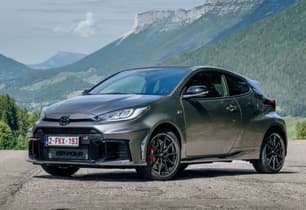
The GR Yaris arrived in 2020 and won praise for its rally-car-for-the-road feel with Toyota’s high-performance division Gazoo Racing heavily modifying the docile Yaris hatch - while adding a bit of Corolla - to create this little monster.
In early 2025 Toyota added more power and torque, along with an automatic transmission for the GR Yaris and now a new variant has been launched - the GTS Aero Performance Package and this is what we are testing.
Now that the original Mitsubishi ASX is finally gone, the oldest small SUVs still on sale in Australia today are the Mazda CX-3 and Suzuki Vitara.
Both released in 2015, their longevity is due to a combination of good design, strong engineering, sound driving dynamics and an undefinable charm.
Given their high number of rotations around the sun, it’s also surprising that neither has received a major facelift in all this time. Clearly, their creators got it largely right early on.
Until now. The Vitara steps up with the Series III makeover, ushering in a fresh nose, larger central touchscreen and a hybrid tech upgrade for the (now-sole) turbo powertrain, among other more-minor changes.
Are these enough to keep the venerable Vitara from vulnerability?
The GR Yaris GTS with the Aero Performance Package is a so wonderfully special with its brilliant engineering, mind-blowing dynamics and fun-to-drive nature. The new aero package makes an already angry beastie look furious, making it the perfect enhancement that's also functional.
The only lower marks here are for warranty, fuel use and practicality. But if there was a score for fun it'd be a 10/10.
In car years, 11 is ancient.
Back when it was first released, this-generation Vitara’s competitive pricing, progressive yet pretty design, pleasant interior packaging, sporty dynamics and general driving ease helped establish the emerging small SUV segment into the powerhouse it is today.
In some ways, today’s Turbo Hybrid still impresses, especially with its punchy performance, promising economy and no-nonsense packaging. Objectively, it is still a decent proposition, with few actual vices.
But the 2026 Vitara’s high pricing, embarrassingly outdated interior, underwhelming specification and noisy ride leave it feeling too expensive, too old and too exposed against newer and more-sophisticated rivals.
Even the brightest stars eventually need to retire.
Note: CarsGuide attended this event as a guest of the manufacturer, with travel and meals provided.
The GR Yaris exists so that Toyota could go racing in the World Rally Championship. As with many racing series it required Toyota to build a road-going version of their Yaris race car, also known as a homologation vehicle. It’s a good deal, they get to race, you get a race car for the road. And so the GR Yaris was born.
Wildly different from a regular five-door garden variety Yaris, the GR Yaris is a hand-built three-door hatch with a wider track, wider and lower body and the use of forged carbon and aluminium for lightweight construction.
The GR Yaris already looks very angry, but the GTS Aero Performance Pack makes it look furious. It adds a huge adjustable rear wing, fender ducts that channel air, a front spoiler lip that aids stability, a giant bonnet scoop to help release air, and rear bumper ducts to reduce drag.
The GR Yaris’s cabin was redesigned for the 2025 update and that saw the dashboard angled more to the driver much like in a race car, but it's more functional than fancy and it’s all very plain.
Still, we’re not complaining. The seats are lovely and the red stitching is a nice touch but this isn’t a Lexus. It’s supposed to favour function over form and so the design is absolutely fitting. And by function I mean dynamics and not practicality.
While the albeit-cheeky Mazda CX-3 clearly looks like a product of last decade, the Vitara’s boxy, broad-stance proportions were prescient, pointing to the upright shapes that prevail today. In other words, the good-looking design has aged remarkably well.
Changes to the headlights, a reshaped bumper, a revised grille, restyled wheels and paint colours are the only ways you can differentiate new from old, ignoring the Hybrid badge out back.
We wonder whether Suzuki should have tried harder visually updating the Vitara?
Measuring in at nearly 4.2 metres long, 1.8m wide and 1.6m high, the square-rigged styling hides the smallness of the Vitara, yet also seems to liberate more space inside than you might expect, aided by deep side windows.
Conversely, Suzuki’s decision to retain the old Vitara dashboard – including much of the same instrumentation – roots it into the middle of last decade. This is very disappointing.
The regular Yaris is small, the GR Yaris is smaller at 3995mm end-to-end and with two fewer doors. As a tall person (I’m 1890mm end-to-end) the space on board is adequate up front with just enough knee, head and elbow room.
The GR Yaris is a four seater with the two rear seats accessed through the front doors. There’s not much room in there for adults and not even my lanky 11-year old would be happy in there. Still if you need to carry three other people, technically you can.
Cabin storage is limited to fairly large door pockets and two cupholders between the front seats. There is a little shelf carved into the dashboard which is great and a small glovebox below it.
Boot space is tiny at 174 litres but again this is a small car with other priorities.
The practical shape, ease of access and spacious, airy cabin were reasons to buy the Vitara way back when, and remain relevant today.
But, stepping inside and taking a look around transports you to another time, like hearing Let it Happen by Tame Impala.
In the press release, Suzuki states: “Physical control switches remain a key focus, ensuring ease of use while driving, a touchpoint of Suzuki’s practical design philosophy.” Changing nothing in nearly a dozen years in production to save money seems more like the company’s key focus here. Even the steering wheel is precisely the same.
As we said earlier, nothing changed inside other than some minor trim, save for the new multimedia system that looks cheap and aftermarket compared to Suzuki’s earlier, distinctive and colourful quadrant layout. We welcome the inclusion of a digital speedometer, however.
Broad if flat front seats do the job, ahead of a workable driving position that helps provide good all-round vision as well as an easy reach to the multitude of buttons and switches placed around. The plastics have already proven to be long-lasting, while there is sufficient storage to be found. The climate control is effective, too.
The rear seat environment is spacious and pleasant enough, but lacks amenities like USB-C ports, cupholders and central air vents.
Further back, the load area is relatively large and simple to use. Cargo capacity varies from an unremarkable 362 litres to 642L (VDA – to the window height) or 1119L (to the ceiling), with the 60/40 rear backrests dropped providing extra versatility.
Thankfully, a space-saver spare wheel is included.
Overall, then, the Vitara’s cabin is roomy and user-friendly for a small SUV, but it also appears hopelessly out of date. That Suzuki also had the unrelated e-Vitara electric vehicle at the launch event just served to underline that fact.
The GR Yaris GTS Aero Performance Pack sits at the top of the model range with the six-speed manual version listing for $64,990 before on-road costs, while the automatic is $67,490. That’s $4500 more than the standard GTS without the aero pack
The aero pack significantly toughens up the look of the GR Yaris, and also improves its dynamics. So if you plan to use the GR Yaris as a track car and drive it hard and fast, the kit will help.
That's thanks to improved down force from the giant rear wing, air ducts in the fenders to improve steering under braking, a front splitter for stability, underbody cladding to maximise airflow and a bonnet scoop to help release hot air from the engine bay.
The rest of the high-performance equipment comes on the regular GTS including a Torsen limited slip differential, high performance suspension tune and 18-inch forged wheels with Michelin Pilot Sport 4S tyres.
Standard features are the same as the regular GTS and include heated GR sports front seats with suede leather upholstery, a 12.3-inch digital instrument cluster, leather-wrapped steering wheel, aluminium pedals, dual-zone climate control, proximity unlocking and push-button start.
There's also an eight-speaker, eight-inch media screen with Apple CarPlay and Android Auto, and an eight-speaker JBL sound system.
The value is actually great considering all the high-performance engineering around you in the GR Yaris, and it will save you money from being tempted to go down the aftermarket route and buy equipment that hasn't been designed for the car by the people who made the car.
There are some nice comforts, too, like the leather seats, although the media screen is small.
From $39,990 (all prices are drive-away unless stated otherwise), 2026’s cheapest Vitara, the Turbo Hybrid 2WD, seems provocatively expensive for an 11-year-old generation. And the all-wheel drive (AWD) model dubbed 'AllGrip' is a heady $46,000. Oof.
This puts the base Vitara’s price well above Chinese hybrid equivalents like the Haval Jolion HEV and MG ZS Hybrid+, about on a par with popular small-SUV hybrids including the Honda HR-V, Hyundai Kona and Toyota Corolla Cross, and in company with lower-spec petrol-powered iterations of the Honda CR-V, Hyundai Tucson, Kia Seltos, Kia Sportage, Mazda CX-30, Mitsubishi ASX, Mitsubishi Outlander, Nissan X-Trail, Renault Duster, Subaru Crosstrek, Skoda Kamiq, Volkswagen T-Cross and VW T-Roc.
Facing a lion’s den of fierce rivals is putting things mildly. The Vitara’s value struggles to stack up.
But consider this.
Back in 2015, the base Vitara cost $23K, drive-away – or $31.4K in 2026 money adjusted for inflation. However, that was for a 1.6-litre petrol manual; the auto added the equivalent of another $2.7K and the optional turbo that came soon after (dubbed 'BoosterJet' – and now standard equipment) cost another $6.8K, coming to $41K.
Huh. Suzuki isn’t being so delusionally greedy, then.
And that’s not taking in the latest model’s unique hybrid tech, extra safety of advanced driver-assist technologies (ADAS) such as autonomous emergency braking (AEB), rear cross-traffic alert (RCTA), lane departure warning and blind-spot monitoring, or Apple CarPlay/Android Auto connectivity, or a host of other extra features that have since been applied to an evolving Vitara over the years. Plus, import costs from Hungary are said to have skyrocketed.
If we compare what the 2026 Turbo Hybrid 2WD costs against the pre-facelift 2024 Turbo 2WD from $36,490, before on-road costs, the price rises aren’t nearly as bad as they seem (though runout ’24-build models are currently being promoted at $34,590, drive-away).
So, what else does your $40K-plus Vitara Turbo Hybrid give you?
Not much compared to most of the competition listed earlier. Climate control, rear privacy glass, LED automatic headlights, cloth upholstery, adaptive cruise control, a 7.0-inch touchscreen, reversing camera, 17-inch alloy wheels and flat paint are bare minimum at this price point.
Metallic paint demands another $745 if the standard white isn’t your bag.
Stretching to the $45,990 AWD adds a panoramic sunroof, 9.0-inch touchscreen, six instead of four speakers, extra driving modes, synthetic leather trim and two extra modish colours – beige or grey-blue that are also available with a two-tone black combo for an extra $1345.
The Vitara is over a decade old, but costs new-model money, lacks features found in rivals costing thousands less and only allows for a five-year warranty when some others offer up to 10.
Obama was US President when this Suzuki launched. The world it finds itself in today seems almost unrecognisable.
It still boggles my mind how 221kW and 400Nm is extracted from a 1.6-litre three-cylinder petrol engine but here we are. The GR Yaris has this set up with this output, along with all-wheel drive.
Thanks to lightweight materials such as forged carbon and aluminium the GR Yaris weighs nothing in car terms - just 1300kg - so acceleration from 0-100km/h is a rapid 5.1 seconds.
I’ve already detailed the juicy engineering bits the GTS Aero Package is fitted with, from the limited slip diff to the adjustable rear wing, and it’s not an exaggeration to say that not many small hatches are this gifted with this kind of genius.
Our test car has an eight-speed automatic, which is easy to drive in city traffic. However, I'd opt for the six-speed manual because if you've come this far you may as well go the whole way.
If you’re expecting a Toyota-style series-parallel hybrid system here, forget it.
Instead, Suzuki offers a far-simpler, lighter and cheaper alternative that, by and large, does reduce fuel consumption. In other words, this is a mild-hybrid electric vehicle (MHEV) that, unlike others like Mazda’s, you can feel working away.
On paper, things look a bit shaky, since power drops noticeably compared to the previous 1.4-litre, four-cylinder, turbo-petrol BoosterJet engine this unit is based on.
This version makes just under 81kW of power at 4500rpm, instead of 103kW at 5500rpm, in the interests of economy. Torque jumps though, from 220Nm to 235Nm, between a low 2000rpm to 2500rpm.
More importantly, it is coupled to a 48-volt integrated starter motor generator acting as an electric motor, and 48V 8Ah lithium-ion battery, adding an additional 12kW/50Nm to simultaneously boost acceleration and reduce consumption and emissions.
Power is sent to the front wheels via a six-speed torque-converter automatic transmission, while the AWD version also sends drive to the rear axle when slippage is detected.
The whole MHEV system adds just 15kg, and is nestled between the MacPherson strut front axle and torsion beam rear end, for even weight distribution.
The GR Yaris is a hungry beastie that eats through its 50L petrol tank fairly quickly and then wants more. Toyota says you should see 9.1L/100km of 98 RON used in the automatic and 8.2L/100km with the manual over a combination of driving conditions.
Stop-start city driving in traffic saw fuel use increase dramatically to 13.0L/100km in the auto. According to our car's trip computer, my own testing used an average of 14.5L/100km after mainly suburban driving.
The Vitara Turbo Hybrid 2WD returns a combined average 5.8 litres per 100km, while the AWD version is rated at 5.9L/100km. This translates to between 130 grams and 139g/km of carbon-dioxide emissions, respectively.
The previous 1.4-litre turbo equivalents were 5.9L and 6.2L/100km, so that mild-hybrid tech seems to make some difference. Our box-fresh test car’s trip computer driving around Sydney’s outer suburbs displayed 6.2L/100km.
Filling the 47L fuel tank with the required 95 RON premium-unleaded petrol, expect to average around 810km of range.
There’s been a multitude of electric cars through the test garage over the past six months and the GR Yaris is like a diamond found in a tub of Lego when it comes to driving.
So much sound. The three cylinder snarls on start up sending vibrations into the cockpit and up through the steering wheel, the transmission can be heard engaging gears, the big brakes creak as they’re released. And we’re hardly even moving yet. There’s so much theatre. It’s all real and I love it!
I even love that in the first 10 minutes of driving, a message appears on the instrument cluster asking that excessive acceleration be avoided while the engine is cool. You don’t get that beautiful inconvenience in an electric car.
But when you can excessively accelerate (on a race track of course, right?) it's wonderful and it's loud. Lift off, and the wastegate lets out a little "weeee!" in excitement.
I don't need to tell you that the GR Yaris handles better than just about anything in this price range and while the ride is firm and speed bumps feel like you’ve hit a gutter I still drove the GR Yaris every day, even to do the school run, because it is so much fun. Meanwhile my hybrid long0term test car looked lonely in the driveaway all week...
Being an automatic makes it easy to drive in traffic and the small size makes finding parking spots quick and simple.
Visibility is good, steering is excellent, the seats are big enough to accommodate me but snug enough to offer good lateral support, too.
Suzuki allowed only a frustratingly limited amount of time for us to drive the Vitara Turbo Hybrid 2WD, over some outer-suburban Sydney back roads, in convoy with a lead car and in heavy traffic, so first impressions are limited.
But, unsurprisingly, it’s all very familiar, after years of testing earlier iterations.
Essentially, acceleration now feels leisurely in 'Eco' and 'Auto' when previously the 1.4L BoosterJet always felt punchy, but it becomes much stronger in 'Sport', suggesting the MHEV’s economy focus is the priority. The latter mode makes the Vitara feel lively and moves things along fairly quickly, but leaving it in Sport mode would defeat the purpose of trying to save fuel.
Meanwhile, the Vitara’s chassis calibration remains on the sporty side, with keen steering response and a decent level of handling agility there for the taking. And even the ride comfort wasn’t too bad, considering that too little suspension travel and too much road noise betray the age of this vehicle’s platform – though that may have also had something to do with us driving this back-to-back with the smoother e-Vitara EV.
Finally, the ADAS tech didn’t seem to interfere at all, though a longer drive may reveal otherwise.
The Vitara still drives okay, then, but its refinement and noise suppression may be issues for some people used to newer SUVs. The bigger problem for us is just how old the driving experience feels sitting inside such a dated cabin. Stale sums it up.
We also had a brief stint around a moderately-demanding off-road 4WD course to test the Turbo Hybrid AWD’s AllGrip set-up. The limited off-road aids – 4WD Lock, hill-descent control, a paltry 175mm ground clearance – helped see it navigate several carefully-chosen sections fairly confidently, but we can’t imagine this being the deal maker or breaker.
Overall, based on our brief time with it, the Vitara Turbo Hybrid remains an easy, competent and even enjoyable small SUV from behind the wheel, but one that feels dated in too many areas, especially at its asking price.
The GR Yaris has not been crash tested by ANCAP and the score for the regular Yaris can't be applied to the GR version.
Still the GR Yaris comes equipped with an array of advanced safety tech such as auto emergency braking (AEB), lane keeping assistance and a blind spot warning.
There are six airbags, two child seat ISOFIX points and two top tether anchor mounts in the rear row.
Back in 2015, the Vitara scored a maximum five-star ANCAP crash-test rating, but it hasn’t been tested since and that result expired in December, 2022.
Both models come with the expected level of ADAS tech, including AEB, RCTA, lane departure warning, lane keep assist, blind-spot monitor, traffic sign recognition, auto high beam and adaptive cruise control.
There is no data on the operation parameters of the latest AEB system, but previous models operated from above 30km/h while the RCTA functions from 8.0km/h.
Six airbags (dual front, side and curtain) are also featured, along with two outboard rear-seat ISOFIX points and a trio of top tethers for child seats.
The GR Yaris is covered by Toyota's five-year/unlimited-kilometre warranty which is lacking compared to many other mainstream manufacturers’ seven-year-plus warranties. The good news is that the engine and driveline is covered by an extra two-year warranty.
Servicing is capped at about $300 for the first six visits, although services are six months apart which means that after three years you’ll run out of capped-price servicing.
Still, Toyota’s reputation for reliability does provide some peace of mind.
Suzuki offers an industry-average five-year/unlimited kilometre warranty, along with five years of roadside assistance if the vehicle is serviced at an authorised dealer.
Service intervals are every 12 months or 10,000km, while the basic capped-price servicing costs are $329, $429, $339, $539 and $349 annually for the first five years or 100,000km, respectively. That's an average of $397.
At the time of publishing Suzuki listed 90 dealers throughout Australia.