What's the difference?
The idea of a Tesla that can tow sounds about as likely as an astrophysicist with three Olympic gold medals, who also moonlights as a hand model.
The EV brand has blazed a trail for every other mainstream and premium car manufacturer to jump on the electric bandwagon, and today they’ve still got the biggest batteries and most impressive range ratings, while also having the most extensive extensive network of charge stations made up of Superchargers and destination chargers, covering every state and territory.
They’re not perfect though, often displaying niggling build quality issues and production delays for upcoming models. There’s also a degree of uncertainty bred by a founder who flits between the modern-day space race, manufacturing flame throwers and offering to send miniature submarines to rescue stranded children.
But there’s no questioning the overall impact Tesla has had on the automotive industry, along with the incredible brand awareness and aspiration it’s generated from non-enthusiast Joe Average consumers around the world.
The Model X is also rated to tow, with a decent 2250kg braked rating and an integrated tow bar that folds out of sight when not in use, which both fits its SUV character and encourages you to give it a go.
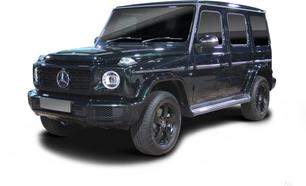
Everything you need to know about the Mercedes-AMG G 63's personality pokes out from underneath the polished alloy steps running down each of its flanks. Side pipes… no one does side pipes.
A colleague was pulled over in a G 63 because the cops thought the '60s muscle car-style exhaust was after-market and illegal. But it's not, and it's brilliant.
Launched globally in early 2018, this brutal take on the second-generation Mercedes-Benz G-Class might look the same as the G 63 it replaces, but under the skin it's a whole new ballgame.
The first-gen was like grandpa's axe, regularly updated but underneath it all the same basic framework. This is a whole new axe, including a fresh drivetrain, suspension set-up and interior treatment.
After nearly 700km of testing with both cars, it’s fair to say that the Tesla is indeed a capable tow vehicle, provided you keep the distances relatively short and plan around charge station locations.
Overall average - Penrith to Bathurst to Penrith
Fuel and energy consumption will always depend on the driving conditions, which is why we chose different routes for each leg of our testing.
Averaged across the two legs, towing the caravan with the Model X used 101 per cent more energy than without, or halved its driving range, which sounds a bit scary.
The LandCruiser by comparison added 63 per cent on average, which is still a big difference, but matters less in the real world when its big fuel tanks would still give you about 760km of driving range, which can be refilled quickly at any diesel-stocked servo.
So you could do a weekend trip with the caravan from Penrith with one supercharge in Bathurst, but it would’ve been highly unlikely to manage the extra 55km if you were leaving from Sydney CBD.
The bottom line is that there’s plenty of things - like smaller camper trailers - lighter than our caravan that will help the Tesla to do the towing job better right now.
Compared to the ‘Cruiser, the Tesla is a lesson in the benefits of a lower centre of gravity and road-focused handling.
As always, bigger batteries and more recharge points will go a long way to rectifying the Tesla’s towing shortcomings, and I'm sure we'll get there eventually.
But no matter what, its acceleration performance under load is simply excellent.
Thanks to our friends at Avida for making this test possible with the use of the 17-foot Avida Wave Tourer Electric Pop-Top single-axle caravan. They can also be reached on 1300 428 432.
The Mercedes-AMG G 63 isn't for shrinking violets. It's bold, fast, and loud, and in second-generation form massively improved dynamically and technically. It's a lot of money, but there's a lot to love, and here's hoping it stays around for decades to come.
Energy consumption is just one element of a tow vehicle though, with stability, braking and acceleration performance being the most important details.
The big ‘Cruiser is always a safe bet for towing heavy loads, but it's fair to say its off-road ability, tall body and short wheelbase mean it could be better on the road, and the Tesla goes some way to proving that.
With all those batteries mounted nice and low, the Tesla is significantly more stable with 1.7 tonnes on the back than the LandCruiser, in all conditions. It’s also helped by that longer wheelbase.
The Tesla’s airbag suspension is another surprise advantage, and while it can be a bit choppy around town over minor bumps, bigger bumps on the highway are soaked up really nicely and it all settles quicker than with the LandCruiser - even with the caravan on the back.
Tesla is famous for instant acceleration at any speed, and this effect remains when towing. The LandCruiser’s twin-turbo V8 (with max torque available from 1600-2600rpm) has long been a benchmark for tow vehicles, but the Model X makes it feel sluggish by comparison.
You know how caravan vehicles are usually the slow ones up hills? This time, we were the ones doing the overtaking, even up the steep bends heading out of Lithgow. To overtake, it just takes the slightest flex of your right foot.
Clearly there’s a big caveat though when it comes to how much energy it’s consuming while you’re enjoying that performance, and it’s deceptive because it doesn’t make any more noise like a conventional engine when you’re pushing it.
You’d also think the weight of the van would overcome the engine-braking effect of the regenerative brakes, but they are still very effective at conserving your brakes downhill and preventing the car from running away from you, and no doubt giving the batteries a bigger boost at the same time.
On that note, the LandCruiser’s cruise control also does a great job of witholding speed on downhill runs, proactively dropping gears to engine brake enough to keep the Avida Wave in check.
Let's cut to the chase. The G 63's pure grunt overpowers its challenging aero profile to thrust this boom box on wheels from 0-100km/h in a claimed 4.5 seconds. And believe it or not, despite its greater length and width, it has enough power to punch a 240km/h hole in the air (maximum velocity is limited to 220km/h if you choose not to opt for the 'AMG Driver's Package').
The new electronic architecture brings with it the latest version of Merc's 'Dynamic Select' system with five driving modes adjusting the engine, transmission, suspension, steering and assistance systems right up to maximum attack Sport+ mode.
All 850Nm of peak torque is available between 2500-3500rpm and pinning the throttle anywhere in that band feels like lining up a runway and preparing to rotate for take-off.
The two-stage exhaust flap arrangement allows you to turn the noise up from growl to roar even at modest around town speeds, and the nine-speed transmission is sharp and positive, with the multiple downshift function (in manual mode) hilariously good fun.
The racy AMG sports seats are as grippy as they are comfortable, and the fat 295/40 Goodyear Eagle F1 rubber, wrapped around the optional 22-inch forged alloys, does a good job of keeping all that mass and momentum in control as the high riding G 63 careens around corners.
And speaking of mass, the job of hauling it from warp speed to rest sits with big ventilated discs all around (cross-drilled 400mm front/370mm rear), clamped by monster six piston calipers at the front and single piston at the back. They're progressive and reassuringly powerful.
So, the performance is as dramatic as ever, but when I think of previous Merc-AMG G-Class offerings, two main shortcomings come to mind... steering and ride.
The steering was like a laggy mouse, with a few beats separating input at the wheel from response at the front treads. And the damping came up short, with a bouncy ride par for the course.
Still sitting on a ladder-type frame, the new G's suspension was developed by Mercedes-Benz and Mercedes-AMG. And finally, it has a decent double-wishbone independent front-end, with a rigid axle at the rear and coil springs all around. Plus, a strut tower brace, Merc-AMG calls it a 'suspension bridge', now connects the front strut towers, increasing torsional rigidity.
Ride comfort, especially in the most compliant 'Ride Control' suspension setting and riding on the big 22s, is massively better. It's no limo. You'll still feel jittering over higher frequency imperfections. But it's way, way ahead of the first-gen version.
The steering system changes from a recirculating ball to rack and pinion, and is now variable ratio with electro-mechanical rather than purely hydraulic assistance. And it's also much improved. We're not talking about a Lotus Elise-style connection with the road, but the steering is clearly more predictable and responsive.
One thing that hasn't changed is an ocean liner-worthy, 13.6m turning circle. You'll need to plan ahead for U-turns and reverse parks, but enough parking cameras (including surround view) to please Cecil B DeMille are on hand to help.
It's like a whole new world with a familiar cover wrapped around a markedly improved package. But (there must be a but) visibility is still compromised by thick window and door pillars, and despite the new dash layout ergonomic efficiency is patchy, with some switches and knobs located in relatively awkward positions.
As mentioned earlier the G 63 features three 100 per cent diff locks and low-range off-road gear reduction. But forget breakover angles and wading depths. This 4x4 seeing off-road action is as likely as an Abbott 2.0 prime ministership.
Suffice it to say, this car wears the 'Schöckl' badge at the base of its B-pillar. And in case you were wondering, Schöckl is a 1445m mountain in Graz, the Austrian city where the G-Class is built (and big Arnie Schwarzenegger was born!).
In the second-gen G-Class's development, prototypes covered roughly 2000km over a five kay trail including gradients of up to 60 per cent and lateral inclines up to 40 per cent. So, despite its irrelevance, the off-highway box is ticked.