What's the difference?
For a vehicle that Subaru has touted as a Sport Electric Vehicle, promising the all-terrain adventuring the brand is known for, the Trailseeker AWD looks like it should be stepping up to the plate with plenty of confidence.
It has all the ingredients on paper: electric power, decent driving range, all-wheel drive and the sort of go-anywhere credentials Subaru buyers have come to expect.
But is an electric wagon-SUV-crossover really the product Aussies have been screaming out for? Will you happily point this towards Alpine country and strap your skis to the roof, or has Subaru swung a little too hard here?
Because the electric vehicle market is getting crowded, with what seems like a new brand arriving every other week. The Trailseeker has some serious competition from the likes of the Skoda Enyaq, Tesla Model Y and Zeekr 7X and they're all vying for attention.
I've spent the week finding out what makes the Trailseeker AWD stand out.
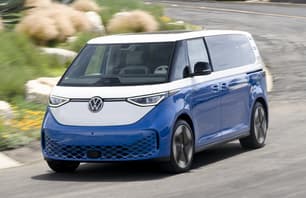
You might call it six degrees of Kombi separation. Somewhere, somehow just about all of us have a VW bus lurking in our family and friends' back story. And this is the latest version of that familiar box on wheels to hit the Aussie market.
It’s the premium, sportier, AWD GTX version of the pure-electric Volkswagen ID.Buzz.
This one-box wonder hits the retro-futurist ball out of the park and we attended its local launch to explore whether what’s under the skin supports the promise of its stunning exterior.
The Subaru Trailseeker AWD really hits it out of the park when it comes to its comfort, practicality and all-round solid family features. It's one of the nicest EVs I've sampled of late when it comes to handling and power delivery.
There's no doubt that it's a capable car being a dual-motor AWD and sporting a great ground clearance ... but it's still an EV.
And the general rule of thumb is that it's best to avoid off-roading in most EVs (potential battery damage yadda yadda), you also can’t plug it into a gumtree to charge.
Is it a comfortable family wagon-SUV crossover? Absolutely. Will you actually be driving ALL of those trails it's promising to seek out? We'll see.
The only way to make this car cooler would be to add a split fold-out windscreen and a tube steel luggage rack on the roof.
It’s fast, super practical, comfortable and guaranteed to put a smile on the face of premium family buyers ready to go for something different. And that smile will extend to just about everyone who lays eyes on it. I love it.
Note: CarsGuide attended this event as a guest of the manufacturer, with travel, accommodation and meals provided.
This is not a pillowy or small wagon-SUV (can we make WUV a thing?!) crossover. At 4845mm long, 1860mm wide and with 211mm of ground clearance, the Trailseeker isn’t compromising on size just to slot neatly into the EV category. This is very much an EV-styled Outback, which should delight fans looking for that familiar Subaru ruggedness and impressive on-road presence.
The biggest tell-tale sign that this is, in fact, an EV is the front end, which gets smooth panelling and a more streamlined silhouette. However, you still get plastic moulding around easy-to-hit areas.
Full LED lighting, 18-inch alloys with aerodynamic caps and familiar paintwork colours round out the handsome offering.
Head inside and the cabin is plush and well styled, with a stepped dashboard and display design creating some interesting focal points. It absolutely scores goals with its tactile functionality, too. Buttons, steering wheel stalks and door-mounted side mirror controls keep the Trailseeker feeling very car-like, which is a welcome relief in an increasingly screen-heavy EV world.
The synthetic leather upholstery on the seats, dash and doors feels nice underhand and even the slightly odd hexagonal steering wheel soon becomes charming.
The cabin feels fresh but comfortingly familiar.
The ID.Buzz GTX is characterised by a unique front bumper with new integrated daytime running lights near its outer edges and a narrower black honeycomb grille.
GTX badging and the exterior mirror housings are finished in high-gloss black, and 21-inch alloy wheels are standard.
The rich ‘Cherry Red’ solid paint finish of the launch test car is exclusive to the GTX and it’s a fair bet many buyers will stump up the extra $4K required for a two-tone treatment, in this case with ‘Mono Silver’ as the highlight colour.
The interior is familiar ID.Buzz territory, with the long, broad dashtop pushing the windscreen and small front windows beside it into a quintessentially Kombi ‘bay window’-style design.
A 12-inch central multimedia screen sits proud of the multi-layered dash, and a slick 5.3-inch LCD instrument and car data display is fixed in front of the driver.
A black headliner dials up the sporty feel, the electric front seats are a GTX-specific design and the synthetic diamond pattern microfleece trim is highlighted by red contrast stitching and piping.
The red cross-stitching extends to the steering wheel and smile-inducing stainless steel ‘play’ and ‘pause’ symbols on the accelerator and brake pedals are retained.
The sub-zero cool exterior design manages to merge with a more restrained and practical interior perfectly. VW has solid retro form with the ‘New Beetle’ from the 1990s and this primo ID.Buzz looks amazing. It drew an instant crowd of curious onlookers every time we stopped.
Subaru has nailed the available space in the Trailseeker. The entire cabin is roomy where it counts and passengers will be all the happier because of it.
In the front, the heat function, side bolsters, and deep padding make the front seats feel super comfortable. You'll get very little fatigue on a big road trip which is great for a WUV (it's happening) that's being positioned for family adventuring.
The rear row has legroom for days and there is a limo-like sense of space that taller adults will praise. When I say limo-like, I mean it. You'll easily be able to fit rearward-facing child seats behind a taller adult and make use of the three top-tether anchor points in general.
All of my passengers this week, including my parents, commented on how easy it is to get in and out of the car, and that’s largely thanks to the 211mm ground clearance and wide door apertures.
Despite missing out on a glovebox, which makes the giant User's Manual essentially homeless, there are still quite a few storage options throughout the car.
Up front, there is a shallow but wide middle console with a dual-opening lid (very Lexus coded), a centre console that has dual wireless charging pads, two cupholders and a little shelf underneath for smaller items. Each door (front and back) has bin storage and a drink bottle holder.
In the rear, there is a fold-down armrest with two cupholders and a couple of map pockets. My nine-year old is particularly chuffed with the heated outboard seat function and the dual USB-C ports. A handy addition here would have been sunblinds, like the Skoda Enyaq sports.
The boot rounds out the storage with its 609L of capacity, which is more than enough for luggage and kid paraphernalia. It’s handy having a retractable cargo cover and handsfree powered tailgate, but you only get a tyre repair kit, which isn’t super practical for a car that might want to hit a gravel road or two.
You also miss out on vehicle to load (V2L) functionality, which the Trailseeker AWD Tourer gets, and that too would help weekend adventurers.
Let's talk tech.
The 14-inch media display shares the same operating system as Toyota and Lexus, which offers a straightforward layout and responsive touchscreen. Note that this car is the mechanical twin of the recently released Toyota bZ4X Touring.
Climate controls are positioned in the screen but they're easy to operate.
There is wireless Apple CarPlay and Android Auto and CarPlay connected quickly and maintained a steady connection all week for me. You get a standard six-speaker sound system but it proved to be more than enough to successfully belt out some tunes to.
All in all, the Trailseeker AWD has a straightforward and practical cabin for family use.
The ID.Buzz GTX is offered in shorter wheelbase variants with five- and six-seat configurations for other markets, but here it’s seven seats and long-wheelbase only.
At close to five metres long and just under two metres wide, it’s road-trip ready with heaps of breathing room for all seven occupants.
Placement of the gearshift on the right-hand side of the steering column frees up extra space in the front and there’s heaps of storage including a moveable (and removable) centre console unit between the front seats with pull-out drawers at either end, two trays in each door (the lower one offering room for multiple large bottles), a decent glove box and a fold-out dual cupholder unit.
There’s also an oddments shelf in front of the passenger, a wireless device charging slot in the dash and adjustable fold-down armrests on both sides of the front seats.
Pull the handle on the power-opening sliding side doors and the second row opens up with three seating positions offering hectares of room in all directions.
This row can be moved 200mm longitudinally if a turf war erupts with those in the third row. And storage is great with two pockets and a fold out table on each front seatback as well as huge door bins with waste baskets included. There are also adjustable vents with temperature control in the roof.
There’s enough head and legroom for adults in the third row although the backrest is relatively upright. Even access is straightforward and there are numerous storage trays, cupholders, air vents and storage slots back there.
Power across the cabin runs to two USB-C ports in the dash, another in the front passenger area and four USB-C charging sockets in the rear.
Boot space increases from a handy 306 litres with all seats up to 1340 litres with the 50/50 split-folding third row down, and 2469L with it and the 60/40 split second row lowered. That’s plenty.
And that 1.6-tonne braked trailer towing capacity means a jet ski, even a mid-size camper trailer, is within hauling range.
The power tailgate is welcome and the rear of the boot’s load platform sits above two storage boxes. But you won’t find a spare of any description back there; a repair-inflator kit is your only option. So beware, a flat could really suck the air out of this mobile family room.
Subaru is offering two trim levels of the Trailseeker: the mid-spec AWD, which is what we’re reviewing, and the slightly higher-specced AWD Touring. Before on-road costs, they’re priced at $63,990 and $69,990 respectively, making our test vehicle competitive against its nearest rivals.
The Skoda Enyaq Sportline 85 starts at $66,990 MSRP, while the Tesla Model Y Premium Long Range comes in at $68,990 and the Zeekr 7X RWD starts at $57,900. That makes the Trailseeker AWD the more affordable option than two of its key rivals, while also offering something you’ll need to level up for, both grade- and price wise, with its dual-motor all-wheel-drive system.
Standard features include:
The new ID.Buzz GTX 4Motion is priced at $109,990, before on-road costs, which puts it in the same price zone as a diverse range of large, primo people haulers.
On price, it competes with three-row EVs like the Kia EV9, LDV Mifa 9, and if you stretch the price equation a little further, the Zeekr 009. But in terms of style and personality, this machine lives in a world of its own.
Maybe its VW California Beach sibling comes closest, however that van’s traditional turbo-diesel powertrain stands in stark contrast to the ID.Buzz’s pure-electric vibe.
Once you’ve crested the $100K mark, it’s fair to expect a healthy list of included features and the ID.Buzz GTX doesn’t disappoint.
Aside from the performance and safety tech we’ll get to shortly, the highlights include adaptive cruise control, auto LED matrix headlights, 13-speaker (plus sub-woofer) Harman Kardon audio with digital radio, wireless Android Auto and Apple CarPlay, three-zone climate control, a panoramic (dimmable) glass roof, 30-colour ambient lighting, power-adjustable heated front seats, heated (outer) rear seats and 21-inch alloy rims.
There’s also a head-up display, a heated steering wheel, rain-sensing wipers, microfleece seat trim, keyless entry and start, electric side doors and tailgate (the latter with hands-free functionality), ‘Ask IDA’ voice control and dark tinted windows.
That’s a strong, class-competitive value equation. Metallic or pearl effect paint will set you back $1890, the two-tone treatment is $4090 and black 21-inch alloys add $380.
The Subaru Trailseeker is powered by a dual-motor all-wheel-drive set-up with a hefty 280kW of combined power.
Subaru doesn’t quote a combined torque figure, but it can sprint 0-100km/h in just 4.5 seconds, making this feel very performance coded compared to some of its single-motor rivals.
The GTX is a twin-motor AWD, the front unit generating 80kW/134Nm and the rear 210kW/560Nm. Total output is 250kW/590Nm which boosts towing capacity from 1.0-tonne in the single-motor ID.Buzz to 1600kg.
A single-speed transmission sends drive primarily to the rear wheels to maximise efficiency, the dual-motor set-up able to direct power to the front axle as required during acceleration or to manage available traction.
The Trailseeker AWD has a large 74.7kWh lithium-ion battery and a WLTP driving range of up to 533km. I got pretty close to the claimed energy consumption of 15.4kWh/100km, with my 15.7kWh average this week. Given I’ve done some serious highway trips, that’s an impressive result.
It sports a Type 2/CCS charging port which accepts up to 22kW on an AC charger and up to 150kW on a fast DC charger. I would have liked to see a higher DC charging capacity, but on a compatible fast charger, you can go from 10 to 80 per cent in around 30 minutes, which is reasonable.
The ID.Buzz GTX’s 86kWh lithium-ion battery delivers a claimed (WLTP) range of 473km and the car uses a CCS Type 3 socket. VW includes a Mode 2 and Mode 3 cable as standard.
The claimed 10-80 per cent 200kW DC fast charge time is 26 minutes, while the same top-up takes nine hours at a maximum 11.0kW AC capacity.
Claimed energy consumption on the combined (urban/extra-urban) cycle is 20.2kWh/100km (WLTP) and over several hundred kilometres of mainly B-road and freeway running on the launch we saw an average of 24.5kWh/100km, which isn’t out of order given the type of driving involved.
No one will claim that the Trailseeker is underwhelming when it comes to power. It’s quick, with no bucking through the body when you have to plant it, and it’s a perfect companion on the open road.
The suspension and steering are nicely balanced to deliver a dynamic and engaging driving experience, and I’m really enjoying how stable it feels through corners.
It’s easy to choose between the four levels of regenerative braking thanks to the steering wheel-mounted paddles. But you don’t get one-pedal driving, which seems like an important omission for an EV.
The cabin is quiet around town and on the open road, and it’s easy to chat across the cabin without raising your voice.
Visibility is quite good out the front and sides from my driving position, and I like that the A-pillar has a glass insert to break up its width. And it doesn’t matter if you have a car full of gear or people, because you have a digital rear-view mirror.
Even with the regen on its strongest level, you can still ‘creep’ at lower speeds and, coupled with a really clear 360-degree camera, the Trailseeker is downright easy to park.
Despite the fact that it weighs in at around 2.8 tonnes (2780kg), Volkswagen Australia says this dual-motor ID.Buzz accelerates from 0-100km/h in 6.4 seconds and on to a 160km/h maximum velocity, if you dare.
And there is always some serious oomph lurking under your right foot. Trundle along at 65km/h, pin the accelerator, and in roughly two blinks of an eye you’re doing 95km/h.
Proportionally, this car is like a loaf of bread on wheels - about as high as it is wide. And on the windy launch drive we were buffeted a bit, the car moving sideways slightly when hit with a gust. But overall, it remains stable despite its proportions. That said, some wind noise comes over the bluff nose on the freeway, but never to an alarming degree.
The ID. Buzz rides on VW’s Modular Electric Drive (MEB) platform and there’s been past criticism of the short-wheelbase versions' ride quality, but there are no such issues here.
Suspension is by struts at the front and semi-trailing arms at the rear and this GTX has had a suspension retune with particular attention paid to key components, including the dampers.
On rural roads that have seen better days, dotted with potholes, bumps and thumps, a combination of that suspension retune and the longer wheelbase helped the GTX handle it well.
There are five drive modes with Comfort the default. Eco smooths out acceleration, tapers the climate control and reduces overall power, while Sport dials up the powertrain, suspension and steering. Traction optimises the AWD system for loose or slippery surfaces and Individual allows you to cherry pick various attributes for a custom set-up.
Steering is progressive rate and you can feel it loading up nicely as you head into a corner. Not the last word in terms of road feel, but the car points accurately and turn-in is nice and progressive.
At the same time you’ve got the electric motors constantly shuffling drive between the front and rear axles, helping you out if you decide to explore the car’s sporty nature and have a crack in the corners.
Tyres are Hankook Ventus S1 Evo3 EV specials (235/45 fr - 265/40 rr) and in long, sweeping bends, taken at pretty decent speed, they grip hard. Even on coarse-chip B-road surfaces there’s a bit of rumble but it’s far from a roar.
Braking is by large (358mm) ventilated discs in the front and, believe it or not, drums at the back. A well-designed, modern drum brake can work effectively and the regenerative braking in an EV like this is a big factor in terms of washing off speed.
In terms of lower speed manoeuvres, you’ve got a 360-degree camera view as well as a reversing camera and front and rear parking sensors. If you really need some help, Park Assist Plus will get the job done for you.
In terms of ergonomics, we spent hours behind the wheel and the front seats remained comfortable and supportive in terms of lateral grip.
Speaking of grip, the steering wheel is nice to hold. And the cool little 5.3-inch instrument and car data display is clear as a bell, and the large 12-inch media screen is easy to use and working through the different screens is largely intuitive.
The Subaru Trailseeker has a maximum five-star ANCAP safety rating from testing conducted in 2025 and features eight airbags. It didn’t manage an individual assessment score in the nineties, but still performed well, scoring 89 per cent for adult occupant protection, 86 per cent for child occupant protection, 80 per cent for vulnerable road user protection and 82 per cent for its safety assist systems.
The biggest callout here is that the new Trailseeker misses out on emergency call capability, but it is good that none of its safety equipment intrudes too much on everyday driving.
Standard equipment includes:
The current ID. Buzz range hasn’t been assessed by ANCAP although its sister organisation, Euro NCAP, awarded it a maximum five-star rating in 2022.
As you’d expect, a full suite of driver-assistance tech is onboard including highway-speed AEB with pedestrian and cyclist monitoring, adaptive cruise, lane-keeping assist, lane-change assist, blind-spot monitoring, rear cross-traffic alert, driver fatigue monitoring and tyre pressure monitoring.
There’s also a 360-degree view and reversing camera, plus Park Distance Control incorporating front and rear proximity sensors.
The airbag count runs to seven - front, front side, curtains covering the second and third rows, as well as a front centre bag. And multi-collision brake minimises the chances of subsequent impacts after an initial crash
There are five top tethers for child restraints; three across the second row and two in the back row, with four ISOFIX anchors across both rows.
The Trailseeker is offered with Subaru’s five-year/unlimited km warranty. While some of its rivals have the same term, it’s now a below-average offering for the class in general.
Servicing, however, is downright cheap, with a three-year pre-purchased plan costing just $584.29 and the five-year plan set at $984.18. Servicing intervals are also well-spaced at every 12 months or 15,000km, whichever occurs first.
It’s also fairly easy to get your Trailseeker serviced, with around 120 Subaru service centres across Australia.
The ID.Buzz GTX is covered by Volkswagen Australia’s five-year/unlimited-km warranty with two years’ roadside assistance included. On top of that, there’s an eight-year/160,000km warranty on the drive battery.
That general warranty is in line with the mainstream market, although it’s worth noting an increasing number are stepping up to longer terms, including 10 years.
There’s a 12-year corrosion perforation warranty and keep servicing with an authorised VW dealer and that roadside assistance support will be rolled over for another two years each time.
The recommended maintenance interval is two years/30,000km. Standard scheduled service pricing is $687 for each of the first five workshop visits, while pre-paid plans covering six, eight or 10 years represent savings of between 30 and 35 per cent on that figure, which is pretty handy.