What's the difference?
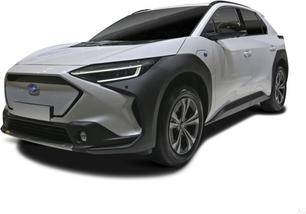
Car companies don’t normally overhaul a vehicle so rapidly and comprehensively. But the updated Subaru Solterra EV is an exception. It had to be done and this isn’t just an update, it’s an act of survival for Subaru… and Toyota.
You knew the Solterra’s identical twin is the Toyota bZ4X, right? Together Subaru and Toyota developed an electric SUV. Subaru’s is the Solterra, Toyota’s is the bZ4X - same car, different styling, mostly.
The problem was the vehicle couldn’t compete with rivals like the Zeekr 7X and Tesla Model Y on price, driving range, power or charging speed.
Subaru and Toyota knew this had to be fixed ASAP. And so we now have the new Solterra. But is this revised version good enough? Read on to find out.
Straight off the bat, let's just acknowledge that there's nothing new about the Toyota Kluger large SUV for 2025 – but that might not be a bad thing.
In a world where there seems to be some new fangdangled piece of car tech out there that works on paper but not in reality - like keyfobs that don't unlock the car properly, or multimedia systems that are just too darn smart for their own good.
There is something quite charming about the familiar specs and on-road comfort of the mid-spec Toyota Kluger GXL seven-seater we're family testing this week. In true Toyota style, it has a healthy mix of the tradition thrown in with workable technology.
It's newer seven-seat SUV rivals might try to tell you that the old Kluger is starting to fall behind, but is it? Or will simplicity win out for tired parents who just want an SUV to do what it says it will?
The updated Subaru Solterra is now good enough to compete with rivals such as the Tesla Model Y and Zeekr 7X. The price is right as are the driving range and motor outputs.
There's room for improvement in terms of cabin packaging. The car doesn’t cater for taller, larger people up front, with the steering wheel placement and wide centre console. Cabin storage could also be much better.
Still, the Solterra is superb to drive. One of the best EVs I’ve piloted at this price.
The Toyota Kluger GXL Hybrid has been the ultimate SUV this week, as it fits my gear and family in comfort, the on-road handling is excellent and the fuel usage makes owning this long term actually feasible.
This is a great example of a mid-spec seven-seater that is both functional and comfortable. There’s lots to satisfy here and even though it hasn’t been updated, it may be a case of ‘if it aint broke, don’t fix it’.
The Solterra is a mid-sized SUV with sporty coupe-like styling and this update has seen the front of the car receive a new look which to my eyes is better than the previous face.
The rest of the car’s exterior remains mainly unchanged in the design.
If you aren’t a fan of the Solterra’s look then check out Toyota’s bZ4X, which is its twin and has slightly more conservative styling, and while I do like the Subaru’s face, I think Toyota’s tail-light treatment is cleaner.
The cabin is modern with a large central media screen, a high-placed instrument display and a wide centre console with dual phone chargers. But the squareish steering wheel steals the show, completing the futuristic vibe.
This update has seen the centre console re-designed with the dual chargers added and the gear-shifter moved backwards away from the media display.
The cabin doesn’t have much in the way of glitzy touches, with dark materials dominating throughout. Hard plastics abound, but the interior still looks and feels premium.
The Kluger epitomes what a large SUV was originally meant to look like. A big body and with enough ground clearance to earn the tag, but the shape is all long lines and gently curving panelling and that makes it look sleek rather than rugged.
Make no mistake, the Kluger is large at 4966mm long, 1930mm wide and 1755mm tall. It's only only 24mm shorter in its length than its big 4WD Toyota Prado cousin. It's size and road presence assures you that it's capable, but it's not trying to convince you it's a 4WD.
Despite not seeing any design updates, the Kluger still feels relevant and more than holds its own when it comes to kerbside handsomeness.
On the inside, the black synthetic leather trims, softly padded touchpoints and interesting dashboard make the cabin both pleasant to look at and spend time in.
The 12.3-inch multimedia display looks lovely with its clear graphics, but it’s still nice to see some traditional elements - like the gear selector, analogue instrument cluster (with a 7.0-inch digital display) and lots of buttons and dials to play with.
Interestingly, there isn’t a traditional transmission tunnel, which means you get a practical flat floor in the middle row and, thus, more legroom for middle seaters.
It's a forgiving cabin that lots of different drivers will find something to like in.
The steering wheel’s square design is like that for a reason - it’s designed to provide the driver with a clearer view of the instrument cluster. But as noted in the past with other vehicles that choose this set up, the ergonomics don’t work for everybody - especially if you’re tall like me (I’m 189cm).
In my case the top of the steering wheel obstructs my visibility of the display, which shows vehicle speed among other crucial info.
There’s also a problem with the clearance of the steering wheel and my legs. This is caused by a combination of my height, the low steering wheel and the limitations of how much it can be raised, the low-hip point in the seating position and the shape of the wheel.
Add an overly wide centre console and space for larger and taller drives becomes even more cramped.
Moving the shifter back in this update also makes it more difficult to use for me and the mechanism is quite clunky.
Second row space is a much better story, with a flat floor, good headroom and lots of legroom even for me behind my driving position. The rear door aperture isn’t great and this has made installing child car seats and the corresponding child difficult.
Cabin storage could also be better. There’s no glove box, but there is space under the centre console, although this is now where the large driver’s manual lives. There’s a large centre console bin, big door pockets and four cupholders (two up front and two in the second row).
The second row has directional air vents and USB ports. There are USB ports up front, too.
Boot capacity isn't enormous at 421 litres in the entry-grade and 410 litres in the Touring. There’s no front boot, either. Under the bonnet is the Solterra’s front motor and electrical hardware.
The Solterra is a five seater SUV, so no third row here.
The Kluger is both practical and comfortable for passengers as each row gets a great amount of head- and legroom – yes, even third-rowers, but the low level of amenities in that row will render it a 'sometimes seat' for adults or older kids.
The 208mm ground clearance, wide door apertures and low-sitting seats makes it a very easy SUV to get in and out of, even for kids. The access to the third row is also good as the 60/40 split middle bench seat can be slid forward.
The electric front seats offer lots of adjustments, including lumbar support on the drivers side, but both seats get heating. They’re also well-padded and quite comfortable on a longer journey.
The outboard seats on the middle row offer the most comfort as they have longer under-thigh support, but the entire row benefits from heavy padding and the seat backs can recline.
The third row offers a curious 60/40 split and is wide enough for two adults to not be squished like sardines.
Although the Kluger is a seven-seater, families will be bummed that there are no child seat anchor points in the third row. But the middle row has two ISOFIX child seat mounts and three top-tether anchor points. It is more than wide enough to accommodate three seats side by side and you’ll have enough room for the front passenger when a rearward facing child seat is installed, too.
Individual storage is above average for the class, but the front row gets the best of it. There are two handy shelves built-into the dash, a glove box, a deep middle console (that swallows my arm) and cubbies in the centre console that include a phone cradle and two cupholders. There's also a sunglasses holder and little cubby beside the driver's knee.
In the middle row, you get two map pockets, two cupholders in a fold down armrest, and a drink holder in each door. While the third row gets a couple of cupholders.
Amenities are well-rounded for the most part, with the three-zone climate control and well-positioned directional air vents in the roof for the back two rows. Middle-rowers also get reading lights and two USB-C ports.
Technology is easy to use and looks great as the 12.3-inch display uses the same multimedia system as Lexus. The built-in satellite navigation is simple to set up and shows clear directions with lots of route customisations available.
There is wired Android Auto and wireless Apple CarPlay, but you do have to initially connect the CarPlay via a cable.
Rounding out the cabin is the great-size boot that offers 241L with all seats in use, but that can jump up to 552L when the third row is stored.
The level loading space makes it easy to slide larger items in and out of, and there’s a handy underfloor storage compartments for smaller items. You get a full-size spare tyre underneath the car and a powered tailgate in this model.
The updated Solterra is offered in two grades. An entry-grade model, simply called Solterra, lists for $63,990 and above that is the Solterra Touring for $69,990. That’s up to seven thousand dollars more affordable than pre-update.
We tested the top-of-the-range Touring, which comes loaded with standard features, the only option being leather seats.
If you were wondering if you needed to spend the extra money on the Touring you might be pleased to know both grades have exactly the same powertrain and the entry-grade comes with plenty of standard features.
Coming standard on the entry grade Solterra are 18-inch alloy wheels, LED headlights and LED tail-lights, power mirrors, puddle lamps, a powered tailgate with kick-sensor (new with the update) and roof rails.
There’s also synthetic leather seat trim, heated and eight-way power-adjustable front seats, a heated leather steering wheel, heated second row seats, dual-zone climate control, a 14-inch multimedia touchscreen (new) and 7.0-inch driver display, wireless Android Auto and Apple CarPlay, dual wireless phone chargers (new) and a six-speaker sound system.
The Solterra Touring comes standard with all this but adds 20-inch alloy wheels, a panoramic sun roof, ventilated front seats (new) and a 10-speaker Harman Kardon sound system.
The Touring also features a 220V vehicle-to-load (V2L) power outlet.
You have to love a simple three-grade line up with variant names that aren't hard to say! The Kluger starts with the base GX, mid-spec GXL and then the flagship Grande model.
All Kluger models share the same all-wheel-drive hybrid powertrain, and our test model is the mid-spec GXL, which is priced from $70,440 before on-road costs.
Its price positions it in the middle of its seven-seat hybrid rivals; the Hyundai Santa Fe Elite ($65,000 MSRP) and the Kia Sorento GT-Line AWD ($73,330 MSRP), but it should be noted that the Sorento hybrid is only offered in one high-spec grade level and the Kluger can’t always match the Sorento’s plush features.
The GXL is still fairly well-specified and includes eight-way powered front seats with heating, adjustable lumbar support (driver's seat), black synthetic leather upholstery, a powered tailgate, rain-sensing wipers, dusk-sensing LED headlights, keyless entry/start and a full-sized spare tyre.
There is also 12 months of complimentary access to Toyota Connected Services, which allows you remote access, via the myToyota Connect app, to safety and security features, multimedia connect and driving insights.
The other technology is well showcased in the 12.3-inch multimedia display that has touchscreen functionality, in-built satellite navigation, wired Android Auto, wireless Apple CarPlay, Bluetooth and digital radio. You also get a single USB-A port, three USB-C ports, two 12-volt sockets and three-zone climate control.
The Solterra has two electric motors and as before there is one driving the front wheels, and one driving the rear wheels for all-wheel drive. Toyota’s bZ4X twin can be had in two-wheel drive and AWD.
The big news is the motors are now more powerful. Much more powerful. Combined output is 252KW (up from 160kW). That’s a huge increase but power is still less than the output of a Model Y or Zeekr 7X.
The front motor now makes 167kW/268Nm, while the rear motor produces 88kW/169Nm. Acceleration from 0-100km/h is about five seconds and that’s almost two seconds faster than the old version.
All Kluger grades are all-wheel-drives with a smooth continuously variable transmission. They share the same 2.5-litre four-cylinder hybrid powertrain that produces up to 184kW of power. Toyota does not quote a combined torque output.
At first look, these outputs may look underwhelming, but the on-road experience has shown that it’s more than enough to move the Klugers big body around without it feeling underpowered.
The Kluger has a braked towing capacity of up to 2000kg, which means you can hook up most of your weekend adventure toys!
The updated Soltera’s battery size has increased to 74.7kWh. That’s up from 71.4kWh and means driving range has increased.
The new, larger lithium ion battery delivers a range of 566km (WLTP) in the entry-grade Solterra (up from 414km). That addresses a big concern about the old car. The Touring has a range of 517km and any range above 500km is acceptable in my book.
Also big news is the increase in maximum AC charging capacity from 11kW to 22kW. DC charging capacity is the same at 150kW with 0-80 per cent charge in about 30 minutes.
Consumption officially ranges from about 14.6kWh/100km in the entry-grade Solterra to 16.0kW/100km in the Touring. The Touring we tested was reporting 17.0kW/100km according to the trip computer after 163km of testing in mainly urban conditions.
The Kluger may be massive but it has an excellent combined fuel cycle usage of just 5.6L/100km because of its hybrid powertrain.
Combined with its large 65L fuel tank, you should see a theoretical driving range of up to 1160km, which is really good for a family SUV and rivals diesel models of the same size.
I’ve been super pleased with the fuel usage of our test model because despite doing quite a few long distance trips, which is where hybrids are usually the most inefficient, I’ve managed a real world usage of only 5.8L/100km! That is a great result.
The Kluger only accepts a minimum 95RON unleaded premium petrol.
The Solterra may slightly lag behind rivals in some areas such as range and power output, but where most rivals can barely touch it is when it comes to driving.
Currently there aren’t many electric vehicles that are good to drive, except for more prestige offerings from brands such as BMW, Mercedes-Benz and Porsche.
The Solterra is one of the best electric vehicles I have driven at this price point and it’s down to the outstanding platform it shares with the Toyota bZ4X which provides superb ride comfort, great handling and excellent steering.
Acceleration is strong and traction from the all-wheel drive is good.
Sure, while the driving position needs improvement, the car itself is excellent to drive.
Visibility is also good and sound intrusion is minimal. We noticed some materials making noises in the cabin. Although this is common, with no engine to mask it, it becomes more noticeable in EVs.
The engine can sound like it’s under pressure, but that doesn’t translate to underwhelming power delivery. The GXL has enough grunt to make it a comfortable open-roader that’s confident on hills and overtaking.
The steering is light for such a big SUV, but with its 11.4m turning circle, it’s every parents dream when doing the school run or navigating small lanes or parks for after-school activities. It’s almost stupidly easy to drive and feels much smaller than what it is, even in the city.
Visibility is mostly good because of the large windows, but the B-pillar is larger than I’d like and I found myself checking my blind spots carefully.
The ride comfort is really good and suspension is forgiving on the worst of the bumps without feeling like it floats on the road. Road noise is low, even at higher speeds, but occasionally you get a weird wind whistle through the air vents.
Even those usually put off by a large SUV, should find this comfortable to get around in. Parking it is the only time you really notice its bulk. While the reversing camera is great quality, a 360-degree view system would have been much better.
The Solterra has been awarded the maximum five-star ANCAP rating - but that was given under 2022 testing criteria and the bar has been raised quite a lot higher since then.
Still, the level of safety technology is high with AEB, lane keeping assistance, blind spot warning and rear cross traffic alert onboard.
Front and rear parking sensors are standard on both grades, as is a 360 degree camera view. Auto parking is standard on the Touring.
A digital rear vision mirror is also standard on both grades providing a clear and unobstructed view.
There are seven airbags present, including a front centre bag. And there are three child seat top tether points across the second row with ISOFIX anchors in the two outer positions.
The Toyota Kluger has a maximum five-star ANCAP safety rating from testing done in 2021 and scored highly across its individual assessment scores. However, it only features seven airbags, which is a bit low for a car of this size, but the curtain airbags extend to the third row, which is good.
The Kluger has lots of safety equipment, including daytime running lights, hill-start assist, seatbelt warning (all seats), lane departure alert, lane-keeping aid, traffic sign recognition, rear cross-traffic alert, blind-spot monitoring, a reversing camera (with guidelines) and front and rear parking sensors.
The Kluger does miss out on family friendly safety items, like child-presence alert and side exit assist. The adaptive cruise control isn’t as well tuned as I’d like as it doesn't hold it's speed all that well, slows down too soon behind a vehicle, and sometimes can be sluggish to return to a normal speed once a vehicle has left its 'radar'.
The GXL has AEB with car, pedestrian, cyclist and junction turning assist and is operational from 10-80km/h (up to 180km/h for car), but it is usual to see that starting point sit closer to 5.0km/h.
The Solterra is covered by Subaru’s five-year, unlimited-kilometre warranty which is falling behind the seven-year warranty offered by many now. The battery is covered by an eight-year, 160,000km warranty.
There is also five years of capped price servicing with each yearly/15,000km service costing between $130-$300. That’s a very reasonable price.
The Kluger is offered with Toyota’s five-year/unlimited-kilometre warranty, but that can be extended to seven years if you service on time and with a Toyota service centre, which makes it competitive against some rivals.
There’s a five-year capped-price servicing program available, with services costing just $285, which is cheap for the class. Servicing intervals are reasonable at every 12 months or 15,000km, whichever occurs first.