What's the difference?
The hotly anticipated Renault Megane E-Tech has arrived on our shores but we're only getting the mid-spec variant for now.
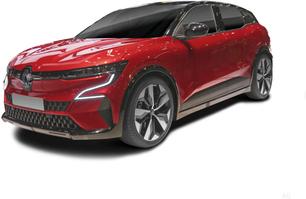
Renault's newest EV is related to the well-known Megane in name only because it has been built from the ground up as an EV. It’s not a hatchback, like its namesake, either, rather a crossover, which means it’s a bit lower than some of its small SUV rivals.
It faces firm competition in the likes of the Hyundai Kona Electric, Volvo C40 and newcomer bZ4X from Toyota. In this review we'll see how Renault's cutest EV handles life with my family of three.
Peugeot has dropped its traditional petrol and PHEV options for a new mild-hybrid system in the next-generation 3008.
We’re testing the flagship GT Premium Hybrid, which brings fresh styling, upgraded tech and a premium cabin into one of the most competitive SUV segments, but is it enough to stand out?
The design for the Renault Megane E-Tech is top-notch and the eco-conscious footprint is even better. It’s an easy and comfortable car to be in but the price is a smidge too high in my opinion when you consider there’s currently only one choice for us Aussies and it’s a mid-spec variant at that. It also misses out on some items its rivals have but is a solid EV to consider for urban dwellers.
The new Peugeot 3008 GT Premium Hybrid might not be the most spacious SUV for passengers, but it makes up for it with ample boot space and a standout design. It’s fresh-faced, interesting and packed with comfort features that elevate the everyday driving experience.
Is it expensive? Absolutely. But it also delivers a genuinely premium cabin that many rivals can’t match, along with refined on-road manners and efficiency that make it a pleasure to drive.
It doesn’t hit every note perfectly but there’s definitely a melody here worth listening to.
The E-Tech’s plump body panelling gives me some cute marshmallow vibes from certain angles but there are enough features to keep it looking slick, like the fun LED headlights, massive 20-inch alloys and optional two-tone paintwork.
I’m also a fan of the door handles on the E-Tech as they add some nice focal points, because the front has auto-flush handles that pop out on approach and the back door handles are positioned on the C-pillar.
If you're eco-conscious the E-Tech ticks the box because Renault has designed it to be 90 per cent recyclable.
The body is made of aluminium and can be reformed and shaped into new products at the end of its life. The interior materials are made from recycled fabrics and trims; even the lithium-ion battery is free from any rare earth minerals.
Head inside the cabin and the grey knit trims and upholstery on the seats, doors and dashboard creates a cabin space that feels warm and inviting. It's a similar feel to the Polestar 2 - simple but refined.
Although, with my kid around I have higher anxiety about dirtying them!
The third-generation Peugeot 3008 boasts a striking silhouette, with coupe-like lines at the rear and well-proportioned overall dimensions that give it a confident, refined stance.
Signature Peugeot elements like the claw-inspired LED headlights and tail-lights lend it a distinctive, modern edge, which elevates its presence in a crowded SUV segment.
That said, the extensive use of black plastic cladding around the lower body detracts from the otherwise premium exterior and feels out of place.
Step inside and the cabin is easily one of the most captivating interiors I've been in recently. There's real design flair here: a multi-level centre console, sculpted ambient lighting panels that highlight the angular dashboard, and a rich, eclectic mix of materials. From quilted Nappa leather seats to textured grey knit fabric and brushed aluminium accents, it’s a refreshingly bold and beautifully executed space.
Add the panoramic sunroof and long equipment list, it's a cabin that you'll like to spend a lot of time in.
The E-Tech’s cabin is fairly roomy up front with plenty of head- and legroom. The front seats are super comfortable with powered lumbar support and I wouldn’t mind them not being powered if the price point was a bit lower.
The rear seat is comfortable enough once you get seated but the top of the door apertures are low, and I have to duck my head to get in and out.
Your head also brushes against the roof lining in the back which isn't terribly comfortable, especially considering there is no fold-down armrest to lean on.
The front row benefits the most with individual storage and you get a lot of options to choose from but the centre console is one of the most practical I’ve seen for the class. Lots of pockets and nooks that feature adjustable 'walls'.
You get a single permanent cupholder but with the removable walls, accommodation for a second cup or bottle, can be catered for.
Underneath the multimedia screen you get a dedicated phone shelf, which I love using.
In the rear, you get two map pockets and shallow bin storage in each door.
The charging options are good with two USB-C ports in each row as well as a 12-volt outlet and a wireless charging pad up front but you miss out on V2L (Vehicle to Load) functionality in this model.
The 9.0-inch touchscreen multimedia system looks great headlining the dash and is easy to access and use. The system rebooted once on me while driving but other than that everything is responsive.
You get wireless Apple CarPlay and Android Auto and the CarPlay is easy to get started.
The steering wheel has numerous stalks, controls, regen paddle shifters and even the gearshifter on the column, too. It takes a beat to get used to it but I like how driver orientated it is.
The boot offers great storage at 440L but it’s a deep well, which might be annoying if you’re unloading heavier gear. There is underfloor storage for the cables, too, and like I said, you miss out on a powered tailgate.
The best part of the cabin is easily up front. There's generous space, and the seats are comfortable, even before you engage any of their functions. Longer trips have been a dream. I particularly enjoyed the massage settings, though the session durations felt a bit inconsistent.
Storage in the front is cleverly designed, with plenty of options: a sunglasses holder, a large glovebox, a phone shelf, a deep centre console and ample drink holders. It’s easy to keep the space tidy and organised.
Charging options are solid, with two USB-C ports, a 12-volt socket and a wireless charging pad.
The updated multimedia system has a screen that is wider than it's tall, making the icons small and easy to miss while on the go. I did tap the wrong one a few times!
That said, I appreciated the customisable quick-access and instrument panels, and connecting to the wireless Apple CarPlay was seamless. The touchscreen can be a little laggy, but overall the system is functional and intuitive once you're used to it.
Owing to its relatively short 4542mm length, rear legroom is tight, and the bench isn’t wide enough to comfortably seat three adults over long distances. This just makes it feel cramped for a mid-size SUV and it's something my eight-year old noticed straight away.
The seats are well-padded, though, and rear amenities are strong with directional air vents, heated outboard seats, two USB-C ports, a 12-volt socket and the usual cupholders and map pockets.
Boot space is generous at 520L with a flat load floor. The 48-volt battery means there's no spare tyre, but the powered tailgate with kick-function was a lifesaver during errand runs this week. For more flexibility, the rear row folds in a 40/20/40 split.
For the moment, the Megane E-Tech is being offered in only one grade for the Australian market and that’s the Techno EV60, which is the mid-level version of Renault’s brand new EV.
The EV60 is priced from $64,990, before on-road costs, and that positions it right in the middle of its rivals. The nearest competitor is the Hyundai Kona Extended Range at $60,500 MSRP, newcomer Toyota bZ4X 2WD slides in at $66,000 MSRP and the Volvo C40 Plus sits at $78,990 MSRP.
The E-Tech comes with a decent array of features for a mid-spec variant and premium items include heated front seats, a heated steering wheel, a digital rear view mirror and wireless functionality for Apple CarPlay and Android Auto but you do miss out on items like a powered tailgate and electric front seats which most of its rivals sport.
Technology looks good with a 9.0-inch touchscreen multimedia system, 12.3-inch digital instrument cluster, dual-zone climate control, faster USB-C ports (four total) and a wireless charging pad.
Sound is covered by the Arkamys Auditorium sound system with six speakers and the mood can be set with the 48-way configurable ambient lighting system.
Despite missing out on a powered tailgate, the EV60 has some features that still offer convenience like keyless entry, heated and auto-folding side mirrors and auto-folding flush door handles that pop out on approach (front only).
The new 3008 has a streamlined line-up of only two grades, at least for now, and we’re in the flagship GT Premium Hybrid for this review.
The third-generation 3008 has a new mild-hybrid powertrain, which pairs a turbocharged petrol three-cylinder engine with a small electric motor and a 48-volt battery. A fully electric version exists overseas but is yet to be confirmed for Australia.
Our test model competes with popular mid-size SUV rivals like the Mazda CX-5 Akera, which starts at $55,150 before on-road costs, and the Toyota RAV4 Cruiser 2WD, which sits at $51,410.
With its $64,990 price tag, the new 3008 GT Premium Hybrid is the most expensive option, which might only appeal to fans of the brand.
However, the GT Premium is very well-specified with massaging and heating functions for the electric front seats, a panoramic sunroof, a 10-speaker Focal sound system and a 3D sat nav with connected services, where you can get information like local car park pricing, as well as over-the-air updates.
Other premium features include ventilated front seats and heated rear outboard seats, which are new for this model.
But the biggest change inside is the new 21-inch display, which houses the updated multimedia system and digital instrument cluster.
There are other new features like wireless Apple CarPlay and Android Auto, and an upgraded panel for your quick access menu widgets (up to 10 widgets can be customised).
Other features include a handsfree powered tailgate with kick functionality, keyless entry and start, four USB-C ports, a wireless charging pad, a tyre repair kit, a panoramic sunroof and surrounding ambient lighting.
The Techno EV60 has a single electric motor. It produces a power output of 160kW and 300Nm of torque, and Renault says it will sprint from 0-100km/h in 7.4-seconds.
That's perfectly adequate for keeping up with traffic or getting around town. You only notice a sluggishness with power when you have a full load of gear. Flipping it to 'Sport' mode make it feel peppier, if you ever need it.
All grades of the 3008 are powered by the same mild-hybrid setup, featuring a 1.2-litre three-cylinder turbo-petrol engine that's paired with a small electric motor and a 48-volt battery. Power is sent through a six-speed dual-clutch transmission, with the system delivering combined outputs of 100kW of power and 230Nm of torque.
Performance is modest, with a 0-100km/h sprint time taking 10.2 seconds. It’s perfectly adequate for everyday driving around town and in traffic, but the lack of urgency becomes more noticeable when overtaking at highway speeds. Still, the hybrid system offers smoother low-speed acceleration and improved efficiency over the outgoing petrol-only model.
The official energy consumption figure is 15.6kWh/100km and I averaged 13.9kWh after a fair mix between urban and open-road driving.
That’s outstanding consumption but the official driving range for this E-Tech’s 60kWh lithium-ion battery is up to 454km, which is similar to the Hyundai Kona Electric but I still had an eye on the range during longer trips.
The E-Tech has a Type 2 CCS charging port which means you can benefit from faster DC charging speeds, however, it can only accept a top speed of 7.4kW on AC power.
On a 7.4kW AC charger, you can go from 0-100 per cent in a little over nine hours but on a standard 2.3kW house plug, that jumps up to over 30-hours.
On a 130kW DC charger expect to go from 15-80 per cent in as little as 30 minutes, which is pretty convenient if you have access to one.
Sadly, the E-Tech doesn’t have vehicle-to-load capability, so you can’t power or charge bigger items.
The new mild-hybrid powertrain brings a solid improvement to efficiency, with an official combined fuel consumption of 4.9L/100km. Paired with a 55-litre fuel tank, that delivers a theoretical driving range of up to 1122km, which is an impressive figure for a mid-size SUV.
Over the past week, I’ve done a mix of longer highway drives, urban errands and the usual big grocery hauls. My real-world average came in at 6.1L/100km, which is still a strong result for this segment.
The system also features regenerative braking, which while not customisable, is noticeable in everyday driving. It kicks in strongly enough to give the sensation of heavy braking at times, particularly in city traffic and it reminds you that it's working behind the scenes to recover energy.
I have mostly loved driving the E-Tech. It's easy to cruise around in and the power is adequate for open-road driving but it prefers an urban environment.
The power can feel a bit lacklustre when you are carrying lots of people or gear but you mostly feel that when you're on a steep incline and trying to keep up your speed.
The steering is crisp and that makes the E-Tech very responsive to drive. The power is delivered smoothly and it feels well-balanced when you put your foot down.
There is more roll in corners than I was expecting but the car still feels firmly planted.
The ride comfort is great. The suspension is more firm than soft which means you feel the road but it's not a major bother. There is a bit of wind noise at higher speeds, as if the door isn’t properly sealed by a millimetre but it doesn't annoy me.
The regenerative braking is controlled by paddles on the steering wheel and you have three levels plus a one-pedal function to choose from.
The single pedal set-up is pretty smooth, even in stop/start traffic, but it’s great to be able to quickly change modes on the go.
The smaller size of the E-Tech makes it an easy car to manoeuvre in a small car park. You get front, rear and side parking sensors which is great because the reversing camera isn’t as clear as it should be for this price level.
The 3008 has been genuinely enjoyable to drive. It’s easy to handle, with responsive steering and a stable, confident feel at higher speeds. The transmission generally keeps the powertrain in the right gear, only occasionally over-revving during open-road driving.
Power delivery is prompt enough for stop-start traffic and quick city lane changes. That said, there's a noticeable dip in performance when overtaking on the highway and it’s a clear reminder that this isn’t a high-output powertrain.
Visibility is generally good, though the narrow rear window can limit your view, especially when passengers or a child seat are in the back. Still, the pillars didn’t obstruct my view from the driver’s seat.
The suspension is on the firmer side, so you will feel the larger bumps, but it strikes a decent balance for everyday driving.
There’s a bit of body roll when cornering, which prevents it from feeling as sporty as its coupe-inspired design might suggest.
Parking is a breeze thanks to the clear 360-degree camera system, ample sensors and a tight 10.64m turning circle. My only gripe is that the rear camera points slightly downward, which can make the view feel narrower than expected.
The E-Tech has a maximum five-star ANCAP safety rating from testing in 2022 and has seven airbags, including a front centre airbag.
The EV60 comes with lots of passive safety features including dusk sensing auto LED headlights, LED DRLs, a rear fog light, child safety locks, tyre pressure monitoring, traffic sign recognition tech, an intelligent seatbelt warning, a reversing camera plus front, rear and side parking sensors.
Active safety equipment includes items like blind-spot monitoring, driver attention alert, rear collision warning, forward collision warning, rear cross-traffic alert, lane departure alert, lane keeping aid, and adaptive cruise control (with stop and go).
You also get a digital rear view mirror which is essential as the back window is narrow and the camera feed provides a clearer view than you’d have without it.
The rear row also features ISOFIX child seat mounts on the outboard seats and three top tethers but two seats will fit best. The front passenger seat also has ISOFIX child seat mounts and a top tether.
AEB with car, pedestrian, cyclist and junction turning assist function is operational from 8.0-80km/h (160km/h for cars) but it is common to see that starting figure sit closer to 5.0km/h.
At the time of writing, the 3008 is untested and unrated by ANCAP, which may be a consideration for some buyers. It also features just six airbags, missing a front centre airbag — a growing standard in many newer rivals.
On the plus side, Peugeot has added several useful driver assistance features, including forward collision warning, long-range blind-spot monitoring and lane departure warning.
Other standard features include autonomous emergency braking, lane-keeping aid, lane-following assist, driver attention alert and monitoring, traffic sign recognition, rear cross-traffic alert and adaptive cruise control with stop and go functionality.
There are also child locks on the rear doors, an intelligent seatbelt reminder, front passenger detection and tyre pressure monitoring. Most of these systems operate quietly in the background and don’t feel overly intrusive, which I always appreciate.
However, I did encounter a concern with the autonomous emergency braking system. During a close call when another driver blew through a roundabout in front of me, the system didn’t alert or react — no sounds, no warnings. It was a surprising omission, especially in a moment where you’d expect the tech to step in.
The rear row has ISOFIX child seat mounts and three top-tether anchor points but two seats will fit best.
The E-Tech comes with a five-year/100,000km warranty, but it’s usual to see an unlimited km term for the class. The battery is covered by an eight-year or up to 160,000km warranty term.
Service intervals are reasonable at every 12 months or 30,000km and you also get five-years roadside assistance included.
Pricing over the first five years ranges from a low of $230.04 to a high of $519.62, averaging out at pretty competitive $317.72 per service. No capped-price deal is available.
The 3008 comes with a five-year/unlimited-kilometre warranty, which is okay but now feels a bit basic, especially when rivals like Nissan offer up to 10 years of coverage (under specific servicing conditions).
Peugeot also provides a five-year capped-price servicing plan, or you can opt to pre-purchase servicing for three, four or five years. The five-year pre-paid plan comes in at $1890, which works out to be more affordable than sticking with the capped-price option.
Servicing intervals are every 12 months or 25,000km, whichever comes first. That’s quite generous, particularly if you rack up a lot of kilometres annually.