What's the difference?
The hotly anticipated Renault Megane E-Tech has arrived on our shores but we're only getting the mid-spec variant for now.
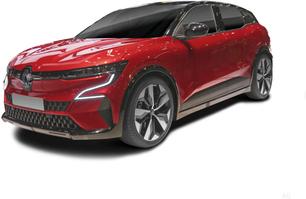
Renault's newest EV is related to the well-known Megane in name only because it has been built from the ground up as an EV. It’s not a hatchback, like its namesake, either, rather a crossover, which means it’s a bit lower than some of its small SUV rivals.
It faces firm competition in the likes of the Hyundai Kona Electric, Volvo C40 and newcomer bZ4X from Toyota. In this review we'll see how Renault's cutest EV handles life with my family of three.
Alfa Romeo’s new entry-level model has finally arrived in Australia.
Pitched as a spiritual successor to the MiTo and Giulietta hatchbacks, the Junior is a tiny SUV with plenty of hatchback design cues.
It was originally set to be called the Milano, however members of the Italian government complained, claiming it’s illegal to sell products with an Italian place name that aren’t actually made there.
The Junior is actually built in Tychy, Poland alongside the related Jeep Avenger at a Stellantis production plant.
We’ve driven the Junior a few times now overseas, but now it’s time to see how it holds up on local soil.
First up is the Ibrida, or hybrid. The fully electric version is also on sale but will have to wait for a future review.
The design for the Renault Megane E-Tech is top-notch and the eco-conscious footprint is even better. It’s an easy and comfortable car to be in but the price is a smidge too high in my opinion when you consider there’s currently only one choice for us Aussies and it’s a mid-spec variant at that. It also misses out on some items its rivals have but is a solid EV to consider for urban dwellers.
The Alfa Romeo Junior is a cute car that’s charming and smile-inducing. It deserves to sell well but ultimately this will come down to whether the Australian public is receptive.
There is plenty of competition out there and if you're wanting something design-led, it's hard to look past this without spending much more money.
Note: CarsGuide attended this event as a guest of the manufacturer, with travel, accommodation and meals provided.
The E-Tech’s plump body panelling gives me some cute marshmallow vibes from certain angles but there are enough features to keep it looking slick, like the fun LED headlights, massive 20-inch alloys and optional two-tone paintwork.
I’m also a fan of the door handles on the E-Tech as they add some nice focal points, because the front has auto-flush handles that pop out on approach and the back door handles are positioned on the C-pillar.
If you're eco-conscious the E-Tech ticks the box because Renault has designed it to be 90 per cent recyclable.
The body is made of aluminium and can be reformed and shaped into new products at the end of its life. The interior materials are made from recycled fabrics and trims; even the lithium-ion battery is free from any rare earth minerals.
Head inside the cabin and the grey knit trims and upholstery on the seats, doors and dashboard creates a cabin space that feels warm and inviting. It's a similar feel to the Polestar 2 - simple but refined.
Although, with my kid around I have higher anxiety about dirtying them!
This is such a cute and tiny car with Alfa Romeo trying its hardest to sandwich all of its hallmark design traits in. It’s certainly a busy design on the outside which I don’t love right now, but I imagine I’ll grow to like it with time.
At the front there’s a special grille as standard that features Alfa Romeo script, plus an offset license plate and cool matrix LED headlights with the company’s ‘3+3’ lighting signature.
Around the side the 18-inch alloy wheels have a flower petal-like design, hidden second-row door handles, as well as a hidden serpent (Biscione) easter egg that’s laser etched into the C-pillar.
The rear of the Junior is my least favourite angle. It tries too hard to look more like a hatchback than a crossover SUV with the slanted rear window and the big black slab where the tail-lights are.
The twin exhaust pipes are a cute look, however, especially given the engine doesn’t scream performance credentials on paper.
Inside there’s an obvious attempt at making the cabin look and feel driver-oriented and sporty.
I like the seats which have a red section that runs down the backrest and onto the seat base. It helps break up the black finishes nicely.
Speaking of, however, there's a sea of black finishes throughout the rest of the cabin. I’d like to see some more silver or chrome accents as the glossy piano black may not age well.
There is interior ambient lighting around the cabin with a customisable colour, which looks great in low-light situations. It particularly pops in the large circular air vents which flank the dashboard and are shaped like cloverleaves.
If you look closely you may notice the Junior shares a lot of its physical switchgear with the related Jeep Avenger. Examples include the steering wheel buttons, gear selector, starter button and the physical climate control switches.
While there’s an argument to say that this cheapens the feel of the Junior, I’m thankful there is physical switchgear in this car to begin with. Plus, the Junior does look different enough as it is.
The E-Tech’s cabin is fairly roomy up front with plenty of head- and legroom. The front seats are super comfortable with powered lumbar support and I wouldn’t mind them not being powered if the price point was a bit lower.
The rear seat is comfortable enough once you get seated but the top of the door apertures are low, and I have to duck my head to get in and out.
Your head also brushes against the roof lining in the back which isn't terribly comfortable, especially considering there is no fold-down armrest to lean on.
The front row benefits the most with individual storage and you get a lot of options to choose from but the centre console is one of the most practical I’ve seen for the class. Lots of pockets and nooks that feature adjustable 'walls'.
You get a single permanent cupholder but with the removable walls, accommodation for a second cup or bottle, can be catered for.
Underneath the multimedia screen you get a dedicated phone shelf, which I love using.
In the rear, you get two map pockets and shallow bin storage in each door.
The charging options are good with two USB-C ports in each row as well as a 12-volt outlet and a wireless charging pad up front but you miss out on V2L (Vehicle to Load) functionality in this model.
The 9.0-inch touchscreen multimedia system looks great headlining the dash and is easy to access and use. The system rebooted once on me while driving but other than that everything is responsive.
You get wireless Apple CarPlay and Android Auto and the CarPlay is easy to get started.
The steering wheel has numerous stalks, controls, regen paddle shifters and even the gearshifter on the column, too. It takes a beat to get used to it but I like how driver orientated it is.
The boot offers great storage at 440L but it’s a deep well, which might be annoying if you’re unloading heavier gear. There is underfloor storage for the cables, too, and like I said, you miss out on a powered tailgate.
The front seats in the Junior are very comfortable for longer drives. The driver’s seat in particular offers six ways of electric adjustability and a massage function. You don’t see features like that very often on a tiny SUV.
Ahead of the driver there’s a leather-wrapped steering wheel. It’s surprisingly slim which makes it nice to hold. There are also paddle shifters on the back which could be more pronounced.
As standard there’s a 10.25-inch digital instrument cluster which emulates analogue dials for the tachometer and speedometer. While the screen is high-res and clear, it’s interesting that Alfa Romeo chose to emulate dials in a digital way rather than just have physical ones, especially because you can’t change their appearance.
There’s a section in the middle that has a few different informative pages you can cycle through. I’d love to see more configurability given there’s limitless possibilities with a screen.
Moving across there’s another 10.25-inch screen for the central multimedia system. It certainly makes up for the lack of configurability in the digital instrument cluster and you can create and customise five different home page screens with a vast array of widgets. It’s fairly clever though at some point it feels like overkill.
There aren’t many menus or sub-menus to get lost in, however, the home button took me a while to locate. It’s above the touchscreen in a small pod of physical buttons alongside the hazard lights and door lock switch.
Underneath the touchscreen there’s a wireless phone charger, plus USB-C and USB-A charger ports.
The engine start button is mounted prominently on the centre tunnel with the lightswitch-like gear selector directly behind it. It’s mounted a little too close to the centre armrest which means craning my arm like a T-Rex to use it.
Other amenities up front include a deep console area with configurable cupholders, a sliding centre armrest with a cubby, as well as a tiny glovebox.
It’s very clear the second row of the Junior isn’t the focus. At 182cm tall I need to splay my legs on either side of the driver’s seat in my desired driving position. Despite this, toe room and headroom is adequate, even with the optional sunroof.
The second row isn’t a place anyone would want to spend too long in. Kids would likely suit better, plus there are top-tether points on all three rear seats and ISOFIX mounting points on the outboard rear seats.
Amenities are limited to a single USB-C port in the second row. There are no air vents or centre armrest. You need to make your own entertainment.
At the back there’s a hands-free power tailgate, which is rare for a vehicle of this size. Once it’s open, the available boot space is decent, especially for such a small car. There’s 415L of boot space with the rear seats upright.
The area itself is fine. There’s no load lip which allows you to get things in and out with ease, plus there’s a two-tier boot floor, allowing you to stow items under the floor away for prying eyes.
In terms of boot-related amenities there’s a 12V socket, a light and some hooks. It’s fairly standard back there.
Unfortunately there’s no spare wheel as standard in the Junior line-up. Instead there’s a tyre repair kit which is not super handy if you have a tyre blow out.
Thankfully you can purchase a space-saver spare wheel for the Junior Ibrida for $314 as a genuine accessory. It would be better if this came as standard given there’s the space for it.
For the moment, the Megane E-Tech is being offered in only one grade for the Australian market and that’s the Techno EV60, which is the mid-level version of Renault’s brand new EV.
The EV60 is priced from $64,990, before on-road costs, and that positions it right in the middle of its rivals. The nearest competitor is the Hyundai Kona Extended Range at $60,500 MSRP, newcomer Toyota bZ4X 2WD slides in at $66,000 MSRP and the Volvo C40 Plus sits at $78,990 MSRP.
The E-Tech comes with a decent array of features for a mid-spec variant and premium items include heated front seats, a heated steering wheel, a digital rear view mirror and wireless functionality for Apple CarPlay and Android Auto but you do miss out on items like a powered tailgate and electric front seats which most of its rivals sport.
Technology looks good with a 9.0-inch touchscreen multimedia system, 12.3-inch digital instrument cluster, dual-zone climate control, faster USB-C ports (four total) and a wireless charging pad.
Sound is covered by the Arkamys Auditorium sound system with six speakers and the mood can be set with the 48-way configurable ambient lighting system.
Despite missing out on a powered tailgate, the EV60 has some features that still offer convenience like keyless entry, heated and auto-folding side mirrors and auto-folding flush door handles that pop out on approach (front only).
The Junior Ibrida is the “entry-level” variant and has an asking price of $45,900 before on-road costs, which is fairly steep for such a small vehicle.
Depending on what you class as a rival for this car you can either see it as good or poor value. It’s cheaper than the likes of the Lexus LBX and around the same price as a related Peugeot 2008.
However, Chinese rivals like the Chery Tiggo 4 and the MG ZS, albeit slightly larger, are virtually half the price. But they lack the primo Alfa badge.
Despite this, the Junior comes fully loaded as standard in Australia so there’s plenty of kit.
Standard equipment includes 18-inch alloy wheels, matrix LED headlights, a hands-free power tailgate, two-tone black roof, dual 10.25-inch screens, wireless Apple CarPlay and Android Auto, wireless charger, single-zone climate control, heated front seats, as well as black cloth and synthetic leather upholstery.
The only options available include a sunroof and premium paint. Both of these cost $1990 each.
The Techno EV60 has a single electric motor. It produces a power output of 160kW and 300Nm of torque, and Renault says it will sprint from 0-100km/h in 7.4-seconds.
That's perfectly adequate for keeping up with traffic or getting around town. You only notice a sluggishness with power when you have a full load of gear. Flipping it to 'Sport' mode make it feel peppier, if you ever need it.
The Junior Ibrida is powered by a 1.2-litre turbocharged three-cylinder petrol engine with 48V mild-hybrid assistance.
In the six-speed dual-clutch transmission is a 21kW electric motor that’s fed by a 0.9kWh lithium-ion battery pack.
It’s worth noting that this is the exact same engine set-up that features in a growing number of Peugeot models locally, including hybrid versions of the 2008, 3008, 5008, 308 and 408.
Total system outputs are 107kW and 230Nm which is far from class-leading. Alfa Romeo claims the 0-100km/h sprint takes 8.9 seconds.
The official energy consumption figure is 15.6kWh/100km and I averaged 13.9kWh after a fair mix between urban and open-road driving.
That’s outstanding consumption but the official driving range for this E-Tech’s 60kWh lithium-ion battery is up to 454km, which is similar to the Hyundai Kona Electric but I still had an eye on the range during longer trips.
The E-Tech has a Type 2 CCS charging port which means you can benefit from faster DC charging speeds, however, it can only accept a top speed of 7.4kW on AC power.
On a 7.4kW AC charger, you can go from 0-100 per cent in a little over nine hours but on a standard 2.3kW house plug, that jumps up to over 30-hours.
On a 130kW DC charger expect to go from 15-80 per cent in as little as 30 minutes, which is pretty convenient if you have access to one.
Sadly, the E-Tech doesn’t have vehicle-to-load capability, so you can’t power or charge bigger items.
The Junior Ibrida has a claimed fuel consumption of just 4.1L/100km, which is solid for a mild-hybrid vehicle.
There’s a 44L fuel tank which requires a minimum of 95 RON premium unleaded petrol.
During our 200km drive loop on the launch which consisted of mixed and spirited drive, we returned an average of 5.4L/100km. However, during one section with fewer twists and turns we saw an average of 4.0L/100km, which is incredible.
Using our as-tested fuel consumption there’s a theoretical range of 815km.
I have mostly loved driving the E-Tech. It's easy to cruise around in and the power is adequate for open-road driving but it prefers an urban environment.
The power can feel a bit lacklustre when you are carrying lots of people or gear but you mostly feel that when you're on a steep incline and trying to keep up your speed.
The steering is crisp and that makes the E-Tech very responsive to drive. The power is delivered smoothly and it feels well-balanced when you put your foot down.
There is more roll in corners than I was expecting but the car still feels firmly planted.
The ride comfort is great. The suspension is more firm than soft which means you feel the road but it's not a major bother. There is a bit of wind noise at higher speeds, as if the door isn’t properly sealed by a millimetre but it doesn't annoy me.
The regenerative braking is controlled by paddles on the steering wheel and you have three levels plus a one-pedal function to choose from.
The single pedal set-up is pretty smooth, even in stop/start traffic, but it’s great to be able to quickly change modes on the go.
The smaller size of the E-Tech makes it an easy car to manoeuvre in a small car park. You get front, rear and side parking sensors which is great because the reversing camera isn’t as clear as it should be for this price level.
Starting up the Junior Ibrida, the turbo three-cylinder engine roars to life with an off-beat, thrum-y sound.
If the engine is bone cold, it’ll stay on to get the fluids up to operating temperature. Once this happens it will happily switch off.
Initial acceleration is typically done on electric power alone and if you don’t press the accelerator too hard it’ll stay in EV mode at city speeds. It’s very electric-heavy for a car that’s technically only a 48V mild-hybrid.
At many points the engine switches off at speeds up to 80km/h, especially if you’re travelling on flat ground. Even at 100-110km/h, it’ll switch off if coasting.
Something to note is the electric motor is part of the six-speed dual-clutch transmission which means you can sometimes feel gear changes even when driving in EV mode. You do get used to this.
A positive of the electric motor being in the dual-clutch is it helps iron out awkward pauses and jerks that this type of transmission typically presents. It’s still not perfect though.
If you press the accelerator harder or the battery charge gets lower, it’ll inevitably fire up the three-cylinder engine. It makes a rorty note during acceleration which is fun to listen to.
The transition from electric to petrol is generally seamless. There can be a slight shudder when the three-cylinder first fires up at low revs, but I’ve experienced much worse in other cars.
There’s only one setting for regenerative braking, which is fairly strong and almost one-pedal-driving like. It takes a bit to get used to the feeling. You do still need to put your foot on the brake pedal to come to a complete stop.
With the combination of the petrol engine and electric motor, acceleration is far from break-neck but it’s far from slow. The fact it doesn’t have much power actually makes this car more endearing, especially because it’s rewarding to drive.
The steering in the Junior is communicative and direct. It's a joy to take corners in as the feel errs more on the lighter side. It almost has a Mini-like go-kart feel as the car feels so nimble.
Additionally, the ride is composed and settled, even at higher speeds on rough roads, which is rare for small vehicles. This is likely because the Junior only has 18-inch alloy wheels with a decent amount of tyre sidewall, rather than the low-profile 20-inch units that are offered in the Veloce Elettrica overseas.
On the highway the Junior’s cabin is surprisingly quiet. You can’t hear the three-cylinder once you’ve reached your set speed and there’s also minimal wind/tyre noise.
Lastly, the safety systems do a good job at working but not being annoying. The worst culprit is the intelligent speed limit assist which chimes when you go over the signposted speed limit.
If it does grate you too much, you can easily switch it off in a dedicated advanced driver assist system (ADAS) menu that can be reached via a shortcut button near the hazard lights. It’s as easy as that.
The E-Tech has a maximum five-star ANCAP safety rating from testing in 2022 and has seven airbags, including a front centre airbag.
The EV60 comes with lots of passive safety features including dusk sensing auto LED headlights, LED DRLs, a rear fog light, child safety locks, tyre pressure monitoring, traffic sign recognition tech, an intelligent seatbelt warning, a reversing camera plus front, rear and side parking sensors.
Active safety equipment includes items like blind-spot monitoring, driver attention alert, rear collision warning, forward collision warning, rear cross-traffic alert, lane departure alert, lane keeping aid, and adaptive cruise control (with stop and go).
You also get a digital rear view mirror which is essential as the back window is narrow and the camera feed provides a clearer view than you’d have without it.
The rear row also features ISOFIX child seat mounts on the outboard seats and three top tethers but two seats will fit best. The front passenger seat also has ISOFIX child seat mounts and a top tether.
AEB with car, pedestrian, cyclist and junction turning assist function is operational from 8.0-80km/h (160km/h for cars) but it is common to see that starting figure sit closer to 5.0km/h.
The Alfa Romeo Junior hasn’t been crash-tested by ANCAP or Euro NCAP just yet.
Standard safety kit includes six airbags, autonomous emergency braking (AEB), blind-spot monitoring, lane-keep assist, adaptive cruise control, front, side and rear parking sensors, as well as a reversing camera.
Some features missing from the line-up include rear cross-traffic alert, plus a proper surround-view camera. With the latter, however, the reversing camera stitches together when reversing to create a surround-view image, much like Peugeots.
Junior owners get 12 months of complimentary access to connected services which allows for things like SOS emergency calling and live traffic satellite navigation, plus a range of remote functionality through a companion smartphone app.
The E-Tech comes with a five-year/100,000km warranty, but it’s usual to see an unlimited km term for the class. The battery is covered by an eight-year or up to 160,000km warranty term.
Service intervals are reasonable at every 12 months or 30,000km and you also get five-years roadside assistance included.
Pricing over the first five years ranges from a low of $230.04 to a high of $519.62, averaging out at pretty competitive $317.72 per service. No capped-price deal is available.
Like other Alfa Romeos, the Junior is covered by a five-year, unlimited-kilometre warranty.
There’s also five years of roadside assistance as standard. An additional 12 months of coverage can be added for the lifetime of the vehicle every time you service at an authorised Alfa Romeo dealer.
Logbook servicing is required every 12 months or 15,000km, whichever comes first. The first five services are capped and total $3105.84, which averages out to around $620 each.
This seems pretty expensive for such a small car, but it's only a touch pricier than the Lexus LBX.
It’s clear maintaining this vehicle with its dual-clutch automatic transmission and mild-hybrid components is costly in the long run.