What's the difference?
MG is far more popular as a Chinese-owned brand than it was as a British sports car maker.
The company now makes cars that appeal to a wider range of people, especially those looking for an affordable way into electric vehicles. As part of that broad appeal the company also makes regular petrol cars like the one tested here - the MG ZS Essence.
That’s right, we’re not testing the electric version of the MG ZS, nor the hybrid variant. Not even the one with the turbo. Our ZS is the ordinary petrol version in the mid-level Essence grade. Could it be the pick of the lot? Well… you’ll know soon.
First, who are the ZS’s rivals? The ZS is a small SUV and competes against the likes of the GWM Haval Jolion, Kia Seltos and Mazda CX-30. Having tested all of them we can say the ZS does some things better but also struggles to match a few of the other qualities of its rivals.
Oh, and don’t confuse the MG ZS with the MG HS. The HS is bigger and a mid-sized SUV, while the ZS is a small SUV. Got it?
Read on and we’ll take you through the strengths and weaknesses of the ZS Essence.
@carsguide.com.au New-gen MG ZS petrol tested! #MG #ZS #car #carsguide #fyp ♬ original sound - CarsGuide.com.au
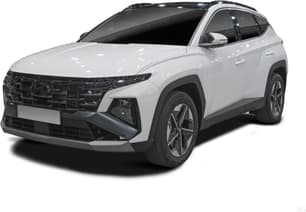
For the first time in Australia, the mid-sized Hyundai Tucson is being offered with a hybrid powertrain – which combines its spritely turbo-powered engine with a fuel efficiency-improving electric motor. And it might be enough to swing you to becoming a hybrid fan.
The new powertrain makes the Tucson a proper competitor against Australia’s darling, the Toyota RAV4 but the Nissan X-Trail e-Power and Kia Sportage remain strong rivals.
This week I’m family-testing the mid-spec Elite Hybrid with the N Line option pack to see how the newly updated Tucson handles family life.
The MG ZS Essence with the 1.5-litre petrol engine has many strengths - price and value for money, practicality and space, good looks… and the only area where it really struggles to match its rivals is its underpowered engine.
The good news is the Essence also comes with a turbo engine and while this isn’t a race car by any means, turbocharging is a way to add the oomph needed in a car this size.
Stepping up to the MG ZS Essence Turbo costs an extra $2000, but if you can make the budget stretch you’ll have the complete package of value, looks, practicality, safety and much better performance for more enjoyable driving.
The updated Hyundai Tucson Elite Hybrid N Line offers families space, features and easy-enough handling for everyday stuff and the occasional weekend adventure pursuits.
The price point is higher than the previous non-hybrid model but you get a lot of bang for your buck and my family was comfortable this week.
The ZS's good looks is another strength.
The new-gen ZS arrived in Australia late in 2024 and this petrol version landed in February 2025. The styling looks more expensive and premium than its price tag would suggest. The sleek nose, the refined tail-lights, a pleasing profile all make for a good looking small SUV.
There are many interesting elements in the design - the grille and its aggressively looking flanking 'air intakes', the crease through the door panels, the little fin that meets the tail-light.
Squint and it looks like a mini Ford Territory. Sort of…
The cabin of the ZS Essence is equally refined with a modern design and soft touchpoints throughout. It’s a minimalist and spacious place free from button clutter.
The ZS is 4430mm long, 1818mm wide and 1635mm high. Ground clearance is 161mm, in case you’ve been lying in bed wondering.
The Hyundai Tucson has seen a minor facelift on the exterior but most of the changes are in the cabin.
The N Line pack means that you get 19-inch alloy wheels over the standard 18-inch version as well as extended body panelling instead of black plastic trims. There is N Line badging across the car too, but N Line option pack does limit you to just four exterior colour choices.
The front features new stacked LED DRLs which tie in with the fang-like design of the rear LEDs. The origami-styled panelling looks more severe than the previous model which helps it stand out in a class that’s heavy on rivals.
The cabin features a completely reconfigured dashboard and now sports a large curved display panel that houses those upgraded tech screens and a new 6.6-inch climate control panel.
The centre console has been redesigned to look like it’s floating and now adds an extra-large storage cubby underneath it.
The upgraded interior makes the Tucson a leader for the mid-sized SUV segment and is very pleasant to spend time in.
Practicality is a big strength, too, with a proximity key that’ll unlock the car when you touch the door handle, and a cabin with good legroom and headroom even for me at 189cm tall.
There's also a wonderfully simple charging pad for your phone - it's a large area on the centre console which works well in terms of connection but also in terms of wasy access. Many rivals will hide phone chargers away is small crevices that make them hard to extract or even pop in.
You'll find four USB ports, too plus a 12V charger, too.
Clever storage like a shelf built into the dash for loose objects, four cupholders and big door pockets are also on hand.
The boot is also a decent size for a small SUV at 443 litres which is bigger than many rivals, including the Subaru Crosstrek.
The cabin up front is spacious with plenty of head- and legroom on offer. You also won’t jostle for elbow room either when you have a passenger.
The seats are comfortable with their heat function but you might still get fatigue on longer trips as you only get adjustable lumbar on the drivers side and it's simple at best.
The back seat has really good space for the class and no matter the passenger, they were comfortable back there. The seats in the rear are well-padded and access to this row is good for sliding in a child seat as the door aperture is wide.
Other amenities are average with directional air-vents, a single reading light, and a fold-down armrest. My seven-year-old son found the window sills to be quite high, so he didn’t get the view he wanted.
The individual storage is excellent for the class with the redesign as you get a dedicated storage shelf in front of the front passenger and a massive cubby that easily fits a handbag underneath the mid-sized centre console.
There are two cupholders and two drink bottle holders per row but the rear storage bins are skinny. The rear row also gets map pockets but again, these are shallow.
The upgraded technology is a must have and the new multimedia system is easy to use once you spend time with it and looks great with its graphics. The system has built-in satellite navigation, over-the-air updates and wireless connectivity for Apple CarPlay and Android Auto.
Connecting the CarPlay is simple and maintains a strong connection.
Charging options are great with two USB-C ports per row and the front also gets a wireless charging pad and a 12-volt socket to choose from. The centrally located position of the charging pad is handy and the liner grippy - so no phone movement.
Rounding out the practicality is the boot, which has a wide aperture and a loading space level with 582L of capacity available with all seats in use, which is good for the class.
The back row has a 60/40 split but don’t fold flat – they sort of spring up a bit, which might annoy when you do a big Bunnings run.
There is a 12-volt socket, a space-saver spare tyre underneath the floor and you get a powered tailgate in this model – which I always like.
The MG ZS’s biggest strength is its affordability and the petrol variant in the Essence grade we tested is a relative bargain at $29,990, drive-away. The entry-grade Excite is even cheaper at $26,990, drive-away.
The Essence offers more standard equipment though and is worth the extra three thousand if you can afford it. Coming standard are LED headlights, 17-inch alloys wheels, silver roof rails, a panoramic sunroof, proximity unlocking, push button start, a 12.3-inch media screen, sat nav, digital radio, six-speaker audio, heated front seats and a leather steering wheel.
That’s good value, and we can testify the LED headlights are excellent for a night-time country road, the proximity unlocking is hard to live without and the heated seats do get very warm.
But the stereo’s sound is 'meh' and the shade on the panoramic roof could be thicker to block out the intense Aussie sun.
Also the seat upholstery is vinyl and while it is easy to clean and looks great, it doesn’t have the nicest feel to it. Still, the car is $29,990 and is better value than the Kia Seltos and a few other rivals.
There are now six variants for the Hyundai Tucson with the release of the hybrid powertrain and all six have the choice of being either a front-wheel-drive or all-wheel drive with either the petrol engine or hybrid powertrain. And every grade gets the option of adding the N Line style pack. So, there is no excuse for not getting the combo you actually want now.
The model on test is the mid-spec Elite Hybrid with the N Line option pack and its priced from $55,100 before on-road costs. That positions it towards the top end of the market but you get an SUV that's more feature-heavy than most of its rivals.
The standard equipment for the upgraded Elite Hybrid N Line now includes dual 12.3-inch technology screens, wireless Apple CarPlay and Android Auto, as well as a 6.6-inch climate control touchpad.
Other equipment includes a powered driver’s seat, heated front seats, suede/leather upholstery, dual-zone climate control, wireless charging pad, digital radio, four USB-C ports, keyless entry, push-button start, space-saver spare wheel and a powered tailgate.
The Kia Sportage SX hybrid is more affordable at $45,950 MSRP but unlike the Elite Hybrid it misses out on wireless connectivity for phone charging and phone integration apps.
The Toyota RAV4 XSE AWD is priced from $52,585 MSRP but misses out on the newer and bigger technology screens that the upgraded Elite Hybrid has.
The Nissan X-Trail Ti 4WD e-Power is the closest rival in terms of price ($55,090 MSRP) and available features.
Okay, we've listed a lot of strengths for the MG ZS but the engine isn’t one of them. The 1.5-litre four-cylinder petrol engine makes 81kW and 140Nm.
Really, power needs to be at least 100kW and torque closer to 200Nm in something weighing 1330kg otherwise acceleration is going to feel woeful - which it is.
Seriously, the first time I tried to overtake I looked down to see if the handbrake was still on.
Not helping performance is a CVT (Continuously Variable Transmission) which, while good for fuel economy, seems to have trouble getting power to the road effectively.
The Elite Hybrid N Line model features a hybrid powertrain that combines an electric motor with a 1.6-litre four-cylinder turbo-petrol engine. They combine to produce 172kW of power and 367Nm of torque. Which is more than enough to make the mid-sized Tucson feel spirited.
This particular variant is AWD and uses a six-speed automatic transmission, which can over rev at times but is mostly smooth with its gear changes.
Official fuel consumption for the combined (urban/extra-urban) cycle is 6.7L/100km, which isn’t outstanding, especially compared to the hybrid version which can get 4.7L/100km.
Our own testing after city driving and motorways saw 7.9L/100km. Not the most efficient engine in the range, so if it’s saving petrol you want then go for the hybrid, or better still, the electric version of the ZS.
The official combined cycle fuel consumption figure is a low 5.3L/100km, and my real-world usage came out at 6.0L after doing a lot of open-road driving where hybrids tend to be at their least efficient, so that is an excellent result.
The Tucson hybrid is the second best for fuel usage after the Toyota RAV4 hybrid, which sits at 4.8L/100km for combined usage. Overall, the new hybrid powertrain has proven itself to be pretty frugal.
Based on the official combined fuel cycle and 53L fuel tank, expect a theoretical driving range of up to 981km, which is great for a family road tripper.
The lack of oomph from the 1.5-litre naturally aspirated four-cylinder engine affects the driving experience of the ZS. This lack of accleration is hampered not just by the low outputs of the engine but also by the transmission, which is a CVT and these don't favour getting power to the road as effectively as torque convertor transmissions.
Handling is good for this class, with the ZS feeling stable under most conditions. Steering is excellent, with a nice weight and accuracy to it.
And while the ZS is no prestige car, the ride is comfortable, composed and better than many small SUVs at this price point.
Other pluses include its smaller size which makes it easy to manoeuvre in city traffic and park in tight spaces.
The final driving score however is dragged down by the engine and transmission which fail to provide the acceleration needed to easily overtake, merge or move quickly when needed at stop signs or out of car spaces on busy roads.
The new hybrid powertrain offers respectable power delivery that makes the Tucson feel zippy in the city and a relaxed cruiser on the open road.
There can be some over-revving when you’re trying to get up to speed and the accelerator and brake feel touchy at first until you get used to them.
On the hybrid side of things the Elite Hybrid has regenerative braking and there are moments of pure EV mode but it kicks in seemingly when it feels like it. When it is on, there’s practically no engine noise but when it's off, the cabin still remains fairly quiet.
My family went off the paved stuff this week and hit muddy and gravel roads on our quest to find a cool picnic spot, and the Elite Hybrid impressed with how it handled the different terrains. It’s not an off-roader but you can still do mini adventures.
The Tucson is mid-sized and has a very clear reversing camera with front and rear parking sensors, so it’s not too hard to manoeuvre or park.
The real negative feedback is that on three separate occasions, our test car randomly shifted into neutral while driving and to clarify, this did not occur while trying to shift into or out of 'drive' but while on the road, already in drive.
The first time it happened, I thought I had somehow bumped the column shifter but on the other two occasions, I happened to be watching my husband drive and he didn’t touch the shifter.
This is probably just a fault on out test car and not indicative of the model in general but it wasn't fun.
Safety is a strength, as well, with the MG ZS scoring the maximum five-star ANCAP assessment. Safety tech is abundant with AEB, lane keeping assistance, blind spot warning and rear cross traffic alert.
You’ll also find a clear 360-degree camera view, seat belt reminders and adaptive cruise control.
For child seats there are two ISOFIX mounts and three top tether points across the second row.
A space saver spare wheel is located under the boot floor.
FINALLY! Hyundai has listened to the people.
They have found a workaround for the annoyingly intrusive beeping alerts associated with the traffic sign recognition and speed alert tech. Yes, they still alert unless you turn them off and yes, you still have to turn the damn thing off every time you get in the car, but you not longer have to access five to six menu pages to do so. Hurrah.
The Hyundai Tucson Elite Hybrid N Line has a robust safety features list and includes equipment like blind spot monitoring, driver attention monitoring, safe exit warning, rear occupant alert, forward collision warning, LED daytime running lights, rear cross-traffic alert, lane keeping aid, traffic sign recognition, intelligent seatbelt warning, adaptive cruise control, a reversing camera, and front/rear parking sensors.
Our test model misses out on lane departure alert and the lane keeping aid is too intrusive for every day driving. It gets to the point where you wonder who is driving, you or the car.
The Hyundai Tucson has a maximum five-star ANCAP safety rating from testing done in 2021 and the hybrid variants are covered by this as well. It has seven airbags, including, the newer front centre airbag.
The Tucson has two ISOFIX child seat mounts and three top-tethers.
Auto emergency braking (AEB) is standard and features car, pedestrian, cyclist and junction assist detection which is operational from 5.0 – 80km/h (85km/h for car) but it's usual to see a higher top speed for the car detection (usually 180km/h).
Ownership costs are a strength, too. The MG ZS is covered by a 10-year/250,000km warranty.
MG’s ‘Precise Price’ service plan locks in the cost of servicing with 12-month/15,000km intervals and a cost of about $1200 over five years.
Hyundai offers the Tucson with a five-year/unlimited km warranty and the battery is covered by an eight-year/160,000km warranty which is pretty standard for the class now.
You can pre-purchase servicing for up to five years and the breakdowns are as follows.
Three years or up to 30,000km for $1240 (average $413 per service).
Four years or up to 40,000km for $1700 (average $425 per service).
Five years or up to 50,000km for $2040 (average $408 per service).
The five-year pricing is comparable to its rivals and not outrageous for the class.
Servicing intervals could get annoying if you put a lot of kilometres on your car as they sit at every 12 months or 10,000km, whichever occurs first.